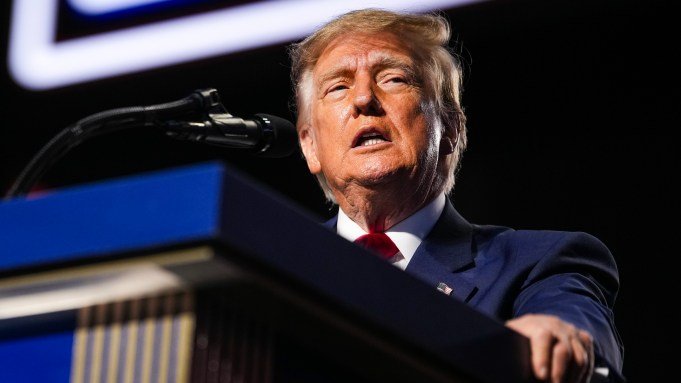
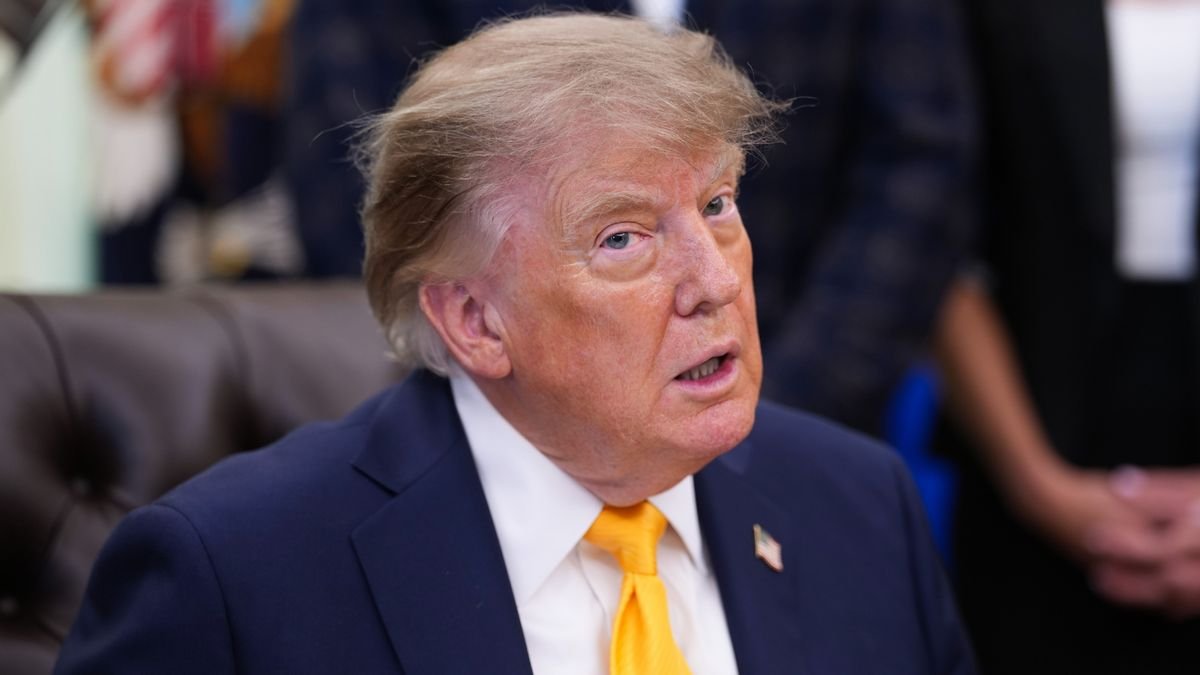
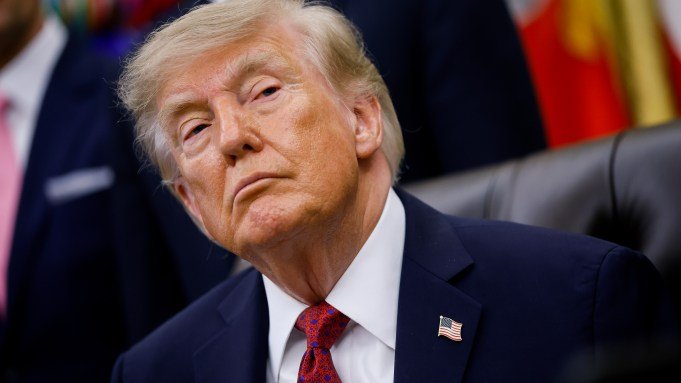
Donald Trump has vowed to appeal a judge’s ruling in the networks’ challenge of his ban on their access to the White House, even though a federal judge has yet to issue a ruling in the case.
Shortly after CNN, Politico and MS NOWfiled suit on Monday against Trump for his ban on their access to the White House, the case was assigned to U.S. District Judge Timothy J. Kelly. Kelly set a hearing for Wednesday on the networks’ motion for a temporary restraining order to prohibit such a ban and restore their correspondents’ credentials.
Trump appointed Kelly in his first term, but the judge ruled in favor of CNN and then-White House correspondent Jim Acosta after the administration pulled his credentials.
Trump wrote on Truth Social on Monday, “As expected, Fake News CNN, Politico (Pay back the 8 Million Dollar contribution made by the U.S. Government to keep them afloat!), and MSNOW (formerly known as MSDNC!), have brought suit to gain access to the White House, and your President, ME! They have drawn a great Judge, for them, a man who ruled in favor of Jim Acosta, who now seems to have disappeared from the Planet. The Judge’s name is Tim Kelly, and he was, sadly, appointed by ‘TRUMP.’ In other words, almost without question and, as usual, we’ll go for appeal because Fake News people and publications that only write negatively, and who violate our National Security by writing false and defamatory stories with unknown ‘sources,’ shouldn’t be allowed access to the most important Office anywhere in the World.”
In the Acosta case, Kelly ruled that precedent required that the White House give proper notice of a revocation of a credential. In the 1977 D.C. Circuit opinion, Sherrill vs. Knight, the judges ruled that “the protection afforded newsgathering under the First Amendment guarantee of freedom of the press requires that this access not be denied arbitrarily or for less than compelling reasons.”
Trump announced his ban on Friday. On Saturday, reporters for CNN, Politico and MS NOW said that they were denied access to the White House when their hard passes no longer worked.
Another Trump appointed federal judge, Trevor McFadden, sided with the Associated Press last year when they sued the administration for banning them from the White House pool and other events. The AP was restricted after it declined to change the name of the Gulf of Mexico to the Gulf of America, as set out in one of Trump’s executive orders.
McFadden wrote in his opinion, “The Court simply holds that under the First Amendment, if the Government opens its doors to some journalists — be it to the Oval Office, the East Room, or elsewhere — it cannot then shut those doors to other journalists because of their viewpoints. The Constitution requires no less.” His decision is under appeal.
In contrast to the AP case, which had to do with being blocked from specific areas of the White House, the three networks were restricted from the grounds entirely.
Trump has also made clear that the ban was over their coverage. Courts have typically required that such restrictions on press freedom serve a compelling government reason for it. In his Truth Social post, Trump wrote that ‘FAKE NEWS IS A THREAT TO DEMOCRACY.”
He wrote, “Virtually every story about me, or anything having to do with me, is negative, wrong and, in many cases, DANGEROUS for our Country! No matter how GREAT my Achievements, they trivialize and demean. The fact is, I won all seven Swing States, the Popular Vote, the Electoral College (312 to 226), and the Counties throughout America by 86%, and yet it is reported that I get 94% bad publicity. With such a Crooked and Corrupt Press, how did I win in such a LANDSLIDE? It is because the Media has NO credibility, and that is a very bad thing for our Nation! Why should I have to give “access” to such people? Perhaps Judge Kelly could explain that!”
Kelly has given Trump until Tuesday to respond to the networks’ lawsuit.
U.S. President Donald Trump called the U.S. and Israel’s war with Iran “small potatoes.”
Rating:
Context
Some people sharing the quote claimed Trump was specifically referring to the deaths of 18 service members during the conflict. He was in fact referring to the conflict itself.
A rumor circulated online in September 2026 that U.S. President Donald Trump had called the Iran war, initiated by the United States and Israel in February 2026, “small potatoes.”
Users shared the claim on social media and Reddit. Sen. Chuck Schumer, D-N.Y., shared the purported quote and added, “Tell that to the families of the 18 troops we’ve lost, the hundreds of wounded servicemembers, and the Americans suffering every single day from record high prices.”
The quote was correctly attributed to Trump.
Trump made the statement during a news conference in the Oval Office on Sept. 4, during which he signed executive orders related to the cattle industry.
The news conference was available to view on the White House’s official YouTube channel. The comment in question begins around the 25-minute mark after a reporter referred to Vice President J.D. Vance’s statement that he did not consider the conflict in Iran a war and asked, “Can you explain to the American people if this is not a war, what exactly is it?”
Trump responded (emphasis ours):
A lot of people don’t call it a war. I call it a military conflict. Because it’s small potatoes for us. It’s not a big thing. We did Venezuela and we did this. In Venezuela we lost nobody, in this we lost 18 people. And in Vietnam we lost 100,000 people, and in other conflicts you lost tens of thousands of people.
Trump continued by elaborating on some of the military operations the United States has enacted since the start of the conflict. He said, “It’s a military conflict, but it’s very intermittent. I could see somebody not calling it a war.”
Asked directly by the same reporter whether he considered the deaths of 18 service members to also be “small potatoes,” Trump said he’d met their families and had gotten “very friendly” with some and again mentioned the number of deceased from past conflicts to compare the size of the numbers.
Some social media posts called out Trump’s comment and claimed he specifically called the number of deceased service members “small potatoes.” In truth, he made the comment about the conflict itself, not specifically the number of service members killed..
We reached out to the White House for further comment on the criticisms of Trump’s statement and will update this article if we receive a response.
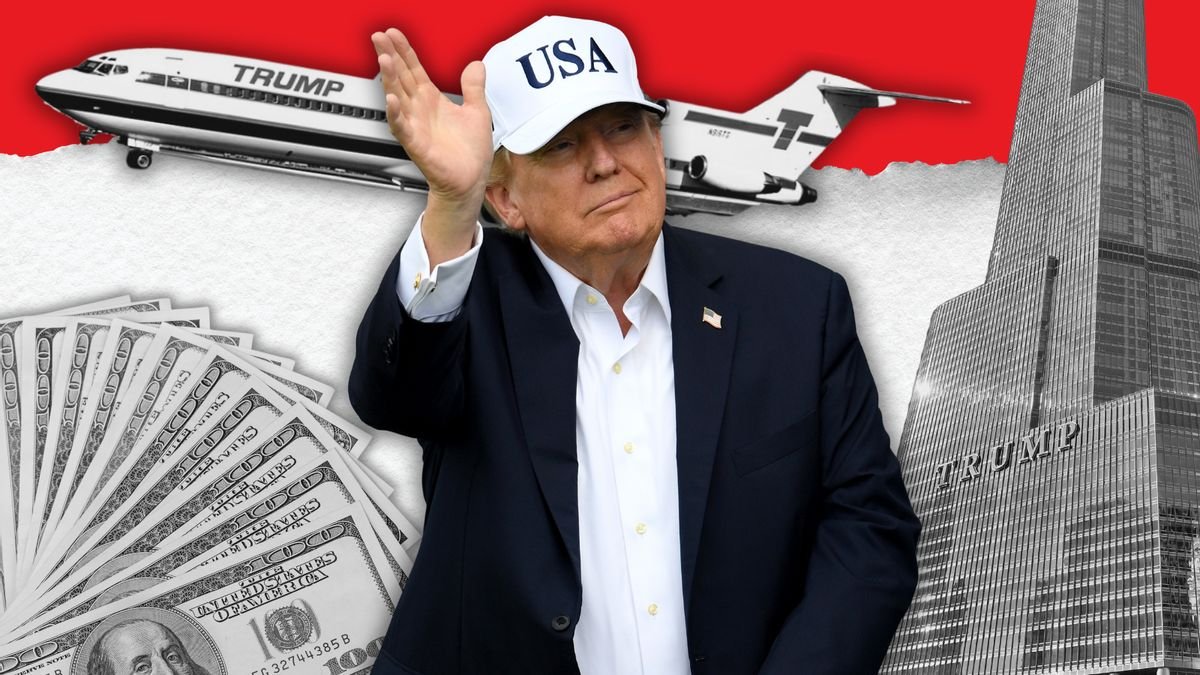
A Facebook post accurately described 13 acts of kindness carried out by U.S. President Donald Trump before he ran for office.
Rating:
What’s True
Of the 13 reported acts of kindness in the Facebook post, nine were true, mostly true or probably true.
What’s False
Two of the claimed acts of kindness were false, and one was unproven. Lynne Patton, a former Eric Trump Foundation employee whom Trump appointed to roles in both of his presidential administrations, carried out one of the reported acts.
In September 2026, a Facebook post (archived) circulated online that listed 13 claimed “acts of kindness” that U.S. President Donald Trump purportedly carried out before running for office.
The introduction to the post read:
For thirty years before he ran for office, Donald Trump quietly paid mortgages, flew sick children across the country, and wrote checks to strangers who needed help. You will not find those stories on the evening news. So here they are.
Start with what people who knew him before politics say. He has never had a drink. He has never smoked. He has never used drugs. He built his business on long hours, and the people who worked for him will tell you he outworked all of them. Nobody called him a bigot until the day he announced for president. That timing tells you something about the accusation.
Of the 13 reported acts of kindness in the Facebook post, nine were true, mostly true or probably true, two were false and one was unproven. One of the alleged acts was actually carried out by Lynne Patton, a long-time employee of the Eric Trump Foundation whom Trump later appointed to roles in both of his administrations.
Given the above, we rate this claim a mixture of true and false or unproven elements. Below, we investigate each claim in the post.
Annabel Hill’s farm: True
In 1986, a Georgia widow named Annabell Hill was about to lose the family farm at a foreclosure auction. Trump saw her story on the news, picked up the phone, called the auction, and stopped the sale. Then he sent her the money to keep the farm.
Snopes investigated this claim in September 2026 and found it to be true. Accordingtoreporting at the time, Hill’s farm had been up for auction twice. Her husband, Leonard D. Hill, died by suicide in February 1986 to try to save the farm using the payout from his life insurance. That sum did not cover the debts, and his widow faced a second auction that September.
That was reportedly when Trump stepped in, called the bank to block a foreclosure auction and started fundraising for Hill. The fundraising was successful, with Trump himself covering at least $39,000 of the $170,000 needed. Because of the fundraising efforts, Hill’s family was able to keep the farm.
A private plane for Andrew Ten: True
In 1988, an Orthodox Jewish family in Los Angeles had a three-year-old son named Andrew Ten who needed treatment in New York. The boy could not survive without a full life-support setup, and no airline would carry it. His father asked Trump for help. Trump put the family on his own jet and got them there.
Snopes previously investigated this claim in 2015 and found it to be true based on a report published by the Jewish Telegraphic Agency in 1988 that said Ten’s father had appealed to Trump for help transporting his ill son to access medical treatment in the New York area.
The Times of Israel later reported that Ten died in 1998. In 2014, the Securities and Exchange Commission fined Ten’s father, Harold Ten, in an alleged scheme to “profit from the imminent deaths of terminally ill patients in nursing homes and hospice care.”
Trump sent plane to fly Marines: False
In 1991, two hundred Marines came home from Desert Storm to Camp Lejeune and found out the military had no aircraft to fly them the rest of the way to Florida. Trump’s airline, the Trump Shuttle, made two runs between North Carolina and Miami and got every one of them back to their families.
Snopes previously investigated this claim in 2016 and found it false. Though some Marines did fly from Miami to North Carolina on a Trump-branded plane after Operation Desert Storm in 1991, Trump did not own Trump Shuttle or its planes at the time because he had defaulted on the loans he used to buy the fleet. Rather, the military chartered some of the planes that still bore the Trump logo to fly the Marines without involvement from Trump.
A flat tire and a mortgage payment: False
In 1995, a passing driver in New Jersey pulled over to help change a flat on Trump’s limo. Trump asked what he could do in return. The man only wanted flowers sent to his wife. A few weeks later, the story goes, the flowers came with a note saying the couple’s mortgage had been paid off. People have been repeating that one for three decades.
This claim is an urban legend that Snopes first debunked in 1998. It has also circulated using other celebrities’ names. According to an Aug. 15, 1997, report in the Toronto Globe and Mail, an assistant at Trump’s New York office told the paper the story “isn’t true.”
Mar-a-Lago welcomed Black people and Jews: True
In 1996, Trump sued the town of Palm Beach, Florida. The town had been leaning on his Mar-a-Lago club for one reason. He let in Jewish members and Black members, and the older clubs did not. Abraham Foxman, who ran the Anti-Defamation League at the time, said Trump shined a light on the ugly side of Palm Beach that the glitter usually hid. Foxman also said other clubs started admitting Jews and Blacks after Trump forced the issue.
Snopes investigated a similar claim in 2016, finding it true that Trump allowed Black people and Jews to access Mar-a-Lago while other clubs in Florida did not. The Wall Street Journal reported in 1997 that after Trump sued Palm Beach alleging discrimination against his club because it admitted Black and Jewish members, other clubs had started to admit Jewish patrons.
However, the WSJ reported in April 1997 that Palm Beach denied it was discriminating against Mar-a-Lago because of its membership and that restrictions imposed on the club were part of a zoning matter. The outcome of the lawsuit was unclear.
Ultimately, Trump’s decision to allow Jewish and Black members turned out to also benefit his business, helping him fight Palm Beach’s restrictions and also allowing him to attract a different crowd than existing clubs already catered to.
According to the Wall Street Journal article, Foxman did speak the quote the Facebook post attributed to him, saying Trump “put the light on Palm Beach. Not on the beauty and the glitter, but on its seamier side of discrimination.”
Money for a girl with brittle bone disease: True
In 2000, Trump was watching Maury Povich and saw a little girl named Megan who lived with brittle bone disease. He said her attitude got to him. He called the show and sent her family a large check.
According to a recording of a Dec. 19, 2000, episode of “Maury,” the talk-show hosted by Povich, an 11-year-old girl named Megan and her mother received a check and video greeting from Trump.
The clip of the show Snopes viewed did not elaborate on Megan’s illness or the exact size of Trump’s check. During the clip, Trump called Megan “beautiful, inside and out” and told her to “keep up that attitude.”
Povich, when handing over Trump’s check to Megan, said Trump didn’t give out “chump change” and referenced “all those zeros” but did not say the exact amount.
In 2020, to mark the 30th anniversary of the Americans with Disabilities Act, Trump’s campaign shared a news release that highlighted several moments he reportedly supported Americans with disabilities. One of these highlights was about Megan and said she had brittle bone disease.
Jennifer Hudson stayed free at Trump hotel: Probably true
In 2008, Jennifer Hudson’s mother, brother, and nephew were murdered in Chicago. Trump moved Hudson and her family into his Chicago hotel at no charge and had his security team watch over them while they grieved.
Snopes previously investigated this claim in 2016. E! Online reported on Oct. 31, 2008, that Hudson checked into the Trump International Hotel & Tower on Oct. 24, following the murder of her mother, brother and nephew by her former brother-in-law.
The outlet reported that Trump himself was paying for the stay, something Trump also told People magazine on Nov. 10. It was unclear how long Hudson stayed at Trump’s hotel.
Hudson has never publicly refuted Trump’s claim that he paid for her stay or named herself or anyone else other than Trump as having paid.
A check for bus driver who saved woman from suicide: True
In 2013, a Buffalo bus driver named Darnell Barton saw a woman standing at the edge of a bridge. He stopped the bus, walked over, put an arm around her, and talked her back to safety. Trump read about it and mailed Barton a check, because he thought a man like that deserved a reward.
Snopes found this claim to be true in 2016. A Buffalo radio station reported photos from a ceremony on Nov. 7, 2013, during which Barton received the $10,000 check (archived) that Trump had promised on social media after Barton’s Oct. 18 rescue of an apparently suicidal woman he spotted while driving his bus.
Money for a Marine arrested in Mexico: True
In 2014, Marine Sgt. Andrew Tahmooressi spent seven months in a Mexican prison after he took a wrong turn at the border with legally owned guns in his truck. President Obama never placed the call to Mexico that the sergeant’s family begged for. Trump sent Tahmooressi a check for $25,000 to help him rebuild his life once he got home.
Snopes previously investigated this claim in 2018. We found at the time that Tahmooressi was arrested after he crossed the Mexican border while carrying guns and ammunition that he legally owned in the U.S. — but wasn’t permitted to carry in Mexico — and was imprisoned for seven months.
We could not substantiate his claims about abuse and mistreatment by Mexican authorities that also circulated at the time.
The House Committee on Foreign Affairs reported on Oct. 31, 2014, that Tahmooressi had been released from Mexican jail. Trump pledged (archived) on social media on Nov. 10, 2014, that he would send Tahmooressi a check for $25,000. We reported in 2016 that Trump made good on his promise the next day, writing to Tahmooressi:
You have served our country with fortitude and dignity, and we are fortunate to have someone like you as a brave Marine and protector of our wonderful nation. We are proud of you and I wish you and your family the very best for many years to come.
According to the House Committee on Foreign Affairs and reporting by the Los Angeles Times, Republican and Democratic politicians alike had pushed for Tahmooressi’s release. Any involvement or lack thereof by then-President Barack Obama was unclear.
College money for beauty queen’s son: True
In 2016, Melissa Young stood at a Trump rally in Wisconsin and cried while she thanked him. She had competed as Miss Wisconsin USA in 2005, then got sick with an illness that has no cure. During her worst stretch, a handwritten note arrived from Trump calling her the bravest woman he knew. She said the doors Trump opened for her ended up giving her Mexican-American son a full ride to college.
During a Trump campaign rally in Janesville, Wisconsin, on March 29, 2016, Young told the then-candidate that his organizations, including the Miss USA pageant and the since-defunct crowdfunding platform FundAnything.com, had helped secure her Mexican-American son a full ride to college.
Young, who competed as Miss Wisconsin in the Miss USA pageant in 2005, said she suffered from an incurable illness and that at one point when she was in hospital, Trump sent her a handwritten letter addressed to the “bravest woman I know.”
In 2016, Snopes reported on Young’s story and the open letter to Trump she posted on Facebook (archived) in July 2015. That letter explained that Miss USA 2005 Chelsea Cooley had started a fundraiser for Young’s son after attending the launch of FundAnything.com, which would allow him a full ride to college.
It was unclear whether Trump personally paid anything into Cooley’s fundraiser for Young’s son. (The claim does not say specifically that he did.)
Young posted (archived) on Facebook in August 2026 that her son would be a high school senior that coming school year.
Lynne Patton’s reply to claims Trump was racist: True
That same year, Lynne Patton, a Black executive at the Trump Organization, put out a video answering the people calling her boss a racist. She admitted she had fought addiction for years. She said the Trump family never pushed her out. They stood by her the whole way.
Patton, who was at the time the vice president of the Eric Trump Foundation, spoke at the July 20, 2016, Republican National Convention in Cleveland, Ohio. Before she took the stage, a five-minute video essay played in which Patton criticized “repeated and reprehensible” attempts to “align my boss and his family with racist hate-mongering groups campaigns and messaging” (time code 0:14).
Patton called the Trump family, “one of the most generous, compassionate and philanthropic families I’ve ever had the privilege of knowing” (time code 0:39).
Patton’s video essay and following appearance did not include mention of addiction. This part of the claim may have come from her later media appearances. For example, in April 2025, Patton discussed her history with cocaine addiction with Lara Trump, Eric Trump’s wife, on Fox News. During that interview, Patton also talked about how the Trump family had supported her through her addiction.
After Donald Trump won the 2016 presidential election, he appointed Patton to a role in the Department of Housing and Urban Development overseeing a region covering New York and New Jersey. During his second administration, Trump appointed Patton as deputy assistant to the president and director of minority outreach.
Patton previously served a suspension from government work for a violation of the Hatch Act, which regulates the partisan political activities of federal employees, during her time at HUD.
Cancer treatment for campaign volunteer’s father: Mostly true
Also in 2016, a young Illinois volunteer named Shane Bouvet told reporters that Trump had stepped in to cover his father’s cancer treatment. His father, Donald Bouvet, beat the cancer. Trump has stayed in touch with the family ever since.
Trump met with Bouvet and his father, Donald, on Feb. 9, 2018. The president said he had first read about Shane Bouvet in The Washington Post ahead of his January 2017 inauguration.
The Post reported at the time that Bouvet was a Trump supporter and volunteer social media coordinator for the Trump campaign in Illinois. The article noted that Bouvet’s father had cancer and that Bouvet and his mother both faced layoffs and difficulties finding well-paid work.
I said, “I’d like to meet him.” Nice young man, had a lot of difficulty. And I gave him some money for himself — $10,000. His father, Donald — good name — was suffering and really on a pretty final path toward losing his life with cancer. Shane took the $10,000, and, rather than spending it on himself, he gave it to his father. And his father went to a very good cancer clinic or hospital because he was at hospitals before and they didn’t do so well.
Trump continued:
And they did a fantastic job, and Donald is now cancer-free. And I think it’s an incredible story where a son would give 100 percent of the money to his father, who he loves, obviously.
As such, though Bouvet ended up spending Trump’s money on cancer treatment for his father, Trump suggested that was not how he intended the money to be spent when he gave it to Bouvet. It was unclear whether Trump remained in contact with the Bouvet family at the time of this writing.
Loans to Black entrepreneurs: Unproven
And there is a story that has floated around New York business circles for years. A Black business owner could not get a loan anywhere in the city. Someone told him to go see Trump. Trump lent him the money and told him to pay it back when he could. The man came back later with a check and said the business was doing well. Trump tore the check up.
Snopes could not determine the source of this rumor. An oft-cited source was the Joe Brown, a former TV judge, who appeared on a podcast in 2019. When asked on the podcast whether Trump was a racist, Brown said (time code 1:07:43):
I don’t think so. I have talked to a number of Black entrepreneurs who, back in the late ’80s and ’90s were, early ’90s, were trying to get financing. They couldn’t. Somebody told them to go check with Donald Trump. So they come back and tell me they got a loan from Donald Trump. He gave him a term loan: Show up with the interest in the principal [unintelligible] but they had to go see him in person. They independently relayed this tale that when they saw him he said, “That’s what you’re supposed to pay me, this is our agreement?” say “Yeah,” and then tore the check up, shook their hands and “Congratulations, now run your business.”
We found no evidence that Trump, his campaign or individual business owners had ever publicly confirmed giving or receiving such loans. We attempted to contact Brown to ask if he could put us in contact with Black business owners who received loans from Trump in the early 1990s. We also contacted the Trump Organization to ask about the rumor. We await replies to our queries.
‘1996: Trump Buys the Miss Universe Organization – 2016-11-09 – Donald Trump Through The Years’. Forbes, https://www.forbes.com/pictures/ejle45hiej/1996-trump-buys-the-mis/. Accessed 17 Sept. 2026.
Alcindor, Yamiche, and J. David Goodman. Trump Family Wedding Planner to Head New York’s Federal Housing Office. 16 June 2017, https://www.nytimes.com/2017/06/16/us/politics/trump-family-wedding-planner-to-head-new-yorks-federal-housing-office.html.
Andino, Gabe. ‘Remember That One Time Donald Trump Owned an Airline?’ NYC Aviation, 9 July 2015, https://www.nycaviation.com/2015/07/one-time-donald-trump-owned-airline.
Black White House Aide Returns after Suspension for Past Political Activity on the Job. 5 May 2025, https://www.semafor.com/article/05/05/2025/high-ranking-black-white-house-aide-returns-after-suspension-for-past-political-activity-on-the-job.
Bueno, Jacqueline. ‘Trump’s Palm Beach Club Roils the Old Social Order’. Wall Street Journal, 30 Apr. 1997, https://archive.ph/fPXLL#selection-273.0-276.0:~:text=In%20recent%20weeks,its%20chief%20officer.
Defending the USA. ‘Lynne Patton “The Trump Family That I Know” – A Black Female Trump Executive Speaks’. YouTube, 2 May 2016, https://www.youtube.com/watch?v=lxaKUo5naoY.
‘Donald Trump Shelters Jennifer Hudson’. People, 11 Nov. 2008, https://archive.ph/6WpiF.
Fox News. ‘Incoming Trump Official Shares Heartwarming Story of Overcoming Addiction’. YouTube, 6 Apr. 2025, https://www.youtube.com/watch?v=aJw_RlcI0yU&t=109s.
‘Guilty Verdicts in Jennifer Hudson Family Murder Trial’. BBC News, 11 May 2012. US & Canada. www.bbc.com, https://www.bbc.com/news/world-us-canada-18043638.
‘Hero Bus Driver Coaxes Woman from Edge of Bridge’. TODAY.Com, https://www.today.com/video/hero-bus-driver-coaxes-woman-from-edge-of-bridge-58856515627. Accessed 17 Sept. 2026.
Intervention By Trump Helps Stave Off Foreclosure Of Family Farm. 30 Dec. 2015, https://web.archive.org/web/20151230214756/https://www.apnewsarchive.com/1986/Intervention-By-Trump-Helps-Stave-Off-Foreclosure-Of-Family-Fawirerm/id-7b84fa6b5f9d67cd35f94363b48c03a4.
Interview: Donald Trump on Maury – December 19, 2000. vimeo.com, https://vimeo.com/388909587. Accessed 17 Sept. 2026.
‘Jennifer Hudson “Still in Shock” at Chicago Hotel’. E! Online, 31 Oct. 2008, https://www.eonline.com/news/66557/jennifer-hudson-still-in-shock-at-chicago-hotel.
Jouvenal, Justin. ‘In Donated Shoes and Suit, a Trump Supporter Comes to Washington’. The Washington Post, 18 Jan. 2017, https://archive.ph/3cTCd.
L. A. Times Archives. ‘Widow Gets Yule Gift of $187,000 to Save Her Farm’. Los Angeles Times, 23 Dec. 1986, https://www.latimes.com/archives/la-xpm-1986-12-23-mn-309-story.html.
LiveNOW from FOX. ‘FULL Donald Trump Rally in Janesville, Wisconsin – Count How Many Times He Says Motorcycle – FNN’. YouTube, 30 Mar. 2016, https://www.youtube.com/watch?v=_nvpHW5uZXw&t=2794s.
‘Orthodox Child with Rare Ailment Is Rescued Aboard Tycoon’s Jet’. Jewish Telegraphic Agency, https://www.jta.org/archive/orthodox-child-with-rare-ailment-is-rescued-aboard-tycoons-jet. Accessed 17 Sept. 2026.
Perry, Tony. ‘Marine Tahmooressi Is Released from Mexican Jail’. Los Angeles Times, 1 Nov. 2014, https://www.latimes.com/local/lanow/la-me-ln-tijuana-judge-orders-marine-to-be-released-from-jail-20141031-story.html.
Prince, Cathryn J. ‘For Tale of Jewish Child “Saved” by Trump, a Tragic End’. Times of Israel, 25 Aug. 2015, https://www.timesofisrael.com/for-tale-of-jewish-child-saved-by-trump-a-tragic-end/.
Remarks by President Trump During Visit with Shane Bouvet and Donald Bouvet. 9 Feb. 2018, https://web.archive.org/web/20180209203005/https://www.whitehouse.gov/briefings-statements/remarks-president-trump-visit-shane-bouvet-donald-bouvet/.
Right Side Broadcasting Network. ‘Full Speech: Lynne Patton at the Republican National Convention (7-22-16)’. YouTube, 20 July 2016, https://www.youtube.com/watch?v=ODZrY0V11e4.
‘SEC Announces Charges Against Brokers, Adviser, and Others Involved in Variable Annuities Scheme to Profit From Terminally Ill’. The Securities and Exchange Commission, 13 Mar. 2014, https://www.sec.gov/newsroom/press-releases/2014-50.
T, Jazzy. ‘IT’S DARNELL BARTON DAY IN BUFFALO [PHOTOS]’. Power 93.7 WBLK, 7 Nov. 2013, https://wblk.com/its-darnell-barton-day-in-buffalo-photos/.
‘”The Trump Family I Know” Video’. C-SPAN, 20 July 2016, https://www.c-span.org/clip/campaign-2016/the-trump-family-i-know-video/4612500.
The White House. ‘President Trump Announces Appointments to the White House Offices of Communications, Public Liaison, and Cabinet Affairs’. The White House, 25 Jan. 2025, https://www.whitehouse.gov/briefings-statements/2025/01/president-trump-announces-appointments-to-the-white-house-offices-of-communications-public-liaison-and-cabinet-affairs/.
Trump Campaign Press Release – President Trump Is Working to Empower and Protect Americans with Disabilities | The American Presidency Project. https://www.presidency.ucsb.edu/documents/trump-campaign-press-release-president-trump-working-empower-and-protect-americans-with#:~:text=In%202000%2C%20Donald%20Trump%20helped%20the%20family%20of%20an%2011%2Dyear%2Dold%20girl%20named%20Megan%20suffering%20from%20brittle%20bone%20disease%2C%20providing%20her%20family%20with%20a%20check%20after%20seeing%20her%20story%20on%20Maury%20and%20feeling%20personally%20touched. Accessed 17 Sept. 2026.
‘Trump Card’. Toronto Globe and Mail. 15 Aug. 1997, https://drive.google.com/file/d/1xvi1W5BjAy-ZaLivGdV2RafOoemfXnLp/view.
Brown, Bridget. “Live Updates: Trump Goes After Supreme Court for Rejecting His Push to Restrict Mail Ballots.” AP News, 15 Sept. 2026, https://apnews.com/live/supreme-court-mail-ballots-trump-news-updates-09-15-2026. Accessed 18 Sept. 2026.
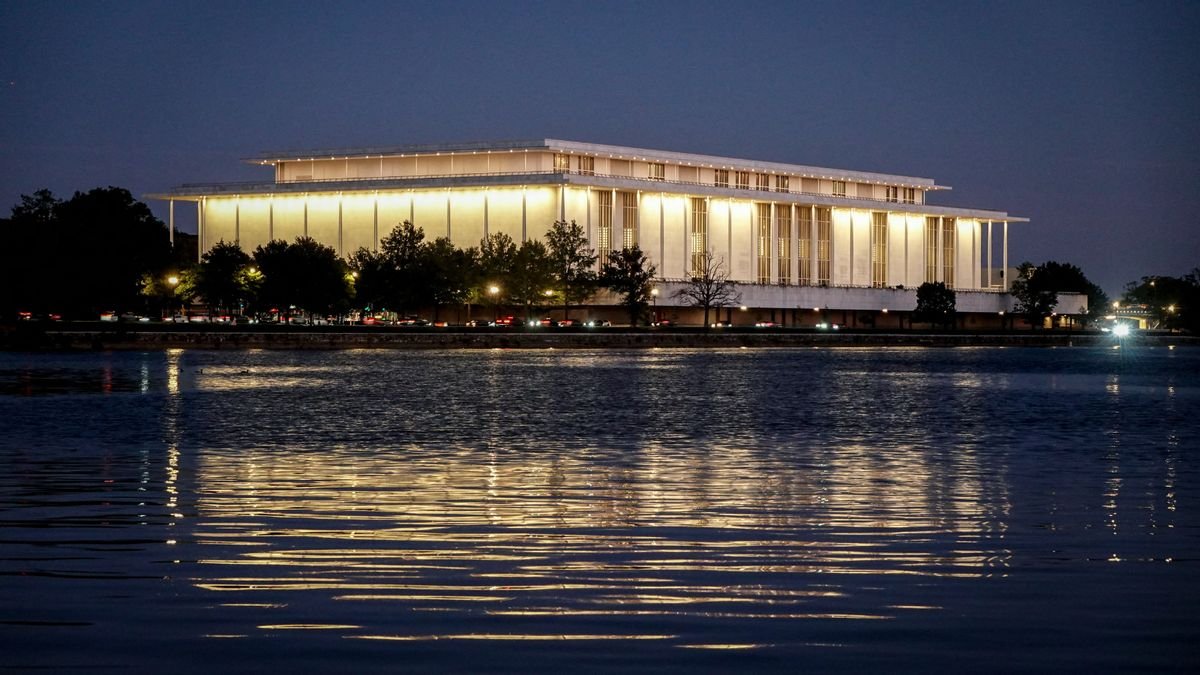
“President Trump Adds His Own Name to the Kennedy Center.” NPR, 18 Dec. 2025, https://www.npr.org/2025/12/18/nx-s1-5648519/kennedy-center-name-change-trump. Accessed 18 Sept. 2026.
Semones, Evan. “Kennedy Center Closes Amid Financial Crisis and Trump Name Dispute.” Al Jazeera, 15 Sept. 2026, https://www.aljazeera.com/news/2026/9/15/kennedy-center-closes-amid-financial-crisis-and-trump-name-dispute. Accessed 18 Sept. 2026.
Sloan, Steven, and Ashraf Khalil. “Kennedy Center Board Votes to Close Over Finances and Trump Dispute.” AP News, 15 Sept. 2026, https://apnews.com/article/kennedy-center-closure-board-trump-ruling-1dfbfaac695f6817719477101b971a54. Accessed 18 Sept. 2026.
“The John F. Kennedy Center for the Performing Arts – Our Story.” Www.Kennedy-Center.Org, https://www.kennedy-center.org/our-story/. Accessed 18 Sept. 2026.
Travers, Karen, et al. “Trump Says Kennedy Center Could Be ‘Ripped Down’ If He Doesn’t Get ‘Recognition.’” ABC News, 17 Sept. 2026, https://abcnews.com/Politics/trump-kennedy-center-ripped-recognition/story?id=136513298. Accessed 18 Sept. 2026.
WEISSERT, WILL. “Trump Says He’s Firing Kennedy Center Board of Trustees Members and Naming Himself Chairman.” AP News, 8 Feb. 2025, https://apnews.com/article/trump-kennedy-center-board-chairman-firings-21cd0018c6e9f591d59becea8573d8c0. Accessed 18 Sept. 2026.
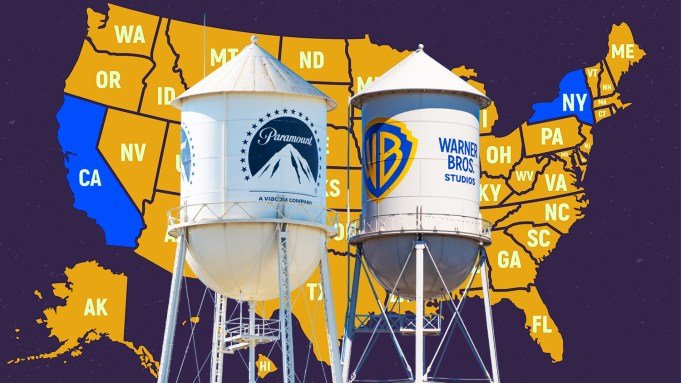
Whatever the true state of settlement talks this weekend among Paramount, a coalition of state Attorneys General and the Writers Guild of America to end the antitrust action over the $111 billion Warner Bros Discovery merger, the people against the deal from the beginning are not going quietly.
“As Trump tries to ban CNN from the White House, it would be a massive mistake to cave on the Paramount merger,” Sen. Elizabeth Warren (D-MA) said Saturday morning as the current WBD-owned CNN and MS Now journalists were denied access to the Executive Mansion. “The last thing we need is another Trump-controlled media conglomerate abusing its power to stomp out competition. This is a dangerous merger.”
Compared to Warren, the A-list-supported Block the Merger is truly angry and feeling betrayed.
“The rumored ‘deal’ to usher the Paramount-Warner Bros. merger forward is an insult to everyone who has stood up against this harmful transaction and to the hundreds of thousands of workers, journalists, and consumers who will be hurt if it goes forward,” the DC-based group told Deadline today of reported behind-closed-doors negotiations underway right now. “Let’s be very clear: an agreement based on unenforceable concessions is a win only for David Ellison. It is an L for everyone else.”
As leaks of talks between the AGs, led by California’s politically ambitious AG Rob Bonta, and the Ellison-run Paramount flooded the media late Friday, the possible L (loss) that BTM are spotlighting could include guardrails around CNN editorial independence, some selloffs and job assurances. The hope down on Melrose is such a deal would render moot the March 2, 2027, trial start date currently on the calendar in federal court — and all the financial and political blast radius that comes with it for the Trump-friendly Ellisons.
To that, with massive job, production and tax-revenue losses on the table, Paramount’s plan B for the last eight weeks has been to pressure Bonta from all sides to make a deal. Two days of court-ordered settlement talks have already been set for mid-October, but that’s procedural in the judicial system and widely expected to go nowhere fast.
Also, mid-October doesn’t quite line up with Ellison’s balance sheet.
Looking at an October 1 date in which a $7 million-a-day ticking fee to WBD shareholders begins, as well as a September 24 hearing on a Hail Mary desire for a $1.88 billion bond from the states and the WGA, Ellison’s crew has been leaking more than ever threats to exit California for a red state.
Even as the likes of outgoing California Gov. Gavin Newsom acknowledged privately at the recent Primetime Emmys that the Ellisons were being too heavy-handed, the multi-pronged pressure campaign seems to have paid off. Whereas Bonta once accused Paramount of “blackmail” with its threats and theatrical promises, the reelection-seeking AG now has his lieutenants in the room with Ellison’s execs.
The latest word on the wire is the parties could have an agreement before the official start of Yom Kippur this weekend.
Word is also out there that New York AG Letitia James isn’t as “in step,” according to a source, with Bonta as she was when it came to burying the hatchet with Paramount. There is also the wildcard of the WGA, which joined the AGs’ July 13 suit after filing an anti-merger action of its own.
“This is such bullsh*t,” an industry insider told Deadline this morning of the ParaBros talks. “Bonta should have called their bluff, instead he caved,” she added, noting such tactics are typical of Democratic politicians in the MAGA era.
Block the Merger, with its support from such names as Bryan Cranston, Hannah Einbinder, Bradley Whitford, W. Kamau Bell, Kristen Vangsness, Jane Fonda and Rati Gupta, wasn’t quite as blunt today in its statement, but the vibe was much the same.
“Thousands of industry leaders took a risk when they spoke out publicly about the harm the Paramount-Warner Bros. merger would cause,” said the outfit, which also counts Noah Wyle, Denis Villeneuve, Atsuko Okatsuka, Damon Lindelof and Sofia Coppola among its backers. Claiming that more than 75,000 people have joined them to tell the state AGs to stand strong including national leaders like Warren, the group said, “We know a bad deal when we see one. AG Bonta and his fellow state AGs should reject this deal, stand strong, and fully block the merger with no concessions.”
That mention of Warren may have greater significance this weekend than initially apparent. Like everyone else, Paramount is keenly aware of what the polls are projecting going into November’s midterms. If the midterms actually occur and if the new Congress is actually seated (two big ifs in America right now), a projected Democratic majority in the House and Senate have promised to probe and even break up mega media mergers.
Even with Oracle founder Larry Ellison the primary backer of his son’s ParaBros dreams, the even older Ellison’s net worth, which has been declining of late, may not be able to handle the strain of months and months of such probes. So perhaps it is the first week of November, not October 1, that is the calendar date the younger Ellison is hoping to beat this weekend.
Paramount has been in “no comment” mode for weeks since the Melrose lot got burned on allegations of leaks detailing past preliminary talks with Bonta’s gang.
Bonta’s office did not respond Saturday to Deadline’s request for comment on Warren and Block the Merger’s opposition to the talks.
UPDATED: CNN, Politico and MS NOW are suing Donald Trump and other White House officials after the president banned him from the complex.
In the lawsuit, the news outlets are asking a federal judge to immediately restore their access, which was denied on Saturday, a day after Trump announced he was restricting them from entry to the White House grounds.
“This ban could not be a more direct assault on the First Amendment nor a more blatant violation of our most fundamental constitutional principles.”
The new organizations said in a joint statement, “This morning, we notified the government that we are filing a lawsuit today to protect our First Amendment rights and defend the principle that the government does not decide what the press reports or publishes.
“Without notice or process, the White House revoked our journalists’ credentials because it objected to our reporting. Left unchallenged, this threatens press freedom and the public’s right to independent journalism free from government interference.”
The White House also removed CNN from the White House pool on Monday, the day it was scheduled to be the primary network for their coverage. As a result, there will be no TV pool on a day when Trump is traveling to New York, signaling that other networks declined to serve as replacements because of the president’s targeting of CNN.
The news outlets state in their lawsuit, “The President banned CNN, MS NOW, and Politico, and the individual reporters covering the news for those media organizations, in disregard of the most basic guarantees of the First Amendment and the Due Process Clause. He did so expressly for the improper purpose of retaliating against Plaintiffs for past news coverage because he deemed it ‘negative’ and chilling future reporting about him and his administration’s policies and actions.
“President Trump has said in no uncertain terms that he would prefer only to be covered by news organizations and reporters who praise his administration. But the Constitution does not allow a president or any other government official to deprive the press of their First Amendment rights and liberty and property interests with no notice or process based solely on his dislike of the content of their reporting. The ban is unconstitutional and should be immediately restrained.”
The lawsuit claims violation of the Fifth Amendment’s due process clause and First Amendment retaliation and viewpoint discrimination. The outlets are seeking a temporary restraining order and injunction to prohibit the ban from being enforced and to require that their access be restored, as well as a declaratory ruling.
The outlets are represented from Theodore J. Boutrous Jr., who represented CNN’s Jim Acosta when his credentials were revoked in Trump’s first term, as well as others at Gibson Dunn, including Katie Townsend and Patrick Fuster.
In addition to the impact of the ban on their own news organizations, the outlets argue in the lawsuit that it “inflicts an injury on all news media organizations—who now risk a similar fate if they engage in reporting the President deems insufficiently favorable. And the public at large suffers for however long the unconstitutional ban restricts access to current and complete information about their government. These irreparable harms should not be tolerated for a day longer. The Court should immediately enjoin enforcement of the ban.”
The lawsuit also names White House Communications Director Steven Cheung, Secret Service Director Sean Curran and Chief of Staff Susie Wiles as defendants.
Shortly after the lawsuit was announced, Trump posted on Truth Social, “The White House is not instituting an assault on the Free Press, something which I cherish. It is instituting an assault on the FAKE NEWS, something that has grown like Cancer in our beloved United States of America. It is corrupt, purposeful, pervasive, fully coordinated, and totally out of control. It is a threat to our National Security, and must be stopped, NOW! Thank you for your attention to this matter.”
In 2018, in the case of Acosta, a federal judge ruled that precedent required that the White House give proper notice of a revocation. In the 1977 D.C. Circuit opinion, Sherrill vs. Knight, the judges ruled that “the protection afforded newsgathering under the First Amendment guarantee of freedom of the press requires that this access not be denied arbitrarily or for less than compelling reasons.”
The White House has yet to provide a legal justification for revoking the credentials of the news outlets. On ABC’s This Week on Sunday, host Jon Karl pressed House Majority Leader Steve Scalise on Trump’s ban.
“Do you support him banning these news organizations because he doesn’t like what they are reporting?” Karl asked.
Scalise deflected, pointing to Trump’s accessibility to the media and claimed that Joe Biden removed the press credentials from more than 400 news organizations.
In fact, the Biden White House established new criteria for credentialing, based in part on how often holders had used the hard passes and that they had full time employment and residency in the D.C. area. It was not based on a news organization’s viewpoint, although the changes were made after one correspondent had repeatedly interrupted press briefings.
Karl told Scalise that they “were not banned from the White House.” He then asked Scalise whether Trump’s ban violates the First Amendment, but Scalise again did not answer. Karl moved on to another topic.
In this episode of On the Record, Al Jazeera’s James Bays sits down with United Nations Secretary-General Antonio Guterres, ahead of his final UN General Assembly before stepping down in December 2026. They discuss the situation in the Middle East and its global consequences, whether the UN is still relevant in addressing today’s challenges and why Guterres believes the UN Security Council must be reformed.
When Donald Trump travels to New York on Monday, there will be no primary TV pool, after major networks declined to replace CNN in the regular rotation after it was banned from White House and other coverage of the president.
CNN was scheduled to serve as the pool network, but the White House released a schedule late Sunday showing that was no longer the case. On Friday, Trump announced a ban on CNN, Politico and MS NOW from White House access because of their negative coverage of him.
The five major networks in the pool — CNN, Fox News, ABC, NBC and CBS — indicated that there would be no such TV coverage as long as the restrictions remain in place.
“This is to advise that, effective today, the TV pool will not be covering events designated as pool coverage of the president,” read a message from Fox News Washington bureau chief Bryan Boughton, who is currently chairing the pool. “This follows the White House’s position preventing CNN from fulfilling its assigned pool duties. There will be no replacement pool put in place.”
He added, “All other pool coverage will continue as normal, including Congress, VIPs, and selected events in Washington and around this country. We will provide further updates as this situation develops.”
The network boycott of the pool is taking place during an eventful week: Trump is addressing the United Nations General Assembly on Tuesday. Later in the week, he will host Chinese President Xi Jinping in Washington, including for a state dinner.
In a statement, the five networks in the TV pool stated, “The public has a vital interest in receiving accurate, independent information about its government. No administration should restrict a news organization because it objects to its reporting.”
The network pool distributes video and audio to other outlets, a system designed to rotate responsibilities and costs while gaining access where space is limited.
Earlier today, CNN, Politico and MS NOW announced that they were filing a lawsuit against Trump and other members of the administration, claiming First Amendment retaliation and violation of due process. The lawsuit seeks a restoration of journalists’ access and credentials.
Print, photo and radio pool coverage is scheduled to continue, as well as secondary TV poolers.
Whatever the true state of settlement talks this weekend among Paramount, a coalition of state Attorneys General and the Writers Guild of America to end the antitrust action over the $111 billion Warner Bros Discovery merger, the people against the deal from the beginning are not going quietly.
“As Trump tries to ban CNN from the White House, it would be a massive mistake to cave on the Paramount merger,” Sen. Elizabeth Warren (D-MA) said Saturday morning as the current WBD-owned CNN and MS Now journalists were denied access to the Executive Mansion. “The last thing we need is another Trump-controlled media conglomerate abusing its power to stomp out competition. This is a dangerous merger.”
Compared to Warren, the A-list-supported Block the Merger is truly angry and feeling betrayed.
“The rumored ‘deal’ to usher the Paramount-Warner Bros. merger forward is an insult to everyone who has stood up against this harmful transaction and to the hundreds of thousands of workers, journalists, and consumers who will be hurt if it goes forward,” the DC-based group told Deadline today of reported behind-closed-doors negotiations underway right now. “Let’s be very clear: an agreement based on unenforceable concessions is a win only for David Ellison. It is an L for everyone else.”
As leaks of talks between the AGs, led by California’s politically ambitious AG Rob Bonta, and the Ellison-run Paramount flooded the media late Friday, the possible L (loss) that BTM are spotlighting could include guardrails around CNN editorial independence, some selloffs and job assurances. The hope down on Melrose is such a deal would render moot the March 2, 2027, trial start date currently on the calendar in federal court — and all the financial and political blast radius that comes with it for the Trump-friendly Ellisons.
To that, with massive job, production and tax-revenue losses on the table, Paramount’s plan B for the last eight weeks has been to pressure Bonta from all sides to make a deal. Two days of court-ordered settlement talks have already been set for mid-October, but that’s procedural in the judicial system and widely expected to go nowhere fast.
Also, mid-October doesn’t quite line up with Ellison’s balance sheet.
Looking at an October 1 date in which a $7 million-a-day ticking fee to WBD shareholders begins, as well as a September 24 hearing on a Hail Mary desire for a $1.88 billion bond from the states and the WGA, Ellison’s crew has been leaking more than ever threats to exit California for a red state.
Even as the likes of outgoing California Gov. Gavin Newsom acknowledged privately at the recent Primetime Emmys that the Ellisons were being too heavy-handed, the multi-pronged pressure campaign seems to have paid off. Whereas Bonta once accused Paramount of “blackmail” with its threats and theatrical promises, the reelection-seeking AG now has his lieutenants in the room with Ellison’s execs.
The latest word on the wire is the parties could have an agreement before the official start of Yom Kippur this weekend.
Word is also out there that New York AG Letitia James isn’t as “in step,” according to a source, with Bonta as she was when it came to burying the hatchet with Paramount. There is also the wildcard of the WGA, which joined the AGs’ July 13 suit after filing an anti-merger action of its own.
“This is such bullsh*t,” an industry insider told Deadline this morning of the ParaBros talks. “Bonta should have called their bluff, instead he caved,” she added, noting such tactics are typical of Democratic politicians in the MAGA era.
Block the Merger, with its support from such names as Bryan Cranston, Hannah Einbinder, Bradley Whitford, W. Kamau Bell, Kristen Vangsness, Jane Fonda and Rati Gupta, wasn’t quite as blunt today in its statement, but the vibe was much the same.
“Thousands of industry leaders took a risk when they spoke out publicly about the harm the Paramount-Warner Bros. merger would cause,” said the outfit, which also counts Noah Wyle, Denis Villeneuve, Atsuko Okatsuka, Damon Lindelof and Sofia Coppola among its backers. Claiming that more than 75,000 people have joined them to tell the state AGs to stand strong including national leaders like Warren, the group said, “We know a bad deal when we see one. AG Bonta and his fellow state AGs should reject this deal, stand strong, and fully block the merger with no concessions.”
That mention of Warren may have greater significance this weekend than initially apparent. Like everyone else, Paramount is keenly aware of what the polls are projecting going into November’s midterms. If the midterms actually occur and if the new Congress is actually seated (two big ifs in America right now), a projected Democratic majority in the House and Senate have promised to probe and even break up mega media mergers.
Even with Oracle founder Larry Ellison the primary backer of his son’s ParaBros dreams, the even older Ellison’s net worth, which has been declining of late, may not be able to handle the strain of months and months of such probes. So perhaps it is the first week of November, not October 1, that is the calendar date the younger Ellison is hoping to beat this weekend.
Paramount has been in “no comment” mode for weeks since the Melrose lot got burned on allegations of leaks detailing past preliminary talks with Bonta’s gang.
Bonta’s office did not respond Saturday to Deadline’s request for comment on Warren and Block the Merger’s opposition to the talks.