Category: News

  • A bird’s-eye view as Donald Trump arrives for the World Cup final

    A bird’s-eye view as Donald Trump arrives for the World Cup final

    NewsFeed

    Donald Trump arrived at the 2026 FIFA World Cup final between Spain and Argentina aboard Marine One. Video footage posted by his daughter Ivanka showed the helicopter flying over the New York New Jersey Stadium shortly ahead of kickoff giving the President a bird’s-eye view.

  • What happened to the Jewish left?

    Marc Lamont Hill speaks to Molly Crabapple about the Jewish Bund, anti-Zionism and the Jewish left today.

    Founded in 1897 in the Russian Empire, the General Jewish Labour Bund was a revolutionary socialist movement that organised Jewish workers and championed Yiddish culture and democracy while standing against Zionism.

    But what remains of its memory? And is its vision finding new life in the Jewish left today?

    This week on UpFront, Marc Lamont Hill speaks to Emmy Award-winning artist and author Molly Crabapple.

  • Spain fans bring the party to New York before World Cup final

    Spain fans bring the party to New York before World Cup final

    NewsFeed

    ‘King [Messi] abdicates, but the prince [Lamine Yamal] takes the throne!’
    Spain fans filled the streets of New York with chants and songs ahead of the World Cup final against defending champions Argentina. Spain’s supporters are confident a new generation can bring the trophy home.

  • Messi reflects on pressure and competition ahead of World Cup final

    Messi reflects on pressure and competition ahead of World Cup final

    NewsFeed

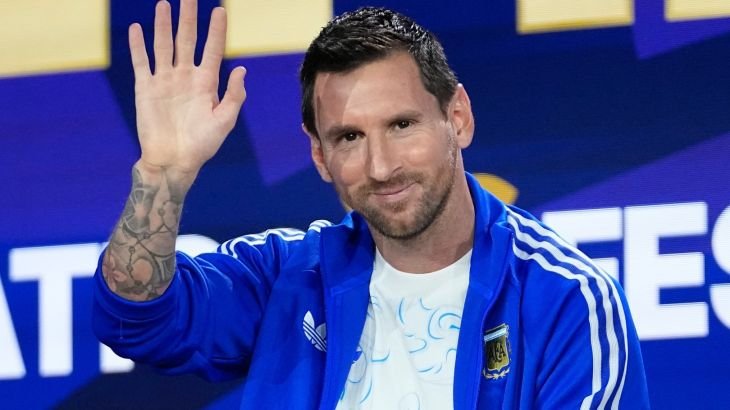
    Ahead of the World Cup final, Lionel Messi says growing up playing football taught him to enjoy the game rather than fear the pressure, reflecting on the mindset that has guided his career.

  • Canadian wildfire smoke shrouds US, potential risk for World Cup final

    Canadian wildfire smoke shrouds US, potential risk for World Cup final

    NewsFeed

    Plumes of smoke from wildfires in Canada are pouring into major US cities across the Midwest, Northeast and mid-Atlantic. Polluted air is affecting more than 100 million people and is creating concern ahead of Sunday’s World Cup final.

  • Elizabeth Warren And Other Democratic Lawmakers Warn Of Antitrust Issues With Fox-Roku Merger

    Elizabeth Warren And Other Democratic Lawmakers Warn Of Antitrust Issues With Fox-Roku Merger

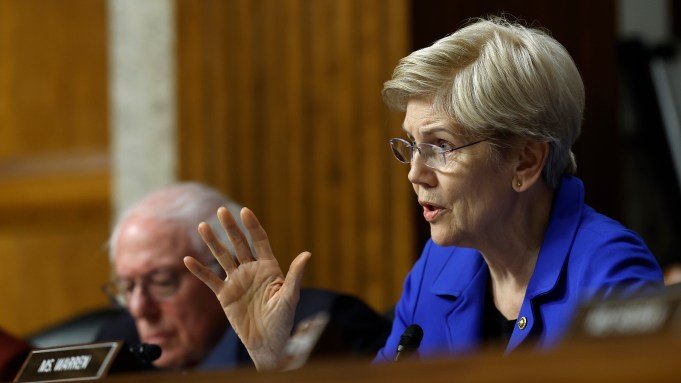
    Sen. Elizabeth Warren (D-MA) and other congressional Democrats are warning of antitrust implications in Fox Corp.‘s proposed $22 billion acquisition of Roku.

    In the letter to Associate Attorney General Stanley Woodward, the Democrats wrote, “Eliminating a significant competitor would reduce consumer choice for free streaming services and could give the combined entity market power to start charging for a previously free service.”

    They also sought Woodward’s commitment that the DOJ review of the transaction “will be conducted free from political interference and in an impartial fashion.”

    In the letter (read it here), they wrote that a “merger between Fox and Roku may also give the combined Fox-Roku entity the incentive to preference and steer viewers to Fox content for the 100 million Roku households, disadvantaging Fox competitors and limiting consumer choice.”

    RELATED: Trump Celebrity Supporters: Famous Folks In Favor Of The 47th President

    Fox Corp. announced in June a $22 billion deal to acquire Roku, giving it a boost in the free, ad-supported streaming space. It acquired Tubi six years ago. In a statement announcing the deal, Fox and Roku said both companies were “committed to continuing to operate Roku as an open, partner-friendly platform and to the continued ubiquitous distribution of Fox content.”

    A Fox spokesperson declined comment. A DOJ spokesperson could not immediately be reached.

    The letter also was signed by Rep. Jerrold Nadler (D-NY), Rep. Maxwell Frost (D-FL); Rep. Chuy Garcia (D-IL); Rep. Pramila Jayapal (D-WA); Rep. Summer Lee (D-PA); and Rep. Pat Ryan (D-NY).

    The letter also referred to a Wall Street Journal report that Woodward has told antitrust staff attorneys that he wants to settle cases instead of taking proposed mergers to trial. Democrats also pointed to the DOJ decision to close its case examining Paramount’s proposed merger with Warner Bros. Discovery.

    “We are concerned that settlements invite opportunities for more backroom deals like the ones we have seen during this administration, and will weaken enforcers’ ability to go after antitrust violations in order to lower prices for American families,” they wrote.

  • Judge Says She’ll Rule By Next Week On Emergency Motion In State AGs’ Challenge To Paramount-Warner Bros Discovery Merger

    Judge Says She’ll Rule By Next Week On Emergency Motion In State AGs’ Challenge To Paramount-Warner Bros Discovery Merger

    The judge overseeing the state attorneys general challenge to the Paramount-Warner Bros Discovery merger did not issue a ruling Friday on an emergency motion to pause the transaction, but said she would do so by July 22.

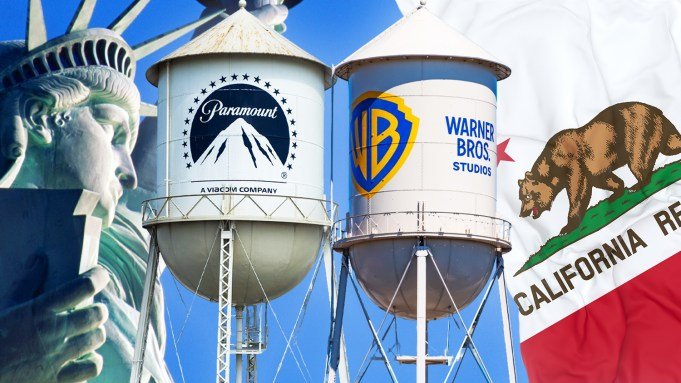
    U.S. District Judge Araceli Martínez-Olguín heard arguments from both sides in an 80-minute hearing in Oakland. The states are seeking a temporary restraining order that would bar the companies from closing the deal for up to 28 days. That would be a prelude to a further ruling on a preliminary injunction, which would perhaps pause the transaction indefinitely, or until the legal process plays out.

    Jeffrey Kessler, representing Paramount, told the judge that the transaction will not close by July 22, which is Wednesday. That is around the time that the European Union is expected to issue its decision on the $110 billion transaction.

    Much of the hearing was devoted to argument on how narrowly the market for theatrical and cable distribution should be defined, as the states claimed that they had shown that the transaction on its face is illegal.

    But timing is also top of mind in the litigation. Kessler also told the judge that they were “prepared to stipulate we won’t close for 28 days,” but Paramount also wants what is essentially a mini trial that would ensure that there would be a ruling on the preliminary injunction before September 30. As part of its agreement with WBD, Paramount agreed to pay a $7 million per day ticking fee if the transaction does not close by then. The states oppose that scheduling plan.

    California attorney general Rob Bonta and 11 other states filed suit to block the merger on Monday. They claim that the transaction is “presumptively unlawful,” likely to substantially lessen competition in the markets for wide release theatrical distribution, anticipated top grossing film releasing, and basic cable channel licensing.

    The AGs claim that the merger will lead to “higher prices and degraded quality,” as a combined Paramount and Warner Bros will be able to extract a greater portion of box office revenue from exhibitors.

    They also argued that the transaction was presumptively illegal by pointing to market shares. Paramount-WB represent about 27% of the box office, per the state attorneys general, and will control more than 30% of big-budget theatricals for wide release. When it comes to cable, the combined company would control more than a quarter of all basic cable channels by revenue, per the lawsuit. The transaction will not only put two legacy film studios under the same corporate owner, but Paramount will have amassed a collection of basic cable outlets, ranging from MTV and Nickelodeon to TNT and Cartoon Network.

    Kessler called the state AGs’ market figures misleading. He argued that they don’t account for the impact of distributors like Amazon MGM or for unexpected successes like Obsession, “made for a million dollars that comes out of nowhere and earns over $450 million I think so far this year.”

    He also pointed to F1, contending that the state AGs did not account for the “dramatic theatrical success” of that movie even though it came from Apple, not one of the five major legacy studios. But the attorney for the state AGs, James Weingarten, pointed out that F1 was distributed by Warner Bros.

    Kessler accused the states of dismissing the impact of streaming, arguing that the growing market “compels the increase in production for theatrical. It compels it because it is the only way streaming can succeed.”

    Paramount has said that under the merger, it will boost theatrical output to 30 films per year. Kessler said that the company is making the commitment “because it has to.”

    As for cable, Kessler said that the collection of channels from the merged company would be “complementary, and there is no increase in bargaining power.”

    Cable distributors take both packages of channels from Paramount and Warner Bros Discovery, and “if they’re combined, they’re going to take both packages. There’s no change in the competitive dynamic.”

    Weingarten told the judge that the market definitions in the lawsuit do reflect the way that business is currently practiced, even if streaming has gained a foothold.

    “It’s no good for a theater owner with 38 or 45 or a hundred theaters to say, ‘But Netflix,’ or “But Amazon.’ They can’t stop showing a blockbuster or an anticipated blockbuster and say, ‘We’re just going to put Amazon or Netflix up on the screen instead. That’s not a substitution for them.”

    While there may be breakout hits, he said, there is a market for anticipated top-grossing movies. “The point is there are some movies that get the budget, the marketing, the name brand. We all know, whether we call them blockbuster, tentpole or whatever, these are the lifeblood of the industry.”

    He also challenged the notion that Paramount won’t gain bargaining leverage in basic cable.

    “It is intuitive and clear that if one company owns 50 of the 100 channels, they will have excessive bargaining leverage, and there will be anti-competitive effects in their negotiations with the cable companies and the satellite distributors,” he said.


  • Judge Denies Preliminary Injunction In Consumer Lawsuit Seeking To Block Paramount-Warner Bros. Discovery Merger

    Judge Denies Preliminary Injunction In Consumer Lawsuit Seeking To Block Paramount-Warner Bros. Discovery Merger

    A federal judge has denied a group of consumers a preliminary injunction to at least temporarily block Paramount‘s proposed merger with Warner Bros. Discovery.

    The judge, Araceli Martínez-Olguín, said that she is taking Paramount’s motion to dismiss the lawsuit under advisement.

    The lawsuit was filed in April, one of the early legal challenges to the merger.

    This week, attorneys general from California and 11 other states filed their own antitrust lawsuit, and Martínez-Olguín will take up their motion for a temporary restraining order at hearing on Friday.

    In her remarks, the judge said that the consumers had failed to meet the threshold to order an immediate halt to the $110 merger.

    “A preliminary injunction is an extraordinary remedy that may only be awarded upon a clear showing the plaintiff is entitled to such relief,” the judge said at the hearing. “Here, plaintiffs fail to meet that standard. Plaintiffs have not offered any evidence and this have not made a clear showing of a likelihood of success, nor to they make a clear showing of irreparable harm.”

    In April, five pay-TV and streaming services subscribers filed a lawsuit challenging the merger, claiming, among other things, that the acquisition would increase prices and diminish the diversity of viewpoints. The lawsuit also seeks the divestiture of Skydance’s acquisition of Paramount Global last year.

    In its filing seeking dismissal of the case, Paramount’s legal team argued that the plaintiffs — Pamela Faust, Len Marazzo, Lisa McCarthy, Deborah Rubinsohn and Gary Talewsky — do not have standing. They also argued that they failed to state a plausible claim of competitive harm from the merger.

    Joseph Alioto, the lead attorney for the plaintiffs, argued that all that they had to show was “a threat to injury.” He cited the price hike for Paramount+ subscriptions after Skydance acquired the studio last year.

    He argued that with the debt load that Paramount will take on with the acquisition, “there is no way they can get that unless, among other things, they raise the price.”

    Paramount’s lead attorney, Jeffrey Kessler, said that “price increase cannot be attributed to merger seeking to enjoin because that merger has not been completed yet.” He told the judge that there was “no injury identified for these plaintiffs” in the lawsuit.

    The judge also rejected plaintiffs’ request for expedited discovery. Alioto said that private plaintiffs “don’t get special privileges,” or access to merger materials, unlike the state of California or other government entities.