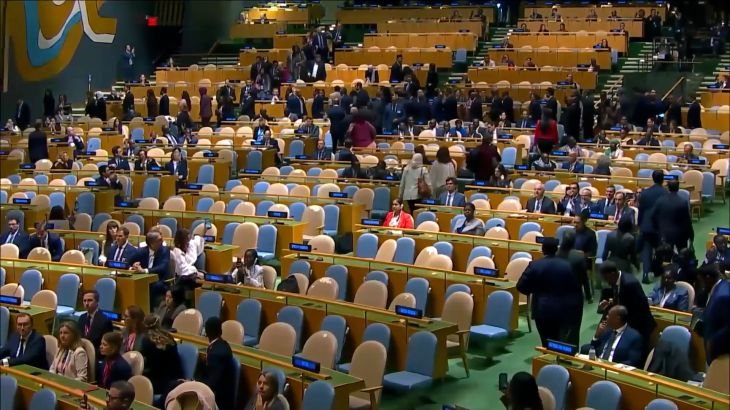
Israeli Prime Minister Benjamin Netanyahu’s speech at the UNGA was filled with bold claims about Israel’s policies. But as delegates walked out and with Israeli elections weeks away, was his real audience at the UN, or back home?
Dozens of countries’ delegations walked out of or were absent for Israeli Prime Minister Benjamin Netanyahu’s UN General Assembly speech in protest over Israel’s war in Gaza. Here’s which countries’ seats were visibly empty — and which delegations remained.
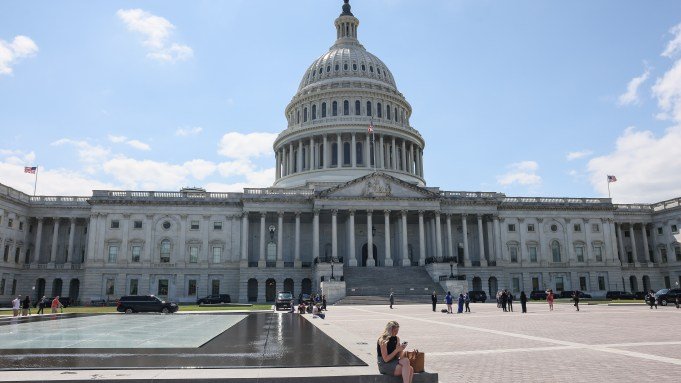
UPDATED: House and Senate lawmakers are again turning their attention to major anti-piracy legislation, introducing a bill in which content owners can seek a court order to require that internet providers prevent access to foreign digital piracy sites.
The , or DEFEND IP Act, was introduced by lawmakers of both parties in Congress on Thursday. Key sponsors include Rep. Zoe Lofgren (D-CA) and Rep. Ben Cline (R-VA) in the House, and Sen. Thom Tillis (R-NC), Sen. Chris Coons (D-DE), Sen. Marsha Blackburn (R-TN) and Sen. Adam Schiff in the Senate.
The legislation would leave it to a judge to decide whether a a site should be designated as one dedicated to foreign digital piracy, with such an order subject to renewal after 360 days. The bill defines such as site as one that has “no commercially significant purpose or use other than committing a violation of copyright.” The bill also applies to transmission of live events from foreign locations that violate copyright.
After that designation, content owners could then seek a further order to prevent, or block, access to the site. Per the legislation, the order would “direct service providers to take reasonable measures to prevent users in the United States from using the system or network of those service providers to access the foreign digital piracy site.” The bill sets out a series of criteria, including that such measures would not interfere with access to legal content at other online locations, and that it would be “technically feasible and effective.” Those seeking such orders would have to show that they are “likely to suffer irreparable harm” from the piracy.
It’s been nearly 15 years since the entertainment industry sought passage of a previous effort to curb access to online piracy, with the Stop Online Piracy Act, or SOPA. That generated a backlash, with Google and other tech giants opposed, and Wikipedia and others staging a daylong “blackout.” The bill was sidelined, and left lawmakers shellshocked at the scale of the outcry.
For years since then, with many on Capitol Hill skittish, the entertainment industry instead set its sites on voluntary commitments from those in the internet ecosystem.
Circumstances have changed. Since then, tech has seen its own backlash against it, albeit little significant legislation has passed Congress. Supporters of site-blocking measures, meanwhile, have pointed to its use in almost 60 countries.
Backers of the DEFEND IP Act noted that the bill differs from past legislation. It does not mandate specific technical measures for preventing access, leaving it up to internet providers to take “reasonable measures.” The bill also contains legal immunity for ISPs, and applies to large-scale foreign sites.
Still, after the DEFEND IP Act was introduced, the Common Sense Copyright Coalition, which AT&T, Charter, Comcast, Cox and Verizon, expressed its opposition.
A spokesperson for the group said the legislation “would impose substantial new responsibilities on broadband providers without adequately addressing the legal and operational risks they create, including threats to lawful content online. This is particularly troubling given the Supreme Court’s unanimous decision in Cox v Sony this year that rejected holding an ISP broadly liable for copyright infringement occurring over its network.”
In Cox vs. Sony, the Supreme Court ruled in March that an ISPs was not liable “for merely providing a service to the general public with knowledge that it will be used by some to infringe copyrights.”
Among other things, the argued that piracy sites can still put up “mirror sites” and users can turn to VPNs. They also expressed concerns over the live event provision, arguing that it is based on “predicted infringement.”
Yet after years of calls for tech and ISPs to take a greater responsibility to curb infringement, the legislation would be a new tool for studios, producers and other content creators to curb piracy.
In a statement, Lofgren said that foreign piracy operations “exploit a loophole in our law, hurting workers and businesses in California and across the country while putting consumers at risk.” She called the bill a “smart, targeted approach to crack down on foreign piracy while protecting Americans’ free speech and access to a free and open internet.”
Tillis said, “Foreign piracy continues to threaten American creators, putting well-paying jobs at risk, while exposing consumers to malware, identity theft, and other serious online harms.” He called the bill “a targeted, commonsense tool to shut down these foreign, criminal operations at the source while protecting lawful speech and due process.”
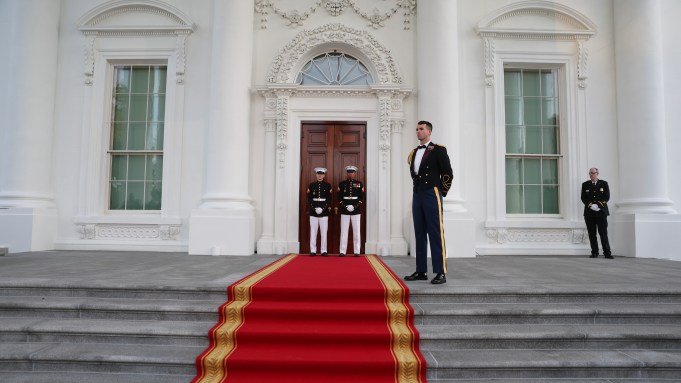
UPDATED with White House response: Shortly after CNN said that it was denied access to cover the arrivals at the White House State Dinner for Chinese President Xi Jinping tonight, MS NOW announced that it, too, had been barred.
The news came on the same day a federal judge ordered the White House to restore hard passes to the networks’ journalists and those of and Politico.
The coverage at the North Portico was scheduled to be open to pre-credentialed media, a wider scope of reporters and photographers than the White House press pool.
CNN White House correspondent Kristen Holmes said that they were told that their credential to cover the event was only for a camera and audio, not an editorial presence. She had requested that she and her producer attend.
“Again, no editorial presence, just a camera and audio, which certainly seems like a reaction to President Trump saying that he wanted the CNN coverage of the event,” Holmes said.
The White House said on its rapid response account that it was a “pre-credentialed event,” and “contrary to what the fake news wants you the believe, they don’t just get to have free rein into every part of the White House, every event, and every press call.”
The exclusion came after U.S. District Judge Timothy Kelly ordered that credentials for CNN, Politico and MS NOW be restored, ending Trump’s five-day ban of the outlets from the White House grounds.
The outlets returned to the White House around noon. Then, hours later, Trump complained that CNN and MS NOW were not covering the state visit.
Trump claimed that the networks “refused to cover one of the Biggest and Most Beautiful Events to take place in many years, the arrival at the White House of the Highly Respected President of China, Xi Jinping, and his beautiful wife, Madam Peng. The event was magnificent — Actually made for Television but, because they’re Fake News, and because they knew how good it would be, they didn’t want credit to be given to ‘TRUMP,’ they refused to be there. That’s why they have such poor Ratings. Tonight’s State Dinner at the White House, for President Xi, will be spectacular!”
In fact, network correspondents said that they were not able to get access to the White House on Thursday morning. And after the White House pulled CNN from the TV pool on Monday, the other four networks in the pool declined to replace them in the rotation. That has meant a dearth of video images from the White House, as TV pool coverage has yet to resume.
The latest exclusion does not appear to be addressed in Kelly’s order. Rather, it is an issue about access to a particular event on White House grounds. The press office sends out notice to reporters of events that are open to “pre-credentialed media,” accommodating a much wider scope of credentialed reporters than those restricted to the White House pool. Those who want to attend RSVP, and the White House staff then inform reporters and photographers if they have clearance to go.
Last year, after Trump barred the Associated Press from pool access to areas like the Oval Office as well as larger “pre-credentialed media” events in locations like the East Room, the news organization sued. In an initial ruling on a preliminary injunction, a federal judge sided with the AP, concluding that the White House could not bar outlets from press events based on viewpoint. The D.C. Circuit, though, concluded that the White House could exclude the AP from smaller spaces, like the Oval Office and Cabinet Room, but distinguished those areas from larger White House locations like the East Room, where the district judge’s order remains in effect.
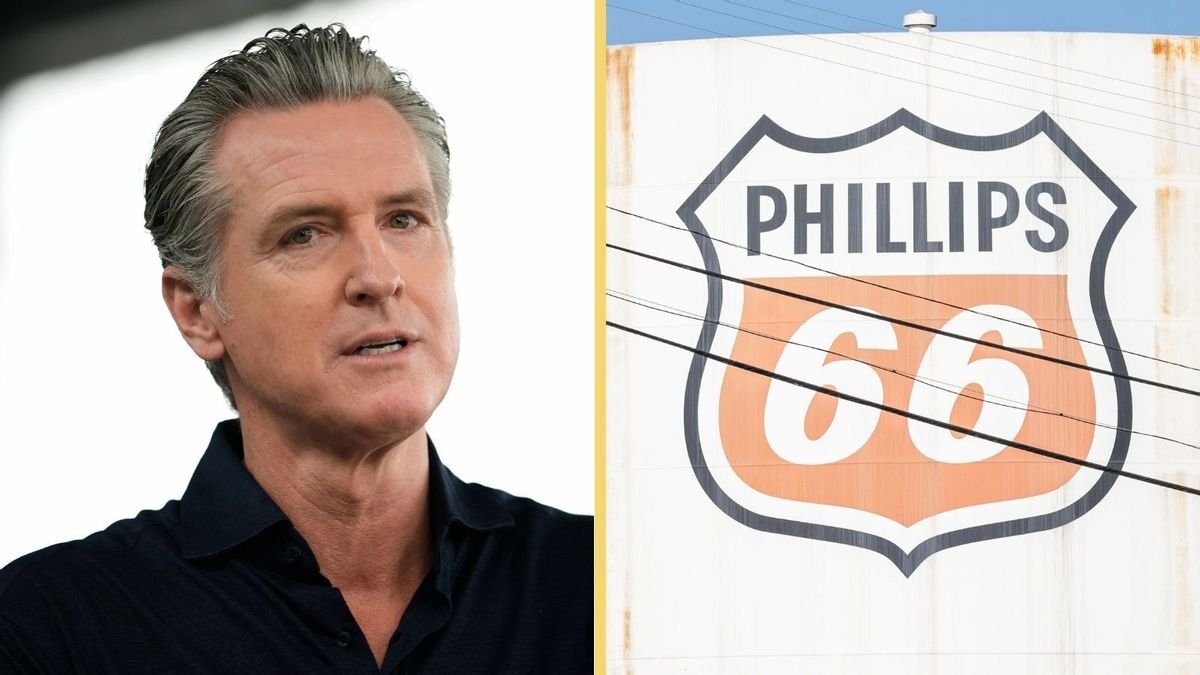
The reason for high U.S. gas prices in 2026 wasn’t the Iran war but instead California Gov. Gavin Newsom forcing four California refineries to close.
Rating:
What’s True
Two California refineries, not four, recently shut down, including Phillips 66’s Los Angeles Refinery in October 2025 and Valero’s Benicia refinery in April 2026. Valero’s leadership cited state regulations as part of the reason the company closed its plant in the Bay Area. Also, California gas prices rose nearly 40 cents per gallon between January and February — prior to the start of the Iran war — with some analysts blaming Newsom’s administration. However …
What’s False
… no evidence suggests Newsom’s actions forced the closure of the refineries. Professionals knowledgable in fuel industry matters have repeatedly cited the Iran war, as well as the resulting closures of Middle East shipping routes, as the primary factors causing higher nationwide gas prices in 2026. Data shows nationwide fuel prices dramatically rose in the weeks immediately following the beginning of the Iran war in late February and early March, just as prices similarly rose in the weeks after Russia — a major oil supplier — invaded Ukraine in late February 2022. Oil companies that closed refineries in California cited reasons including high costs and low earnings for the decisions.
In September 2026, people shared social media posts claiming the reason for high U.S. gas prices wasn’t the Iran war but instead the alleged “forced” closures of “4 oil refineries” due, supposedly, to actions taken by Gov. Gavin Newsom.
For example, on Sept. 17, Timothy Wilcox, who reportedly ran in the 2026 Connecticut gubernatorial race as a Republican, posted (archived) on Facebook, “The price of gas is caused by California forcing the shut down of 4 oil refineries, not Iran war. The blame lies with Newsom.” Others shared the claim on Facebook and X.
Snopes received a handful of reader emails asking if it was true that Newsom’s administration, not the Iran war, was largely to blame for the rise in nationwide gas prices. One person emailed, “I’m hearing Gavin Newsom closed oil refineries in CA which is the reason gas is so expensive rather than trumps war in iran. Why honestly are gas prices so high right now?”
In sum, a deep study of this matter found the rumor was mostly false.
Two California refineries, not four, shut down in the past 12 months, representing a 17% loss in the state’s refining capacity and less than 2% loss in national capacity. Phillips 66’s leadership named high production costs and “very low” earnings as the reasons its Los Angeles refinery closed in Carson and Wilmington in October 2025. A company spokesperson reportedly said one of Newsom’s regulatory bill signings wasn’t a factor in Phillips 66’s decision. Meanwhile, the leadership of Valero cited both state regulations and high maintenance costs as reasons for its April 2026 Benicia plant closure in the Bay Area.
Professionals knowledgable in energy sector matters, for example the GasBuddy petroleum analysis company, the Institute for Energy Research nonprofit organization and other analysts, have cited the Iran war, as well as the resulting closures of Middle East shipping routes, as the primary factor underlying higher U.S. gas prices in 2026.
The U.S. Energy Information Administration website hosts week-to-week historical data for gas and diesel prices, showing nationwide fuel prices dramatically rising in the weeks immediately following the beginning of the war in late February and early March, just as prices similarly rose in the weeks after Russia — a major oil supplier — invaded Ukraine in late February 2022.
The Institute for Energy Research also published an article specifically about California state gas prices. Citing what it labeled “Newsom’s radical environmental agenda,” the organization asserted that refinery closures stemmed from Newsom’s “detrimental” regulatory policies, the state’s increasing import needs, California reportedly having the highest state-level gas tax of all states, and other factors. The article also pointed out, accurately, that California’s average gas price rose by nearly 40 cents in the first two months of the year, prior to the start of the Iran war. (Regarding the claim central to this fact-check about nationwide gas prices, this data about California only pertains to one of the 50 U.S. states and none of the territories.)
Via Messenger, we asked Timothy Wilcox for evidence to support his claim. We also emailed representatives for GasBuddy, Newsom, the Oil Price Information Service, Phillips 66 and Valero. A Newsom spokesperson referred us to a spokesperson for the California Energy Commission, who shared someresources specifically about California’s own gas prices, as well as a comparison showing the state’s gas prices rising and falling along trend lines similar to national prices, although California prices were higher than other states. Correspondence from a GasBuddy analyst appears below, as does past investor earnings call information from Phillips 66 and Valero. We will update this article if we receive further details.
Correspondence with Wilcox
Regarding Wilcox’s Sept. 17 post, he responded to our request for evidence with a set of bullet points resembling a copied-and-pasted answer from an AI tool (for example Google’s “AI Overview”). The message said four California refineries — including the Bay Area’s Marathon facility in Martinez, the Phillips 66 location in Rodeo and Valero plant in Benicia, and the Phillips 66 Los Angeles refinery in Carson and Wilmington — were closing or shutting down crude oil operations to concentrate on renewable fuel production.
However, Wilcox’s answer to Snopes contained data conflicting with his own claim. It called global crude oil prices and the Iran war a “major driver” of current U.S. price increases. It also provided information specifically about California’s own state gas prices, for example saying, “It’s too simplistic to say the refinery closures are the main reason California gas prices are rising.”
In later messages, Wilcox answered “no” to our question whether he used an AI tool to produce this information. We presented him with the above points, upon which he clarified he had used ChatGPT.
GasBuddy analysis
Patrick De Haan, who works for the petroleum analysis company GasBuddy, told us that only two California refineries — not four, as claimed — had ceased crude oil processing within the last year. Phillips 66 ceased operations at the Los Angeles refinery in October 2025, followed by Valero’s April 2026 shutdown of its Benicia refinery. (Newsom’s office issued a statement in January 2026 pledging his administration’s coordination with Valero to help maintain a stable fuel supply.)
De Haan contended that Phillips 66 and Valero executives made the decisions to end crude oil processing and that it wasn’t “some political decision” forcing the shutdown of operations:
Some of the reason refineries chose to close may have been due to growing number of requirements for operating a refinery in California, but that was a business decision by those refineries, not a policy change that forced them.
By and large the biggest impacts are the Strait of Hormuz after the U.S. attacked Iran [and] Ukraine’s attacks on Russian oil refineries (heavily impacting record global diesel prices). California’s sales tax on diesel, for example, is collecting nearly 40c/gal more than this time a year ago, so that would also be a factor.
Claims addressed in past investor calls
Investor earnings calls from 2025 and 2026 provided more information about this subject, with executive leadership for Phillips 66 and Valero detailing reasons for the two site closures in Los Angeles and Benicia, as well as appearing to attribute rising fuel costs to the U.S. going to war with Iran.
During an April 24, 2025, earnings call, Lane Riggs, Valero’s CEO and president, fielded a question about the reason for the Benicia refinery closure. In his answer (20:33), Riggs cited California as “the most stringent and difficult of anywhere else in North America” in terms of the state’s regulatory and enforcement environment. He mentioned the fact that several refineries closed following the COVID-19 pandemic and also that the Benicia site “costs considerably more to maintain” versus another one of the company’s California plants.
Richard Harbison, Phillips 66’s executive vice president of refining, fielded a similar question during a Feb. 4, 2026, earnings call, regarding why the company chose to close the Los Angeles Refinery. Harbison cited the reason for the shutdown, saying, “One, the cost to produce was very high, and the materiality of the earnings was very low, if not negative, in a number of cases.”
Phillips 66 announced the Los Angeles Refinery closure plans on Oct. 16, 2024, just two days after Newsom signed a bill enacting new regulations reportedly in an effort to strengthen oil companies’ supply and protect consumer costs. According to S&P Global, Phillips 66 spokesperson Al Ortiz said the closure plans had nothing to do with the new law, saying, “This decision is not related to the recent bill signing. We want to continue to be a trusted and deliberate partner with the state.” We emailed Ortiz with questions about the rumor and will update this article if we receive further word.
Regarding remarks about the Iran war, Mark Lashier, board chairman and chief executive officer for Phillips 66, began his comments on the company’s April 29, 2026, earnings call (archived) — the first call since the beginning of the Iran war — saying of fuel prices, “Geopolitical events in the Middle East drove unprecedented commodity price volatility during the quarter.” Seconds later, he added, “Due to the closure of the Strait of Hormuz, a significant amount of global refining and petrochemical capacity is down.” He then spoke highly of his company’s purported “high utilization” in supplying products to customers.
On April 30, Gary Simmons, Valero’s executive vice president and chief operating officer, specifically referenced during an earnings call (video at 15:35) the Iran war and closed straits, for example the Strait of Hormuz, saying that “the conflict in Iran has really created a market with demand significantly outpacing supply” — meaning higher prices for consumers. Three months later, during the July 30 earnings call, Simmons spoke again of the Middle East and said Ukrainian drone attacks on Russian refining capacity were “beginning to have a significant impact on the market,” adding, “And I don’t see those slowing down.”
Other plants closed well before 2026 gas-price spike
As for the other two refinery sites Wilcox mentioned in his Facebook post, including Marathon’s Martinez plant and Phillips 66’s Rodeo location, both appear to have stopped processing crude oil prior to 2026.
According to NBC Bay Area, the Marathon refinery in Martinez stopped crude oil processing in April 2020 due to travel restrictions and a plummeting demand for fuel at the beginning of the COVID-19 pandemic, a period marked by low gas prices. Later that August, Marathon announced plans to end the plant’s crude oil processing and begin renewable fuel production. Also in August 2020, Phillips 66 announced a plan to end crude oil processing at its Rodeo site and instead produce renewable fuel. Phillips 66 reportedly stopped processing crude oil at the facility in February 2024.
For further reading, we previously reported about the time former President Joe Biden falsely claimed the average gas price was over $5 per gallon when he took office in January 2021.
Sources
“AAA Fuel Prices.” U.S. American Automobile Association, https://gasprices.aaa.com/.
“AB-1 Energy: Transportation Fuels: Inventories: Turnaround and Maintenance.(2023-2024).” California Legislative Information, 14 Oct. 2024, https://leginfo.legislature.ca.gov/faces/billNavClient.xhtml?bill_id=202320242AB1.
Bay City News. “East Bay Oil Refinery to Close Temporarily With Low Gasoline Demand.” NBC Bay Area, 19 Apr. 2020, https://www.nbcbayarea.com/news/coronavirus/east-bay-oil-refinery-to-close-temporarily-with-low-gasoline-demand/2275809/.
Clements, Adam. “Pain at the Pump: What’s Causing High Gas Prices across the Tri-State.” WKRC, 16 Sept. 2026, https://local12.com/news/local/pain-at-the-pump-whats-causing-high-gas-prices-across-tri-state-crude-oil-diesel-iran-strait-hormuz-taxes-refineries-gasoline-cincinnati-local-12-wkrc-news.
“FAQ California Gas Prices and the Impacts of the Iran War.” California Energy Commission, California Energy Commission, https://www.energy.ca.gov/programs-and-topics/topics/petroleum-fuels-transition/faq-california-gas-prices-and-impacts-iran.
“Fuel Oil and Diesel Prices Are at Record Highs as Iran Conflict Continues.” Institute for Energy Research, 16 Sept. 2026, https://www.instituteforenergyresearch.org/fossil-fuels/gas-and-oil/fuel-oil-and-diesel-prices-are-at-record-highs-as-iran-conflict-continues/.
“Gas Taxes by State, 2026.” Tax Foundation, 28 Aug. 2026, https://taxfoundation.org/data/all/state/gas-taxes-state/.
Gonzalez, Laura Lopez. “End of Era: Valero Has Closed Benicia Refinery, Plans Total Exit.” The Benicia Bridge News, 16 Apr. 2026, https://www.thebeniciabridge.com/valero/.
“Governor Newsom’s Statement on Valero’s Benicia Refinery Update.” Governor of California, 6 Jan. 2026, https://www.gov.ca.gov/2026/01/06/governor-newsoms-statement-on-valeros-benicia-refinery-update/.
Hussain, Fayaz. “Phillips 66 to Stop Processing Crude at Rodeo Refinery in February.” SAF Investor, 1 Feb. 2024, https://www.safinvestor.com/news/144257/phillips-66-to-stop-processing-crude-at-rodeo-refinery-in-february/.
Lukiv, Jaroslav, and Dearbail Jordan. “Largest Attack on Moscow Sees Ukraine Fire Hundreds of Drones, Mayor Says.” BBC News, 20 Sept. 2026, https://www.bbc.com/news/articles/c34gdjk1ne8yo.
McGurty, Janet. “INFOGRAPHIC: California’s Gasoline Demand Met with Increased Global Supply as Refineries Close.” S&P Global, 25 Nov. 2025, https://www.spglobal.com/energy/en/news-research/latest-news/crude-oil/112525-californias-gasoline-demand-met-with-increased-global-supply-as-refineries-close.
———. “REFINERY NEWS: Phillips 66’s Los Angeles-Area Refinery Closure Not Due to New California Regulations: Company.” S&P Global, 17 Oct. 2024, https://www.spglobal.com/energy/en/news-research/latest-news/refined-products/101724-refinery-news-phillips-66s-los-angeles-area-refinery-closure-not-due-to-new-california-regulations-company.
“Phillips 66 Plans to Transform San Francisco Refinery into World’s Largest Renewable Fuels Plant.” Phillips 66, 12 Aug. 2020, https://investor.phillips66.com/financial-information/news-releases/news-release-details/2020/Phillips-66-Plans-to-Transform-San-Francisco-Refinery-into-Worlds-Largest-Renewable-Fuels-Plant/default.aspx.
“Phillips 66 Provides Notice of Its Plan to Cease Operations at Los Angeles-Area Refinery.” Phillips 66, 16 Oct. 2024, https://investor.phillips66.com/financial-information/news-releases/news-release-details/2024/Phillips-66-provides-notice-of-its-plan-to-cease-operations-at-Los-Angeles-area-refinery/default.aspx.
“Phillips 66 Provides Update on Los Angeles Refinery Operations.” Phillips 66, 1 Oct. 2025, https://investor.phillips66.com/financial-information/news-releases/news-release-details/2025/Phillips-66-provides-update-on-Los-Angeles-Refinery-operations/default.aspx.
Raghunandan, Vaibhav. “February 2026 — Monthly Analysis of Russian Fossil Fuel Exports and Sanctions.” Centre for Research on Energy and Clean Air, 12 Mar. 2026, https://energyandcleanair.org/february-2026-monthly-analysis-of-russian-fossil-fuel-exports-and-sanctions/.
“Refinery Closures Present Risk for Higher Gasoline Prices on the West Coast – U.S. Energy Information Administration (EIA).” U.S. Energy Information Administration, 9 July 2025, https://www.eia.gov/todayinenergy/detail.php?id=65704.
Seba, Erwin. “Marathon Petroleum to Permanently Close Two U.S. Oil Refineries.” Reuters, 1 Aug. 2020, https://www.reuters.com/article/business/marathon-petroleum-to-permanently-close-two-us-oil-refineries-idUSKBN24X3XT/.
Stevens, Alex. “California’s High Gas Prices Are About More Than the Conflict in Iran.” Institute for Energy Research, 6 Mar. 2026, https://www.instituteforenergyresearch.org/international-issues/californias-high-gas-prices-are-about-more-than-the-conflict-in-iran/.
“U.S. Gasoline and Diesel Retail Prices.” U.S. Energy Information Administration, https://www.eia.gov/dnav/pet/pet_pri_gnd_dcus_nus_w.htm.
Valero Energy Corp. – Events & Presentations. https://investorvalero.com/events-and-presentations/.
Venteicher, Wes. “Gavin Newsom Signs Law to Rein in Gas Prices.” Politico, 14 Oct. 2024, https://www.politico.com/news/2024/10/14/gavin-newsom-law-gas-prices-00183615.
“What Drives California’s Gasoline Prices?” California Energy Commission, California Energy Commission, https://www.energy.ca.gov/what-drives-californias-gasoline-prices.
James Talarico, the Texas Democrat looking for an upset in the U.S. Senate race in the state over Ken Paxton, is drawing on an endorsement from Bill Nye, the Science Guy.
The pop culture science figure and TV host appears in a new campaign video for Talarico debuting on Friday, highlighting the candidate’s background as a teacher. It’s part of an effort to launch a coalition, Teachers for Talarico, for the candidate.
Nye says in the video, “Now, I’ve spent my career getting young people excited about science, about being curious, about learning in general, and so do you — you are teachers in Texas. And get this, maybe you know this: James Talarico was a teacher, a middle school teacher, in San Antonio before he was in the Texas legislature. Now, he’s running for Senate, and he needs your support.”
Compared to the 2024 presidential race, the midterms have so far seen relatively few celebrities out on the trail or in videos for candidates. Talarico, though, has posted photos with figures like Willie Nelson and Jimmy Kimmel, who sang his praises when the candidate recently appeared on his late night show, albeit the interview was moved to YouTube out of concern over the FCC’s equal time rule.
Talarico has been leading in polls over Paxton, but Republican super PACs are investing heavily in an effort to shore up support in the state.
Video footage of presidential events at the White House returned to TV screens on Friday as five TV networks resumed their pool coverage.
Major cable networks showed images of an outdoor ceremony featuring Donald Trump and Chinese President Xi Jinping, along with their wives. They later telecast footage from inside the White House of a meeting between Trump and Xi.
Such footage of White House events has been absent for much of the week, after the White House restricted CNN from participating in the TV pool rotation. The other four networks in the pool, including ABC News, Fox News, CBS News and NBC News, suspended their participation in protest of the ban.
A CNN spokesperson said that the network has been allowed back into the pool, but the test will come later in the morning when Trump and Xi go to the National Archives, where the network is assigned to provide coverage as the in-town pooler. Unclear is whether Trump and Xi will view the original Bill of Rights and the First Amendment. CBS News is the primary TV pooler on duty on Friday.
On Thursday, U.S. District Judge Timothy Kelly ordered that the White House restore the press credentials of staffers from CNN, Politico and MS NOW. Trump banned the outlets from accessing any of the White House grounds, citing their negative coverage of the administration.
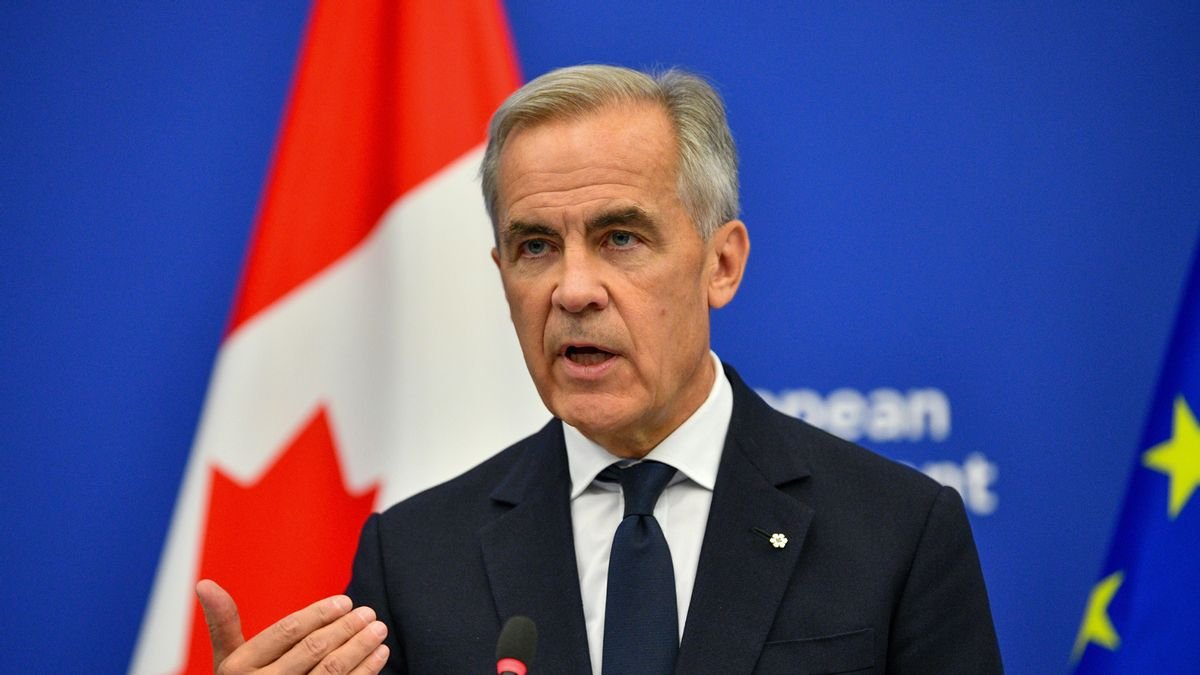
Canadian Prime Minister Mark Carney said in September 2026 that he had prepared for the chance that U.S. President Donald Trump might order military action against Canada.
Rating:
Context
The New York Times paraphrased Carney, who said he had prepared during the past year for the “extreme tail risk” that Trump might order military action against Canada. Carney also noted that he had been in regular contact with Trump. We have reached out to Carney’s office to learn more.
In September 2026, a rumor spread online that Canadian Prime Minister Mark Carney had said Canada was prepared for an invasion from the U.S. One X post (archived) making the claim read:
Mark Carney told The New York Times in an interview on Wednesday that he studied the possibility of Donald Trump launching a military invasion of Canada, arguing that “it would be irresponsible not to” prepare for such a scenario.
While Carney did say that he had prepared over the past year for the “extreme tail risk” that Trump might order a military invasion of Canada, his remarks were partly paraphrased by The New York Times. He also noted that he had been in frequent contact with Trump. Therefore we rate this claim as true with additional context.
Snopes reached out to Carney’s office to determine his exact words and will update this report if we receive a response.
Prime Minister Mark Carney of Canada said that he had prepared over the past year for the “extreme tail risk” that President Trump might order military action against Canada, but disclosed that the two men have spoken “frequently,” even since trade talks collapsed last month, describing a tense, evolving relationship.
The Times asked Carney about whether he took Trump’s repeated threats to annex Canada and make it the 51st U.S. state seriously. Carney, while declining to comment on details, said, “I think you have a responsibility in these roles to look at extreme tail risk.” The Times then paraphrased part of his next statement:
“That’s just risk management. That’s not a base case, but it would be irresponsible not to” prepare.
Carney also said about his communication with Trump:
From my perspective, we have a good relationship in the sense of we can pick up the phone and talk to each other about issues … He’s direct. I’m direct in terms of where positions are. It’s much more efficient that way, and so you know that exists and that will continue to exist.
For further reading, Snopes has covered numerous rumors about Carney.
Sources
“Carney Lays Out His Vision for Breaking Canada’s Reliance on U.S.” The New York Times, 23 Sept. 2026, https://www.nytimes.com/2026/09/23/world/canada/mark-carney-canada-us-trump-tariffs.html. Accessed 25 Sept. 2026.
Sutherland, Callum. “Does Trump Still Plan to Annex Canada?” TIME, 25 June 2025, https://time.com/7297490/trump-plan-to-annex-canada-51st-state-mark-carney/. Accessed 25 Sept. 2026.
New York Mayor Zohran Mamdani posted a video of himself planting an olive tree alongside Palestinian families from Gaza, hours after Israeli Prime Minister Benjamin Netanyahu accused him of anti-Semitism in his speech at the UN General Assembly.