Category: News

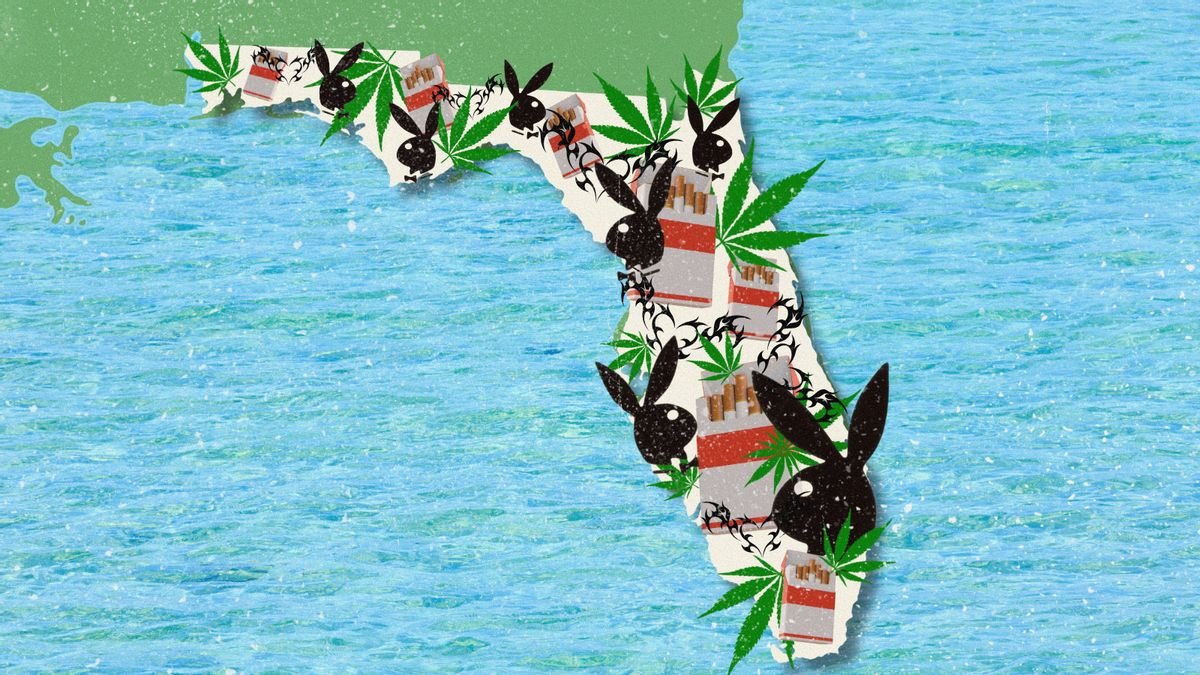
  • Is Florida the first state to bar welfare cash for ‘nonessential’ items?

    Is Florida the first state to bar welfare cash for ‘nonessential’ items?

    Claim:

    In August 2026, Florida became the first U.S. state to bar recipients of welfare cash assistance from spending it on tattoos, vaping products, theme park tickets and other “nonessential” items.
    Rating:

    Mixture

    What’s True

    The claim is correct in that Florida became the first state to implement item-specific restrictions for recipients of its Temporary Assistance for Needy Families program at the point of sale. However …

    What’s False

    … other states across the U.S. also block similar purchases through other means. So while the claim is technically correct, Florida is not the first state to block the purchase of certain kinds of items using government funds through other means.

    In September 2026, a claim circulated online that Florida had become the first U.S. state to bar recipients of temporary cash assistance from spending it on “nonessential” items such as tattoos, tobacco, drugs, pornography and more.

    For example, one popular Facebook post with more than 120,000 likes reads, in part (archived):

    The program, funded through the federal TANF [Temporary Assistance for Needy Families] program and delivered via EBT [electronic benefit transfer] cards, gives eligible families with children under 18 an average of about $250 a month for basic living costs. Under the amended plan, that money can no longer go toward tobacco and nicotine products, vaping devices, drugs or intoxicants, p*rnography, video games, theme park admission, entertainment subscriptions, tattoos and body piercings, spa and tanning services, or psychic and fortune-telling services.

    (Facebook user It’s A Guy Thing)

    In short, the claim is correct in that Florida has become the first state to implement item-specific restrictions for TANF recipients at the point of sale, but other states across the U.S. also block similar purchases through other means. So while the claim is technically correct, Florida is not the first state to block the purchase of certain kinds of items using government funds through other means.

    Some posts, such as the one above, do not specify the date that the change took place — potentially misleading people into believing the change occurred in September. Florida Governor Ron DeSantis actually first announced the move on Aug. 24, 2026 (archived). 

    In a news release published that same day, De Santis said (archived):

    Florida has become the first in the nation to set guardrails on our TANF State Plan to stop these taxpayer-funded benefits from being used to purchase inappropriate, luxury, and non-essential goods and services. Taxpayer-funded assistance should help families put food on the table, keep the lights on, purchase clothing, provide for their children and overcome barriers on the path toward independence. We will continue supporting Floridians who genuinely need assistance, while working to improve accountability and transparency so that these programs operate as intended.

    The full list of new prohibited products was outlined in the 2026-2028 Florida TANF State Plan as follows: 

    • Tobacco, Nicotine, Vaping and other associated products
    • Drugs, intoxicants, and related products
    • Pornography, sexually explicit materials, and adult-oriented goods or services
    • Entertainment goods, subscriptions, and services such as video games, entertainment tickets, theme parks, and subscriptions/memberships
    • Body art, jewelry and body piercings, cosmetic services and luxury items such as tattoos, spa services, and tanning
    • Psychic, fortune-telling and divination goods or services
    • Political contributions
    • Lottery tickets and entries, sports wagers and bets
    • Soda
    • Energy drinks
    • Candy
    • Ultra-processed prepared desserts

    Further down in De Santis’ announcement, it notes that the state already prohibits several kinds of items using welfare assistance:

    Florida already prohibits EBT card use or acceptance for alcohol purchases and transactions at adult entertainment establishments, pari-mutuel wagering facilities, slot machine facilities, commercial bingo establishments and casinos or gaming facilities. Florida’s EBT vendor blocks point-of-sale transactions at those businesses and ATM transactions at prohibited locations. The first-in-the-nation policy expands those controls to additional items and services at eligible retailers.

    Other states, such as Kansas and Virginia, also prohibit the purchase of items such as tattoos and tobacco products using TANF benefits, with violators potentially facing penalties after making such purchases.

    The difference between Florida and other states is that it amended its existing limits for purchases at certain locations (such as liquor stores or casinos) to include the use of temporary cash assistance for specific items at the point of sale (PDF page 69).

    Some items, including drugs such as recreational marijuana, are already criminalized in the state of Florida.
  • Execution of US woman Christa Pike fails after botched lethal injection

    Execution of US woman Christa Pike fails after botched lethal injection

    The high-profile execution of convicted murderer Christa Pike is in disarray after two lethal injections failed to kill her. Witnesses say prison officials administered the drugs but 40 minutes later Pike was still alive.

  • Trump admin will cut student loan eligibility for some degrees. How will they choose?

    Trump admin will cut student loan eligibility for some degrees. How will they choose?

    Claim:

    The administration of U.S. President Donald Trump is cutting access to student loans for degrees that have low earning potential, including social work.

    Rating:

    True

    Context

    The new rule, first announced in April 2026, was finalized in June 2026 and will take effect in 2027. The Department of Education will begin denying loans for degrees that fail its “earnings test” in both 2027 and 2028 in time for the 2028-29 academic year.

    In September 2026. a rumor spread that the administration of U.S. President Donald Trump was planning to cut access to student loans for candidates pursuing degrees in programs with low earning prospects, including social work and English literature. 

    Public interest in the claim was apparently sparked by news reports that came out several weeks earlier in the Los Angeles Times, The New Republic and other media outlets. 

    Social media posts on Facebook and X amplified the claim online. On X, for example, one account said the Department of Education was “cutting off student loans” for degrees that “don’t pay off,” listing a series of examples (archived):

    The list read:

    Programs failing: 
    – Cosmetology 
    – Massage therapy / bodywork 
    – Culinary arts 
    – Medical / dental assisting 
    – Religious Studies 
    – Social work / mental health counseling 
    – Fine and studio arts 
    – Music 
    – Graphic design 
    – English literature 
    – Early childhood education

    In addition, several Snopes readers emailed, seeking to confirm whether the claim is true. It is.

    The so-called ‘earnings accountability’ rule

    In April, the Department of Education proposed a new rule tying the approval of student loans to the earning prospects of the students’ chosen disciplines. 

    On June 29, the department posted on its website a fact sheet detailing a new package of rules, including the one above. The document said (on Page 3) that the department would start calculating a new “earnings test” in 2027 for 2027 and 2028, and that resulting student loan denials would begin in 2028-29 for degrees that fail the earnings test twice.

    The fact sheet said the rule was designed to hold “all institutions, regardless of tax status or credential level, accountable for providing graduates with a financial return on their investment.” 

    Calling it the “Student Tuition and Transparency System (STATS) and Earnings Accountability” rule, the fact sheet said it would create “a new accountability framework that applies a commonsense earnings test across all sectors, institutions, and programs.” 

    A spokesperson for the department told Snopes:

    ED [the Department of Education], in coordination with the IRS [Internal Revenue Service], will run data for the first cohort of graduates in 2027. If a program fails to show at least a modest financial return on investment for its graduates in two out of three consecutive award years, it will lose eligibility to participate in the federal Direct Loan program. 

    Will some students be banned from taking out loans? 

    On Sept. 27, The New Republic posted on X to say, “Trump is banning students majoring in degrees that don’t make enough money from taking out college loans.”

    In its Sept. 28 reply, the Department of Education sought to deny claims that it was “banning” certain degree programs, but confirmed it would start cutting access to student loans for those that result in low earnings for the borrower. The post said “Federal student loans are not a welfare program for failing college programs” (archived):

    On Page 3, the fact sheet explained how the new eligibility rule would work to cut student loans for degrees with low-earning prospects:

    Loss of Federal Direct Loan Program Eligibility

    The final rule requires that programs that fail the earnings test in two out of three consecutive years lose eligibility to participate in the Direct Loan program. At that time, such programs are classified as “low-earning outcome programs”.

    In other words, the Department of Education will run the earnings test in 2027 and 2028. Degrees that fail the test will result in student loan denials for their candidates.

    The notice of proposed rulemaking on the website of the Federal Register, published on April 20, 2026, outlined some degrees that may be most affected by the new “accountability” rules (emphasis ours):

    Mental and Social Health & Allied Professions master’s degree programs (CIP=51.15), Teacher Education and Professional Development associate’s degree programs (CIP=13.12), and Drama/Theater Arts bachelor’s degree programs (CIPs=50.05, 50.07, and 50.09) are anticipated to be most impacted by the proposed regulations. These programs are often between 10 and 20 times more likely to fail the accountability framework under the proposed regulation relative to the current regulations. These higher fail rates are driven by the fact that a large share of these programs are offered at public and non-profit institutions, which would no longer be exempt from the accountability framework under the proposed rule.

    The final rule notice in the Federal Register provided an updated estimate of which degrees are likely to fail the earnings test and be denied student loans. Those include humanities and liberal arts, education, health-related degrees, but also culinary and personal services, social and behavioral sciences, and more. It’s unclear if all the specific professions listed in the X post at the top of this article would fall under the broad categories listed in the final rule.

    The final rule also defined “earnings” to clarify which data the Department of Education would use from the IRS in its earning test calculations: “… wages, income as reported to the Internal Revenue Service, and other earned income, including from self-employment.”

    For further reading, Snopes examined the claim that the Department of Education would stop counting certain programs, including nursing, as “professional degrees.” 

  • White House misspelled United States in ‘super intelligence’ accord

    White House misspelled United States in ‘super intelligence’ accord

    Claim:

    The White House misspelled United States as “Unites States” in President Donald Trump’s accord on “super intelligence,” or “SI” — his new name for AI.

    Rating:

    True

    A rumor that U.S. President Donald Trump’s White House misspelled United States as “Unites States” on its “super intelligence” accord circulated online in late September 2026.

    Trump and a group of tech industry leaders signed the voluntary accord at the White House on Sept. 29, reportedly as part of an effort to address fears about the future of artificial intelligence. On the same day, Trump also signed an executive order renaming “artificial intelligence,” or “AI,” as “super intelligence,” or “SI.”

    Users shared the “Unites States” claim on Bluesky (archived), Facebook (archived) and X (archived).

    (@paleofuture.bsky.social via Bluesky)

    Snopes received reader mail and searches generally asking if the misspelling genuinely occurred. In an age of misinformation, it isn’t out of the realm of possibility that someone might secretly change one or more characters in such a document and circulate the corrupted version to discredit its signatories.

    That was not the case in this instance. An official White House X post sharing an image (archived) of the two-page accord confirmed that whoever prepared the document truly misspelled “United States” under Trump’s signature so it read, “President of the Unites States.” 

    The document didn’t feature any official letterhead or other graphical designation, but it did include a title attributing its ownership to the White House. That title read, “White House Accord on Super Intelligence.”

    (The White House via X)

    The spelling error appears on the accord’s second page, which features Trump’s prominent signature, as well as those from Google CEO Sundar Pichai, Anthropic CEO Dario Amodei, Meta CEO Mark Zuckerberg, OpenAI President Greg Brockman, “XAI” CEO Elon Musk and Nvidia CEO Jensen Huang. Some of the men served as founders or cofounders of their respective companies, as well as work under more than one title.

    (The White House via X)

    Snopes emailed the White House to ask if they wanted to share a statement responding to the users sharing the error and will update this article if we receive further details.

    The document also appears to contain other errors. For example, the word “joint” near the top is misaligned, suggesting someone may have added it later. On the second page, Musk’s name and signature appear next to “XAI.” The company was previously named “xAI,” with a lowercase X, before SpaceX purchased it in February and renamed it SpaceXAI.

    (The White House via X)

    Trump’s ‘super intelligence’

    Trump’s executive order explained his administration’s reasoning for attempting to rename artificial intelligence as “super intelligence,” or “SI” — specifically referencing the name change as guidance for the government’s executive branch:

    The terminology used by the Federal Government should reflect the transformative capabilities of these technologies and the limitless opportunities they create for the American people. Accordingly, the term “Super Intelligence” more appropriately captures the promise, potential, and rapidly advancing capabilities of these technologies. It is therefore the policy of my Administration that, to the maximum extent permitted by law, the executive branch shall use the terms “Super Intelligence” and “SI” in place of “Artificial Intelligence” and “AI” and will not acknowledge the usage of “Artificial Intelligence” and “AI” in any applicable setting.

    For further reading, we previously reported on the White House misspelling a word on a placard displayed during a Cabinet meeting.

    Sources

    “Inaugurating The Era Of Super Intelligence.” The White House, Executive Orders, 29 Sept. 2026, https://www.whitehouse.gov/presidential-actions/2026/09/inaugurating-the-era-of-super-intelligence/.

    Rugaber, Christopher, et al. “Trump Says Top Tech Firms Have Signed Accord to ‘Self-Police’ AI Development.” The Associated Press, 29 Sept. 2026, https://apnews.com/article/trump-ai-anthropic-musk-595796511f110fc006cca0d01329733e.

    Schroeder, Stan. “Elon Musk’s xAI Is Now Officially Called SpaceXAI.” Mashable, 7 July 2026, https://mashable.com/tech/xai-spacexai-name.

    “Supporting the DOW’s Mission with AI.” Internet Archive Wayback Machine, x.AI, 22 Dec. 2025, https://web.archive.org/web/20260101040400/https://x.ai/news/us-gov-dept-of-war.

    @TheWhiteHouse. “White House Accord on Super Intelligence.” X, 30 Sept. 2026, https://x.com/WhiteHouse/status/2105292669303791687.

  • Did Trump’s AI tool say he lost the 2020 election, contradicting his claims that he won?

    Did Trump’s AI tool say he lost the 2020 election, contradicting his claims that he won?

    Claim:

    America.gov — an artificial intelligence chatbot the U.S. government launched in September 2026 — stated that U.S. President Donald Trump lost the 2020 presidential election, contradicting his longstanding claim that he won three elections.

    Rating:

    True

    On Sept. 29, 2026, U.S. President Donald Trump’s administration launched America.gov, an artificial intelligence chatbot intended to answer questions related to the government. Shortly after, a rumor circulated online that the chatbot said former President Joe Biden won the 2020 presidential vote, contradicting a longstanding claim by Trump that Democrats “stole” the 2020 election.

    Trump made the claim that he won the 2020 election as recently as Sept. 9, 2026, saying, “We won the presidency three times,” referring to the 2016 and 2024 elections that he won as well as the 2020 election that Biden won.

    “Trump just launched an AI government website called America.gov, and it immediately told everyone he lost the 2020 election,” one popular Facebook post read (archived).

    The claim was true — the America.gov chatbot said Biden won the 2020 election, not Trump. “Joseph R. Biden won the 2020 U.S. presidential election,” the chatbot stated. 

    When the rumor first spread on Sept. 29, screenshots showed similar responses by the chatbot. When we first attempted to verify the claim on Sept. 30, the chatbot deflected, claiming that it “did not provide political commentary.”

    After several attempts using varied wording, the chatbot then explicitly confirmed Trump was incorrect, as follows (our question in bold):

    Based on certified election records, was Donald Trump incorrect in saying that he won the 2020 election?

    *:last-child]:mb-0 [&>*:last-child]:after:inline [&>*:last-child]:after:align-baseline [&>*:last-child]:after:content-[var(–streamdown-caret)] response-root type-body-m text-text-primary [text-wrap:stable] **:[text-wrap:stable] [&>*:first-child]:mt-0″ readability=”34″>

    Yes. Certified records show Joseph R. Biden won the 2020 presidential election, 306–232 in the Electoral College. Donald Trump’s statement that he won that election does not match those records.

    It then linked to the National Archives and Federal Election Commission results as evidence of Biden’s victory.

    This image shows the exchange in which America.gov's chatbot confirmed former President Joe Biden won the 2020 election, and that Trump was incorrect in claiming he won the 2020 election.

    (America.gov)

    Trump announced the chatbot’s launch in an event alongside AI tech leaders including Anthropic CEO Dario Amodei, Google CEO Sundar Pichai, Meta CEO Mark Zuckerberg, OpenAI President Greg Brockman, Nvidia CEO Jensen Huang and Elon Musk, CEO of SpaceX and Tesla.

    The Associated Press reported that the site was modifying its answers “as Trump was speaking” at the Sept. 29 launch event, changing its response to say it couldn’t answer “political questions.” According to the AP, it also said that “official federal sources do not show that widespread fraud changed the 2020 presidential election outcome. Isolated election crimes did occur and have been prosecuted.” 

    Snopes did not received the same response when we asked the same question later. As of this writing, it’s unclear what the Trump administration’s process is for modifying results related to specific topics of inquiry.

    We reached out to the White House seeking further information and will update this story if we receive a response.

  • Trump amazed that an ‘Israeli plumber’ helped land Flydubai flight

    Trump amazed that an ‘Israeli plumber’ helped land Flydubai flight

    An amazed US President Donald Trump relayed the story of how an ‘Israeli plumber’ helped land a Flydubai flight after one of the pilots was stabbed. The flight carrying 174 passengers nearly crashed when an altercation broke out in the cockpit between the pilots.

  • Former American Idol contestant found guilty of murdering wife

    Former American Idol contestant found guilty of murdering wife

    Former American Idol contestant Caleb Flynn has been found guilty of murdering his wife, Ashley, while he was having an affair. He will be sentenced on Monday and could get up to life in prison without the chance of parole.

  • Trump backs AI self-regulation at tech summit but is it enough?

    Trump backs AI self-regulation at tech summit but is it enough?

    US President Donald Trump and leading tech companies have signed a voluntary agreement to regulate AI that includes internal reviews and joint monitoring, but falls short of introducing concrete ‘guardrails’.

  • CNN, MS NOW And Politico Warn That Trump Will “Reinstitute A Complete Ban” Without Judge’s Injunction: “An Injury On All News Media”

    CNN, MS NOW And Politico Warn That Trump Will “Reinstitute A Complete Ban” Without Judge’s Injunction: “An Injury On All News Media”

    UPDATED, with White House comment: CNN, MS NOW and Politico are warning that the Trump administration will reimpose a “complete ban” on their access to the White House without a judge issuing a preliminary injunction.

    Last week, U.S. District Judge Timothy Kelly granted a temporary restraining order, forcing the White House to restore access to the White House to the outlets as he more fully considers the legal arguments. The TRO lasts for 14 days.

    In a filing in federal court on Monday, attorneys for the three news outlets argued that the Trump White House actions since then “leave little doubt that it will immediately reinstitute a complete ban of CNN, MS NOW, and Politico if allowed the opportunity.”

    The outlets’ legal team, led by Theodore Boutrous Jr., pointed to the White House’s restriction on CNN from access to State Dinner arrivals on Thursday evening. The network then was barred from serving as TV pooler on Air Force One on Trump’s trip to Tennessee on Saturday, with no replacement stepping in, and leaving a dearth of TV images from the trip.

    “Because the ban is an unlawful assault on the most fundamental First Amendment freedoms and will inflict irreparable harm on Plaintiffs and the public if not restrained, this Court should preliminarily enjoin its enforcement pending the resolution of this case,” the news outlets’ attorneys wrote.

    Kelly cited a lack of due process by the White House when it pulled dozens of credentials of reporters from the three outlets. While the Trump DOJ has cited standards of “professionalism and decorum” and national security concerns, the media outlets’ legal team called that reasoning that “pretextual” and “post hoc,” as well as vague.

    In the latest brief, CNN, MS NOW and Politico also again cited violations of the First Amendment. They noted that Trump has explained the ban by blaming their coverage as “Purposely … negative,” among other things.

    “His statements also make clear he implemented the ban to coerce more favorable coverage from CNN, MS NOW, and Politico, and to deter other journalists and news organizations from newsgathering and reporting that the President might view as negative,” the news outlets’ legal team wrote. “And his administration has continued to retaliate against Plaintiffs even after the temporary restraining order, only underscoring that Defendants’ motive is to punish and chill journalism they dislike.”

    The outlets are asking the judge to prohibit the Trump team from pulling hard pass credentials, or to ensure the reporters of the White House access they had before Sept. 18. In contrast to a TRO, a preliminary injunction would sideline Trump’s ban until a trial is held, or if an appeals court rules otherwise.

    Trump initially banned the three outlets on Sept. 18. When the judge granted a TRO last early Thursday, it meant that the White House had to restore hard passes, with reporters not gaining reentry until around noon that day.

    The issue of whether the White House can also restrict CNN from the pool is a slightly different, but related issue. It’s also one at the center of another case, involving the Associated Press after it was banned from the pool and other White House events. That case is currently on appeal.

    That said, in the latest brief, the three outlets cited the White House’s continued prohibitions on CNN as an example of White House retaliation over protected speech.

    For much of last week, there was no TV network pool, meaning that there was little video coverage of Chinese President Xi Jinping’s visit to the White House. The four other networks in the pool — CBS News, ABC News, Fox News and NBC News — initially suspended their participation in protest of the exclusion of CNN. The networks resumed the TV pool coverage this week, but it will be put to the test again on Thursday, when CNN is assigned to that duty.

    “Every day, critically important news is breaking at the White House, and the ban will substantially interfere with Plaintiffs’ ability to cover it,” the outlets brief stated. “The ban also inflicts an injury on all news media organizations—which now risk a similar fate if they engage in fact-based, independent reporting the President deems insufficiently favorable.”

    The DOJ’s brief in response is due by Friday. A White House official said in a statement, “President Trump is the most accessible President in history — holding open press events, regular gaggles and interviews, taking questions nearly every day, and speaking directly to the American people through social media. But if a reporter walks into an interview with their headline and narrative already decided, why do they need to be in the room? They can write their garbage from anywhere. Even after outlets were given access to the White House, they declined to cover various events proving this isn’t about access. It’s performative and dishonest.”

    Boutrous said in a statement, “The president and his administration have continued to make clear that this ban has only one purpose: to punish reporting he doesn’t like. That’s retaliation and viewpoint discrimination, pure and simple.” He said that with the pending expiration of the TRO, “it is critical to ensure that the White House continues to be prevented from implementing this unconstitutional ban on the free press.”

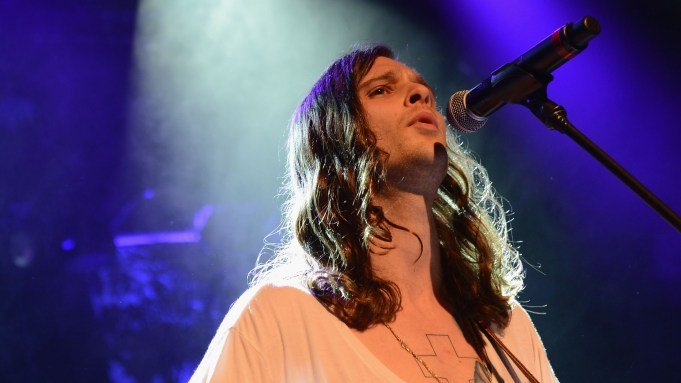
  • ‘Love Me’ Artist JMSN Fires Off Cease-And-Desist Letter Over Use Of Song In Taxpayer-Funded Spot Touting Donald Trump

    ‘Love Me’ Artist JMSN Fires Off Cease-And-Desist Letter Over Use Of Song In Taxpayer-Funded Spot Touting Donald Trump

    The White House has been hit with a cease-and-desist letter from a musician whose song was featured in a promotional ad featuring Donald Trump that was paid for using tax dollars rather than campaign funds.

    Related Stories

    An attorney for JMSN, whose real name is Christian Berishaj, fired off a cease-and-desist letter to White House Chief of Staff Susie Wiles on Monday, objecting to the use of his song “Love Me” in the ad, known as “The Country He Loves.” The ad was one of a series of spots that have run on TV in the past week, with the White House claiming they are public service announcements yet Democrats and even some Republicans contending that they are campaign propaganda.

    The letter alleges that the song was used without proper clearances and claims violation of federal copyright law. Norm Eisen of Democracy Defenders Action wrote in the letter that “JMSN does not want to be viewed as directly or indirectly affiliated with the President or his Administration. As he said in his Instagram post denouncing the Advertisement, he ‘would never authorize [his] music to be used for ANY political agenda or campaign.’ Thus, the use of the Song in this context, as part of an overtly partisan, political advertisement, is particularly damaging, as it could cause others to call into question JMSN’s artistic independence and integrity.”

    A White House spokesperson did not immediately return a request for comment. Yashar Ali first reported on the cease-and-desist letter.

    The ads contain messages that they are “paid for by the U.S. government.” Per NBC News, AdImpact estimates that $1.7 million has been spent to run the spots.