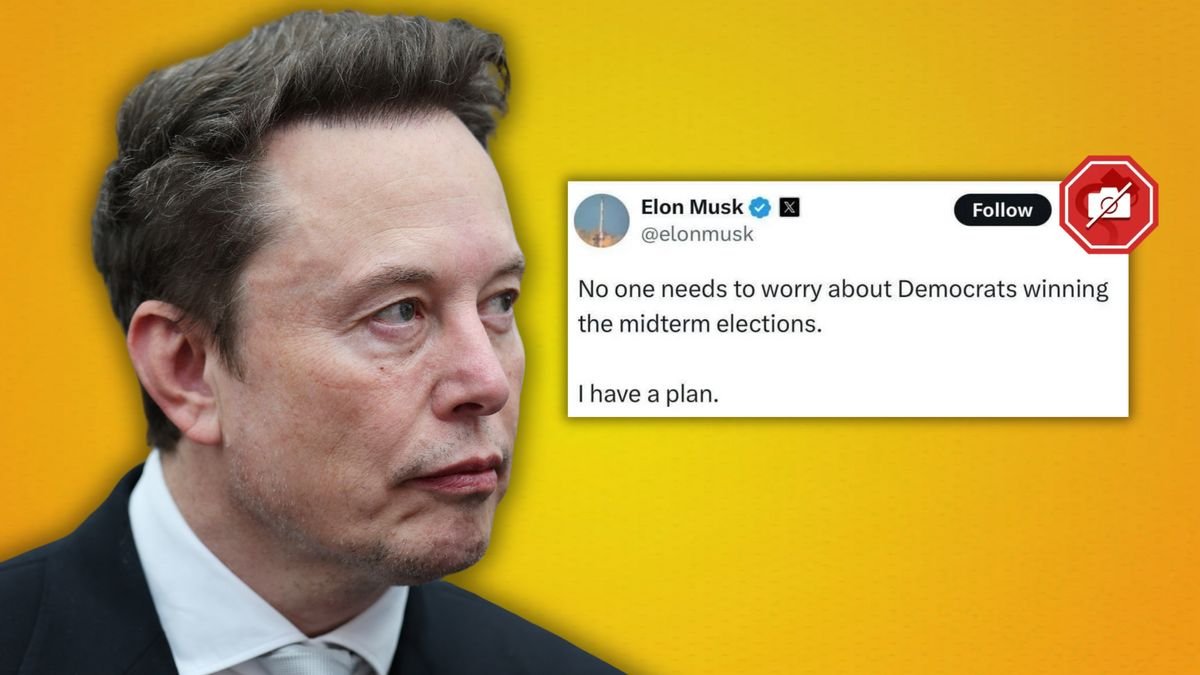
A screenshot authentically shows an X post from Elon Musk that says: “No one needs to worry about Democrats winning the midterm elections. I have a plan.”
Rating:
For more than a year, social media users have spread a purported screenshot of an X post by Elon Musk that says: “No one needs to worry about Democrats winning the midterm elections. I have a plan.”
The alleged screenshot circulated on platforms such as X and Reddit. Snopes readers contacted us to investigate the screenshot’s legitimacy.
However, a search of Musk’s X account found no evidence that this post exists. Furthermore, we found no screenshots of the post that included a timestamp or additional details indicating it was authentic, indicating that Musk did not share this X post and then delete it. If the screenshot circulating online were indeed authentic, there would be additional examples of the post through other users’ varying screenshots.
Similarly, a search of an independent archive for Musk statements returned no relevant results. Searches on Google, DuckDuckGo and Yahoo also revealed no evidence that reputable news outlets have covered this supposed statement.
As such, we have rated this screenshot as fake.
The earliest version of the fake X post that we found was posted in August 2025, from Threads user @powermacuser12.
That post claimed Musk “rigged the vote tabulation computers in the swing states to ensure Trump won the 2024 election, & he’s obviously planning on cheating again in the midterm elections.”
“He should be hauled into jail by the FBI for his post below,” powermacuser said, in reference to the fake screenshot.
We reached out to the Threads user to ask more about where they obtained the screenshot and await a response.
Snopes previously found no evidence Musk rigged the election in favor of Trump via his Starlink satellite network. In fact, most election systems are a closed network, making connection to Starlink impossible.
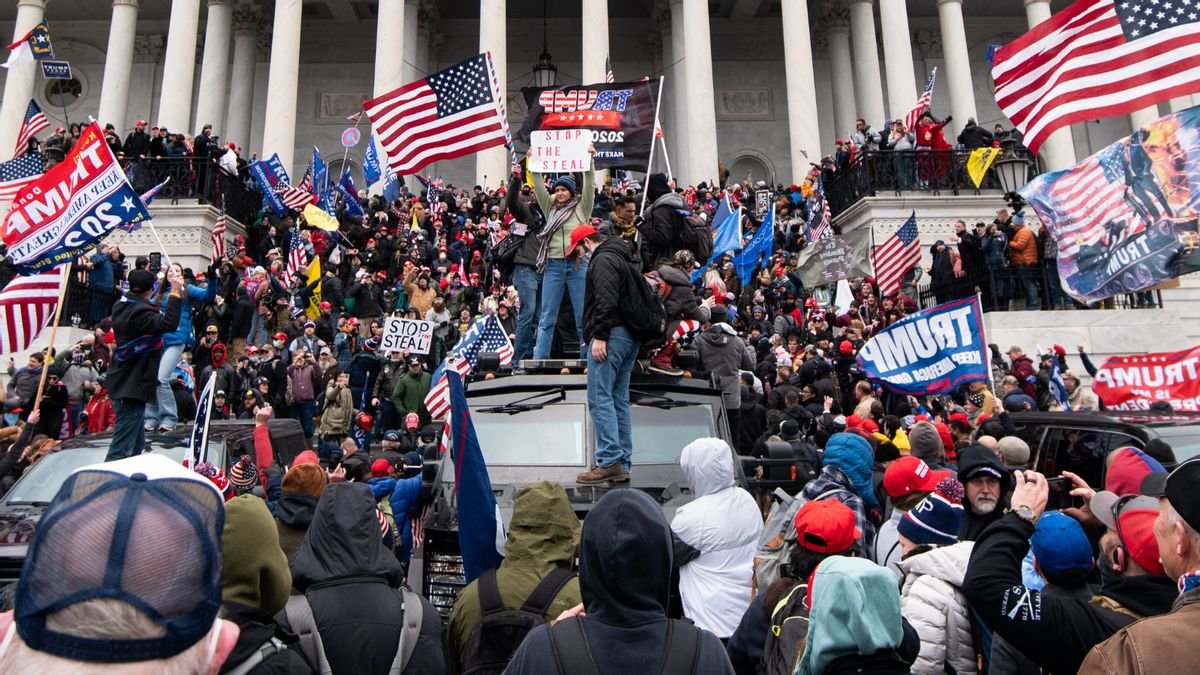
For years, a rumor has circulated that Donald Trump’s 2020 presidential campaign paid for hotels, flights and other expenses to help people who stormed the U.S. Capitol on Jan. 6, 2021. For instance, a meme alleges a “new document drop” shows the “Trump campaign paid for travel, hotels, expenses and organizing efforts to bring outside radical organizers” to Washington, D.C.
The claim gained traction after former Special Counsel Jack Smith, who led the investigation into Trump’s efforts to overturn the results of the 2020 presidential election, testified before the Senate Judiciary Committee in recent weeks.
The claim draws on authentic, unsealed records that Smith assembled about Jan. 6, but makes an unsubstantiated assertion about the Trump campaign covering people’s expenses. It also mischaracterizes the documents as being new.
Smith’s documents detail a $3 million proposed budget for the rally and how those funds were distributed among various political advocacy organizations that are not legally required to disclose their donors. These groups did not work directly for, or with, the Trump campaign, but they supported either his candidacy or other Republican candidates running for lower offices.
Congressional records show that one person in particular — Julie Fancelli, heiress to the Publix supermarket chain — provided the $3 million for the rally’s organization.
The political conditions that led to the Jan. 6, 2021, attack on the U.S. Capitol will be studied for decades. The extent to which President Donald Trump influenced the violent attempt to stop Congress’ certification of the 2020 presidential election remains a major question.
Some critics of the president not only allege he incited the attack with false claims of election fraud, but that his campaign paid for the travel and lodging expenses of the people who stormed the Capitol while they were in Washington, D.C.
One Facebook post claimed, “Jack Smiths new document drop shows that the Trump Campaign PAID for travel, hotels, expenses and organizing efforts to bring outside radical organizers” to Washington, D.C., on Jan. 6 (archived):
(Democrats, Republicans and Independents for Democracy)
Trump headlined the rally at the Ellipse, a park near the White House, that preceded the attack on the Capitol. At the end of his speech, he asked those present to march to the Capitol. “We’re going to the Capitol,” he said. Violence began at the Capitol shortly after Trump finished speaking.
The claim that Trump’s campaign funded the rally draws on authentic, unsealed records that Smith assembled about Jan. 6. However, Snopes found no evidence that his official campaign covered attendees’ expenses or organization costs of that rally.
In addition, the documents Smith compiled are not new. A judge’s order unsealed them in 2024.
One of these documents indicates several independent political advocacy groups received money to organize the so-called “Save America” rally.
Congressional documents reveal that the financial backing for the event came from one person in particular — Julie Fancelli, heiress to the Publix supermarket chain.
To learn more about the financing, we reached out to Fancelli, Caroline Wren — a Republican fundraiser who helped Fancelli distribute money for the Jan. 6 rally — and some political advocacy groups that received money for the event. We also reached out to the White House asking about Trump’s involvement in the day’s organization. We will update this report if we receive responses.
Smith’s documents outline Jan. 6 rally expenses
In October 2024, U.S. District Judge Tanya Chutkan issued an order unsealing 1,889 pages of documents Smith had assembled about what happened on Jan. 6. (Chutkan was set to decide which allegations against Trump could still be prosecuted after a U.S. Supreme Court decision granted presidents broad immunity from criminal prosecution for official actions while in office.)
Smith compiled the documents through his investigation into the matter. Notably, some of these documents had been subpoenaed directly from the participants as part of a congressional investigation, as shown below.
According to the documents Smith submitted, planners of the rally that preceded the Capitol attack proposed a $3 million budget for expenses.
The donations used to cover various expenses were funneled through multiple political advocacy organizations, including Turning Point Action, Save the U.S. Senate PAC, Tea Party Express, the Rule of Law Defense Fund RAGA — the advocacy arm of Republican Attorneys General Association (Page 305 of the PDF) — Women for America First and Bluebonnet Fundraising, Wren’s fundraising company.
(Trump, Appendix 4, Page 305, via Jack Smith)
Turning Point Action, Save the U.S. Senate PAC, Tea Party Express, Rule of Law Defense Fund RAGA and Women for America First are all section 501(c)4 organizations, also known as “dark money” groups, or political advocacy organizations that are not legally required to disclose their donors. These groups did not directly work for, or coordinate with, Trump’s official 2020 presidential campaign, but they supported either his candidacy or other Republican candidates running for lower offices.
Save the U.S. Senate PAC and Women for America First are no longer active. We reached out to Turning Point Action, Tea Party Express and the Rule of Defense Fund RAGA seeking details about their roles in the rally but did not receive responses by the time of publication.
The files included the same list of expenses (Page 317) with certain amounts lowered. This copy included handwritten notes, such as “we pay our own way.” The amended budget totaled $2.4 million:
(Trump, Appendix 4, Page 317, via Jack Smith)
As we outline below, congressional testimonies revealed how the amounts were amended.
The name of someone who supposedly received $200,000 to “assist with his organization efforts” was redacted in both budget tables.
Both budgets indicated that some money was earmarked for speaker fees and travel, “crowd building and busing,” and hotels and private flights for a group whose name was redacted. The claim may have originated from these details. The Trump campaign is not listed in this budget.
Republican operative’s testimony aligns with Smith’s budget info
In December 2021, Dustin Stockton, a Republican operative who was involved in the preparation for the “Save America” rally, testified in Congress that Wren told him the night before, on Jan. 5, that she raised $3 million for the event. This testimony aligns with the budget documentation in Smith’s files.
According to Stockton’s account, Wren “parked” the money at “Republican Governors Association, TPUSA, Tea Party Express.” (TPUSA refers to Turning Point USA, the nonprofit 501(c)3 sister organization to Turning Point Action.) Describing his exchange with Wren, Stockton testified (Pages 96-99 of the PDF):
But she tells me a lot of stuff. So she tells me that she raised —
[…]
And Caroline [Wren] told me that she raised the $3 million, and that she parked the money with the Republican Governors Association, TPUSA, and Tea Party Express. And I actually clarified with her, because, like, I assumed she meant Tea Party Patriots, but she clarified that it was Tea Party Express, which seemed interesting because both Amy [Kremer, former chairperson of Tea Party Express] and I have our political roots there.
(The budget tables unsealed in Smith’s documents did not list the “Republican Governors Association,” but the Republican Attorneys General Association, which works to elect Republicans as attorneys general across the country and “has been incredibly supportive of President Trump’s legal efforts” to overturn voting results in the 2020 election, according to Page 305 of Smith’s document. Stockton clarified with Snopes he meant the latter in his testimony.)
Stockton told Snopes via email he helped fundraise for Jan. 6 on behalf of Kremer and her daughter Kylie Kremer, a leader of Women for America First at the time and someone who spoke at the “Save America” rally.
“I helped the Kremers raise a lot of money for all the D.C. events and bus tours that included January 6,” Stockton said. “It was in the millions of dollars total but I have no idea how much would have been for the event at the Ellipse.”
Wren names Publix heiress Julie Fancelli as donor
In a Dec. 17, 2021, deposition with Congress, Wren said she fundraised specifically for the “Save America” rally, which she called the “Million MAGA March.”
She said donations from Fancelli, the heiress to Publix, were distributed to several groups tasked with organizing the rally (starting on Page 46 in the PDF), including Turning Point Action, Save the U.S. Senate PAC, Tea Party Express (which Wren suggested because the organization had experience with bussing protesters to designed locations), Rule of Law Defense Fund RAGA and Women for America First.
In her testimony, Wren discussed the amounts Fancelli committed to the various organizations listed in the two versions of the budget presented among Smith’s documents, including $1 million for Turning Point Action (Page 49), $50,000 for Bluebonnet Fundraising LLC (Wren’s company) and $300,000 for Women for America First (Page 51).
Wren also explains how the amounts were amended. The annotated copy of the budget on Page 317 of Smith’s documents reflected several of those changes.
Fancellideposed, pleads the Fifth
On Feb. 18, 2022, the congressional January 6 Committee deposed Fancelli. While she invoked her Fifth Amendment right against self-incrimination, the 132-page transcript mentioned evidence that corroborated Wren’s claims.
The evidence came from Fancelli, whose records the committee subpoenaed for the investigation.
The evidence, which included text messages and emails read by the interrogators, indicated Fancelli was prepared to donate as much as $3 million toward the rally. She received the proposed budget via email and her accountant helped her amend it. The evidence also suggested she did not expect the rally to turn into a violent attack on the Capitol.
The committee’s final report said her financial support made the rally possible.
On Pages 24 and 25 of the PDF, the interrogator read a text exchange between Wren and Taylor Budowich, a then-Republican operative who served as White House deputy chief of staff between January and September 2025:
(…) on Saturday, December 26th, which is the date that Ms. Wren was at your home, Ms. Wren texts, “I’m at Julie Fancelli’s.” “Guess what the budget is she just gave me for our bus project?” “You won’t guess.” “$3 million … ”
And Mr. Budowich responds with several “lol”s and says, “probably could do it for 3.”
And then Ms. Wren responds, “we can use some for save the us senate.” “I’ll call you when I leave here.” And then turning to the next page, she says, “she wanted to just wire me the 3 mill lol.”
And Mr. Budowich responds, “rich people are so odd.”
At one point (Pages 40-41), an interrogator quotes language from a budget plan regarding funding for RAGA’s “legal efforts to fight the election fraud around the country.” Because this language appeared in one of Smith’s unsealed documents, it suggests Fancelli received that same version.
Fancelli’s deposition also gives clues about discrepancies between the budget in Smith’s documents and her actual donations. On Page 40, the interrogator reads from an email sent by Marianne Parsons, Fancelli’s accountant, as part of an ongoing conversation about the proposed budget:
And next it says the “Rule of Law Defense Fund- we are cutting that by $50,000 … please trim how many or how much each attorney general gets for expenses and other expenditures.”
In our email to RAGA, we inquired about the presence of any attorneys general at the rally.
None of this evidence suggests Fancelli wanted or expected the rally to turn into an attack on the Capitol. On Page 89 of her deposition, the interrogator read a text message she had written:
Ms. Fancelli, if I could clarify, on Wednesday, January 6th, at 1:50 p.m., when you asked, “What is really happening?!”, presumably, with the question mark and exclamation mark, it’s possible that you had seen things on the news that indicated that something might be going wrong at the Capitol, and you were trying to check with somebody who was actually there and present.
Jan. 6 committee’s report on Fancelli’s role
The congessional committee’s final report, published in late 2022, summarized Fancelli’s role in the events of that day:
Fancelli worked with Wren to create a multimillion-dollar budget to convene as many supporters of President Trump as possible To ensure that Fancelli’s dollars made maximum impact, Wren contacted some of the major players who were rallying supporters for January 6th. Wren emailed Kylie Kremer and exchanged texts with [Alex] Jones and [Cindy] Chafian. Fancelli’s goal was clear: she wanted to spend $3 million to “get as many people there as possible.” The resulting budget allocated $500,000 to a busing program and a centralized ad campaign by the Tea Party Express to promote the event. Another $500,000 went to assisting WFAF [Women for America First] and Jones in their organizational efforts.
(Conspiracy theorist Alex Jones’ podcast inspired Fancelli to support the movement. Jones spoke at the rally. Cindy Chafian was one of the organizers of the rally.)
Fancelli did not respond to our queries as of this writing.
Fancelli has donated money to Republican candidates since at least 2016, according to data from the Federal Election Commission. For example, in 2016, she gave money to Secretary of State’s Marco Rubio’s presidential bid and to the campaign of former Rep. Carlos Curbelo, a Republican from Florida. The Miami New Times reported Fancelli donated to a pro-Trump“dark money” group in 2019, though we did not find evidence of those donations on the FEC website.
UPDATED, with Trump comment: The Pentagon announcement that it plans to livestream the execution of the Fort Hood shooter in December has generated an outcry from public officials and religious figures, including the president of the U.S. Conference of Catholic Bishops.
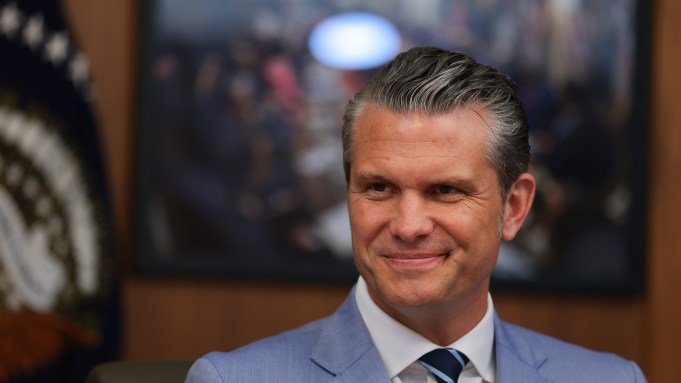
None of the networks have yet to comment publicly on whether they would air such an event, and there is substantial doubt that they would do so. It undoubtedly would get news coverage surrounding the stream of the execution, which Defense Secretary Pete Hegseth has made clear he wants to be public.
On Friday, FCC Chairman Brendan Carr was asked on CNBC if the execution is “something you would allow on broadcast if they wanted to.”
“Ultimately we’re going to defer to Secretary Hegseth and his decisions on how to move forward with this,” Carr said.
A Pentagon spokesperson said that the Dec. 3 execution of Maj. Nidal Malik Hasan would be live streamed and that “details will follow.” Hasan was convicted of killing 13 people and injuring dozens of others in shooting rampage at the Fort Hood military base in 2009.
A livestream falls outside of the FCC’s regulatory power, but the Pentagon feed is something that, absent restrictions, broadcasters could pick up. The FCC’s obscenity, indecency and profanity guidelines do not directly address executions, but under his tenure, Carr has launched investigations of networks on the grounds that they may not be meeting their public interest obligations. FCC guidance earlier this year emphasized, among other things, that stations must air programming that is “responsive to the needs of their local communities.”
“My understanding is it’s not on broadcast TV, so I don’t think there’s a role for the FCC one way or the other there,” Carr said on CNBC. “But I trust Secretary Hegseth. I mean, he’s implementing the laws and regulations that are relevant to the Department of War, and I think he’s doing a great job, and I trust that he’s making the right call on these issues.”
The execution by firing squad is planned for 1 p.m. on that day and will take place at Fort Hood, Hegseth said.
“It hasn’t been since World War II that we have done that, and I kind of like the mentality that we had in World War II,” Hegseth told Real America’s Voice, a pro-Trump network, in an interview this week.
“We will make sure that people are able to watch it, that it is public, because people need to understand there are serious consequences for these types of things,” Hegseth said.
Asked by a reporter whether he approved the livestream plan, President Donald Trump said, “Absolutely.”
There has been a tradition of state executions allowing a handful of journalists to witness executions, including in Texas, but with a prohibition on photos and video. It’s possible that Hasan’s legal team will try to block those plans as well.
The announcement was condemned by some lawmakers on both sides of the aisle, as well as Archbishop Paul S. Coakley, president of the U.S. Conference of Catholic Bishops, called the plans for a livestream “a barbaric promotion of a culture of death” and said that it “must be reconsidered.”
“The public execution even of one who has done grave harm will only further undermine the moral fabric of our nation and be a blight on the conscience of its people,” Coakley said.
Networks have been cautious about any airing of a public death, issuing viewer advisories or having general policies against airing the moment of death. YouTube also has a policy prohibiting “violent or gory content intended to shock or disgust viewers,” but has exceptions for educational, documentary, scientific or artistic content, “including content that is in the public interest.” A YouTube spokesperson did not immediately return a request for comment.
Another issue will be in how children will be restricted from a livestream. The U.S. Army Corrections System guidelines on military executions does not allow anyone under 18 to be a witness to such an event.
There have been cases of media outlets seeking permission to record or film executions. In 1991, KQED-TV sued for access to the execution of Robert Alton Harris, but a federal judge ruled that effort, siding with prison officials’ concerns over the impact on inmates, per the Los Angeles Times.
Brett McGurk‘s new book Brink: Inside the Race to Free the October 7th Hostages offers an insider account of the diplomatic rollercoaster to secure a ceasefire and hostage release in the war in Gaza.
The book, published this week, also offers a glimpse at White House messaging about the conflict, including two figures the president turned to in delivering a key speech: Jeffrey Katzenberg and Steven Spielberg.
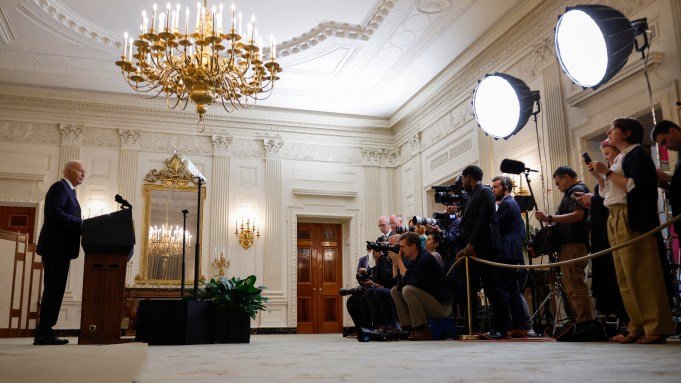
McGurk, who served as deputy assistant for national security affairs to Biden, wrote of the scene as they prepared the president for his address on May 31, 2024. While Katzenberg and Spielberg’s role have been reported before, McGurk gave a first-hand account in the room, for a speech focused on a proposal to end the fighting and to secure a release of the hostages.
By that point, the Gaza conflict had created divisions within the Democratic coalition, protests at college campuses and presidential appearances and concerns over its impact on the November elections. There was pressure from the campaign for the president to make an address on the crisis, per McGurk.
McGurk wrote of the rehearsal, “In the Map Room, Biden peered at two screens behind me. ‘Jeffrey, Steven, welcome,’ he said. I turned around to see Jeffery Katzenberg and Steven Spielberg on Zoom. They greeted Biden warmly, Spielberg saying this was the speech they wanted to hear.
“It was a reminder that while I saw this speech as a policy address with a functional aim, it had a political purpose, too,” McGurk wrote.
He added, “The speech was timed for Friday night in Israel, when much of the country shuts down, allowing time for us to shape its reception there and around the world. Notably, we did not inform Netanyahu that we were making the speech until shortly before Biden delivered it, as we knew the address would lock Netanyahu into the terms of the deal now on the table.
“Biden said he was ready.
“Katzenberg advised, ‘Remember, slow Joe, let the audience hear every word.’
“Biden smiled, ‘Slow Joe? Don’t let Jill hear that.’
“He read through the draft, pausing at times to ask questions about the text, which we addressed with rewrites.”
McGurk wrote that he found Biden “fully engaged, leaning forward on the podium.”
He wrote, “The moguls told him he looked strong, and he did. There was no sign of the Biden we’d all see on a debate stage with Trump only four weeks later.”
The latter was a reference to Biden’s disastrous debate performance against Trump. What followed were weeks of calls on Biden to drop out, coming from some elected Democrats and prominent donors, until he exited the race on July 19. Katzenberg had played a prominent role as a top adviser to Biden’s re-election campaign.
While the Biden speech focused on a peace proposal, as it turned out, it would take until the next year, a week before Trump returned to office, for a ceasefire agreement to be reached.
A top official with the UN’s health agency doesn’t know how a lab worker in Siberia died amid concerns about plague, and she’s urging Russia to provide more information.
There have been questions and concerns about the death of the 28-year-old woman, identified in Russian media as Darya Shipilova, amid speculation she died of pneumonic plague and that her death may be connected pathogens she worked with at the Irkutsk Anti-Plague Research Institute of Siberia and the Far East.
Maria Van Kerkhove, director of epidemic and pandemic management at the World Health Agency (WHO), said the agency doesn’t know the cause of the woman’s Oct. 2 death, and “this is why we need more information.”
“We don’t understand how she was infected,” Van Kerkhove said during a news briefing in Geneva.
The WHO is also seeking more information about unconfirmed media reports of a second case of pneumonia of “undetermined cause” connected to the Irkutsk lab, in southeastern Siberia.
The Irkutsk Anti-Plague Research Institute of Siberia and the Far East, where a lab technician worked before her death on Oct. 2 from pneumonia. The World Health Organization is urging Russia to be more forthcoming with information about the case, as authorities insist her illness was not related to a form of plague. (Tatyana Makeyeva/AFP/Getty Images)
WHO director general Dr. Tedros Adhanom Ghebreyesus said the agency could not verify the credibility of the reports but is seeking clarification from the relevant officials in Russia.
In a tersely worded statement, Russia’s official public health and consumer watchdog, Rospotrebnadzor, does not link the first case to pneumonic plague, saying only that “extensive” testing found no evidence the lab worker’s illness was caused by any of the pathogens she worked with.
Russia has said she died of pneumonia — a “typical” acute respiratory viral infection — and its health authorities have found no cases of plague recently, the WHO has said, acknowledging that pneumonia is commonplace and that cases of COVID-19 and rhinovirus were present among the some 200 people monitored since that death.
Pneumonic plague is a less common but severe form of plague that can spread from person to person.
Plague is an infectious disease caused by a bacterium known as Yersinia pestis, or Y. pestis, that is carried by small mammals and generally spread by the fleas that feed off them. It can be treated with antibiotics but can be deadly if left untreated.
What we know about the suspected plague death in Russia
Two-hundred people have been placed under medical observation in Siberia, Russia, after a laboratory worker died after a reported accident at a plague research facility. The World Health Organization says the public health risk remains low.
Russia insists no plague cases
Moscow previously informed the WHO that no case of plague has been registered in the Irkutsk region.
Russian health authorities reported a full range of preventive measures had been carried out —including tracing the dead woman’s contacts, medical monitoring and lab tests, the WHO said.
The Russian note relayed to The Associated Press by the WHO said the test showed “no presence of dangerous infectious disease pathogens in any of the contacts.”
The organization said it has requested further information to clarify the cause of the severe pneumonia, the pathogen that prompted the public health measures, and media reports of the second case.
Kremlin spokesman Dmitry Peskov referred all questions to Rospotrebnadzor, which does not mention suspected plague in its reports.
In its latest statement Tuesday, the agency said “the sanitary and epidemiological situation in the Irkutsk region … is calm.”
Authorities were completing a “complex of prophylactic measures and medical observation over contacts,” it said, adding that so far they have found two cases of COVID-19 and two of rhinovirus.
Mother not notified
The news outlet Lyudi Baikala identified Shipilova as the deceased lab worker and said she first was hospitalized with cold symptoms Sept. 29, in the nearby town of Shelekhov, and died three days later.
It quoted colleagues as saying she was a highly qualified and diligent researcher, and emphasized that security rules at the facility are extremely strict.
The report quoted Shipilova’s neighbours as saying a team of disinfection experts did several cleanups of her apartment, leaving a strong antiseptic smell.
Researchers work in the institute’s lab in this undated photo released in 2019. (Irkutsk Anti-Plague Research Institute of Siberia and Far East/Handout/The Associated Press)
Shipilova’s mother, who worked as a doctor in the past, described her daughter as hard-working and dedicated, according to independent Russian news outlet Glubina, adding that she had not received official documents describing the cause of death.
Irkutsk Gov. Igor Kobzev said she died of a “particularly dangerous infection” and everyone who came into contact with her has remained under medical supervision.
The hospital where she died was placed under quarantine, no longer admitting or discharging patients, although its outpatient clinic has continued operating, according to Mayor Maxim Modin.
WHO urges transparency
Russian authorities have, however kept a tight lid on information and the speculation she died of pneumonic plague.
While the case has grabbed international attention, Russian state TV and other national state-controlled media have steered clear of the subject. Some state-sponsored news outlets withdrew earlier reports about the case.
Vasily Vlassov, professor at the department of health-care administration and economics at Russia’s Higher School of Economics, says it’s not clear whether more transparency was possible if those dealing with the situation didn’t have enough certainty, and “maybe, they still don’t.”
Deceiving the public “always turns out to be harmful,” he said, and distrust of Russia’s official narrative is “natural” and “almost inevitable.”
Judy Twigg, professor of political science at Virginia Commonwealth University, notes that Russia criminalized “false information” about threats to public safety in 2020 amid the COVID-19 pandemic, “so silence is the one safe move for everyone below the top.”
“Personalist regimes without electoral accountability tend to treat bad news as a loyalty problem rather than focusing on the actual problem to be addressed,” she said.
LISTEN | Ground zero for ‘Black Death’:
Quirks and Quarks8:08The Black Death was history’s most lethal plague. Now we know where it started
The audio version of this article is generated by AI-based technology. Mispronunciations can occur. We are working with our partners to continually review and improve the results.
Russia’s health regulator said Thursday that reports that a second person had fallen ill following the death of a worker at a plague research laboratory in Siberia were false.
In a statement published by Russian news agencies, the regulator denied what it called “fake information circulating on social media regarding a second case of illness.”
It said it had completed checks on all the contacts of the dead woman, adding, “No health issues related to an infectious disease were detected, and the results of nearly 5,000 laboratory tests showed no dangerous pathogenic microorganisms.”
Russian authorities have said 28-year-old Daria Shipilova died last Friday from pneumonia of an as-yet-unestablished origin. Shipilova was a lab employee at the Irkutsk Anti-Plague Research Institute of Siberia and the Far East, located in the town of Shelekhov, prompting authorities in Russia to swiftly roll out a series of precautionary anti-epidemic measures that caught global attention.
What questions do you have about the reports of pneumonicplague in Russia? Email ask@cbc.ca.
Rospotrebnadzor, Russia’s health watchdog, said she died of an unknown type of pneumonia and that no relevant pathogens had been found in anyone who came into contact with her. Officials in Russia said she was vaccinated and therefore “immune to the dangerous infections with which she worked.”
A security person wearing a face mask looks out from the door of an infectious diseases hospital in the town of Shelekhov, where an employee of the Irkutsk Anti-Plague Research Institute recently died, a mysterious fatality that has caused international concern. (Tatyana Makeyeva/AFP/Getty Images)
The World Health Organization initially said it estimated the risk of the Russia case to the public as low, based on what had been made known, but told a news conference on Wednesday it could not make a fuller risk assessment due to insufficient information from the Russian authorities.
Tedros Adhanom Ghebreyesus, director general of WHO, said the global health body had offered assistance to Russia and also repeated a request to verify “media reports of a second employee with pneumonia of undetermined cause.” Those reports started with a Russian media outlet and were spread to English-language audiences by the Daily Mail in Britain, based on a subsequent pneumonia-like death at an Irkutsk hospital.
Health Canada has told CBC News it is also monitoring the situation, though it sees no risk to Canada at this time. According to the agency, the last recorded human case of plague in this country was in 1939.
U.S. Centers for Disease Control and Prevention (CDC) director Erica Schwartz said Wednesday the risk to the U.S. from an unconfirmed pneumonic plague case in Siberia was extremely low, but the agency was prepared to monitor and screen travellers.
What we know about the suspected plague death in Russia
Two-hundred people have been placed under medical observation in Siberia, Russia, after a laboratory worker died after a reported accident at a plague research facility. The World Health Organization says the public health risk remains low.
The CDC has a port health station at the John F. Kennedy International Airport in New York that can conduct surveillance and screening for travellers from the region entering the United States, Schwartz said. The U.S. Department of Health and Human Services did not immediately respond to a request for comment on whether the agency planned to set up screening there.
A spokesperson from Health and Human Services said there are about 200 individuals per year from the Siberian region who travel to the United States. Direct flights between Russia and the United States have been suspended since the start of the Ukraine war in 2022.
Bonnie couldn’t walk without a cane, and blamed “the jab.”
Art couldn’t help but recall his dad’s Second World War persecution.
The COVID-19 pandemic had myriad social, economic and political effects around the world. But Alberta may be the only place it helped spawn a separatist movement.
For many independence activists, from leaders to adherents, their entrée to activism was in their profound responses to public health restrictions or vaccines.
Proverbially, it was the same radioactive spider bite that powered so many ordinary Albertans into becoming fighters for a cause.
Sure, there’s a long history of separatism that stretches back to Alberta’s founding in 1905, got inflamed anew by Ottawa energy policy of the 1980s, and then again by climate action more recently.
The timeline of western alienation may be long, but for so many Alberta separatists their trajectories really began in 2020 and 2021.
Polling ahead of the Oct. 19 referendum suggests the separatist cohort is a minority of residents now, just as the COVID policy critics and the vaccine-wary were in the minority then.
But they’re just as riled up and disgusted by the mainstream Canadian status quo as they were five or six years ago, converting their personal disgust into political action.
“Most people are like that,” reasons Chris Scott, leader of the sovereignist group Let’s Talk Alberta. “They ignore things around them until it affects them personally, until they have a reason to get involved.”
Scott’s COVID origin story might be the best known. He defied indoor dining restrictions at his Whistle Stop Café in Mirror, Alta., then ignored a 2021 closure order, then got arrested after leading a protest outside his restaurant. Then, he fought a lengthy and successful court case against his charges.
Chris Scott was arrested in May 2021 after leading this protest outside his café in Mirror, Alta., which health authorities had targeted over violating pandemic public health measures. (Jason Franson/The Canadian Press)
Before all that, Scott said his only political activity was casually talking smack online against progressives. But he was jolted into doing more after the public health rules he didn’t believe in. “It kind of shattered my illusion of what I thought a free Canada was,” he told CBC News in a recent interview.
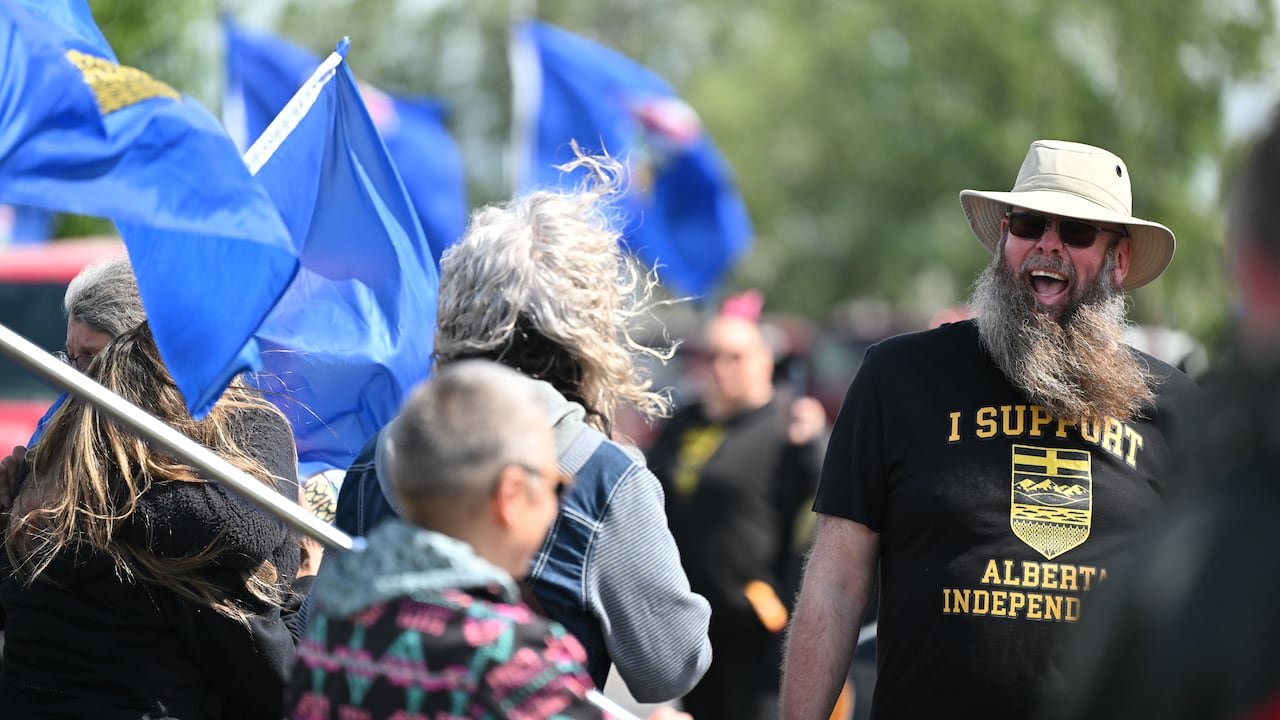
Images from the 2021 protest show glimpses of the separatist leader Scott would become. A blue Alberta flag flapped on the pole outside his restaurant, where a maple leaf might typically fly. Around the protest hung banners saying “Alberta strong and free.”
Before long, he became a key figure in Alberta Prosperity Project, the group behind the 300,000-signature petition that helped push Premier Danielle Smith to schedule this month’s referendum on holding a binding separatism vote in the future.
Here is Scott’s logical bridge from his restaurant having to close to wanting an independent Alberta: “If Alberta was fully sovereign, and the federal government wasn’t interfering, we could make sure that we have the rights and freedom that we thought we had before.”
It was, however, the provincial policies of then-premier Jason Kenney that forced restrictions on the Whistle Stop, albeit based on federal public health recommendations. Among APP’s founders is Dennis Modry, the retired Edmonton surgeon who’d emerged in the COVID skeptic community with a prominent and contentious open letter in 2020 to Jason Kenney.
Chris Scott live-streams from the Let’s Talk Alberta tour through small towns east of Calgary. (Mantai Chow/CBC)
Scott took his Let’s Talk Alberta RV tour in mid-September to a banquet hall in northeast Calgary, where Bonnie Meikle worked the registration and pro-independence pamphlet desk, as she often does.
She used to work in foodservice at a Ponoka medical centre, and Alberta Health Service’s COVID mandate forced her to get a vaccine she didn’t trust, or lose her job.
Meikle got what she derisively calls “the jab,” and lost her job anyway — because she says she soon lost much of the cartilage in her knees.
She attributes that, and co-workers dying, to vaccines.
“Of course, you can’t necessarily prove anything, but I was seeing these things happen around me,” Meikle said.
She supported 2022’s COVID-related convoy protests in Ottawa and Coutts, Alta., but said the law-enforcement response to it “broke” her.
“I learned that the Canada I lived in wasn’t the country that I thought it was,” she said.
Separatist messages are tougher sells in big cities. Organizers at Scott’s Calgary event on a Tuesday night last month put out banquet chairs for 200 people, but around 50 showed up. By show of hands more people told Scott they’d been to a dozen or more independence events than were there for the first time.
Nick Klinck, a heavy equipment operator, was impressed enough that when Scott sent donation buckets around, he pulled a $100 bill out of his wallet. He sported a Trump-style “Make Alberta Great Again” blue hat, and explained he likes the conversations it provokes.
He also perked up politically during the pandemic lockdowns and vaccine mandates. He watched friends lose their jobs and have vehicles repossessed, while rodeo shutdowns meant he lost most of two competitive bull-riding seasons.
“I don’t like the way Canada is going — not proud of the direction,” he said.
Nick Klinck at a pro-indendence event in northeast Calgary in September. (Jason Markusoff/CBC)
Pandemic protesters are a blend of two groups — the anti-vaccine people and the anti-government populists “that were mostly on the far right,” according to Jean-Christophe Boucher, a University of Calgary political scientist who has tracked post-pandemic activism.
“COVID created conditions to create a political movement without parties necessarily being the main drivers,” he said.
What coalesced to protest the vaccine mandates galvanized during the 2022 trucker convoy, and has also had overlap with protests against gender-identity policies in schools and furore over an ostrich cull in B.C. last year.
In Alberta, activism has largely migrated to trying to take the province out of Canada, Boucher said.
“This is kind of a movement that has been working with each other for almost more than six years now and has kind of like systematically developed their networks, built their funding bases, built their online followership.”
But as they were with public health rules, separatists are fighting against a near-consensus among the institutional establishment, and almost every politician you can name. Online and in person, they try to persuade more Albertans to see it their way.
‘Anyone here vaccinated?’
About an hour’s drive south of Calgary, small-town separatist organizers for APP gather in a former car-repair shop in the town of Vulcan.
In a 90-minute group interview with CBC News, the pandemic repeatedly comes into the conversation. Many distrust the scientific consensus that vaccines were safe and effective, and reckon COVID was a scam or a “psy-op.”
“Is anyone here vaccinated?” asks Leanne Sparks from the nearby village of Champion. Others in the room shake their heads, or grimace knowingly. For people who did get COVID shots, “it has changed their attitudes,” said Cindy Leader from Vulcan, explaining the hostility independence activists have faced locally.
Organizers with Alberta Prosperity Project meet in the town of Vulcan, Alta. (Jason Markusoff/CBC)
APP leader Mitch Sylvestre views federalists as the sort that complied without protest to social distancing rules and mask recommendations. “They obviously don’t view COVID the way I see it.”
Sylvestre is the separatist petition’s frontman and a major UCP power broker, but admits he was politically clueless until the pandemic.
“I did not know left from right,” he said.
In spring 2020, provincial health authorities shuttered Sylvestre’s gun and sporting goods store in Bonnyville, along with other “non-essential businesses.” It infuriated him that Canadian Tire and Walmart in his northeast Alberta town were deemed essential, allowing them to keep flogging similar items that he was barred from selling.
“COVID was the clear example of how bad it could get,” he told CBC News.
Before plotting a split from Canada, he and others worked on making Kenney part ways from power in Alberta. Sylvestre joined Take Back Alberta, the grassroots organization launched by David Parker — a preacher’s son offended at pandemic crackdowns on pastors, and doubtful of vaccines.
Take Back tapped into unrest about COVID rules, particularly in rural areas and conservative online communities, and Parker called Kenney a “tyrant.”
With a flood of new members voting in a leadership review, United Conservatives pushed out the party’s first premier, and replaced him with a politician and ex-broadcaster who compared vaccine requirements to post-Holocaust conventions on human experimentation, and gave special airtime to what she called the pandemic’s “deplatformed doctors” (including Modry).
As premier, Danielle Smith further pleased her new political base — she fired top public health official Deena Hinshaw, and called the unvaccinated “the most discriminated against group that I’ve ever witnessed in my lifetime.”
A fellow traveller on pandemic issues, she’s met activists partway on their new issue of focus. She’s a declared federalist, but she’s touted her own version of “Alberta sovereignty within a united Canada,” and loosened citizen initiative rules to make it easier for separatists to get the issue onto a provincial ballot.
Then-premier Jason Kenney takes his mask off at a news conference about COVID restrictions in 2021. (Todd Korol/The Canadian Press)
Kenney has been far more vocal than his successor against separatists, which he told CBC Radio’s The House in August is a “marginal movement” like the one that rose up against him.
“I think it got hypercharged by people with a variety of grievances coming together and getting organized around COVID,” Kenney said.
“This whole thing has become the new right wing uni-cause. If your number-one issue is vaccine skepticism or chemtrails or … or globalism — whatever it is, separatism is a convenient umbrella for these preoccupations.”
While most Alberta separatists appear to have latched onto the issue since the pandemic — largely since the federal Liberals won re-election last year, and the citizen’s petition gave the cause a political vehicle — some in the movement have held the view for longer.
Cory Morgan’s separatism activity goes back to his 2001 leadership of the Alberta Independence Party, long before anyone outside microbiology circles knew what a coronavirus was.
But the leader of the third-party advertiser Pathway to Independence gets how COVID strikes an effective nerve in a pro-independence crowd.
“We’re one more sneeze away from being locked down over some fake pandemic,” Morgan told the July 1 “Albertans’ Day” rally outside Chris Scott’s restaurant in Mirror.
“You know, we can make the case about equalization and our oilfield and things like that, but the scariest stuff of all is our freedoms … people often don’t realize that they don’t have them until they’ve lost them.”
Several years removed from mask and vaccine rules, the issues don’t come up constantly at separatist lectures. But it’s front-of-mind enough that one speaker at APP’s big legislature rally in August focused his speech on an Ontario Conservative MP Dean Allison’s independent hearings on vaccine injuries. (About 11,702 serious adverse events were reported among the 105 million COVID immunization doses administered through 2023, according to Health Canada.)
Jason Lavigne, a popular pro-independence online broadcaster, took a week off in the referendum campaign’s stretch drive to be in Ottawa, to live-stream what Conservatives called the Allison Inquiry, eight hours a day for four days.
The pandemic also brought into the separatist movement some activists who may have never otherwise been accessible to what some analysts consider a hard-right cause.
Art’s journey
Art Matsui is one such figure.
The retired IT worker celebrated with his wife at the NDP’s Calgary headquarters the night Rachel Notley was elected premier in 2015; he joined Naheed Nenshi’s mayoral election victory party in 2010, donning a fuzzy fedora in Nenshi’s signature purple. “Lefties” through and through, he said in an interview.
Art Matsui, right, embraces Naheed Nenshi at his 2010 victory party for the Calgary mayoralty, in the candidate’s trademark purple. (Facebook/Art Matsui)
When the pandemic shuttered businesses and ushered in universal masking, Matsui was immediately skeptical of the science behind such decisions. They’d been similarly doubtful of the public health benefits of adding fluoride to the public water supply, but the health interventions in COVID-19 were so much broader.
His wife was raised in a quasi-religious cult and had broken free, but preserved her distrust of governments. For Matsui, inspiration to resist came from his father’s imprisonment in Canada’s Japanese internment camps in the 1940s.
“Rights is the main driving force in my journey,” he said. “Because we had been stripped of all our rights during the Second World War … my family lost everything.”
He became a regular at Calgary’s pandemic protests and marches. He began bringing his father’s internment camp papers to show what happens in extreme rights crackdowns.
Matsui got turned off by Nenshi when the mayor called them “thinly veiled white nationalist supremacist anti-government protests.” He recalled swearing off Notley in late 2021 when she suggested a door-to-door campaign to address the few vaccine-hesitant Albertans. He backed the trucker convoy, and even attempted to drive along with them to Medicine Hat, until his vehicle got rear-ended leaving Calgary.
At one protest, Matsui met Take Back Alberta’s Parker, who encouraged him to try effecting change in the UCP. He became a party director in his home riding, and quickly supported Smith for premier, revering her public apology for the Alberta government’s treatment of the unvaccinated.
As he became more involved with Take Back Alberta and then Alberta Prosperity Project, Matsui became more convinced the federal government continued to crack down on rights post-pandemic, regarding the Liberals’ anti-hate legislation as a big threat to free speech
“In COVID, they were curtailing our freedoms, right?” Matsui said. “But now, we’re still on the same trajectory.”
Matsui gradually began to believe that moving toward Alberta independence was the only way to preserve freedoms, as so many fellow travellers have. He gathered names on the separatist petition, and became a frequent attendee and volunteer at pro-independence events.
Art Matsui, centre, met conservative broadcaster Tucker Carlson and Robert F. Kennedy Jr. (now Health and Human Services Secretary in the Trump administration) at an event in Milwaukee in 2024. (Facebook/Art Matsui)
It’s all coming to a head on Oct. 19, the mission many independence activists have passionately been on for about 18 months, some longer.
Polls suggest they’re bound to lose the referendum by a wide margin. If they lose, and there’s no binding referendum campaign to wage, where will they take their anti-establishment, anti-government fight then?
Feodor Snagovsky, a University of Alberta political scientist, has found in polling that one of the clearest predictors of separatism was support for the convoy. He wonders what cause the group might latch onto next.
“After Oct. 19, whether or not they continue with separatism I think is an open question,” Snagovsky said.
“I don’t think separatist sentiment necessarily will go down, but the folks in this cohort will find other things to be interested in.”
After spending years on freedoms during the pandemic, and then separatism, the “need to create a political campaign” might spawn something different, said University of Calgary’s Boucher.
Losing the referendum won’t likely change how they view Alberta’s place in Canada, he said.
But he expects them to carry the separatist beliefs and narrative with them in whatever might come next for the cohort.
“Losing now won’t change how they will feel about this issue.”
Anti-lockdown and anti-mask protesters at a rally outside the Alberta Legislature in Edmonton in 2021. (Jason Franson/The Canadian Press)
Most independence leaders, for their part, have vowed to keep up the fight, no matter what the referendum’s result is.
Several years removed from state-ordered business closures, or needing proof of a vaccine to fly, work in health care or dine indoors, policy-makers and much of the public may have moved on.
Many Alberta separatists haven’t, and don’t believe Big Government has, either.
To Mitch Sylvestre, COVID was a mere “dress rehearsal” for what those in power will impose next, if Alberta cannot free itself from overreach.
“The next one,” he said, “will be even more strict.”
Pennsylvania is reporting 74 new measles cases since Monday, the state’s health department said Wednesday.
A total of 1,078 cases have been reported in the state so far this year. At least 207 people have been hospitalized and five people have died, according to the Pennsylvania Department of Health (DOH).
“Of the 74 cases added, more than 40 represent individuals who were sick more than two weeks ago and are no longer contagious, but their cases were only recently reported and subsequently confirmed, the DOH said. Wednesday’s update “does not reflect a current surge in new infections.”
Of the five people who died, two of the deaths were among unvaccinated adults: an 18-year-old and a 40-year-old. The other two deaths were among infants who were too young to have received the measles, mumps, rubella (MMR) vaccine.
The fifth death occurred in an unvaccinated resident of Lancaster County, in southeastern Pennsylvania, but it is unclear how old the individual is. Lancaster County is the epicenter of the state’s outbreak, with 401 cases confirmed so far.
One-third of cases are among those under 18 years old and fewer than 1% of cases are among those fully vaccinated with the MMR shot, according to DOH data.
In this Oct. 24, 2025, file photo, a vial of the Measles, Mumps, and Rubella (MMR) vaccination for children is displayed during an immunization event in Los Angeles.
Patrick T. Fallon/AFP via Getty Images, FILE
The Centers for Disease Control and Prevention recommends that people receive two doses of the MMR vaccine, the first at ages 12 to 15 months and the second between 4 and 6 years old. One dose is 93% effective in preventing measles infection and two doses are 97% effective, the CDC says.
Infants aged 6 to 11 months living in or traveling to high-risk outbreak areas may receive an early third dose of the MMR vaccine.
CDC data, however shows vaccination rates have been lagging in recent years. During the 2025-26 school year, 92.4% of kindergartners received the MMR vaccine, according to data. This is lower than the 95.2% seen in the 2019-20 school year, prior to the COVID-19 pandemic.
“State health center staff have administered more than 5,700 MMR vaccinations at 198 pop-up vaccination clinics in the affected communities since the outbreak began in late April,” DOH wrote in a press release on Wednesday.
“Dozens of additional vaccine clinics are scheduled for the upcoming weeks and months, based on community interest and need,” the press release continued. “In pop-up clinics and at state health centers combined, Department nurses have administered nearly 9,000 MMR vaccine doses to residents across the Commonwealth in 2026.”
An official at the Pentagon told Al Jazeera that former US Army Major Nidal Hassan’s execution would be ‘livestreamed’.
Published On 8 Oct 20268 Oct 2026
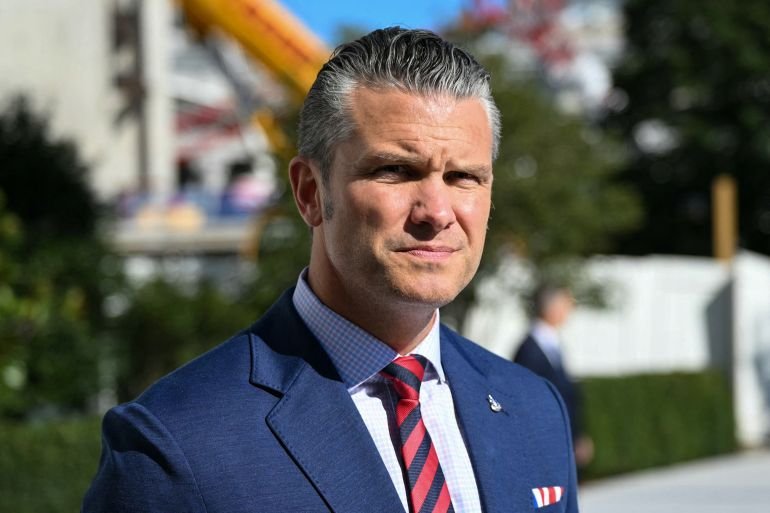
United States Defense Secretary Pete Hegseth has said the execution of a former US Army psychiatrist who killed 13 people at the Fort Hood military base in Texas will be publicly available to watch.
In an interview with the media outlet Real America’s Voice on Thursday, Hegseth was asked about President Donald Trump’s recent order to use a firing squad to execute Nidal Hasan, who was convicted of the 2009 shooting.
Recommended Stories
list of 3 itemsend of list
The secretary said he approved of the decision, calling it a “no-brainer”.
“We’ll make sure that people are able to watch it, that it’s public,” Hegseth told interviewer Jack Posobiec. “Because people need to understand that there’s serious consequences for these types of things.”
Hegseth added that the execution would take place at Fort Hood on December 3 at 1pm US Central Time (19:00 GMT), the same time that the 2009 shooting took place.
Hasan was sentenced to death in August 2013 after a military jury found him guilty of 45 counts of premeditated murder and attempted murder for the shooting.
The former Army major walked into an army processing centre on the Texas base, shouted “Allahu akbar” (God is greatest) and opened fire on fellow military members waiting to get medical attention.
Hasan’s execution required approval from Hegseth and Trump, who authorised the use of the firing squad on Monday.
An official with the Defense Department told Al Jazeera that Hasan’s execution would be “livestreamed”, adding that more details would come soon.
It is not clear from Hegseth’s remarks whether troops, spectators or US military officials would be present in person for the execution. US Army regulation states that at least two media outlets should be selected as witnesses.
No state or federal execution has ever been televised in the US. The last public execution in the country took place more than 90 years ago in Owensboro, Kentucky, on August 14, 1936.
The last time a US military execution was conducted by firing squad was in 1945, for desertion during World War II.
When asked to comment on Hegseth’s remarks – and whether Trump would view the execution – the White House referred Al Jazeera to the Pentagon.
The Trump administration announced it would add death by firing squad as an acceptable method for federal executions in April, along with gas asphyxiation and electrocution.
Crew members express relief upon return from record-breaking deployment of 265 days that strained conditions on board.
Published On 9 Oct 20269 Oct 2026
The United States aircraft carrier USS Abraham Lincoln has returned to its home port after a 322-day deployment, including a record 265 consecutive days at sea, during which it helped wage the US-Israel war on Iran.
The vessel returned to Naval Air Station North Island in San Diego, California, on Thursday, where members of its crew were greeted by family and friends.
Recommended Stories
list of 3 itemsend of list
“It feels amazing,” 20-year-old Abel Ramirez told The Associated Press news agency, adding that his parents had driven from Texas to meet him. “There was a certain point when I never thought I would come off.”
The record-setting deployment of the USS Lincoln became a symbol for larger criticisms of the US war effort, which has dragged on since February with no clear end in sight and has strained US military stockpiles.
The prolonged deployment prompted a series of news reports calling attention to deteriorating conditions, food shortages and a series of reported suicide attempts by crew members.
Pentagon chief Pete Hegseth praised the sailors on Wednesday in remarks that accused the media of trying to turn the ship into “a symbol of dysfunction or a symbol of low morale or a symbol of a failed mission”.
President Donald Trump and members of his administration have frequently lashed out at the news media for critical reporting on the war on Iran. Trump himself has called the reporting about the USS Lincoln “fake news”.
“The Lincoln has been out there for a period of time, a good period of time,” he said at an Oval Office meeting on August 17. “I know people on the Lincoln, and they say it’s beautifully maintained and beautifully taken care of.”
Earlier that month, when confronted with the amount of time the USS Lincoln had spent at sea without a port stop, Trump quipped that its deployment was “not nearly long enough“.
The reports of mental health strain on the USS Lincoln come as public opinion polls show low approval ratings among US voters for the war against Iran.
On Thursday, the Pew Research Center released a poll that found 65 percent of Americans disapproved of Trump’s handling of the war, compared with 33 percent who approved.
The war has also fuelled concerns about the cost of living ahead of the upcoming midterm elections. Since the war began, Iran has hindered commercial traffic through the Strait of Hormuz, a critical waterway for the trade of fuel, fertiliser and other goods.
Sailors returning home on the USS Lincoln said that they were looking forward to fresh meals and spending time with their families.
Alma Solano Velez said that her husband, one of the US service members on board, shared a list of foods he had been craving over his 10-month deployment: oxtail, barbecue chicken, broccoli and shrimp empanadas, among others.
She added that he had spoken about “the lack of food and showers” and was looking forward to seeing their four-year-old daughter.