Category: News

  • Did French rioters target synagogue and Jewish businesses, but spare Muslim ones?

    Did French rioters target synagogue and Jewish businesses, but spare Muslim ones?

    • While investigations are ongoing in Paris and Marseille, there is no evidence French rioters on the edges of the Oct. 17 nationwide protests targeted a synagogue in Paris or attacked Jewish-owned businesses in Marseille while sparing those owned by Muslims.
    • The rumor that a synagogue was attacked spread after IsraJ — a French-language Jewish news outlet — reported a Jewish space for prayer was found ransacked the morning of Oct. 18, the day after the protests. 
    • The break-in at the synagogue, Ohaley Yaakov, was more likely to be a burglary unrelated to the protests, according to the SPCJ, a Jewish nonprofit group that offers security services to many synagogues, Jewish schools and community centers and compiles data on antisemitic attacks. IsraJ reported that the space was temporary and had no visible Jewish signs from the outside. In addition, synagogues closer to the center of Paris were spared, suggesting there was no coordinated effort to target Jewish spaces. 
    • The claim that looters targeted Jewish businesses in Marseille came from a television interview with French journalist Paul Amar, who made this claim on the conservative news and opinion channel CNews, without citing sources or showing any proof to back his assertion.
    • According to Marseille police, the looting in Marseille had “no connection” to anti-Jewish hatred. “Businesses were targeted without any particular distinction,” a police spokesperson told Snopes in an email. Bruno Benjamin, president of the Marseille-area branch of the CRIF — a Jewish umbrella organization representing Jewish institutions in France — said on a French Jewish radio station on Oct. 19 that “all businesses were affected — whether Jewish, non-Jewish, or Muslim.”
    • Snopes will update this report if and when additional information surfaces. We have reached out to the leaders of Ohaley Yaacov, the synagogue in Paris, as well as the police headquarters in Paris and are waiting for responses.

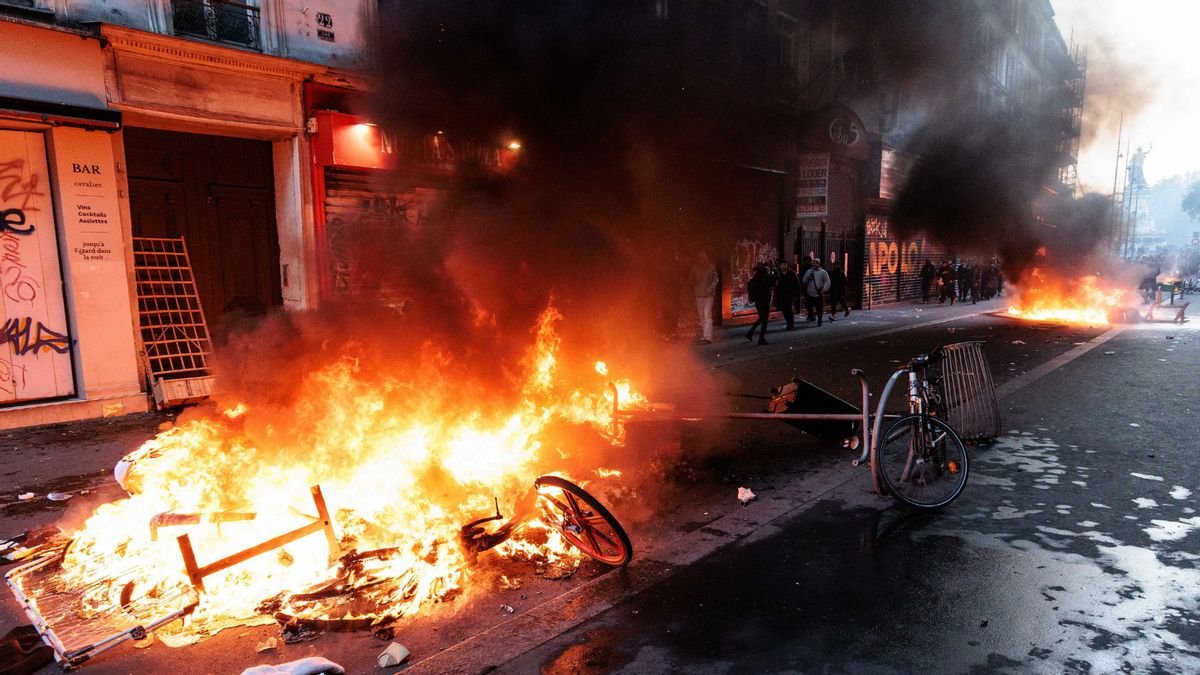
    After protests across France on Oct. 17 devolved into riots and looting, posts multiplied on social media claiming the rioters had targeted a synagogue in Paris and Jewish-owned businesses in Marseille, but spared Muslim businesses. 

    The claims spread on Facebook and Reddit. On X, one post alleged the rioters “took advantage of the protests to carry out a pogrom” — a coordinated mob attack on Jewish people and spaces (archived):

    Meanwhile, several Snopes readers emailed, asking us to verify these claims. 

    The rumor that looters attacked synagogue Ohaley Yaakov in Paris spread after a Jewish space for prayer was found ransacked the morning of Oct. 18, the day after the protests, according to IsraJ, a French-language Jewish news outlet.

    The story that Marseille rioters targeted Jewish businesses while sparing Muslim-owned businesses came from a television interview with French journalist Paul Amar, who made this claim on the conservative news and opinion channel CNews, without citing his sources.

    “They came prepared,” Amar said, without proof. “They had the addresses of town halls. They had addresses of Jewish shop owners. In a street in Marseille, I heard this morning, all businesses owned by Jews were set on fire. Businesses run by Muslims were not.”

    The New York Post, a conservative tabloid in the U.S., relayed both claims.

    There was no evidence the break-in at the synagogue in Paris had an antisemitic motive or a link to the protests, according to a Jewish nonprofit organization that offers security services to synagogues and other Jewish institutions. Instead, it was more likely to be a robbery.

    Meanwhile, a spokesperson at police headquarters in Marseille told Snopes in an email that the looting there had “no connection” to anti-Jewish sentiment. Further, a leading representative of the Jewish community in the region of Marseille said Jewish and non-Jewish businesses — including Muslim businesses — had been attacked without distinction.

    However, because investigations are ongoing, we have left the claim unrated.

    We reached out to Ohaley Yaakov and to police headquarters in Paris for more details. We’ll update this story should they respond. 

    Synagogue ransacked in Paris

    On the morning of Oct. 18, members of the synagogue Ohaley Yaakov found their space had been ransacked, according to IsraJ. The article said that the space was a temporary one during renovations at the main building, and had no visible Jewish signs from the outside. 

    While the faithful found prayer books, tefillin (leather straps Jewish men wrap around their arms and hands for prayer) and the content of cubbies and cupboards on the floor, the story said Torah scrolls had been left untouched and the vandals had not taken anything. 

    The article quoted one member of the synagogue’s board, identified only as Raphaël, as saying he did not think it had a a link to the protests as the congregation had been able to hold Shabbat services unbothered on the day of the protests. 

    Raphaël also told IsraJ that while he could not rule out an antisemitic motive, he thought the intruders had searched for money.

    The break-in at Ohaley Yaakov was more likely to be a burglary unrelated to the protests, according to the SPCJ — a Jewish nonprofit organization that offers security services to many synagogues, Jewish schools and community centers and compiles data on antisemitic attacks. Though the motive behind the attack had yet to be confirmed, the SPCJ said there had been no antisemitic graffiti or any other sign indicating the break-in was based on anti-Jewish sentiment.

    Notably, more-prominent synagogues nearer the center of Paris, where most of the protests and the looting took place, had been spared, suggesting there had been no coordinated effort to target Jewish spaces.

    Businesses looted in Marseille

    Meanwhile, the looting in Marseille had “no connection” to anti-Jewish hatred, according to police headquarters in Marseille. 

    “The looting that has taken place so far has no connection to religious beliefs,” a spokesperson for Marseille police told Snopes in an email. “Businesses were targeted without any particular distinction.” 

    Bruno Benjamin, president of the Marseille-area branch of the CRIF — a Jewish umbrella organization that represents Jewish institutions in France — said in an interview with a French Jewish radio station on Oct. 19 that there was “no evidence” Jewish-owned businesses had been specifically targeted (emphasis ours): 

    I know there’s a rumor going around that Muslim-owned businesses were spared and so on. 

    In any case, based on all the information we have right now, when we put it all together, we see that all businesses were targeted, whether they were Jewish, non-Jewish, or Muslim. In the end, they didn’t make any distinctions, you know — they’re looters. They break into a store and take whatever they can get their hands on. 

    Of course, as everyone knows, there are a lot of Jewish shop owners in Marseille, so they were affected too, but I don’t think we can make any distinctions at this point. In any case, we don’t have any evidence—we don’t have a body of evidence that would allow us to confirm that.

    Snopes has covered claims of antisemitism in Europe, including the rumor that Spanish police removed Jewish children from a plane at the Valencia airport.
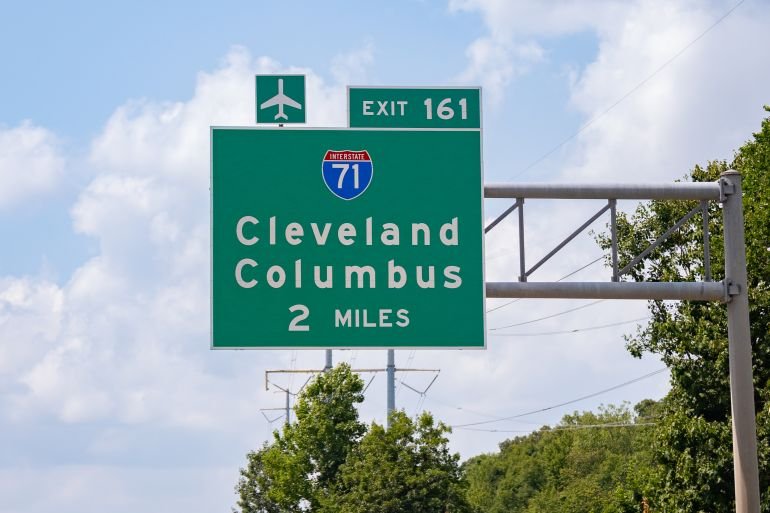
  • One killed in US shooting near mosque in Columbus, Ohio

    One killed in US shooting near mosque in Columbus, Ohio

    Local authorities say the mosque was not the target of the attack.

    At least one person has been killed in a shooting near a mosque in Columbus, Ohio in the United States, according to police.

    The US Bureau of Alcohol, Tobacco, Firearms and Explosives in Columbus, Ohio initially said its agents were “responding to a reported shooting incident at a mosque in the 2200 block of Albert Ave”.

    However, local police later said the shooting took place near the mosque, but the facility was not targeted.

    “We want to make it clear this was not an attack on the mosque,” said Sergeant James Fuqua, according to the Associated Press.

    He said the shooting stemmed from a dispute at an apartment building at the same location as the mosque.

  • Chuck Schumer urges FCC to block AI robocalls before elections

    Chuck Schumer urges FCC to block AI robocalls before elections

    Chuck Schumer urges FCC to reject petition allowing AI robocalls ahead of key November midterm elections.

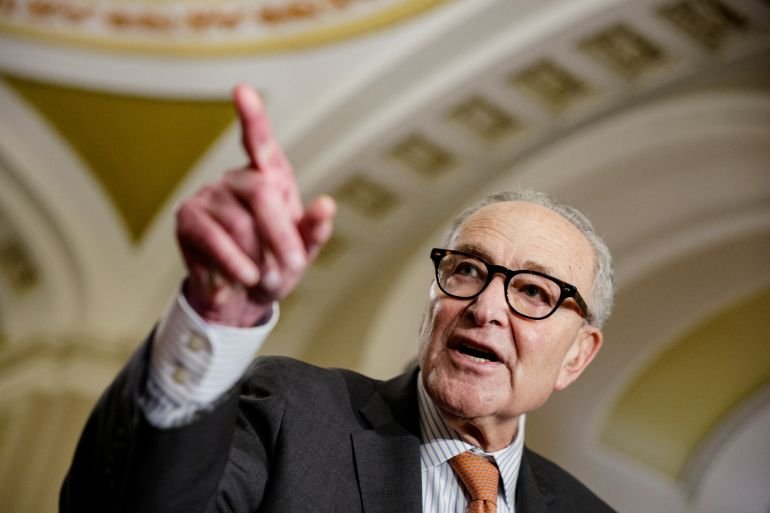
    United States Senate Democratic leader Chuck Schumer of New York has urged the Federal Communications Commission (FCC) not to approve a petition by the conservative group Club for Growth to allow AI-generated robocalls ahead of the November midterm elections.

    “Under this change, campaigns could use their opponents’ voice to send out a message that is, at best, disingenuous and, at worst, a blatant lie,” Schumer said on Monday.

    Recommended Stories

    list of 4 itemsend of list

    The petition was originally filed on August 31, and the public comment period began on September 4 and expires on Monday.

    Earlier this month, Anna Gomez, the Democratic member of the FCC, urged her colleagues not to allow consideration of the petition brought by the national conservative fiscal policy organisation.

    Her concerns echoed Schumer’s. “[If] the FCC allows a dark money group to flood Americans’ phones with AI-generated robocalls they never agreed to receive, it would bring chaos so close to Election Day,” commissioner Gomez told the Reuters news agency at the time.

    There is precedent for the concerns being raised. In the 2024 presidential election, ahead of the New Hampshire primary, voters received an AI-generated version in the voice of President Joe Biden, the then Democratic incumbent, telling them not to vote. The FCC said that a political consultant working with longshot primary challenger Dean Phillips was responsible.

    At the state level, Louisiana, Tennessee and Vermont passed laws this year requiring disclosures for AI-generated campaign phone calls. While robocalls have been used in political campaigns for years, FCC rules prohibit such calls to cellphones without prior consent, but the restrictions do not apply to landlines.

    Club for Growth’s president, David McIntosh, in a statement earlier this month, said that the group is asking for “the FCC to treat First Amendment-protected political speech the same way it already treats wireless calls about package deliveries, bank accounts, and doctor’s appointments”.

    “There is no one at the FCC that has expressed any interest in moving to an order on this or any of the petitions, and there are zero plans to do so. The FCC seeks comment on petitions that come in as a matter of normal procedure,” a spokesperson for the FCC told Al Jazeera.

  • Ex-OpenAI employee accused of planting device has Saudi backing: Prosecutor

    Ex-OpenAI employee accused of planting device has Saudi backing: Prosecutor

    US federal prosecutors allege the defendant was in frequent contact with unnamed member of royal family.

    An ex-OpenAI engineer accused of planting a recording device in an executive conference room at the AI company appears to have received considerable support from the Saudi government, United States prosecutors have said in a court filing.

    Federal prosecutors allege that the defendant, Abdulrahman Alfozan, 35, was in frequent communication with an unnamed member of the Saudi royal family and that a Saudi military official paid for a one-way plane ticket for Alfozan’s wife and young son to return to Saudi Arabia after his arrest, according to the court document, made public late on Sunday.

    Recommended Stories

    list of 4 itemsend of list

    Prosecutors made those allegations as they asked a federal judge to keep Alfozan in US custody to await trial, arguing he is a flight risk. Alfozan, a Saudi national and lawful permanent resident in the US, is scheduled to appear in federal court in San Francisco later on Monday.

    The case has highlighted security challenges around sensitive AI research as companies and governments compete fiercely for an edge in the transformational technology.

    “The defendant went to significant lengths to create customized, encrypted recording devices to secretly record highly sensitive meetings involving senior OpenAI personnel and executives, high-level business counterparts, and government officials, all while communicating with individuals of significance in Saudi Arabia and pursuing opportunities in — and making plans to travel to — Saudi Arabia,” prosecutors wrote in a detention memo.

    The Saudi government media office did not immediately respond to a request for comment. A lawyer for Alfozan did not immediately respond to a request for comment.

    The lawyer, William Pernik, previously asked for Alfozan to be released from custody, subject to conditions including location monitoring and surrendering his passport, and said Alfozan had spent the last 15 years in the US and had applied to become a citizen.

    The lawyer said a planned trip by Alfozan to Saudi Arabia this month was booked before he was under investigation and was for “family and immigration reasons”, according to a court filing.

    Investigation remains active

    US prosecutors charged Alfozan last week with using an electronic device to intercept oral communications. Alfozan plugged a recording device into the back of a television in an executive conference room at one of OpenAI’s San Francisco buildings, according to a criminal complaint.

    Meetings involving government officials took place in the conference room around the time the device was installed, according to the prosecutors’ detention memo.

    Prosecutors said the investigation remains active and additional charges could be brought against Alfozan.

    A member of the Saudi royal family sought to recruit Alfozan for an AI-focused role in Saudi Arabia, writing in one message, “Saudi needs you more then [sic] the US!” Alfozan replied, “100,” according to messages cited by prosecutors.

    Before his arrest, Alfozan was scheduled to fly to Riyadh during a planned two-month parental leave. His wife told investigators that she and their son planned to move permanently to Saudi Arabia and that Alfozan eventually intended to join them, according to prosecutors.

    In an Arabic-language interview on the Identity Capital podcast last month, Alfozan said that he visits Saudi Arabia three or four times a year, follows developments there and advises or mentors Saudi startups.

    He said meeting Prince Mohammed bin Salman, then deputy crown prince, during a 2016 gathering with young Saudi tech workers in Silicon Valley persuaded him to learn at a top tech company before bringing those skills back home.

    While Alfozan was working at Facebook, he and other Saudis in Silicon Valley formed a consulting initiative that linked Saudi public- and private-sector organisations with expertise in big data, the internet of things and machine learning.

    OpenAI previously said it discovered the device on September 30 and referred the matter to the FBI.

    Al Jazeera has reached out to the Saudi embassy for comment.

  • Florida issues arrest warrant for Cuban leader Raul Castro

    Florida issues arrest warrant for Cuban leader Raul Castro

    Florida, in the southeastern United States, has issued an arrest warrant for 95-year-old former Cuban leader Raul Castro.

    The move comes as US authorities step up pressure on the government in Havana.

    Recommended Stories

    list of 3 itemsend of list

    State Attorney General James Uthmeier said on Monday that the warrant was based on criminal charges over Castro’s alleged role in ordering two unarmed aircraft to be shot down in 1996.

    The aircraft were affiliated with Brothers to the Rescue, a Florida-based group that helps Cubans fleeing the country. Four people were killed in the attack.

    Castro faces state-level charges of conspiracy to commit first-degree murder in Florida.

    “Raul Castro ordered the murder of four Floridians in cold blood, and Florida will never stop pursuing accountability for that communist conspiracy,” Uthmeier wrote in a news release.

    He said the arrest warrant was necessary accountability for the lives lost. “Thirty years later, we are still fighting for justice for Carlos Costa, Pablo Morales, Mario de la Pena, and Armando Alejandre Jr.”

    The decision to shoot down the two small twin-engine planes has been the subject of renewed controversy over the last year, as Republican President Donald Trump seeks to oust Cuba’s communist leaders.

    The attack took place on February 24, 1996. US authorities say the planes were flying over international waters and received no warning before they were shot down.

    Cuban officials, meanwhile, have argued that previous Brothers to the Rescue flights had breached the country’s airspace, despite warnings to stay away.

    Castro, now 95 years old, was Cuba’s defence minister at the time of the attack. A key figure in the Communist Party of Cuba, he later became president of the island in 2008, replacing his brother, the late revolutionary leader Fidel Castro.

    Though he retired from the presidency in 2018, Raul Castro and his family remain powerful figures in Cuba’s government.

    Since the start of the year, the Trump administration has signalled it would like to see regime change in Cuba.

    To trigger such change, the administration has tightened US restrictions on the island, including by imposing a de facto energy blockade in January.

    By threatening steep tariffs against any country that supplies Cuba with oil, the US has effectively barred fuel exports to the country, according to experts.

    That, in turn, has caused deteriorating conditions on the island and strained the country’s already meagre power system, which relies heavily on fossil fuels. Only 40 percent of Cuba’s oil is produced domestically.

    Additional sanctions have been placed on Cuba’s economy, limiting its state-run industries.

    But in May, the Trump administration unveiled a superseding indictment also targeting Raul Castro for the 1996 plane downings.

    It charges Castro with federal crimes including conspiracy to kill US nationals, destroying aircraft and four counts of murder.

    The Trump administration issued a statement in support of Florida’s actions against Castro on Monday.

    “We’re committed to pursuing every lawful, prosecutable avenue to bring accountability, including parallel federal and state prosecutions,” US Attorney Jason Reding Quinones said.

    “Our historic federal indictment laid the groundwork, and James [Uthmeier] and his team have now taken the important step of bringing charges under Florida law.”

    Trump has previously used indictments to justify military operations targeting government leaders that are at odds with the US, including former Venezuelan President Nicolas Maduro.

  • Trump backs Netanyahu: Is the US planning a new Iran attack with Israel?

    Trump backs Netanyahu: Is the US planning a new Iran attack with Israel?

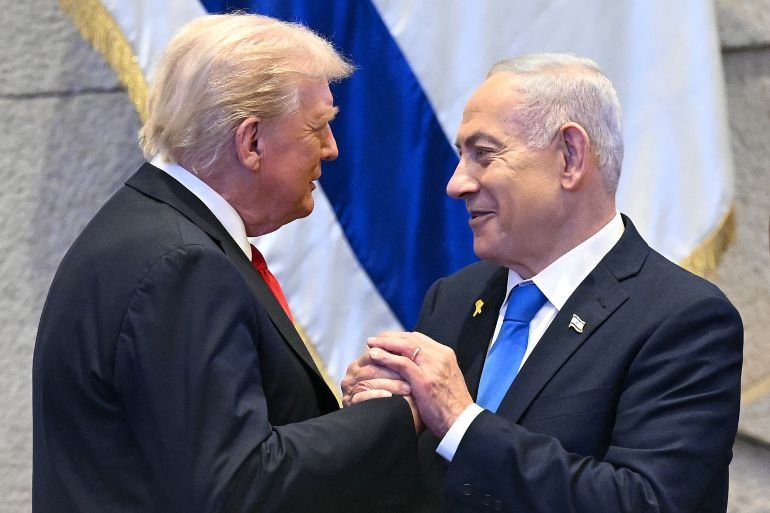
    United States President Donald Trump has announced his official endorsement of Israel’s Prime Minister Benjamin Netanyahu’s election campaign after previously refusing to endorse anyone.

    Trump posted on his Truth Social platform on Sunday that Netanyahu had been a “great warrior prime minister and an even greater partner for peace”, adding that Iran had been “systematically destroyed both militarily and financially, and unless they change their ways, rapidly, we will soon finish the job.”

    Recommended Stories

    list of 3 itemsend of list

    “If Israel has the wrong Leader, which would be anyone other than Bibi, America will have to do this work ourselves, and I am not inclined to do so,” Trump wrote.

    “Bibi Netanyahu has been Strong, Brave, and Brilliant in the face of tremendous opposition, including that coming from even Israel, itself. Despite all of that, he has endured and, in fact, he has thrived!”.

    The president added that normal men and women would have “wilted” under the pressure that Netanyahu was under, but the Israeli prime minister “got stronger”.

    “This is the kind of Partner that the United States of America is demanding of Israel, a Country for which it has done so much. Please let this Letter serve to represent my Complete and Total Endorsement of Bibi Netanyahu in his upcoming Race for Re-Election as Prime Minister of Israel. BIBI NETANYAHU WILL NEVER LET YOU DOWN!”, he added.

    The Israeli election will be on October 27 . According to Israeli news outlet Haaretz’s tracker, as of Sunday, the opposition alliance led by the Yashar party of Gadi Eisenkot is expected to win the most seats, at 52, with Netanyahu’s Likud party-led coalition taking 51 of the 120 seats in the Knesset.

    So far, no party is projected to secure an outright majority.

    But Trump’s endorsement comes after he had previously shied away from fully backing Netanyahu’s election campaign.

    Earlier this month, when asked twice by TIME magazine if Netanyahu should be given another term, Trump pivoted to his own popularity in Israel and Washington’s actions supporting Israel.

    When asked on Thursday by the right-wing US news outlet, Newsmax, if he was planning to get involved in the Israeli elections,  Trump said: “They’d like me to be. Yeah, they’d like me to be”.

    When asked whether he trusted Netanyahu, Trump replied, “I don’t trust anybody, honestly”.

    Still, Sanam Vakil, director of the Middle East North Africa programme at the British think tank Chatham House, explained that Trump’s endorsement of Netanyahu was “politically significant” because it comes after months of tension between the two leaders.

    “It allows Netanyahu to reinforce his claim that he is indispensable to Israel’s relationship with Washington,” Vakil told Al Jazeera.

    “However, its electoral impact should not be overstated. Israeli voters remain divided over Netanyahu’s leadership and the outcome of the Iran war. The endorsement may help consolidate his existing support, but it does not resolve the wider questions surrounding his record,” she added.

    Andreas Krieg, senior lecturer at the school of security studies at King’s College London, said that Trump’s endorsement was a “political gift” to Netanyahu, whose electoral campaign is struggling.

    But like Vakil, he cautioned against treating Trump’s endorsement as a game-changer.

    “Netanyahu’s problems are structural, involving fragmented right-wing parties, disillusioned ultra-Orthodox voters and the legacy of October 7. Trump may mobilise reluctant Likud voters, potentially worth a seat or two in a close contest, but he cannot manufacture the coalition majority Netanyahu currently lacks,” Krieg told Al Jazeera.

    What the endorsement means for the Iran war

    Much of Trump’s endorsement has been heavily focused on the Iran war, at a time when many analysts suggest the US president might be looking to restart attacks, either before or after the midterm elections in early November.

    The conflict, which began in February after the US and Israel launched attacks across Iran, is currently at a standstill.

    The Strait of Hormuz, which once transported 20 percent of global crude, was effectively shut by Iran after the war started. A US naval blockade of Iranian vessels followed, as each country struck ships passing through the waterway that they accused of not complying with its orders. Oil traffic last month through the strait picked up to pre-war levels as the US Navy shepherded an increasing number of tankers. But a spate of Iranian attacks on vessels early this month has again hit crude exports through Hormuz.

    On Monday morning, Brent crude futures stood at $107.57 a barrel, down slightly after reaching their highest since May 19 on Friday, when they briefly touched $110 a barrel.

    Last month, Iran presented a proposal to Washington to reopen the waterway within seven days, but negotiations failed after the US did not address Tehran’s seven conditions, which included the lifting of sanctions and the ending of its naval blockade.

    Foreign Minister Abbas Araghchi told Iranian media outlets on Sunday that the proposal remained on the table and, if Washington accepts Tehran’s conditions, the strait could reopen within six days, with talks resuming the following day.

    At the same time, Araghchi, in a post on X on Sunday night, accused Netanyahu of wanting to restart attacks on Iran with the US to “stay out of jail”.

    “Last time you wanted to ‘finish the job’, Iran emerged even stronger. Want to try your luck again? Be our guest. But be careful; we have unfinished jobs too,” he wrote.

    “Netanyahu is driving America into another war to stay out of jail, whatever the consequences for Israel – let alone POTUS,” he added.

    Krieg said Trump was prioritising the use of “coercive leverage” through his endorsement of Netanyahu but not necessarily “war over diplomacy”. 

    “The naval blockade is hurting Iran considerably and Washington believes time is working in its favour. Trump’s calculation is that Iran will eventually accept nuclear concessions and reopen Hormuz, without Washington having to offer significant concessions first,” he argued.

    “His endorsement reinforces the military threat underpinning that strategy. But it does not mean diplomacy is finished. Trump still wants a deal he can present as a victory. The danger is that Tehran increasingly believes it must escalate to improve its bargaining position.”

    What is next?

    Vakil explained that, while Trump’s declaration of support for Netanyahu had signalled renewed political alignment with Israel and left the door open for future joint military action, it also makes it “harder for Trump to distance himself from the war or portray the US as having been reluctantly drawn into it”.

    “He is explicitly taking ownership of the partnership and its military campaign against Iran. However, the endorsement does not necessarily mean that the two leaders have agreed on another operation, nor does it settle the question of who initially pushed hardest for war,” she said.

    Vakil added that for Tehran, the statement will reinforce the belief of Iranian leaders that there is “little meaningful distinction between US and Israeli objectives.”

    “At the same time, Trump’s suggestion that he is reluctant to confront Iran without Netanyahu could be interpreted as evidence of the limits of Washington’s appetite for another war.”

    Meanwhile, while Trump has said that he would not attack Iran before the November midterms, several US media outlets have reported that the Pentagon has drawn up plans to relaunch attacks before voters head to the polls.

    Last week, US news outlet Axios reported, citing both US and Israeli officials, that both Trump and Netanyahu had spoken about launching a major new operation against Iran ahead of the elections in both countries.

    For Krieg, the likelihood that the US and Israel launch an attack on Iran remains low, assuming there is no Iranian strike that forces a response.

    “The more dangerous window opens after November 3 [US midterms], when those electoral constraints disappear. Both militaries are preparing for that possibility. The greatest immediate risk is an uncontrolled escalation in Hormuz that forces Washington’s hand before either leader is politically ready,” he said.

  • Qatar warns global energy shockwaves from Iran war have yet to peak

    Qatar warns global energy shockwaves from Iran war have yet to peak

    Doha, Qatar — Qatar’s deputy prime minister has warned that global energy shockwaves from the US-Israel war on Iran have yet to reach their peak, raising concerns about further disruption to supplies, international trade and economic growth.

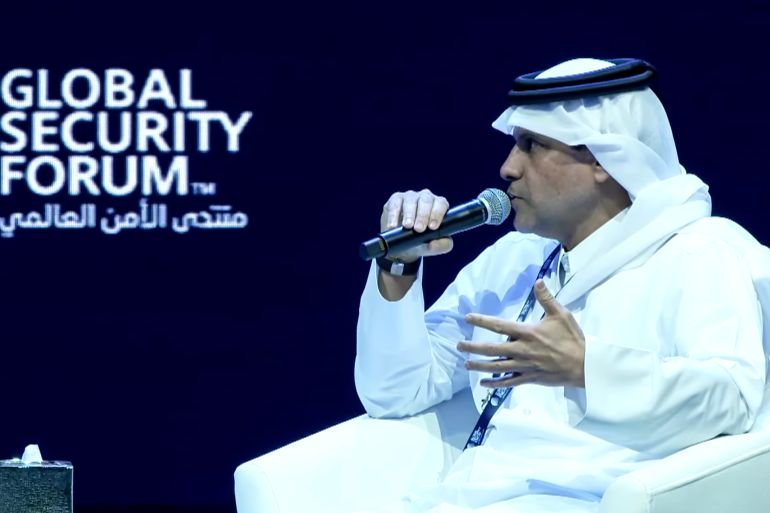
    Speaking at the Global Security Forum in Doha on Monday, Sheikh Saoud bin Abdulrahman Al Thani, who also serves as Minister of State for Defence Affairs, identified several threats facing Qatar and the wider Gulf, including risks to sovereignty and disruptions to energy supplies.

    Recommended Stories

    list of 3 itemsend of list

    “We haven’t reached the peak with respect to energy,” he said, warning of further repercussions “in the coming days and months”.

    His remarks come amid continued instability in the Strait of Hormuz – a vital waterway for global oil and liquefied natural gas (LNG) shipments – following the US-Israeli attacks on Iran on February 28, and Tehran’s retaliatory strikes across the region.

    Iranian strikes on Qatar’s Ras Laffan industrial complex in March damaged facilities, with repairs expected to take several years.

    “We were surprised,” Al Thani said when asked about the attack, adding that there had since been “a lot of discussion with Iran”.

    He said Qatar had drawn lessons from the strikes, “to make sure that all of our assets will be protected from any unexpected attack”.

    Al Thani also warned against imposing tolls on ships passing through the Strait of Hormuz.

    “Transit fees should not be applied,” he said, adding that uncertainty over the waterway would ultimately affect consumers worldwide.

    ‘We never stop our communication’

    Despite the attacks, Al Thani said Qatar continued to maintain contact with Tehran.

    “We never stop our communication,” he said, adding that the two countries remained in touch at different levels despite their disagreements.

    He described Qatar’s relationship with Iran before the attacks as one of trust, pointing to their shared offshore gasfield and longstanding economic interests.

    Al Thani expressed hope that mediation efforts involving Qatar, Pakistan and Oman would help produce an agreement between the United States, Iran and other parties, including Israel.

    He said a sustainable settlement would require broader regional dialogue involving Gulf Cooperation Council (GCC) countries, Pakistan and Turkiye, in consultation with international allies.

    “We need to build this on trust,” he added.

    Al Thani also suggested developing economic ties with Iran to prevent future conflicts, citing cooperation between France and Germany following decades of hostilities.

    “Iran is our neighbour. We need to find ways to live with them,” he said.

    US defence ties

    Al Thani also highlighted Qatar’s longstanding defence partnership with Washington, saying that “more than 90 percent” of attacks had been prevented through shared expertise and military capabilities developed over the past three to four decades.

    He said Qatar was continuing to develop Al Udeid airbase, which hosts US forces and military personnel from other partner countries.

    The base was itself targeted by Iran during the conflict, with Qatar reporting that it had shot down two Iranian warplanes during an attack in early March.

    Al Thani also announced plans for a new regional defence partnership, saying Qatar was prioritising several aspects including air defence, counter-drone measures and cybersecurity.

    “I’m happy to announce today also that soon we’re going to announce a new partnership,” he said, without naming the regional partners involved.

    The deputy prime minister stressed that Qatar’s mediation efforts did not diminish its commitment to defending its territory.

    “Mediation doesn’t mean that we should not be ready for any defensive action from our side,” he said.

  • Al Jazeera investigation challenges Israeli account of Heidi Levine attack

    Al Jazeera investigation challenges Israeli account of Heidi Levine attack

    An Al Jazeera investigation has challenged official Israeli narratives regarding an attack by settlers on Palestinian olive harvesters and an American photojournalist on Friday in Khirbet Abu Falah, northeast of Ramallah in the occupied West Bank.

    The investigation by Al Jazeera’s Data Journalism Unit used open-source verification and analysis of visual and geographic evidence.

    Official Israeli accounts of what happened differ: Prime Minister Benjamin Netanyahu’s office has questioned whether Israeli settlers were to blame at all, while the Israeli army has suggested that the military was engaged in addressing a confrontation between Palestinians and settlers at the time.

    But verified footage and mapped coordinates reveal a coordinated attack by masked settlers, with Israeli military vehicles passing by shortly before the incident, without intervening.

    The October 16 pogrom left veteran Washington Post photojournalist Heidi Levine, 63, with a broken rib, four fractured vertebrae, and wounds requiring hand surgery, despite wearing a clearly marked press vest.

    To establish the facts, the Data Journalism Unit monitored and analysed more than 20 videos and photos taken by journalists and witnesses on the ground. The team independently verified the footage, arranged it chronologically, communicated with local journalists, and mapped key locations.

    Geography of attack

    Geospatial analysis pinpoints the settler outpost where the attackers originated, the harvesting land, and the location of the assault on Levine.

    The attack on Levine was mapped at the coordinates 32°01’13.5″N 35°18’40.7″E. This site is approximately 455 metres southwest of an outpost on a hill near the Misholash settlement, and just 120 metres north of the land where Palestinians were picking olives.

    INTERACTIVE - Israeli settler attack map West Bank Heidi Levine-1792405524

    The unit also identified rooms traditionally used by Palestinians to store fertiliser and agricultural tools, and where farmers occasionally spend the night. These rooms are near the outpost, 430 and 500 metres northeast of the attack site. A local journalist, speaking on condition of anonymity due to security concerns, said that Palestinian owners can no longer enter these rooms, where settlers now stay and gather.

    The journalist explained that the outpost is located in Area B under the Oslo Accords, where the Palestinian Authority (PA) manages civil affairs and Israel retains security control. While only a few settlers typically reside in the outpost to “prove” their presence, during any incident, 50 to 100 settlers from other outposts gather there before descending on the fields.

    He noted that other settler tents on the adjacent mountain overlooking the village serve as additional gathering points to attack anyone harvesting olives.

    Chronological evidence

    Tracking the footage chronologically reveals a gradual escalation leading up to the attack.

    Movements began around 8am when a 4×4 vehicle carrying settlers headed towards the site, followed by six motorcycles moving towards the area opposite the harvesters. In a video posted shortly after 9am, about 30 settlers are seen gathering near the farmers.

    Al Jazeera correspondent Tharwat Shaqra, who was at the scene, said that Israeli military vehicles passed through the area, and after their passage, settlers headed towards the journalists and farmers, “as if it were a green light.” Independent Israeli journalist Oren Ziv noted that military jeeps made no attempt to stop the masked men.

    The settlers then set fire to the olive trees and advanced towards the harvesters, prompting village youths to respond by throwing stones.

    Footage subsequently documents the assault on Levine after she was knocked down. Her colleagues could only reach her after young Palestinians pushed the settlers back by throwing stones in their direction.

    American journalist Jasper Nathaniel, who helped pull her away, wrote on X: “The only reason I was able to get to Heidi is because Palestinian youth provided cover with stones facing settlers and soldiers with machine guns and tear gas.” He added that the army pursued the young Palestinians after the attack, not the settlers.

    During the same period, a video captured the sound of four gunshots followed by two more, which Tharwat Shaqra confirmed originated from the settlers.

    Israeli forces only appeared to be deployed at the attack site in later footage, with their vehicles stationed in the settlers’ area. Soldiers then shot local council member Abdel Jaber Obeid and intercepted the ambulance before his transfer to hospital, as the army continued firing tear gas at the olive harvesters.

    Conflicting Israeli claims

    The timeline and geographical data contradict the official Israeli narratives.

    The Israeli Prime Minister’s Office said that “the facts surrounding the confrontation near Abu Falah, during which Washington Post photojournalist Heidi Levine was allegedly assaulted, remain unclear and are under investigation”. It cited reports indicating “some 200 Arabs and far-left activists confronted approximately 40 Israeli youths”.

    However, footage and testimonies show that the settlers gathered, descended, and burned trees before the youths responded, and the assault on Levine is documented on video.

    Conversely, the army did not question the assault, acknowledging the injury of a foreign journalist. The Israeli military stated that forces were dispatched “following a report of a violent confrontation” and broke it up using “riot dispersal means”. It said soldiers “fired warning shots into the air and then fired toward a suspect who ran toward them, carrying a sharp object,” making no mention of the settlers or their gunfire.

    The Israeli military’s international spokesperson Ariella Mazor told The Washington Post that soldiers in the area were trying to disperse a large, violent crowd and did not see the assault on Levine.

    But evidence from videos and other testimony suggests that military vehicles in the area passed by the settlers without intervening and that Israeli forces eventually directed tear gas at Palestinians after the attack.

    Widespread condemnation

    The attack prompted widespread condemnation. United States Ambassador to Israel Mike Huckabee demanded that “those who attacked unarmed reporter should spend YRS in prison”.

    He said that “attacking a female photographer is despicable act of terror carried out by masked cowards”.

  • NFL’s Azeez Al-Shaair honours Palestinian children for fifth straight week

    NFL’s Azeez Al-Shaair honours Palestinian children for fifth straight week

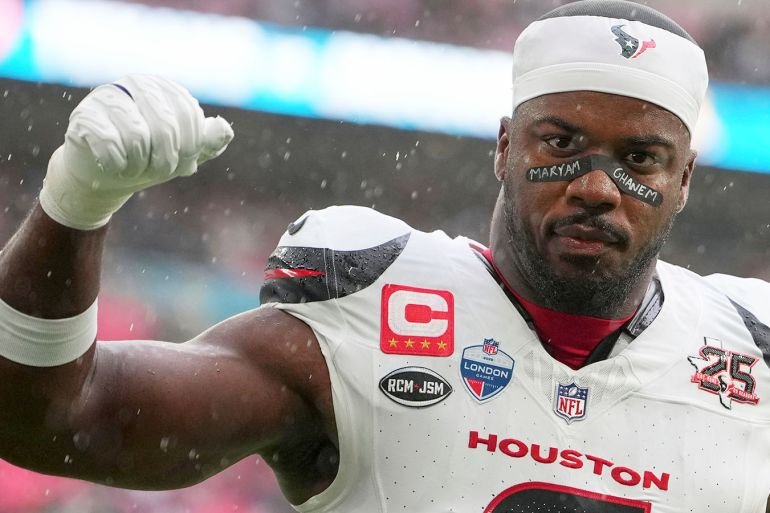
    Al-Shaair’s eyeblack carried the name of Maryam Ghanem, a girl in Gaza who was forced to watch her mother burn alive.

    American football player Azeez Al-Shaair has honoured a Palestinian child for the fifth consecutive week by writing the name of Maryam Ghanem, a girl who was orphaned in Gaza last week, on his eyeblack for his team’s latest National Football League game.

    Al-Shaair carried Ghanem’s name on the black tape across his nose during the Houston Texans’ fixture against the Jacksonville Jaguars at Wembley Stadium in London, United Kingdom, on Sunday.

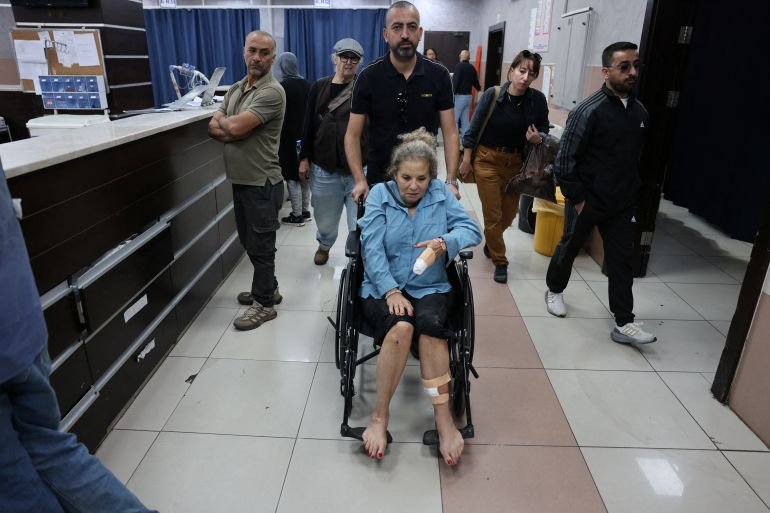
    Ghanem is a two-and-a-half-year-old girl in Gaza who was forced to watch her mother burn alive after an Israeli strike hit their home in the Remal neighbourhood of Gaza City on Wednesday.

    [Screen grab/ instagram/a_train2_]
    [Screengrab/Instagram/a_train2_]

    Local journalists managed to rescue her after hearing her cries as flames engulfed her home in an apartment building that was struck early that morning. Ghanem was later identified as the sole survivor of her family.

    She was moved to hospital for treatment. “My hand hurts,” Ghanem said as she lay shell-shocked on a hospital bed, suffering from severe burns, and clutching her doll close to her.

    Maryam lost her father at the beginning of Israel’s genocidal war on Gaza and has now lost her mother as well.

    Israeli air strikes continue to pound Gaza regularly despite a United States-brokered “ceasefire” in the besieged Strip.

    Al-Shaair has used his social media accounts and his eyeblack, a tape worn by athletes to reduce glare, to bring attention to the killings of Palestinians in the three years of Israel’s genocidal war on Gaza.

    The 29-year-old has been fined and has reportedly been threatened with removal from games, but he remains undeterred.

    The Black American Muslim player began his current NFL season by wearing the name of Hind Rajab on September 13.

    The five-year-old girl was killed in Gaza after Israeli soldiers opened fire on her family’s stranded car on January 29, 2024.

    Houston Texans linebacker Azeez al-Shaair (0) warms-up before an NFL football game against Jacksonville Jaguars in London, Sunday, Oct. 18, 2026. (AP Photo/Kin Cheung)
    Azeez Al-Shaair has been honouring Palestinian children for five weeks [Kin Cheung/AP Photo]

    The NFL fined him $11,491 for breaching the league’s code of conduct on players’ clothing and equipment during a match against the Buffalo Bills.

    However, basketball player Kyrie Irving stepped in and offered to pay the fine for Al-Shaair, who later confirmed that he had been in touch with the nine-time NBA All-Star.

    Al-Shaair brushed off talk of the fine while speaking to reporters last week. “It’s bigger to me; what’s a life worth? Is a life worth $11,000? No, I think it’s priceless,” he said.

    He has continued to raise awareness about the slain children by wearing a name, or combination of names, every Sunday.

    Prominent American Muslim scholar Omar Suleiman has repeatedly voiced his support for Al-Shaair.

    “My brother, who went to Jordan to be with Palestinian refugees this summer, who spends time with Palestinian children with missing limbs in Houston, who is using every week of his Pro Bowl NFL career to honour a Palestinian child despite the fines,” Suleiman wrote about Al-Shaair in a social media post last month.

    “In the sports and entertainment arenas run by many of the same types of people who run government, choose to be like Azeez Al-Shaair, Kyrie, and Macklemore.”

    The NFL’s fine on Al-Shaair came at a time when Robert Kraft, owner of the Boston-based team, the New England Patriots, confirmed that he pressured pop star Ed Sheeran to drop rapper Macklemore from his tour of the US.

  • How a grass fire at a Canadian military base killed four soldiers

    How a grass fire at a Canadian military base killed four soldiers

    On Saturday morning, Canadian military officials at a base in Alberta province observed a grass fire that appeared sufficiently contained, allowing soldiers to conduct live-fire combat training. Then, the officials say, the wind shifted.

    In less than a minute, Canadian soldiers went from training drills to being engulfed in flames, said Major-General Wade Rutland, describing the incident that killed four soldiers and injured 39 people, 19 of them critically.

    “The fire was a kilometre away when the wind shifted. That is not normal for a fire to move a kilometre in 36 seconds,” Rutland said at a news conference in Edmonton, the capital of Alberta, on Sunday.

    While the cause of the grass blaze remains unknown, Prime Minister Mark Carney described the incident as one of the worst peacetime tragedies for Canada’s military on domestic soil.

    So how did the grass fire spread so fast, and why is this base significant?

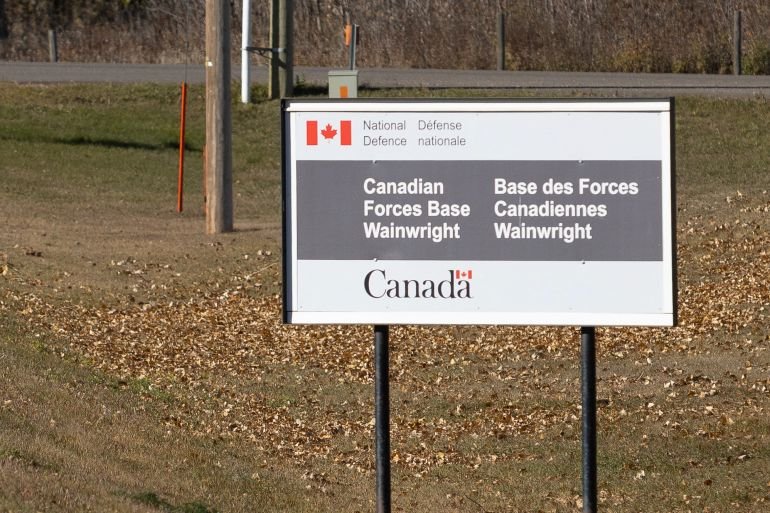
    Firefighers and emergency services close to Canadian Forces Base Wainwright in Wainwright, Alberta, Canada, on October 18, 2026.
    Firefighters and emergency services close to Canadian Forces Base Wainwright in Wainwright, Alberta, October 18, 2026 [AFP]

    What is a grass fire?

    A grass fire spreads through dry grass, weeds, shrubs and other low-growing vegetation. Unlike forest fires that burn through trees and woodland, grass fires spread across open fields, grasslands and plains.

    They can move exceptionally quickly because dry grass ignites easily and provides a continuous source of fuel, and wind can play a pivotal role in how the fire develops.

    Strong winds push flames rapidly across open terrain, change their direction with little warning, and carry burning embers ahead of the main fire, potentially igniting new fires.

    The uncertainty of winds makes grass fires difficult to predict and contain, particularly in dry conditions.

    They may burn for a shorter time than a forest fire, and while they are easier to contain, the speed at which they can spread in dry conditions can make them lethal.

    Grass fires can start naturally but can also be ignited by human activities, such as discarded cigarettes or equipment sparks.

    What happened at the base?

    The fire spread on Saturday afternoon during high-intensity combat training involving Charlie Company of the 3rd Battalion, Princess Patricia’s Canadian Light Infantry, at Canadian Forces Base Wainwright in Alberta, western Canada, about 210km (130 miles) southeast of Edmonton.

    The area lies in the prairies, a landscape of wide, open grasslands, rolling plains and scattered groves of trees. The base is also one of the Canadian Army’s largest training centres and a key facility for preparing troops for operational deployment.

    About 84 soldiers were split between a grenade range and an area where they practised attacks on simulated enemy positions. The fire swept into the second training area.

    Rutland said investigators would examine whether the wind drove the fire towards the soldiers or whether flames spread unseen through vegetation before suddenly overtaking them.

    Large areas of Alberta were hit by a windstorm, with gusts up to 100km/h (62mph). The winds toppled trees, sent signs flying and pushed flames beyond the base into surrounding rural areas.

    The fire also disrupted advance voting ahead of Monday’s referendum on whether Alberta should begin a process that could lead to independence from Canada.

    On Sunday, the Canadian media reported that the fire could have worsened after a gas facility was struck during a live firing exercise. However, the military later clarified that investigators do not believe any explosions were caused by oil or gas infrastructure.

    Firefighters continue to work close to Canadian Forces Base Wainwright in Wainwright, Alberta, Canada, on October 18, 2026.
    Firefighters continue to work close to Canadian Forces Base Wainwright, October 18, 2026 [AFP]

    Were there initial warnings?

    Global News, a Canadian publication, reported that an armed forces memo obtained by it noted the fire risk was assessed as low for the scheduled live-ammunition exercise, greenlighting soldiers to train.

    However, Environment Canada had issued a strong-wind warning earlier that day, forecasting gusts of up to 100km/h in parts of Alberta.

    The memo also noted that blazes jumped a fire guard and spread outside the base, forcing the evacuation of one family home.

    “During training, a grass fire ignited, and strong winds caused the fire to spread rapidly and shift direction; the fire shifted toward the personnel on the range and overtook their admin area,” the memo states.

    Global News reported that the memo warned that the situation was “fluid” and the casualty figures “may change over time with ongoing assessments” of status.

    Why is the base significant?

    The Wainwright base is one of the country’s largest and most used military facilities, especially for training soldiers. It spans 609sq km (235sq miles) and is home to 25 weapons ranges.

    During the final months of World War II and for several months in 1946, the base was used as an internment centre for German prisoners of war.