Category: Entertainment

  • Shakira, Romeo Santos, Prince Royce Among Top Winners at Premios Juventud 2026

    Shakira, Romeo Santos, Prince Royce Among Top Winners at Premios Juventud 2026

    Shakira, Prince Royce and Romeo Santos were among the top winners at Premios Juventud 2026, broadcast live from the Starlight Amphitheater in Marbella, Spain on Thursday night.

    Royce and Santos shared three wins on the back of their collaborative project “Better Late Than Never,” which picked up best tropical album. Their tracks “Dardos” and “Lokita Por Mí” won tropical hit and tropical mix, respectively. Shakira, meanwhile, was named Premios Juventad female artist and won OMG collaboration for “Dai Dai” with Burna Boy as well as best pop song for “Bésame” with Alejandro Sanz. Aitana and Alejandro Fernández also received three awards.

    Elsewhere, Bad Bunny and Karol G won two awards apiece, as did Bizarrap, Carín León, Ovy on the Drums, Santos Bravos, Grupo Frontera, Beéle and Angelique Boyer.

    The award show, which was the culmination of a week of events in various cities across the globe, also bestowed the Agent of Change award upon Antonio Banderas, Marc Anthony, Yandel and La Oreja de Van Gogh. Jesús Vázquez hosted alongside Alejandra Espinoza and Clarissa Molina for the event, which was held in Europe for the first time this year.

    Check out the full Premios Juventud 2026 winners list by artist below:

    AITANA (3)

    Mejor Euro-Song | Best Euro-Song – SUPERESTRELLA
    Mejor Álbum Pop | Best Pop Album – CUARTO AZUL
    Couple Goals (WITH PLEX)

    ALEJANDRO FERNÁNDEZ (3)

    Mi Track Favorito | My Favorite Track – ME ESTÁ DOLIENDO (WITH CARÍN LEÓN)
    Mejor Canción Pop Balada | Best Pop/Ballad Song – SIN DESPEDIDA (WITH CARLOS RIVERA)
    Mejor Canción Banda Música Mexicana | Best Mexican Banda Music – EL REY (WITH VICENTE FERNÁNDEZ)

    PRINCE ROYCE (3)

    Tropical Hit – DARDOS (WITH ROMEO SANTOS)
    Tropical Mix – LOKITA POR MÍ (WITH ROMEO SANTOS)
    Mejor Álbum Tropical | Best Tropical Album – BETTER LATE THAN NEVER (WITH ROMEO SANTOS)

    ROMEO SANTOS (3)

    Tropical Hit – DARDOS (WITH PRINCE ROYCE)
    Tropical Mix – LOKITA POR MÍ (WITH PRINCE ROYCE)
    Mejor Álbum Tropical | Best Tropical Album – BETTER LATE THAN NEVER (WITH PRINCE ROYCE)

    SHAKIRA (3)

    Artista Premios Juventud Femenina | Premios Juventud Female Artist
    Colaboración OMG | OMG Collaboration – DAI DAI (WITH BURNA BOY)
    Mejor Canción Pop | Best Pop Song – BÉSAME (WITH ALEJANDRO SANZ)

    ANGELIQUE BOYER (2)

    Mi Actriz Favorita | My Favorite Actress – DOMÉNICA MONTERO
    Me Enamoran | They Make Me Fall in Love – DOMÉNICA MONTERO (WITH MARCUS ORNELLAS)

    BAD BUNNY (2)

    Artista Premios Juventud Masculino | Premios Juventud Male Artist
    Mejor Tour | Best Tour – DEBÍ TIRAR MÁS FOTOS WORLD TOUR

    BEÉLE (2)

    Mejor Canción Pop/Rhythmic | Best Pop/Rhythmic Song – YO Y TÚ (WITH QUEVEDO & OVY ON THE DRUMS)
    Afrobeat Latino del Año | Afrobeat of the Year – ENEMIGOS (WITH OZUNA & OVY ON THE DRUMS)

    BIZARRAP (2)

    Productor del Año | Producer of the Year
    Mejor Urban Track | Best Urban Track – DADDY YANKEE: BZRP MUSIC SESSIONS, VOL. 0/66 (WITH DADDY YANKEE)

    CARÍN LEÓN (2)

    Mi Track Favorito | My Favorite Track – ME ESTÁ DOLIENDO (WITH ALEJANDRO FERNÁNDEZ) (SECA)
    Mejor Álbum Música Mexicana | Best Mexican Music Album – PALABRA DE TO’S

    GRUPO FRONTERA (2)

    Mejor Colaboración Música Mexicana | Best Mexican Music Collaboration – MODO DIFÍCIL (WITH GRUPO FIRME)
    Mejor Fusión Música Mexicana | Best Mexican Music Fusion – NO CAPEA (WITH XAVI)

    KAROL G (2)

    Álbum del Año | Album of the Year – TROPICOQUETA
    Mejor Canción Urbano Rhythmic | Best Urban Rhythmic Song – VERANO ROSA (WITH FEID)

    OVY ON THE DRUMS (2)

    Afrobeat Latino del Año | Afrobeat of the Year – ENEMIGOS (WITH OZUNA & BEÉLE)
    Mejor Canción Pop/Rhythmic | Best Pop/Rhythmic Song – YO Y TÚ (WITH QUEVEDO & BEÉLE)

    SANTOS BRAVOS (2)

    Grupo o Dúo Favorito del Año | Favorite Group or Duo of The Year
    La Nueva Generación Masculina | New Generation – Male Artist

    ALEJANDRO SANZ (1)

    Mejor Canción Pop | Best Pop Song – BÉSAME (WITH SHAKIRA)

    ALOFOKE MUSIC (1)

    Mejor Canción Dembow | Best Dembow Song – SACA PUNTA (WITH ARLENE MC, JEY ONE & LA MAS DOLL)

    ÁNGELA AGUILAR (1)

    La Mezcla Perfecta | The Perfect Collab – NO QUIERO HABLAR (WITH MARC ANTHONY)

    ARAYA VLOGS (1)

    ModoAvión | #Airplane Mode

    ARCÁNGEL (1)

    Mejor Canción Urbano Trap | Best Urban Trap Song – QUE SENSACIÓN (REMIX) (WITH JEZZY)

    ARIA VEGA (1)

    La Nueva Generación Femenina | New Generation – Female Artist

    ARLENE MC (1)

    Mejor Canción Dembow | Best Dembow Song – SACA PUNTA (WITH ALOFOKE MUSIC, JEY ONE & LA MAS DOLL)

    BURNA BOY (1)

    Colaboración OMG | OMG Collaboration – DAI DAI (WITH SHAKIRA)

    CALIBRE 50 (1)

    Mejor Canción Norteña Música Mexicana | Best Mexican Norteño Music – ME ENAMORÉ SOLO

    CAMILA FERNÁNDEZ (1)

    Mejor Canción Mariachi Música Mexicana | Best Mexican Mariachi Music – RETUMBANDO EN EL CORA

    CARLOS RIVERA (1)

    Mejor Canción Pop Balada | Best Pop/Ballad Song – SIN DESPEDIDA (WITH ALEJANDRO FERNÁNDEZ)

    CAZZU (1)

    Mejor Tema en Cumbia | Best Cumbia Song – CON OTRA

    DADDY YANKEE (1)

    Mejor Urban Track | Best Urban Track – DADDY YANKEE: BZRP MUSIC SESSIONS, VOL. 0/66 (WITH BIZARRAP)

    DJ SNAKE (1)

    Mejor Mezcla Urbana | Best Urban Mix – TONTO (WITH J BALVIN & RYAN CASTRO)

    FARRUKO (1)

    Mejor Dance Track | Best Dance Track – YAPAQUE (WITH GREEICY & STEVE AOKI)

    FEID (1)

    Mejor Canción Urbano Rhythmic | Best Urban Rhythmic Song – VERANO ROSA (WITH KAROL G)

    GABRIEL SOTO (1)

    Mi Actor Favorito | My Favorite Actor – MONTEVERDE

    GREEICY (1)

    Mejor Dance Track | Best Dance Track – YAPAQUE (WITH FARRUKO & STEVE AOKI)

    GRUPO FIRME (1)

    Mejor Colaboración Música Mexicana | Best Mexican Music Collaboration – MODO DIFÍCIL (WITH GRUPO FRONTERA)

    HUMBE (1)

    Mejor Canción Pop – Nueva Generación | Best Pop Song – New Generation – MORFINA

    J BALVIN (1)

    Mejor Mezcla Urbana | Best Urban Mix – TONTO (WITH RYAN CASTRO & DJ SNAKE)

    JAY WHEELER (1)

    Mejor Canción Pop Rock | Best Pop/Rock Song – SIN TI (WITH MORAT)

    JENNY SOLARES (1)

    Mejor LOL | Best LOL

    JEY ONE (1)

    Mejor Canción Dembow | Best Dembow Song – SACA PUNTA (WITH ARLENE MC, ALOFOKE MUSIC & LA MAS DOLL)

    JEZZY (1)

    Mejor Canción Urbano Trap | Best Urban Trap Song – QUE SENSACIÓN (REMIX) (WITH ARCÁNGEL)

    KENIA OS (1)

    Girl Power – FIFTY FIFTY (WITH LOLA INDIGO)

    LA MAS DOLL (1)

    Mejor Canción Dembow | Best Dembow Song – SACA PUNTA (WITH ARLENE MC, ALOFOKE MUSIC & JEY ONE)

    LOLA INDIGO (1)

    Girl Power – FIFTY FIFTY (WITH KENIA OS)

    LOLA LOLITA (1)

    Creator de España | Creator of Spain

    MALUMA (1)

    Mejor Canción Pop/Urbano | Best Pop/Urban Song – BRONCEADOR

    MARC ANTHONY (1)

    La Mezcla Perfecta | The Perfect Collab – NO QUIERO HABLAR (WITH ÁNGELA AGUILAR)

    MARCUS ORNELLAS (1)

    Me Enamoran | They Make Me Fall in Love – DOMÉNICA MONTERO (WITH ANGELIQUE BOYER)

    MERCEDES ROA (1)

    POV Futbolero | Soccer POV

    MORAT (1)

    Mejor Canción Pop Rock | Best Pop/Rock Song – SIN TI (WITH JAY WHEELER)

    OMAR CAMACHO (1)

    La Nueva Generación Música Mexicana | New Generation – Mexican Music

    OZUNA (1)

    Afrobeat Latino del Año | Afrobeat of the Year – ENEMIGOS (WITH BEÉLE & OVY ON THE DRUMS)

    PINKY PROMISE (1)

    Podcast del Año | Podcast of the Year

    PLEX (1)

    Couple Goals (WITH AITANA)

    QUEVEDO (1)

    Mejor Canción Pop/Rhythmic | Best Pop/Rhythmic Song – YO Y TÚ (WITH OVY ON THE DRUMS & BEÉLE)

    RYAN CASTRO (1)

    Mejor Mezcla Urbana | Best Urban Mix – TONTO (WITH J BALVIN & DJ SNAKE)

    STEFANNY LOAIZA (1)

    Creator Del Año | Creator of the Year

    STEVE AOKI (1)

    Mejor Dance Track | Best Dance Track – YAPAQUE (WITH FARRUKO & GREEICY)

    VALERIA VILLALOBOS (1)

    #GettingReadyWith

    VICENTE FERNÁNDEZ (1)

    Mejor Canción Banda Música Mexicana | Best Mexican Banda Music – EL REY (WITH ALEJANDRO FERNÁNDEZ)

    XAVI (1)

    Mejor Fusión Música Mexicana | Best Mexican Music Fusion – NO CAPEA (WITH GRUPO FRONTERA)

    YOUNG MIKO (1)

    Mejor Álbum Urbano | Best Urban Album – DO NOT DISTURB

  • ‘Marriagetoxin’ Creators Joumyaku and Yoda Mizuki Tease Season 2: ‘There Is Plenty of Cool Action We Want You to See’ (EXCLUSIVE)

    ‘Marriagetoxin’ Creators Joumyaku and Yoda Mizuki Tease Season 2: ‘There Is Plenty of Cool Action We Want You to See’ (EXCLUSIVE)

    A master assassin’s toughest job isn’t a kill order. It’s finding a wife.

    That premise carried “Marriagetoxin” from a running Shonen Jump+ series into one of the standout anime of Spring 2026, and creators Joumyaku and Yoda Mizuki are already looking toward a second season set for January 2027.

    The series follows Hikaru Gero, a master assassin whose latest assignment is to secure an heir by finding a wife. The target of his most recent job, a marriage swindler named Mei Kinosaki, ends up joining him for that mission instead. Serialized on Shueisha’s Shonen Jump+, “Marriagetoxin” has surpassed one million copies in circulation worldwide, and its anime adaptation, directed by Hori Motonobu, is streaming on Crunchyroll ahead of a second season premiering in January 2027.

    On how the manga came together, Joumyaku says, “It started with the single idea of ‘a Poison Master goes on a search for marriage,’ and from there, as we built the characters and the story, everything I had read, experienced, and picked up along the way got layered onto it.”

    The audience reaction has exceeded what either creator anticipated. Joumyaku points to Kinosaki’s reception specifically, crediting the anime staff for carrying Yoda’s character designs and action work faithfully into the adaptation. Yoda says they are grateful to the readers who have supported the series, to everyone involved in making it, and to Joumyaku for teaming up with them. “What surprises me most is that so many readers have enjoyed it – enough that Volume 1 went straight into a reprint and the dream of an adaptation came true.” Yoda says.

    Both creators are already looking ahead to the second season. Joumyaku promises that even more captivating heroines will appear one after another, deepening the relationships surrounding Gero. “There is plenty of cool action we want you to see,” Joumyaku says, adding that they are very much looking forward to delivering it to fans. Yoda echoes that heading into Season 2, captivating new heroines arrive along with several characters they are fond of themselves.

    Because the story operates within the shonen framework even though most of its cast are adults, Joumyaku says the protagonist’s growth remains the story’s central axis, which is why depicting relationships and identity carries so much weight for the work. Yoda, who illustrates the manga, says the story itself is built by Joumyaku and the series editor rather than by them, but that the emotions are already fully expressed at the storyboard stage. For an artist who wants to depict emotion richly above all, they call it a genuinely enjoyable story to illustrate.

    That approach has extended to how the series treats gender presentation, an element fans and critics have singled out as unusually progressive for the genre. Joumyaku describes the subversive elements as something that emerged naturally rather than as a plan set from the outset, with the protagonist caught between family expectations and the pull to live authentically. “I have a rough picture of where things go through the final chapter, but it feels like we are building the story while working out together how the protagonist comes to terms with it all,” Joumyaku says.

    Asked about designing Kinosaki, Yoda says, “I had been told in advance that this character would appear in both traditionally masculine and feminine clothing, so on the art side, I designed Kinosaki so that the character holds up in either presentation.”

    Working with Hori, whose credits include “Metallic Rouge” and “Carole & Tuesday,” has also shaped the manga going forward. Joumyaku says ideas raised in the anime’s script meetings have fed back into key parts of the source material, pointing to the fully realized car-splitting sequence in Episode One as an example of the level of craft involved. They single out a scene from Chapter 12 of Volume Two, in which Ureshino dumps yakisoba on her head, as the one that stayed with them most, noting that it was given what they call a proper through-line in Part B of Episode Four. “It was amazingly good,” Joumyaku says.

    Yoda says the anime’s action choreography went well beyond anything scripted in the manga panels. Of watching it unfold, they say, “so this is how they were moving all along.” They add that seeing the anime’s rendering of Kinosaki’s eyes pushed them to draw the character bigger and cuter in the source material going forward.

    Looking toward the manga’s climax, Joumyaku says the urge to give everything to the story’s endpoint grows stronger by the day, while Yoda says they never expected their own dream of seeing their character designs made into figures to actually come true, and that going forward they want to draw even better character designs and illustrations, ones that also get made into figures.

  • ‘Queer Edward II’ Takes Us Behind the Scenes of Derek Jarman’s Film Shoot and a Political Backlash (Exclusive Venice Clip)

    ‘Queer Edward II’ Takes Us Behind the Scenes of Derek Jarman’s Film Shoot and a Political Backlash (Exclusive Venice Clip)

    In 1991, Irish cinematographer Seamus McGarvey, who later became known for the likes of Atonement, The Hours, Nocturnal Animals and The Greatest Showman, was invited by the legendary Derek Jarman to shoot behind the scenes on the set of his film Edward II, his gay love story with a bloody ending.

    After 30 hours of footage remained unseen for decades, British creative Theo Rollason looked through them and assembled them into their directorial feature debut, Queer Edward II, which will world-premiere in an out-of-competition slot of the Venice Open section of the 83rd Venice International Film Festival on Sept. 4.

    Queer Edward II is a Lightborn Films production in association with March 13th and John Gore Studios.

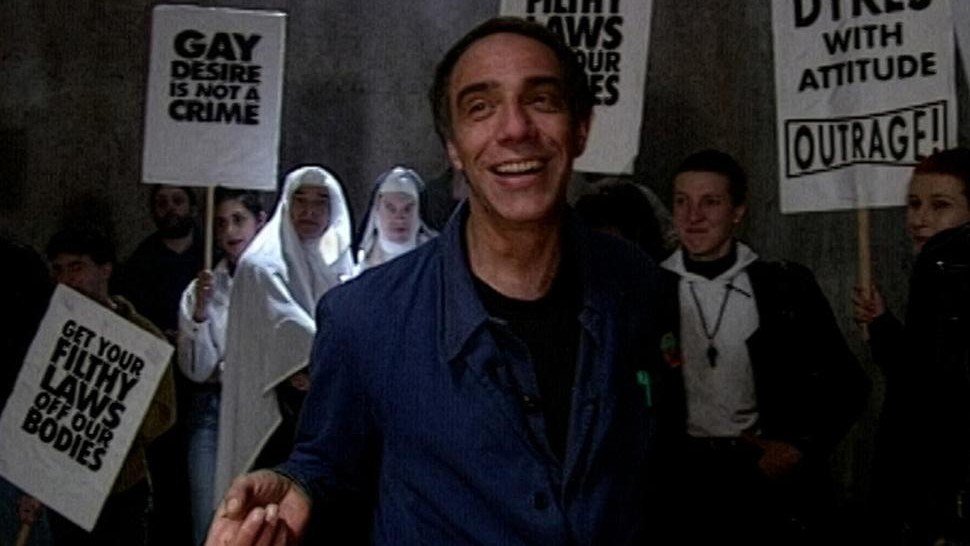
    The documentary provides intimate access to Jarman and his collaborators, including Tilda Swinton and costume designer Sandy Powell, who are both executive producers on the new film. And it puts a spotlight on how Jarman, back then fairly newly diagnosed with HIV, refused to separate art from politics and the harsh political climate that queer people in Britain were facing at the time. Also featured are a controversy surrounding Ian McKellen accepting a knighthood and an incident involving queer rights activists and a British pop star, who was rehearsing for a tour on the same studio lot where the film shoot was taking place, which snowballed into a tabloid scandal and threatened to derail the production.

    Plus, the film shows a pack of beagles let loose, drag nuns taking a smoke break – and much more. After Hours and Cinephil are handling sales on Queer Edward II.

    “When I was first approached to look through unseen rushes shot on the set of Edward II – which had been sitting in a cupboard for over 30 years – I hoped there might be enough material for a short,” Rollason shares in a director’s statement. “Instead, I was astonished to find a comprehensive record of Jarman’s idiosyncratic filmmaking practice, capturing everything from rehearsals to intimate conversations to production office dramas. What really struck me, however, was the set’s embrace of the 1990s political climate, particularly regarding gay rights,” they added.

    And the director recalls learning how Jarman became the first public figure in the U.K. to disclose his HIV status and his association with activist group OutRage! “As a queer filmmaker born just after Jarman’s death, I saw a clear opportunity to use the Edward II set as a springboard to discuss what I wish I’d known: just how high the stakes were for the community at this historical moment, and Jarman’s centrality to the struggle that followed,” Rollason concludes. “My perspective is shaped by a belief that queer history is too often depoliticized and reduced to respectable narratives of progress, rather than the messy, confrontational movements that made that progress possible.”

    That also makes Queer Edward II very timely. “With anti-trans rhetoric and attacks on queer rights again intensifying, I hope the film can function not simply as a snapshot of a historical moment, but as a reminder of what collective resistance can look like – and what role art has to play,” Rollason highlights.

    THR can now exclusively premiere a clip from Queer Edward II. It shows Jarman discussing how to best shoot a scene in a bed, including the number of people fitting into it, as well as the necessary choice of clothing, or lack thereof.

  • Four Seasons Launches Refresh of Hotel Danieli

    Four Seasons Launches Refresh of Hotel Danieli

    A gothic gem overlooking Venice’s iconic lagoon got a refresh in time for the Venice Film Festival.

    Reservations are open at Danieli, Venice, a Four Seasons Hotel following a restoration process that was unveiled this summer and remains ongoing at the property’s adjacent palazzos and within a soon-to-be finished Danieli Spa. Located on the waterfront stretch known as Riva degli Schiavoni and within walking distance from the wildly popular tourist destination Piazza San Marco, aka St. Mark’s Square, Danieli is often praised by guests for its views of the lagoon from both the terrace and inside the rooms and suites.

    French interior designer Pierre-Yves Rochon steered the renovation by focusing on a “balance of history, light and materials” per Four Seasons. The color palette is said to have been inspired by the lagoon and mixed with inspiration from Venice’s marble facades, plasterwork and architecture through the use of celadon greens, soft blues, terracotta, ochre and powder pink.

    Inside the Palazzo Dandolo lobby, hand-restored gilding creates a quatrefoil motif against a blue background reminiscent of water while the columns, stonework and the staircase were restored by local artisans. The space also leans on natural light through Venetian mirrors while Murano glass, Venetian terrazzo floors and Rubelli fabrics connect each space to Venetian tradition and codes. A collection or artworks has been curated to honor Venice’s heritage and history as a destination for artists and writers.

    The Danieli has a rich history. Originally built in 1471 and known as Palazzo Dandolo for the noble family, Giuseppe Dal Niel, aka Danieli, converted the property into a hospitality destination in 1822.

    Courtesy of Four Seasons

    The hotel reopened with a total of 120 rooms and suites available, a collection said to be more spacious with an expansion of junior and one bedroom suites. The total number of accommodations will balloon to 168 once the restoration of Palazzo Danieli Excelsior is done in 2027. The Four Seasons reports that a particular emphasis was placed on integrating technology into those rooms through such features as a custom-designed media wall to integrate the television with artwork and decorative objects, automated curtains, customizable lighting and a climate control system, the latter of which is ever more necessary as Europe faces historic and punishing summer temperatures.

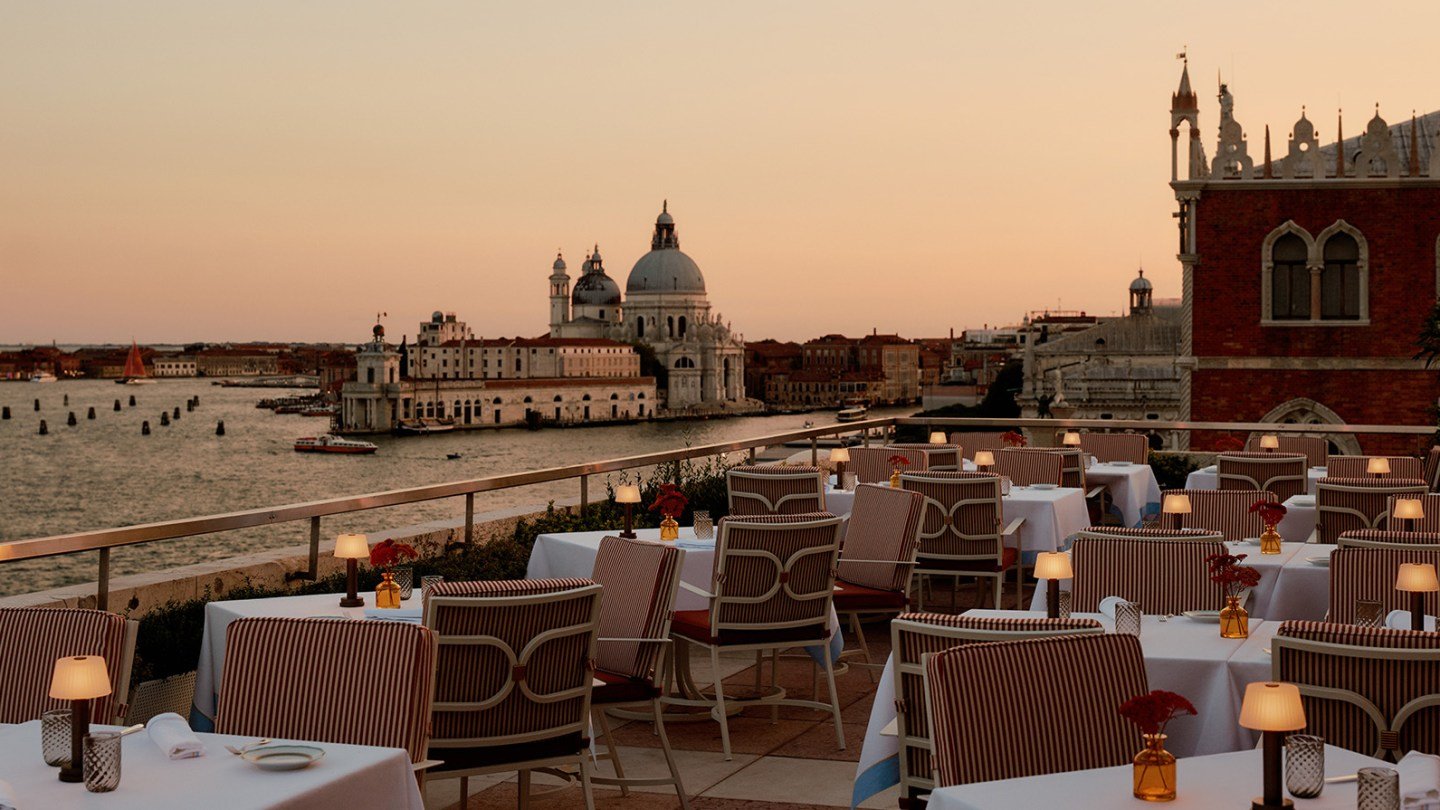
    Rooftop restaurant Terrazza Danieli also got a refresh, seen below, which insiders note was done in a way to transform the atmosphere without disrupting the architectural identity. Dark finishes were swapped with pastel tones, blue accents and golden colors, and mirrors were added to play off the natural light. Executive chef Adriano Rausa presents a “contemporary interpretation” of Italian cuisine with a Venetian twist, and many of his menus signature dishes are finished tableside to add a little bit of drama and entertainment.

    A view of the grand staircase above the lobby.

    Courtesy of Four Seasons

    As for the spa, it is expected to open during this second half of the year. It will feature three treatment rooms (including one for couples), a sauna and bathhouse. Danieli, Venice, a Four Seasons Hotel is party of the brand’s Italian portfolio that includes destinations in Milan, Florence and Taormina.

    “With the reopening of the iconic Danieli, Venice, a Four Seasons Hotel, our fourth property in Italy from the spectacular collection, we are inaugurating a new chapter in the history of this celebrated palazzo,” said Rainer Stampfer Four Seasons president of global operations, hotels and resorts. “In collaboration with our longtime partner, Gruppo Statuto, we are offering guests the unique opportunity to experience the grandeur of Venice in a whole new way.”

    Added Danieli, Venice general manager Christian Zandonella: “The reopening of Danieli as a Four Seasons experience represents an exciting milestone after months of dedication and meticulous restoration. We are delighted to welcome guests back to one of Venice’s most iconic addresses, where the hotel’s extraordinary heritage is reimagined through legendary Four Seasons hospitality.”

    A lounge space.

    Courtesy of Four Seasons

    A lounge space.

    Courtesy of Four Seasons

    One of the airy and light suites.

    Courtesy of Four Seasons

    Another view of one of the suites.

    Courtesy of Four Seasons

    A view of the restaurant overlooking the lagoon.

    Courtesy of Four Seasons

  • ‘Eklipse’ Mixes the Autobiographical and Fictional to Explore AIDS Taboos and Fear of Social Exclusion

    ‘Eklipse’ Mixes the Autobiographical and Fictional to Explore AIDS Taboos and Fear of Social Exclusion

    Austrian filmmaker Manuel Wetscher made a name for himself with such fiction shorts as 2018’s Four Seasons, 2021’s At Night When Mice Scream and 2022’s Magma. Then came the 2024 experimental short doc Richard, a particularly personal film.

    “I only learnt the real reason for my father’s death 10 years after he died,” reads a synopsis for the film. “At first, I was told that he had died of pneumonia, then later of lung cancer. The truth finally came out from a drunken relative at a birthday party when I was 17 years old. Since then, I have known that my father died of AIDS in 1993 at the age of 40.”

    Wetscher’s feature film debut Eklipse, which world premieres in the Horizons section of the 83rd edition of the Venice Film Festival on Sept. 5, is inspired by his experience of being kept in the dark on the details of his father’s situation by his family. And as the title, which means “eclipse,” suggests, the sun plays a role in the movie, just as it did in Magma. And yes, the title Eklipse is spelled with a “k” in both its German and English versions.

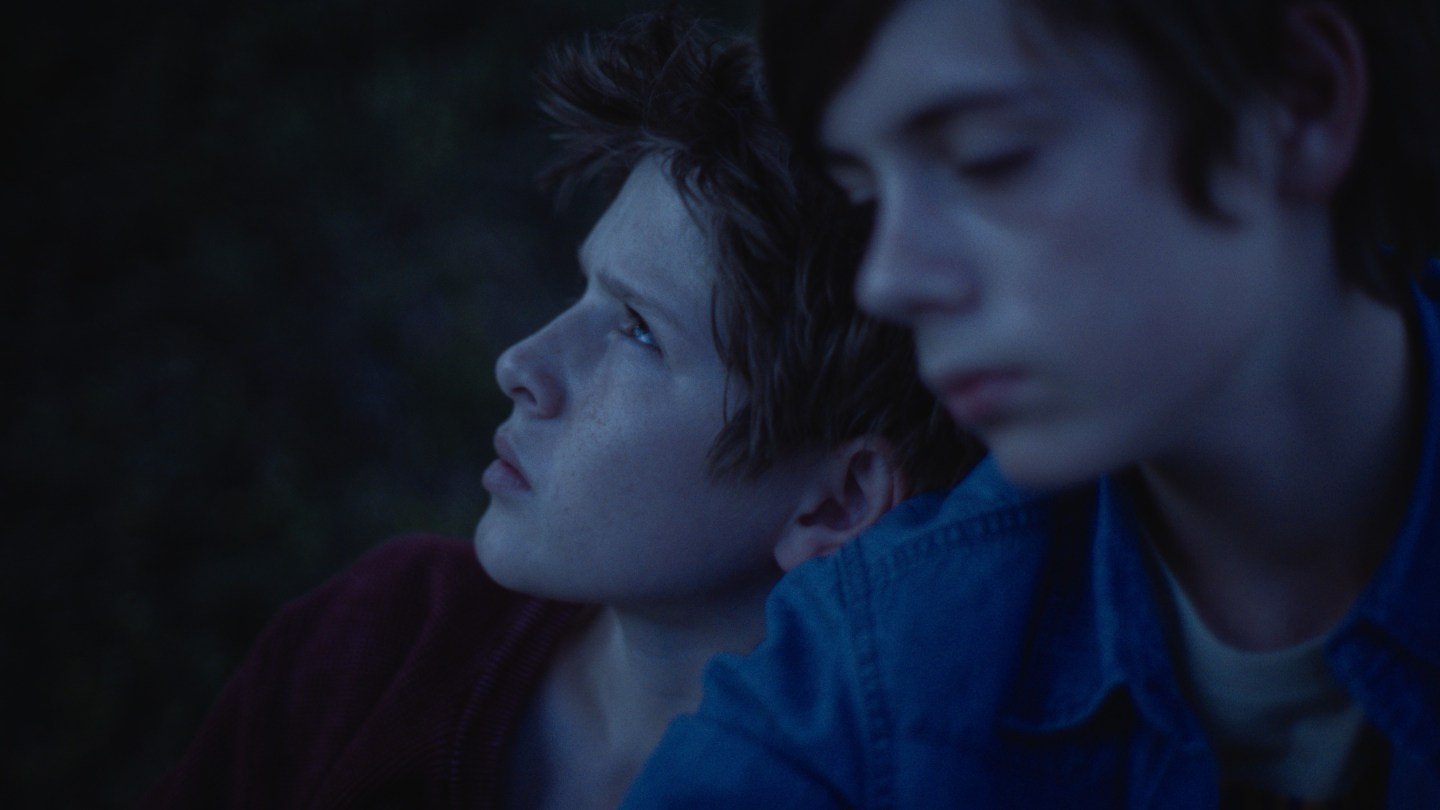
    Eklipse, starring Moritz Hohlrieder as Tomy and Finley Brown as his best friend Chris, is set in the 1990s at an alpine dairy farm in Austria. The two teenagers spend a summer helping Tomy’s uncle, portrayed by Hannes Perkmann, with milking and other duties, as well as exploring the outdoors.

    But as the title suggests, darkness overshadows their time together, while also leading to some revelations. After all, Tomy’s father is in hospital, and his mother decides to keep the real reason from her son in the film from production companies Eutopiafilm in Austria and Albolina Film in Italy. But then, Chris learns that Tomy’s father is in hospital with “the gay disease,” and he becomes frightened, leaving Tomy suddenly confronted with rejection and the silence of his loved ones.

    Wetscher co-wrote the film with Bernhard Jarosch, with whom he also collaborated before on several short films. Simone Hart handled the cinematography, and Anna Kirst is the editor of Eklipse, which also features actors Lenz Moretti, Lisa Schützenberger and Barbara Romaner. Films Boutique is handling world sales on Eklipse, which comes from production companies Eutopiafilm in Austria and Albolina Film in Italy.

    “Eklipse is a film about the taboos surrounding AIDS and the fear of social exclusion,” Wetscher says in a director’s statement. “It tells the story of how prejudice and ignorance affect the friendship between two boys, and how social contexts are mirrored within the microcosm of a family.” And he emphasizes: “With Eklipse, I want to create memories by exploring the sensory and tactile qualities of cinema.”

    THR talked to Wetscher about mixing the autobiographical and the fictional in Eklipse, including his cameo in the film, how he found his young stars, how he and his team discussed Andrea Arnold and Alice Diop films, his efforts to transport audiences into the alpine environment, and the timeliness of the fear of AIDS and the unknown.

    The film feels very intimate, and I understand that it is inspired by your and your family’s experiences. How much of what we see is autobiographical and how much is fictionalized?

    It’s part [of a cinematic] game. I wrote the screenplay with a good friend of mine. The film draws a lot on the personal experience of losing my dad in 1993, when he died of Kaposi’s sarcoma, a cancer caused by AIDS, but then it also includes completely fictional things. Later on, seeing films and getting to know more about what people did [back when my father died] made me look at my family history differently. But many summers, I spent in Tirol working for my grandfather on a farm, so I knew these two elements. That is also where I actually experienced the 1999 eclipse, so these were all elements I had from the beginning.

    But then, of course, writing the screenplay meant having to make it all into a story, something that keeps you interested and that works in itself. That’s a process I love, [during] which I also experienced a lot about myself and about the time back then. It allows you to reflect on how certain mechanics in society work and this dilemma of what you tell and what you don’t tell a kid.

    I guess that is why the film feels so specific about its time and location but also very universal…

    That’s something that interests me when watching films – when they make me understand the world or learn, experience, or feel something. So yeah, the goal from the beginning was to make a film that gives people who don’t know this background or specific location the experience of things that come with being and living there. For example, this experience of going into a stable with 50 cows.

    It’s very tricky to translate that into cinema because when you go there, it’s so physical and it’s so sensorial. There are so many things going on, including the smell. It was a beautiful challenge to think about how to put that into cinema and what kind of ingredients we have to use to recreate that. Part of that is choosing the team that is able to go there, but then also later on in the sound design and with the musicians, we focused on recreating the sound, including with synthesizers and loops, to make sure you really have this feeling in the image but also in the sound. That’s much more direct of an experience.

    How did you think about time?

    One element that we decided on while editing was that we wanted to sometimes let things stand for a while and let you go through a process, because that is what our characters do in the film.

    There are scenes that look like old home videos in Eklipse. Are they real?

    Yes, that includes my cameo as a baby. And we have this material with the father, which is a home video that I have from my dad and me. There is also this image that the boys look at of the dad who is in the hospital. It’s an actual picture of my dad. I worked with personal material in creating this film. I was showing people [on the team] these images, so they could relate better. And because this is authentic material, it also has the emotion for me in it that I was searching for.

    For cinema, you play with [such material and emotion] and then it becomes something else. In the film, it becomes the character’s memory. You asked about universal themes. We tried to tell the story in a very limited and small place, but through using the eclipse, which is very big and outside of our world, we also had the chance to fade to the bigger elements. When you look at the stars, the light that comes to the Earth has already been gone for a long time. In the edit, we realized that it was so beautiful to understand that this material that he sees or memory itself is far away. But then in the moment where you look at it, it’s there at the same time. So to use this element felt really right and made a lot of sense.

    Did anybody on your creative team and crew have similar experiences?

    Since this is my first feature, the idea was to have some newer people but also to have people who are more experienced and could bring stability for us. And these conversations were very interesting because some of the people who experienced the ’90s lost friends to AIDS or had someone in their family. Talking to them really made me understand in a different way my mother’s or my family’s position.

    By coincidence, I also met a doctor who was working back then in the hospital in Innsbruck where my father was, and hearing how complicated it was and how scared people were and how impossible it was to talk about it, even within groups of friends who then suddenly wouldn’t talk to you anymore, helped me [understand that time] better. They did this out of fear. It also created a possibility for me after a long time to talk with my mother about it and to also see her point of view.

    Has your family seen the finished film?

    There will be the Austrian premiere, and my family will come there.

    ‘Eklipse’

    Courtesy of Venice Film Festival

    You probably started working on Eklipse before what feels like a backlash against queer people and LGBTQ+ rights…

    I can see what you describe and what is happening politically at the moment. But yeah, we were not foreseeing that. I mean, I wish this would not be happening. I can see the dynamics, and that’s just scary how people who are different or live another way are being discriminated, and how populism is using that. But that is coming from the outside.

    What we are looking at in the film is the friendship, the vulnerability of the people and the families. And the smaller the details we show, the more vulnerable we become, but through these small things, you understand so much about the dynamic and the universal issues and bonds.

    How did you find your two young and excellent leads?

    We started with online casting, and it went through schools. We were looking specifically in the region where we shot because it was important to have actors who had roots or a connection to this region that has a specific language and sound. We realized that to be authentic, you need to have the dialect.

    We picked Moritz and Finley and did a casting with them together because they needed to match and make you feel a connection between the two of them. They could not just pretend to be friends. And then we also took Georg, who plays the uncle, to see the dynamic between all three. We went to the mountain because we also needed to know if they were able to play with the cows and not be afraid. So we put them there to work a bit and to experience all this, and then we felt they were great.

    How early did you know the title for the film? And there is no English-language spelling version of it, correct?

    We had it from the beginning. Of course, there were a lot of moments where everybody came to ask: Is it the right title or not? And we tried different things, but we always came back to it. There was the question of how to do the international title. And the final decision was to say it’s going to be in German and, also for international, always written with the K to make it a bit more unique or more recognizable.

    Were there any films you watched when you worked on Eklipse or movies that may have been an influence?

    For the cows and all these things, Cow by Andrea Arnold was a film we looked at. Also, Saint Omer by Alice Diop and [Céline Sciamma’s] Petite Maman were films that we talked a lot about in the making with the DOP to create authenticity and keep it simple but also [allow for] the bigger picture.

    When the credits started rolling, I had an unusual feeling or idea…

    It’s cutting to black at the end, like another eclipse.

    Indeed! And I wondered if that also symbolically invites you as a viewer to think about what you just saw and heard…

    It’s like the aftermath, the echo of what you just saw. How the images reappear and how you put them together. That’s one thing. There is something else. It’s called Eklipse because of the solar eclipse, but then you have the same term in virology, which you use when an infection goes into the body, but it has not infected the cells yet. That’s also called an eclipse, and for us, in the dramatography and in developing the story, this knowing and not knowing, what is visible and what is not visible also became important.

  • ‘Chad Powers’ Season 2 Ending: Who Knows the Truth About Russ Holliday and What Happened to Gerry?

    ‘Chad Powers’ Season 2 Ending: Who Knows the Truth About Russ Holliday and What Happened to Gerry?

    SPOILER ALERT: This story contains spoilers for “12th Quarter,” the Season 2 finale of “Chad Powers,” now streaming on Disney + and Hulu.

    It sure is tough being Chad Powers.

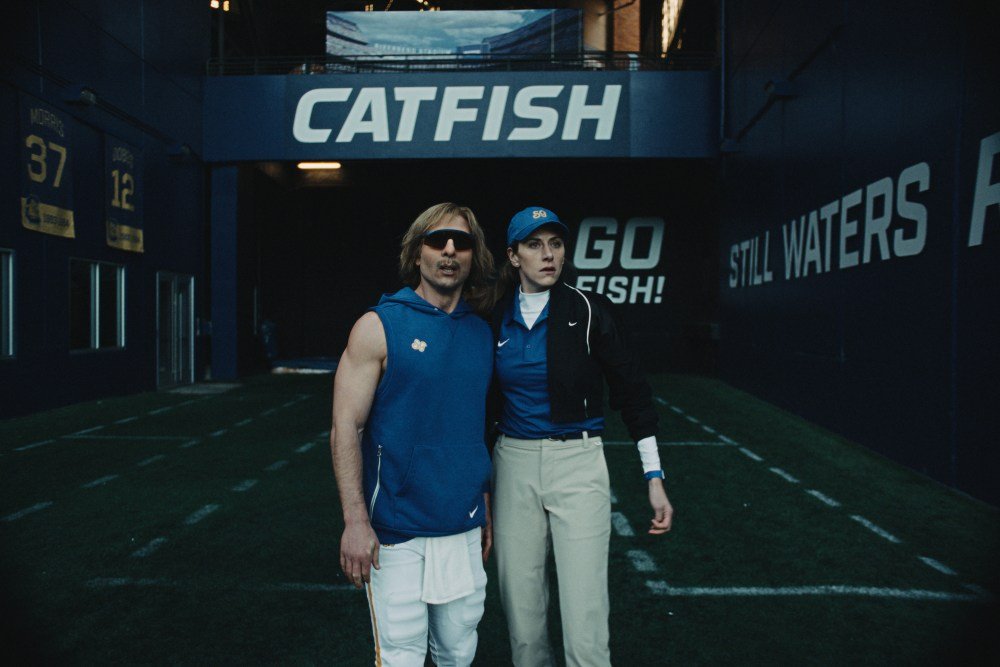
    Infamous quarterback Russ Holliday (Glen Powell) knows this well. But he’s not going to let anything stop him from continuing his double life as the socially awkward star of the South Georgia Catfish football team — especially not his teammate Gerry (Colton Ryan), who’s closer than ever to exposing Russ’ secret. 

    Throughout Season 2, Gerry grows increasingly suspicious of Chad, going so far as stalking the starting quarterback and those closest to him. He doesn’t know that Russ is hiding behind that prosthetic mask, but he’s pretty sure something’s amiss. Why else would Coach Ricky (Perry Mattfeld) be sneaking over to the QB’s house? And then he spots Chad’s father, “Howard Powers” (Toby Russ), wearing a wig and prosthetic nose to the homecoming banquet. 

    In the penultimate episode, “11th Quarter,” Gerry breaks into Russ and his friend Danny’s (Frankie A. Rodriguez) house and attacks Danny. The season finale opens by revealing their ransacked basement. Gerry stole the prosthetics used to disguise Russ as Chad. Danny is OK, but there’s blood running down his face. 

    Russ, disguised as Chad, meets Gerry at a movie theater, where he finds the backup QB sitting alone in an empty theater screening “Edward Scissorhands.” It’s an ominous setting, and it’s clear that Gerry, who now has hard evidence, won’t back down silently — unless Chad offers him something. 

    Instead of revealing what transpires between Chad and Gerry, the episode cuts to a diner where Danny meets Russ. Ricky joins them, and she’s still upset after recently discovering Russ knew that her father, Coach Hudson (Steve Zahn), wasn’t medically cleared to return to the sidelines despite telling everyone — including Ricky — that he was. Russ shrugs off the showdown with Gerry, insisting that all he wanted was money, which Russ will get, meaning that the threat has been neutralized. 

    But Danny and Ricky aren’t falling for Russ’ carefree act, and Ricky, unable to take any more of his lies, storms out. Even when he’s alone with Danny, Russ sticks to this vague story, but he does admit that he views Danny as the one true friend he’s had, and now it’s his turn to keep him safe. 

    The following day is the Catfish’s final regular season game, and they’re facing the Texas Longhorns. If the Catfish win, they move forward to the College Football Playoffs. If they lose, their dream season ends.

    And when the game kicks off, the pressure seems to be getting to Chad, who immediately throws an interception. In fact, Chad can’t seem to do anything right on the field. By halftime, the Catfish are losing — by a lot. 

    Colton Ryan as Gerry in Season 2 of “Chad Powers”

    Disney

    As the team heads for the locker room, Ricky goes to find Danny, who reveals he found a piece of paper in Russ’ room that lists Chad’s statistics for the game — all negative plays that would tank the Catfish’s season.

    It turns out there was more to Russ’s conversation with Gerry: the former backup quarterback demanded that Chad play a “historically bad game” so Gerry would win the bets he placed against him and win $200,000. Gerry didn’t just want the money; he wanted everyone to hate Chad just as much as they hate him. Once Chad loses the game, Gerry also insists that he take responsibility for framing him by placing a 3-d printed gun in his locker in the previous episode. If he did all that, then Gerry wouldn’t come forward with the truth about Chad Powers. A devastated Russ agrees. 

    Ricky, who now understands Gerry’s scheme, finds Russ sitting alone and tells him she got the coaching job at Syracuse. She accepted and starts tomorrow, meaning this is the last game they’ll ever play together. She also reveals that she knows about Gerry’s bet, and while there’s a million things that Chad can’t do on the field, Ricky has a few tricks up her sleeve — since she’s watched all of Russ’s old game tape from his time at Oregon.

    When the game resumes, Ricky takes on the role as the “Chad whisperer,” drawing up trick plays that help the Catfish get into the end zone while abiding by Gerry’s terms. It’s risky, but it works, and every score makes Gerry scream with rage as he lurks in one of the stadium’s bathrooms.

    In the final moments of the game, Chad scores the game-winning touchdown, but a penalty sets them back with just two seconds left on the clock. The only way to score is by breaking Gerry’s strict rules. As Chad weighs his options, he shares a heartfelt moment with Coach Hudson, who tells the quarterback that, no matter what happens, he’s grateful for the great season they shared and is proud of him. And he knows Chad’s late mother would have been too. 

    Chad decides to run for it and scores the game-winning touchdown — for real, this time. While everyone celebrates around them, he and Ricky search for each other in the crowd and hug, excitedly, both thankful he went for the win — despite Gerry’s threats.

    Speaking of Gerry — he storms on the field, furious that Chad broke his terms and lost the $200,000. As he charges toward Russ and Ricky, he gets punched by Tricia Yeager’s (Wynn Everett) security guard. While carrying Gerry’s limp body off the field, the bodyguard tells Chad that his name has been acquired by Yeager Family Foods, then calmly points out that Chad’s facial prosthetic has slipped, referring to him as “Mr. Holliday.”

    How did he know all of that? In a last-ditch effort, Danny revealed Chad’s true identity to Tricia, who heads the Catfish boosters, and asked for her help keeping Russ’ secret safe. Tricia agreed, but coolly explained that they’d be doing things her way — beginning with having Russ and Danny move onto her ranch, so she can keep them “safe” and ensure that Russ stays as Chad “for a long time.” 

    Elsewhere on the field, Hudson tells his assistants, Coach Byrd (Quentin Plair) and Coach Dobbs (Clayne Crawford), that this will be his last season as head coach. He wants them and Ricky, whom he doesn’t know accepted the Syracuse job, to move up the ranks. 

    Now back in the locker room, Ricky and Russ share an emotional moment while she fixes his prosthetic. Mourning that this is their last game together before she leaves for New York, Ricky starts crying. As Russ consoles her, he confesses he loves her, and the two share their first kiss. 

    As they begin making out more passionately, Ricky starts to pull off the remaining prosthetic on Russ’ face, but they’re interrupted when Coach Hudson throws open the locker room door. Russ turns away to hide the fact that half his prosthetic mask is out of place, but it’s unclear how much Coach Hudson saw, as the episode cuts to black.

    If “Chad Powers” gets renewed for a third season, there are many loose ends to be tied up. Did Coach Hudson recognize Russ, and can his heart handle the stress of Chad’s real identity? Will Ricky go to Syracuse — especially now that she jeopardized her career by canoodling with a player? Is Gerry really gone for good? And, most importantly, will the Catfish get to — and win — the National Championship?

    Let’s say that there are still plenty of plays for Powell and co-creator and director Michael Waldron to run on their way to the end zone.

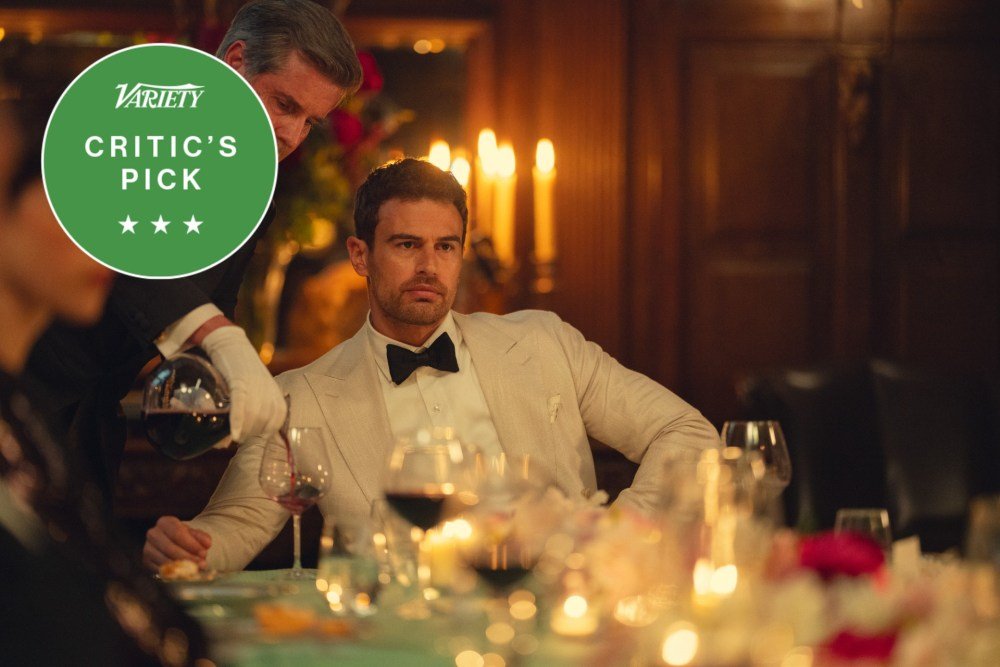
  • Theo James Steps Into His Michael Corleone Era for a Darker, More Sinister ‘The Gentlemen’ Season 2: TV Review

    Theo James Steps Into His Michael Corleone Era for a Darker, More Sinister ‘The Gentlemen’ Season 2: TV Review

    It’s been two and a half years since Guy Ritchie ushered viewers into the dazzling, violent criminal underworld of his Netflix series “The Gentlemen.” Now, in an even darker and more volatile second season, audiences are reentering this world, with a very different Eddie (an exceptional Theo James) at the center. Engaging, devastating and thoroughly entertaining, it’s clear that with its second season, “The Gentlemen” has upped the ante and fully hit its stride.

    When viewers last saw Eddie, he was finding his bearings as the recently instated Duke of Halstead, and was navigating the unhinged antics of his constantly coke-out older brother Freddy (Daniel Ings), who was suffocating with bitterness after being usurped by his younger brother for their father’s title. The Duke was also learning the inner workings of an extensive cannabis empire, housed on his family’s massive estate and run by the incarcerated ​​Bobby Glass (Ray Winstone) and his whip-smart daughter, Susie (Kaya Scodelario). A former Army Captain, Eddie initially felt out of his element. Yet, as he and Susie bonded and he leaned into his military training, Eddie slowly realized being a gangster suited him as well as his tailored coats.

    As Season 2 opens, Eddie is worse for the wear. Half-dead and dragging himself on his belly through a muddy field, Eddie is far from the calm, affable aristocrat audiences first met in Season 1. But this is not where this new chapter truly begins. Dialing back three months earlier, things were looking much different for the Duke.
    ​
    Firmly settled into his enterprise with the Glasses and getting Freddy sequestered away in rehab, Eddie has his sights set on expanding. Not only does he want to reclaim the land surrounding his family’s 15,000-acre estate, but he’s focused on growing the enterprise beyond the U.K., and into Italy, while gaining a stronghold in the world of legal cannabis. Yet, this will take a great deal of finesse, including pushing through a bill in parliament by buttering up Lord Hawthorne (Hugh Bonneville), who is willing to trade his vote for a night out with Susie’s brother, Jack (Harry Goodwins). As Eddie’s work wife and business partner, Susie sees the Duke’s vision, but Bobby has the final say. Bobby is open to a partnership with Italian mobster Marco Moretti (Sergio Castellitto) and his unhinged liaison Cico Maldini (Michele Morrone). However, in Bobby’s purview, decriminalizing marijuana is out of the question.
    ​
    Unfortunately, Eddie and even Susie have grown increasingly weary of being under Bobby’s thumb. It’s also concerning that the older man is acting erratically and seems more focused on his spiritual awakening than on keeping his business relevant in the 21st century. Frustrated, both Susie and Eddie follow their own paths. Still, extricating oneself from Bobby’s grasp was always going to be trickier and bloodier than one would expect. While Susie is willing to comply with her father’s wishes, Eddie grows more emboldened, fueled by the power he’s learned to harness. Additionally, he begins to recognize his kindness and affability are being taken for weakness.
    ​
    Exquisitely shot, “The Gentlemen” Season 2 is full of absurd characters, gunfights, hijinks (including million-dollar birds and shocking beheadings) and a couple of steamy romances. Amid the bloodbaths and whimsy, however, Eddie is evolving into someone new. Episode 4, “The Bigger Picture,” acts as a turning point in the series. Eddie, no longer able to temper his frustrations, explodes, revealing a side of himself that changes how the Glasses and viewers will see him moving forward.
    ​
    With a more somber tone and higher stakes, “The Gentlemen” Season 2 is still wildly entertaining. If audiences were paying attention, there was only one way for Eddie to evolve. He was always destined to follow in the footsteps of another tyrannical, ruthless Don – Michael Corleone. But that’s the thing about becoming a crime boss: ego and power often lead to irreparable brokenness. Only time will tell how spectacular and bloody Eddie’s rise and eventual demise will be.

    “The Gentlemen” Season 2 is now streaming on Netflix

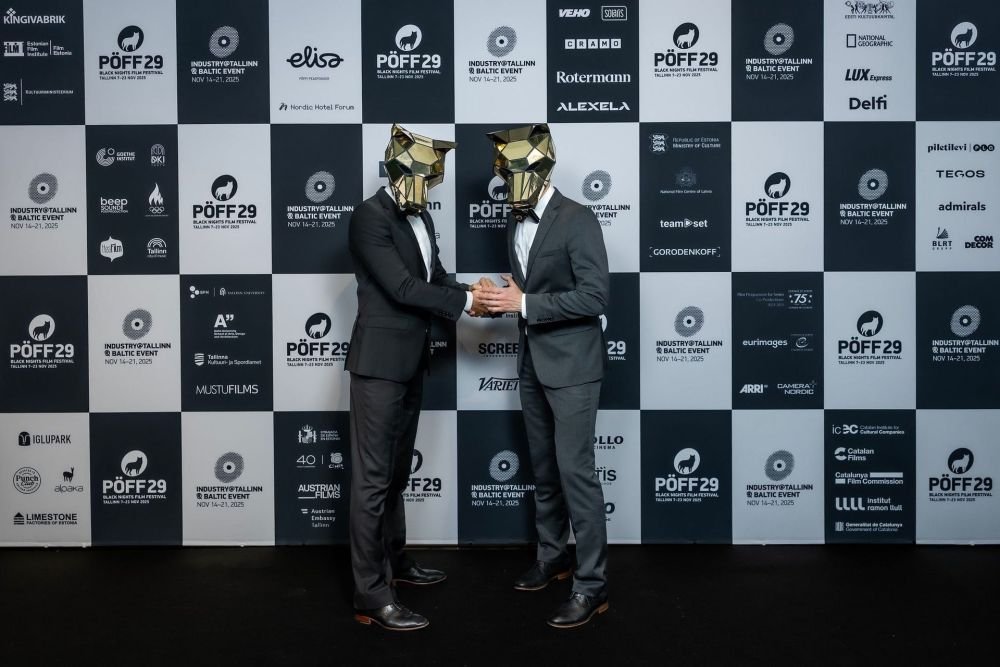
  • Tallinn Black Nights Festival Sets Focus on Baltic Cinema for 30th Anniversary Special Edition (EXCLUSIVE)

    Tallinn Black Nights Festival Sets Focus on Baltic Cinema for 30th Anniversary Special Edition (EXCLUSIVE)

    To celebrate its 30th anniversary, the Tallinn Black Nights Film Festival (also known as PÖFF), the largest and only A-list festival in the Baltics, is turning the spotlight on Baltic Cinema, with the backing from the Estonian Film Institute, National Film Centre of Latvia and Lithuanian Film Centre. 

    “Baltic cinema has always been an essential part of PÖFF,“ stated Triin Tramberg, PÖFF long-time film curator who will for the first time serve as artistic director in lieu of festival founder Tiina Lokk, now fully-focused on her CEO duties and strategic issues. 

    While reiterating past achievements such as the launch of the Baltic Film Competition in 2008 and Doc@PÖPP competition in 2025, Tramberg said this year’s Baltic Focus will further draw international attention to Baltic films, but also to the “remarkable talent behind them.“ 

    “The Baltic countries may be small individually, but together they form a dynamic and increasingly visible film region,“ she pointed out, referring notably to the first ever Oscar from the region for Latvia’s animation pic “Flow“ in 2025, Sundance Best Direction Award to Estonia’s “Smoke Sauna Sisterhood“ in 2023 and Locarno’s top Golden Leopard Award to Lithuania’s “Toxic“ in 2024. More recent examples of prestigious fest bows take in the Cannes Un Certain Regard entry “Ulya“ by Latvian filmmaker Viesturs Kairišs and a Cannes Special Screening for “Vesna“ by Lithuanian-born Rostislav Kirpicenko. 

    At this year’s PÖFF, the focus will be both on today’s most outstanding recent films and co-productions from the Baltics across fiction and documentary, and on past film pearls, with retrospectives including two to four landmark features from Estonia, Latvia and Lithuania. 

    Through the festival’s influential Industry@Tallinn & Baltic Event, attended by over 800 delegates in 2025, the Focus will further highlight upcoming Baltic film gems, the region’s top film professionals, infrastructure and tax incentives (up to 30% for Lithuania, 40% for Estonia and 50% for Latvia) that have boosted foreign filming over the past decade. Indeed examples of Baltic shores used as go-to destination for Hollywood and Euro pics abound, from “Tenet“ and “The Agency” in Estonia and “Stranger Things” and “Sisi” in Lithuania, to “The Chronology of Water” and  Venice-bound “Woman Unknown“ in Latvia. 

    Baltics Global Reach
    Commenting on the Baltics Focus and PÖFF at 30, Edith Sepp, CEO at the Estonian Film Institute said, “For the Estonian Film Institute, as well as for all Estonians, PÖFF turning 30 is something quite extraordinary! The festival has grown alongside the modern Estonian film industry, and in many ways, we have grown stronger together.

    “30 years ago, it would have been almost impossible to imagine Tallinn becoming a place where the international film industry shoots its films, and then every November gathers to celebrate cinema. Today, just as the Estonian film industry is not only Estonian but very international and focuses on co-productions, PÖFF together with Baltic Event is no longer simply a local festival. It is one of the platforms through which Estonia speaks to the world. And putting the spotlight on the Baltics this year is particularly important.”

    “Estonia, Latvia and Lithuania together have a stronger voice in European cinema and beyond. We all have very distinctive filmmakers, stories and cinematic cultures, and we need a platform like PÖFF that allows our films and filmmakers to shine internationally,” she said. 

    Sharing Sepp’s views, the head of the Lithuanian Film Centre Laimonas Ubavičius said, “we can take great pride in the close collaboration between the three Baltic countries and in how much our film industries have grown and strengthened. This is reflected in the increasing international recognition of Baltic cinema, the growing confidence in our producers and the emergence of a new generation of filmmakers with distinctive voices. 

    “The presentation of co-productions such as “Ulya” and “Vesna” at this year’s Cannes Film Festival is just one example of what this sustained partnership can achieve. As the festival celebrates its 30th anniversary, there is much to reflect on, and even more to look forward to,” he observed. 

    The 30th PÖFF will unfold both in Estonia’s capital Tallinn and second largest city Tartu Nov. 6- 22. 

    Triin Tramberg, Tallinn Black Nights Film Festival

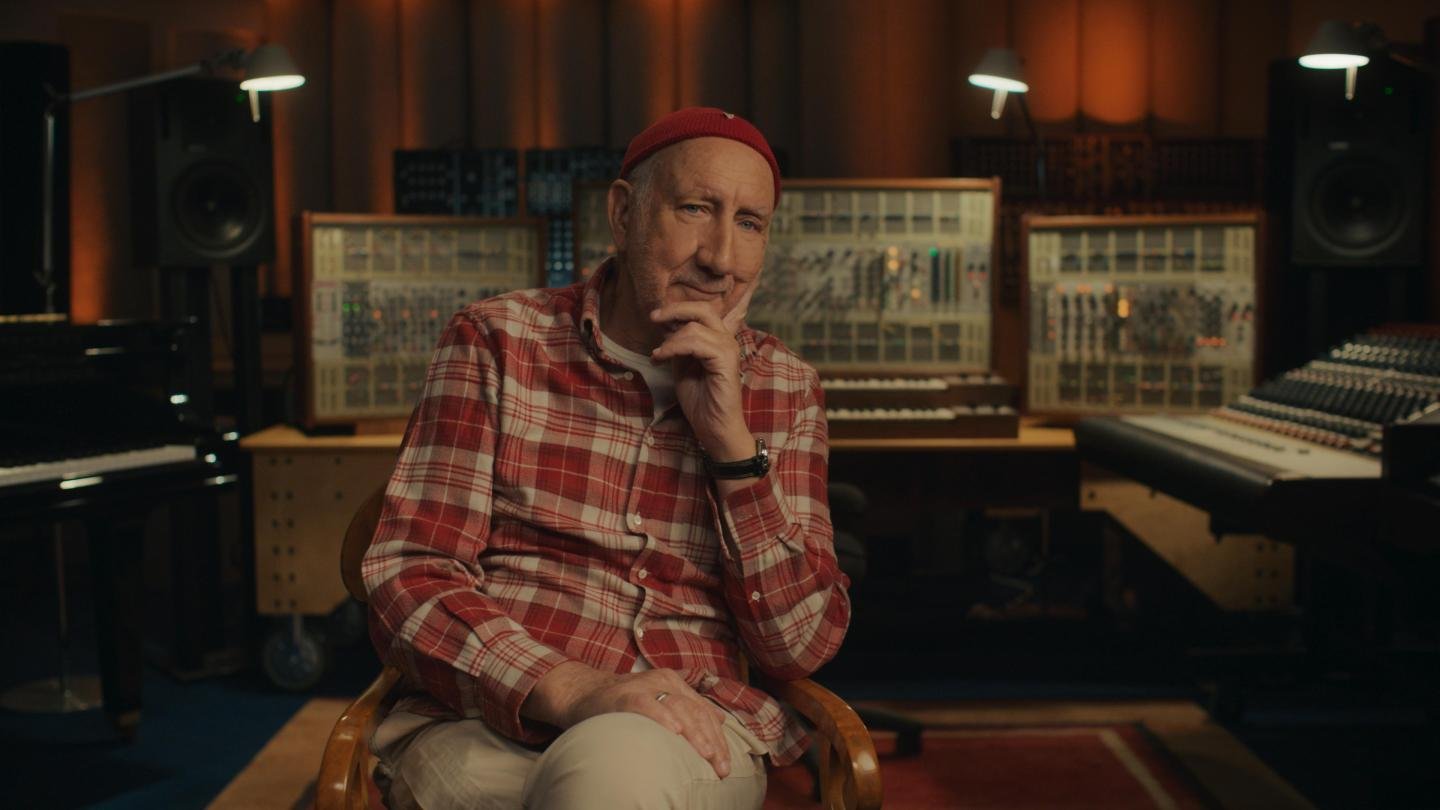
  • Frank Marshall and Nigel Sinclair Reveal and Discuss Their New Doc ‘Pete Townshend: Behind Blue Eyes’ (Exclusive)

    Frank Marshall and Nigel Sinclair Reveal and Discuss Their New Doc ‘Pete Townshend: Behind Blue Eyes’ (Exclusive)

    The legendary singer/songwriter Pete Townshend of The Who has cooperated with a documentary feature about his colorful life and career, and specifically about a time that almost destroyed him and his band: when, shortly after the release of the album Tommy, Townshend and The Who tried to make a science fiction rock opera called Lighthouse.

    Behind Blue Eyes, which was co-directed by Frank Marshall and Nigel Sinclair, is headed to multiple fall film festivals as a sales title. The film’s backers — it was produced by Kennedy Marshall Documentaries, White Horse Pictures and VICE Studios, and is presented by Sobey Road Entertainment in association with Spirit Music Group, Polygram Entertainment and Trinifold Management — hope it will land a buyer and a spot in this season’s awards race.

    Marshall and Sinclair exclusively discussed the film with The Hollywood Reporter.

    What was it about Pete Townshend’s story — and specifically the story of Lifehouse — that made you feel this was a film that needed to be made now?

    FRANK MARSHALL It’s a fascinating story and very compelling as a film now because the world has finally caught up with it. In 1971, no one could understand what Pete was talking about and he thought Lifehouse had failed. The irony is, 55 years later, we’re living inside his story. 

    NIGEL SINCLAIR And the other part of this is that Pete’s reached a point in his career and life where he is prepared to take a very intense look back at his creative process, with all its twists and turns; and that was captivating.

    As you dug into this period of Pete’s life, what surprised you most about him or changed your understanding of the man behind the music? 

    MARSHALL I was surprised by how intellectual Pete is, his art school background and how he was trying to describe the future with technology. His solution wasn’t destroying technology, but human connection. He wanted to connect to the audience and bring them together through music. And out of that apparent failure came “Baba O’Riley,” “Won’t Get Fooled Again,” “Behind Blue Eyes,” “The Song Is Over” and other amazing music originally connected to Lifehouse.

    SINCLAIR What surprised me was how self-aware he was from an early stage in his career. Discovering the link between his childhood torment and the character of Tommy was an extraordinary revelation. The other thing was the intense duality of his personality — the introvert and the extrovert, the rock superstar and the internal artist who wanted to be thought of as a writer not a rockstar.

    Lifehouse emerged from a deeply personal crisis that nearly tore apart both Pete and The Who. How did you approach telling that story in a way that captures both the enormous musical ambition of the project and the personal stakes for Pete?

    SINCLAIR Ironically, the enormous musical ambition of the project resulted in Who’s Next, which is easily the biggest album The Who released, groundbreaking, and often considered one of the top 10 rock albums of all time. In two days of interviews, Pete opened up his heart and explained how much Lifehouse was intended to reconcile the two sides of his personality, the rockstar and the artist. So its failure was heartbreaking then and, it appears so, now, as he tells it. So many of the later decisions Pete made about his career were so obviously driven by this “disaster.” And maybe from it came the wisdom that gave Pete a greater sense of fulfillment later, and made his relationship with Roger even more powerful.

    What do you hope audiences come away understanding differently about Pete Townshend — and his place in music history — after seeing the film?

    SINCLAIR Pete Townshend was one of the avatars who took rock and roll as a form of popular music and turned it into an anthem, a generational call to action, for then and for so many generations since. With Townshend, a select group — John Lennon, Bob Dylan, Ray Davies of the Kinks, and a little later David Bowie — gave the music, the lyrics and the performance of rock and roll the power to become an identity for millions and millions of people on earth. If Dylan changed the narrative with his The Times They Are a-Changin’ album, Pete turned it up to another level with the Tommy double album.

  • Oscars: Romania Picks Cannes Winner ‘Fjord’ as Best International Feature Contender

    Oscars: Romania Picks Cannes Winner ‘Fjord’ as Best International Feature Contender

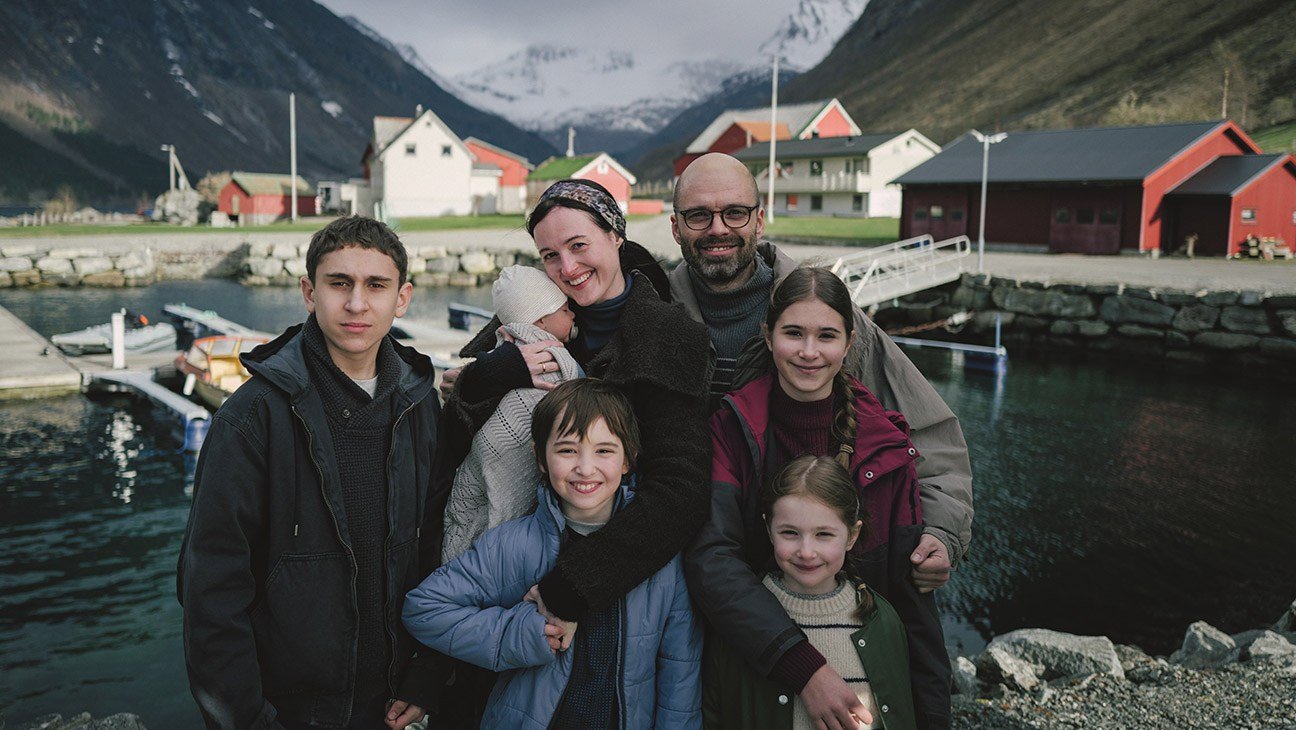
    Romania has picked its Oscar contender, selecting Cristian Mungiu‘s Fjord starring Renate Reinsve and Sebastian Stan to be its official selection for the 99th Academy Awards in the Best International Feature race.

    In the drama about progressive politics, religious faith, and the limits of tolerance, Reinsve and Stan play two fundamentalist parents who relocate from Romania to a small Norwegian village, only to find themselves accused of child abuse, and forced to defend their beliefs, and strict parenting style, in court. The film is in Romanian and Norwegian with substantial portions in English.

    Reinsve, hot off her box office success with horror sensation Backrooms, starred in this year’s Best International Feature winner, Joachim Trier’s Norwegian melodrama Sentimental Value.

    Fjord premiered in Cannes, where it won the Palme d’Or for best film. Neon snatched up the film for domestic release ahead of the festival. Under new Academy rules, the Palme d’Or win meant Fjord received automatic entry qualification for the Best International Feature category, whether Romania chose to pick it or not.

    The film’s star power and its hot-button themes, as well as the Palme d’Or prestige, could help Mungiu secure his first-ever Oscar nomination. The Romanian director won the Palme d’Or back to 2007 victory with his breakout 4 Months, 3 Weeks and 2 Days, but that film was not put forward for the Academy Awards, triggering an outcry. His 2012 feature Beyond the Hills was Romania’s official Oscar pick and it made the shortlist, but did not secure a nomination. Fjord looks like a strong contender in this season’s race, not just for Best International Feature but in other categories, particularly Best Original Screenplay.

    To date, the only Romanian film to be nominated for an Oscar is Alexander Nanau’s documentary Collective, about an investigation into hospital corruption in the wake of a nightclub fire. Collective was nominated for two Academy Awards, in both the Best Documentary and Best International Feature categories. A Romanian film has yet to win an Oscar.

    The Academy of Motion Picture Arts and Sciences will announce the 15 films on the best international feature film shortlist on Dec. 15. The five nominees will be announced Jan. 21, 2027. The 99th Academy Awards ceremony will take place on March 14, 2027.