Category: Entertainment

  • Martin Short’s Daughter Katherine Short Dies at 42

    Martin Short’s Daughter Katherine Short Dies at 42

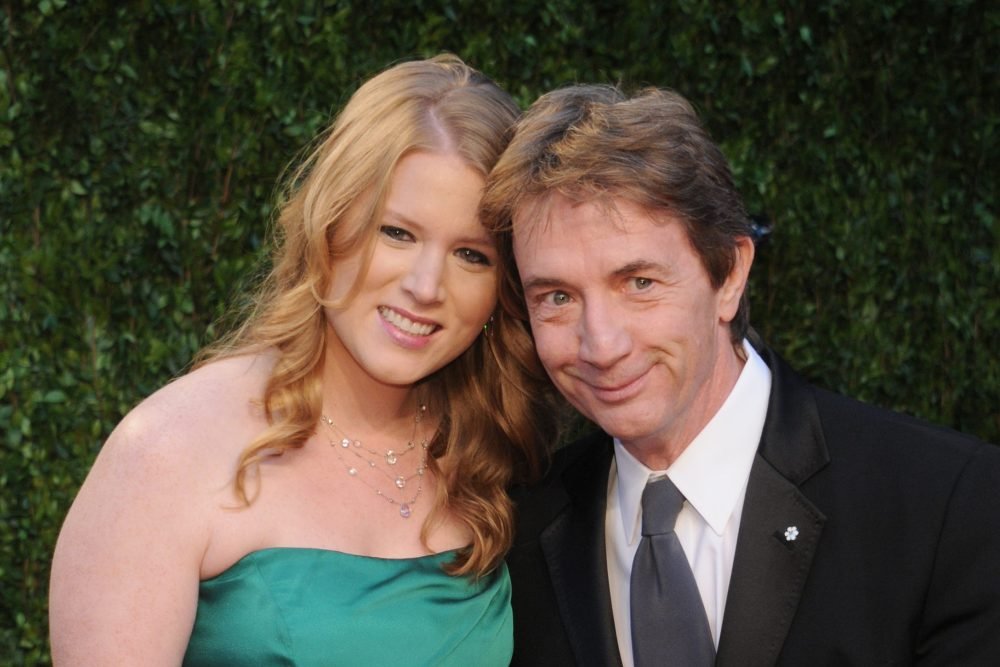
    Martin Short‘s daughter Katherine died Monday in Los Angeles. She was 42.

    She died of a self-inflicted gunshot wound, law enforcement sources told TMZ. Police responded to her home in the Hollywood Hills after 6 p.m. Monday.

    “It is with profound grief that we confirm the passing of Katherine Hartley Short,” Martin Short’s rep said in a statement. “The Short family is devastated by this loss, and asks for privacy at this time. Katherine was beloved by all and will be remembered for the light and joy she brought into the world.”

    Katherine Elizabeth Short was the eldest of three children adopted by the “Only Murders in the Building” star and his late wife Nancy Dolman. A social worker in Los Angeles, she worked with the Charity Bring Change 2 Mind which advocated for breaking down mental health stigmas.

    Katherine Short graduated from NYU with a bachelor’s in psychology and gender sexuality studies in 2006, then earned her master’s in social work at USC. She worked at UCLA’s Resnick Neuropsychiatric Hospital before going into private practice, according to People magazine.

    Katherine’s mother, actress Dolman, died of ovarian cancer in 2010, and Martin Short told the Guardian it had been difficult. “It’s been a tough two years for my children. This is the thing of life that we live in denial about, that it will ever happen to us or our loved ones, and when it does you gain a little and you suffer a little. There’s no big surprise.”

    “It was absolutely horrible, obviously, and as sad as anything. I will tell you what I said to my kids at the time: ‘I believe Mom has zoomed into our souls,’” he added in another interview at the time.

    Martin Short is also father to sons Oliver and Henry. He had been scheduled to perform a show with Steve Martin Saturday in Minneapolis.

    If you or anyone you know is having thoughts of suicide, please call the National Suicide Prevention Lifeline at 988 or go to SpeakingOfSuicide.com/resources.

  • Tim Daly Joins Wife Téa Leoni in NBC Comedy Pilot ‘Newlyweds’

    Tim Daly Joins Wife Téa Leoni in NBC Comedy Pilot ‘Newlyweds’

    Tim Daly and Téa Leoni are “Newlyweds” — both in real life and in the NBC comedy pilot of the same name.

    Variety has learned that Daly will star opposite Leoni in the multi-cam pilot. The casting marks their first project together since they officially tied the knot in July 2025. The two originally met on the set of the CBS drama “Madam Secretary,” where they also played a married couple.

    “Newlyweds” was picked up to pilot at NBC in January. Per the logline, the show is a “later-in-life love story about a free-spirited woman and a buttoned-up professor who marry impetuously after a whirlwind courtship.”

    Daly will play Tony, who is described as “Recently divorced, Tony accidentally runs into Jeannie at a valet stand and is so taken with her beauty and spirit that they wind up having dinner together anyway. Tony soon realizes that his life with Jeanie is not going to be the quiet, stay-at-home lifestyle he enjoys, but he also knows he’d rather change his ways than live without her.”

    The role also brings Daly back to NBC, where he famously starred in the hit multi-cam sitcom “Wings” for eight seasons between 1990 and 1997. He has since starred in shows like “The Fugitive” at CBS and the aforementioned “Madam Secretary,” the latter of which ran for six seasons. Daly earned an Emmy nomination for outstanding guest actor in a drama series in 2007 for his work as JT Dolan on “The Sopranos.”

    He is repped by IAG, Gateway Management & Production and Behr Abramson Levy Johnson.

    “Newlyweds” hails from writer and executive producer Gail Lerner and co-creator and executive producer Jamie Lee Curtis. Eric Tannenbaum, Kim Tannenbaum, Scott Schwartz, and Lionsgate Television also executive produce, with Leoni producing in addition to starring. Pam Fryman will executive produce and direct the pilot. Universal Television is the studio.

  • Netflix’s ‘America’s Next Top Model’ Docuseries Debuts With 14 Million Views in One Week

    Netflix’s ‘America’s Next Top Model’ Docuseries Debuts With 14 Million Views in One Week

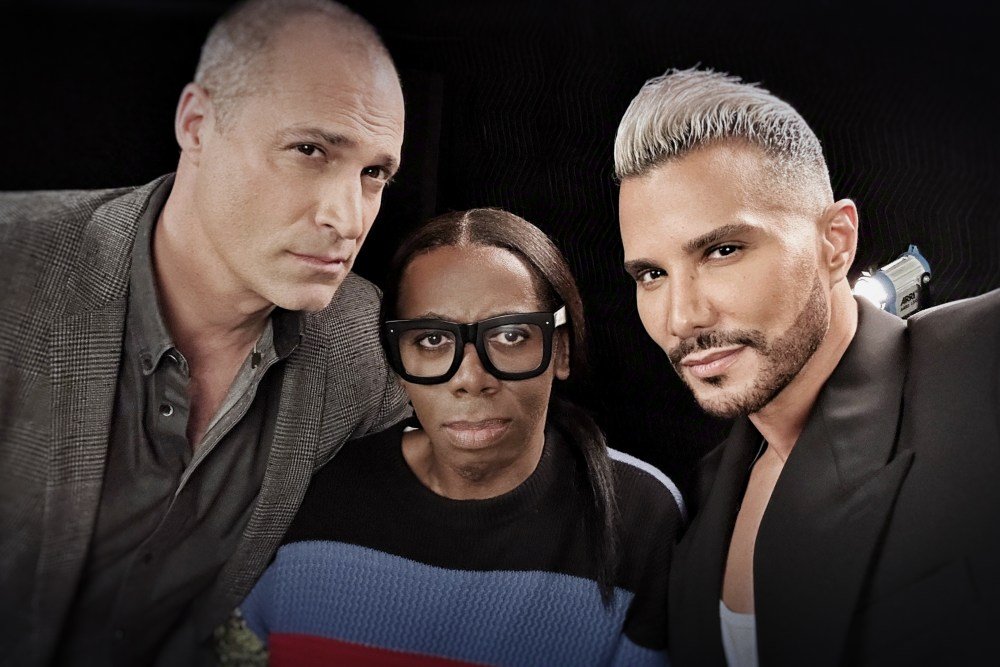
    “Reality Check: Inside America’s Next Top Model” strutted to 14.2 million views in its first seven days on Netflix, becoming the most-watched show on the streamer from the week of Feb. 16 to 22.

    The three-part docuseries, a harsh look at the controversial 2000s runway competition show, features interviews with former contestants, winners, judges and even creator and host Tyra Banks.

    Trailing “Reality Check” on Netflix’s list of the top 10 English-language TV titles last week are “The Night Agent” Season 3, which debuted to 8.4 million views and “Bridgerton” Season 4, which scored 6.3 million views in its fourth week on the streamer.

    On the non-English side, the Korean mystery thriller “The Art of Sarah” reached 10 million views in its second week. The German spy thriller “Unfamiliar” boasted 4.3 million views in its third week, and the Polish historical drama “Lead Children” nabbed 3.9 million views.

    Tyler Perry’s “Joe’s College Road Trip” was the most-watched English-language film with 10.4 million views in its second week. New to Netflix, Ridley Scott’s 2012 “Alien” prequel “Prometheus” reached the No. 2 spot with 6.6 million views in its first week. And “KPop Demon Hunters” continues to slay the charts, with 6 million views from Feb. 16 to 22 — its 36th week on the platform.

    Regarding non-English language films, “A Father’s Miracle,” “Firebreak” and “The Orphans” took the top three spots, with 7.3 million, 6.1 million and 5.3 million views, respectively.

    See the Netflix Top 10 for Feb. 16-22 below, beginning with English-language shows and movies and followed by non-English-language shows and movies.

  • Broadway Box Office: Grosses Fall 6 Percent Due to Blizzard

    Broadway Box Office: Grosses Fall 6 Percent Due to Blizzard

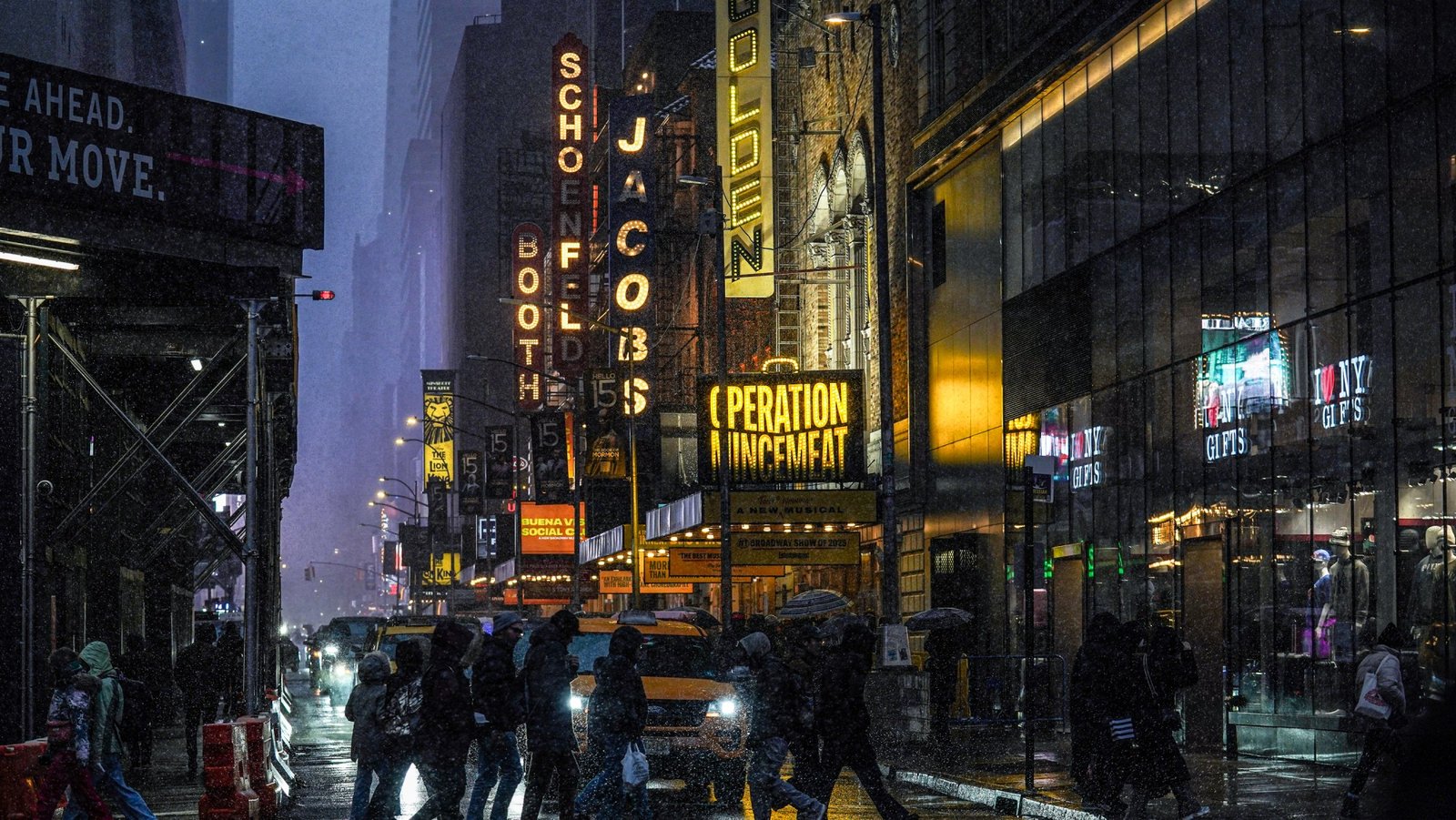
    Broadway grosses dropped 6 percent last week as eight productions canceled Sunday evening performances due to the blizzard in New York City. 

    Wicked, one of the highest earners on Broadway, saw the biggest drop due to the storm, as the musical fell $408,223 from the prior week. It was still one of the highest grossing shows of the week with Harry Potter and the Cursed Child as the top grossing show ($2.6 million), followed by The Lion King ($1.9 million), then Wicked ($1.6 million) and Just In Time ($1.5 million).

    & Juliet (down $195,292 from the prior week), All Out: Comedy About Ambition (down $77,149), Chicago (down $169,110) and Oh, Mary! (down $216,345) also lost their Sunday evening performances. 

    Though it was not impacted by the snowstorm, Chess had the largest drop of the week, falling $802,675, as lead Lea Michele was out of the show from Wednesday through Sunday due to a scheduled absence. Attendance also fell to 80 percent from 95 percent and the average ticket price dropped to $85 from $144. 

    Operation Mincemeat was meant to have a nine-performance week, with Sunday evening marking the final performance of original cast members David Cumming, Claire-Marie Hall, Natasha Hodgson, Jak Malone and Zoë Roberts. However, the cast members performed the matinee and then held a live-streamed concert in the evening, in lieu of the final performance. The show still saw a $150,000 boost from the prior week, bringing in $1.1 million as the average ticket price jumped up $23 to $175. 

    Hell’s Kitchen played its final performance Sunday, after opening on Broadway in April 2024. The musical brought in $1.4 million, and saw its grosses jump up about $200,000 from the prior week. 

    Stranger Things: The First Shadow also had to cancel Sunday night’s performance due to the storm, but still brought in close to $1.6 million across seven performances, above its totals at the beginning of February. The production was dark the prior week to allow for filming.

    Broadway also canceled Monday performances, impacting six productions that were scheduled to go on that night. Those cancellations will be reflected in the upcoming grosses. 

  • ‘The Ballad of Judas Priest’ Review: Leather-Clad Heavy Metal Pioneers Are Nice Working-Class English Lads Who Enjoy a Good Cup of Tea

    ‘The Ballad of Judas Priest’ Review: Leather-Clad Heavy Metal Pioneers Are Nice Working-Class English Lads Who Enjoy a Good Cup of Tea

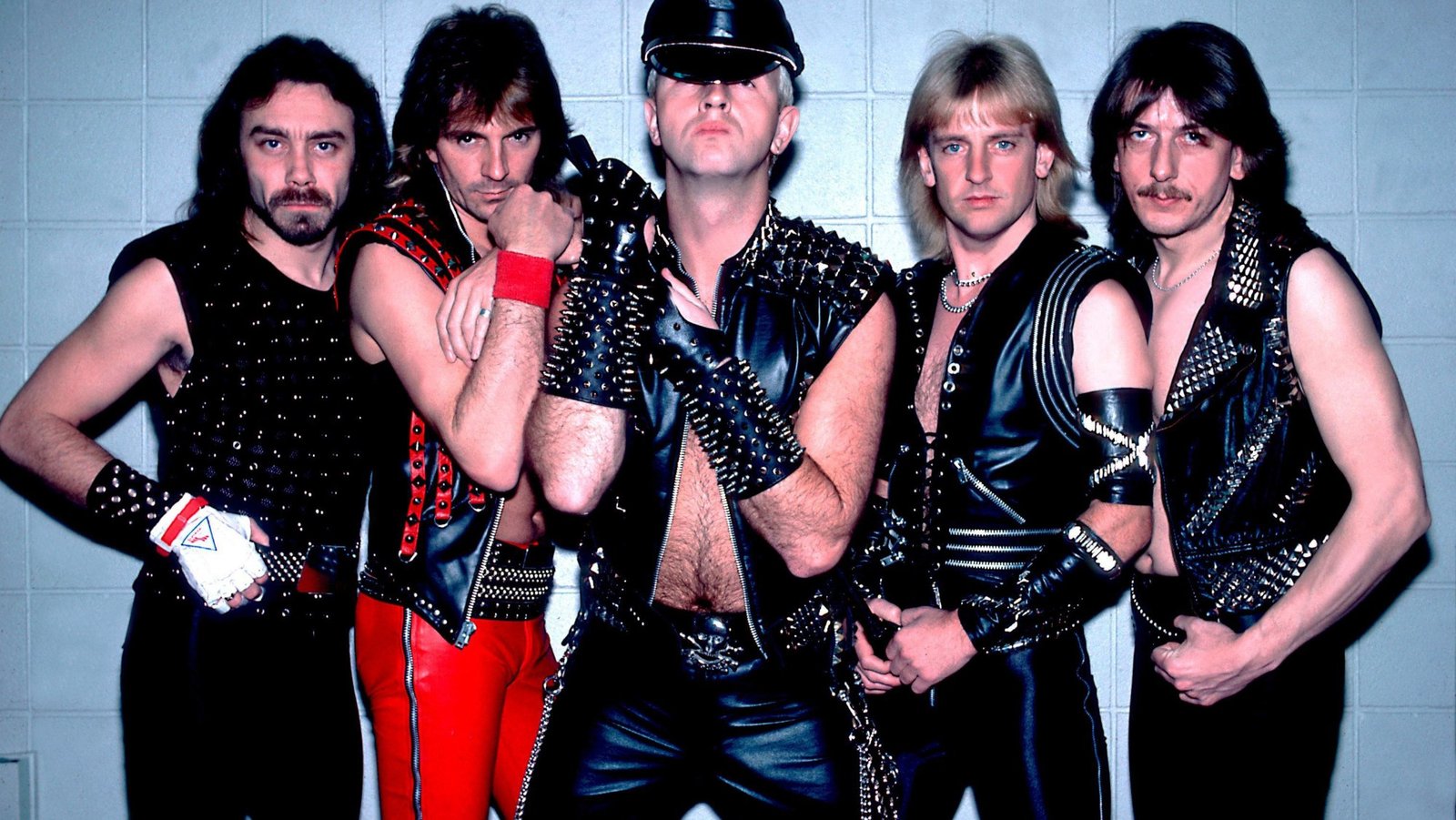
    The studded leather stage garb, the ear-splitting falsetto and thrashing guitars of a bunch of heavy metal gods suggest a stereotype bordering on satanic. Even the name given to the industrial birthplace of this lovingly assembled rock doc’s subjects, “The Black Country,” sounds like a demonic spawning ground. But one of the chief takeaways from fanboy co-directors Sam Dunn and Tom Morello’s entertaining legacy salute, The Ballad of Judas Priest, is how endearingly this canonical band comes across.

    Sure, they helped define heavy metal culture by dressing like a biker gang, sparked a culture war trial over accusations of subliminal death messaging and superfan Jack Black describes their sound as “the song you want to fuckin’ play on the electric chair; it’s the song you want to play before you fuckin’ head off into oblivion.” But these guys seem approachable, unpretentious and refreshingly uninclined toward bad-ass macho-aggressive posturing. They are the kind of nice, self-deprecating working-class English lads you could take home to meet Mum and Dad. Maybe it’s the delightful Birmingham accents.

    The Ballad of Judas Priest

    The Bottom Line

    The sweeter side of hardcore headbangers.

    Venue: Berlin Film Festival (Berlinale Special Midnight)
    With: Rob Halford, K.K. Downing, Glenn Tipton, Ian Hill, Scott Travis, Richie Faulkner, Tom Morello, Jack Black, Darryl McDaniels, Dave Grohl, Lzzy Hale, Billy Corgan, Scott Ian, Kirk Hammett, Ozzy Osbourne, Andy Sneap
    Directors: Sam Dunn, Tom Morello

    1 hour 38 minutes

    That’s not to imply that Dunn and Morello’s film makes the pioneering metallurgists seem in any way inauthentic or soft. But when you partly frame a Judas Priest doc with longtime frontman Rob Halford, now a cheerful septuagenarian, strolling down to his local to order fish and chips with mushy peas and a pickled egg, you inevitably demystify your Metal Lords.

    Then again, Judas Priest appear never to have cared much about cultivating an offstage mystique to match their hard-edged, high-energy performance style. Any band in their genre that would craft a metal power anthem out of Joan Baez’s introspective folk ballad “Diamonds and Rust” clearly isn’t just playing to expectations.

    The movie has surprising warmth and heart, notably so in its handling of Halford’s sexuality. The singer was never in the closet with his bandmates or management, but he was encouraged to hide that side of himself as their popularity grew in the 1970s. Halford acknowledges that metal was an alpha male-dominated sphere in which he himself believed there was no place for an openly gay man.

    That created a struggle between success and fame on one side and loneliness and angst on the other, leading to a period of alcoholism, which he kicked with a 30-day rehab stint. But when Halford casually came out during a 1998 MTV interview, and the news traveled round the world in 24 hours, he was astonished at the outpouring of love and acceptance from the metal community.

    The doc makes wry points about going back and looking for hidden queer meaning in the band’s lyrics, yielding not exactly subtle clues like Halford strutting around the stage singing “Grinder! Looking for meat!”

    Earlier, they switched from sequins and satin into their defining leatherwear look, finding the initial pieces in a gay sex shop in London’s Soho. There’s humor in Metallica lead guitarist Kirk Hammett, a San Francisco native, recognizing the look from late 1970s Castro leather boys: “I was thinking, huh, maybe it’s different in Britain.” But Halford drolly specifies: “There was never any equation to S&M, because I’m the most vanilla guy in the gay world.”

    The doc mixes present-day interviews with the band, archive material and input from contemporaries like Ozzy Osbourne and next-gen rockers Dave Grohl and Hammett. Black’s contributions are both reverential and light-hearted.

    But some of the most insightful and witty commentary comes from co-director and Rage Against the Machine guitarist Morello. He talks about starting a heavy metal appreciation club while he was at Harvard, which would meet every week to discuss Harvardian topics like “The social impact of the twin axe attack on ‘80s metal post Defenders of the Faith.”

    In subsequent years, Morello started organizing similar gatherings of like-minded friends to discuss metal at the Rainbow Bar & Grill in Los Angeles. One such meeting, extensively excerpted here, is a “Judas Priest Round Table,” at which Morello is joined by Run-DMC vocalist Darryl McDaniels, Smashing Pumpkins frontman Billy Corgan, Scott Ian from Anthrax and Halestorm’s Lzzy Hale.

    The group’s Priest love is contagious, and there’s a nice note of inclusivity in the fact that two Black musicians, Morello and McDaniels, were instrumental in getting Judas Priest into the Rock & Roll Hall of Fame after the band had been passed over on two previous ballots.

    Perhaps the most interesting chapter looks back on the “Satanic Panic” period, when mainstream America’s fear of the heavy metal subculture peaked. Concerned mothers formed the PMRC (Parents Music Resource Center) to scapegoat hard rock as a pollutant of their children’s minds, while Senate subcommittee hearings pushed for censorship.

    The most significant offshoot of all this came in 1990, when a Nevada civil action funded by Christian conservatives went after Judas Priest for $6 million, alleging that subliminal messages in the band’s music prompted the suicide pact of two young males. This would seem ludicrous today if not for the far right’s habitual moral hysteria. But watching a courtroom full of people straining to hear vague signals like “Do it” in a Priest song raises eyebrows, especially when it’s determined that the subliminal words were never there. “The common-sense thing is, why would you tell your fans to fucking kill themselves?” observes Halford.

    While the band was cleared of any suspicion, the experience of their music being put on trial left behind a heavy cloud. They argue that, rather than feeding loneliness and despair, metal allowed misfits to find their communities. Hammett gets emotional talking about it, calling the music “medicine.”

    This is more of a celebration than a warts-and-all study, with relatively little on the personal side. Conflicts are glossed over, line-up changes happen without drama and any life or relationships outside the band are mentioned only in passing. LGBTQ audiences might wish to know if Halford ever managed a clandestine relationship over the 25 years of fame during which he remained closeted, or indeed since. But Dunn and Morello make no apologies for sticking to the music and the rapport among the band members.

    As with any group that’s been recording and performing in various configurations for more than half a century (Morello calls them “the Willie Nelson of heavy metal”), time takes its toll.

    Longtime guitarist K.K. Downing’s departure in 2011 was a blow, though he’s vague about the reasons, beyond saying it started to feel more like hard work than joy. Even more saddening was the Parkinson’s disease diagnosis that struck Glenn Tipton, Downing’s other half in the twin axe “guitarmony” component so essential to the band’s dynamic. (The late Osbourne makes touching comments about the sense of solidarity he felt as a fellow Parkinson’s sufferer.)

    The biggest change to the band came in 1992 when Halford decided to step away for a while to pursue solo projects. That lasted 11 years, but despite any rancor the break might have caused, when the time came for him to return, Tipton says, “He didn’t need to ask.” Nevertheless, that negotiation took place, in quintessentially British style, over a cup of tea.

    I confess that aside from a handful of Led Zeppelin bangers, I’ve never been much of a metal fan and before The Ballad of Judas Priest, I couldn’t have named even one of the band’s hits. But watching them perform at the 2022 Hall of Fame ceremony, with all four core members — Halford, Downing, Tipton and bassist Ian Hill — together again on stage, I found myself thinking “Priest! Fuck, yeah!” as my index and pinky fingers involuntarily formed devil horns.
  • Pierson Fodé Signs With CAA (Exclusive)

    Pierson Fodé Signs With CAA (Exclusive)

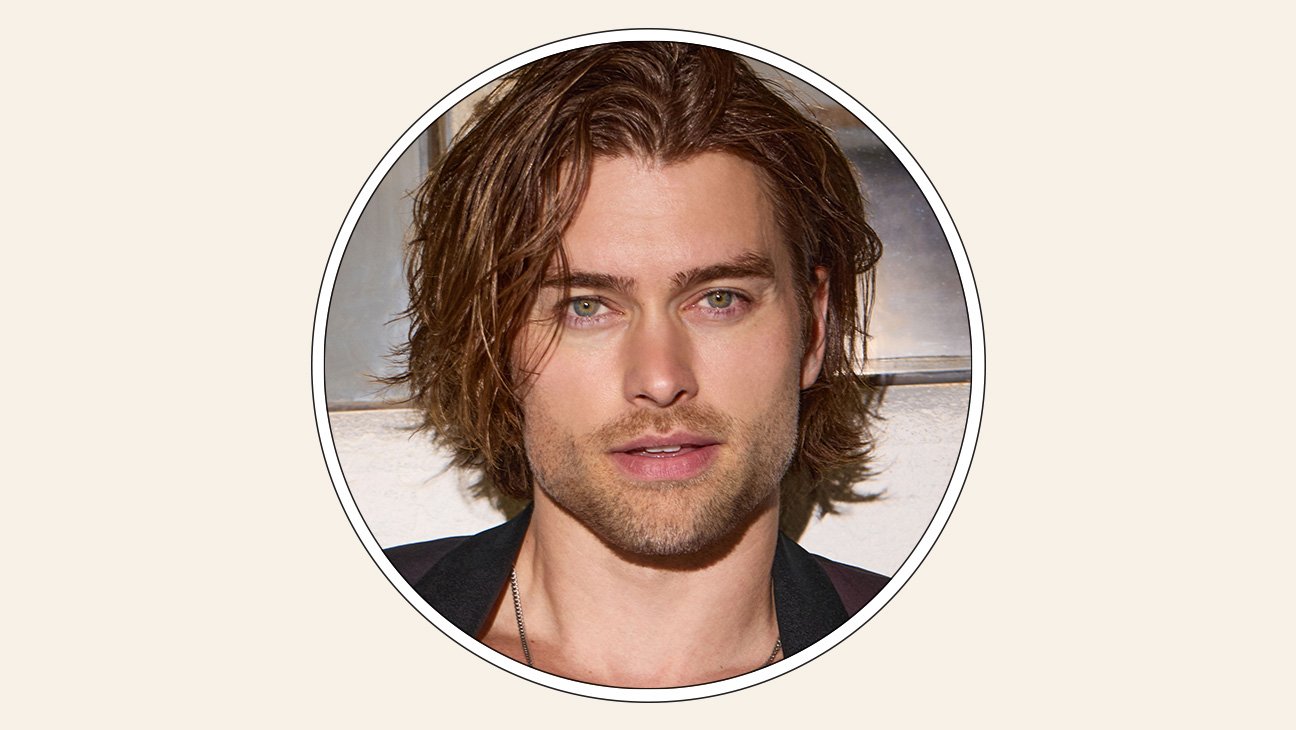
    Pierson Fodé has signed with CAA for representation in all areas.

    The former Bold and Beautiful star went from a soap for which he earned two daytime Emmy nominations to a leading man in Hollywood thrillers, including with a breakout role opposite Kevin Hart and Woody Harrelson in Netflix and Sony Pictures’ The Man From Toronto from director Patrick Hughes.

    Having made his acting debut in a 2012 episode of iCarly, Fodé recently wrapped production on the upcoming Netflix thriller The Last Mrs. Parrish, directed by Robert Zemeckis and also starring Jennifer Lopez and Nikolaj Coster-Waldau. In 2025, he performed alongside Lily James in Swiped, the 20th Century Studios biopic inspired by Bumble founder Whitney Wolfe Herd and directed by Rachel Lee Goldberg for Hulu.

    His other film credits include Netflix’s The Wrong Paris with Miranda Cosgrove; the romantic comedy A Merry Little Ex-Mas; the thriller romancer Dope Queens; Naomi & Eli’s No Kiss List, also starring Victoria Justice; director Alastair Orr’s horror pic Indigenous, which bowed at Tribeca; and director Frank Waldeck’s drama It’s Time, about the Ole Miss cornerback Chucky Mullins. 

    On the TV front, Fodé starred in Animal Kingdom, Leverage: Redemption, Dynasty, and the spoof series The Real Bros. of Simi Valley, where he played the role of Yonder.  Fodé also appeared in the “Big Game” Super Bowl commercial for T-Mobile alongside the Backstreet Boys.

    Fodé, who has around 2.6 million TikTok followers, continues to be represented by Zero Gravity Management, Gang, Tyre, Ramer, Brown & Passman and The Initiative Group.

  • Katherine Short, Daughter of Martin Short, Dies at 42

    Katherine Short, one of the three children adopted by Only Murders in the Building star Martin Short and his late wife, actress Nancy Dolman, has died. She was 42.

    “It is with profound grief that we confirm the passing of Katherine Hartley Short,” a rep for Martin Short said in a statement. “The Short family is devastated by this loss and asks for privacy at this time. Katherine was beloved by all and will be remembered for the light and joy she brought into the world.”

    Sources told TMZ that she died from a self-inflicted gunshot wound, with the LAPD responding to her Hollywood Hills home shortly after 6 p.m on Monday.

    Survivors include her younger brothers, Henry and Oliver.

    Born on Dec. 3, 1983, Katherine Short received a bachelor’s degree in psychology and gender sexuality studies from NYU in 2006 and her master’s in social work from USC in 2010.

    According to her website, she later worked at UCLA’s Resnick Neuropsychiatric Hospital and for the dual-diagnosis outpatient program Camden Center. She was said to be involved in a charity called Bring Change 2 Mind, which works to eliminate stigmas associated with mental health.

    Short and Dolman first met in 1972 when they worked together on a production of Godspell, and they married in 1980. Dolman died in August 2010 after a battle with ovarian cancer, after which Short told The Guardian: “It’s been a tough two years for my children. This is the thing of life that we live in denial about, that it will ever happen to us or our loved ones, and when it does you gain a little and you suffer a little. There’s no big surprise.”

    Short is now on a two-man comedy-and-music tour with Martin, with their next show scheduled for Friday in Milwaukee.

  • Watch ‘A CNN & Variety Town Hall Event: Timothée Chalamet and Matthew McConaughey’ With Bonus Footage

    Watch ‘A CNN & Variety Town Hall Event: Timothée Chalamet and Matthew McConaughey’ With Bonus Footage

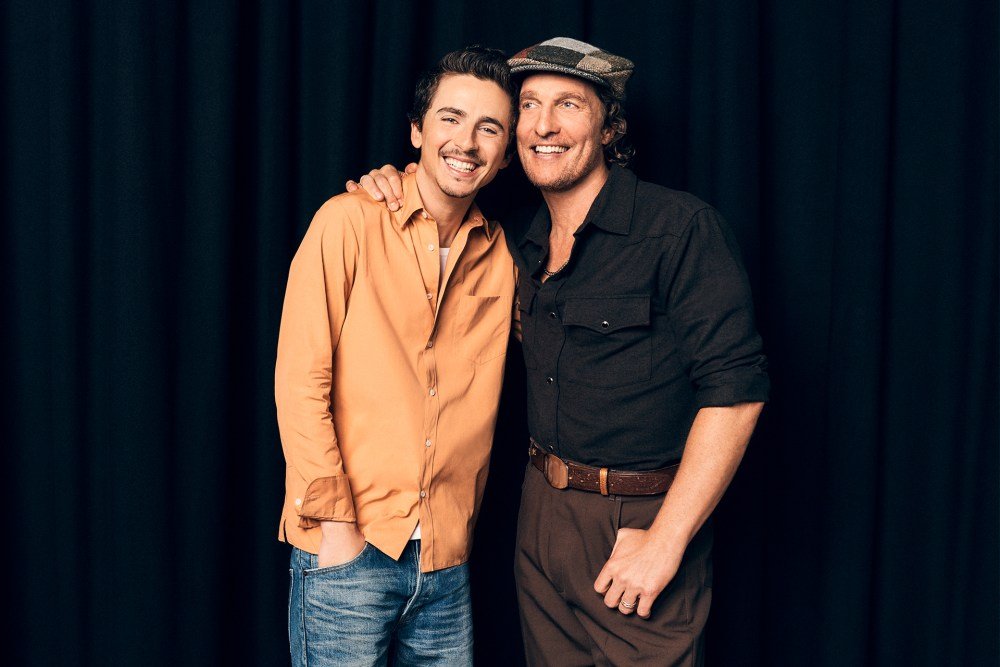
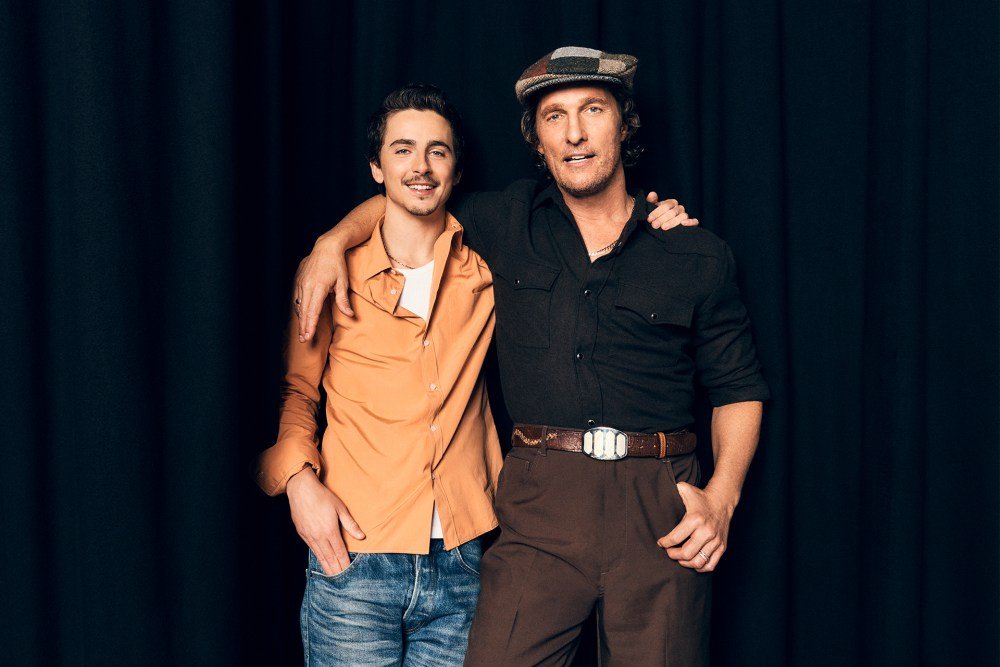
    Timothée Chalamet and Matthew McConaughey came together for a one-of-a-kind town hall conversation hosted by Variety and CNN. The program, which aired Feb. 21 on CNN, is now available to stream on Variety‘s YouTube channel, along with bonus footage.

    “A CNN & Variety Town Hall Event: Timothée Chalamet and Matthew McConaughey,” which was filmed before a live audience of University of Texas at Austin’s students, marked a reunion for Chalamet and McConaughey, who played son and father in Christopher Nolan’s 2014 sci-fi epic “Interstellar.”

    In the 90-minute conversation, the actors discussed their memories from “Interstellar,” Chalamet’s role in “Marty Supreme,” their approaches to acting and more. Chalamet and McConaughey also answered questions from audience members throughout the evening.

    “Man, that’s remains my favorite project I’ve ever been in,” Chalamet told McConaughey about “Interstellar.” “I think it’s your most fantastic role. I know you were coming off ‘Dallas Buyers Club,’ but that movie, to me, was the origin point in seeing how you carried yourself on set, how seriously you and Christopher Nolan took the work. It gave me a license. Coming out of high school, it’s hard to take yourself super seriously. You can feel like you’re wasting time or stuck-up or something. And I remember you had a yoga mat, and you’d be working out and sleeping on set. It was all very strange to me. But it was super inspiring. I just can’t thank you enough for being warm to me at that time, when you had no reason to be warm to me. Christopher as well. It just changed my life, man.”

    McConaughey responded, “Thanks for that, man. You were pretty easy to be warm to. I remember you had what I felt like was a feverish curiosity at that time. You were figuring some stuff out, but it seemed obvious to me that no matter what you were dealing with, you were going to make your way. And I believe you were in some sort of limbo. You were choosing — something about music, and somebody was putting pressure about, ‘Maybe go this way,’ and you wanted to go this way.”

    At one point, Chalamet shared new details about “Dune: Part Three,” which opens in theaters this December. He teased that the final film in Denis Villeneuve’s sci-fi trilogy is the “eeriest one” and a “big swing.”

    Chalamet later added, “I didn’t want to be complacent about a single moment. Everything was sacred, and it was my last time doing a ‘Dune’ film, so I really wanted to treat it as sacred. Because people can get complacent, but I was more intense on the third one. It felt like that was the natural momentum, so I wanted to push against that as hard as I could.”

    Watch “A CNN & Variety Town Hall Event: Timothée Chalamet and Matthew McConaughey” below.

  • Timothée Chalamet Says Netflix Wants the ‘Biggest Action Set Pieces Up Front’ as Matthew McConaughey Mourns the Loss of Act One in Movies: ‘The First Thing That Gets Cut’

    Timothée Chalamet Says Netflix Wants the ‘Biggest Action Set Pieces Up Front’ as Matthew McConaughey Mourns the Loss of Act One in Movies: ‘The First Thing That Gets Cut’

    In bonus footage from “A CNN & Variety Town Hall Event: Timothée Chalamet and Matthew McConaughey,” the two actors discussed how studios have begun catering to people who are using their phones while watching movies or TV shows.

    “In this day of shorter attention spans and vertical 12-second spots, are we losing the patience for Act 1?” McConaughey said. “Because it’s the first thing that gets cut. It’s the first thing a studio wants to get rid of. I’m seeing Act 2, more and more, start on freakin’ page 12 [of a script]. I’m seeing 10-part series where — bam! — Act 1’s over 32 minutes into the opening episode, and you’re off on the conflict right away. It feels abbreviated to me.”

    Chalamet responded, “I saw an article about a Netflix production guideline — not for all movies, I don’t want to speak disparagingly, but — where they want their biggest action set pieces up front. The logic used to be: Save your big action set piece for the end of a movie. You save the fireworks for the end. But now they want something up front.”

    Chalamet was referencing Matt Damon and Ben Affleck’s recent interview with Joe Rogan about their Netflix movie “The Rip,” where Damon revealed the streamer’s strategy for making action movies. “The standard way to make an action movie that we learned was, you usually have three set pieces. One in the first act, one in the second, one in the third,” Damon said. “You spend most of your money on that one in the third act. That’s your finale. And now they’re like, ‘Can we get a big one in the first five minutes? We want people to stay. And it wouldn’t be terrible if you reiterated the plot three or four times in the dialogue because people are on their phones while they’re watching.’”

    But Chalamet hasn’t lost hope. “I also think there’s sort of a reverse thing going on where people are desiring things that are more patient and that pull you in,” he said. “I just saw another article that says Gen Z is a bigger moviegoing audience than millennials. ‘Frankenstein’ was a hugely popular movie this year; I didn’t think that pacing was extraordinarily fast, but it pulled people in.”

    “Some people want to be entertained quickly,” Chalamet continued. “I’m really right in the middle, because I admire people [saying], ‘Hey, we gotta keep movie theaters alive. We gotta keep this genre alive.’ And another part of me feels like, if people want to see it — like “Barbie,” like “Oppenheimer” — they’re going to go see it and go out of their way to be loud and proud about it.”

    With a laugh, he concluded: “I don’t want to be working in ballet or opera where it’s like, ‘Hey, keep this thing alive, even though no one cares about this anymore’ — all respect to the ballet and opera people out there.”

    Watch the extended version of “A CNN & Variety Town Hall Event: Timothée Chalamet and Matthew McConaughey” on Variety‘s YouTube channel or on the CNN app.

  • I Worked for JFK Jr. I Thought I Would Sob Through ‘Love Story.’ Instead, I Laughed Out Loud.

    I Worked for JFK Jr. I Thought I Would Sob Through ‘Love Story.’ Instead, I Laughed Out Loud.

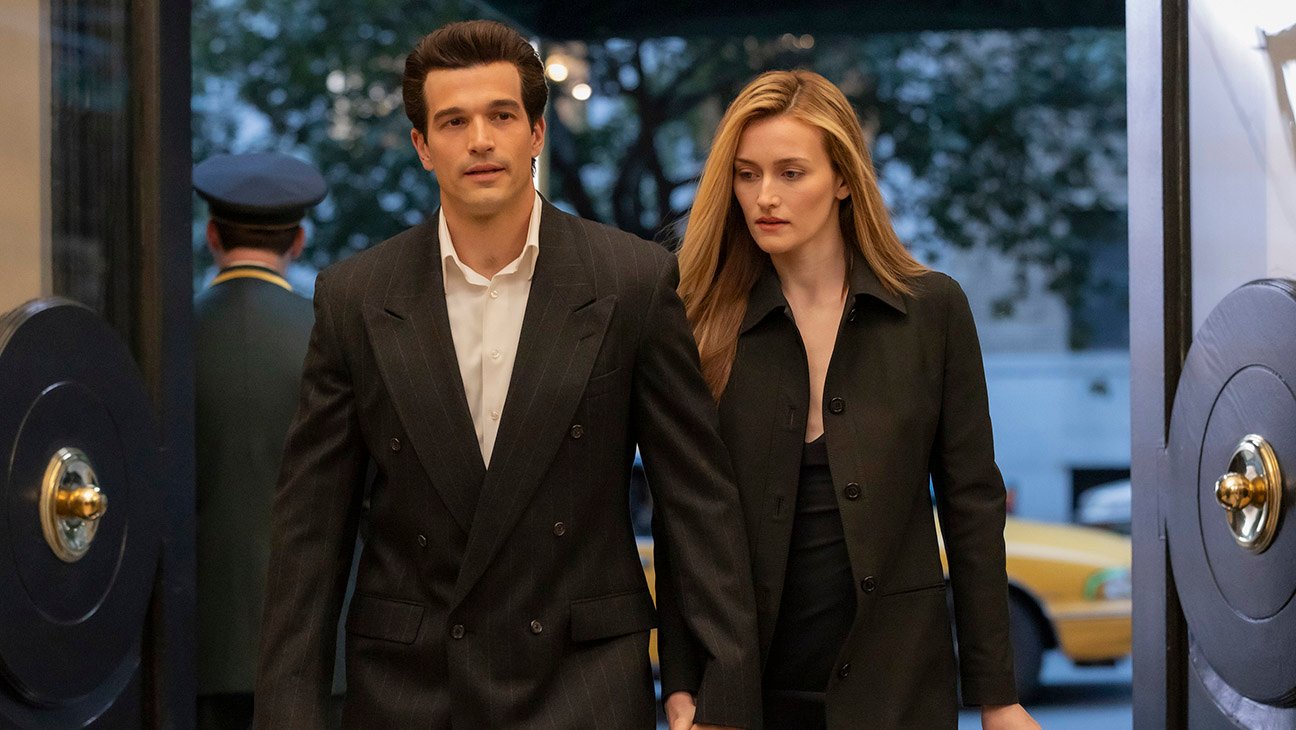
    So now I have to admit that I’m watching it. This is a touchy subject for those who actually knew John and Carolyn. Do you purposely and deliberately not watch, assuming Love StoryRyan Murphy’s latest extravaganza dramatizing their relationship and tragic death — will be dreck that they’d both have hated? In solidarity with John’s beloved nephew Jack Schlossberg, who was the ring-bearer at his secret wedding, and who, months before a trailer was even released, accused Murphy of profiting off his uncle “in a grotesque way”? Yikes. Shouldn’t we all be virtue-signaling and (grandly) announce that we will not be watching it?

    Well, no. I worked for John at George. He started a magazine, for chrissake. And one of the reasons he was an excellent editor (yes, he was) was because John had the No. 1 quality of a great editor: an insatiable curiosity. Journalists are curious. He also, in a very Tina Brown kind of way, wouldn’t miss something that was so clearly part of the zeitgeist. Everyone’s talking about this. It was the same reason he invited his staff to a dinner party (with big-screen TV)  at the Racquet Club the night Monica Lewinsky blabbed all to Barbara Walters — even though he was visibly uncomfortable, squirming through the whole thing, just the idea of this thing, a 21-year-old intern talking about flashing her thong and then fellating the President of the United States in the oval office. Ick. But of course he watched. And I think he’d have hate-watched Love Story.

    So, I gathered my tissue boxes, and I did cry — before it started. That choked-upness that comes at any John trigger, and there are so many. JFK airport can do it to me. But the lead-up to this series has been a nonstop bombardment.  Then it started. And first, I was pissed. The opening of the pilot, obnoxiously named “Pilot” (get it?), is focused on their normal-for-them lives before they get to the airport. John is at the office, talking to staff, handwriting a personal note. Yeah, he would do that. Then, Murphy recycles that old debunked trope, first promulgated by Ed Klein in Vanity Fair (as John used to say, “He had one lunch with my mother and has been dining out on it ever since”), that they were late taking off because Carolyn kept getting her toenail polish changed, to the perfect shade of lavender. In Love Story, it’s her fingernail polish and it’s red, though Carolyn never wore nail polish on her fingers, and certainly not red (red was for lipstick). But that shit doesn’t bother me in a fictionalized miniseries. What does bother me is the implication that her vanity caused the crash. As Klein’s source has explained numerous times, she left the salon before 5:00. The plane took off at 8:15. Jeesh. Let it go.

    It was the Jackie depiction that had me howling. Naomi Watts did such a spectacular job playing Babe Paley in Murphy’s previous miniseries (that I mostly loved) Feud: Capote vs. The Swans, that I expected big things from her Jackie. I did not expect a cartoon character that was too off-the-charts to even be considered camp, from her first scene, where she is at her dining-room table in her Park Avenue apartment, imperiously ringing a dinner bell to summon the help. But the hilariously bad Jackie scene comes in Episode 3. You know that great portrait of President Kennedy that hangs in the White House, the pensive one where he is glancing down, the one Jackie actually did approve? Well, Murphy has it in her apartment. And one night, all alone in a dark room (where’s Maurice, you damn fool?!), and knowing she is dying, she puts Camelot on the record player (well, it was 1994), lifts up the painting in her fragile state, and dances with it to Camelot. Are you fucking kidding me, Ryan Murphy? Of all the zillions of Jackie stories in circulation for 70 years, some of them true, this is what you pull out of your ass?

    Naomi Watts as Jacqueline Kennedy Onassis in FX‘s Love Story.

    Kurt Iswarienko/FX

    And what’s his beef with Daryl Hannah, who comes across as a certifiable ditz? Clingy, dim, goofy, stoned. Was/Is she that much of a flake? I never met the woman, but I can’t imagine that John, who was preternaturally attracted to smart strong women, could have lasted five minutes, let alone five years, with Murphy’s Hannah. It’s all so comical that even when John accidentally gets her dog killed (which, apparently, is true), I didn’t cry.

    And whoever cast Rose Marie Terenzio, John’s effortlessly hip executive assistant, as a fat and dowdy bore, should be taken out in an alley and beaten up.

    In fact, the actors that offended me the least were the main characters. Let’s be real. This had to be the bitch of all casting assignments. Starting with Carolyn, who never gave a single interview in all the years she was with John. Sarah Pidgeon had little more than mythology to work with. I don’t pretend to have known Carolyn well. I knew her the way you know a boss’ wife — being seated next to her at dinner parties, sneaking out for a smoke together, that kind of stuff. She was, as Pidgeon portrays her, smart as a whip and funny. And in that sense — plus the indescribable aura of Carolyn, that thing she had where you just knew, of course John would be head over heels for her — Pidgeon nails it. She also had that elusive mix of confidence and empathy that made both men and women love her. Pidgeon nails that too.

    About Paul Anthony Kelly. Does he look like John? No one looks like John. (Or Carolyn.) So cut him a break there. But don’t actors have to prepare for their roles? Shouldn’t someone have sent him to the gym for a few months to get rid of those flabby abs? On John Kennedy? Horrors! Or at least not shoot him the way you’d shoot John Kennedy, naked to the waist in a locker room or Central Park. (Nice package, though.)

    What Kelly does get right, and it’s no small thing, is John’s mannerisms, the way he walked, the way he locked up his bike. Or forgot to lock up his bike. That was real. And the lateness. That was real, too. He also, in most scenes, though not all, captures his voice. John had a distinctive way of speaking, the cadence, the intonation. When he sounded like him, I got chills. And he got the banter, the rhythm, which we also should credit the screenwriters for. John was a gifted conversationalist. He could return the volley with anyone. And he often did so with humor and self-deprecation. Kelly gets that, too. One quibble: Kelly has said in interviews that he tried to get the lisp down. What lisp? This was news to me. Was there something about his intonation that you might call a faintly discernible stammer? OK. But lisp? Nah. John Kennedy did not lisp, for chrissakes. And in any event, it is way overplayed.

    Here’s where I did choke up. The spot-on depiction of the ‘90s in New York. The Odeon! Which John loved. Pay phones. Business lunches at Michael’s. Book parties with gift bags. That soundtrack. And especially the publishing world of the ‘90s, when magazines were on fire and George was the new bright shiny object. How I miss those days. And I’m sure I will ugly-cry eventually. We haven’t gotten to the crash.

    Would John have liked Love Story? No. But I think he would have been happy about the depiction of his wife — at least as far as the first four episodes — as a smart and intoxicating creature. His mother? He’d have hated it. But laughed. When these things arise — documentaries, anniversary specials, the whole John Jr. oeuvre — I always ask, is this good for his legacy? (That’s my virtue signaling.) And they usually are. I like that, I like when 20-year-olds and 30-year-olds know who he was.

    Love Story would not have come as a surprise to John. He got it. Though he might have wondered what took so long.