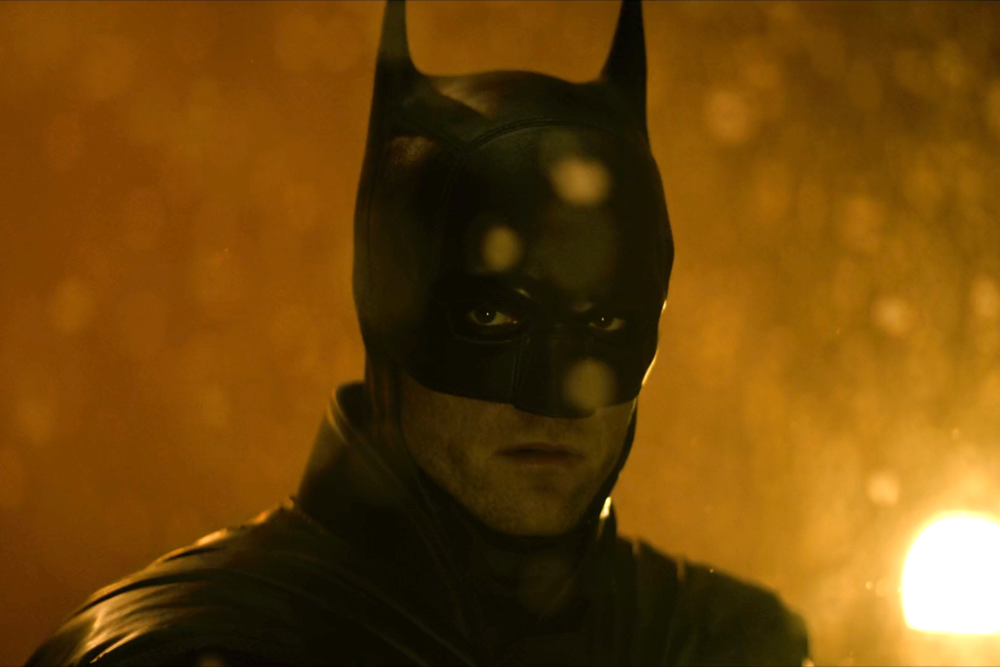
DC Studios co-chief James Gunn is putting to bed one of the more popular online rumors about the upcoming “The Batman 2,” directed by Matt Reeves and once again starring Robert Pattinson as the Dark Knight. Social media has been convinced that Reeves is filming “The Batman 2” and “The Batman 3” back to back, alleging this is one of the reasons his sequel to 2022’s “The Batman” spent so many years in development. Not so fast.
Gunn was asked on Threads to confirm or deny the rumor about two “Batman” sequels shooting back to back, to which he bluntly answered: “I can deny.”
It’s not uncommon in Hollywood for studios to shoot sequels back to back as one huge production. This is how “The Matrix Reloaded” and “The Matrix Revolutions” were filmed after the blockbuster success of the “The Matrix,” for instance, as were “Pirates of the Caribbean: Dead Man’s Chest” and “At World’s End” following the huge reception for “The Curse of the Black Pearl.” Marvel shot “Avengers: Infinity War” and “Avengers: Endgame” as one production over the course of an entire year.
Warner Bros. recently delayed the release of “The Batman 2,” which is now in production in London. The movie will open in theaters on Feb. 18, 2028, nearly six years after the March 2022 opening of “The Batman.” Joining Pattinson in the long-delayed sequel are Scarlett Johansson and Sebastian Stan, plus Charles Dance, Brian Tyree Henry and Sebastian Koch. Reeves co-wrote the sequel’s screenplay with Mattson Tomlin. Plot details remain under wraps, as do the roles being played by the film’s supporting cast.
“The Batman Part II” was originally supposed to open Oct. 2, 2026, before Warner Bros. delayed it to Oct. 1, 2027. Moving the film to 2028 gives Reeves additional time in post-production.
Screenwriter Eric Roth (“Forrest Gump,” “Dune: Part One”), Brian Kavanaugh-Jones (“Longlegs,” “A Complete Unknown”), Andrew Upton of his and Cate Blanchett’s production company Dirty Films (“The New Boy”) and Anne Peters are on board as executive producers of the fable-like tragicomedy “The Present Times.”
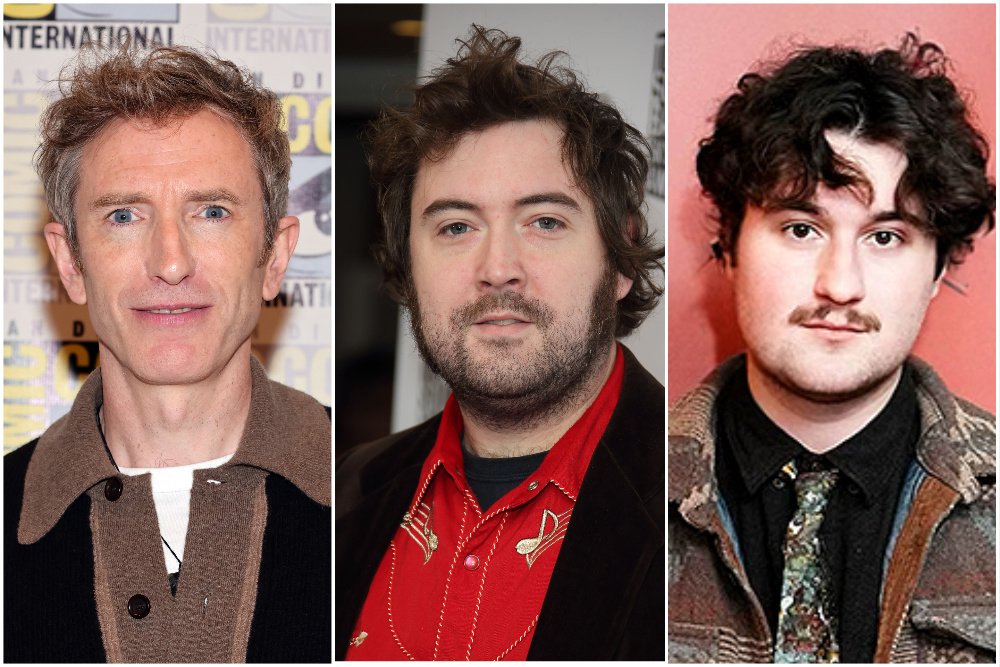
The upcoming feature film, directed by Noah Stratton-Twine, stars Daniel Weyman, who plays Gandalf in “The Lord of the Rings: The Rings of Power,” and standup comedian and actor Nick Helm (“Uncle”).
Weyman and Helm play embittered paparazzi Roy and Ian, respectively, who face the consequences of their intrusive profession when confronted by an immoral scheme and an otherworldly presence.
Joining them in the cast are Paul Kaye (“Game of Thrones”), Raffey Cassidy (“The Brutalist”), Emma McDonald (“Moonhaven”) and Jay Simpson (“Chernobyl”), supported by an ensemble that includes Ada Player (“The Running Man”), Os Leanse (“Artificial”), Ivy Freeman-Attwood (“Elden Ring”), Nish Nathwani (“Surge”) and Luke Rollason (“Supergirl”) — who starred as the lead in Stratton Twine’s first feature “Two Big Feet.”
Stratton-Twine describes the film as “an ode to both Britain’s wealth and history of championing character actors, larger-than-life performances in often ludicrous yet wholly innate and resonant scenarios, and London as a singular and diverse cinematic city, prior and still championed by heroes of mine like Mike Leigh.”
This is the third feature written, directed, edited and scored by Stratton-Twine, who is currently touring his co-directed effort “The Peril at Pincer Point,” which received the Neon Auteur Award at SXSW 2026 and is set to play at Fantasia, Edinburgh Intl. Film Festival and many others, having since screened and won awards at Fantaspoa and Sydney Film Festival.
Also featured in the cast are Kim Durham, Anna Acton, Bron Weigh, Richard Keep, Corinna Marlowe, Ignatius Upton, Andrew Upton, Andi Da Silva, Andre Lillis, Oxa Hazel, Sabira Stanisavljevic, Kenichiro Thomson and Jack Redmayne, who previously led Stratton-Twine’s “The Peril at Pincer Point.”
“The Present Times” is produced by Dashiell Upton, Lev Petrov, Jake Kuhn and Timofey Stolov. Casting by Marta Nogeura. Cinematographer Murray Zev Cohen returns for his third collaboration with Stratton-Twine. The production companies are Right Off Films and Gittes-Cross Pictures.
We’ve found a precious 40 minutes away from the hustle and bustle of press day for season four of ITV‘s Trigger Point at London’s Soho Hotel. Tucked into the corner of one of its underground bars, McClure speaks to The Hollywood Reporter while her co-stars — Eric Shango, Natalie Simpson, Maanuv Thiara among them — dutifully pose for photos and laud the latest work of show creator Daniel Brierley.
McClure, returning as the no-nonsense bomb disposal expert Lana Washington in another high-octane, watch-behind-your-hands instalment, is taking us through her early years at Nottingham’s Television Workshop, a Midlands-based film, TV, and theatre training school for kids from working-class backgrounds. She had initially eyed a career in professional dance and landed a place at the prestigious Italia Conti academy. But her family couldn’t afford the tuition. She stayed with the Television Workshop until the age of 21.
I halt the conversation early on to ask if what I’ve read online — that McClure was mentored at the Workshop by The Odyssey breakout Samantha Morton, a fellow Nottingham native — is true. The actress is quick to clarify: “That isn’t correct. Sam is a huge part of the Workshop, and my word, I mean, even now, the gigs that she’s in,” she says, alluding to the latest Christopher Nolan hit, wide-eyed with awe. “[But] we never crossed over. I actually didn’t know her while I was in the Workshop.” The pair would, later in their respective careers, meet at odd events. “You gravitate to each other if you’re both from Nottingham or the Workshop,” explains McClure, who was proudly born and raised in the English city (she has resisted the industry-induced pressure to relocate to the capital — a decision we’ll come to later).
It was only when both of them were leading Dominic Savage’s I Am… series that McClure and Morton ended up “having a long chat on the phone.” They’ve stayed in touch, and McClure certainly calls her peer “an icon of the Workshop, and of the acting world.” But, contrary to what the internet purports, this friendship didn’t blossom until well beyond the Nottingham Television Workshop, which McClure remains a devoted patron of.
And while Morton’s face currently graces thousands of cinema screens across the world, it is Vicky McClure who is known far and wide here in Britain. She has steadily risen through the ranks for two decades now to become one of the most prolific actors in the country, famed for her forthright characters and becoming, frankly, a legend of the U.K. police procedural (Line of Duty, Broadchurch, to name a few).
With Trigger Point continuing to pull in millions of viewers — season three’s seven-day consolidated average came in at 5.1m last year — and a hotly anticipated Line of Duty return imminent, McClure, now 43, enters a chapter of her career marked by prolificacy, freedom, and industry-wide reverence.
Vicky McClure (center) in 2006’s ‘This Is England.’
IFC Films/Courtesy Everett Collection
Her starring role aged 23 as Lol Jenkins in Shane Meadows’s 2006 film This Is England, and in the Channel 4 sequel mini-series This Is England ’86, This Is England ’88 and This Is England ’90 from 2010 to 2015, is what she considers her long-awaited big break. “But I went straight back to the office,” McClure tells THR about her job at a house valuation company. “There’s just an illusion that once you’re in a film or you’re in something, that’s it. Onward you go,” she continues. “I’d train new people, then I sort of went into the HR department, looked after things like the vending machines, the post, a wide variety. I was even fire warden at one point, which I think has done me well for drifting into Lana,” she laughs. “That was my thing. I’d go off and do This Is England, and then I’d come back.”
She worked at the business for eight years, and in that time, starred in a film directed by Madonna, Filth and Wisdom (2008). “We always think people care more than they do,” McClure says when asked what her office mates thought of the Madonna gig. “You know what I mean? They go, ‘Oh, amazing. That’s cool. Well, we’re having lunch.’”
The reality is, while McClure was shooting with mega-stars, she was also getting told “no” a lot. “I learnt very quickly to stop telling people when I had an audition because nine times out of 10, I never got the job,” she admits. She recalls going up for roles in Peaky Blinders and Sarah Gavron’s 2015 Suffragette film. “That was one of those moments,” she says about feeling particularly heartbroken by the Suffragette casting, which eventually went to Carey Mulligan, Helena Bonham Carter, Anne-Marie Duff and Meryl Streep. “I wasn’t really that bothered about learning too much at school. I’d missed out on lots of history, so Jonny [Owen, McClure’s husband, also an actor and producer] sat down with me and we talked about the suffragette movement in great detail. I started getting really attached to this world and these characters.”
Over time, she nailed the accent — “at the Workshop, it wasn’t like you trained to do accents, you just did them” — but eventually, nothing came of it. “They’re a bit naughty,” she says. “Sometimes casting directors can do that thing where they go, ‘So you’re available for those dates?’ Come on, guys. That’s basically a: ‘Let’s shake hands and roll the cameras!’”
Still, on TV especially, McClure gradually made a name for herself with small roles in Five Daughters, The Body Farm and True Love. Then, in 2012, Jed Mercurio’s Line of Duty hit BBC Two. The series, about an anti-corruption unit inside a fictional police force, accrued a cult following around the world. Perhaps for the first time, McClure, as the driven, undaunted Detective Constable (later Sergeant and Inspector) Kate Fleming, was getting her flowers.
“I don’t think I felt fame throughout This Is England,” she ponders. “People were really respectful of that show, and it was such an ensemble piece that it didn’t belong to just one person. It was a really special show… [And] I think Line of Duty [is too]. It’s not a fluke because Jed’s writing is obviously impeccable, but it’s all down to the audience, and if they start tuning in and if they show [interest], then you’re in a good spot. But there’s every chance it can go [the other way], and shows do, don’t they?” says the veteran of British broadcast television, likely well acquainted with the graveyard of BBC and ITV shows haunting various streaming platforms. “No one watches them, and then a few years later, there’s this weird surge where everyone starts watching them again.”
When the news of Line of Duty‘s season seven broke last year, it certainly wasn’t a surprise to McClure. “We’d never closed the door,” says Mercurio’s star. “Me, Jed, [co-stars] Martin [Compston] and Aidy [Adrian Dunbar] meet up for a curry at least a couple of times a year. We’ve always had a sociable time when we make the show,” she continues, “and I think that comes across. We always said, ‘Oh, it’d be a shame if [season six] was the last one,’ because we felt like we had a really different experience [during] COVID… So then it was a case of: How are the stars going to align? We’ve all been lucky to get other gigs. Of course, Jed’s busy. He’s got to write it. We knew when he started to pick up his pen again…” she pauses, flashing a grin.
(L-R) Martin Compston, Adrian Dunbar, Vicky McClure in ‘Line of Duty.’
Courtesy Everett Collection
It is interesting, McClure adds, that Line of Duty is predominantly a cast of working-class people, “written by Jed, who grew up in a working-class family in Birmingham,” she says. “And it plays out on screen — you have accents and you have characters that are able to tap into certain flaws. Relationships were formed that are so long-lasting. Martin and Aidy are family now. I adore them both. So [hiring working-class talent] works. People need a bit more belief in those lives and characteristics.”
McClure has been a champion of opening doors for working-class creatives her whole career. Her work with the Television Workshop is testament to that, though she isn’t content yet — by any means. “London should not be the center of the universe. For anything,” she says. “Don’t get me wrong, it’s an amazing city. But there is Nottingham, Birmingham, Manchester, Glasgow… The world’s a beautiful place, but with the industry in tow, it can’t all be London central. It has been and it still is, for so many years. And it’s just not serving anyone now.”
When I put to her that there has been something of a production boom outside of the capital — in Wales, Scotland, and Northern Ireland — she maintains that while shoots are there, all of the really important get-togethers still happen in London. “It’s really naive of us to think that people can just afford that horrendous train fare or the petrol, or whatever it may be, [and] to just up and leave to get to that meeting. And I remember it was tricky for me. To get here and go, ‘I need to grab a sandwich and a cup of tea’ or something. It’s expensive.” McClure knows from first-hand experience that thousands of young actors will miss out on network-building because they can’t pay London rent: “It’s a very privileged space, a very privileged industry.”
And even when the long-hoped-for acclaim arrives, the quote-unquote “fame” comes with unwanted side effects. “I don’t want to sit here and go, ‘It’s been a problem for me,’” concedes McClure, who says that staying in Nottingham has made showbiz a more liveable place — literally — for an actor of her calibre. “I like to do things here and there. When I get nice invitations, if I can make them, and it’s something I want to do, I’ll go, and the paps [paparazzi] will do what they’ll do. You can kind of control it, to a degree. You can choose to put yourself out there a bit more — and sometimes you need it. You need the promotion to help whatever business it is you’re trying to sell.”
This is the more pragmatic side to McClure. With a BAFTA and a handful of wildly popular shows under her belt, you can’t deny it: She knows the ropes. “It’s a business and I’m in my mid-40s now,” she continues. “I’m a bit wiser, a bit longer in the tooth. I can see what things are, and you’re less naive. I’m not Hollywood. I feel Hollywood talking to The Hollywood Reporter,” she says, smiling again, though admitting she’s never even been to L.A. (Tinseltown may yet come knocking — McClure’s next film, Kenneth Branagh’s The Last Disturbance of Madeline Hynde, sees her next to Jodie Comer, Patricia Arquette and Michael Sheen.) “I think when I’m on my deathbed,” she continues, “I won’t be worrying about my career.”
What might McClure be more concerned with? Her charity work, for one — in 2019, she formed Our Dementia Choir following her late grandmother’s Alzheimer’s diagnosis. The organization was the subject of a BBC documentary, led by McClure, and over the years the group has performed in front of tens of thousands, including at Nottingham’s Splendour Festival. She also has a production company co-founded with her husband, Build Your Own Films, backed by All3Media and committed to nurturing projects “rich in subject matter, diversity and representation.”
McClure in a first-look image of Lana Washington from season four of ‘Trigger Point.’
ITV1
Right now, however, it’s more Trigger Point on the telly for McClure. Releasing soon, the new season promises a deeper look into Lana’s trauma and, as you might have guessed, some pretty explosive drama. “There’s no joke to her job. It is life and death,” McClure says about returning to everyone’s favorite Expo. “We feel like we’ve seen it all in Trigger Point. Different types of scenarios.” She stops. Eye contact. “You haven’t seen it all.” She says this season’s writing team had a lot of fun concocting more dire situations for the Met Police bomb squad. “And we really own that. If there’s anyone that can go out with a bang, it’s Trigger Point. This is the bomb show.”
She remembers reading a Times paper describing the series as “Scooby-Doo on acid.” It was meant to be, according to McClure, a bit of a diss. She loved it. “It is Scooby-Doo on acid!” she beams. Most importantly, this Nottingham native is given the opportunity to take on the fearless Lana Washington once more, and it’s exactly where Vicky McClure wants to be. “I love it when she has one of them ‘fuck you’ moments. I always slip in a few more fucks than I probably should!”
Catch McClure in the brand new series of Trigger Point, coming soon to ITV1 and STV.
Warner Bros. Discovery would like you to focus on its second quarter 2026 streaming revenue — up 9 percent to $3.1 billion — because the box office was ugly.
Theatrical revenue dropped 46 percent from the comparable quarter last year as Supergirl and The Bride bombed. Making matters worse, their comps were to Q2 2025 hits A Minecraft Movie and Sinners.
WBD’s advertising revenue sunk 22 percent as Turner continues to feel the sting of no NBA. TV/streaming programming highlights in the June quarter included Euphoria, House of the Dragon, The Pitt, and the final season of Hacks.
Wall Street forecast Warner Bros. Discovery would record $9.21 billion in quarterly revenue. Another miss: WBD reported total revenues of $8.717 billion; net income was $100 million.
And yet, Paramount Skydance still wants it.
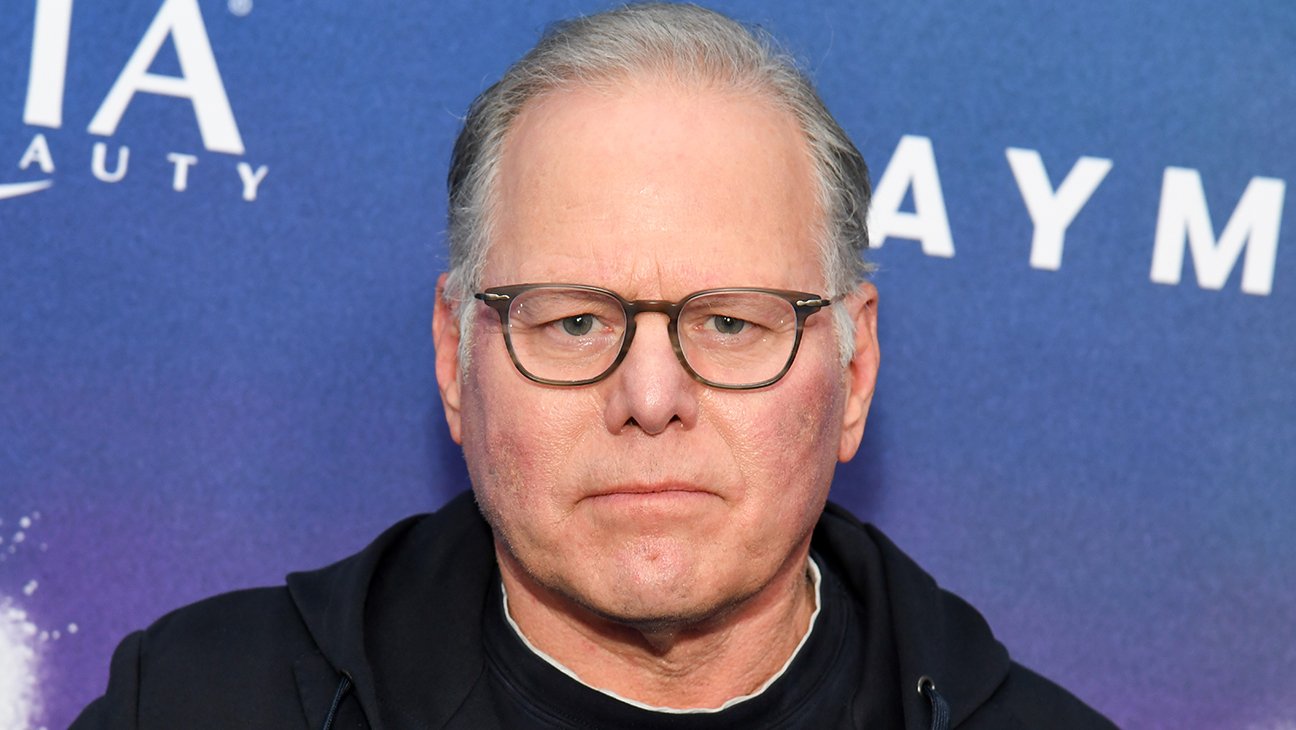
The process — and the drama — continues for David Ellison’s $111 billion takeover of WBD. There have been regular calls emanating from the U.S. and abroad to block the deal. It was originally supposed to be Netflix that bought the “WB” piece of “WBD,” but Ellison swooped in with an even bigger check and a promise to absorb the company in its entirety.
A coalition of a dozen states are attempting to block Paramount/WBD; the case will go to trial in March 2027. Meanwhile, beginning Oct. 1, 2026, Paramount Skydance must begin paying a ticking fee of $7 million per day to WBD shareholders. The ticking fee is only paid out if the deal closes.
Ellison believes the opposition is politically motivated and centers on his potential oversight of CNN’s editorial content. He already controls CBS News, which has undergone many changes since Ellison’s Skydance merged with Paramount Global.
“The issue is whether I can be trusted as a steward of Warner’s CNN. There has been speculation about my politics, my loyalties, my intentions,” he wrote in a recent New York Times op-ed. “Unfortunately, I can’t give anyone a view into my heart and mind, but I can share this: I have regularly voted for candidates of both parties; I hold some views that would be called conservative and others that would be called liberal, just like most Americans; and when it comes to our news operations, I do not aspire to lead these companies to bend their newsrooms to my views. I believe that news should be based on facts and truth.”
There were no updates provided on the pending deal within Warner Bros. Discovery’s earnings report.
Versant, the cable TV-focused spinoff from NBCUniversal that runs CNBC, MS NOW, USA, Golf Channel and other assets, reported lower second earnings on lower revenue and public company costs from its Comcast separation.
Now solo Versant reported revenue for the quarter to June 30 at $1.64 billion, down 3.8 percent from $1.7 billion in the same period of 2025. In that revenue mix, linear distribution was down 6.3 percent to $954 million, as Versant continues to rely on a declining pay TV business.
Advertising revenue at $423 million was down just under 1 percent from the year-earlier period when ad revenue dropped 13 percent. Platforms revenue grew 0.8 percent to $212 million, and content licensing revenue was unchanged at $43 million.
Net income attributable to Versant was down 30 percent at $211 million due to lower overall revenues and one-time costs following the separation from Comcast, including higher tax expenses after the divestiture of SportsEngine. The adjusted EBITDA fell 9 percent to $624 million.
Versant, as it looks to diversify away from traditional pay TV channels to focus more on streaming TV platforms and digital business lines, said it was raising both revenues and EBITDA guidance for the second half of the year. The full-year outlook for 2026 will see total revenue of between $6.2 billion and $6.45 billion, while the adjusted EBITDA will come in between $1.9 billion and $2.05 billion.
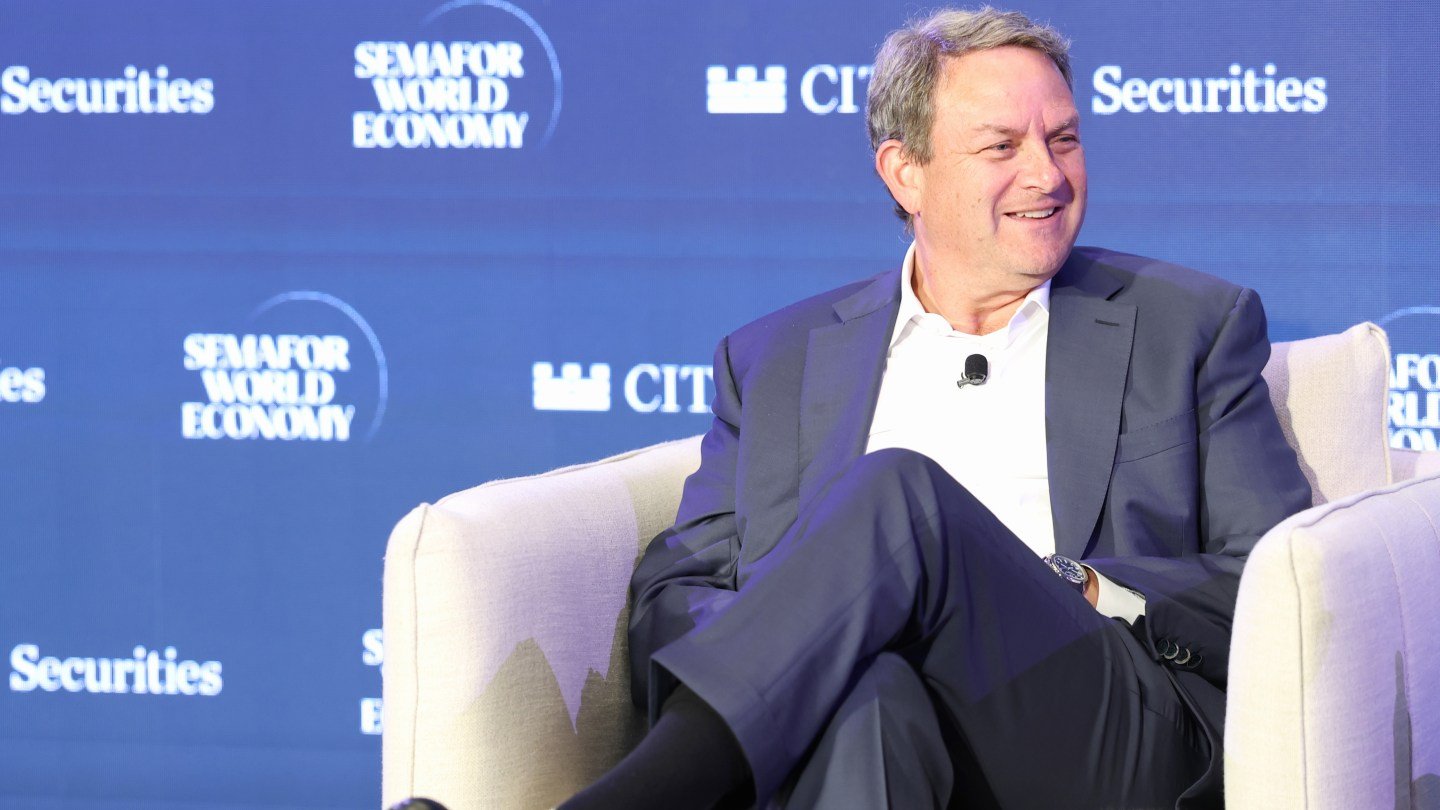
“Versant’s brands once again demonstrated strength, durability and scale, reaching more than 120 million viewers each month during the quarter while reinforcing our leadership across news, sports and entertainment,” said Mark Lazarus, Versant CEO, said in a statement ahead of a morning analyst call to also include CFO and COO Anand Kini.
Warner Bros. Discovery has a great story to tell about its streaming business –if only its other operations didn’t get in the way.
The parent of HBO, TNT and the Warner Bros. movie studio said net income in the second quarter fell significantly as growth at its new-tech streaming operations was more than offset by the continued erosion of its cable-TV networks and a weaker studio lineup than in the year-earlier period. TV ad sales fell 22% due to Warner’s loss of NBA games after the 2025 season, and TV distribution revenue fell due in part to a 10% decrease in the number of subscribers to its networks.
Total revenue fell 11% to $8.7 billion, compared with $9.8 billion in the year-earlier period. Net income attributable to the company fell to $149 million from $1.58 billion, partially the result of $1.1 billion of pre-tax acquisition-related amortization of intangibles, content fair value step-up, and restructuring expenses.
Warner is in a difficult spot. It needs to continue to manage its operations even though it has agreed to be purchased by Paramount Skydance. While the proposed deal has won approval in multiple countries, it has been held up in federal court by a coalition of 12 attorneys general who are making the case that the combination of the two media companies would create an entity that would be in violation of antitrust law in areas such as movie production and the operation of cable television properties. The case will not come to trial until next year.
Even so, Warner had some bright spots to show off. Streaming revenue rose above $3 billion for the first time, thanks to an increase of 10% that was aided by expansion of HBO Max in various markets around the globe. In a move that counters conditions at its TV networks, Warner said advertising and distribution revenue increased noticeably at its streaming venues, with distribution fees up 11% and ad revenue up 8%.
Revenue at the company’s studios was off 39% to $2.3 billion thanks to comparisons with the year-earlier period, which benefitted from the release of films such as “A Minecraft Movie,” “Sinners,” and “Final Destination Bloodlines.”
Versant Media said second-quarter net income fell by 30% as the new media company continued its efforts to add non-traditional assets to lend ballast to its linear media operations.
The owner of MS NOW, CNBC and USA said net income fell to $211 million from $302 million in the year-earlier quarter, a decline of $91 million. The company cited lower revenue, the costs of operating as a public company, interest expense following its separation from Comcast, and increased tax expense tied mostly to the divestiture of SportsEngine, an online sports management software company that was sold in May.
Versant, spun off from Comcast earlier this year, is focused on generating new revenue from digital and direct to consumer operations. In recent weeks, it has expanded Fandango into a broader consumer entertainment platform, and made progress on new subscription projects at both CNBC and MS NOW. “Together, we believe these initiatives build on the foundation of our portfolio, deepen consumer engagement, and position Versant for long-term growth,” said Mark Lazarus, the company’s CEO.
Revenue in the second quarter fell 3.8% to $1.64 billion. Distribution fees fell 6.3% in the second quarter, largely due to subscriber declines. Ad revenue was off 0.6%, compared with a decline of 13% in the year-earlier quarter, reflecting improvements in ratings at some of its networks. Revenue from platforms, which include many of Versant’s direct to consumer businesses, rose 0.8%, due to higher revenue at Fandango and GolfNow.
Versant said it was confident in its near-term future, raising revenue and cash-flow projections for the second half of the year.
It seems Rihanna is at “work, work, work, work, work, work” on her next album.
With fans incredibly hungry for another album from the Grammy winner, especially since it’s been a decade since she released her last studio project, 2016’s Anti, her longtime partner, A$AP Rocky, is offering a little status update.
During a recent interview on The Jason Lee Show, the rapper was asked by host Jason Lee, “Are you the reason why we don’t have an album?” He was referencing the long-running joke among fans that the delay in new music was due to her relationship with Rocky, their growing family (they share three children) and Rihanna’s many business ventures.
However, Rocky shut down those claims. “Nah,” he replied. “She in the studio right now. Yeah, I said it. Sorry, babe.”
He added, “Bro, she working. She cooking, no funny shit. Damn, I’mma get in trouble for this. Her fans are going to kill me.”
When Rihanna’s Anti dropped in 2016, it became a hit, spending two weeks atop the Billboard 200 chart. It also included her fan-favorite songs “Work,” “Needed Me,” “Love on the Brain” and “Desperado.”
Though she hasn’t released an official album since then, she has put out a few standalone singles tied to film soundtracks, including “Lift Me Up” and “Born Again” for Black Panther: Wakanda Foreverand “Friend of Mine” for Smurfs.
When Rihanna was previously asked for an update on her next album, dubbed R9, she told Entertainment Tonight in 2024 that while she’s “starting over,” she also doesn’t “want to neglect the songs that I have, so I actually want to go back and listen to stuff with new ears, with my new perspective and then see what applies and what I’m still in love with.”
That same year, she also told Interview magazine that her “brain is working backward right now” regarding her next musical endeavor. “I usually have the music first, and the music leads me into all of these visual opportunities, and now I’m having all of these visuals,” she added.
Elsewhere on The Jason Lee Show, Rocky was also asked if fans could expect a “double album of y’all both together on every song” in the future.
“Nope,” the rapper quickly replied. “I would hate Rocky and Rihanna if they both did that. That’s trash. Nobody wants to hear us together, bro.”
Rocky explained that he believes their separate sounds wouldn’t make sense together because “I make subversive weird ass indie rap,” adding that “the music that I make is for a niche demographic of people who actually get this shit.”
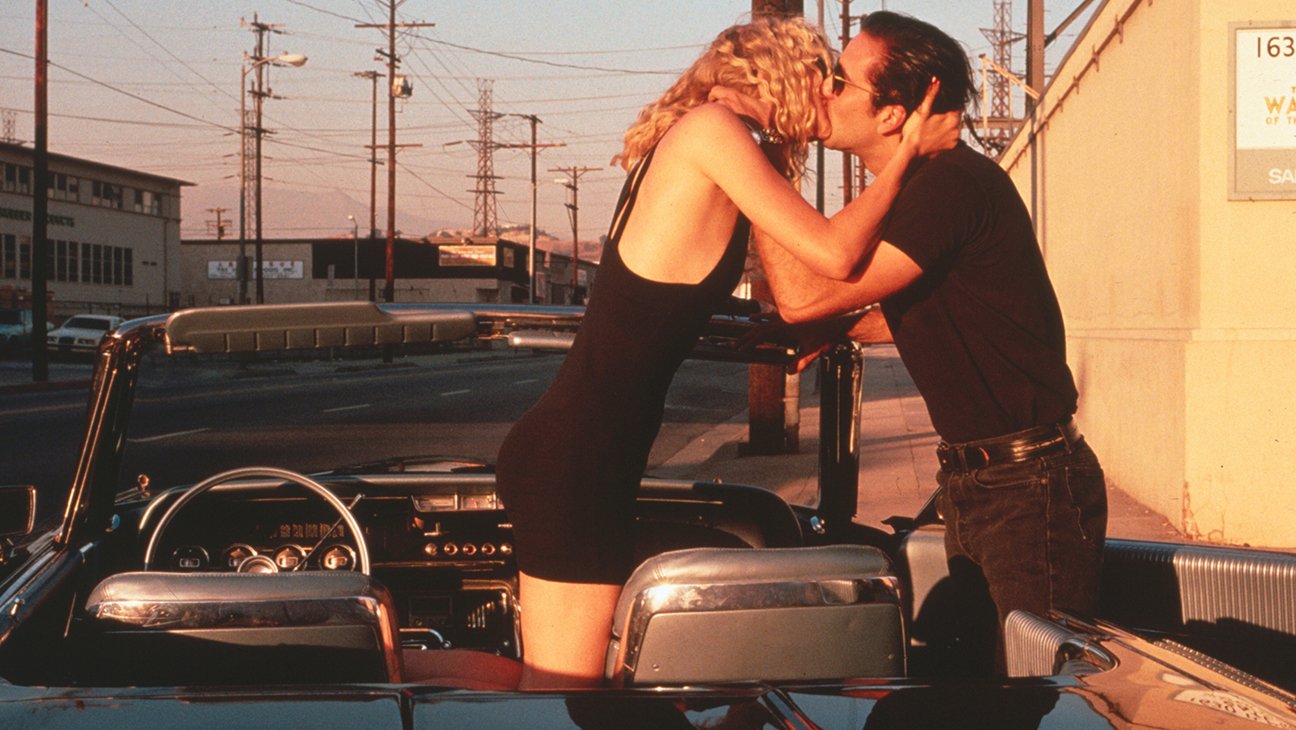
Iceland-born, U.S.-based producer Sigurjón “Joni” Sighvatsson has the kind of résumé that speaks for itself: David Lynch‘s Cannes Palme d’Or winner Wild at Heart, Julian Schnabel’s Basquiat, Kathryn Bigelow’s The Weight of Water, plus music videos and series including Twin Peaks and Beverly Hills, 90210.
This week, the Palomar Pictures principal — who co-founded Propaganda Films in 1986 — returns to the 79th edition of the Locarno Film Festival to receive the Raimondo Rezzonico Award in the Piazza Grande on Thursday evening. The honor is named for the man who served as Locarno’s president from 1981 to 1999.
Ahead of his trip to Switzerland, Sighvatsson spoke with THR about his excitement over returning to Locarno, his read on the festival circuit at large, and why he believes his work doesn’t belong in the “closed system” he says Netflix has built.
Sighvatsson has visited Locarno before and remains a fan, largely thanks to its more adventurous, less predictable curation. “The festival is not just focused on what is in the competition,” he says. “Everything has changed. When Wild at Heart won in Cannes [in 1990], that was a big platform for that kind of unusual film to get. Now, we don’t know really what Cannes is anymore. What are they catering to? What is their vision? It is a very different festival from Locarno.”
Unlike the bigger festivals, he adds, Locarno “never had this incredible focus on just getting stars, or just a competition, or just this.” That flexibility, he argues, will serve it well: “I love Locarno. I think some of the other festivals have become prisoners of their own success, and with the business changing, they have changed. I think festivals like Locarno, which are smaller and have a slightly lower profile and different approaches to film, will do better.”
AI’s Impact On the Industry
With AI a hot topic of debate in Hollywood and beyond, what is the producer’s reading on the technology’s likely impact on the film industry? “I think AI actually will help in many ways, but I don’t really see AI movies changing things because in the end, movies are about people and they’re about stories,” Sighvatsson tells THR. “I see it working for some projects. For the new The Odyssey, Christopher Nolan was not using AI for a reason — because he doesn’t want to make people feel it’s AI. I heard the new [live-action] Moana, the Disney film, feels just like an AI film, even though it’s using real characters [and CGI].”
His bottom line: “I think it’s a double-edged sword, but AI will help. It’s like any very powerful tool, for example, the atom bomb. It’s all about how you use it, or if you use it at all. And I think a lot of filmmakers will opt not to use AI because they don’t need to. But others will use it. Will it change the course of cinema? No. I think it will change television more.”
On Netflix and the “Closed System”
Sighvatsson isn’t optimistic about television’s current state, largely because of streaming — and he draws a sharp line between films and what Netflix produces. “There are things that Netflix calls films. I don’t call them films,” he says. “I call them Netflix films. That’s very different than a film.”
He elaborates: “Most of the things that Netflix does don’t have a very deep meaning, and they are not supposed to. You still need a lot of skill to make those big Netflix films, but they don’t really expect them to have a long life, and they are shown only within a closed system. It’s the Netflix system, so Netflix is just making something for a closed system, whereas everything that I’ve made, even music videos, is for an open system that anybody can access.”
The distinction, he says, comes down to distribution: “The difference is that Netflix doesn’t even sell any of its product to anybody else but Netflix. So they’ve created the language that fits this box that is called the Netflix box, and they’re very successful, including with some of the animation and some of the children’s content. And even though Netflix is changing, it doesn’t change the fact that a Netflix film fits only in a Netflix box. It wouldn’t fit in an Imax theater, for example. … And when you’re producing for such masses, you automatically demand less complexity.”
Given all that, don’t expect a Sighvatsson-produced Netflix title anytime soon. “I don’t think so,” he says. “I don’t think it’s my thing. I don’t think I’m in the Netflix universe.”
Still, he gives the streamer credit where it’s due. “I think it’s great that other people [create content for] it. That’s fantastic, and Netflix has changed the business,” he says. “What I think Netflix has done well is give people in other countries an opportunity to make material in different languages, in different cultures. That, I think, is the greatest contribution Netflix has made.”
ProSiebenSat.1 posted lower first-half revenue as Germany‘s weak television advertising market and competition from broadcasters carrying the World Cup weighed on its entertainment business.
The German commercial broadcaster, which is controlled by the Berlusconi family’s MediaForEurope (MFE) group, reported first-half revenue of €1.54 billion ($1.77 billion) on Thursday, down 9 per cent from a year earlier. On an organic basis, excluding portfolio changes and currency effects, revenue declined 2 per cent. Second-quarter revenue fell 8.5 per cent to €768 million ($881 million).
The company said advertising revenue continued to be affected by a slowdown in the German TV market, the ongoing shift of ad spending to digital platforms and competition from broadcasters airing major sporting events, particularly the World Cup. Entertainment revenue fell 6 per cent in the first half to €952 million ($1.09 billion), with linear TV advertising down 9 per cent.
Digital advertising remained a bright spot. Digital & Smart advertising revenue rose 6 per cent, driven by ProSieben’s streaming service Joyn, content distribution on third-party platforms and the group’s audio business. Advertising-supported streaming revenue at Joyn increased 8 per cent in the first half, while subscription revenue climbed 20 per cent.
Despite the revenue decline, earnings improved sharply as the company cut costs and continued a broader restructuring. First-half EBITDA rose by €152 million ($174 million) to €124 million ($142 million), compared with a loss of €28 million ($32 million) a year earlier. Programming expenses fell to €404 million ($464 million) from €496 million ($570 million), while personnel costs declined to €299 million ($343 million) from €416 million ($478 million), reflecting restructuring measures, asset sales and lower content costs.
ProSiebenSat.1 has also continued to slim down its portfolio. Since the start of the year, the company has sold six non-core businesses, including Studio71 U.S., as it focuses on its German-speaking entertainment operations.
The company is also betting big on Joyn. Last month the streaming service announced a deal with ZDF to add on-demand programming from the German public broadcaster. ProSieben is also developing a shared streaming technology platform with MediaForEurope, for use across the group’s European markets. MFE pan-European network of commercial broadcasters also includes Italy’s Mediaset and Telecinco in Spain.
ProSiebenSat.1 reaffirmed its full-year outlook, maintaining its forecast for slight organic revenue growth and a significant increase in EBITDA, while cautioning that visibility in Germany’s advertising market remains limited.