Category: Entertainment

  • Police Respond to Perez Hilton’s Miami Home After He Appeared to Harm Himself on Livestream

    Police Respond to Perez Hilton’s Miami Home After He Appeared to Harm Himself on Livestream

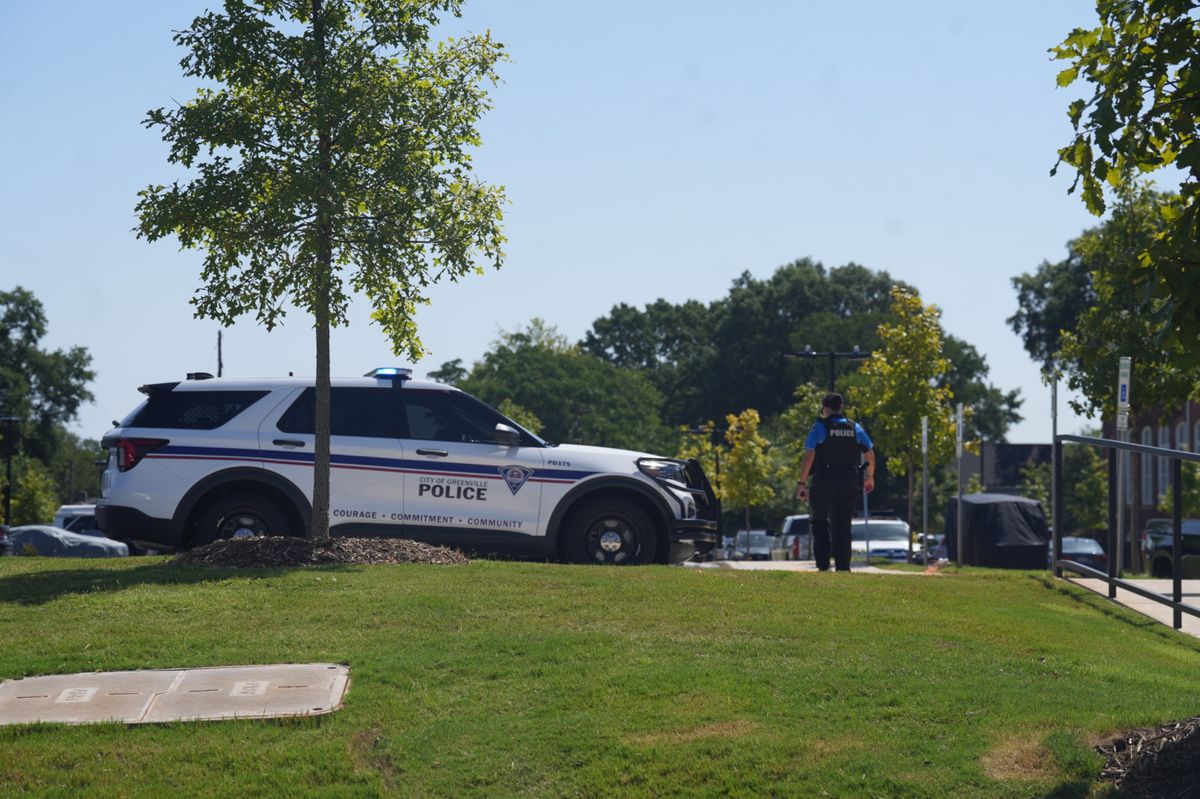
    Police reportedly responded to Perez Hilton‘s home in Miami after the celebrity gossip blogger appeared to be harming himself on a livestream.

    In graphic clips reposted on social media, Hilton, appearing manic, could be seen in the livestream covered in blood, using an object to cut himself repeatedly.

    The Miami-Dade County Sheriff’s Office told Newsweek in a statement that deputies responded to Hilton’s home after the office received “multiple calls” about a person livestreaming acts of self-harm. After authorities confirmed Hilton was alone inside the home and spoke with family members at the scene, deputies decided to “tactically disengage while continuing to monitor the situation.”

    “In many incidents involving a person experiencing a mental health crisis or actively harming themselves, deputies prioritize de-escalation by creating time, distance, and opportunities for communication,” the statement continued. “Unless there is an immediate threat to others, slowing the situation and utilizing crisis intervention techniques can reduce the likelihood of a suicide-by-cop encounter and minimize the risk of injury to the individual, deputies, and the public.”

    Local news station NBC6, which had reporters at the scene, later reported that a man, believed to be Hilton, was seen being taken away in an ambulance.

    The Hollywood Reporter has also reached out to the Miami-Dade County Sheriff’s Office for comment on the incident involving Hilton, in addition to his personal rep.

    Earlier this year, Hilton shared in a lengthy Instagram video that he was hospitalized for three weeks after initially battling the flu before developing “an ulcer, and then a perforation, and then Sepsis,” he said at the time.

    “The Sepsis just kept working and my body kept falling apart,” Hilton explained in the video in March. “Then one night with rapid response came ’cause my heart got out of control. They had to put me on heart medications. And then I developed another infection in the hospital.”

    He added, “It was just such a slow process. I mean, two weeks of just sickness and then another week of getting better before I was released. And that last week was hell because I had already been in the hospital two weeks by then. I was like, ‘I just wanna go home. I just want to be with my babies.’” Perez is a single father of three children.

    Once he was released from the hospital and sent back home, Hilton said he had time to reflect and came to the realization “that God presented Himself to me” during the challenging experience.

    “It was real and this has been life-changing. I’m so grateful,” he added at the time. “I’m excited to start taking the kids to church every week. And to just know that God is real. … I don’t have to hope to believe. I know now.”

  • ESPN Taps Creators to Help Promote the NFL Season and its First Super Bowl Telecast

    ESPN Taps Creators to Help Promote the NFL Season and its First Super Bowl Telecast

    ESPN has lined up its fourth annual “Creator Network” of digital stars who will fan out across the country to promote the 2026 NFL season that is set to culminate with the Super Bowl airing on ESPN for the first time.

    The five members of the cohort for this year are, as described by ESPN:

    Chase Murman (@theQBplug) TikTok | Instagram | YouTube — Founder of The QB Plug, one of social media’s fastest-growing football brands, known for original quarterback storytelling and athlete-first content that has helped redefine how the next generation consumes football.

    Isaac Rochell TikTok | Instagram | YouTube — Former NFL defensive lineman, sports media personality, and creator who combines an authentic player’s perspective with relatable storytelling around sports, fatherhood, and life beyond football.

    Simone Scott TikTok | Instagram — Sports creator, host, and reporter who makes football, basketball, and other sports approachable through clear, engaging content that helps fans better understand the games and storylines driving the conversation.

    Diana Flores TikTok | Instagram — Captain and quarterback of Mexico’s World Champion National Flag Football Team, global ambassador for the sport, and bilingual creator helping grow flag football’s reach ahead of its Olympic debut at LA28.

    Leah Cammarano TikTok — Sports analytics creator and former Carolina Panthers Football Analytics intern who makes advanced football data accessible through engaging, easy-to-understand storytelling.

    “This is a major moment in ESPN’s history, and we have an incredible opportunity to tell that story in new and authentic ways,” said Kaitee Daley, ESPN’s senior VP digital, social and streaming content. “Partnering with creators who have built passionate communities through their distinctive voices and storytelling styles will help bring fans closer to the people, culture and highlights that will define the road to ESPN’s first Super Bowl.”

    ESPN first established its Creator Network in 2022 as the cable giant sought to embrace new forms of content and promotion for its game coverage and studio shows. The 2026 group will be given broad access to attend college football games, NFL events including the upcoming Super Bowl set for Feb. 14 at Los Angeles’ SoFi Stadium. ESPN and ABC will share the rights to the big game, marking the return of pro football to ABC’s air, some 20 years after the “Monday Night Football” franchise shifted from ABC to ESPN.

    ESPN is one of many blue-chip media brands that have worked to harness the power of buzzy creators to produce social media and video content. In the sports context, NBCUniversal brought influencers and creators to help drive conversation around the Milan Cortina Winter Olympics in Italy. In February, the NBA enlisted more than 200 creators to help promote the NBA All-Star Game and All-Star Week events in Los Angeles.

    ESPN’s Creator Network is supported by Blue Hour Studios, a social media-focused brand and media strategy agency based in New York.

  • What David Ellison Is Really Up to

    What David Ellison Is Really Up to

    At first it just seemed like a happy coincidence — a Hollywood agency mogul supporting a Hollywood corporate merger. Ari Emanuel published an op-ed in The Wall Street Journal last Tuesday saying David Ellison buying Warner Bros. was a good idea and that those 12 Democratic AG’s who have sued to stop the deal were on the wrong warpath. 

    “The attorneys general should drop this case and get back to enforcing the laws as they are written,” the WME chief wrote, as he extolled a Paramount-WB tie-up and said it would be good for the business. 

    Sure, Ellison had committed last year to pay Emanuel’s TKO $7.7 billion to broadcast UFC fights, a fact he conveniently neglected to mention. And the timing certainly benefited Ellison — earnings were coming, a time when Wall Street would be paying close attention and could express its worry financially about a deal falling through. But still, just a nice little stocking-stuffer under the mogul’s tree.

    Over the past week, however, the support has started to look a lot less like passive presents and a lot more like an active strategy. That strategy? Make it seem like a lot of Democrat-approved personalities have no problem with the merger, isolating Rob Bonta, Tish James and the rest of the dozen AGs suing to block the deal as a bunch of regulatory crazies. Never mind that these are some of the country’s most decorated legal enforcers, with many decades of experience, from places as different as Arizona and Massachusetts. 

    The maneuvers unfolded like a stunt pilot’s careful course-plotting. A few days after the Emanuel op-ed came an anonymously sourced story Friday in the Journal about how one of the preeminent national Democratic leaders, California governor Gavin Newsom, was behind the deal foursquare, according to “people close to the suit.” “Newsom’s office has encouraged Attorney General Rob Bonta’s office, which has independent authority to file such suits, to find a resolution out of court,” the paper said. 

    Never mind that Newsom has a long history of deferring to giant corporations (remember his 11th-hour pro-Big Tech capitulation on Scott Wiener’s AI bill in 2024?) — this merger was going to create jobs! (“State employment would suffer” without a deal, the paper said Newsom has told colleagues, never mind that no credible economist has supplied such evidence.) Another happy coincidence. Or, given that the paper was pointedly not citing sources close to Newsom, perhaps part of an Ellison-led strategy.

    Then today, an op-ed of Ellison’s own in a redoubt of mainstream liberalism, The New York Times. He trotted out all the usual arguments for mergers these days, and against his own naysayers — if we don’t do this the tech companies win, movie theaters should survive, Hollywood should be employed. “What I can promise is the work, and more of it,” he wrote, using the noun four times, which is four times more than he used the noun Donald Trump. (Los Angeles County has determined that determined that the merger will likely lead to less work.)

    Meanwhile, Ari has been hitting the hustings, appearing on CNBC Tuesday morning to rattle off a series of Ellison talking points and praising the mogul. “This is a guy who said ‘hey I’m going to make 30 movies a year, 45-day release,” Emanuel said. “He’s gonna spend he says 30 billion in content a year. We need that for the economy of Hollywood.” The comments wouldn’t have been out of place on the Paramount investor earnings-call Tuesday, where executives touted all these numbers and used words like “pro-competitive” to describe the deal. If there’s one thing we know about capitalism, it’s that combining  two major companies leads to more competition.

    These media hits that aimed to buck the headwinds even involved a literal plane —  the day Bonta and the AGs were suing, Ellison jetted to Washington to lobby for a federal tax credit, a news stunt meant as much to lobby support among Hollywood as to win over legislators. One story the move overshadowed that week: ProPublica’s bombshell report that Paramount allegedly provided gifts to FCC commissioners reviewing the deal.

    More of these pieces and columns are no doubt coming. More foot soldiers arguing for the value to the business, or the First Amendment. Never mind that the WGA — those fierce opponents of free expression! — have just sued to stop the  deal. Doesn’t the world’s richest family have the right to own CNN? Isn’t that enshrined in the Constitution?

    It’s a shrewd flyer, and you need to give Ellison’s team credit for landing it so effectively.

    You also hardly need an advanced radar beacon to see what’s happening. Having courted MAGA and Donald Trump to get the deal federal approval — how many Kennedy Center boxes and UFC ringside seats can one centibillionaire’s son fill? — Ellison is now pivoting to work on Dems to take care of the state challenge.

    Not regulatory-minded Dems, as that group, from Elizabeth Warren to Cory Booker to Adam Schiff, have all been fiercely critical of the deal and asked hard questions about combining the country’s third and fourth biggest pure-play entertainment companies. Not these decorated and often landslide-winning AGs.

    But if you get enough people like Newsom and the Kamala-donating Ari on your side, maybe people won’t notice all the Democrats who aren’t. Or enough of their consistuents will lose interest, causing AGs to do the same.

    Maybe people will magically forget that no fewer than 1,000 creatives, from  Bryan Cranston to J.J. Abrams to Glenn Close to Lin-Manuel Miranda, all signed a letter this spring opposing the deal, noting how a merger “would further consolidate an already concentrated media landscape, reducing competition at a moment when our industries—and the audiences we serve—can least afford it” and lead to “fewer opportunities for creators, fewer jobs across the production ecosystem, higher costs, and less choice for audiences in the United States and around the world.” But an agent told me it was good for creativity?

    There’s a reason Paramount needs the deal to happen. Warner Bros. Discovery turned in a profit of $1.2 billion this past quarter once you strip out all the money they have to pay as part of the acquisition. That’s a lot of profit for a company like Paramount, which revealed Tuesday that in the same quarter it netted $41 million.

    And there’s a reason Paramount needs the deal to happen soon. Starting Oct. 1, Paramount must pay Warners shareholders $7 million every day until the deal closes. By the second week, they’ll have wiped out all the measly profits they earned this quarter. By the spring, they’ll have wiped out the profits of the company they’re buying. One can’t imagine a lot of joy on Melrose, then, when the word came down Tuesday that the trial won’t start until March.

    Also, the deal is partly bankrolled by Larry Ellison and his significant AI investments. And can that boom go on forever?

    The reality is the AGs may not just have the law on their side — they have the leverage. And with every week that passes they have more of it. Could they extract a major settlement — possibly even carving out CNN? Don’t rule it out, no matter how many UFC fights Ellison attends with the president.

    “Winning comes down to having the best stories,” Paramount CFO Dennis Cinelli told investors on the earnings call Tuesday. Ellison and his allies will keep telling them. That doesn’t mean it will result in victory.

  • Eli Roth Admits ‘Ice Cream Man’ Features AI-Assisted Shots After Suggesting Otherwise: ‘I Misspoke’

    Eli Roth Admits ‘Ice Cream Man’ Features AI-Assisted Shots After Suggesting Otherwise: ‘I Misspoke’

    Eli Roth first promised that his upcoming horror release, “Ice Cream Man,” would feature an animated sequence he had initially drawn himself. Now, days ahead of the film’s Aug. 7 premiere, Roth admitted AI had a hand in the effort.

    The horror director said in a statement on Tuesday (via Polygon) that he used AI in “a very small portion of a few scenes in the film” after social media posts claimed the technology was used abundantly throughout the film and pointed to the involvement of the AI visual effects studio Dark Half.

    The statement came after Roth detailed a sequence in the film to Polygon that features a cartoon that seemingly hypnotizes children, turning them into murderers. Roth said he initially drew the animated portions himself, inspired by a 1920s-era Mickey Mouse cartoon of the character parading through a haunted house, before he had animators “help kind of make it a little more fluid” and an artist gave it “an old-timey jittery feel.”

    “I misspoke,” Roth said in a new statement Tuesday. “AI was used in a very small portion of a few scenes in the film. It was an opportunity where technology and creativity came together to help bring my vision for the film to life.”

    Representatives for Roth and Dark Half did not respond to Variety‘s initial request for comment. The revelation is the latest example of how engaging the technology — and obfuscating such use — can roil audiences eager to support new films.

    “Late Night with the Devil” directors Cameron and Colin Cairne had to explain their use of AI after the version of the 2023 horror film that debuted in theaters featured multiple AI-generated images, while “Stop That Train” director Adam Shankman claimed that the RuPaul-led film featured “ZERO shots conceived by AI in the movie” and that every shot in the film was made by “human hands” after social media users took issue with the employment of Ryan Kavanaugh’s Acme AI and FX firm.

  • Perez Hilton: Disturbing Livestream Frightens Fans, Rushed to Hospital After Police Investigation

    Perez Hilton: Disturbing Livestream Frightens Fans, Rushed to Hospital After Police Investigation

    Local police were dispatched to the Miami home of Hollywood gossip journalist Perez Hilton after receiving reports about a disturbing livestream during which Hilton, covered in blood, appeared to be cutting himself, Variety has confirmed.

    The Miami-Dade County Sheriff’s Office received multiple calls about Hilton’s livestream on Tuesday night and sent deputies to respond. Once on scene, officers spoke with several of Hilton’s family members. Authorities confirmed that Hilton was alone in his home during the time of the live stream. Deputies have since been ordered to “tactically disengage,” but continue to keep an eye on the situation.

    The Miami-Dade County Sheriff’s Office also confirmed that Hilton was safely transported from his home to a local hospital, where he is receiving medical attention.

    “In many incidents involving a person experiencing a mental health crisis or actively harming themselves, deputies prioritize de-escalation by creating time, distance, and opportunities for communication,” the Miami-Dade Sheriff’s Office said in a statement. “Unless there is an immediate threat to others, slowing the situation and utilizing crisis intervention techniques can reduce the likelihood of a suicide-by-cop encounter and minimize the risk of injury to the individual, deputies, and the public.”

    Reps for Hilton did not immediately respond to Variety’s request for comment.

    Hilton launched his career in the early 2000s, operating a popular celebrity gossip blog that offered a biting, unfiltered look at some of Hollywood’s most unsavory moments. In a 2012 sit-down with The New York Times, Hilton said that he was no longer aligned with his provocative reporting.

    “What’s important for me is not being liked, but it is that people think I am no longer toxic to the world,” he said. Hilton later added, “I’m aware of the fact there are going to be a lot of people with lingering resentment and a lot of skeptics.”

  • Disney Sells Its Stake in A+E to Hearst for $1.2 Billion

    Disney Sells Its Stake in A+E to Hearst for $1.2 Billion

    The Walt Disney Co. has sold its 50 percent equity stake in A+E Global Media to Hearst for $1.2 billion in cash, ending the joint venture that was first created in 1984.

    The deal will see Hearst take full control of the media company formerly known as A+E Networks, which owns brands like A&E, History and Lifetime, including cable TV channels, content studios, and streaming offerings. A+E has also invested in companies like Vice, Propagate Content, Atlas Obscura and Philo TV.

    A+E will become a part of Hearst’s entertainment group upon closing later this year.

    “We thank our Disney colleagues for decades of successful partnership,” said Steven R. Swartz, president and CEO of Hearst. “We look forward to supporting Paul Buccieri and A+E Global Media’s leadership team as they continue to make must-see programs and innovate around the great HISTORY, Lifetime and A&E brands.”

    Paul Buccieri has led A+E since 2018.

    “In a media environment defined by fragmentation, A+E Global Media’s advantage is the strength and versatility of our brands, our strong partnerships and our vast library of owned assets,” added Buccieri, president and chairman of A+E Global Media. “As we continue extending our storytelling globally across all platforms with IP that travels to every screen and form-factor, we believe we are well suited for whatever opportunities may come next. I also want to express my deepest thanks to Hearst, The Walt Disney Company and to our board members — both recent and past — for their guidance and support over the years.”

    The company was founded in 1984 (the Arts & Entertainment Network was its original cable brand), with Hearst and ABC each owning a slice alongside other investors. NBC obtained a minority stake in 1993. The company expanded with an acquisition of Lifetime Networks in 2009. Lifetime was also a JV of Disney and Hearst.

    Disney and Hearst had been equal partners in A+E since 2012, when they bought out NBCUniversal’s minority stake. The company had begun to explore its options a year ago, hiring Wells Fargo to market it. Since then, of course, Comcast spun out its cable channels into Versant while Warner Bros. Discovery has inked a deal to sell itself to Paramount Skydance.

  • Paramount Reports Mixed Earnings Results With Warner Bros. Takeover In Limbo

    Paramount Reports Mixed Earnings Results With Warner Bros. Takeover In Limbo

    Paramount reported mixed second-quarter earnings Tuesday as its takeover of Warner Bros. Discovery remains in limbo.

    Still, CEO David Ellison sought to reassure shareholders in the letter saying, “We continue to prepare for our proposed combination with Warner Bros. Discovery, while staying focused on executing our standalone strategy and delivering strong results.”

    The company reported revenues of $6.9 billion, up 1 percent from its predecessor company a year ago, while net earnings fell to $41 million, or four cents per share after $57 million, or eight cents a share, a year ago.

    Paramount’s TV media segment, which includes CBS and its cable networks, continued to fall, dropping 9 percent year-over-year to $3.1 billion, while direct-to-consumer revenue rose 9 percent to $2.5 billion. Studio revenue rose 16 percent to $1.3 billion, thanks to content licensing deals and TV production arm as well as the success of Scary Movie.

    Revenue at Paramount+ rose 16 percent to $2.1 billion, as the company said Q2 was its best quarter for retention ever on Paramount+ thanks to Dutton Ranch, UFC and the FIFA World Cup. The streaming services added 2 million new subscribers to hit 81.6 million worldwide, up 6 percent year over year. 

    Paramount is raising its full-year outlook range to $3.8 billion to $3.9 billion in adjusted EBITDA and now expects free cash flow conversion of at least 10 percent. The company added that it had seen “double-digit growth in commitments” across the company after its Upfronts presentation, but did release further specifics.

    “We continue to make progress on our transformation at Paramount, and we now expect to deliver over $2.7 billion of run-rate efficiencies by the end of 2026 versus $2.5 billion previously, and continue to expect $3 billion-plus in efficiencies from the Skydance-Paramount combination,” the letter continues.

    Paramount won the bidding war for Warner Bros. Discovery in February with its $111 billion offer, after Netflix declined to raise its offer. But the merger is currently on pause, as Paramount has since been hit with several lawsuits, including from 12 state attorneys general who claim the acquisition will kill competition in the film and television industries. The company has agreed to delay the billion takeover of Warner Bros. Discovery until June 1, 2027, or until the antitrust lawsuits brought by state attorneys general are resolved. Ellison has told staff he remains “highly confident” in the completion of the merger.

    But just after earnings were released Tuesday, the judge overseeing the states’ lawsuit scheduled the trial to start in March, rather than November as the studio had requested. Starting Oct. 1, Paramount will have to pay a ticking fee of roughly $7 million per day to Warners shareholders until the deal closes.

    The earnings also come the same day that an op-ed from Ellison appeared in The New York Times, in which the executive argued that his political leanings and proposed takeover of CNN are the root cause of the lawsuits filed by a dozen state attorneys general and the Writers Guild of America.

    “I believe this fight is not really about market share … I believe a plainer worry sits beneath the briefs and the news releases: the news. The issue is whether I can be trusted as a steward of Warner’s CNN. There has been speculation about my politics, my loyalties, my intentions,” Ellison wrote. “Unfortunately, I can’t give anyone a view into my heart and mind, but I can share this: I have regularly voted for candidates of both parties; I hold some views that would be called conservative and others that would be called liberal, just like most Americans; and when it comes to our news operations, I do not aspire to lead these companies to bend their newsrooms to my views. I believe that news should be based on facts and truth.”

    More to come.

  • Paramount Q2 Profit Dips, With Streaming Boost Offset by TV Declines

    Paramount Q2 Profit Dips, With Streaming Boost Offset by TV Declines

    Paramount Skydance said second-quarter profit fell, even as the company was boosted by its streaming media and studios operations, while its large TV division shed ad dollars and subscribers. David Ellison, the company’s CEO, vowed that its deal to acquire Warner Bros. Discovery would close, despite legal setbacks that have slowed the transaction.

    “While there is still significant work to be done, our confidence in the opportunity continues to grow, and
    we’re excited for the future of this company powered by storytelling and accelerated by technology,” Ellison said in a letter to shareholders Tuesday.

    Paramount said net earnings fell to $41 million, or four cents per share, in the second quarter, compared with $57 million, or eight cents a share, in the year-earlier period. Revenue rose 1% to $6.91 billion, compared with nearly $6.85 billion a year earlier.

    In the company’s TV operations, the largest part of its business, revenue fell 9%, to $3.12 billion, compared with $3.45 billion a year earlier. Ad revenue fell 14%, due in part to difficult comparisons with 2025 that involved more NCAA advertising. Distribution fees fell 6%, due in large part to erosion of linear subscriptions.

    Revenue from streaming operations rose 9% to $2.5 billion, with revenue from Paramount+ rising 16%. The service added 2 million subscribers in the second quarter, ahead of expectations. The company cited FIFA World Cup telecasts in certain Latin American nations as as UFC broadcasts in the U.S., and said Paramount+ had its “lowest churn quarter” since launch.

    Revenue from the company’s studios rose 16% year-over-year to $1.3 billion, owing in part to films such as “Scary Movie” and programming for third parties from its TV production operations.

    Paramount said its upfront sales process had ended, and it had secured “double-digit growth in commitments across the company,” without offering further details about volume or pricing.

    The company projected revenue in the third quarter would grow between 4% to 7%, increasing to $6.95 billion and $7.15 billion, with more growth from studios and streaming and “moderating declines” from TV. Subscribers to Paramount+ are seen as “flattish.”

    Despite a recent legal setback that will delay the closing of its deal for Warner, Ellison said he remained optimistic it would eventually close. “We remain confident the transaction will be completed, creating a stronger, more competitive media company,” he said, describing the combined entity as a smaller player when compared with “tech giants such as Netflix, Amazon, Apple, and others.”

    More to come

  • Paramount-Warner Bros. Trial to Start in March 2027 in Blow to David Ellison’s Team

    Paramount-Warner Bros. Trial to Start in March 2027 in Blow to David Ellison’s Team

    The judge overseeing a lawsuit from a coalition of 12 states looking to block Paramount‘s $111 billion takeover of Warner Bros. Discovery has scheduled a trial to start in March.

    The decision marks a blow for the studio, which pushed to start the trial in November. Starting on Oct. 1, Paramount will have to pay a ticking fee of roughly $7 million per day to Warners shareholders until the deal closes. It’ll likely be on the hook for upwards of $1.5 billion, accounting for the time it takes for the court to issue a ruling on the antitrust trial.

    Last week, Paramount urged the court to start the trial in November while the states proposed to set it for April.

    The trial will last 12 days, beginning on March 2 and ending on March 19. It will run from 8:30 am to 1:30 pm. The final pretrial conference will be held in February, with both sides completing briefing by the beginning of April.

    Paramount’s legal team is led by Beth Wilkinson, who successfully defended Microsoft’s bid to acquire Activision Blizzard after the FTC sued. She joined last month a deep bench of lawyers for Paramount that includes Jeffrey Kessler and Paul Clement.

    Facing lawsuits from the states, the Writers Guild of America and Paramount shareholders looking to stop the deal, Paramount’s bid to acquire the legacy studio is in limbo. In a New York Times op-ed, Ellison stressed that the merger has been politicized, with the states primarily looking to stop him from owning CNN.

    “I believe this fight is not really about market share … I believe a plainer worry sits beneath the briefs and the news releases: the news. The issue is whether I can be trusted as a steward of Warner’s CNN. There has been speculation about my politics, my loyalties, my intentions,” Ellison wrote. “Unfortunately, I can’t give anyone a view into my heart and mind, but I can share this: I have regularly voted for candidates of both parties; I hold some views that would be called conservative and others that would be called liberal, just like most Americans; and when it comes to our news operations, I do not aspire to lead these companies to bend their newsrooms to my views. I believe that news should be based on facts and truth.”

  • What Happened to the Boy From ‘Boyhood’? Ellar Coltrane on 12 Years of Linklater’s Classic, Coming to Set High and More

    What Happened to the Boy From ‘Boyhood’? Ellar Coltrane on 12 Years of Linklater’s Classic, Coming to Set High and More

    When Richard Linklater released “Boyhood” in 2014, moviegoers had never seen anything quite like it. Filmed over the space of 12 years, the coming-of-age classic followed a Texas family living through divorce, moving and growing up, with the cast returning at intervals to film episodes as the children grew up. The groundbreaking result came thisclose to winning the Oscar for best picture, with Patricia Arquette, who played the family’s mom, winning best supporting actress, and Ethan Hawke, who played the father, nominated for supporting actor. But what happened to the boy of “Boyhood” — Ellar Coltrane — and Lorelei Linklater, who played his sister?

    Lorelei Linklater, the director’s daughter, is a painter and actress who has appeared in several independent films since “Boyhood.” Coltrane, now 31, says he lives “in the middle of nowhere,” and is pursuing several interests: He’s a volunteer fireman, he’s doing EMT training and is gets involved in occasional independent films. But though he’s had a few roles such starring in the indie “Shoplifters of the World Unite,” he’s not driven to pursue film and TV stardom. “I’ve moved on,” he says.

    Unlike many child actors who experienced too much fame too early, Coltrane thinks he was spared that kind of pressure because the world didn’t see the finished product until he was 18 — although even then the amount of attention was somewhat overwhelming.

    Independent Film Company’s 12th anniversary release of “Boyhood” (representing the 12 years of filming) is currently playing in more than 100 theaters across the U.S. and in Canada through Mongrel, with a special filmed Q&A included this week. Additional live Q&As and special screenings will roll out throughout August.

    Coltrane looked back on the experience of shooting “Boyhood” over 12 years, remembering the fun, scary and embarrassing moments along the way.

    Ethan Hawke, left, and Ellar Coltrane onstage during the “Boyhood” 12-Year reunion Q&A in Austin.

    Kelly Zhu

    As a child, you went to theater classes through Zach Theater in Austin, and then met your aunt’s agent who became your agent. How did you end up auditioning for “Boyhood”? Do you remember much about what they told you when you were just 6 years old?

    What I remember is meeting Richard. Both of my parents are performers, so I think they were definitely supportive and understood the idea of me going into performing arts, but it wasn’t something that they set up or pushed me into. It all just kind of happened. I remember them telling me about who Richard was to them, being artists in Austin. They knew a lot of people that were in “Slacker” and he was a real hometown hero. I remember them telling me, this is really cool, this is different than the other auditions you’ve gone to. I don’t know how many callbacks it was, but it was several, and there was no script at that point, so it wasn’t at all a traditional audition where I’m reading sides. I think he was just kind of getting to know me more than anything.

    Do you think he had other kids he was considering?

    It was an open casting call, so there probably hundreds of kids that they were considering. There were a number of homeschool kids that were being considered specifically, because he knew it would be easier to work with a kid who didn’t have to be in school five days a week. I remember in one of the callbacks, he asked me to bring in some of my art, my drawings. The piece of the drawing that I brought in was on the back of a poster for a band called Joe Rockhead that my dad played in, in the ’80s and ’90s in Austin. And Richard was a fan, and so I remember him looking turning the page around and being like, “What is this? Why do you have this poster? And I’m like, that’s my dad’s old band.

    When did it dawn on you that you were going to keep returning every year, every couple years? Like, did you understand that at first, or did it take a little while to really get that?

    I was a smart kid. I understood as much as a 6-year-old can. I understood that I would be returning every year, but there was no way for me to comprehend what 12 years is, or what that really represents in my life. It was much later, once I was 17 or 18, that I started to understand like how just how significant it was in my life. It was fun. It was like a summer camp. It never felt like a burden really.

    What was working with Richard like? Were you ever scared or felt pressured?

    Richard is very much an actor’s director, and he and Ethan had such an industrious working relationship at that time, writing the “Before” movies and they had a really powerful collaborative dynamic that they had built together, and it was really wonderful to be invited into that, and be taught how to partake in that process of writing collaboratively.

    Did you get to improvise?

    There was very extensive workshopping every year. There was some improvisation in the writing room, but more so just a lot of requests for my input. So even if I wasn’t improvising in the moment, I was often using my words, and using pieces of my experience and what I was going through in the different years, and I was encouraged to manipulate my dialogue to be more natural for myself to speak as a child.

    There were a lot of pretty tense scenes — do you remember being worried about the adults arguing, particularly with the alcoholic stepfather?

    I grew up in a pretty tumultuous household, so it didn’t seem shocking at all to me. That was kind of just how adults were. The big one was the violence at the dinner table with Marco’s character. I remember that moment, with the dinner plate and just how viscerally scary that was. Even though I knew it was acting, and everybody laughs in between takes. There was a lot that was done, probably for our benefit, for the kids to try to break up the tension, and I think we didn’t do very many takes of that.

    I rewatched the film for the first time in a number of years a couple weeks ago at the Austin Film Society reunion screening, and there were lots of things that I was stricken by that landed differently now. That scene definitely affected me more watching it than it ever has before, and I was a lot more aware of myself as a vulnerable child experiencing this traumatic thing. Even within the artifice of the film, it’s still scary.

    Was there ever a time you wanted to quit? I know Lorelei wanted to be written out at one point.

    No, not at all. I mean, when it released, when I became famous and was going around doing a million Q&A’s and parties, I didn’t enjoy that part so much. But I never wavered in production. I loved it. It was a really wonderful experience for me.

    You said it was like summer camp, did you play with the other kids and make friends?

    Really just Lorelei. All the other kid characters are so transient. More so Richard and Ethan and Patricia. I was such an odd kid. I I didn’t have a lot of friends my own age, even in my personal life, just being homeschooled and being raised by the arts community in Austin. Also Rodney Becker, the production designer. I went on to work under him in the art department for a number of years after “Boyhood” released.

    What was it like as you got to be a teenager, since teenagers are figuring out so much stuff — were you ever self-conscious about growing up on-screen?

    I was a pretty cocky teenager. Like around 14 or 15, when I have the bangs and everything, that was a pretty awkward phase. I think I was pretty self-conscious. But even still, with the kissing, I’m kissing Megan Devine in that in that episode, and I was pretty confident in that. One of the funny things about that phase of the film for me is that I was a really wild teenager, I was getting into a lot of trouble, and that is so peripheral in the film. It’s just kind of implied that there’s other stuff going on that we’re not seeing, that this person is experimenting with drugs and whatever else, but it’s not really in the film.

    But I do remember I showed up to set probably when I was 17, very high on marijuana one time, and was extremely anxious and self-conscious, and that scene is terrible. Needless to say that scene did not make it into the final cut. I never did that again.

    Was Linklater’s idea for Mason to be into photography, or yours?

    That was me. It’s kind of funny because (unit photographer) Matt Lankes, rest in peace, outside of set, he gave me photography lessons and was a big part of that developing in my life before I was ever in the film. My interest in photography definitely was fueled, if not initially inspired, by being on set and watching Matt work. He made the book and so we would do those portraits every year and he was always working with antique film equipment and his work practice was very intricate, and I found that really inspiring.

    What do you think about this experience of making a movie over so many years? It’s pretty unusual.

    It’s fantastic. It’s magical. It’ll be interesting to see what comes of Richard’s new long-term project (“Merrily We Roll Along”), and if other people try to emulate that. Because it’s a gimmick in a way, and it also very much works.

    It’s also kind of a crazy thing to sign a child up for.

    Exactly — as smart as a kid as you were, how could you have really known what you were agreeing to?

    I think I did pretty well in terms of navigating that and coming out the other side not too damaged, but it’s a lot. Being a child actor is always a strange thing. A big saving grace for me, in that context of being a child actor, and later interacting with the Harry Potter kids and other people who starred in a long-term project or started a career around the same time, for them there was something released to the world also in childhood. I didn’t have to experience that and I am grateful for that, because when I did experience celebrity, it was a lot. It allowed me to have the experience of acting and learning to do all these things and being on set. It allowed me to avoid being a child star, which is really difficult for a lot of people. I have a lot of compassion for people who really struggle with fame early in life.

    Catch us up on what kind of things you’re pursuing now?

    I live in the middle of nowhere, and I’m pretty far away from film. I’ve acted in a couple of short films. One called “El Fantasma,” which we filmed in Mexico City, where I play Lee Harvey Oswald, that’s really cool. And then I did a film in El Paso two years ago, a short film called “So, Who Was It This Time?” I’ve become kind of integrated with the independent film community in El Paso, which is really wonderful. I’m really inspired by the energy there and what my friends are up to. It reminds me of Austin 20 years ago. Really, in my life I’ve moved on. I do manual labor, and I’m a volunteer firefighter, and I’m working on my EMT license right now. But being back in Austin at the AFS event, interacting with film people again, I am missing being on set, missing collaborating.

    I do very well collaborating with a director who has a passion project. When I can get into that head space with an artist and work closely with them to figure out how I can express what they’re trying to express, I think I can do really good work. But just showing up on a big set with a million producers as an actor, I don’t know how to do that. I was never really trained as an actor. I was trained by Richard and Ethan as a collaborator and part of the machine of the film. So I’m hoping for more small, independent passion projects that I can be a part of, because I have a lot to offer.