Those who find the notion of a quiet, peaceful afterlife just a bit too humdrum look no further, as a particularly ridiculous PR stunt has the world’s largest streaming service and the world’s edgiest canned water company teaming up for a high-tech urn to play music at your ashes after it’s come time to reach the great beyond.
Spotify and Liquid Death announced what they’re calling the Eternal Playlist Urn on Tuesday, and as the name suggests, the vase intended for the cremated remains of you or your loved one comes embossed with the two companies’ logos and is outfitted with a Bluetooth speaker built into the underside of the cap to play some tunes.
The companies teamed up for the urn, which is listed at $495 before taxes, to “redefine the afterlife experience.” They describe it as having a “minimal and respectful” design appropriate for the “home, columbarium or anywhere in between.” Spotify has created a playlist generator to help curate users’ eternal soundtrack, and those who purchase the urn can sync the playlist directly to it.
A musical urn is the sort of stunty absurdity Liquid Death has become known for, having previously sold limited edition enemas with Travis Barker (a nod to the Blink-182 album Enema of the State),$450 cans of tea that Ozzy Osbourne drank to contain trace amounts of his DNA and skateboards painted with paint infused with a small amount of Tony Hawk’s blood.
With just four broad questions — one of which asks which ghost noise best fits you and another asks what your getting-ready-to-haunt music is — the feature certainly isn’t giving a thorough, personalized playlist for the five people on the planet who may actually want to use this thing to score the rest of their eternity. And at press time, the actual playlist generator doesn’t appear to be working, giving errors before it can properly give music suggestions, so it’s unclear what type of music will actually play.
The urn’s speaker itself is wireless and Bluetooth-enabled, so it’ll have to stay charged for it to in fact work for the rest of time. (The urn includes a USB-C charging cable).
If you purchase an independently reviewed product or service through a link on our website, The Hollywood Reporter may receive an affiliate commission.
Let’s get one thing straight: Escaping the hustle and bustle of Rodeo Drive this spring need not involve a plane ticket. In fact, you can hop in your car (or order fancy SUV service) and end up at Hilton’s Santa Barbara Beachfront Resort in merely one-and-a-half hours — effectively getting treated to world-class hospitality; the comforts of recently renovated, airy suites; and no shortage of ways to occupy your time, whether you’re embarking on the much-needed getaway with your beau, the whole family or solo.
The Hilton Santa Barbara Beachfront Resort‘s marquee feature is that it sits right on Santa Barbara‘s East Beach, which means two things: If you’re brave enough, you can take a dip in the calm, south-facing waters of the Pacific, and if you’re more land- versus sea-inclined, there’s also the Funk Zone district a 20-minute walk away. For the uninitiated, this vibrant arts hub is a mix of breweries, tasting rooms, galleries, vintage stores and murals. Exploring the neighborhood is an apt way to spend a few hours or even half a day out and about, though we urge you to get right back to your resort for lunchtime.
Hilton Santa Barbara Beachfront Resort
This Hilton outpost, after all, serves up the kind of coastal Californian cuisine that can win over even the pickiest of gourmands: no matter if you end up eating at The Set (considered one of Santa Barbara’s best fire pit–equipped sunset-watching spots), try out a new-to-you grape variety at the Wine Tasting Room or tuck into hearty breakfast classics at The Roundhouse.
Just as sumptuous as its food offerings are the Hilton Santa Barbara Beachfront Resort‘s various accommodation options meant to fit every budget. The refreshed pool walkout rooms are ideal for those craving an indoor-outdoor type of vacation, given the fact that guests get direct access to the hotel’s pool from their room, not to mention a private patio with a fire pit (are you starting to sense a theme here?) for getting cozy once the stars — think celestial, not Hollywood — come out. You can also pick from rooms with or without balconies, various bed sizes and arrangements, ocean-facing orientations that lend themselves well to some early morning meditation and other bells and whistles. Those who find their zen while staring at peaks as opposed to bodies of water will be happy to know that the property also boasts clear views of the Santa Ynez Mountains, making it the best of both worlds… and not in a cliche way this time.
Hilton Santa Barbara Beachfront Resort
After Hilton’s renovation, the Santa Barbara Beachfront Resort also got blessed with a chic, upgraded pool deck, so don’t forget to grab your best bathing suit when preparing for the trip. Lined with state-of-the-art cabanas and day beds, the pool area is the perfect place for quenching your thirst with a mai tai and tropical fruit platter (after which you’d be remiss not to cool off in the crystalline waters, of course).
When we say the Hilton Santa Barbara Beachfront Resort is bound to be fun for the whole family, we mean it. While Mom and Dad savor massages at the Float Luxury Spa — which can be enhanced with add-on services like dry brushing and CBD treatments — the kids can sharpen their skills on the lawn, which is well-stocked with games like giant chess, or else join you at the adjacent Santa Barbara Zoo. The latter destination’s resident flamingo is cheekily named Hilty in honor of the Hilton Santa Barbara Beachfront Resort itself, and she just might become a highlight.
Hilton Santa Barbara Beachfront Resort
Other activities of note, either curated by the resort or its partners, include beachside yoga, paddleboarding and pickleball (Hilton Santa Barbara Beachfront Resort has six courts on which you can play this trendy paddle sport). A $40 resort fee per day gets you perks like two-hour bike rentals, free onsite fitness classes, two-hour beach chair rentals and beyond. If you’re someone who can’t leave home without bringing Fido along for the adventure, the hotel is gloriously pet-friendly, too — even going so far as to pamper pooches with treats at check-in, gourmet menus and more tennis balls than your best friend will know what to do (erm, chew) with.
Hilton Santa Barbara Beachfront Resort
Still on the fence about solidifying your spring break plans by booking the Hilton Santa Barbara Beachfront Resort? Perhaps the hospitality company’s myriad of limited-time promotions will help seal the deal. Our favorite: “Stay More, Save More,” which gives you 20% off on reservations of three nights or more. Meanwhile, the “Experience the Stay” package grants a special on-property credit (to be applied towards a beachfront facial, a celebratory dinner and everything in between) plus bonuses like early check-in. Last but not least, if you are, indeed, planning on taking the kiddos to Santa Barbara’s award-winning zoo, you’re going to go bananas over Hilton’s “Wild About Santa Barbara” offer. According to the brand, it promises “four zoo tickets, daily breakfast for two adults with two kids eating free, zoo-themed swag and beachfront accommodations.”
Learn more about all the ways you can save here, and get a Santa Barbara escape on the cal by securing your dream coastal stay at the Hilton Santa Barbara Beachfront Resort — a kind of home (not so far) away from home.
On today’s episode of “Daily Variety” podcast, Variety’s Michael Schneider speaks to “Ted Lasso” and “Shrinking” exec producer Bill Lawrence on the relaunch of “Scrubs” on ABC and Hulu. Lawrence explains how he’s busier than ever in his career — after surviving “a couple of five- and eight-year gaps when I couldn’t get anything going on TV.”
“Zootopia 2” introduces Gary De’Snake (voiced by Ke Huy Quan), a reptile whose home and community are destroyed by the evil machinations of the lynx family. His heroic actions — along with those of returning protagonists Judy Hopps (Ginnifer Goodwin) and Nick Wilde (Jason Bateman) —ultimately foil the villains.
But how do you make a pit viper empathetic?
Production designer Cory Loftis explains that Gary’s design evolved from being intentionally ambiguous — do we trust him? — to feeling instantly sympathetic. Initially, Gary’s eyes were placed more on the sides of his head. “But very quickly, the story started to evolve where it’s like, we want you to love this guy right out of the gate.
So we rotated his eyes to the front of his head so he could look right at you, and you could empathize with him straight away. We rounded his eyes out. We decided not to lose all of the reptileness, so we kept the long vertical pupils, but they’re softened a bit.”
Snakes don’t have eyelids, so Gary’s eyes protrude from the top of his head “more like a frog than a snake,” Loftis says. “So it’s not pure snake anatomy, but we built this thick brow over the top that he could push down onto his eyes to make lid-type shapes.”
As for the village where the snakes once lived, art director Sang Jun Lee proposed that the houses be interconnected to convey a strong, close-knit community. This made their destruction — and the community’s separation — feel all the more devastating. Scale motifs appear throughout both exteriors and interiors. “We made sure the counter heights were all low, because they would sort of slither up to them,” Loftis notes. The tables are curved, with natural scoops for snakes to settle into.
“We also ensured that all the handles on doors and cabinets could be wrapped by a snake’s tail, with pull handles on almost everything,” he says.
“And we really tried to think about where they would sit. Chairs didn’t seem particularly useful, so there are lots of cushions and poufs for them to curl up on.” Loftis adds that some story artists contributed clever ideas as well, including ensuring that every area had a snake accessible ramp so characters could slide up without bumping over stairs.
“There are slides everywhere so they can move around,” he says. “I have a very inventive art team. They really went to town on the mission and came up with some great ideas.
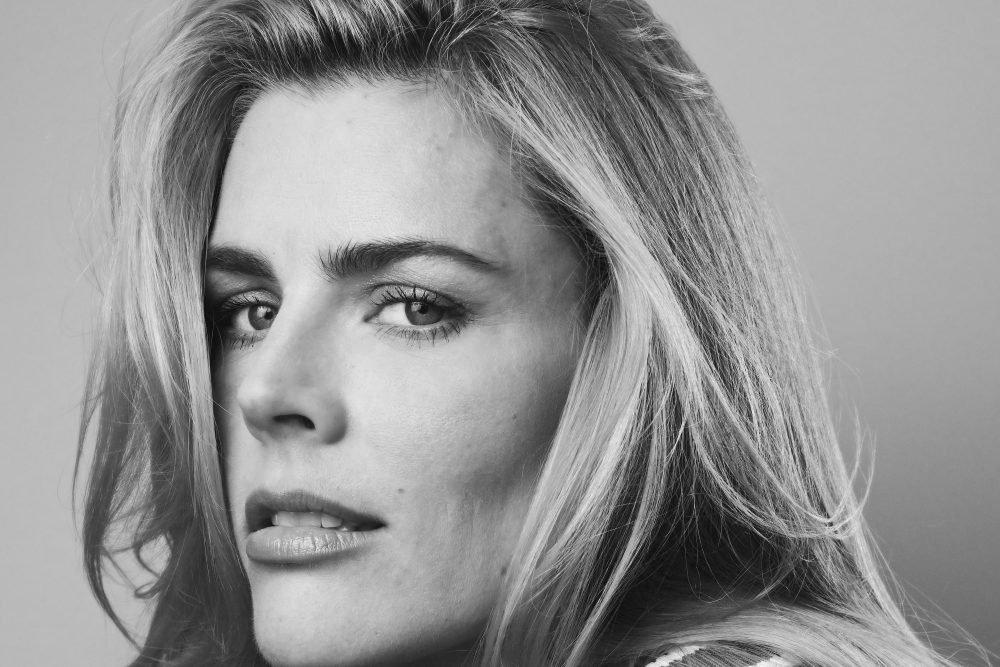
Busy Philipps has joined the upcoming CBS drama series “Cupertino” in a series regular role, Variety has learned.
Philipps joins the show alongside fellow cast members Mike Colter, Rachel Keller, Renee Elise Goldsberry, Ella Stiller, and Nik Dodani. The logline states that the show is “a David vs. Goliath legal drama set in the heart of Silicon Valley that follows a lawyer (Colter) who is being cheated out of his stock-options by his former employer, a tech start-up. Refusing to back down, he joins forces with another recently fired attorney (Keller) to represent those taken advantage of by the tech elite, and help them fight back in a high-stakes battle against the Goliaths controlling Silicon Valley.”
Philipps will star as Natalia, who is described as “the beautiful and delightfully blunt first wife of an AI Billionaire, who divorced her when she turned forty. Now Natalia wants revenge and agrees to finance Michael and Olivia’s start-up law firm in order to go after his and other AI businesses.”
Philipps broke out early in her career with roles in iconic shows like “Freaks and Geeks” and “Dawson’s Creek.” She has also starred in shows like “Cougar Town,” which ran for six seasons, and the critically-acclaimed comedy “Girls5Eva.” Her film credits include “Mean Girls: The Musical,” “I Feel Pretty,” and “The Gift.” She currently hosts the QVC+ talk show “Busy This Week” and previously hosted the E! talk show “Busy Tonight.”
She is repped by Range Media Partners and Gang Tyre.
“Cupertino” hails from Robert and Michelle King, who will write, executive produce, and co-showrun the series under their King Size Productions banner. Robert will also direct the pilot, with Liz Glotzer also executive producing. The Kings are executive producing under their overall deal with CBS Studios.
“Cupertino” was formally picked up to series at CBS in October 2025. The Kings originally set the show up for development at CBS in 2024, with the network then commissioning a full writers room and a 13-episode script order in 2025.
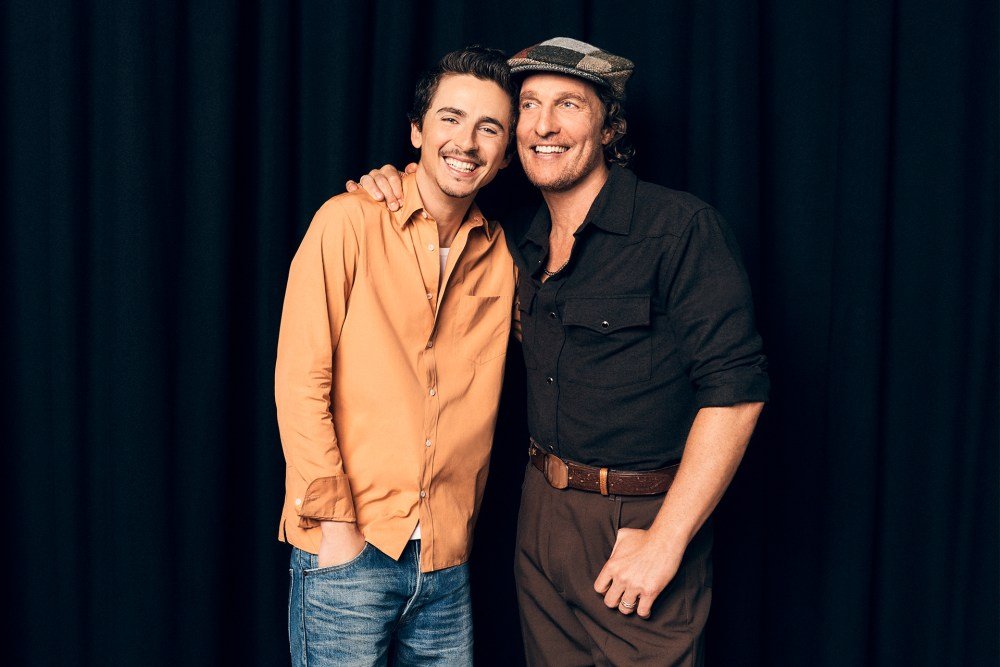
Timothée Chalamet and Matthew McConaughey came together for a one-of-a-kind town hall conversation hosted by Variety and CNN. The program, which aired Feb. 21 on CNN, is now available to stream on Variety‘s YouTube channel, along with bonus footage.
“A CNN & Variety Town Hall Event: Timothée Chalamet and Matthew McConaughey,” which was filmed before a live audience of University of Texas at Austin’s students, marked a reunion for Chalamet and McConaughey, who played son and father in Christopher Nolan’s 2014 sci-fi epic “Interstellar.”
In the 90-minute conversation, the actors discussed their memories from “Interstellar,” Chalamet’s role in “Marty Supreme,” their approaches to acting and more. Chalamet and McConaughey also answered questions from audience members throughout the evening.
“Man, that’s remains my favorite project I’ve ever been in,” Chalamet told McConaughey about “Interstellar.” “I think it’s your most fantastic role. I know you were coming off ‘Dallas Buyers Club,’ but that movie, to me, was the origin point in seeing how you carried yourself on set, how seriously you and Christopher Nolan took the work. It gave me a license. Coming out of high school, it’s hard to take yourself super seriously. You can feel like you’re wasting time or stuck-up or something. And I remember you had a yoga mat, and you’d be working out and sleeping on set. It was all very strange to me. But it was super inspiring. I just can’t thank you enough for being warm to me at that time, when you had no reason to be warm to me. Christopher as well. It just changed my life, man.”
McConaughey responded, “Thanks for that, man. You were pretty easy to be warm to. I remember you had what I felt like was a feverish curiosity at that time. You were figuring some stuff out, but it seemed obvious to me that no matter what you were dealing with, you were going to make your way. And I believe you were in some sort of limbo. You were choosing — something about music, and somebody was putting pressure about, ‘Maybe go this way,’ and you wanted to go this way.”
At one point, Chalamet shared new details about “Dune: Part Three,” which opens in theaters this December. He teased that the final film in Denis Villeneuve’s sci-fi trilogy is the “eeriest one” and a “big swing.”
Chalamet later added, “I didn’t want to be complacent about a single moment. Everything was sacred, and it was my last time doing a ‘Dune’ film, so I really wanted to treat it as sacred. Because people can get complacent, but I was more intense on the third one. It felt like that was the natural momentum, so I wanted to push against that as hard as I could.”
Watch “A CNN & Variety Town Hall Event: Timothée Chalamet and Matthew McConaughey” below.
Oscar-nominated documentary, “The Perfect Neighbor,” will hold special screenings at Stanford University on Feb. 25 and Fordham University School of Law on March 4.
Directed by Geeta Gandbhir, “The Perfect Neighbor” tells the story of a minor neighborhood dispute in Florida that escalated into deadly gun violence when Ajike Owens, a young Black mother of four, was shot and killed by her neighbor, Susan Lorincz. The documentary is made from police bodycam, ringcam, and cell phone footage, as well as recorded 911 calls.
The film highlights Florida’s Stand Your Ground laws, which allow individuals to use deadly force if they believe it necessary to prevent death or bodily harm, as invoked by Lorincz during her trial.
Stanford Law School will hold a screening and discussion with Gandbhir and producer Nikon Kwantu on Feb. 25 at 5 p.m. The event will be held in collaboration with the American Constitution Society, the Stanford Criminal Justice Center, Women of Stanford Law, and the Middle Eastern and South Asian Law Students Association.
Fordham Law School’s Center on Race, Law and Justice will hold a screening and Q&A with Gandbhir and producer Alisa Payne on March 4 at 5:30 p.m.
Leading up to the 2023 shooting, Lorincz called 911 consistently over a two-year period, complaining that Owens’ children and other neighborhood children were making too much noise and playing on “her property.” In an interview with Variety, Gandbhir described the pace of the film as “a slow burn.”
“You have these revelations that make you deeply uncomfortable throughout,” said the filmmaker. “It’s a horror film in many ways.”
Originally premiering at the Sundance Film Festival, “The Perfect Neighbor” was acquired by Netflix in February 2025 for a reported $5 million. The documentary debuted with 16.7 million views in its first three days on Netflix.
From 16th-century Elizabethan England to Pandora, these artisans share how they brought their creations to life.
Hamnet, Frankenstein, Marty Supreme, Sinners, and Avatar: Fire and Ash
Agata Grzybowska/Focus Features (2); John Wilson/Netflix; Frank Ockenfels/Netflix; Atsushi Nishijima/A24; Courtesy of Warner Bros.; Courtesy of 20th Century Studios
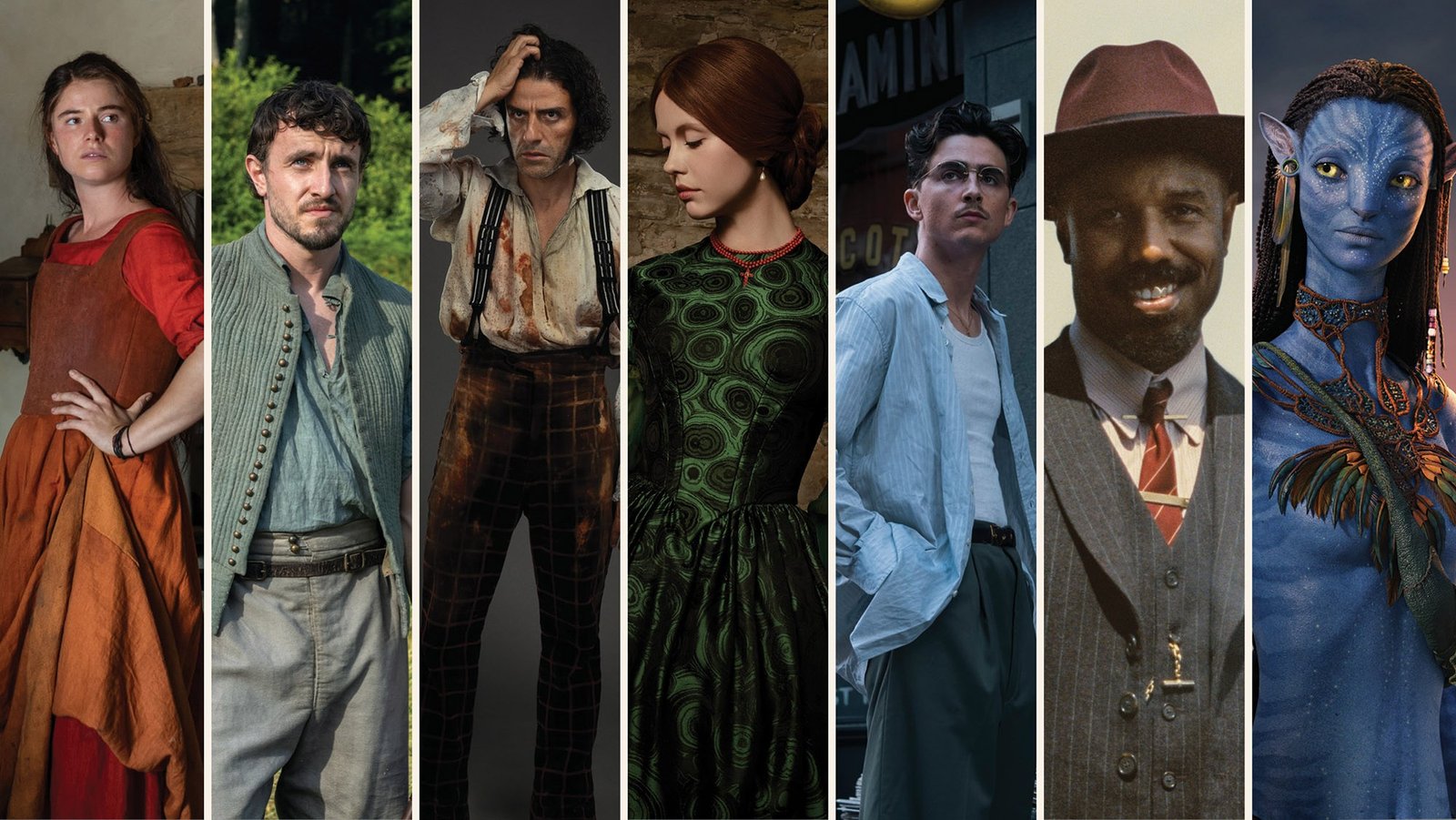
This year’s Oscar nominees for costume design sweep us away on sartorial journeys to 16th century Elizabethan England in Hamnet, 19th century Europe and the Arctic in Frankenstein, the Mississippi Delta in 1931 in Sinners, 1950s New York City in Marty Supreme and a fictional 22nd century world on the moon Pandora in Avatar: Fire and Ash. In their own words, the costume designers behind each film share the stylistic choices that brought these time-specific stories to life, from a “no alterations” rule on set to testing every piece of clothing on VFX models.
Malgosia Turzanska, ‘Hamnet’
Image Credit: Malgosia Turzanska/Focus Features (2); Agata Grzybowska/Focus Features (2)
The first conversations director Chloé Zhao and I had were about focusing on the human, personal side of the love story and tragedy of Will (Paul Mescal) and Agnes (Jessie Buckley), as opposed to William Shakespeare and Agnes Hathaway, so I started from the interiority of the characters out.
We used the traditional Elizabethan technique called pinking, little slashes in the leather, on Will’s doublets. Scratches became larger slashes as he descended into grief and despair, like little silent screams, until the moment we covered him in cracking clay for the ghost look in the Globe play in the film’s final moments.
Grayish blue-greens connect Will to water. We got our hands on the type of iron oak gall ink Shakespeare used and diluted it to grayscale. His fingers and clothes are stained with it. All the Shakespeare children wear gray-quilted clothing as protection to blend into the background and not provoke the abusive father. Rather than a dagger, Will wears a penner (tubes with ink and a quill) slung across his belt.
Moving away from the traditional stiff portrayal of nobles, I looked at depictions of peasants and farmers. Painter Sebastiaen Vrancx creates incredibly dynamic images of people showing the layers of clothing with movement. That led to Will’s sleeves rolled up, collar open. Agnes didn’t wear any padding; she was loose and free in linens and a bodice of barkskin, a Ugandan fabric made of tree bark, representing how she belonged to the forest.
Kate Hawley, ‘Frankenstein’
Image Credit: John Wilson/Netflix; Frank Ockenfels/Netflix; Courtesy of Netflix
Elements of religion, nature and mythologies were all in the screenplay that Guillermo del Toro had been working on for years, in a language he was creating. Overall, he wanted a very operatic, melodramatic atmosphere of melancholy — the feelings you would get from a Caspar David Friedrich painting in this new Mary Shelley world set in the 1850s.
I had images of anatomy, blood cells, fractal patterns and X-rays on my mood boards. The idea of transparency created layers. We looked at 18th century wax models. Guillermo talked about Elizabeth (Mia Goth) being of the world of beetles and William Paley’s Natural Theology. We echoed a female hip bone to create an image of butterflies and insect wings on a pattern that resembles Victorian damask wallpaper. My first big breakthrough was the heightened color sense to move it out of a known world with a melancholy, dreamlike tone. Victor (Oscar Isaac) has fleeting, ephemeral images of Elizabeth and his mother as distant memories. Veiling also evoked that. Because of the single-source lighting and candlelight, getting the colors right was quite a technical alchemy.
Milyako Bellizzi, ‘Marty Supreme’
Image Credit: Atsushi Nishijima/A24 (2); Courtesy of A24
Josh Safdie and I are both hyperrealistic people, so we wanted to make sure that the world and the characters felt as authentic as possible. We referenced 1950s New York City photography by Ruth Orkin and Weegee. There are about 5,000 people in the film, so the sheer volume was a challenge. The silhouettes of the suiting and polo shirts were important. We made hundreds of polo shirts for table tennis teams from 16 countries. Marty (Timothée Chalamet) was eccentric, so we wanted to set him apart with small nuances from what every other kid in that period would wear. His sleeves are a bit bigger, pant legs wider. Building Marty’s navy gabardine jacket with red piping was like the pinnacle of everything I love.
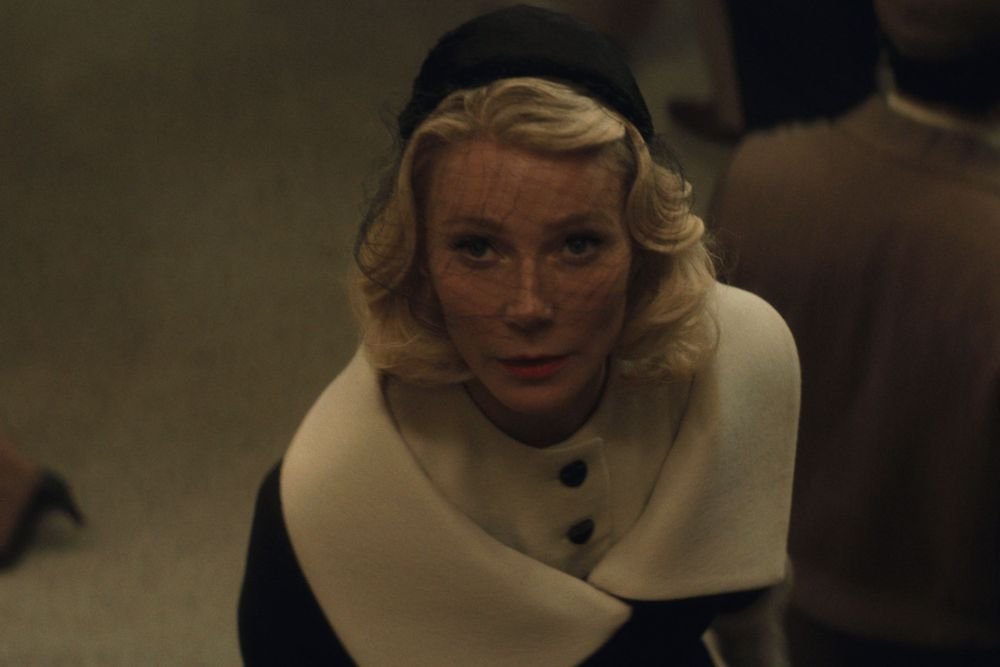
One “aha!” moment was finding tank tops in an original dead stock box set because that’s something you cannot re-create and you need doubles. People collect the Marlon Brando-style tees, and I always look at that in films because I know how hard they are to find. Kay (Gwyneth Paltrow) was a dream character. I referenced fabulous old Hollywood stars like Grace Kelly and Marlene Dietrich, plus costumes by Edith Head and Adrian since she was a star in the ’30s.
Ruth E. Carter, ‘Sinners’
Image Credit: Courtesy of Warner Bros. (3)
Ryan Coogler’s vision of honoring his Uncle James, who loved the blues, became the nucleus of the story, set in 1931 Clarksdale, Mississippi. We brought in red and blue for Smoke and Stack (Michael B. Jordan). I referenced Ralph Lauren’s workwear, palettes of beautiful blue denim and images by Eudora Welty of sharecroppers in hand-me-downs. This is a story of making something out of nothing. I made a “no alterations” rule so everything would be perfectly imperfect.
The Smoke Stack twins had worked for the Irish and Italian mobs in Chicago, so I viewed booking photos. Michael B. Jordan was preparing for the two roles, and I gave him a clear delineation. Smoke wears a houndstooth four-pocket jacket with a holster underneath, no tie and a denim flat cap. His style is country working-class; his clothes a bit bigger. Stack had a three-piece pinstripe suit with close-to-the-body tailoring, a fedora perfectly seated on top of his head, a pocket watch and a four-finger knife. He’s a ladies’ man. Michael says the shoes helped inform his performance: The open toe-box of Smoke’s boot gave him a different gait, while Stack’s Italian shoe was narrow.
Deborah L. Scott, ‘Avatar: Fire and Ash’
Image Credit: Courtesy of 20th Century Studios (3)
Costumes for the Na’vi are inspired by Indigenous people all over the world based on their environments, and Fire and Ash is a burnt-out volcanic landscape. Varang (Oona Chaplin)’s feathered headdress, as a signifier of her stature as tsahik of the clan, was the first defining element director James Cameron wanted for her. Body paint, scars and piercings define the Ash People. A gift of working with Jim is that I get to head all these aspects that complete a whole character. I’m the only department to build finished products for every piece you see in the film, from costumes to hand props and hair grooms, as well as performance-capture suits for live-action.
With artisans at Weta Workshop in New Zealand, we build each piece, from loincloths to necklaces, to human scale and deliver it to Weta FX. They scan it and their artists start to model it. Then we virtually fit samples to a 9-foot-tall blue body, making the costume a second time in a virtual fitting room. We film tests of every piece involved in dancing or swimming or flying and turn them over to the animators and simulators so they understand how the costumes move, because that’s the caliber and demand that Jim has. As a scientist, proof of concept is incredibly important to him.
This story first appeared in a February stand-alone issue of The Hollywood Reporter magazine. To receive the magazine, click here to subscribe.
THR Newsletters
Sign up for THR news straight to your inbox every day
In “Marty Supreme,” Timothée Chalamet plays the titular character, an underdog who is convinced that table tennis is his ticket to success. Set in 1952, Marty is a hustler working at a shoe store, where he pretends customers’ sizes are out of stock to upsell them on pricier pairs. On the side, he’s always looking for his next get-rich-quick scheme.
Atsushi Nishijima
Director Josh Safdie and Oscar-nominated cinematographer Darius Khondji brought the frenetic world of “Marty Supreme” to life. Khondji let Safdie’s script, which was co-written with Ronald Bronstein, guide him. No stranger to shooting period films, Khondji, who is nominated for an ASC award and an Academy Award for his work on the film, worked closely with production designer Jack Fisk, and was inspired by the photography of the era, particularly that of Helen Levitt.
“Most of the conversation was that the greediness of New York was a big thing for us, that we wanted New York to look like it could have been at the time, in the ’50s, so I put haze in the streets [for] pollution. There is always a layer between the actor, and we photograph through these layers,” Khondji says.
Gwyneth Paltrow plays faded movie star Kay Stone, who’s wooed by Marty’s hustling ways. The two first cross paths at the Ritz Hotel in London in a scene where Marty watches her regally enter the dining room as Khondji’s camera follows, gliding along with her. Shortly after, Marty calls her room. Khondji credits Safdie’s vision and ideas when it came to framing. “He’s the one coming up with this very modern, exciting idea that Gwyneth was going to be in a room, Timmy was going to be in a different room talking to each other, and shoot it at the same time, live.”
Towards the end, Kay sees through Marty’s ways and has a frank conversation with him about his “dreams.” Khondji relied on a 360mm anamorphic Cinemascope lens to shoot not just that, but most of the film. Distance was important, and the 360mm lens could provide that.
“Everything we shot was very observed. You wanted to observe them from a distance.” He filmed at the actor’s height to emphasize that. “We’re observing them, whether we’re behind or in the front, we’re really on their face,” he says.
“Joe vs. Carole” creator Etan Frankel has signed a first-look producing deal with Fox Entertainment Studios.
Under the pact, Frankel — whose credits include “Shameless” and “Friday Night Lights” — will develop and produce scripted series across genres. Per a press release, he’ll work closely with Fox leadership to “develop a strategic slate of scripted projects aligned with the studio’s creative priorities, including premium drama, elevated genre storytelling, and distinctive, creator-driven series with global appeal.”
“Etan is an exceptional storyteller with a rare ability to blend emotional depth, sharp perspective, and commercial appeal,” said Hannah Pillemer, head of scripted at Fox Entertainment Studios. “He has built an impressive body of work across platforms and genres, and his voice, taste, and leadership make him an ideal partner as we continue to expand our premium scripted slate.”
Frankel added, “I’m excited to be partnering with Fox Entertainment Studios at a moment when the studio is clearly investing in bold, creator-led storytelling. Hannah and her team have built an environment that champions ambition, collaboration, and originality, and I’m thrilled to develop meaningful, resonant series together.”
Frankel is currently developing the Millie Bobby Brown vehicle “Prism” for Netflix, on which he will serve as showrunner and executive producer. Under a previous overall deal at Universal Content Productions, Frankel created the scripted, “Tiger King”-related Peacock miniseries “Joe vs. Carole,” which starred Kate McKinnon as Big Cat Rescue founder Carole Baskin and John Cameron Mitchell as Joe Exotic.
Before that, Frankel was the showrunner and executive producer on “Sorry for Your Loss” and an EP on “Get Shorty,” “Animal Kingdom” and “Shameless,” on which he wrote for seven seasons.
Frankel is represented by CAA, Literate and Gendler Kelly.