When President Donald trump delivers his State of the Union address to Congress tonight, the audience will be filled with high-profile media personalities, both old and new.
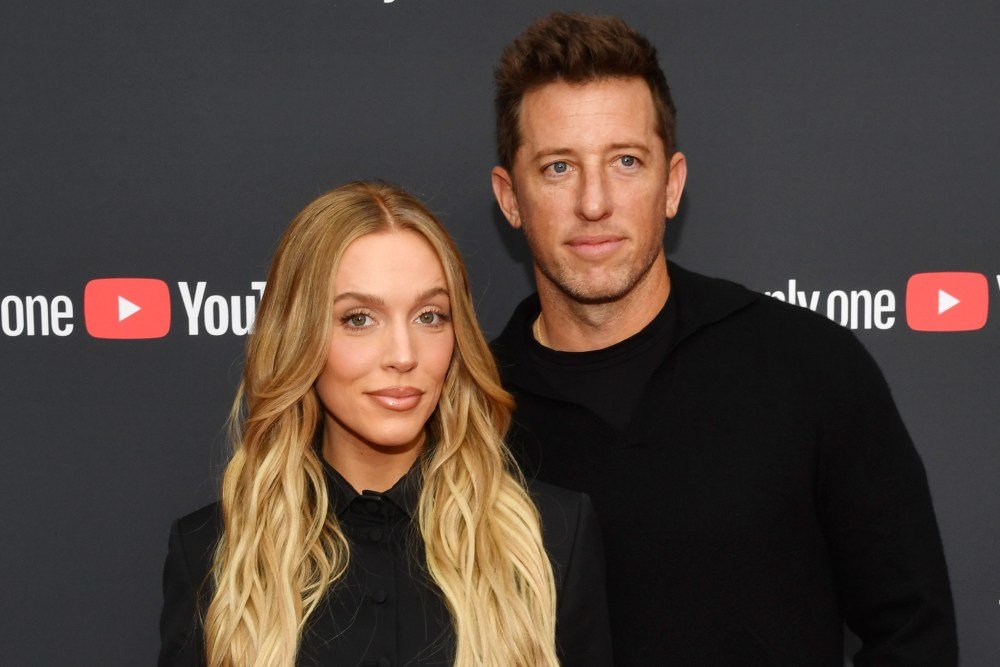
That includes David Ellison, the CEO of Paramount, who is seeking to pry Warner Bros. Discovery away from Netflix in a blockbuster deal; and Erika Kirk, who will be attending as Trump’s guest.
It also includes Nick Shirley, the controversial conservative creator whose expose of Minneapolis childcare centers sparked an entire news cycle in right-leaning media; and Kevin O’Leary, the Shark Tank host and Marty Supremesurprise.
Only Kirk, the widow of the late conservative activist Charlie Kirk, who was murdered last year, is attending a guest of the president. Ellison is attending as a guest of Sen. Lindsay Graham (R-SC); while O’Leary is attending as a guest of Sen. Rick Scott (R-FL). Shirley is attending as a guest of Rep. Peter Stauber (R-MN).
While there are plenty of more widely-expected guests attending (NASA astronauts, the family of Jesse Jackson, survivors of Jeffrey Epstein), the media-heavy guest list underscores how the political landscape is increasingly being shaped by new power centers, from digital natives like Kirk and Shirley to new era moguls like Ellison.
Ellison, of course, is in the midst of trying to steal WBD from Netflix, with the company telling investors Tuesday that it was warming to Paramount’s sweetened bid, which leans heavily on its confidence that it can get the deal through regulatory approvals.
Attending the SOTU as a guest of one of the most powerful Republican senators may underscore Ellison’s confidence in getting a deal done.
Lesley Manville and Ciarán Hinds are such terrific actors that a lot of us would follow them anywhere. But in the wee drama “Midwinter Break,” these two pour their skills into playing a couple of fuddy-duddies — a homepsun Northern Irish married couple, Stella and Gerry, who have reached their early seventies and are so set in their dainty, placid ways that they’ve become like two old pieces of cozy matching furniture. They sit, they read, they have a drink, they have a meal, they exchange comforting pleasantries…and then another day is behind them. And another, much the same, lies ahead.
The whole design of the movie is to take these two out of their comfort zone, to dip beneath the stodgy surface contentment of their well-worn habits and touch the explosive emotions that the couple — or, at least, one of them — has been covering up.
At Christmastime, they’re at home, Gerry seated in the living room nursing an evening cocktail, when Stella asks if she can still tempt him; we wonder if she means something erotic, and when he turns her down, we really wonder. (Is the threadbare dimension of their marriage that the fire has gone out in the bedroom?) But no, she’s just talking about going to church. Stella and Gerry exist in a state that looks halfway between retirement heaven and a coma. The two have a son, who is grown, who they don’t see very much. They are also exiles: residents of Glasgow, Scotland, even though the film presents them as Irish to the core. There’s a reason they left their homeland behind.
In the middle of the night, Stella gets up and goes over to the computer, acting on a sudden inspiration. A bit later, after exchanging Christmas presents, she hands Gerry an envelope with a surprise gift inside: two plane tickets to Amsterdam, where she has arranged for them to have a four-day getaway. She wants to shake up their routine. But as soon as they arrive in that elegant Dutch city of bridges and hidden corners, it’s clear that it’s going to take more than a change of locale to do it.
The movie opens with a jarring flashback. We see the young Stella (Julie Lamberton), very pregnant, being rushed to a hospital after some kind of accident (she has blood on her arm). A cataclysm took place, but we’re not sure what, and our first thought is: Did she lose the baby? Is their son not their actual son?
As Stella and Gerry settle into their Amsterdam vacation, having breakfast at the hotel, visiting a fabled art museum, always lubricating the day with a pint, a glass of wine, a tumbler of Scotch (Gerry brings a bottle along with him in case he needs a quick refill), we register the depth of their connection. (In the bedroom, it turns out, the fire is still alive.) These two fit into each other’s lives as snugly as nesting dolls, to the point that they may have no surprises left, nothing new to discover.
Except that they do. Stella wants to visit a women’s housing facility that’s also a stately convent: a Catholic retreat nestled right in the middle of Amsterdam. A devout Catholic herself, she’s intensely interested in the women who live there. She tells Gerry, who has always been a secular man, that she wants to find a way to be more devout in her own life. And the reason for that is that she wants…more. More than what the two of them already have. This leaves Gerry flabbergasted. What’s the “more” that she could be talking about? He has no concept of it. He thinks their lives are perfect.
It all connects, of course, to that opening flashback. But what happened there is not, perhaps, what we suspect. Was it a miracle? Stella thinks it was. But the real point may not be about what did or didn’t happen. It’s about how two people in a marriage this close could be so cut from the same cloth and, at the same time, so different. Not because there’s some deep dark secret, but because people are…different. Gerry, we can see, drinks too much (he’s the definition of a happy “functional” alcoholic), and Stella has a problem with that, but the real problem isn’t the drinking. It’s the void Gerry is covering up. And Stella now wants to fill her own void with faith.
The director, Polly Findlay, presents all of this in a fluid and fastidious prestige-teleplay-of-the-week way. Adapting a 2017 novel by Bernard MacLaverty (the script is by MacLaverty and Nick Payne), she creates a generous space for her actors, who turn what might have been a rather staid movie — and still, at times, is — into a meticulous duet.
Manville has often played characters of magnetic will (just think of her domineering snob of a sister in “Phantom Thread,” her lusciously obnoxious tippling receptionist in “Another Year”), but in “Midwinter Break” she throws us for a while because her Stella, at first, seems the picture of dowdy devotion. But it turns out that she’s devoted to something deeper, a mystery she can no longer repress. Manville, in a nifty feat of acting, lets that unruly spirit poke through, even as she persists in trying to keep a polite lid on it. She shows us the spirituality of an ordinary woman. And Hinds, dolefully bearded, makes Gerry as comfy and trusting as an old sheepdog: a genuinely benevolent man, yet one who is starting to drown in his quiet complacency. “Midwinter Break” does nothing earth-shattering (it remains wee), but the movie touchingly colors in how it might be possible for two people to know each other too well and also not well enough.
Samuel L. Jackson‘s long-gestating “Tulsa King” spinoff is finally moving forward — but with a new title and setting. Paramount+ announced Tuesday that “Frisco King” — formerly titled “NOLA King” — will start production next month in Ft. Worth, Texas.
“Tulsa King” creator Taylor Sheridan is now set to write all eight episodes of “Frisco King” Season 1, which comes from Paramount Television Studios and 101 Studios. News that Sheridan would write all of “Frisco King” comes seven months after Variety first broke the news that original “NOLA King” showrunner Dave Erickson had exited the spinoff.
“We are honored to have Taylor Sheridan write the first season of ‘Frisco King’ and bring to life Samuel L. Jackson’s iconic character,” said Paramount Television Studios prexy Matt Thunell. “Having him pen all episodes of the season with his singular voice will be a treat for fans of ‘Tulsa King’ and audiences around the world.”
Back when it was called “NOLA King,” the spinoff was to have been set in New Orleans. But with the title change also comes a setting change: “Frisco King” will mostly be set in Frisco, Texas. (According to insiders, the show will still briefly visit New Orleans, but the bulk of the story now takes place in Frisco.)
Jackson was introduced to “Tulsa King” viewers in Season 3 as Russell Lee Washington Jr., “who, after befriending Dwight Manfredi (Sylvester Stallone) during a ten-year stint in federal prison, is sent to Tulsa by New York’s Renzetti crime family to take Dwight out once and for all.” Instead, per the original logline, he’s “inspired by what Dwight created in Tulsa and impressed with the possibilities of second chances.”
Said Paramount+ head of originals Jane Wiseman: “Taylor Sheridan continues to build worlds that attract some of the most iconic talent working today, and ‘Frisco King’ is no exception. Having Samuel L. Jackson step into this universe is a testament to the scale and ambition of the storytelling Taylor is crafting. We’re thrilled to expand this storyline with such a powerhouse creative team and cast on Paramount+.”
Production was previously announced to begin in early 2026; now, the word is cameras will start rolling late March in Fort Worth.
Sheridan, Stallone and Jackson are all EPs on “Frisco King.” David C. Glasser, Ron Burkle, David Hutkin, Bob Yari, Christina Alexandra Voros, Michael Friedman, LaTanya Richardson Jackson and Keith Cox also executive produce.
Paramount+ noted that “Tulsa King” hit Nielsen’s top 10 streaming originals chart for eleven consecutive weeks in Fall 2025.
Jackson’s recent TV output includes the Apple TV limited series “The Last Days of Ptolemy Grey,” the Marvel-Disney+ show “Secret Invasion,” and Peacock’s “Fight Night: The Million Dollar Heist.” He also previously voiced the title character in the animated series “Afro Samurai.”
In 2024, Republican candidate Heather Lappin lost out on the Pima County sheriff’s seat to incumbent Democrat Chris Nanos, the man currently in charge of finding Nancy Guthrie, by 481 votes in a recount. More than 487,000 people voted in the election, making the margin of victory less than 0.1 percent.
There is no love lost between Lappin and her former boss, and you can count Lappin among those who believe Sheriff Nanos is currently bungling the Guthrie kidnapping case, which may soon be a murder case. Speaking with The Hollywood Reporter, Lappin, a former Nanos lieutenant (literally — that was her rank), had nothing nice to say about America’s Sheriff.
“He is a tyrant,” Lappin says. “He tries to be super charming. Like when he did his quote [at the Guthrie press conference], ‘I’m not used to people hanging on my every word and trying to hold me accountable.’ And then he put his hands on his hips because he was trying to be cute. Nobody thinks you’re cute. You’re a 72-year-old man, nobody thinks you’re cute.”
OK, so maybe some of Lappin’s grievances are a little petty. But not all of them.
After her loss, Lappin says she asked to be transferred to another county department — any of them. The request was denied and she eventually relocated to Phoenix, a one-hour, 40-minute drive from Tucson, where she found new employment.
It’s been a ride. After challenging him for the sheriff’s post, Lappin claimsNanos transferred her to a corrections role at the Pima County Adult Detention Center. Lappin had no corrections experience (but 20 years as a cop on the street), and by then, the jail was a very bad place to be — even for jail.
“We had an exorbitant amount of jail death because Nanos decided to come in and fire corrections officers only for not getting the COVID vaccine,” Lappin says. “They didn’t fire deputies, they only fired corrections officers.”
Nanos lost an election for sheriff in 2016 amid a RICO investigation. He won in 2020. The same year, COVID-19 began to kill inmates, but so did the realities of a small staff, Lappin says. “[The inmates] were literally kept in these rooms, just getting food,” she adds. “That’s it — no exercise, no nothing.”
It was also difficult for the remaining corrections officers to monitor drugs coming into the prisons, she says.
In a few years, Lappin would face those challenges, the consequence of being on the ballot opposite Nanos, she contends. Her new work was hard and unfamiliar, and her nights weren’t a whole lot better than her days. Lappin says she was the target of 13 internal affairs investigations in just six months, each allegedly an effort for Nanos to discredit his political opponent.
Nanos also attempted to “intimidate” Lappin at campaign events, she claims. “He sent his two female captains to my campaign events to try to intimidate me,” Lappin says. “He’s like a mafioso, that’s what he’s like.”
“Right now, our focus is on this investigation and serving the victims and this community. Political commentary distracts from this active investigation, and it is unfortunate,” Sheriff Nanos tells THR when asked for comment on the accusations in this story. “My focus remains on justice and transparency.”
Nathan Congleton/NBCU Photo Bank/NBCUniversal via Getty Images via Getty Images
After Nanos won by a razor-thin margin, Lappin says, “He just kept coming after me.” The result of the efforts was an administrative leave for Lappin, where she says she was basically put under “house arrest.” She sued for $2 million.
Now, Lappin is trying to not talk about the Guthrie case — but she did criticize the sheriff’s work. (Lappin declined to comment on plans to run for Pima County sheriff in 2028, though she says she can from an eligibility standpoint.)
Earlier this month, Nancy Guthrie, the elderly and infirm mother of Today show co-anchor Savannah Guthrie, was violently taken from her home in Tucson, Arizona. More than three weeks into the investigation, law enforcement, which now includes the FBI, have no real leads.
“A lot of the Guthrie case is just consequences of his really bad decision making, the years of decimating his units,” Lappin says. “Three of our best homicide detectives, probably in [all of] southern Arizona, were removed from Homicide because they supported me [in the election].”
One popular criticism of Nanos, who to his credit has taken much of it head on, is a reported rift between his office and the feds. It is not entirely clear who has primary jurisdiction as the details of the crime remain so unknown. Lappin says she would have handled the case differently.
“Why didn’t you become the support agency and give this to the FBI? They have the resources. They can bring in the hundreds and hundreds of people that command those tip lines. He’s trying to do that with 395 deputies — we don’t have the resources,” Lappin says.
In our phone call, I informed Lappin of the latest beat of the ongoing Nancy Guthrie case: a $1 million reward “for any information that leads to her recovery,” as Savannah Guthrie laid out in a Tuesday video. An individual close to the family told THR the Guthries wanted the reward out there on day one, but law enforcement discouraged the idea in an effort to prevent fake tipsters.
“[Nanos’] ego doesn’t let him make the decision to give it up because he thinks it’s going to make him look bad,” Lappin says. “When you put your own ego and your own [image] to the public over the health and safety of an 84-year-old woman, then that’s a problem.”
If you purchase an independently reviewed product or service through a link on our website, The Hollywood Reporter may receive an affiliate commission.
Released by Penguin Press, the book is available now as a 304-page hardcover. Newsom also narrates the audiobook version of “Young Man in a Hurry,” which you can listen to for free right now with a free trial to Audible here.
Newsom has made headlines in recent months both for squaring off with Donald Trump and for his grand plans to halt Hollywood’s so-called “filming exodus.” The Governor has pledged to return television and movie production to California, signing a bill last year that would double the state’s tax incentives for film and TV projects from $330 million to $750 million annually. Still, Newsom has faced his fair share of detractors — even from Hollywood insiders — on issues outside of the industry.
In October, Joseph Gordon Levitt said the Governor was “too scared” to veto legislation that would have banned companies from making AI chatbots available to people under the age of 18 (Newsom attributed his decision to the bill’s “broad restrictions,” though he did sign a law that requires platforms to remind users they are interacting with a chatbot and not a human, as well as prevent the promotion of self-harm content). Halle Berry, meantime, criticized Newsom in December for vetoing a menopause bill she backed, adding that, “That’s okay, because he’s not going to be governor forever, and the way he has overlooked women… he probably should not be our next president either.”
The new book was written too late to respond to the criticisms, but nevertheless seeks to position Newsom as an underdog, who took up baseball as a way to deal with his family dysfunction and his long time struggles with dyslexia. The running theme throughout Newsom’s memoir: This is just a guy who has lived his whole life trying to make his home state proud.
“Born in San Francisco, his parents divorced at a young age, and his childhood was spent being tugged between two worlds: his mother worked three jobs in order to care for her children while his father, a close friend of the Getty family, brought Newsom into San Francisco society, a world of wealth and connections,” reads a book description. “The dissonance was frustrating, and made all the more difficult because of undiagnosed dyslexia, but the vantage point was valuable: he inherited his mother’s perseverance and his father’s reverence of California, not only its wildness, but its opportunity.”
For what it’s worth, Newsom has never lived outside of California — something that has both endeared him to locals and left him open to critique from potential voters in the rest of the country. The 58-year-old also memorably saw off a GOP-led recall effort in 2021.
For Newsom, “the California Dream” is what keeps him going, the publishers’ notes say. “His great-great-grandfather, a cop, walked a beat in San Francisco, where almost 150 years later, Newsom would be elected as mayor, running on the values instilled in him by his family history: that California’s open arms must continue to extend to each new generation,” a description reads.
Of course the book chronicles Newsom’s entire political career, including his time as Mayor of San Francisco, where he issued marriage licenses to same-sex couples, more than ten years before the Supreme Court made same-sex unions legal. The book also lauds his “bold efforts” to “counter climate change, improve mental health care, and enhance gun safety.”
As the book description states, Newsom’s memoir is a “deeply resilient California story of identity, belonging, and the defining moments that inspired a life in politics.”
Paramount president Jeff Shell improperly disclosed specific details about the timing, cost and structure of the public company’s $7.7 billion media rights deal with the Ultimate Fighting Championship almost a month before its August 2025 announcement — that’s the allegation of leaked confidential data that an outside law firm is now investigating, The Hollywood Reporter has learned. The SEC is also now reviewing a related whistleblower complaint.
UFC parent TKO Group Holdings’ stock price surged 10 percent following news of the Paramount pact.
The reporting party is R.J. Cipriani, a high-stakes gambler with a documented history as a federal whistleblower. He’s been in settlement negotiations with Shell over a dispute involving consultation services. He declined to comment.
Both men have shared the same attorney: noted Hollywood power lawyer Patricia Glaser, who no longer reps Cipriani.
When asked for comment, Glaser said in a statement, “we were presented with a draft complaint riddled with clear errors of fact and law and the threat that it would be filed, but if he makes the mistake of going ahead with it, we will strongly respond.”
The Shell investigation surfaces at a sensitive time for Paramount, which on Feb. 23 sweetened its politically charged bid to purchase larger competitor Warner Bros. Discovery — and, in the process, elbow out Netflix. The streaming giant previously entered a $82.7 billion deal for WBD. Shell is said to have notified Paramount once he learned of the whistleblower’s draft complaint.
In 2023, Shell was terminated from his previous top job as NBC Universal’s CEO over allegations of inappropriate conduct involving a CNBC correspondent. Yet he found resurrection in Paramount owner David Ellison, who elevated Shell to his current post from an interim perch with private equity firm RedBird Capital Partners, which helped Ellison’s Skydance Media acquire the studio.
Cipriani is a colorful figure whose exploits as a high roller and government whistleblower have included battles with a Las Vegas casino behemoth as well as an international drug lord. He toldTHR in September 2025 that a Mark Wahlberg-produced Amazon Prime docuseries about the latter saga, Cocaine Quarterback, portrayed him in a false light. Cipriani has said he’s been in development on a scripted project about the risky business that is his life. The working title is Jackpot, which is the codename the FBI conferred on him.
If you purchase an independently reviewed product or service through a link on our website, The Hollywood Reporter may receive an affiliate commission.
The newest member of the Tapestry Collection by Hilton, the hospitality brand’s portfolio of boutique properties, has a very specific audience in mind: concertgoers, sports fans and entertainment seekers.
Officially opened in February 2026, The Anthem Hotel is located in the heart of Los Angeles’ Stadium District, the city’s entertainment and sports hub. The 179-room property is a quick walk or Uber ride from some of L.A.’s biggest venues: Intuit Dome (0.1 miles), SoFi Stadium (0.9 miles), YouTube Theater (0.9 miles) and Kia Forum (1.1 miles). It’s also a 10 minute drive from LAX and 20 minutes to the beach.
On top of its proximity to the action, The Anthem will lean into its guests’ interests with a year-round lineup of programming and activations, including game-day celebrations, concert-night takeovers and exclusive experiences tied to global events. Local sports bar and restaurant Tom’s Watch Bar is connected to the property, overseeing The Anthem’s full food and beverage program, including its Soundwave Pool Bar.
To celebrate its opening, The Anthem is offering a limited-time launch promotion when customers book directly through this link. Use code P0 on The Anthem Hotel’s booking page to earn 10,000 Hilton Honors Points per night when booking the exclusive Private Rate.
“The Anthem isn’t just near the action, it’s part of it,” says Stephen Chavez, the property’s General Manager. “We’ve created a space that reflects the rhythm of the Los Angeles Stadium District: vibrant, connected, and full of possibility. Here, events start and end at The Anthem, where the crowd becomes the atmosphere itself: a sea of fans in jerseys, tie-dye, and festive glam. It’s an energy unlike what other places can offer.”
The Anthem Hotel, Tapestry Collection by Hilton is located at 3900 W Century Blvd., Inglewood, CA 90303. Book now via this link with code P0 to earn 10,000 Hilton Honors Points per night.
Management of the Writers Guild of America West met with the staff union on Sunday night as the two sides aimed to resolve the week-old staff strike.
But while there has been some movement on some issues, the staff union said that not enough progress has been made.
“Management is still not ready to meet the moment,” said Dylan Holmes, co-chair of the Writers Guild Staff Union bargaining committee, during picketing on Tuesday. “They do not want us to be on this picket line and are trying to figure out how to get us off of it. But they are still unwilling to bargain in good faith with us in order to get there.”
The WGSUwent on strike on Feb. 17, alleging that union leadership had failed to seriously address the staff’s concerns. The staff union — which includes about 100 guild employees — argues that wages are too low and that workers are subject to unfair promotion and discipline practices. Many WGAW employees make $50,000 to $80,000 a year, according to public data.
WGA management has denied the allegations of bad-faith bargaining and said it will continue to work with the staff to reach a resolution. The two sides met on Sunday night at the International Longshore and Warehouse Union hall in San Pedro, as WGAW management sought a “neutral” site.
Another meeting was expected as soon as Tuesday night.
If the strike persists much longer, it could impact the WGA Awards, which are scheduled for March 8 at the J.W. Marriott hotel in downtown Los Angeles. Staff members typically work at the event alongside an event production crew. If they are on strike, it might raise concerns among members about crossing a picket line.
A few dozen WGA members joined the staffers in picketing outside the union headquarters at Fairfax Avenue and 3rd Street on Tuesday morning.
“It’s very hypocritical and quite frankly embarrassing that a union that is always at the forefront of trying to get a good deal for its members won’t do the same for its own staff,” said writer Joe Russo, who was an assistant lot coordinator during the 2023 WGA strike. “I don’t think it’s a good look.”
The WGSU formed last April and is working to get its first contract. Last August, the union filed an unfair labor practices complaint accusing the WGA of firing a union staffer for union activity. At the picket on Tuesday, WGA workers and members carried signs holding Ellen Stutzman, the guild’s executive director, accountable for alleged ULPs.
“Come on y’all, this is embarrassing,” read one sign. Another: “Thought we were on the same team.”
The WGA is due to sit down with the Alliance of Motion Picture and Television Producers on March 16 to begin bargaining new contract on behalf of writers. The WGA has said that bargaining will go on even if the staff is on strike.
“I don’t love that we’d be basically negotiating on two fronts,” Russo said. “So it would be great to resolve this, get all our ducks in order, stop airing our dirty laundry and focus on a deal for members, because at the end of the day that will help staff too.”
The show is called Newlyweds, and in a life-imitating-art situation, its two lead actors are (almost) newlyweds as well.
Tim Daly has joined the NBC comedy pilot about a later-in-life marriage alongside his real-life wife, Tea Leoni (who was the first to join the cast earlier this month). The couple married in July 2025, though they have been together for more than a decade after meeting on CBS’ 2014-19 drama Madam Secretary.
Along with adding Daly to the cast, Newlyweds has also set Pam Fryman (How I Met Your Mother, Happy’s Place) to direct and executive produce the pilot.
Newlyweds, from creator Gail Lerner (Will & Grace, Black-ish), centers on a free-spirited woman (Leoni) and a buttoned-up professor (Daly) who get married after a whirlwind courtship. Daly’s Tony is a recently divorced man who runs into Jeanie (Leoni) at a valet stand and is so taken with her that they wind up having dinner, kicking off the aforementioned whirlwind. He soon realizes that life with Jeanie won’t be the quiet, low-key one he enjoys, but he’d rather change than live without her.
Daly is coming off a recurring part in Netflix’s sitcom Leanne. He starred in NBC’s 1990s comedy Wings and also counts Private Practice, Superman: The Animated Series and a guest role on The Sopranos, for which he earned an Emmy nomination, among his credits. He is repped by IAG, Gateway Management & Production and Behr Abramson.
Newlyweds is produced by Universal Television. Lerner executive produces with co-creator Jamie Lee Curtis, Eric Tannenbaum, Kim Tannenbaum, Scott Schwartz, Lionsgate Television and Fryman. Leoni is a producer.
John Davidson, the Scottish Tourette’s syndrome activist and real-life inspiration for “I Swear,” was thrust into the spotlight at the 79th BAFTA Awards when his involuntary vocal tics disrupted the ceremony, including an outburst of racial slurs that occurred as “Sinners” stars Michael B. Jordan and Delroy Lindo presented an award. In an exclusive email interview with Variety, Davidson offers his perspective on what happened, including what precautions and guardrails he had expected the BBC and BAFTA to take before he attended the ceremony.
Since the fallout, Davidson’s team shares that he’s reached out to the studio handling “Sinners” in order to directly apologize to Jordan, Lindo and production designer Hannah Beacher.
Here he is, giving his account, in his own words.
LONDON, ENGLAND – FEBRUARY 22: Michael B. Jordan and Delroy Lindo present the Special Visual Effects Award on stage during the EE BAFTA Film Awards 2026 at The Royal Festival Hall on February 22, 2026 in London, England. (Photo by Stuart Wilson/BAFTA/Getty Images for BAFTA)
Getty Images for BAFTA
Many people’s only frame of reference for Tourette’s syndrome comes from stereotypes, particularly the idea that it’s “just swearing” or saying slurs for shock value. How do you describe the condition to someone starting from that place?
Very often, the media focuses on my particular type of Tourette’s, which is called coprolalia — the involuntary use of obscene or offensive language. This symptom affects 10% to 30% of people with the condition and is not a criterion for diagnosis. However, it is one of the hardest tics to manage and can be very distressing for those living with it. Many individuals report discrimination and isolation as a result.
I have been physically beaten to within an inch of my life with an iron bar after ticking a comment to a young woman whose boyfriend and accomplice ambushed me one evening.
The real challenge isn’t the tics themselves, but the misconceptions surrounding them. Understanding the full range of Tourette’s helps reduce stigma and supports everyone living with the condition.
When socially unacceptable words come out, the guilt and shame on the part of the person with the condition is often unbearable and causes enormous distress. I can’t begin to explain how upset and distraught I have been as the impact from Sunday sinks in.
In the moment before a vocal tic, do you know what’s coming, or does it only become clear after the fact?
Depending on the severity of the condition, people either have an ability to suppress what they are saying for short periods of time, or they don’t. Suppressing can be compared to taking a full bottle of Coca-Cola and shaking it each time you feel the need to tic. Before long, the pressure is so intense it has to be released, and it bursts out — and on occasion, that can lead to a tic attack.
For me personally, my brain works so fast and the tics have always been so aggressive that I have no idea when they are coming or what they will be. I have almost no ability to suppress, and when the situation is stressful, I have absolutely no choice but to tic — it simply bursts out of me like a gunshot.
When a tic involves a slur or taboo phrase, what’s the single most important thing you want people to understand about the distinction between intent and involuntary neurological response?
I want people to know and understand that my tics have absolutely nothing to do with what I think, feel or believe. It’s an involuntary neurological misfire. My tics are not an intention, not a choice and not a reflection of my values.
Those who have seen “I Swear” will understand this. My tics have said and done things over the years that have caused huge pain and upset — punching Dottie [my second mother] in the face is a prime example. Dottie is someone I love dearly. I would never, ever want to hurt her. I have even punched her in the face when she was driving at speed, almost causing a head-on collision.
Tourette’s can make my body or voice do things I don’t mean, and sometimes those tics land on the worst possible words. I want to be really clear that the intent behind them is zero. What you’re hearing is a symptom — not my character, not my thought, not my belief.
Tourette’s can feel spiteful and searches out the most upsetting tic for me personally and for those around me. What you hear me shouting is literally the last thing in the world I believe; it is the opposite of what I believe. The most offensive word that I ticked at the ceremony, for example, is a word I would never use and would completely condemn if I did not have Tourette’s.
I am often triggered by what I see and/or what I hear, and this part of the condition is called echolalia. For example, when the chair of BAFTA started speaking on Sunday, I shouted, “Boring.” On Sunday, Alan Cumming joked about his own sexuality and, when referencing Paddington Bear, said, “Maybe you would like to come home with me, Paddington. It wouldn’t be the first time I have taken a hairy Peruvian bear home with me.” This resulted in homophobic tics from me and led to a shout of “pedophile” that was likely triggered because Paddington Bear is a children’s character.
I would appreciate reports of the event explaining that I ticked perhaps 10 different offensive words on the night of the awards. The N-word was one of these, and I completely understand its significance in history and in the modern world, but most articles are giving the impression I shouted one single slur on Sunday.
What went into the decision to attend in person, and what conversations, if any, did you have with BAFTA or the BBC in advance about how to support you and other guests?
This was an awards ceremony that featured six nominations connected to a film that told the story of my life living with Tourette’s. This has been a three-year project for me, working with the writer, director, production and cast. I am also an active executive producer on the film. I had as much right to attend as anyone.
I also knew that as voting members, most people in the audience would have seen “I Swear” and would be well prepared, well educated and well informed about my condition.
After living with Tourette’s for almost 40 years, I was aware of how physically and mentally difficult it would be for me to attend. I also had a serious heart operation only five weeks ago. I put every ounce of energy and concentration into being able to attend.
I was thrilled to see that on the night, everyone — including some of the most well-respected and famous people from the film world — cheered at my name and applauded. I stood and waved to show my appreciation and acknowledged that this was a significant moment in my life, finally being accepted. It started as one of the most memorable experiences of my life.
StudioCanal were working closely with BAFTA, and BAFTA had made us all aware that any swearing would be edited out of the broadcast. I have made four documentaries with the BBC in the past, and feel that they should have been aware of what to expect from Tourette’s and worked harder to prevent anything that I said — which, after all, was some 40 rows back from the stage — from being included in the broadcast.
As I reflect on the auditorium, I remember there was a microphone just in front of me, and with hindsight I have to question whether this was wise, so close to where I was seated, knowing I would tic.
What was going through your mind in the moment you realized the room could clearly hear your tics?
Initially, my tics were noises and movements, but the more nervous I got, the more my tics ramped up. When my coprolalia tics came out, my stomach just dropped. As always, I felt a wave of shame and embarrassment hit me all at once. You want the floor to swallow you up. I wanted to disappear. I wanted to hide — just get away from all the eyes.
I was hoping people would understand. My mind was saying: These people have seen the film. They will know I can’t help this. They will know it’s not me. This is exactly why we are here. I was saying in my head, “Please don’t judge me. Please understand this isn’t who I am.”
I was trying to calm myself down, to breathe, but ultimately, I made the decision to leave to not cause any more upset. BAFTA found a private room with a monitor where I watched the rest of the awards.
The awards were, in all honesty, just a heightened version of my everyday life and are the reason why, for many periods in my life, I have been fearful of leaving the house — because I am so anxious and nervous about what I might tic and what people’s reaction might be.
You’ve spent years educating and campaigning around Tourette syndrome. Where have you seen real progress — and where does misunderstanding persist most stubbornly?
Sometimes you feel like you are making real progress in educating people on the condition, but there is so much more needed. Comments following the BAFTAs where people have said things like, “I need to stay inside,” “I wouldn’t say these things unless I thought them,” and “I am racist deep down” are deeply upsetting for me, and show there is still so much to do.
The negative responses only go to show the importance of people seeing the film and understanding more about an incredibly complex neurological condition. I had an expectation that the BBC would physically control the sound at the awards on Sunday. I was so far from the stage. From the lack of response from the early presenters to my tics, and with no one turning around to look at me, I assumed, like everyone else, that I could not be heard on the stage.
The only time I became aware that my tic had reached the stage was when Delroy and Michael B. Jordan appeared to look up from their role as presenters, and soon after that I decided to leave the auditorium.
Finally, is there any language you’d ask us to avoid — words like “outburst” or “uncontrollable” — in favor of something more accurate?
It’s important not to use the word “disability.” This is considered a “condition” by the Tourette’s community. I would prefer phrasing such as: “I have lived with the condition …”