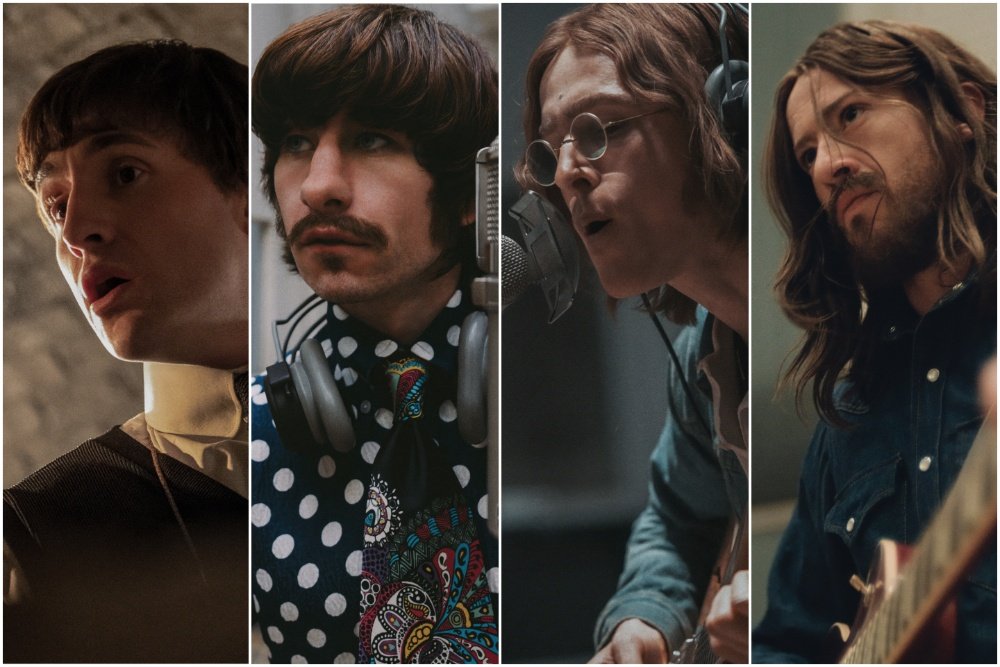
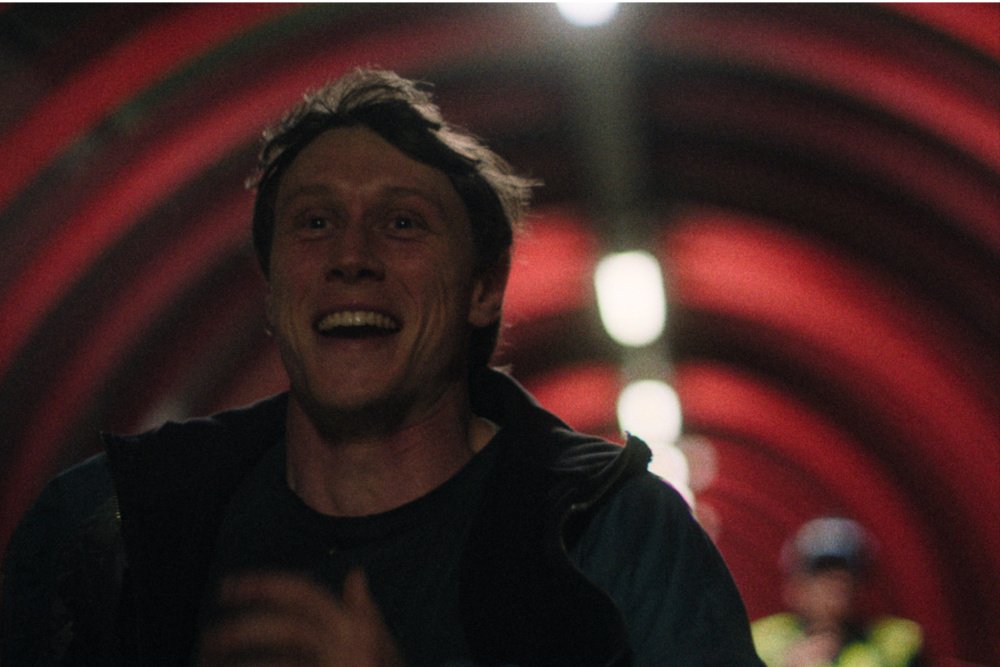
Each film in the series will be from the perspective of a different band member, and all four films are set for an April 2028 release by Sony Pictures. Mendes’ project marks the first time that The Beatles and their estates have signed off on life rights and music for a theatrical feature film about them.
Mescal stars as Paul McCartney, Quinn plays George Harrison, Barry Keoghan portrays Ringo Starr and Harris Dickinson plays John Lennon.
Other cast members include Saoirse Ronan as Linda McCartney, James Norton as Brian Epstein, Mia McKenna-Bruce as Maureen Starkey, Anna Sawai as Yoko Ono, Aimee Lou Wood as Pattie Boyd, Harry Lloyd as George Martin, David Morrissey as Jim McCartney, Leanne Best as Mimi Smith, Bobby Schofield as Neil Aspinall, Daniel Hoffmann-Gill as Mal Evans, Arthur Darvill as Derek Taylor and Adam Pally as Allen Klein.
The film’s official logline reads: “Each man has his own story, but together they are legendary.” During CinemaCon 2025, Mendes, who directs all four installments, described the project as the “first binge-able theatrical experience.” It is currently unknown if the films will be released all at once or once a week throughout April. Sony Pictures chief Tom Rothman added at the time that principal photography for the four films will take a year.
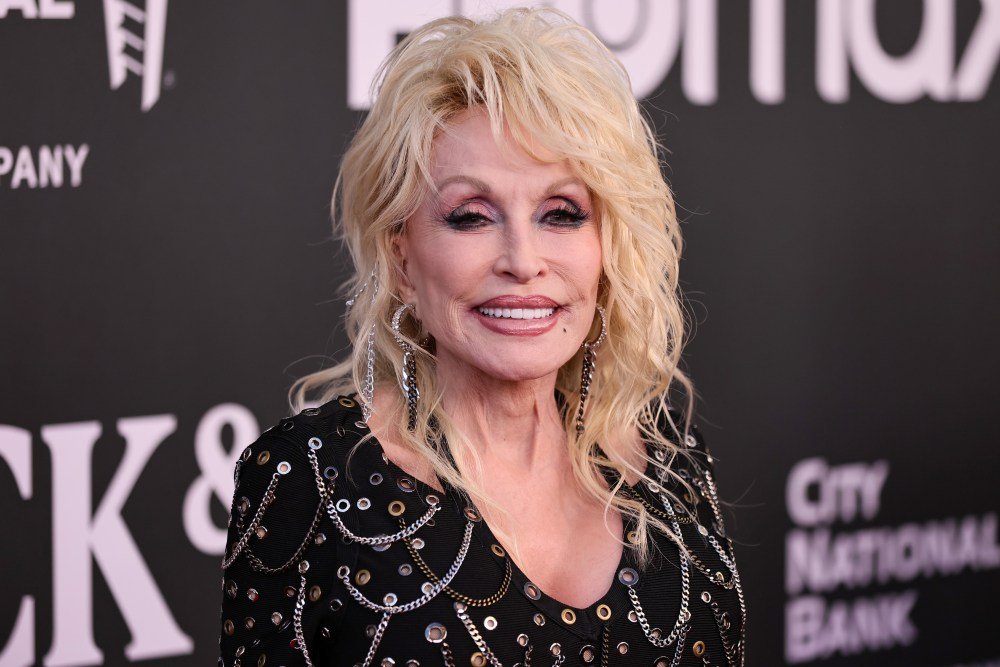
Dolly Parton was unable to attend the opening of NightFlight Expedition at Dollywood on Friday due to ongoing “health issues.”
Dollywood President Eugene Naughton shared a pre-recorded video of the singer during the dedication ceremony for the new ride. “Well, hey Eugene. I’m right here… Well, kind of. Sorta,” Parton said in the video. “I’m still in Nashville, and I’m sorry about that. I was supposed to be there in person like I planned.”
Parton shared that she had been feeling dizzy and dehydrated. She told fans her doctor had advised her against traveling to the opening. “My Nashville doctor has kinda clipped my wings, saying, ‘You ain’t traveling this week.’ So I guess, if your doctor tells you, ‘you ain’t traveling this week,’ you ain’t traveling this week,” she said.
“You have fun, and I’m gonna see you down the road,” she added.
In May, Parton canceled her Las Vegas residency, which had been rescheduled for September. She was originally slated to perform six shows at Caesars Palace in December 2025, but postponed the shows due to “health challenges.”
Parton gave the keynote address at Dollywood during the 41st anniversary celebration in March, one of her first major appearances since the health scare.
Parton bought an interest in the theme park in 1986, and it was renamed to Dollywood. The Dollywood Company operates the theme park, a dinner theater, Dolly Parton’s Stampede, Dollywood’s Splash Country waterpark and the Dream More Resort and Spa. Located in the Knoxville metropolitan area, it is now the biggest ticketed tourist attraction in Tennessee.
“The Sopranos” star Drea de Matteo recently told Jamie Kennedy on the “Hate to Break It To Ya” podcast (via EW) that starting her OnlyFans page was a “political statement.”
“In some ways, the OnlyFans page was almost like a political statement on my part in a way…It was like, ‘Fuck you. I don’t have to work,’” de Matteo said.
She went on to add that some critics think, because of her Emmy-winning turn as Adriana la Cerva on the HBO mob drama, that she is “made of fucking money.” However, de Matteo explained that the whole reason she started her OnlyFans was because of financial problems.
“Everyone sees me coming, they’re like, ‘Here comes that rich bitch from The Sopranos,’” she said. “And it’s like, no, I’m not at all. In fact, you know, I live a pretty fucking normal life. I had to do that [OnlyFans] page to get a lien off my house after foreclosure.”
Earlier in the interview, de Matteo said that when she first launched her OnlyFans, it was to “start a podcast because I was afraid that I’d be censored.” But after getting encouragement from her kids, she shared a photo of herself in a bikini on her page, and “within 75 minutes” she made enough to pay the lien on her house.
In a 2024 interview with Variety, de Matteo shared how OnlyFans helped her financially during the pandemic while facing judgment from her family for not getting vaccinated. She recalled, “[During the pandemic], my brother was like, ‘You know, you’re risking everyone in your home’s life right now [by not being vaccinated].’ And then years later, when I ended up having to open up an OnlyFans page just to save my home, because nobody would help me at that time because I didn’t ‘do the right thing,’ he was like, ‘Your body, your choice. I’m with you all the way.’”
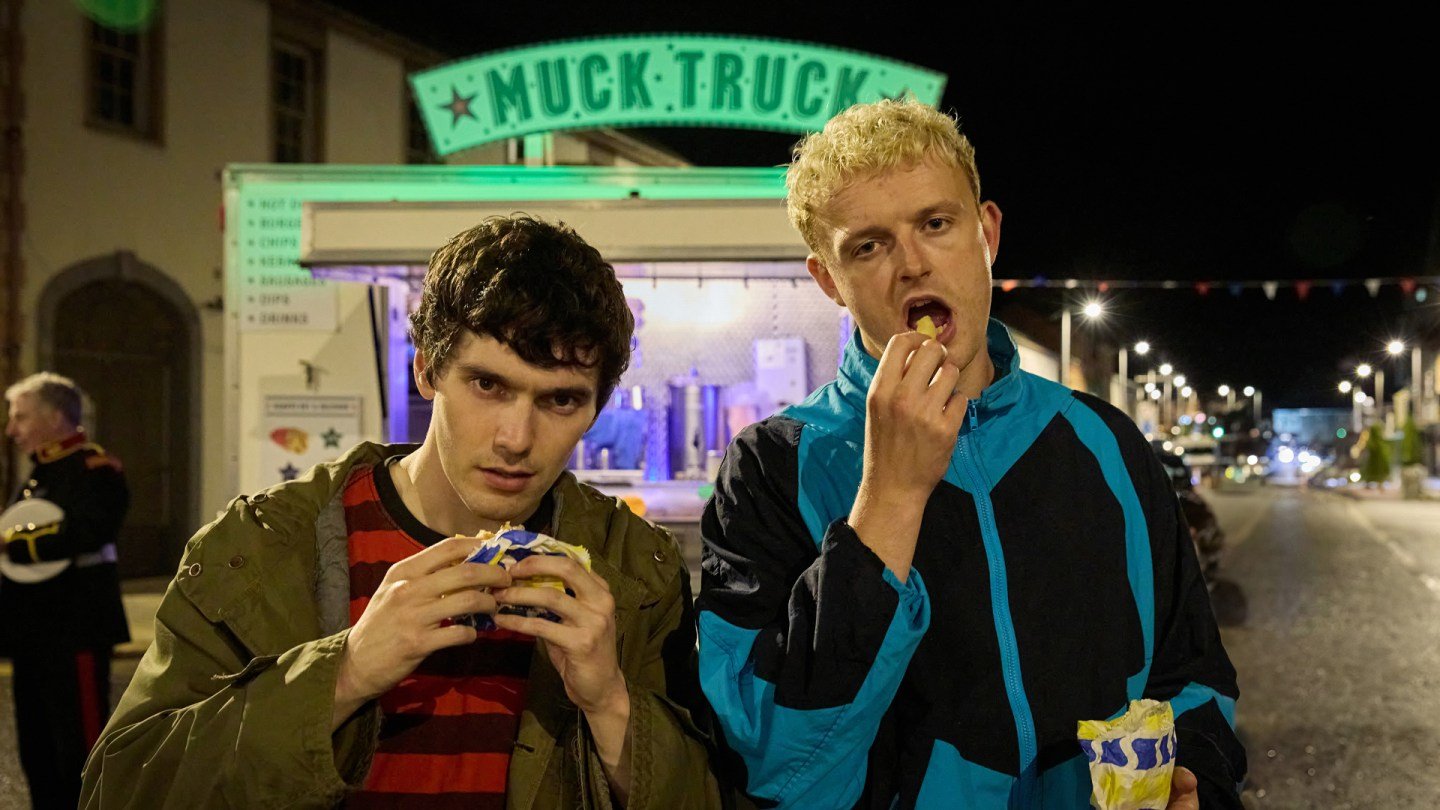
Jack Rowan and director Kieron J. Walsh are hoping for “some buzz” at the Edinburgh premiere of Skintown.
It’s the catchphrase employed by Rowan’s character Vinny and his best friend Jonty (Chris Walley) as they’re just starting to believe there’s life beyond provincial Enniskillen, the Northern Irish town colloquially captured by the film‘s title. Ciarán McMenamin adapts his 2018 novel of the same name, with the movie premiering in competition at the Scottish film festival on Sunday.
Backdropped by the Troubles during the 1994 IRA ceasefire, Skintown follows Vinny and Jonty as the young men party with friends, cut deals, and make plans to escape small-town life — until local shenanigans threaten to blow up the long-held dream. Walsh crafts a vivid portrait of war-weary youth, ’90s rave culture, and Ireland‘s turbulent history. Add to that a brilliant supporting cast of Derry Girls‘ Jamie-Lee O’Donnell and The Day of the Jackal‘s Hope Ikpoku Jr., and you have a real Edinburgh crowd-pleaser — a head-bopping period piece steeped in wit.
But this version of Skintown wasn’t always the plan. “It was a bumpy ride,” begins the Dublin-raised filmmaker about the nine-year journey to make Skintown and its many iterations up to this point. Rowan’s role was once set for Anthony Boyle, who remained committed to the project for two years before production stalled and Netflix’s House of Guinness offer came in. Walsh told him: “‘Mate, you’ve got to go and do your thing. It’s a big role.’” But admittedly, upon Boyle’s departure, Walsh was “bereft.” All it took was English actor Rowan — armed with a spot-on Enniskillen accent — to revive his vision. Skintown was back on.
“The beauty of that is, when Anthony had the part, it was his right. I was never in the picture,” says Rowan, star of Noughts + Crosses and Peaky Blinders. “He didn’t end up doing it, which opened up an opportunity for me to come in. No one loses out.” That includes the audience: His performance is one of the buzziest things about the raucous, roguish Skintown.
Below, Walsh and Rowan have a lot of fun discussing the making of this film (and showcasing the regional nuances of the Northern Irish accent). They talk about a wild, 22-day shoot blessed with brilliant weather, Edinburgh Film Festival being “back with a vengeance” and why a character like Vinny is long overdue: “I think Northern Irish people in particular really wanted to see a story like this on the screen. This hasn’t been explored before: ordinary people, living in the crossfire, [and] young people trying to live normal lives.”
Kieron, how far back did you know you wanted to adapt this story?
KIERON J. WALSH I first met Ciarán McMenamin in 1998, believe it or not. We’ve been pals, and we’ve worked together — I’ve cast him — many times. He started writing stuff and he used to give it to me every so often to have a look at, and I was encouraging. And then he sent me a photocopy of an unpublished manuscript, basically before any publisher had got anywhere near it. He hadn’t even gone out to publishers, and he gave it to me. He said, “Will you have a look at that? It’s a book.” And I was like, “Okay.” So I took it [on my] holidays and read it on the beach. I was halfway through it, and I rang him, and I said, “This is going to make a great movie.” This was nine years ago. That’s how long it takes to get films off the ground now, I’m afraid. So he was a bit kind of like, “I just wanted you to have a look at it as a novel.” And I said, “Well, I’m a director. I have to respond in the way that I see fit, and I think it will make a fantastic film.” I managed to convince him to roll along with it on [the] condition that he’d get to write the screenplay.
Nine years! What work went into that nine years to get Skintown on screen?
WALSH It’s extremely hard, and the older you get, the harder it gets, which is a bit disappointing. C’est la vie. But obviously you’ve got someone who’s written his first novel, and so he’s quite attached to it. Everybody’s attached to their first baby. So it took a while to let him free up from the material and realize that that’s the novel, and the screenplay can be a different thing. And he was actually very forthcoming on that side of things — he was actually pretty cool with that. [He] invented new characters, got new plot lines. But it does take a while. Then getting the various funding bodies lined up was happening at the same time. We were in development with Screen Ireland, Northern Irish Screen… That’s just the length of time it takes. And the script [was] getting better and better and better. It worked out for the best.
Jack Rowan stars as Vinny in ‘Skintown’
Courtesy of EIFF
You had a brilliant cast to bring that script to life. Jack, what was your first reaction reading Skintown? How much did you know about the Troubles?
JACK ROWAN Well, my dad’s from Ireland, so my life’s always been split [between] London and going over to visit my grandparents. It’s always been somewhere that I love and subconsciously you learn the history over time. Actually, my dad’s a good parallel with Vinny because he was pretty much the same age as Vinny in our story, maybe two years later. He was born in ’69, then left in the ’90s. So he knew no different than the Troubles in Northern Ireland. Having this script come my way… I remember reading it for the first time. Obviously, I auditioned. It’s one of those roles where you’re like, “Please, man, please, can this be mine?” Because selfishly, it’s just an amazing part. Then getting the part and reading it again and reading it through the eyes of, “Wow, I’m actually going to be stood there. I’m going to be saying those lines.” Yeah, it was a very proud moment for me. It feels like the earliest acting I did was imitating my dad’s accent. (Laughs.) And it would always make everybody laugh. They’d say, “Do it again, do it again!” To put it on screen and have it out there forever, it’s almost like I’ve got a piece of my dad that’s out there forever.
It is one of the best Northern Irish accents I’ve ever heard on screen. Kieron, you’re the better judge. But I can’t believe [Rowan] did not grow up in Northern Ireland.
WALSH It’s not even [just] a good Northern Irish accent. It’s a really good Enniskillen accent. That’s the difference, and that’s because Jack — apart from being incredibly studious and committed when it comes to his acting — his father was from, what, half an hour from Enniskillen?
ROWAN Probably. He grew up in Cookstown, which is about an hour’s drive.
WALSH Yes. So you were hearing this accent from him and your grandparents, right? Because I remember you imitating your grandfather a couple of times. It’s the smallest little inclinations, the tiniest details. That’s what blew me away. It was so precise, but also completely understandable. It wasn’t like you were going, “What the fuck did he say there?”
ROWAN It was funny at the end when I came back after the shoot, and I was speaking in the accent every day, and I met with my friends and stuff. I’d say the same line. I’d go, “This is a general Belfast [accent]. Boom! This is Enniskillen. Boom!” They’d go, “I can hear it. I can hear the difference.” So it’s subtle, but it means a lot. You wanna put them subtleties in there.
WALSH A car in Belfast is “Car.” A car in Enniskillen is “Kee-yar.”
I want to ask Kieron about the early iterations of this film because I read that it went through a few different casts. Maybe it was a bumpy ride at times. But Jack and Chris, finally, must have been a dream come true.
WALSH It was a bumpy ride. Films have a life, you know? And that life of a film, despite what some producers think, it’s not really in their hands. What festival it gets selected for, what actor is going to be in it, where it’s going to be shot: All of these things are up in the air. Then as soon as one thing lands, it sets the film in a direction, and that direction can be switched a different way. So originally, for Jack’s role of Vinny, we actually had Anthony Boyle, and he stuck with the film for two years. Then he got offered some enormous Netflix thing [House of Guinness], and I said, “Mate, you’ve got to go and do your thing. It’s a big role. It’s well paid. You’ve been with [Skintown] for two years.” So he went off to do that. And I was actually bereft, to be honest. I was like, “What am I going to do?” And between myself and the producer Yvonne Donohoe, we racked our brains. Yvonne had worked with Jack, and I’d seen Jack in a film called The Boys from County Hell which is set… Where was it set, Jack?
ROWAN A fictional Irish county. But Northern Irish [accents].
WALSH Yeah, so I’d seen that film and I couldn’t believe he was English, for a start. I said, “He looks absolutely perfect for it.” So we did a couple of auditions and he knocked it out of the park and I’ve never looked back since that day. I’m blessed.
ROWAN And the beauty of that is, when Anthony had the part, it was his right. I was never in the picture. I never auditioned or anything. If he’d done the part, I would have never had the opportunity. He didn’t end up doing it, which opened up an opportunity for me to come in. But he’s only not doing it because he’s doing something else. So the beauty of that is, everybody only gains. No one loses out.
Did you film in Enniskillen?
WALSH We did a little bit of filming in Enniskillen, towards the end. When you’re making films, the distance from your unit base is very important to the budget. If you’ve got to drive any more than 45 minutes, you incur all sorts of penalties. There’s a possibility of overnights, all of that stuff. So, we had to select certain places and create an Enniskillen. But we did shoot in Enniskillen for three days towards the end of the shoot, with Jack walking about, establishing stuff and a couple of scenes. The rest of the film was shot in Antrim [in Northern Ireland], and actually in the Republic of Ireland in Dundalk. So it’s a proper union of the two jurisdictions.
Director Kieron J. Walsh
Photographer: Steve Langan
How long was the shoot?
WALSH 22 days.
ROWAN An absolutely amazing 22 days.
WALSH It was a lot of fun. It was a lot of, “Oh my god, are we going to get this done? Are we going to be able to do this?” And everybody just jumped on. It was remarkable actually, when I think about it, how the stars lined up. The weather — we were shooting the rave scene in the sand dunes and it was night shoots, loads of supporting artists. If it had rained, it would have been a disaster.
ROWAN But as you say, the stars aligned. I really felt a lot of people had a lot of passion for this project. A lot of people came at it with love. I said, “There’s something in this, man. There’s a reason everything’s on our side here.”
WALSH I think Northern Irish people in particular really wanted to see a story like this on the screen. This hasn’t been explored before. We haven’t seen this side of Northern Ireland before — ordinary people, living in the crossfire, [and] young people trying to live normal lives. It’s hard enough being a young person growing up in any part of the world, but then you’ve got this guerrilla warfare going on all around you in an occupied territory. It’s just an interesting world.
It covers so much: war, friendship, youth, dreams. What do you hope people come away stewing on after watching Skintown in Edinburgh?
ROWAN Firstly, I want them to have a fun ride, right? Just enjoy the film. Come away and go on Spotify and search up some of the songs, maybe be inspired by the clothes. But with the human element, basically no one has a say in where they’re born, right? You’re just born. That’s it, and then you get on with it. We see that in conflicts even now. The media or whatever always try and make us feel different, try and make us feel distant. Actually, everybody’s just the same. Everybody just wants to get on with it. This isn’t necessarily a film about the Troubles. It’s actually just a film about people getting on with their lives… I just would hope people watch it, enjoy it, appreciate it, and have as much fun watching it as we did filming it.
WALSH I would totally agree with that. That’s the primary [hope] — that people go to the cinema to enjoy themselves — and hopefully that will be the case with this. But I think, for me, what’s interesting about the film is there’s a very dark sense of humor in Northern Ireland. Perhaps in other parts of Ireland [too], but particularly Northern Ireland, they have the ability to laugh at their own misfortune and turn it to their advantage. And I suppose what [Vinny and Jonty] have done in this one, they’ve turned an aspect of the Troubles to their advantage and tried to work with it rather than fighting against it. That’s quite interesting.
It’s also interesting to look at what it was like growing up as a young person in Northern Ireland at the time. That’s 30 years now since the Troubles finished. And it’s not really been recorded — what it was like for young people to grow up there. You’ve got all of the ’90s paraphernalia, the music, the clothes, the lifestyle. But it’s different in Northern Ireland. It’s just different, and it’s just skewed a different way because of all the other things that are going on. [You] look at a world that you haven’t seen before. There’s an abandoned cinema. For me, cinema was like a window to the world, a window where you could see what it was like out there. But that’s been shut down, so you can’t even see what it’s like outside of Enniskillen. So [Vinny] wants to get out, and by the end of the film, it’s not about escape. It’s not about running away, because as he says, “Running away never did anybody any good.” You have to face up to things and come to some conclusions about yourself. It’s not really just about running away. It’s about learning. It’s a coming-of-age film, really.
ROWAN I have this memory, before doing this part. As you say, sometimes people don’t know what it was like for people growing up there. And my dad’s a nomad character, very quiet. I was sort of interviewing him without him knowing, and I was telling him some lines, and I was doing the accent, and he was laughing. Again, the dark humor — he understood it straight away. Then there was one line which actually changed in the final script, but the line originally was like, “I’m sort of stressed out…” (Rowan slides into his Enniskillen accent.) “I had Brits pointing guns at me yesterday, cops last night, and then these two!” [Vinny] is basically having guns pointed at him from all directions, and my dad took a drag of his cigarette and he laughed and went, “That’s what it was like.”
WALSH (Laughs.)
ROWAN I was like, “Okay, okay.” You learn a lot, even as a [29]-year-old.
WALSH Is your dad gonna come up to Edinburgh?
ROWAN It actually only hit me recently. I’m probably going to ring him today [to ask].
What can festival runs do for a film like this, with so much love and care put into them?
WALSH Well, obviously Edinburgh had a little bit of a rough patch there a few years back, right? But it’s back with a vengeance, man. It’s great. I did have a short film in it, I think it was my graduation film from the Royal College of Art. There was a film by a friend of mine that was premiering there called I Went Down, an Irish film that also played there, and I was at the premiere of that, and it was just a buzz, an absolute buzz.
ROWAN Some buzz.
WALSH (Laughs.) Some buzz! When the opportunity came round [for Skintown to premiere in Edinburgh], I was like, “Let’s grab it.” Because this festival will get this film. They will get the subtleties in this film. I think a lot of people will get the film anyway. But I think the subtleties of the film, the flute bands, the sectarianism. That exists in Scotland as well. So I think they’ll be able to connect with it. I’m delirious about it. Delirious! Can’t wait to see that in front of an audience there.
This interview has been shortened and edited for clarity. The 2026 Edinburgh International Film Festival runs Aug. 13-19.
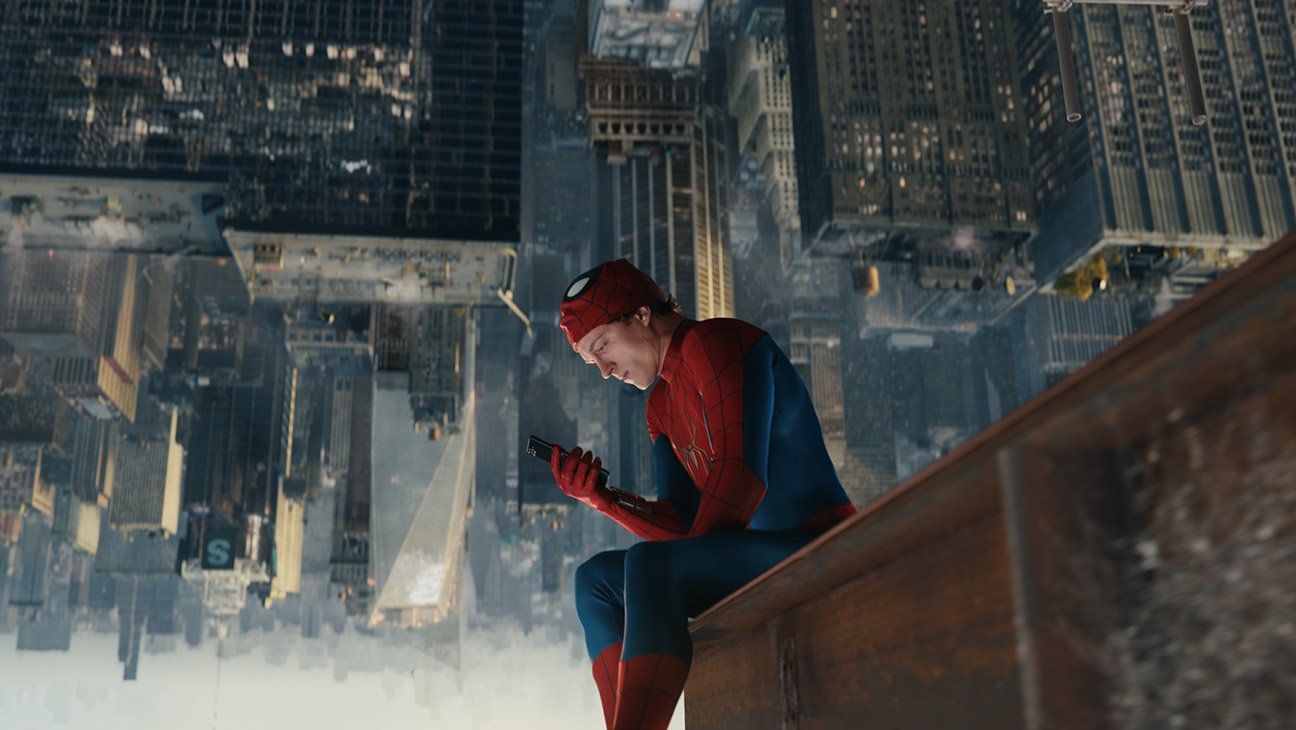
Brand New Day pulled in $70 million to top the domestic box office for its third consecutive frame. This adds to the film’s historic run as it lands the second-best third weekend ever, behind only the $90.2 million that Star Wars: The Force Awakens scored in its third weekend after opening in late 2015.
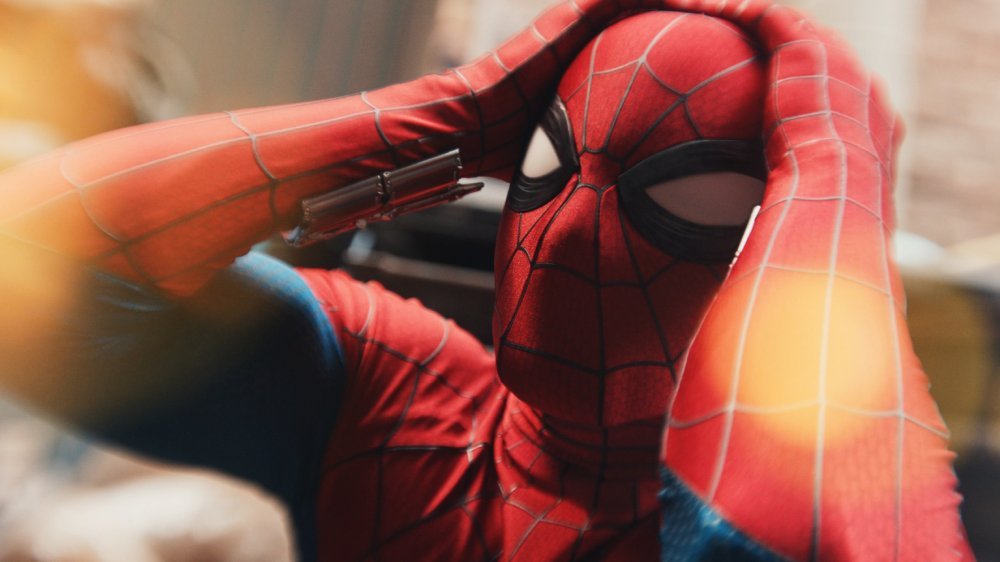
Starring Tom Holland and Zendaya, Spider-Man: Brand New Day hits a North American total of $785.8 million for its first 17 days to rise to No. 4 on the all-time domestic chart, surpassing Avatar at $785.2 million. Next on the list at $814.8 million is 2021’s Spider-Man: No Way Home, which marks Holland’s previous lead turn as the Marvel web-slinger.
Over the weekend, the latest Spidey film also crossed the $2 billion mark globally as the second-fastest movie to do so — behind only Avengers: Endgame — and the eighth feature to ever hit the milestone. Brand New Day currently holds a $2.022 billion worldwide sum, moving it past No Way Home as Sony’s biggest title ever. No Way Home had earned $1.9 billion after opening in December 2021 and was initially seen as tough to match, thanks to the buzz surrounding the return of past Peter Parkers in Tobey Maguire and Andrew Garfield.
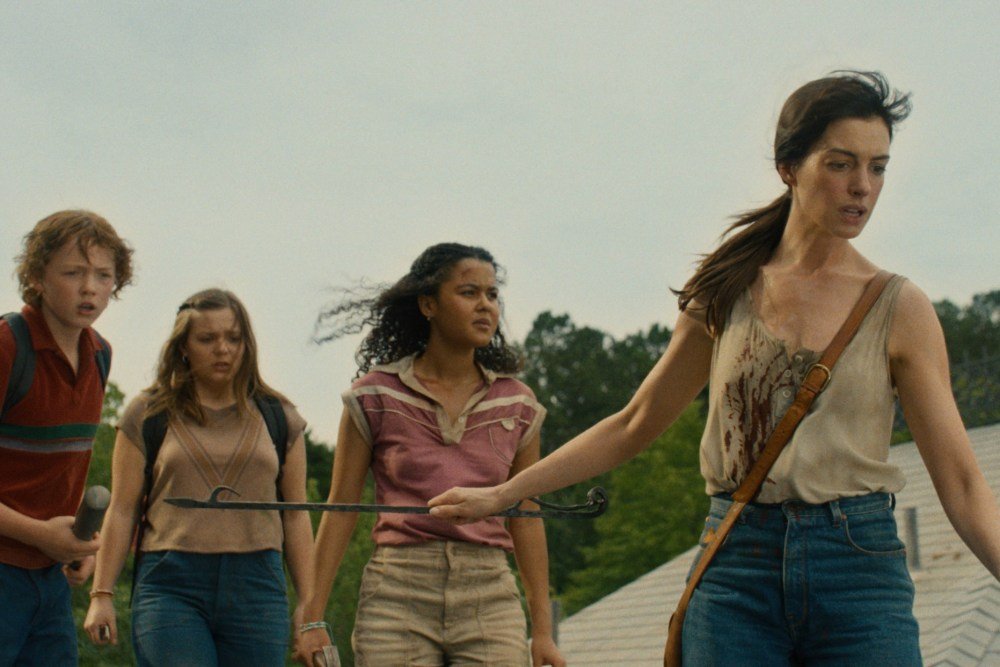
Warner Bros.’ dinosaur-centric sci-fi survival feature The End of Oak Street opened to $21 million domestically and currently stands in third place for the frame, although that could shift by Monday. Earning a B CinemaScore from audiences, David Robert Mitchell‘s film launched in 3,400 North American theaters and carries an $80 million production budget. Overseas, it added around $26 million from 74 international markets.
Anne Hathaway and Ewan McGregor star in the movie about a family in the early 1980s whose suburban neighborhood has landed in a place teeming with prehistoric predators. It holds an 86 percent Rotten Tomatoes approval rating from critics, while its audience score stands at 78. In his review of The End of Oak Street for The Hollywood Reporter, chief film critic David Rooney called the movie “mindlessly entertaining in a big-dumb-fun kind of way.”
PAW Patrol: The Dino Movie chased down $20.5 million domestically for Paramount Pictures in its opening weekend, currently in fourth on the chart. Earning an A CinemaScore from audiences to match what the previous sequel PAW Patrol: The Mighty Movie received, Dino Movie is the third feature in producer Spin Master Entertainment’s animated franchise and opened in more than 3,500 locations in North America. It has added $48.5 million from 52 overseas markets and has a $39.5 million production budget.
Mckenna Grace, Jennifer Hudson, Fortune Feimster, Jennifer Hudson and Snoop Dogg are among the voice stars for director Cal Brunker’s film that brings the Paw Patrol canine heroes to a world containing dinosaurs. The previous sequel, 2023’s The Mighty Movie, opened to $22.7 million domestically in late September. That project’s $205 million global run improved upon the $144 million worldwide total for 2021’s original PAW Patrol: The Movie, which adapted the series that first launched on Nick Jr. in 2013.
PAW Patrol: The Dino Movie
Paramount Pictures /Courtesy Everett Collection
Paramount Animation has been led since the start of the year by president Jennifer Dodge, who joined Spin Master in 2009 and has helped guide the PAW Patrol world, including serving as a producer for the films. PAW Patrol: The Dino Movie holds an 81 percent critics score on Rotten Tomatoes, with its audience rating at 96 percent approval. THRcritic Frank Scheck wrote that, “while the material is thoroughly juvenile, the films impart valuable messages to their impressionable viewers.”
Universal’s The Odyssey remained at No. 2 in its fifth weekend with $23.2 million to bring its domestic cume to $504.6 million. Now standing as Christopher Nolan’s highest-grossing title worldwide, the mythological epic added $98.2 million overseas, including $36.6 million from its debut weekend in China, to push its global total to $1.29 billion.
Rounding out the top five was music documentary Katseye: Wild Hearts. Director Nadia Hallgren’s feature about the girl group opened to around $3.8 million for the weekend from 724 North American screens.
Focus Features’ Six: The Musical Live! grossed $3 million from 1,462 theaters domestically. The filmed stage capture features the original West End cast of the Tony-winning musical.
Opening in 632 North American theaters from Black Bear was The Rivals of Amziah King, as the thriller starring Matthew McConaughey grabbed $1 million over the weekend.
Also opening theatrically this weekend were the Kristen Stewart-led stoner comedy The Wrong Girls and the Green Day-inspired comedy Nimrods, with Mason Thames and Grace.
More to come.
This story was first published on Aug. 15 at 9:02 a.m.
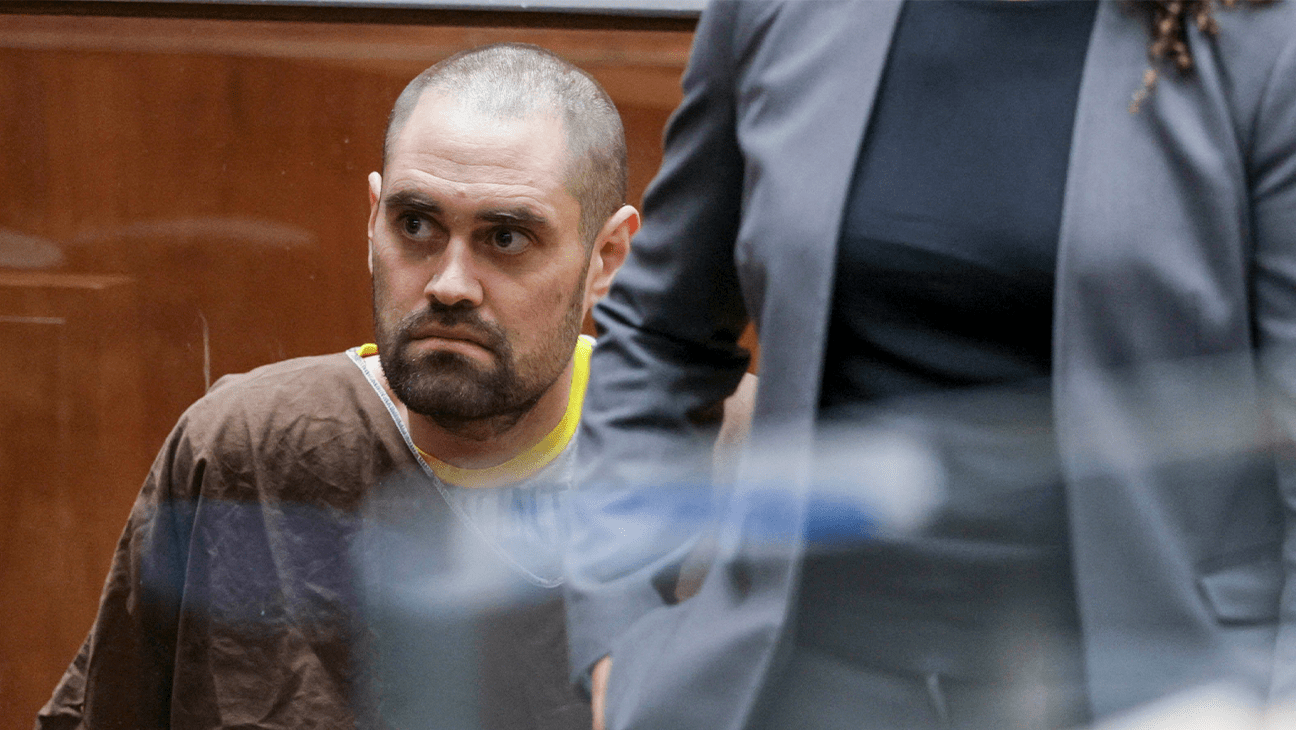
Nick Reiner‘s petition to access the $1.5 million trust fund, as he faces murder charges in his parents’ killings, has been blocked by trustees.
Reiner, 32, has been indicted for the murders of his parents, Rob Reiner and Michele Singer Reiner, in their Brentwood home in December 2025. He pleaded not guilty to the initial murder charges in February as well as to the new charges added on Wednesday and remains in custody in L.A.
He filed a probate petition in June to access some of the trust, which his late parents established, to rehire powerhouse attorney Alan Jackson to defend him in his upcoming criminal trial. Jackson withdrew from his legal defense in January, and Reiner was later assigned a public defender.
In new court papers, obtained by The New York Times, a professional fiduciary overseeing the fund opposed Reiner’s request, citing the “slayer statute,” a California law that prevents a “person who feloniously and intentionally kills the decedent” from inheriting “any property, interest, or benefit under a will of the decedent, or a trust created by or for the benefit of the decedent.”
“California has enacted no exception permitting a killer’s inheritance to be used for criminal defense costs,” Lauriann Wright, a lawyer for the professional fiduciary, Jodi Pais Montgomery, wrote in the filings.
Wright also wrote that the funds would be transferred to Nick’s siblings, Romy and Jake Reiner, under the “slayer statute.” She added that although Reiner is presumed innocent pending the trial, releasing the funds now would be “irreversible.”
Anita P. Wu, an attorney for Mr. Reiner, wrote in a statement to the Times, rejecting the claim that the California law applies in this case. “The slayer statute requires a determination, not a mere accusation,” she wrote. “Nick is presumed innocent and has been convicted of nothing.”
In Reiner’s June petition, he stated that a portion of the trust was to be distributed to him on his 30th birthday and the remaining funds at age 35. He claimed he did not receive any distribution when he turned 30 in 2023, according to the filing.
Reiner’s next scheduled court appearance is on Sept. 15.
New day, new box office milestone for Sony’s latest Spidey adventure.
“Spider-Man: Brand New Day” has surpassed $2 billion in global ticket sales, eclipsing the rare benchmark after just three weekends of release. The comic book adventure, starring Tom Holland as Marvel‘s neighborhood web-slinger, has grossed $785 million in North America and $1.23 billion overseas for a grand total of $2.022 billion.
The newest “Spider-Man” is one of eight films in history to reach the $2 billion club, joining the small-but-mighty company of 2009’s “Avatar” ($2.9 billion), 2019’s “Avengers: Endgame” ($2.7 billion), 2022’s “Avatar: The Way of Water” ($2.3 billion), 1994’s “Titanic” ($2.2 billion), 2015’s “Star Wars: The Force Awakens” ($2.07 billion) and 2018’s “Avengers: Infinity War” ($2.03 billion). (Meanwhile the prior “Spider-Man” installment, 2021’s “No Way Home,” was thisclose with $1.9 billion but missed the milestone because the superhero adventure didn’t play in China.) Notably, “Brand New Day” is the second-fastest film to reach the threshold after “Endgame,” which got there after 11 days.
“Spider-Man: Brand New Day” has been shattering expectations since landing in theaters at the end of July. The movie, Holland’s fourth solo outing as Peter Parker, captured a record-setting $355 million in North America and staggering $932 million globally in its opening weekend and then cleared $1 billion after just six days of release.
There’s no question that “Brand New Day” will leave the big screen as one of the highest-grossing movies of all time (in fact, it’s already the eighth-biggest worldwide release ever). But where will ticket sales ultimately wind up? With stratospheric enthusiasm and encouraging staying power, box office watchers are wondering whether “Brand New Day” could become the only movie to ever reach $1 billion domestically (“Star Wars: The Force Awakens” currently stands as the biggest North American release ever with $936 million) and maybe… possibly… potentially even the first to hit $3 billion globally.
Dog days of summer? This year’s August at the box office didn’t get the memo.
This popcorn season is ending with a bang rather than the usual whimper as “Spider-Man: Brand New Day” and “The Odyssey” continue to pack in crowds. Meanwhile two new movies, Warner Bros. prehistoric sci-fi mystery “The End of Oak Street” with Anne Hathaway and Ewan McGregor and Paramount’s animated sequel “PAW Patrol: The Dino Movie,” each debuted above $20 million.
Despite those newcomers, “Spider-Man: Brand New Day” remained the No. 1 in North America with $70 million in its third weekend of release. Sony and Marvel’s comic book epic, starring Tom Holland as Peter Parker, has been a behemoth with $785 million domestically and $2.02 billion globally to date. It’s the second-fastest film to join the $2 billion club after 2019’s “Avengers: Endgame,” which accomplished the rare feat in 11 days.
“The Odyssey” stayed in second place with $23.2 million in its fifth weekend of release. Universal’s big-budget Greek epic has generated a staggering $504.6 million in North America and $1.29 billion worldwide to date. That’s after debuting this weekend in China to a solid $36.6 million. It’s the second-highest-grossing movie of the year after “Spider-Man” as well as director Christopher Nolan’s biggest of all time — an especially impressive feat for a drama that’s nearly three hours long and adapted from a poem that’s thousands of years old.
Hollywood is celebrating because this summer box office is already the biggest since “the before times,” with revenues surpassing $4 billion for only the second time since COVID. Domestic ticket sales stand at $4.24 billion from May 1 through Aug. 16, running 23% ahead of the same point in 2025 and nearly 6% ahead of 2019. There’s a chance that popcorn season even eclipses the all-time summer record set by 2013 with $4.755 billion (not adjusted for inflation), according to Rentrak.
“This August feels particularly notable with ‘The Odyssey’ and ‘Spider-Man: Brand New Day’ providing blockbuster momentum,” says Rentrak’s head of marketplace trends Paul Dergarabedian. “The final weeks of summer could provide a historic home stretch to what has already been a remarkable summer movie season.”
“The End of Oak Street” launched in third place to a middling $21 million from 3,446 venues. The PG-13 movie also collected $26 million overseas for a global tally of $46 million. It’s a tepid start for the $80 million-budgeted movie, so the studio will rely on positive word-of-mouth to help with staying power. However critics seemed to like “Oak Street” more than audiences; the film holds a “B” grade on CinemaScore and 84% on Rotten Tomatoes. David Robert Mitchell wrote and directed the PG-13 survival thriller, which follows a mysterious cosmic event that transports a suburban family to prehistoric times.
“This is late summer escapist entertainment, but right now audiences are still escaping to ‘Spider-Man,’” says David A. Gross, who publishes the box office newsletter FranchiseRe.
Unless “Oak Street” rebounds, it’ll be the latest underperforming tentpole for Warner Bros. following June’s “Supergirl” and this spring’s “The Bride.” It puts pressure on the studio’s Tom Cruise-led comedy “Digger,” which opens in October and carries a substantial $130 million price tag.
Fourth place went to “PAW Patrol: The Dino Movie” with $20.5 million from 3,500 North American theaters. Those ticket sales are even with the studio’s prior “PAW Patrol” sequel, 2023’s “The Mighty Movie,” which ignited to $22 million and eventually climbed to $205 million globally against a $30 million budget. “The Dino Movie” carries a slightly larger $40 million price tag, which was split between Paramount and Spin Master. Overseas, the newest “PAW Patrol” has earned $48.5 million for a global tally of $69 million.
Rounding out the top five was “Katseye: Wild Hearts,” a documentary about the girl group, with $3.8 million from just 724 screens.
Fittingly, “Six: The Musical Live” debuted in sixth place with $3 million from 1,462 locations. It’s a filmed version of the popular Broadway show, and initial returns are similar to other recent live-captures like “Waitress: The Musical ($2.6 million) and “Merrily We Roll Along” ($1.3 million). Focus Features is releasing “Six,” which lands a few weekends after Bleecker Street’s “Hadestown” established an opening weekend record among Broadway live-captures with $10.2 million. “Hadestown” has been a surprise hit with $20 million domestically since late July.
Elsewhere on box office charts, the Angel Studios historical drama “The Brink of War” opened in seventh place with $2.6 million from 2,083 theaters. Set during the Reykjavík Summit of 1986, the movie stars Jeff Daniels as Ronald Reagan as he races against time to salvage a deal with Soviet leader Mikhail Gorbachev (Jared Harris) to dismantle nuclear arsenals. Audiences liked the film, which secured an “A” grade on CinemaScore.
“This is a weak opening for a war drama,” Gross says. “Angel Studios knows how to get this audience to the theater, but this title is not getting Angel’s usual traction.”
Another newcomer, Black Bear’s crime thriller “The Rivals of Amziah King,” starring Matthew McConaughey, earned a decent $1 million from just 632 theaters. The well-reviewed movie follows McConaughey as a honeymaker and born-again Christian whose former foster daughter reappears in his life.
Meanwhile Universal’s R-rated comedy “One Night Only” failed to rebound, bringing in $2 million in its second weekend, a 61% decrease in ticket sales. The movie, which takes place during the one night a year when premarital sex is legal, has grossed $10 million against a $25 million budget.
“Forgotten Spaceman,” the documentary short by BAFTA-nominated filmmaker Elham Ehsas that won the Leopard of Tomorrow (International Competition) award at Locarno’s Junior Jury Awards, has added Khan & Kumar Media and Prism Entertainment as executive producers ahead of its Toronto Film Festival premiere next month.
The new executive producers are Sharib Khan and Vikas Kumar of Khan & Kumar Media and Shruti Ganguly, Priya Giri Desai and Megha Kadakia of Prism Entertainment. The film premiered at Locarno and is set for its North American premiere at Toronto.
“Forgotten Spaceman” is executive produced by Jack Thomas O’Brien of Ken Loach and Rebecca O’Brien’s Sixteen Films and Catherine Tschaepe, alongside the newly announced producers. It is produced by Lorraine Bhattachary of MonoFilm Productions, with Dheeraj Agnihotri, who worked on “Holy Curse,” serving as associate producer. María Vera of Kino Rebelde is handling international sales and festival strategy.
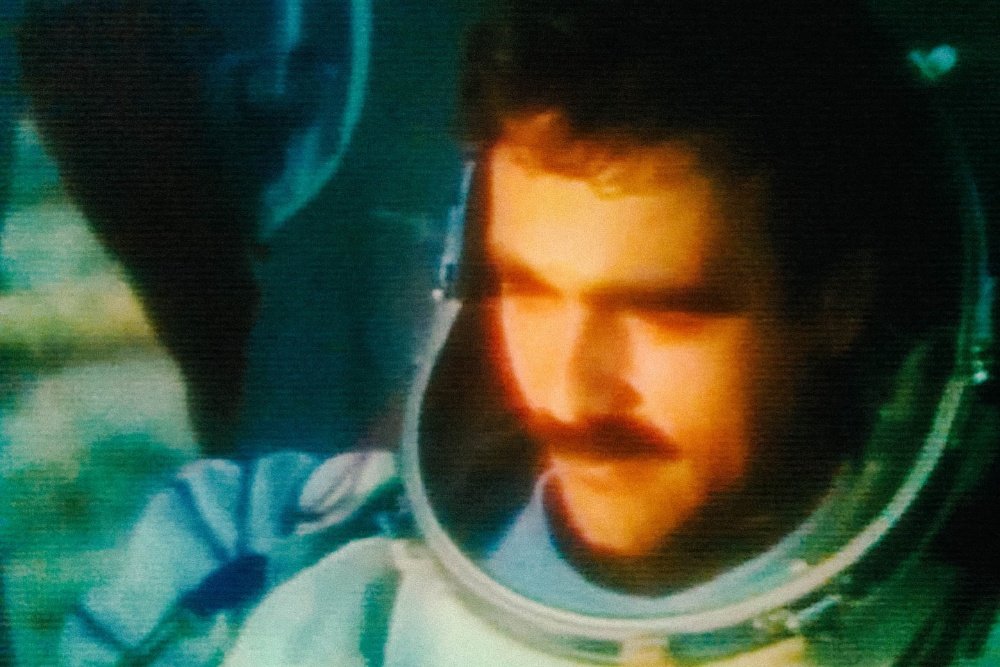
Written, directed and edited by Ehsas, the documentary tells the story of Abdul Ahad Momand, Afghanistan’s first and only astronaut. Momand flew to the Mir space station in 1988, at a moment when Afghanistan was nearing collapse, offering the country a rare spark of hope. During an orbital call home to his mother, he became the first person to speak Pashto in space, making it the fourth language ever used there. The documentary, made decades later, follows Ehsas as he discovers his own unexpected ties to Momand’s story, threading themes of home, identity, exile and belonging.
Director Elham Ehsas said he was delighted to welcome the new partners at such an exciting stage of the film’s journey. “As we continue sharing Abdul Ahad Momand’s remarkable story with audiences around the world, it’s incredibly encouraging to have such passionate partners alongside us,” Ehsas said. “I hope the film continues to spark conversations about home, identity, exile and belonging wherever it travels.”
Producer Lorraine Bhattachary said building the right team around a film is an important part of its journey. “We’re thrilled to reach this next chapter together,” Bhattachary said. “It’s been wonderful bringing these partnerships together, and we’re excited to continue sharing the film with audiences as its festival journey continues.”
Sharib Khan and Vikas Kumar of Khan & Kumar Media said “Forgotten Spaceman” is a film that reminds them why stories matter. “It uncovers a remarkable chapter of history that many of us never knew existed, while remaining deeply personal and profoundly human. Beyond the story of Afghanistan’s first astronaut, it explores universal themes of memory, identity, belonging and the stories that risk being forgotten. At Khan & Kumar Media, we’re drawn to stories that resonate across cultures and borders, and ‘Forgotten Spaceman’ does exactly that. We’re delighted to support its journey to audiences around the world.”
“Elham’s movie contains volumes of Afghan, South Asian and world history while being so deeply personal and profound, forcing us to reconcile ourselves with disruptions that are beyond one’s control. We are thrilled to join ‘Forgotten Spaceman’ as executive producers as we bring this story to audiences who will reconnect with it and those who will discover it for the first time,” added Ganguly, Desai and Kadakia of Prism Entertainment.
Ehsas is a BAFTA-nominated and Academy Award-shortlisted filmmaker whose short “Yellow” received a BAFTA nomination in 2024. His follow-up short, “There Will Come Soft Rains,” won best film at both Raindance and Encounters Film Festival, while his debut feature, “Our Kind of Love,” is in development with the BFI. As an actor, he recently appeared in David Mackenzie’s action thriller “Fuze” and worked as second unit director on “The Crown.”
Khan & Kumar Media is an independent Mumbai production house that actor Vikas Kumar launched together with Sharib Khan’s New York-based Ammi Media. Its slate includes the Venice Horizons competition premiere “Songs of Forgotten Trees,” for which Anuparna Roy won the best director prize in 2025, and this year’s Karlovy Vary selection “The Ink-Stained Hand and the Missing Thumb.” The company returns to Venice’s Horizons competition this year with “Lovers in the Blue Night.”
Prism Entertainment, founded by Ganguly, Desai and Kadakia, focuses on character-driven storytelling spanning film, television and digital platforms. Its credits include the Oscar-nominated documentary “To Kill a Tiger” and Ravi Kapoor’s upcoming feature “Patel,” made in partnership with Camelback Productions. Khan & Kumar Media and Prism Entertainment previously teamed as executive producers on the Oscar-qualifying short “Holy Curse.”
Back in 2013, actor George MacKay and director Paul Wright paired up for “For Those in Peril,” an atmospheric study of youthful alienation, trauma and psychological collapse in small-town Scotland that sealed both men’s place on the U.K. industry “ones to watch” list. Since then, MacKay’s career has gone from strength to strength, while Wright has made just one film in the interim — 2017’s archival doc “Arcadia.” It speaks to MacKay’s continued commitment to challenging British independent fare that he returns for Wright’s long-awaited second narrative feature. Both his stardom and his fearless approach are assets to “Mission,” an atmospheric study of slightly less youthful alienation, trauma and psychological collapse that confirms the director’s stylistic vigor and seriousness of purpose as a storyteller.
It doesn’t necessarily advance them, however. Uncompromisingly downbeat in its portrayal of an aimless Scottish service worker searching not just for a purpose in life, but a reason to live at all, “Mission” impresses with its abrasive intensity of mood, enforced through jagged editing rhythms and dreamily disorienting archival inserts — signalling a troubled mind plagued by intrusive thoughts. In subject, ambience and form, the new film does feel heavily bound to its maker’s past work — including his BAFTA-winning 2010 short “Until the River Runs Red” — minus the mythic overtones of his first feature. Wright’s filmmaking remains arresting, if not altogether surprising; “Mission” will count on MacKay’s profile to attract distributor interest following its competition premiere in Edinburgh, but it’s still no easy sell to audiences.
With jittery body language and an unnervingly directionless gaze, MacKay immediately conveys the anxious unrest of his character Dylan, even before his interior monologue clarifies the degree of his inner torment: “When I was seven, I died for four minutes,” he says in voiceover, alluding to a formative childhood accident. “I’ve spent my life wishing I could feel that way again.” Certainly, Dylan appears to live more in the past than the present, an impression assisted by editors Michael Aaglund and Jen Mackie, who constantly slice through proceedings with oblique, stream-of-consciousness flashes of home-movie memory, shot on hazy, grainy video stock.
The bulk of these memories are connected to Dylan’s older sister Claire, from whom he was once inseparable; played as an adult by Rosy McEwen (“Blue Jean”), she’s now present largely as a weary, defeated voice on the other end of the phone, at a loss as to how to help her brother through another episode. It’s left to the audience to infer exactly what has transpired between them, but largely through omission, Wright’s script effectively articulates the burden of mental illness on family members. Dylan’s friends, meanwhile, are few to none; Becky (Emma Naomi), a kindly colleague at the upmarket hotel where he works as a waiter, humors him, but it’s painfully clear that their interactions mean more to him than they do to her.
Becky, in fact, is the only thing getting him through a job he can’t bear. At a performance review meeting with the hotel’s smarmy CEO James (Emun Elliott), he finally admits that he doesn’t feel like himself in the workplace, and abruptly walks — though he can’t quite quit hanging around the place, missing what scant human connection he once had. After he decisively gives himself one week to find a reason to continue living, his behavior spirals into more extreme actions: stealing and freeing a monkey from the zoo, aggressively confronting strangers, participating in BDSM sex. These are depicted in varyingly surreal vignettes, to the point that it becomes hard to separate Dylan’s everyday and fantasy lives; Dario Swade’s fuzzily layered, industrially inflected sound design amplifies the claustrophobic confusion, as does DP Nick Cooke’s nervily handheld lensing, heavy on clammy closeups.
If this all amounts to a tough sit, MacKay’s natural vulnerability as a performer offers a kind of lifeline to viewers, even as Dylan’s behavior grows ever more erratic and offputting: The actor, often seemingly hunched over with the sheer agony of his character’s interior wounds, is easy to care about when much else here is hard to parse. Sympathetic but gutsy in his embrace of a character’s unflattering damage, he’s a vital, humanizing ally to Wright’s abrasive style of portraiture; one hopes they collaborate again, and sooner.