Category: Entertainment

  • Wild! Mattel Sets UNO Card-Game Competition Series to Stream on Twitch

    Wild! Mattel Sets UNO Card-Game Competition Series to Stream on Twitch

    Mattel Inc. said Wednesday that it’s launching the UNO Championship Series, a live-event competition that will stream live on Twitch.

    The company said the event will transform the card game “into an adrenaline-fueled tournament with the unpredictable, chaotic fun that has made UNO a true cultural phenomenon.”

    Qualifying rounds will take place both in person and on digital platforms, with in-person events set for Oct. 3 in Kissimmee, Florida; Oct. 10 in Chicago; and Oct. 17 in El Segundo. In addition, fans across the U.S. can also earn a place in the championship through free weekly qualifying tournaments in the UNO Mobile app from Aug. 31-Sept. 27 

    The series will culminate with the UNO Championship Series Tournament on Nov. 11 in Los Angeles, featuring UNO players from around the world in an event live-streamed on Twitch. The winner will take home a $50,000 grand prize. 

    “At its core, UNO has always been about creating unforgettable moments around the table from epic comebacks to game-changing Draw 4s,” said Katie Buford, vp and global head of Mattel Games. “The 2026 UNO Championship Series Tournament brings that excitement to the biggest stage yet, giving fans around the world a front-row seat as elite players battle it out to become this year’s UNO Champion.”

    Coinciding with the event, UNO has released a new line of Championship Series products.

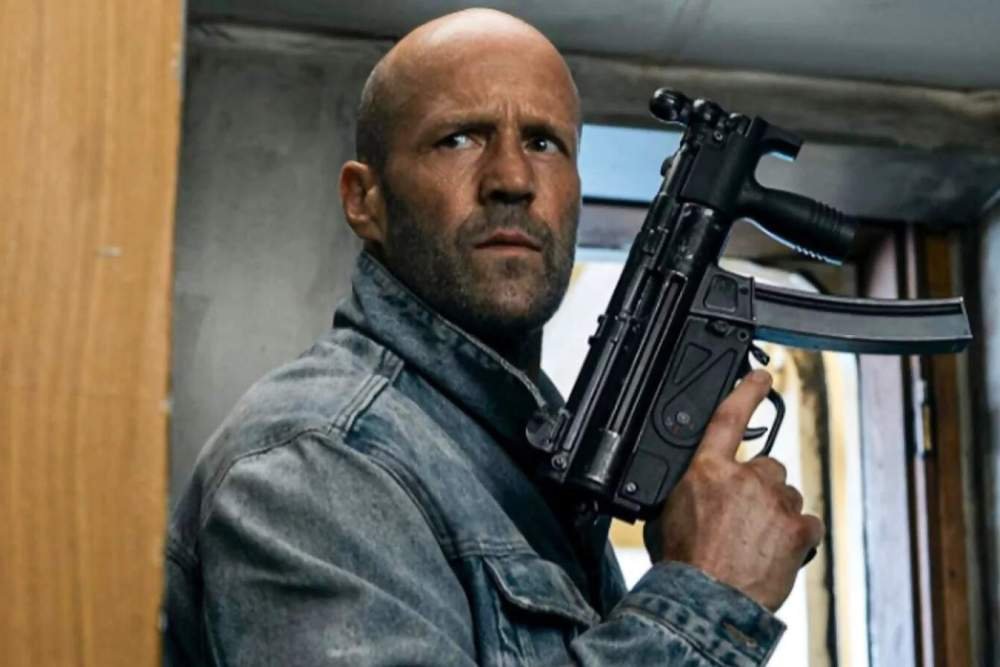
  • ‘Mutiny’ Review: Jason Statham Dies Hard on a Cargo Ship in a Thriller of Impeccable Bring-the-Pain Timing

    ‘Mutiny’ Review: Jason Statham Dies Hard on a Cargo Ship in a Thriller of Impeccable Bring-the-Pain Timing

    By the early ’90s, it had become clear that “Die Hard” was the most paradigmatic thriller of its era, imitated in scores of knockoffs that kept the spirit but changed the locale. Thus, we got “Die Hard on a Plane” (“Passenger 57,” “Air Force One”), “Die Hard on a Bus” (“Speed”), “Die Hard on a Train” (“Under Siege 2: Dark Territory”), “Die Hard in the White House” (“Olympus Has Fallen”), and the one that finally ran the cycle aground — “Die Hard on a Boat,” which served the first “Under Siege” well enough but stalled the overblown, too-slow-for-speed “Speed 2: Cruise Control.”

    But “Mutiny,” a revenge thriller set aboard a giant cargo ship, shows you that there’s life in the “Die Hard on a Boat” concept. The film makes you think of Bruce Willis in other ways too, since its star, Jason Statham, boasts a macho chrome dome and offs his enemies with a blithe viciousness that evokes Willis at his ruthless best.

    From Sly and Arnold to “John Wick,” mano-a-mano fight scenes in movies tend to revel in their showdown-to-the-death choreography, the more elaborate the better. “Mutiny” is different. The killings happen as fast as Cole Reed (Statham), a fallen-London-cop-turned-bodyguard out to avenge the murder of his Bangkok tycoon boss, can make them happen.

    With bring-the-pain timing, he smashes heads and snaps arms and uses whatever cutting tools are available, at one point ripping a foe’s cheek with the hook of an open lock; moments later, when he jabs a dagger deeper into that same wound, it’s the essence of efficiency. Cole, who has to maneuver his way around 20 savage crew members, each of whom will need to be killed, doesn’t waste a homicidal movement. Yet it all feels brutally spontaneous. At one point he smashes the thug he’s holding, pauses to machine-gun another, coldcocks the original guy, then guns down two more, all in the space of nine seconds. The way Statham works, we should call this “Die Easy.”

    In the film’s opening half hour, set in the luxe steel-and-marble corporate echelons of Bangkok, Tibu Campallo (Ramon Tikaram), the worldly but now retiring Thai shipping-magnate boss Cole has become close to (the two love their chess games), celebrates the sale of his company, though a traitor within has other plans. As Cole is driving Tibu back from a passing-of-the-torch party, the two are ambushed, and Tibu is killed. The cops are in on it; it’s a major conspiracy. (Is Tibu’s ingenuous son, played by Chaneil Kular, in on it too? The film keeps you guessing.) Cole sneaks his way aboard the Artemis, the cargo ship on which one of the conspirators is set to make his escape, and it’s there that he discovers an ever darker conspiracy, in the form of a shipping container that’s full of desperate human cargo from Thailand, most of them children.

    That feels like a lift from Angel Studios, but in its way it enriches the revenge plot. Cole isn’t just getting even — he’s saving the world from some very sick evil. His ally is Angie (Annabelle Wallis), the ship’s third mate, who’s an embattled innocent in all this. His antagonist is Marko, the ship’s captain, an amusingly middle-aged European bruiser played by the Danish actor Roland Møller in tattoos and an elegant beard, with an accent that’s a little bit Arnold, a little bit this-is-Matthias-Schoenaerts-in-15-years. He’s no Alan Rickman, but he’ll do.

    “Mutiny” was directed by Jean-François Richet, who made the pretty good Gerard Butler movie “Plane,” and here, once again, he shows a flair for staging extreme misanthropic violence with a human touch. Richet turns the ship into an enthralling character, with its pipes and catwalks and tunnels and tubes, some of which become weaponry. Statham is one of the film’s producers, and you can tell that he wants you to feel each smashed limb and gunshot to the face. The ship’s crew members are anonymous enough, yet each killing is staged as an instant execution. It’s not that the violence is shocking — it’s that Jason Statham means it. (He’s a true actor of action.) At the preview showing I attended, people near me were laughing at the killings, something I almost never do, but at the climax, when Cole reached for a harpoon gun and used it, I had to give in and chuckle myself. It’s all in the timing — the rhythm of revenge murder that’s perfect, because it’s done by any means necessary. Jason Statham is keeping that dream alive.

  • Hook, An AI-Powered Music Remixing App, Strikes UMG Deal as It Takes Social-Forward Approach to Fan-Created Remixes

    Hook, An AI-Powered Music Remixing App, Strikes UMG Deal as It Takes Social-Forward Approach to Fan-Created Remixes

    In an era where AI music generation has ruptured the music industry, a social-forward music remixing app is aiming to stand out among the rest — with the help of one of the major labels.

    Hook, an AI-powered app where fans can create minute-long clips that remixes or mashes up a licensed artist’s track to share on platforms like Instagram and TikTok, has struck a licensing deal with Universal Music Group to bring aboard a suite of the label’s artist catalogs from its host of sublabels — including Republic Records, Capitol Records, Virgin Music Group and more — for fans to experiment with. The deal expands the yearslong relationship between the two companies, which saw UMG push Hook to iron out its product experience to help convince artists why they should allow the platform’s users to modify their work.

    “What we made sure is that [for] everything created on Hook, the artists have full control around the security needs that they have,” CEO Gaurav Sharma told Variety. “All the things that we had to do in figuring out streaming back in 2010 is effectively what we spent the last two years working on with UMG. So the idea of like I believe these sorts of licenses are possible through collaboration. It doesn’t need to be artists, labels, tech companies fighting each other.”

    The company has spent years since its 2024 launch serving almost as a response to AI generation companies like Suno and Udio, opting against music generation and instead for a fan and social-focused approach to licensed music. Fans can apply filters to songs on the platform and produce “Hooks” to add to their own videos for social media, with the artist retaining ownership of the track and making money off the use of their song.

    It has struck deals with labels such as Glassdoor Records and Downtown Music and has brought on songs featuring artists such as Justin Bieber, Teddy Swims, the Weeknd, Ty Dolla $ign, Kendrick Lamar, Charli xcx and more, a roster that the UMG deal will significantly expand. (Both companies declined to share what new artists will be immediately available.)

    Michael Nash, UMG’s executive vice president, chief digital officer, said the collaboration stemmed from fans’ focus on social-media platforms as a method for engaging with an artist’s work, as social media platforms were a sector for the industry that has been “significantly under monetized and substantially disrupted by short format.”

    “We’re eager to collaborate with innovators that are targeting purpose-built technology to go after some of the predominant use cases that empirically exist right now in the social sphere,” Nash said. “Invoking Oscar Wilde here, if imitation is the sincerest form of flattery, then perhaps co-creation is one of the sincerest forms of fandom.”

    Hook is financially backed by by Khosla Ventures, Point72, Imaginary Ventures and former Warner Music Group CEO Edgar Bronfman Jr.’s Waverley Capital, among others. Bronfman told Variety he viewed Hook as a unique opportunity to marry technology with an artist’s creative intent.

    “That, I think, is very different than what I would call sort of generative AI or AI slop, which is just music’s [that’s] been written, and some AI algorithm changes it up,” he said. “I don’t think that’s a lasting phenomenon. I think people care about artists. They they want to go see artists. They believe in artists, and artists believe in in them.”

    Bronfman wouldn’t comment on WMG’s settlement deal with Suno, leaving that for the labels to figure out. UMG and Sony Music are still in active litigation against Suno for alleged copyright infringement.

    The deal also reflects UMG’s continued investment in the changing era of music consumption, which includes a legal settlement with Udio and, in May, a deal with Spotify to power the streaming service’s AI remixing and covers tool. Nash said the two deals represented “extremely complementary partnerships” in line with UMG’s “partnership portfolio approach.”

    “Hook is enabling the specific, empirically demonstrated, very prominent and popular use cases of fan interaction, and it’s all about social,” Nash said. “It’s just a very specific targeted use case that is unique in our partnership portfolio.”

    For Sharma, Spotify’s approach to remixing represented “validation.”

    “Hook is focused on social, on community-driven creation and consumption,” he said. “When a user creates on Hook and they share to their TikTok, and these creations also exist within communities on Hook, tied to the activities, the feelings expressed in the larger [user-generated content] that that person made. So when we say social music, it’s not just the music; it’s the larger expression that the person has with the video and everything else around it… I believe that people will go to Spotify to hear how artists express themselves through music, and our hope is Hook can be that destination where people hear how social media expresses through music.”

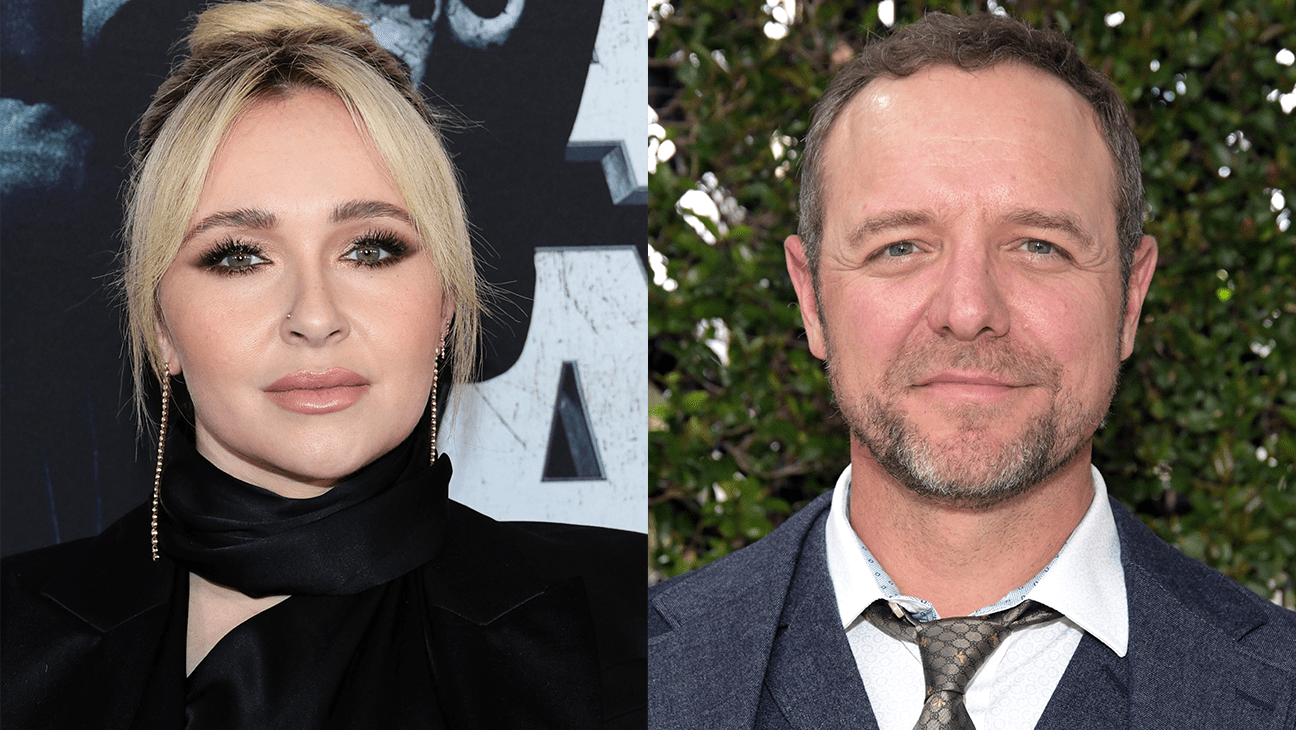
  • ‘A Breed Apart’ Director Recalls Hayden Panettiere’s “Dark” Energy on Set: “She Was Not OK”

    ‘A Breed Apart’ Director Recalls Hayden Panettiere’s “Dark” Energy on Set: “She Was Not OK”

    In the wake of Hayden Panettiere’s death, the director of one of her last films is opening up about his experience with her on set, saying the “energy in her room was pretty dark” at the time.

    The actress, who worked with Griff Furst on his 2025 film A Breed Apart, died on Sunday at age 36 at an apartment complex in Greenville, South Carolina.

    “I had met Hayden about 10 years before that and I knew that she was insanely talented, so when she signed on to do this picture that we were shooting, I was psyched,” Furst began in a video recently posted on Instagram. “I really wanted to work with her.”

    He then recalled realizing “something was off” with Panettiere while filming, making a point to mention the actress’s on-again, off-again boyfriend Brian Hickerson’s presence when he would visit the A Breed Apart set.

    “So I’m on set, and I get word from the movie’s security team who picked her up from the airport that something was off,” Furst continued. “I didn’t think much about it, and so I left set and I walked over to greet her and her boyfriend Brian. He opened the door. Hayden was incredibly sweet and gracious and excited to work, but she was not OK.”

    “I’m not going to get into the details of why that was, but having worked on over 100 movies and seeing just about everything, it was pretty clear that she wasn’t okay and the energy in her room was pretty dark,” the director added.

    Amid the investigation into Panettiere’s death, a police report said Hickerson and his brother were at the scene when the actress was pronounced dead by authorities. The Greenville County Coroner’s Office said that her cause and manner of death remain pending further investigation, and that there were no obvious signs of trauma. However, officials were reportedly heard discussing an “overdose” and “cardiac arrest” on the 911 call at the time of her death.

    Panettiere had been open about her struggles with alcohol and opioid addiction, further detailing her experiences in her memoir, This Is Me: A Reckoning, released earlier this year. In the book, she also detailed physical abuse by Hickerson.

    The actress’ mother, Lesley Vogel, also recently broke her silence on her daughter’s death, criticizing Hickerson, saying, “This person in her life that we have been trying to get rid of for quite some time was with her at her death and that was Brian Hickerson.”

    In Furst’s Instagram video, the director added that he “believed she was getting better” and that he and Panettiere “talked about doing another picture together recently, which is what makes this shitty news hit even harder.”

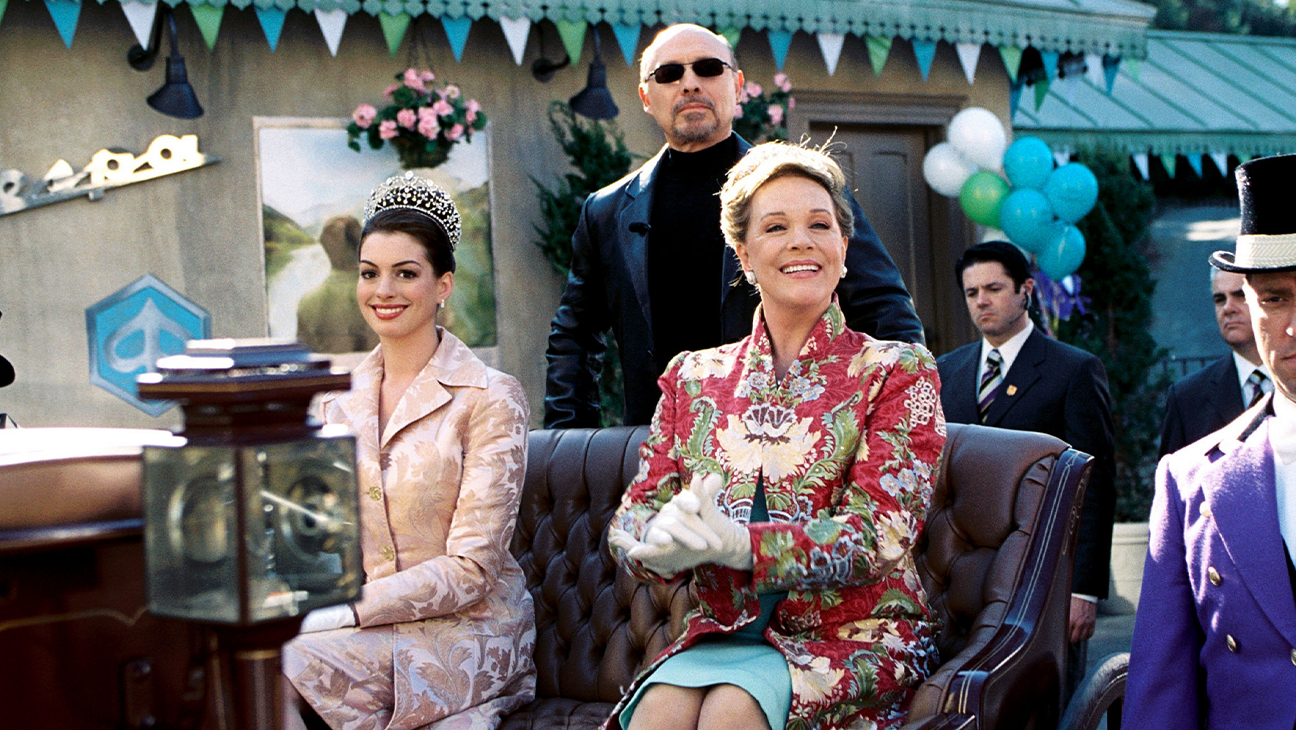
  • Anne Hathaway “Pushed Really Hard” Trying to Get Julie Andrews to Return for ‘Princess Diaries 3’

    Anne Hathaway “Pushed Really Hard” Trying to Get Julie Andrews to Return for ‘Princess Diaries 3’

    Anne Hathaway is revealing that she “did push really hard” trying to get Julie Andrews to reprise her role as Queen Clarisse Renaldi in the upcoming third Princess Diaries installment.

    During a recent interview with Entertainment Tonight after receiving her Disney Legends Honor at the D23 Expo, the Oscar winner reacted to Andrews saying she doesn’t “think I should be a part of” Princess Diaries 3.

    “First of all, I just want to say if she has a change of heart, we’re down,” Hathaway said. “Just anything, really. But we also want to be respectful. Like, for goodness sakes, if anybody has contributed to the world of entertainment and to our collective joy, it’s her. Whatever she wants, we completely understand.”

    However, The Odyssey actress added, “We did push really hard to see if she would want to do it.”

    During an interview with The Hollywood Reporter earlier this month, Andrews explained why she doesn’t see herself stepping into Queen Clarisse Renaldi’s shoes again. “I think the absolute truth is that I think I’m really past all that now,” The Sound of Music star confessed. “I’m not completely retired, but it’s a different kind of work that I do these days — [writing] books, and I do a lot of recording of podcasts and voiceovers. But truly, I don’t think I should be a part of it.”

    While details surrounding Princess Diaries 3 are being kept under wraps, the movie is set to be a continuation of the film series, which centers on Mia Thermopolis (Hathaway), who finds out that she is the heir apparent to the throne of Genovia. At the end of the second installment, The Princess Diaries 2: Royal Engagement, Mia is crowned the queen of Genovia single after Parliament abolishes the law requiring that a queen be married first. However, she also finally gets together with Nicholas Devereaux (Chris Pine) after calling off her wedding to Andrew Jacoby (Callum Blue).

    Hathaway also told ET that she just wants the third installment “to be fun” for those who have been fans since the original film released in 2001.

    “I want the women who were six when the first one came out — a lot of whom are now mothers themselves, maybe even with six-year-olds — I want them to feel like they’re bringing their children to something that mattered to them, a core memory for them, something that was a part of their heart and their lives,” she said. “And that means doing it justice. And that means taking the time that it takes to really build it right. That’s a lot of pressure, but I feel like this is a great team.”

    Adele Lim has been tapped to direct the feature, with Flora Greeson writing the script. Aadrita Mukerji had written an earlier draft of the screenplay before the production team pivoted in a different direction.

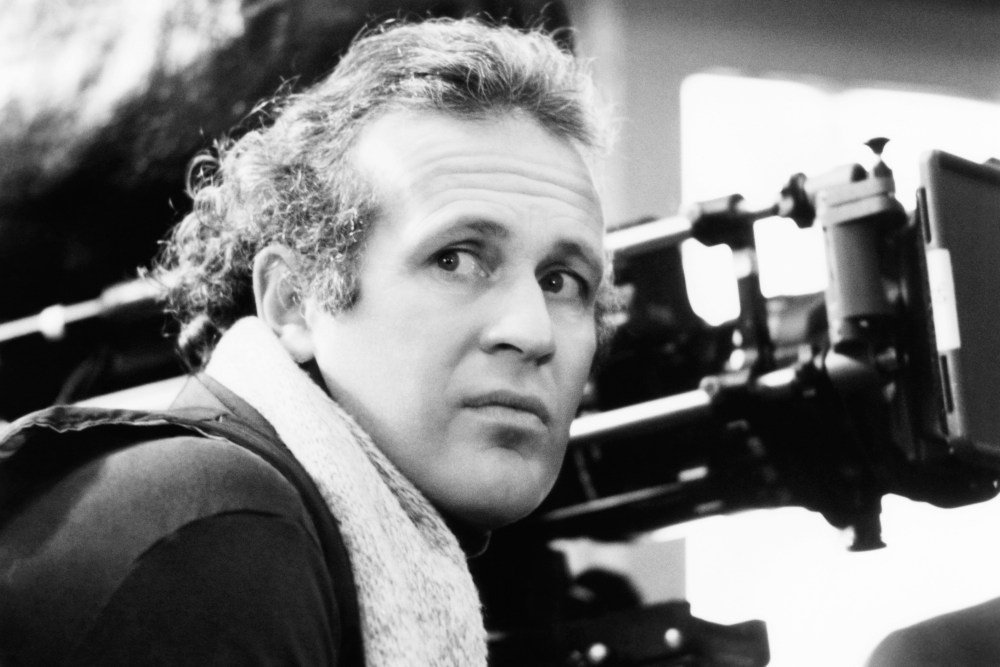
  • John Irvin, Director of ‘Hamburger Hill,’ ‘Tinker Tailor Soldier Spy,’ Dies at 86

    John Irvin, Director of ‘Hamburger Hill,’ ‘Tinker Tailor Soldier Spy,’ Dies at 86

    John Irvin, the British director of “Hamburger Hill,” the “Tinker Tailor Soldier Spy” miniseries and 1981’s “Ghost Story,” died Aug. 11. He was 86. 

    His producers confirmed he died at the home of his sister-in-law in the U.K. 

    The award-winning director’s career spanned several decades, each punctuated by a different focus. By the end of his career, Irvin had amassed over 30 films and three BAFTA nominations, with notable credits including “Turtle Diary,” “A Month By the Lake,” “City of Industry” and “Widow’s Peak.” 

    His 1987 Vietnam film “Hamburger Hill,” which starred Don Cheadle, Dylan McDermott, Michael Boatman, Steven Weber and Courtney B. Vance, is seen as one of the most realistic depictions of that war.

    Irvin, along with his twin brother David, was born in Newcastle upon Tyne, Northumberland on May 7, 1940. He graduated from the London Film School in the late 1950s.

    In the 1960s, he created numerous documentaries, including his 1967 short “Mafia No!,” about Italian social activist Danilo Dolci, which was nominated for a BAFTA Award for Best Short Film. Many of these documentaries were created for his own company Mithras Films, the BBC and ITV. 

    “When I did my documentaries, I would have dealings with the security services from time to time but that was MI6 not MI5,” Irvin said of his time shooting a documentary on the North Yemen War. “When I came back from Yemen, where I shot a documentary on the Civil War I was debriefed. There wasn’t much I could tell them, but I was never part of that world or paid. I was far too left-wing, for a start, but was anti-apartheid, anti-war, anti-nuclear. They were probably well aware of my leftwing activities, so I was certainly not involved in any hanky-panky.”

    In the ’70s, he shifted to television shows and made-for-TV-films. One of the most notable was the BBC miniseries adaptation of John le Carré’s “Tinker Tailor Soldier Spy,” which was nominated for a BAFTA Award for Best Drama Series and a Primetime Emmy Award for Outstanding Limited Series. After working with him, Alec Guinness wrote about Irvin that he “admired a director with balls behind the camera!” 

    By the 1980s and 1990s, he was fully immersed in Hollywood directing big names like Patrick Swayze (“Next of Kin”), Arnold Schwarzenegger (“Raw Deal”) and Uma Thurman 1991’s (“Robin Hood”). 

    “Not many filmmakers directed both Fred Astaire and Patrick Swayze,” Roel Haanen wrote in a 2021 interview. “Or followed up a tender, thoughtful film written by Harold Pinter with an Arnold Schwarzenegger action flick. But John did …”

    After his work with Hollywood, he shifted back to indie films in Europe including “Shiner” starring Michael Caine and “The Boys and Girl from County Clare” starring Andrea Corr and Colm Meaney.

    Most recently, he worked with producer Claire Evan’s on “Mandela’s Gun,” and at the time of his death was working on a new edit of the political thriller.

    In 1970, Irvin married Sophie (née Litchfield) who died of cancer in 1991. Together, John and Sophie had three children; Emilie, Luke, and Amy Irvin, who survive him, and two grandchildren, Finn and Isla Irvin. 

  • ‘Supergirl’ Star David Krumholtz Posts and Deletes Plans to Retire From Acting: ‘And Now, New Life’

    ‘Supergirl’ Star David Krumholtz Posts and Deletes Plans to Retire From Acting: ‘And Now, New Life’

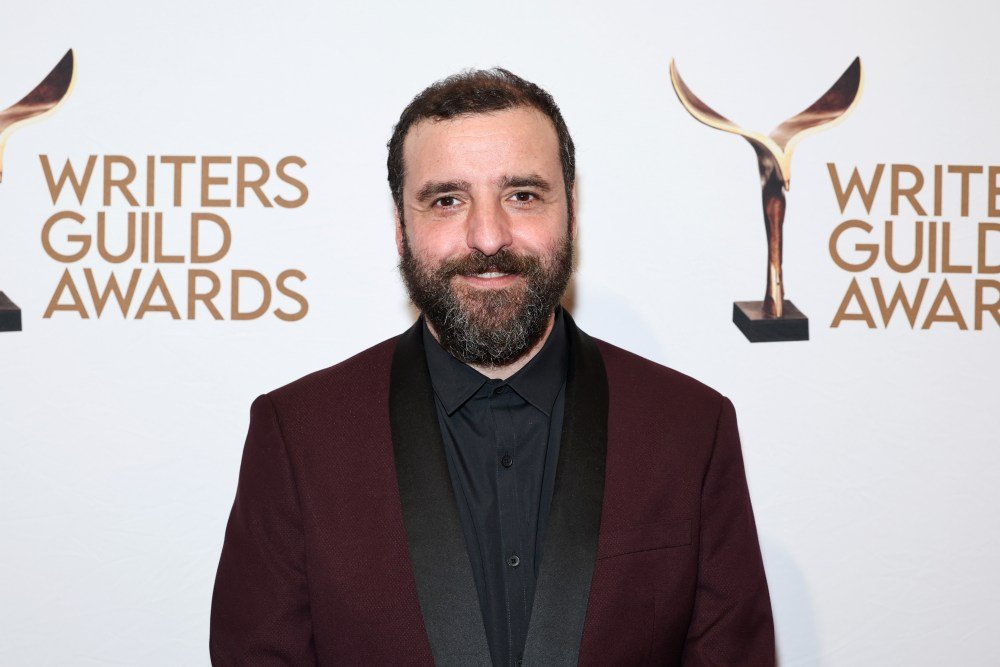
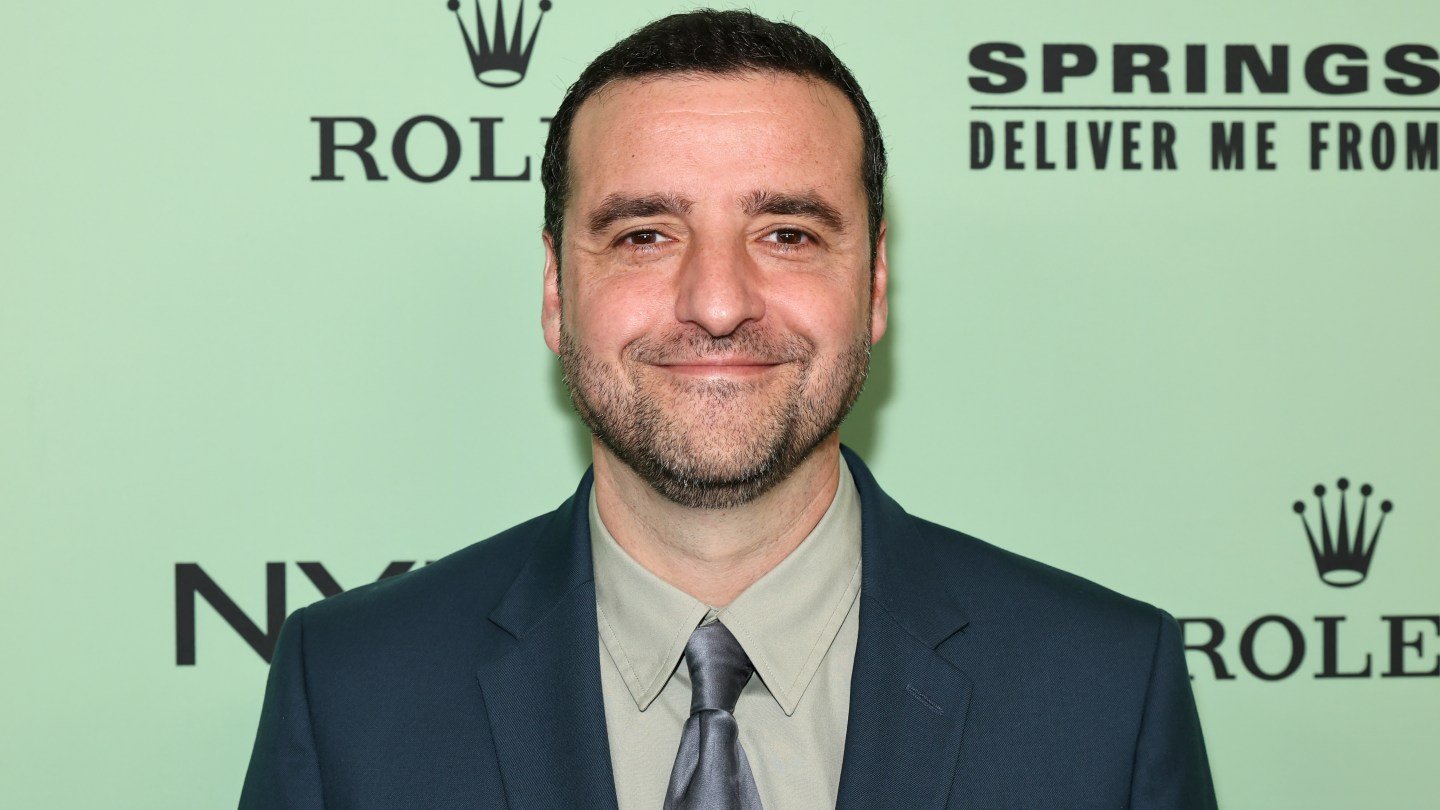
    David Krumholtz, who played Kor-El in this year’s “Supergirl” and appeared in “Oppenheimer” and “The Studio,” said on Threads Monday that he’s done with acting and ready to start a “new life.”

    However, he later deleted the posts that spoke of his frustration with getting jobs in Hollywood, leading fans to speculate whether he is truly ready to turn in his SAG/AFTRA card.

    Krumholtz, who also starred in “Addams Family Values,” wrote, “I kinda sorta put my acting career on hold the other day. It’s been something I’ve been petrified to do for years. Specifically, the fear was that I’d go broke and not be able to handle being out of the game.”

    The post said he “sent the definitive email” that would put his career on hold for now. “A huge wave of relief washed over me. Not sure what I’m going to do for money instead, or how I’m going to do it, but I just removed a humongous burden, one that I truly didn’t fathom the weight of until it was gone. Frustrated, fed up, fried,” he wrote.

    It’s not the first time he has been ready to hang it up, however. Seth Rogen told a story on the “Diary of a CEO” podcast about how Krumholtz, a longtime friend, once told him he was going to quit acting and move to Riverside and start selling BMWs.

    Krumholtz went on to add in his post, “It became clear to me this year, that if I were to continue fighting for parts (what I used to call ‘auditioning’), I’d be doing so for roles that exploit my talent and reputation for a drastically diminishing return. Exploitative art isn’t art. And artists deserve a fair pay percentage for work that assists their employers in making profits. I came up in a time where movie studios and TV networks, no matter how big, were still mom & pop store entities.”

    Reps for Krumholtz did not immediately respond to a request for comment.

    Credits for Krumholtz, who has appeared in more than 100 film and TV projects, include “10 Things I Hate About You,” “Freaks and Geeks,” “ER,” “The Trouble with Normal,” “The Santa Clause 2,” “Harold & Kumar Go to White Castle,” “Ray,” “Tenacious D in the Pick of Destiny,” “Superbad,” “Walk Hard: The Dewey Cox Story,” “Numb3rs,” “Raising Hope,” “Childrens Hostpital,” “This Is the End,” “Key and Peele,” “The League,” “The Good Wife,” “The Deuce,” “Springsteen: Deliver Me From Nowhere,” “Forelock” and “The Rookie.”

  • Inside the Fake Celebrity Podcast Scam Fooling Hollywood

    Inside the Fake Celebrity Podcast Scam Fooling Hollywood

    When Seth Rudetsky received an invitation to appear on Nikki Glaser’s podcast, he had no particular reason to think it wasn’t real.

    Rudetsky, the Broadway performer and SiriusXM host, gets asked to do podcasts all the time. Better yet, this one was offering him between $4,000 and $5,000 to appear. “Oh my God, they’re actually paying for a podcast,” he remembers thinking. A Glaser fan, Rudetsky quickly said yes.

    The invitation also seemed to know an awful lot about him. It mentioned his Broadway cruise and his work with Sara Bareilles — the kind of details that suggested somebody had actually done their homework.

    “All these specific things about my career,” Rudetsky recalls. “I’m like, oh my God, they totally know my work.”

    But they did not.

    Rudetsky had stumbled into an increasingly sophisticated scam in which fraudsters impersonate famous podcasters and their representatives, using flattering, highly personalized invitations — most likely composed by AI — to lure prospective guests into handing over money, login credentials or control of social media accounts.

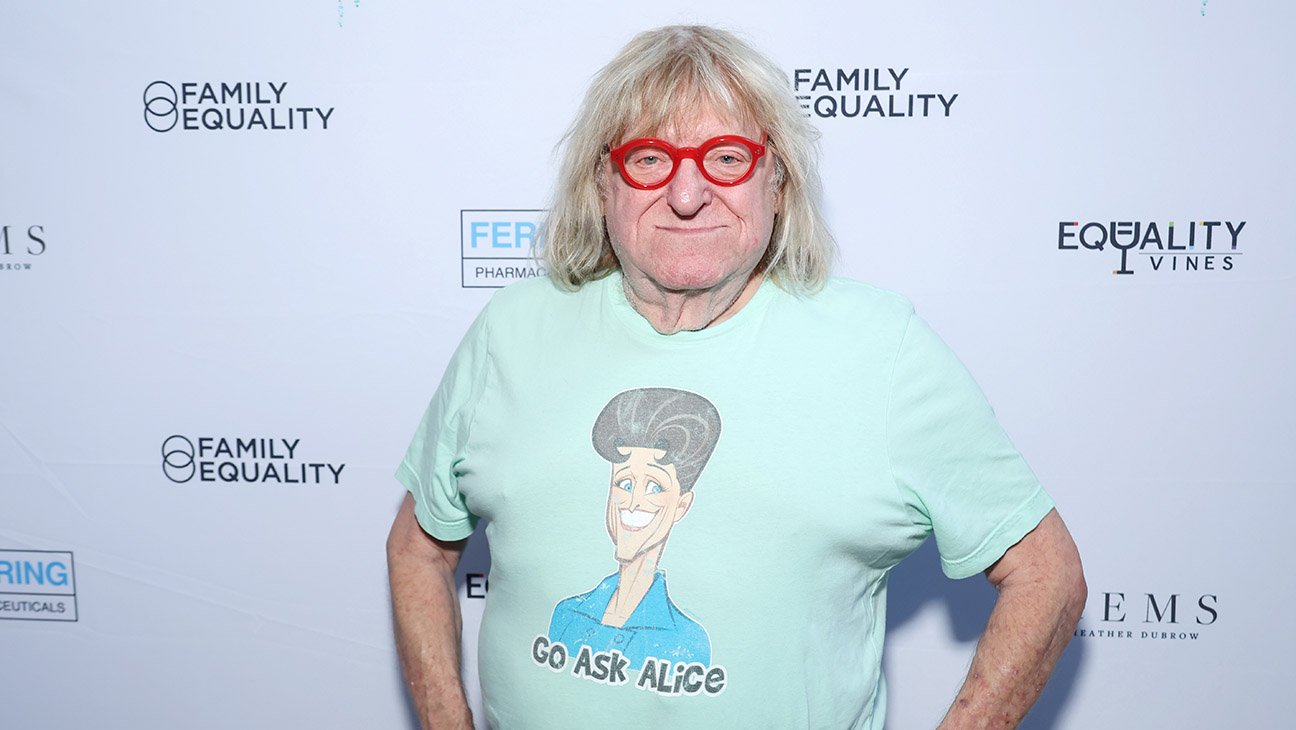
    And he is not the only recognizable Hollywood figure who fell for it. Bruce Vilanch believed Terry Gross wanted him on Fresh Air. There is no indication yet if the two scams are connected, but the pattern follows similar AI-assisted scams reported on recently by THR.

    “It was so articulate and so like her,” the veteran comedy writer and performer tells The Hollywood Reporter of an email he believed came from Gross. The correspondence that followed was equally persuasive, laying out the subjects the person identifying themselves as Gross intended to discuss with him, demonstrating what appeared to be deep, actual knowledge of Vilanch’s work.

    “I thought, ‘Well, this must really be Terry,’” Vilanch recalls.

    There were, of course, red flags, in retrospect at least. Vilanch knew Fresh Air was an NPR production with an entire organization behind it, yet Gross seemed to be personally handling the booking. He decided perhaps she was simply “a maverick.”

    Then “Gross” asked him for money. The explanation was tailored to the moment: NPR was a nonprofit, they explained, but the government had cut funding and the organization needed help. Vilanch found the request strange, but by then the correspondence had established enough credibility that he decided to contribute.

    “It felt real,” he says. So he sent the money.

    But the scammers didn’t disappear after getting his money. They continued preparing him for his Fresh Air appearance, sending more questions and ultimately scheduling the interview. When the appointed day arrived, Vilanch clicked the link. Three windows appeared on his screen: himself, one labeled NPR and a third containing a man.

    “Hello, this is Mike,” the man told him. “I will be conducting the interview.”

    Vilanch stared at him in disbelief.

    “No, you won’t,” he replied. “I’m talking to Terry or I’m talking to nobody.”

    The man explained that Gross was conducting another interview. Vilanch’s skepticism finally overwhelmed his willingness to believe. He waited about 15 minutes, then left. He sent one last message to his supposed host: “Whoever you are, I hope you enjoy the paltry sum that I sent.”

    Vilanch then contacted WHYY, the Philadelphia public-radio station that produces Fresh Air, to warn them someone was impersonating Gross. To his surprise, they already knew.

    Vilanch says the station asked him not to immediately post publicly about the scam and told him others had reported similar impersonations. He subsequently spoke with a WHYY media executive and turned over his entire email chain.

    For Rudetsky, the scam had a different objective.

    After accepting the supposed Glaser invitation, he was asked to join her “manager” on Zoom for a technical setup involving Facebook Live. The man’s camera was off. He had a British accent but told Rudetsky he was in Pakistan. Even his email address struck Rudetsky and a colleague as suspiciously literal, something resembling “NikkiGlasersManager [at] Gmail.”

    Yet each compounding oddity was just plausible enough to ignore. Eventually the “manager” began guiding Rudetsky through Facebook permissions. Administrative control of Rudetsky’s page still belonged to a marketing company he’d worked with years earlier, so Rudetsky brought its representative into the process.

    Later that night, Rudetsky tried to log into Facebook. He couldn’t. At first he blamed the marketing rep. Then, lying in bed around midnight, Rudetsky suddenly wondered whether something more sinister had happened. He Googled a combination of words: podcast, scam, celebrity, Facebook. Immediately, he says, he found an article describing essentially what had just happened to him.

    “Oh my God, oh my God,” he remembers thinking.

    Suddenly the oddities made sense: the email address, the manager overseas, the turned-off camera, the elaborate Facebook instructions. Rudetsky eventually regained control of his page. He says his former marketing company was also compromised, although Rudetsky doesn’t know precisely what the scammers accessed or what damage they caused.

    Both Rudetsky and Vilanch were left wondering how people who considered themselves reasonably savvy had been taken in. And both kept returning to the same thing: the extraordinary specificity of the approaches.

    “I know why I fell for it too, because I’m so old. I don’t think about AI,” Rudetsky says.

    The supposed Glaser representatives knew about his Broadway cruise and his work with Bareilles. To Rudetsky, those details functioned almost like authentication.

    “Wow,” he remembers thinking. “Nikki Glaser loves my Broadway cruise.”

    Vilanch experienced much the same thing. The correspondence didn’t merely imitate the mechanics of a booking request. It seemed to imitate Terry Gross’ voice itself, including the preparation and literacy he associated with her.

    “They went above and beyond what they had to do to nail me,” he says. Then he reconsidered how much “work” might actually have been required. “Now I feel less bad because they could probably AI themselves into all of the work that I thought they had done.”

    There appears to be no indication the scammer or scammers behind this web of deception are anywhere close to slowing down. In fact, Rudetsky’s experience did not even end with Nikki Glaser.

    Not long afterward, another invitation arrived, this time supposedly from Amy Poehler’s podcast. Rudetsky actually knows Poehler, so this time he employed the most reliable authentication technology available: He asked Amy Poehler. No, she replied, she hadn’t invited him onto her podcast.

    Rudetsky says the fraudulent invitations continue to arrive. These days he sometimes entertains himself by engaging the scammers to see how far they’ll go, despite being warned that even replying may simply confirm that his email address belongs to an active target.

    After one supposed Poehler representative contacted him, Rudetsky eventually announced that he’d reported the scam. The response was remarkably cool: “Noted. We’ll see what happens next.”

    Vilanch mostly remembers the embarrassment of realizing he’d been taken. “You just feel bad because you feel like a schmuck and because you’ve been duped,” he says.

    Hearing of Rudetsky’s own troubles made him feel a little better.

    “They picked on two nice Jewish boys,” Vilanch says, “who give people the benefit of the doubt.”

  • For Jacob Whiteduck-Lavoie, Everyday on ‘Sterling Point‘ Was the “Best Day Ever”

    For Jacob Whiteduck-Lavoie, Everyday on ‘Sterling Point‘ Was the “Best Day Ever”

    For Sterling Point star Jacob Whiteduck-Lavoie, filming the Prime Video series brought him right back to his childhood. “It felt like when you’re 9 years old, and you’re at summer camp and every day is the best day ever,“ the 23-year-old tells The Hollywood Reporter on a Zoom.

    The Megan Park-created series is a big step forward in Lavoie‘s career. The actor, much like several of his cast members on the show, has been acting since he was a child. He got his first gig a decade ago after his mom had spotted a Facebook post about an open casting call for a child actor who could speak French and was indigenous. Lavoie, who is of Kitigan Zibi Anishinabeg First Nation heritage and grew up on a First Nation reserve in Quebec, was intrigued but a little apprehensive.

    “I didn’t have any experience whatsoever in theater or acting at all, so it was definitely scary having to learn lines and going into audition,“ says Lavoie. But his mother was persistent and encouraged him to at least give it a try. Thankfully, the team loved his audition and cast him on the spot.

    That 20-day indie film shoot became the moment he fell in love with acting. He signed with an agent in Montreal and continued working on French-speaking productions. Despite leading a show in Canada, Premier Trio, he found he wasn‘t getting English self-tapes. While Lavoie loved his time working on French-speaking roles, he had aspirations to break into the English-speaking productions as it‘s a much smaller industry.

    “[Sterling Point] is the biggest project I’ve ever done in my life,“ he says. The show has allowed him to break into the English-speaking market.

    Lavoie is still grateful to work on the show and get to work with Park and executive producers Josh Schwartz and Stephanie Savage. But perhaps the person he was most grateful to work with was Jeffrey Dean Morgan, or “JDM,” as Lavoie calls him.

    In Sterling Point, Lavoie plays Ellis, a Canadian teen who meets the show‘s leading lady and newcomer to town, Annie, played by Ella Rubin. He becomes one-third of the show‘s main love triangle. Morgan plays his father, Joe, who is later revealed to have his own dealings with Annie‘s family.

    “When I found out that he was going to play my dad, I couldn’t believe it, honestly,” the actor says. “I personally was a fan of The Walking Dead as a kid, so when I found that out, I kind of shat my pants a little bit. I was like, ‘Crap, Negin’s my dad. What?’”

    The young cast of the show, rounded out by Amélie Hoeferle, Daniel Quinn-Toye, Bo Bragason, Keen Ruffalo and Mabel Strachan, were very close during the shoot. Lavoie knew none of the other actors — no one on the cast knew each other before the shoot — but everything felt natural.

    “Everybody got to know each other so well and so quickly. I just love these people so dearly, and everyone’s just such a good actor,“ he continues. “I’ve learned so much working with them.“

    Sterling Point wasn‘t the first show Lavoie had been in that featured a cast full of other actors his age. Premier Trio, the Canadian show he led, was a young-adult hockey show. But his personal experience was very different between the series.

    On Premier Trio, he was the oldest actor, and there was quite a gap between his co-stars — he recalls being 19 and his love interest being four years younger than him — and that made the dynamics different. “I felt like I needed to lead because I just felt like I was the older brother on the show,“ he says.

    Lavoie was the second-youngest on Sterling Point. He jokes that he felt like the “little baby“ of the group. “To work with people your age is just always so much fun and makes the experience just so much more fun,“ he says. “It was like we were just this tight group of friends and did everything together. On our off days, we were playing pickleball and always at the park doing something. It was really magical.”

    Thanks to Park, Lavoie felt extremely comfortable on the set. He admits he was nervous going into the show, but the showrunner, creator, writer and director helped keep him calm — he notes that she has a “young soul“ that makes anyone feel like her best friend instantly. The actor found that attitude take the pressure off of his shoulders.

    Lavoie recalls Park empowering the actors. “She’d let us improvise a lot,“ he says.

    “I remember she told us on the first few weeks, ‘Honestly guys, obviously, I wrote this script, but if you guys want to go off script and just say this line or say this however you feel like, just do it because you guys are the Gen Z and we’re trying to make the Gen Z audience connect and relate,’“ he adds. It seems to have worked, as the authentic dialogue has been a talking point on social media since Sterling Point came out earlier this month.

    Lavoie still has one hope for what‘s next after. He adds, “I hope we get a season two because I want to live it again.“

  • David Krumholtz Says He’s Retiring from Acting in Shock Social Post: “Profession Has Lost Its Gleam”

    David Krumholtz Says He’s Retiring from Acting in Shock Social Post: “Profession Has Lost Its Gleam”

    He’s amassed more than 140 credits on an enviable resumé that dates back to the early 1990s, but David Krumholtz seems ready to throw in the towel on his Hollywood career.

    In a shocking announcement posted (and later deleted) on social media, Krumholtz said he’s “frustrated, fed up, fried” with the business, so much so that he already sent an email to declare it done. Once the decision was made, Krumholtz felt a “huge wave of relief” wash over him.

    “I kinda sorta put my acting career on hold the other day. It’s been something I’ve been petrified to do for years. Specifically, the fear was that I’d go broke and not be able to handle being out of the game. But I sent the definitive email,” he shared on Threads. “And gotta say, a huge wave of relief washed over me. Not sure what I’m going to do for money instead, or how I’m going to do it, but I just removed a humongous burden, one that I truly didn’t fathom the weight of until it was gone. Frustrated, fed up, fried.”

    The post received tons of traction immediately, and Krumholtz continued the conversation by responding in comments to fans expressing their disappointment, encouragement or support, as well as posting additional replies. “The love and encouragement re: my last post is overwhelmingly surprising. Acting professionally is a very different concept than the exercise of acting itself. I’ve enjoyed every single minute of exercising the muscle. I’ve enjoyed the fanfare. There was a time when being competitive and self-involved really served my pursuit. That time has passed. Much to MY overwhelming surprise. There will always be great joy in the exercise. But for me, the profession has lost its gleam.”

    Fellow actor Garret Dillahunt was among those who responded by posting, “This is sad news for me. But I am happy for you. I understand completely.” Krumholtz wrote back and further elaborated on his next moves: “Ain’t over, rather, redefining my terms. Hoping to find a new, more rewarding passion. Me, my product, and [my] mentality is not working anymore. I want to try to be of service. No crystal ball.”

    The 48-year-old veteran actor hails from New York and has worked consistently since breaking into the business on both the big and small screens with parts in Law & Order, Life with Mikey, Addams Family Values, The Santa Clause franchise (playing the beloved Head Elf Bernard) and the Ice Storm, to name a few early roles. He had regular roles on such shows as Monty, Chicago Sons, The Closer, The Trouble With Normal and Numb3rs, the latter of which lasted the longest with 119 episodes.

    He also starred in high-profile movies like Slums of Beverly Hills opposite Natasha Lyonne, 10 Things I Hate About You, The Mexican, Sidewalks of New York, Ray, Harold & Kumar Go to White Castle, Crazy for Love, Bobby, Superbad, This is the End, Hail, Caesar! and more. He played Isidor Rabi in Christopher Nolan’s best picture winner Oppenheimer, which earned him rave reviews, and had a busy last couple of years starring in Springsteen: Deliver Me From Nowhere and opposite Seth Rogen in The Studio and Sausage Party: Foodtopia. Most recently, he starred as Zor-El in Supergirl.

    Krumholtz at the Supergirl world premiere in New York on June 22, 2026.

    (Photo by Dimitrios Kambouris/Getty Images for Warner Bros. Pictures)

    David Krumholtz and cast members from Leopoldstadt are seen on stage during the Broadway show’s opening night at New York’s Longacre Theatre on Oct. 2, 2022.

    (Photo by Roy Rochlin/Getty Images)

    David Krumholtz and Rob Morrow celebrate the 100th episode of CBS’s Numb3rs at the LA Center Studios on March 25, 2009.

    (Photo by Michael Buckner/Getty Images)

    Kal Penn, Krumholtz, John Cho and Neil Patrick Harris at the afterparty for the premiere of New Line Cinema’s Harold and Kumar Escape From Guantanamo Bay at the Green Door in L.A. on April 17, 2008.

    (Photo by Kevin Winter/Getty Images)

    Cillian Murphy as J. Robert Oppenheimer and Krumholtz as Isidor Rabi in Christopher Nolan’s Oppenheimer.

    Melinda Sue Gordon/Universal Pictures