“It’s a project that has been on my desk for many, many years. Jon Fosse wrote it almost 20 years ago. After he received the Nobel Prize in Literature [in 2023], it felt like the whole world wanted to read it. But I always knew it was a powerful piece of work,” he tells Variety.
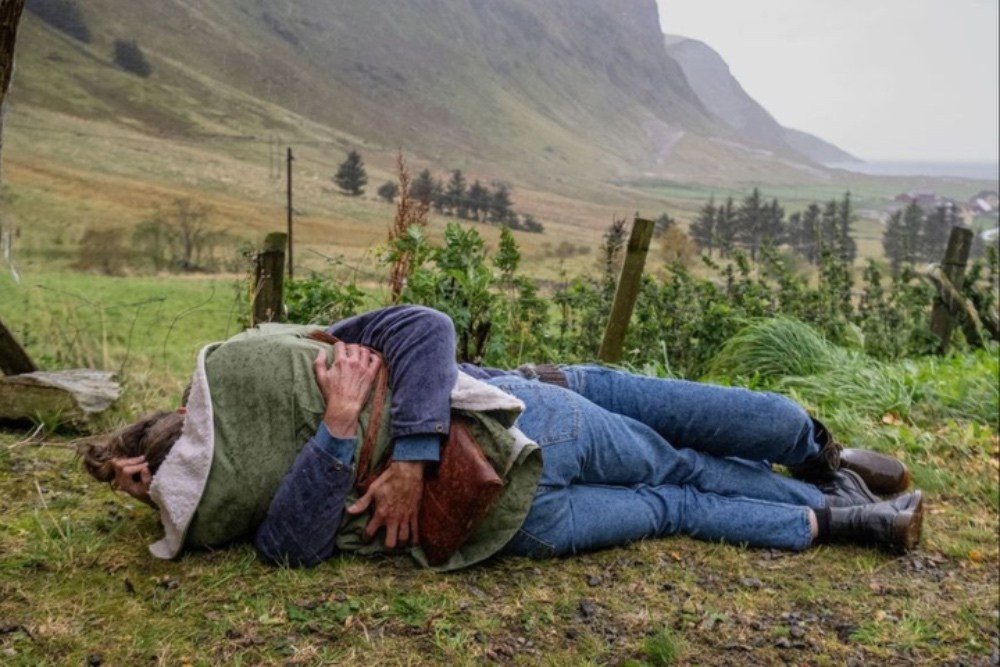
“Beloved” follows a couple who meet in a small coastal town. They have a child, but Asle is drawn back to the sea while Gerd remains in the village.
The film, starring Leo Magnus de la Nuez and Kristi-Helene Giæver Engeberg, was produced by Paradox and SF Production. It’s sold by Reinvent Yellow Sales.
One of Norway’s most acclaimed directors, Poppe is known for larger productions, from “The King’s Choice” to “Utøya: July 22,” “The Emigrants” and “Quisling: The Final Days.” But focusing on a more intimate story felt right this time.
“Looking at the world as it is right now, I needed to hold onto some sense of hope – or at least something more human. I wanted to explore the relationship between two people, as well as between a father and son, because it’s a story of daily life I can relate to.”
He adds: “We’ve all seen how well they perform in the cinemas, surprisingly enough. People long for something honest and truthful that they can just dive into.”
The fact that Fosse is only growing in stature doesn’t hurt either.
“He’s about to be named one of the most important living authors in the world today, and this isn’t based on his novels or plays. [The screenplay] is an original piece of work that he wrote with only one goal in mind: to make it into a movie.”
Still more adaptations are likely on their way.
“I’m quite sure more movies will be made from his novels. As a filmmaker, he’s opening up the space between the dialogue for me to fill in. His style is so simple yet deep. You connect with it, understand it, and it hits you right in the stomach. His novels are short, but when you read them, it feels like Dostoyevsky. I find it extraordinary.”
Despite following only two characters and their son, Poppe didn’t change his approach to working with actors.
“On all my movies, I insist on having at least eight or 12 weeks with them [prior to the shoot]. If I can establish a truthful, honest relationship with my actors, I can push them quite far,” he says. He also paid extra attention to their surroundings.
“I spent a lot of time figuring out where to shoot this film. It’s almost like a mythical landscape, a mythical part of Norway. It’s the fourth character in the film.”
Misty and melancholic, it mirrors their insecurities and growing estrangement.
“It’s quite typical of many relationships. It’s so hard to talk to each other,” says Poppe.
“I was raised by two parents who were almost exactly like these two. Except, it was my mother who left and my sister and I stayed home with my father. The film is about the language these two used to share, which is disappearing, it’s about where they are and what they’re longing for.”
Which is why, despite that title, there is a darker side to ‘Beloved.’
“Based on our first screenings, people have been surprised, but they also really love that it’s not your regular love story,” he admits.
“I think it’s a brave piece of work by Jon. I was tempted by the fact that he doesn’t follow the paths we are so used to. I wanted to explore how that could work in a movie.”
John Oliver took a close look at what he called a “less-covered story from this week” on Sunday’sLast Week Tonight: a reality show from U.S. Secretary of Transportation Sean Duffy called The Great American Road Trip.
Duffy debuted a trailer for the show in May. At the time, a press release stated that the series “asks: Who are we? Following U.S. Transportation Secretary Sean Duffy and his family, this five-part journey encourages Americans to step away from their screens for a vital civic experience. From small towns to iconic landmarks, the series captures the unscripted moments and shared values that prove to love America, you have to see America. The series will be released for free on YouTube, allowing every American family to follow along.” The show was timed to debut during this year, the nation’s 250th anniversary.
“So the motto is to love America is to see America,” Duffy explains to President Donald Trump in the trailer. He continues in voice-over: “It’s more than a road trip. It’s a civic experience. It’s one of the most powerful ways to understand the vast, beautiful, complicated place we call home.” (Watch it below.)
Said Oliver of the trailer: “OK, lots not to like there — from the generic ‘hey ho’ folk rock to Trump giving insane grandma’s new boyfriend vibes to the very conspicuous close up of the Toyota logo to the seemingly AI-generated images of cars, which makes sense. No one’s ever thought to film a real car before.”
At the time the show was announced, Duffy’s wife, Fox News Channel host Rachel Campos Duffy, “even claimed it was a solution to what ails us as a nation,” Oliver said.
“I’m going to be really honest, we live in a Pornhub world,” Rachel said in a Fox News clip shown by Oliver. “This is really wholesome, good family stuff. This is what families need to do is just get together. That’s what our kids want from us.”
Replied Oliver: “Is it? Because I think what every kid really wants is for their mum not to say the word ‘Pornhub’ on national TV. Also, she clearly hasn’t spent a lot of time on that site, or she’d know, families getting together is very much its own category.”
However, the road-trip series drew controversy for a few reasons: the high cost of gas, the fact that Sean was out filming a reality series when he had an important government job to do, and who was paying for the show. Regarding the latter, Sean said that it wasn’t funded by taxpayer money; instead the series was funded through a nonprofit production company called Great American Road Trip Inc. However, that organization’s website lists 17 sponsors, many of which are companies that the Department of Transportation oversees and regulates.
“Yeah, that’s not great,” said Oliver. “The only worse answer to who pay for this than ‘the American taxpayer’ is ‘a bunch of companies I oversee and regulate.’ Actually, I suppose an even worse answer would be a bunch of companies I oversee and regulate, and also my close personal friend Jeffrey Epstein.”
The show was supposed to be released in June, but “all the scrutiny seemed to delay it,” Oliver noted, and all six episodes were “quietly dumped on YouTube” last week.
Oliver said that it’s no surprise that Sean, a former star of MTV’sThe Real World: Boston, wanted to return to reality TV. (He also met his wife on Road Rules: All Stars.) But Oliver pointed out some discrepancies in how Duffy recalled his time on those shows over the years. For example, in Road Trip, he visits the house that the Real World: Boston cast stayed in while filming and “tries to rewrite some history,” the Last Week Tonight host said.
During the segment, Sean reflects on the tension between him and housemate Kameelah Phillips, denying he called her a “bitch.” But Oliver showed a clip from The Real World in which Duffy says, “I walked up ahead of the group and I called her a bitch.”
“You did call her that,” Oliver said. “Call me CVS, Sean, because I will always bring the receipts.”
As for Sean’s claim that the show is “a nationwide storytelling movement that invites Americans to explore the open road, connect with their communities,” Oliver said, “That’s not really what it is at all, because it turns out it’s basically just an expensively produced test run of a Duffy family reality show with each episode featuring a bare minimum about travel or America, but a ton of manufactured reality TV drama around the Duffys doing stuff like planning a family party or over the course of several episodes watching their daughter decide which college she’ll attend.” As for that lattter point, Sean and Rachel are seen talking to their daughter about her desire to go to Harvard, which they evidently don’t support because they believe Harvard has “professionalized figuring out how they can take good young girls like you and I think corrupt their minds,” Sean tells his daughter in the show while the two are chatting in their kitchen.
Replied Oliver: “What the fuck are you talking about? First, this was supposed to be a road trip. Why are we still in your kitchen? Second, is there anything less relatable than a family whose conflict is, how do I tell my daughter she can’t go to Harvard because we did too good a job raising her?”
He continued: “And finally, please don’t be worried that Harvard’s going to corrupt your daughter’s mind. Be worried that if she goes there, like every other Harvard grad, she’s never gonna shut the fuck up about it. One of this show’s writers went to Harvard and guess how I know that? Exactly. I don’t know where any of the others went.”
Oliver then said that it’s no surprise that “hardly anyone” seems to have watched the show, based on the number of viewers available on YouTube. It also received very little promotion.
“I don’t really give a shit if Sean Duffy and his wife want to become the next Duggars or Jon and Kate [Gosselin] or Alec and Hilaria Baldwin,” Oliver said, citing other families who’ve starred in reality TV shows. “What’s concerning is them doing it on the back of the Department of Transportation because it feels ethically dubious on so many levels, which may be why at this point everyone involved in The Great American Road Trip seems like they’d rather just sweep it under the rug.”
He continued: “[H]aving watched all three hours of this god-awful show, from gender reveals to the Duffys renewing their vows for no clear reason, it feels less like the country’s been taken on a road trip by Sean Duffy and a lot more like we’ve all been taken for a fucking ride.”
The LA Phil has played with plenty of pop and rock acts before, but it may have taken Foo Fighters to really put the dude in Dudamel.
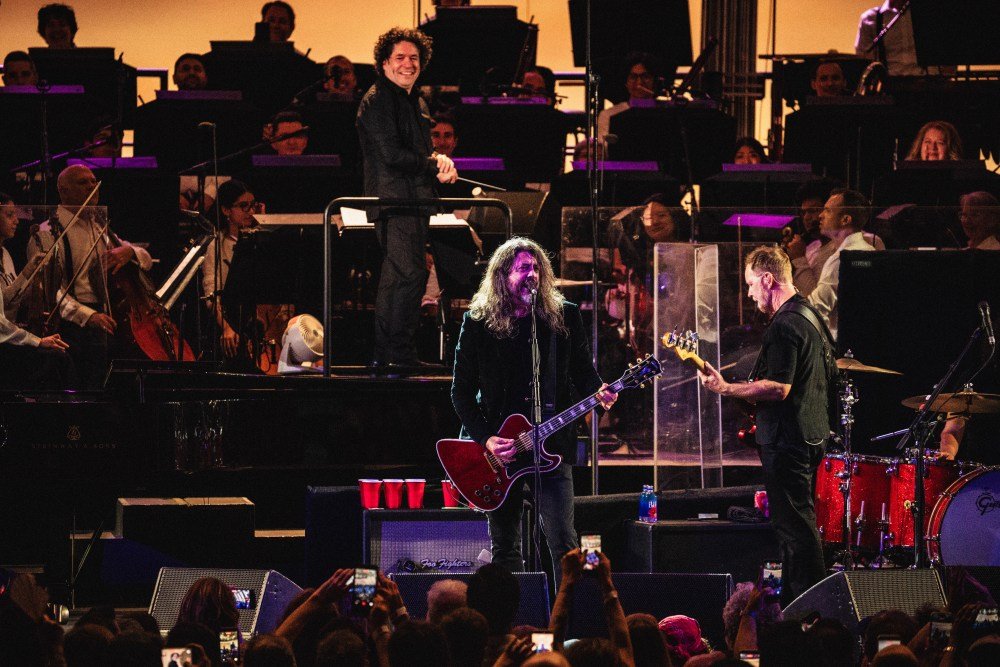
And not a moment too soon, with this being famed conductor Gustavo Dudamel‘s final weekend at the helm of Los Angeles’ primary house symphony. The Phil’s hookup with Dave Grohl and company Saturday night was the middle act in a three-night local finale for Dudamel — a delectable dip into what old-school symphony buffs would once have considered low culture. The entire weekend, though, was about asking Beethoven to roll over, as it were, for some of the maestro’s less classical loves. The Foos collab was sandwiched in between Friday and Sunday concerts where the focus was on acknowledging Dudamel’s connections to Latin American and specifically Venezuelan music.
Understandably, Grohl had to make it at least a little about himself, too, or more to the point, this being a milestone for his 32-year-old band. “ This is a first,” he told the sold-out crowd at the outset. “First of all, I don’t know if you know, but Foo Fighters has never played the Hollywood Bowl before… Usually in this part of the program I ask the audience if they love rock ‘n’ roll music… But tonight, i’m gonna ask this question for the first time: Do you love Dudamel? Me too. so let’s play some rock ‘n’ roll for Mr. Dudamel. That’s what we came here to do.”
For a while, it seemed as if this show might really mark a serious first: Grohl, who tends to pepper his stage banter with the F-word at least once in every sentence — used as an exclamation, adjective, adverb, noun, verb and preposition — seemed to be inspired by the occasion, and by the presence of dozens of the world’s finest musicians in formalwear, to be deliberately abstaining from profanity. But if that was indeed a goal, finally, toward the end, he couldn’t help himself. “Ladies and gentlemen, on an evening like tonight, I don’t really know how to say goodbye, because I wish that we could do this every fucking night for the rest of our lives with all of these amazing people.”
A quick, unscientific survey of Foo fans suggested that not one of them would have a problem with that (in, you know, the theoretical world where Grohl could outspend and out-prestige the New York Philharmonic, where Dudamel is headed next). Fans online — those who’d been at the concert and those just tracking it from afar — immediately began clamoring for a commercial release of Saturday’s show. That desire was well-justified. When some bands do symphonic hook-ups, it makes for a satisfying experiment, but not necessarily one you need to hear endlessly. The arrangements here were so well-balanced, and so in keeping with what made these tracks feel as dramatic as they did in the first place, that you could imagine recordings from the show taking the place of the originals in some fans’ streaming playlists, indefinitely if not for all time.
Some artists who do Bowl shows with the LA Phil or its sister symphony, the Hollywood Bowl Orchestra, run through something close to their normal set and require whoever is assigned to do the orchestrations to follow suit. Fortunately, Grohl took a broader view of what catalog material might benefit most from the augmentation, even if it meant narrowing down the length of the setlist, since orchestral players by definition don’t work rock ‘n’ roll hours.
“Listen, tonight we’re gonna play as many things as we can before we have to stop,” the singer said early in the hour-and-40-minutes performance. “You know, we usually play for three hours a night. But tonight, we picked the best songs that we could perform with our friends in the LA Phil and Mr. Gustavo Dudamel. Some of these you may have never heard before. So sit back and enjoy a song called ‘A320.’”
Foo Fighters and Gustavo Dudamel (third from left) take a bow at the close of Celebrating Gustavo at the Bowl: Foo Fighters with the LA Phil and YOLA, at the Hollywood Bowl August 22, 2026
Timothy Norris/Los Angeles Philharmonic
Now, pretty much the only people who’ve been holding out for “A320” to rejoin the Foos’ set after a quarter-century of absence are the half-dozen people still clutching to their CDs of the 1998 “Godzilla” soundtrack, where it first lived and kind of died a quiet death. But, as one of the rare songs to have included string arrangements on the original record, it was prime territory for revival here. (And the band has also been trying it out at a few non-orchestral tour stops this year, maybe with the thought of getting it ready for the Bowl.) As on the age-old original, the first half of the six-minute track was sweeping in its use of orchestral augmentation, and then the second half put aside both strings and vocals to turn into a pure band jam. That’s counterintuitive, since it would be more common to start a song without orchestration and then add it in, rather than the reverse. But the band fury is as climactic as anything that could be done continuing to have the full ensemble play… and Dudamel looked happy enough to put his baton down, turn around and just watch the group play for a few minutes. (The Phil was present at points on every one of the 15 songs song, but there were plenty of stretches within those songs where they took five.)
HB26 Celebrating Gustavo at the Bowl: Foo Fighters with the LA Phil and YOLA – August 22, 2026
Timothy Norris/Los Angeles Philharmonic
The band’s most faithful followers may be happy to hear “Times Like These” played for the 894th time (according to setlist.fm), but having “A320” come into the set early was a sign that this would really be a night to make the hardcore happy. And there ended up being three more rarities to set fans aflutter: “I Should Have Known,” being played live for the first time since 2012; “Razor,” being performed for the first time since 2006; and “Home,” getting a live airing for the first time since 2007 (and only the fifth performance overall). What these surprise additions meant, in human terms, is that Grohl understood the assignment, when it came to joining forces with another powerful institution: you find the songs that have been waiting for that moment.
Of course, he also considered some of the band’s greatest hits to be in that category. “This was made for the Hollywood Bowl, I think,” Grohl said, prefacing “My Hero.” It was hard to argue with that assessment, when the song took on a healthy dose of brass that sounded noble enough for a military funeral… not to mention a surprise solo harp for just a few seconds when the rest of the onstage complement dropped out for a dramatic pause.
But it really was some of the lesser known or slightly less celebrated songs making bigger impressions. A choir came out on two songs in the middle of the set, both of them highlights. First among them was “The Sky Is a Neighborhood” (the title of which lets you know that Grohl does have a poetic side, however much his stage banter falls into the category of basic-bitch). The frontman did some of his punkiest scream-singing of the night, content to know that the dozen or so berobed figures surrounding him could keep up the melodious quotient of the tune; Chris Shiflett turned in a short, sweet and rare guitar solo over some of that choral wailing, as the band thunderously pounded it out in 6/8 time. Maximalism doesn’t come much more maximal than that, and it was genuinely musical as well as bombastic.
HB26 Celebrating Gustavo at the Bowl: Foo Fighters with the LA Phil and YOLA – August 22, 2026
Timothy Norris/Los Angeles Philharmonic
Then, taking it way down, members of the participating YOLA (the Youth Orchestra of Los Angeles), identifiable by their shirts (and by their, duh, youth), did a somber string opening for “Run,” replicating or replacing the studio version’s extended acoustic guitar intro, before the rock and the choir kicked in — another certain highlight, despite the tune not being on the list of internationally approved classics.
More expected standouts included “Aurora,” which Grohl has been faithfully dedicating nightly to Taylor Hawkins, with the orchestra again going silent during the final stretch so that the core band could use the hypnotically interesting riffage to send a former comrade into the afterlife with 17,000 phones aglow.
It didn’t seem as if it would get much more sentimental than that, yet it did, as the unlikely penultimate pick turned out to be “Home,” of which Grohl said, “We’ve only done this song once.” (He was off-count by about three instances, according to the online stats, but close enough.) Taking a stool for the most sedate of his ballads, Grohl explained that he was never previously able to get through the 2007 song “because it’s such a meaningful song to me that whenever I heard it, I couldn’t stop from crying. And whenever we played it, there’s no way I could make it through the entire song without just bursting into tears. But what I’ve found is that while you’re singing it, if you think of other things, you can actually make it to the end without crying.” There was a pause, while the audience waited for Grohl to explain if he was picturing the audience naked, or something. “I’m not gonna tell you what I was thinking about,” he then announced. “But we got to the end of the fucking song, so there you go.”
There might have been other reasons to wonder whether Grohl would make it through the set, early on — like, right, at the very beginning, when the set started with a slow and stark couple of verses of “Times Like These,” and the singer’s voice cracked when he sang that high, introductory “I…” And the same thing happened when that note came around again. Was it an inauspicious way to start the set, revealing a voice that was tour-ravaged… or was Grohl faking us out with some exaggerated emotion? Whichever was the case, he quickly rallied, or otherwise revved up to speed, and there were no worries about whether his howl would survive this hot night from then on. But he had us going for about half a minute there.
A good thing he turned out to deceptively be in top shape after all; this will go down in many fans’ books as one of the group’s all-timers. Whether the show is memorialized through some sort of commemorative recording or just cameraphone videos, it’s some of the little things that stick in memory, at least initially: the way that the horns filled in the space between the lines of verses on “All My Life” with frenetic stabs, or how, on “Learn to Fly,” the strings played slightly off the beat in the dramatic coda, versus the straightforward slamming of the band. And the fake endings … so many fake endings. But Grohl is showman enough to know: when a fast song leaves ’em wanting more, it doesn’t hurt to seem to quit and then actually give a little more.
Dudamel did not do much talking; if he has any sentimental feelings he wants to share with the L.A. audience about taking leave of them, presumably he will do it during Sunday night’s true swan song. But he did speak while introducing what amounted to the evening’s opening act — a 15-minute border-crossing suite, composer Aldemaro Romero’s “Fuga con Pajarillo,” which segued back and forth between the full orchestra and Venezuelan musicians, including Eduardo Betancourt, Jorge Glem and Moisés Torrealba. The main reason for the night was, as Grohl said, “to give Gustavo one more big rock show before he has to leave this wonderful city.” But even then, he couldn’t leave Venezuela out of it. New York will be blessed to have someone so faithful to his truest loves.
Which definitely do include rock. Dudamel’s performance conducting with Foo Fighters Saturday made you wish the LA Phil, or future employers, would dedicate one of the venue’s big screens solely to a Gustavo Cam, so everyone could see how headbanging really should look, when it’s being done by a pro.
Dave Grohl and conductor Gustavo Dudamel perform as part of Celebrating Gustavo at the Bowl: Foo Fighters with the LA Phil and YOLA – August 22, 2026
Timothy Norris/Los Angeles Philharmonic
Setlist for Foo Fighters with the LA Phil, Gustavo Dudamel and YOLA at the Hollywood Bowl, August 22, 2026: Times Like These All My Life The Pretender Walk A320 My Hero Learn to Fly The Sky Is a Neighborhood Run I Should Have Known Razor Aurora Best of You Home Everlong
Gustvavo Dudamel with Venezuelan musicians backstage at Celebrating Gustavo at the Bowl: Foo Fighters with the LA Phil and YOLA – August 22, 2026
John Oliver is an outspoken fan of reality TV — but not this former “Real World” star.
On Sunday’s “Last Week Tonight,” the political pundit took aim squarely at Sean Duffy, President Trump’s Secretary of Transportation and former congressman and “The Real World: Boston” cast member. You see, on Wednesday, Duffy dropped all six episodes of “The Great American Road Trip” to YouTube. Though it bills itself as a reality show celebrating America’s 250th anniversary, its travel and its people, as Oliver pointed out, “It’s basically just an expensively-produced test run of a Duffy family reality show with each episode featuring a bare minimum about travel or America but a ton of manufactured reality-TV drama around the Duffy’s doing stuff like planning a family party or, over the course of several episodes, watching their daughter decide which college she’ll attend.” (Duffy’s wife is Fox News contributor Rachel Campos-Duffy, who he met on MTV’s “Road Rules: All Stars.”)
In a clip from the show that was widely mocked online, while discussing whether his daughter can go to Harvard, Duffy remarked, “If I send you there, I think what happens is they have professionalized figuring out how they can take good, young girls like you and, I think, corrupt their minds.”
“What the fuck are you talking about?” exclaimed Oliver. “First, this was supposed to be a road trip — why are we still in your kitchen? Second, is there anything less relatable than a family whose conflict is, how do I tell my daughter she can’t go to Harvard because we did too good of a job raising her?”
Duffy claimed that the show was shot over seven months and that no taxpayer money was used; rather, the show was funded by the independent company Great American Road Trip Inc., which listed 17 sponsors, Boeing, Toyota, Shell and United Airlines among them, all companies overseen and regulated by Duffy’s Department of Transportation.
“That’s not great! The only worse answer to ‘Who paid for this?’ than ‘The American taxpayer’ is ‘a bunch of companies I oversee and regulate,’” cracked Oliver.
And, when Duffy was pressed about the conflict of interest in Congress, he replied, “Don’t you want to celebrate America?” adding, “It’s our birthday!”
“It’s our birthday? You sound like a fucking child!” exclaimed Oliver. “You do get that just because it’s America’s birthday doesn’t mean you get to do an ethics violation, right? Grow up, Sean!”
The show was supposed to come out in June but Duffy said it needed to be re-edited so it abided by ethics rules. And Duffy, of course, is a reality-TV veteran.
“[Duffy] has long loved being on camera. He was actually on ‘The Real World: Boston’ in the late-90s, where he presented himself as deeply horny,” explained Oliver. “In his audition, he reportedly said that he wanted to be on the show because of his interest in ‘cute girls,’ and when asked by a producer how many times he’d had sex in the last six months, he — and I’m quoting here — flashed a big smile and said, ‘Three times. Three different individuals, yeah. And three different times,’ adding, ‘I’m sort of starving right now, guys.’”
Cue Oliver: “And I’ve got to say: I had sex with three different women, none of whom were interested in an encore, says a lot more about you than I think you wanted to reveal there.”
What’s worse, during his time on “The Real World: Boston,” Duffy “got attention for annoying the fuck out of his Black castmate Kameelah, who he fought with over affirmative action, complaining he would have gotten into a better college ‘if I were a Black male,’ and at another point, ‘compared [her] to Adolf Hitler while accusing her of reverse racism,’” Oliver offered.
As for “The Great American Road Trip,” its YouTube views are dwindling in the thousands and its YouTube page has less than 3K subscribers at time of writing.
“Everyone involved in ‘The Great American Road Trip’ seems like they’d rather sweep it under the rug,” Oliver maintained. “Since it came out, the Duffy’s have barely promoted the show and the Department of Transportation hasn’t posted about it at all… But even if everyone involved wants to move on and act like it never happened, I’m not sure the rest of us should, because the appearance of a conflict of interest here is not going to go away.”
Oliver then cited how the Department of Transportation has two open investigations into Waymo, which is featured in the series, including for striking a child in the vicinity of a school.
“Having watched all three hours of this godawful show, from gender reveals to the Duffy’s renewing their vows for no clear reason, it feels less like the country’s been taken on a road trip by Sean Duffy and a lot more like we’ve all been taken for a fucking ride,” he concluded.
“I was very, very hurt and deeply disappointed in the lack of professionalism, the lack of compassion in slamming someone who’s lost two children, without even a modicum of consideration,” Vogel said during a recent interview with the Daily Mail regarding the CBS Mornings host and podcaster’s separate comments.
“No one reached out to me before,” she added. “It’s shameful. It’s unconscionable to me.”
The Hollywood Reporter has reached out to CBS Mornings for comment, but did not hear back at the time of publication.
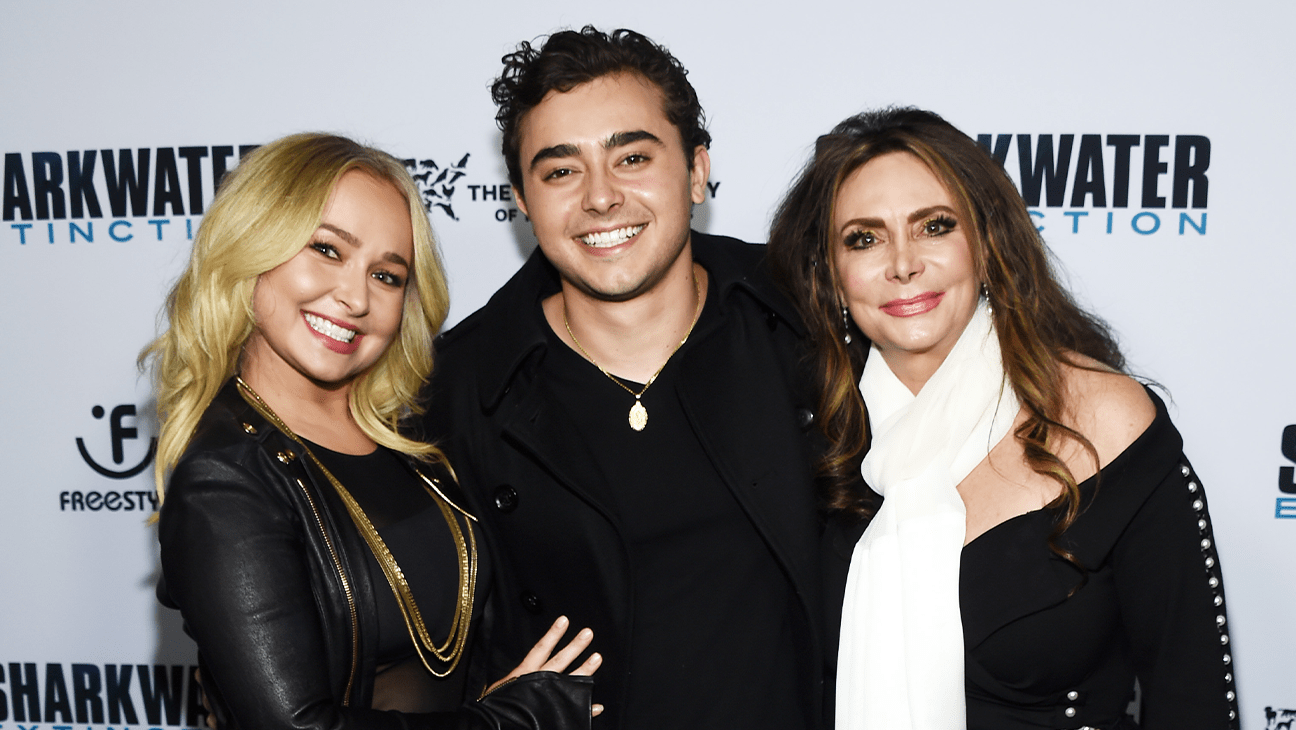
Panettiere, an actress known for her roles in Heroes, Nashville and the Scream franchise, died last Sunday at age 36. Following her death, Vogel spoke to NBC News on Tuesday, where she criticized her daughter’s on-again-off-again boyfriend Brian Hickerson and felt her daughter “lost her way.”
“This person in her life that we have been trying to get rid of for quite some time was with her at her death and that was Brian Hickerson,” she said at the time. “I think Hayden was an amazingly talented person in so many departments and I think young people who grow up in the entertainment industry — it is a struggle and it’s a very challenging industry and it’s not unusual for them to sadly find the wrong path.”
Vogel added, “I think Hayden sadly lost her way and I wish it were different. I wish she had stayed true to herself because she had many incredible attributes.”
The following day, during Wednesday’s CBS Mornings broadcast, King criticized Vogel for focusing too much on her daughter’s struggles amid her death. “You know, guys, you read this and all I can think is, ‘Thanks, mom, for nothing,’” the host said.
“It makes me so sad of the opportunity that you have after your daughter’s death that that’s what you choose to leave us with,” King added.
As for Kelly, the former Fox News reporter went on The Megyn Kelly Show and declared, “You failed at your job… You got an F as a parent,” referring to Vogel.
“You made a bunch of money off of your daughter,” Kelly added. “You probably have a super nice car and a big house. You failed. You raised someone to the age of majority who doesn’t feel safe, loved, or cherished. You’re a loser.”
Panettiere had been open about her estranged relationship with her mother, who also served as her manager when she was growing up in the industry. In her memoir, This Is Me: A Reckoning, the actress detailed the pressure she felt from Vogel.
During an interview with THR in May, Panettiere also opened up about the challenges of delving into her childhood and relationship with her mom when writing This Is Me. “Having to touch on everything about my relationship with my mother, that was one of the harder things to talk about,” Panettiere said. “While writing it, I realized even more so how much of a toll it took on me.”
Page Six reported in May that Vogel had chosen the “no-contact route” with Panettiere after “20 years of trauma” and on the advice of professionals.
Her son and Panettiere’s younger brother also died in February 2023 at the age of 28.
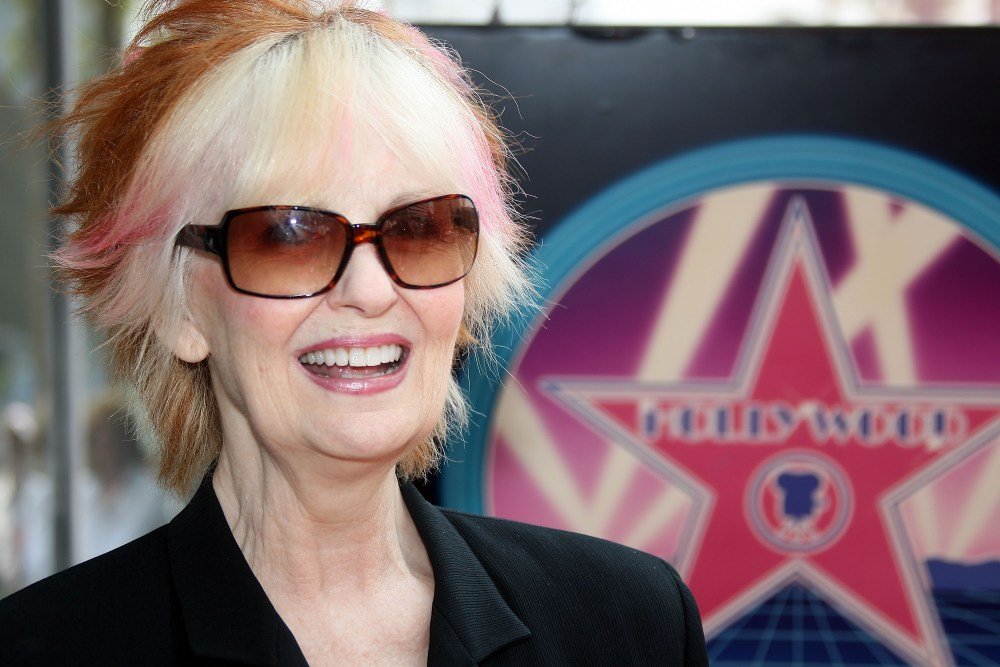
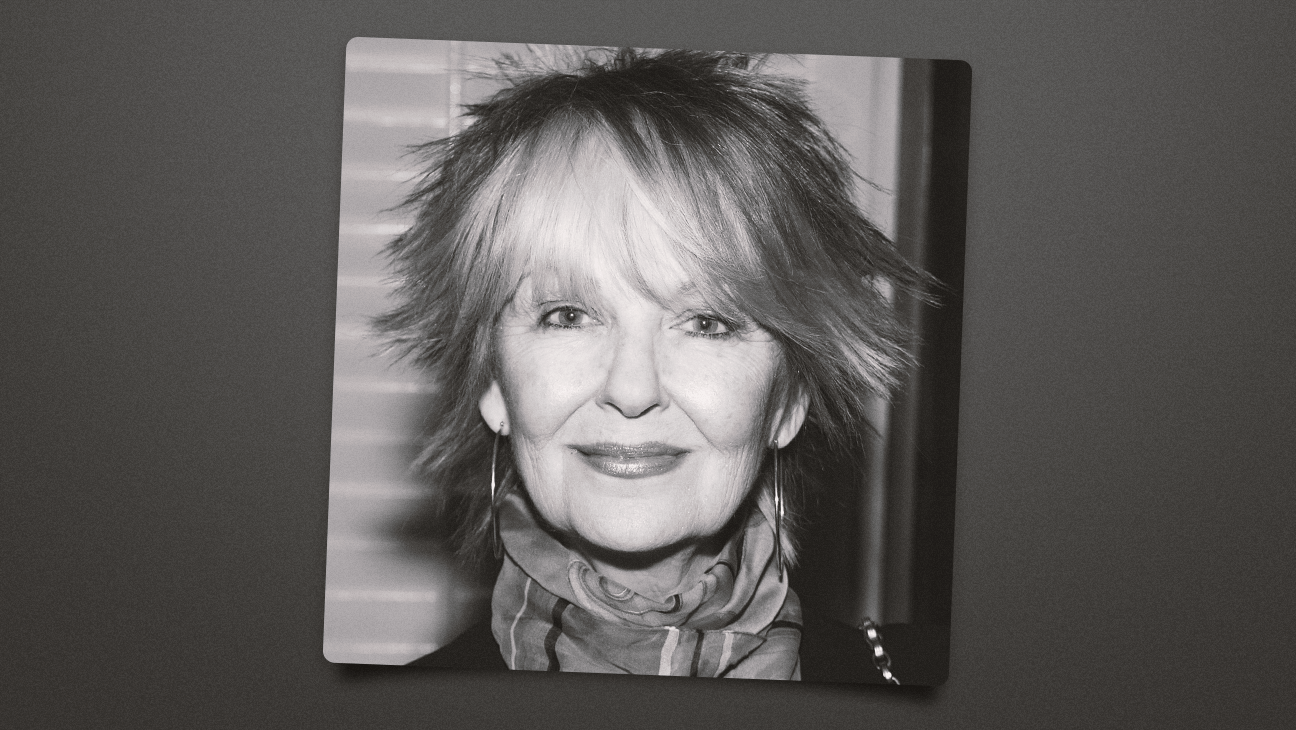
Shelley Fabares, the star of the classic sitcoms “The Donna Reed Show” and “Coach,” died on Saturday in Los Angeles. She was 82.
Fabares’ family said in a statement, “We will miss her deeply — not only as a celebrated performer, but as the loving and extraordinary person she was in our everyday lives. We are heartbroken by her loss, yet profoundly grateful for the years we shared with her and for the joy, compassion, and love she brought to so many. We ask that our family’s privacy be respected as we grieve. We take comfort in knowing that Shelley’s work and the memories she created with those who loved her will continue to live on.”
Fabares starred as the Stone family daughter Mary in “The Donna Reed Show,” which ran on ABC for 275 episodes from 1958 to 1966. Fabares appeared in 192 episodes and left the series in 1965. On ABC’s “Coach,” which ranf or 199 episodes from 1989 to 1997, she played Christine Armstrong, a TV news anchor and the romantic interest of Craig T. Nelson’s college football coach Hayden Fox. She earned two Emmy nominations, in 1993 and 1994, for supporting comedy actress for her work on the series.
Fabares also had a brief career as a singer during her time on “The Donna Reed Show,” notching a No.1 hit with her 1961 track “Johnny Angel.” She parlayed her TV fame into a series of teen-centric B-movie romps including opposite Fabian in 1964’s “Ride the Wild Surf,” and she co-starred with Elvis Presley in three films, 1965’s “Girl Happy,” 1966’s “Spinout!” and 1967’s “Clambake.”
Some of Fabares’ other TV credits include “The Little People,” “Forever Fernwood,” “The Practice,” “Hello, Larry,” “Highcliffe Manor,” “Fantasy Island,” “One Day at a Time” and “The Love Boat.” She had a key role on one of the most lauded TV movies of the 1970s, ABC’s “Brian’s Song,” starring James Caan and Billy Dee Williams in the true story of the friendship between two NFL players as one of them faces terminal cancer. Fabares played Joy Piccolo, the wife of Caan’s Brian Piccolo.
Fabares was born in Santa Monica, Calif in January 1944 and grew up around Hollywood. Her mother, Elsa, started her modeling career at a young age, which led to roles on TV. Fabares’ aunt, Nanette Fabray, was a well-known Broadway star and film supporting player who also transitioned to TV roles. Among Fabares’ early TV breaks was a two-episode stint on “The Loretta Young Show” in 1954. Her first major film credit came in a supporting role in the 1956 Rock Hudson drama “Never Say Goodbye,” for Universal International.
Fabares was briefly married to influential music and movie producer Lou Adler in the mid-1960s. In 1984, Fabares married actor Mike Farrell, known for his long run on the CBS comedy “MASH.” In the 1980s and ’90s, Farrell and Fabares were active in numerous political and social causes, including protesting U.S. activities in Central America and supporting the anti-nuclear movement that took root in Southern California in the late 1970s.
Like Farrell, Fabares was active behind the scenes on industry matters as a longtime SAG member. She was involved in guild leadership and helped to steer some of the early SAG Awards ceremonies. In 1998, Fabares was supportive of early efforts to combine the Screen Actors Guild with the industry’s other major performers union, the American Federation of Television and Radio Artists.
After “Coach” ended its run, Fabares had few film and TV credits as she battled health problems. In 2000, she went through a very public health crisis in which she needed — and ultimately successfully received — a liver transplant. Her experience of waiting nearly two years for a donor liver to become available helped raise public awareness for the acute need for organ donations. Fabares was a longtime supporter of the Alzheimer’s Association, after her mother was diagnosed with the disease in the early 1990s.
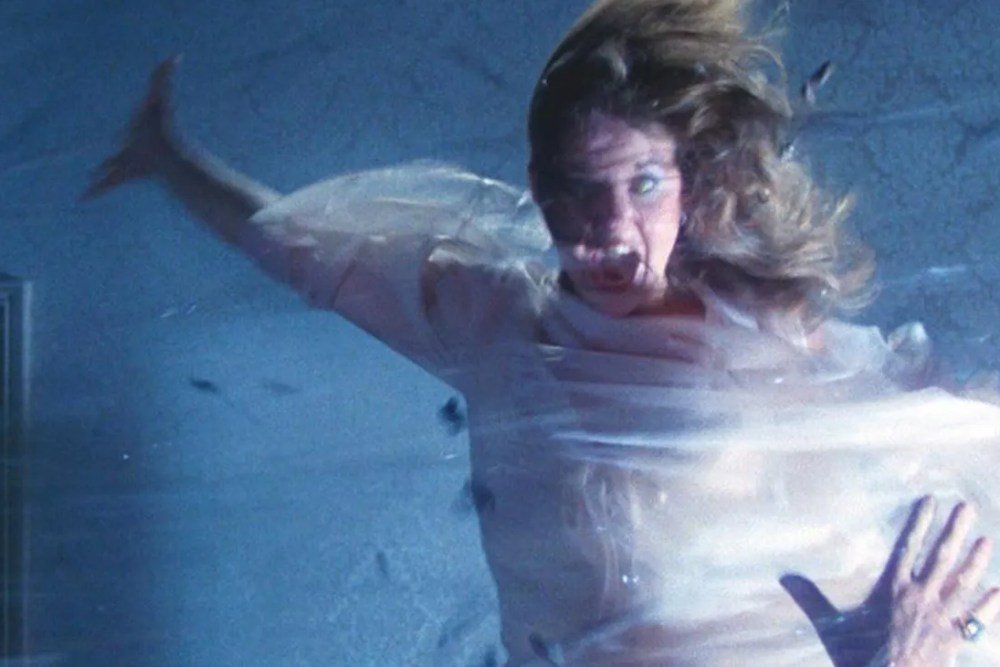
“Boorman and the Devil” is a disaster movie that feels like a party. It’s a documentary about the making of one of the worst movies of its time, and maybe of all time — “Exorcist II: The Heretic,” the spectacularly misconceived and maladroit sequel to “The Exorcist.” It was a film so singular in its awfulness that when it came out in the summer of 1977, audiences laughed at it (they literally did), and the director, John Boorman, made a frantic attempt to recut it. (He lopped off the atrocious ending for a different atrocious ending.)
Talented people can make terrible movies, and the era of “Exorcist II,” when directors still enjoyed the carte blanche that had come with the power of the New Hollywood, was littered with ambitious bombs, from Steven Spielberg’s “1941” to Peter Bogdanovich’s “At Long Last Love” to the granddaddy of them all, the stiff-necked but aimless three-and-a-half-hour Marxist art Western “Heaven’s Gate.” “Boorman and the Devil,” written and directed by David Kittredge, is a dishy and fascinating inside look at how one of the most legendary duds of the ’70s came to happen.
Yet what lends the documentary its special, enjoyable flavor is that 50 years after “Exorcist II” was made, a number of the people connected with it, notably Boorman himself, still don’t fully grasp what the problem was. Boorman, seated in his wintry country home in County Wicklow, Ireland (he was 85 when the documentary was shot; he’s now 93), narrates the making of “Exorcist II” for us, and he still exudes a quality of shining belief in what he was doing. He made a movie so bad so that the audience felt no connection to it — but on some level of barely suppressed ego, he’s still blaming the audience for it. He thinks the film contains “some of the best work I’ve ever done.” He believes the problem is that the audience was expecting a different kind of movie. (Yes, a scary and not deathly boring one.)
You might call Boorman’s fortitude admirable, but you could also call it delusional. And it lends “Boorman and the Devil” the quality of a true-life Christopher Guest film. For this is the unintentionally funny story of what happens when utterly unhinged and high-minded hubris becomes your guiding light. Boorman, and others associated with “Exorcist II,” know that they made an infamous disaster, yet the reason the film was a disaster still eludes them. The documentary is full of lines that, in context, have a double-edged drollery, as when the director Joe Dante says, “Many of the techniques that he uses, I’ve never seen repeated again!”
Boorman thinks the problem with “Exorcist II” is that it failed to deliver the full-scale nasty horror blowout that the audience was expecting — and it’s true, that was a major problem. As Boorman acknowledges, this was all by design. After his success with “Deliverance” in 1972, Boorman had been offered the chance to direct “The Exorcist” (the original) but was repulsed by the book. “It seemed to me to be a book about torturing a child,” he says. “So I declined.” Three years later, when he was offered the sequel, Boorman said he wanted to make a movie that would be a mediation on the aftermath of “The Exorcist.” There’s no doubt that was his first mistake. No less a figure than Stanley Kubrick told him, “If you want to do a sequel to ‘The Exorcist,’ you just get more blood and gore.” This much was obvious.
But the problem with “Exorcist II: The Heretic” wasn’t just that it failed to reconjure the primal terror and gruesome gross-out shock value of “The Exorcist.” It’s that the movie Boorman made instead was at once lifeless and preposterous. Boorman, who came up through the British new wave of the ’60s, had made several gripping thrillers that are recognized as classics — the tight, mean revenge noir “Point Blank” (1967) and then, of course, “Deliverance” (1972), the middle-class-friends-in-the-hillbilly-wilds thriller that established him as an A-list force in Hollywood. But Boorman, gifted as he was, had a flaky pretentious indulgent side; he was in thrall to third-rate “mythic” ideas. (He has remained so to this day.) Boorman passed on “The Exorcist” to make “Zardoz” (1974), a dystopian mess of spaced-out Jungian sci-fi, with Sean Connery running around in a Chippendale’s version of a bullet bandolier.
It was this side of Boorman, the glittery-eyed “visionary” pedant, that enabled “Exorcist II.” The inspiration for the movie came from the French theologian Pierre Teilhard de Chardin, who believed that the human race was getting ready to come together into a kind of cosmic telepathic hive mind. “That piqued my interest,” says Boorman. “It was an opportunity to make a film about, really, metaphysics,” as well as “the next phase of human evolution.” “Exorcist II: The Heretic,” Boorman decided, would be a movie about synchronized hypnosis, with Linda Blair’s Regan trying to deal with the trauma of having had the devil inside her by sharing the experience with her therapist, Dr. Tuskin (Louise Fletcher), and with Father Philip Lamont (Richard Burton), the priest assigned by the Vatican to investigate what happened to Father Merrin.
Here’s the thing about synchronized hypnosis. It’s one of those fruit-loop 1970s ideas — but more than that, it proved to be uniquely static as drama. “Exorcist II” turned out to be a movie about people sitting in a room staring at each other with wiry metal headbands on.
The film’s folly extended to the one-note stentorian badness of Richard Burton’s performance, as he intoned such classy lines as “E-vil…is a spiritual being.” It extended to the ruinously expensive but still fakey-looking re-creation of Ethiopia on a soundstage, with piles of dirt being blown around by wind machines, enough arc lights to threaten to set the place on fire, and boulders that looked like they were made of Styrofoam. And it extended to the film’s weirdly abstract portrait of the devil, which would now be embodied by…locusts! Great teeming swarms of them, with an occasional locust seen in big buggy close-up, and shots of flying from a locust’s-eye view (the Steadicam had just been invented). It all looked like a cheesy disaster movie called “Attack of the Locusts” (in fact, a killer-bee movie called “The Swarm” came out a year later. Coincidence? Maybe not). James Earl Jones, as the African scientist Kokumo, donned a giant locust head like a Halloween costume and for some reason spit a whole tomato out of his mouth. Even the film’s name for the demon was ridiculous: Pazuzu. Every time you heard it, the more it sounded like baby talk.
I saw “Exorcist II: The Heretic” the week it came out, and from the moment Linda Blair appeared, doing a smiley tap-dance for no good reason, through the orgy-of-destruction climax in what looked like a discotheque from hell, the film was staggering in its ineptitude. I left the theater shaking my head in disbelief. I had never seen it again until a year ago, and was unsurprised to discover that time had not been kind to it.
Yet even as “Boorman and the Devil” gets you chortling at how the bad decisions piled up, the movie also sells the idea that Boorman was working on the high wire, and that “Exorcist II” was a folly with shades of greatness in it. Several notable critics are interviewed (they include Bilge Ebiri, Joseph McBride, and my friend Stephanie Zacharek), and they all testify to the idea that there’s some sort of loopy grandeur to what Boorman achieved. With all due respect, I think this is a complete fantasy, but it takes off from what Pauline Kael said about the movie at the time — that its imagery had a crazy spellbinding quality. Kael had hated “The Exorcist” (her despairing review of it is one of her greatest pieces — an example of how she could be a peerless critic even when you disagreed with her), and her kind comments about “Exorcist II” fit a pattern of hers where she would pan a film that became incredibly popular, then go on to embrace the far inferior sequel, almost as if it was her way of getting back in the loop. (She did this with “Exorcist II,” “Ghostbusters II,” and “Indiana Jones and the Temple of Doom.”)
More to the point, in Kael’s comments on “Exorcist II,” you can hear the early stirrings of what would become Movie Disaster Rehabilitation Culture, which is now an industry among hipster cinephiles. Thus, the arid and didactic “Heaven’s Gate” has been elevated to the status of masterpiece. “Eyes Wide Shut,” which should have been about pedophilia (not aging swingers in masks), is now top-drawer Kubrick. And “Exorcist II” is a wacked but misunderstood grand folly. I passionately disagree with all three of those reassessments, and I think they’re all rooted in a certain impulse toward viewing movies in a postmodern way — as endlessly malleable texts rather than as stories that require an emotional logic and coherence that none of those films have. Wait long enough and even the worst movie, if it possesses the proper shoot-the-works ambition, can be “reframed.”
“Boorman and the Devil” honors John Boorman’s ambition, but it also cuts him slack, notably when he’s saying things like, “In my experience, successful movies have one thing in common, and that’s luck.” What a load! What successful movies have in common — along with luck — is artists who know what they’re doing, and are rooted in the real world, and are working at the top of their game.
That said, the making of “Exorcist II: The Heretic” was beset by a litany of bad decisions and bad luck, which piled up sky-high. Boorman got seriously ill with valley fever (from inhaling the imported dirt on set), and after he was hospitalized the production shut down for five weeks. The budget ballooned from $10 million to $15 million, making it the most expensive movie Warner Bros. had ever produced. Boorman and Rospo Pallenberg kept rewriting the script (because no one really knew what the movie was about), and Richard Burton was too dour and old and hungover. There was even an air of mishap surrounding the one sequence in the movie that’s truly effective — the dreamy moment where Regan balances on the edge of a rooftop with no railing. Boorman now acknowledges that the way they shot that scene (on the roof of the Warner Bros. building in New York), something could have gone very wrong.
The story of the film’s first sneak preview, at a theater in Pasadena, with the Warner Bros. executives sitting nervously in the back of the theater, is a hilarious parable of the chickens coming home to roost. The audience sat there, dumbfounded at first, and then you started to hear the giggles; midway through, a man stood up and threatened the people who made the film, at which point they escaped. “Exorcist II” had been booked into 700 theaters for 12 weeks (a nearly unprecedented wide release at the time), but the attendance declined by 50 percent in the second weekend. The word had gotten out. All the recutting in the world couldn’t save it. “Boorman and the Devil,” in its amused way, does try to save “Exorcist II: The Heretic” by treating it as an insane work of artistic daring. But I’m sorry, that’s just a pile of Pazuzu.
Shelley Fabares, the wholesome daughter on The Donna Reed Show who went on to star opposite Elvis Presley in three movies and as Craig T. Nelson’s independent wife on Coach, has died. She was 82.
Fabares died Saturday in Los Angeles after a brief illness, her family announced. Survivors include her husband, M*A*S*H actor Mike Farrell, whom she married in 1984.
“To her family and friends, Shelley was a source of love, strength, laughter and comfort,” they said in a statement. “She was a devoted wife, cherished stepmother, daughter, sister, niece, aunt, family member and loyal friend whose warmth, generosity, humor and grace made an enduring difference in the lives of everyone who knew her. She had a remarkable ability to make people feel welcomed, valued and cared for.”
On the original One Day at a Time, Fabares played against her prim, good-girl persona as Francine Webster, a nasty business rival of Bonnie Franklin‘s Ann Romano. (Her late aunt, Caesar’s Hour and The Band Wagon star Nannette Fabray, also appeared on the CBS sitcom, playing the mother of Franklin’s character.)
Fabares also portrayed the wife of doomed Chicago Bears running back Brian Piccolo (James Caan) on the landmark 1971 ABC telefilm Brian’s Song.
On The Donna Reed Show, which aired on ABC for eight seasons, from September 1958 through March 1966, Fabares played high schooler Mary Stone opposite Reed as her mom, homemaker Donna Stone; Carl Betz as her pediatrician dad, Dr. Alex Stone; and Paul Petersen as her younger brother, Jeff.
When Mary left for college at the start of the sixth season, the Stones adopted a daughter, Trisha (Patty Petersen, real-life sister of Paul).
Capitalizing on her national fame, Fabares — backed by Darlene Love and the Blossoms and Glen Campbell on guitar — recorded a version of “Johnny Angel,” which went to No. 1 on the Billboard Hot 100 in April 1962. She had debuted the song on a Donna Reed episode a couple months earlier.
“I literally cannot sing. So there’s a lot of overdubbing,” she admitted in a 1983 interview. “The girls in the back — ‘Could you sing a little louder please?’ It was unusual. But [The Donna Reed Show] was very successful at that time, so [the song] had a built-in audience.”
During “live” performances — in “the days when they would play the record and you would lip sync” — she recalled, “my worst experience was [when] I did a live local television show and, needless to say, the record stuck. I think I went into a coma.”
Fabares starred on the ABC comedy Coach for eight seasons while earning a pair of Emmy nominations for playing Christine Armstrong, a TV newscaster and the girlfriend and then wife of Nelson’s college football coach, Hayden Fox.
“Clearly, Christine is a very successful woman and firmly entrenched in her career and loves her work. And she loves this man,” she said. “It’s a difficult problem in life to find your balance. We’re all going through the same things. I have a wonderful relationship with my husband, but I’m still a career woman.”
In 2015, NBC developed a Coach revival in which Nelson’s character returns to coaching and Fabares’ character is killed off, but the reboot did not emerge beyond the pilot stage.
Michele Ann Marie Fabares was born in Santa Monica on Jan. 19, 1944. Her mother, Elsa, got her into modeling at age 3, and that led to TV appearances.
By the time she was 9, Frank Sinatra was singing “Young at Heart” to her on an NBC special. She also appeared on a 1955 NBC adaptation of Our Town that starred Sinatra, Paul Newman and Eva Marie Saint and with Rock Hudson in Never Say Goodbye (1956).
In 1958, she was on the ABC series Annette, which starred lifelong friend Annette Funicello.
Fabares said Reed “was not given credit for being the head of her own series, the guiding force behind the series,” she said in 1994. “She produced the series, had an enormous part in writing it and also had four children at home. Having been there, I knew the amazing strength of that woman.”
During a 2011 reunion of the show’s surviving castmembers, Fabares remembered when she was feeling nervous about having to dance during a scene. Reed tried to calm her down. “Shelley, there are three things I can’t do: I can’t swim, I can’t dance, and I can’t act.” But she had to do all three for a film scene. “Oh yeah, that movie I was talking about was It’s a Wonderful Life.”
After several years as Mary Stone, Fabares concentrated on the big screen and appeared in the fun-in-the-sun movies Ride the Wild Surf (1964) with Fabian and Hold On! (1966) with Peter Noone of Herman’s Hermits.
She then co-starred with Presley in Girl Happy (1965), Spinout (1966) — Betz played her dad in that one too — and Clambake (1967).
“The first day of shooting [Girl Happy], I’m on the set. Something was happening, and I didn’t know what it was,” she said. “And I looked over, and it was Elvis. He was walking in. He wasn’t doing anything. He was just walking in. The presence that this man had … you couldn’t talk. Nobody did anything. You just sort of stopped. And I remember thinking, ‘Oh, my God. It’s Elvis Presley. I’m never going to be able to open my mouth around him.’ ”
In the late 1960s, during a time of protest and rebellion, her good-girl appeal fell out of sync with the cultural zeitgeist. It wasn’t until Brian’s Song that she regained her career momentum.
Buoyed by that role, Fabares rebounded to work on such popular series as The Brian Keith Show, The Practice with Danny Thomas and Highcliffe Manor. In the late ’70s and early ’80s, she starred on One Day at a Time, then showed a saucier dimension as the tart-tongued Eleanor Major on the syndicated soap opera spoof Forever Fernwood.
Fabares also had guest-starring roles on Mannix; Love, American Style; Daniel Boone; McCloud; Mork & Mindy; and Hello, Larry (as McLean Stevenson’s ex-wife).
She had a liver transplant in October 2000 after spending nearly two years on the waiting list to receive one.
In 1984, she married Farrell at Aunt Nanette’s Pacific Palisades home. The two had first met in 1970 when she was a guest star on Farrell’s series The Interns, but it was not until they reunited 12 years later during a CBS press tour that they started to date. (Earlier, Fabares had been married to record producer Lou Adler, while Farrell’s first wife was actress Judy Farrell, who played Nurse Abel on M*A*S*H.)
Farrell, known to be a serious human rights activist, said his wife made him a bit more light-hearted. “People talk about how much more fun I am,” he said in 1991. “Shelley has allowed people to understand I’m not this unapproachable doomsayer.”
Added Fabares: “Nothing in Mike’s life is casual. He’s very serious. Mike grounds me, and I think I pull him out sometimes. It’s a nice mix.”
Shelley Fabares and Mike Farrell.
Courtesy Fabares/Farrell family
Survivors also include her stepchildren, Erin and Michael.
“I was very, very hurt and deeply disappointed in the lack of professionalism, the lack of compassion in slamming someone who’s lost two children, without even a modicum of consideration,” Vogel said during a recent interview with the Daily Mail regarding King’s comments.
“No one reached out to me before,” she added. “It’s shameful. It’s unconscionable to me.”
The Hollywood Reporter has reached out to CBS Mornings for comment, but did not hear back at the time of publication.
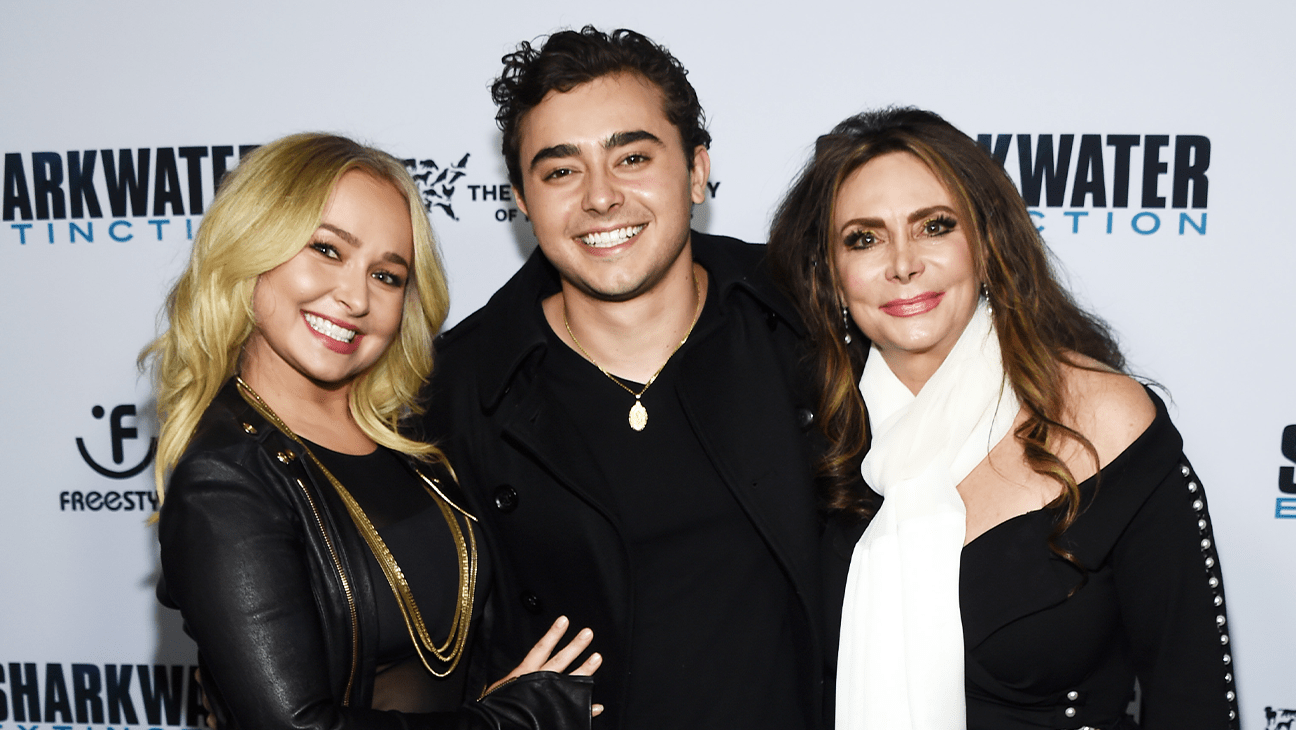
Panettiere, an actress known for her roles in Heroes, Nashville and the Scream franchise, died last Sunday at age 36. Following her death, Vogel spoke to NBC News on Tuesday, where she criticized her daughter’s on-again-off-again boyfriend Brian Hickerson and felt her daughter “lost her way.”
“This person in her life that we have been trying to get rid of for quite some time was with her at her death and that was Brian Hickerson,” she said at the time. “I think Hayden was an amazingly talented person in so many departments and I think young people who grow up in the entertainment industry — it is a struggle and it’s a very challenging industry and it’s not unusual for them to sadly find the wrong path.”
Vogel added, “I think Hayden sadly lost her way and I wish it were different. I wish she had stayed true to herself because she had many incredible attributes.”
The following day, during Wednesday’s CBS Mornings broadcast, King criticized Vogel for focusing too much on her daughter’s struggles amid her death. “You know, guys, you read this and all I can think is, ‘Thanks, mom, for nothing,’” the host said.
“It makes me so sad of the opportunity that you have after your daughter’s death that that’s what you choose to leave us with,” King added.
Panettiere had been open about her estranged relationship with her mother, who also served as her manager when she was growing up in the industry. In her memoir, This Is Me: A Reckoning, the actress detailed the pressure she felt from Vogel.
During an interview with THR in May, Panettiere also opened up about the challenges of delving into her childhood and relationship with her mom when writing This Is Me. “Having to touch on everything about my relationship with my mother, that was one of the harder things to talk about,” Panettiere said. “While writing it, I realized even more so how much of a toll it took on me.”
Page Six reported in May that Vogel had chosen the “no-contact route” with Panettiere after “20 years of trauma” and on the advice of professionals.
Her son and Panettiere’s younger brother also died in February 2023 at the age of 28.
“Wild,” the five-track offering led by the singles “Pinky Up” and “Hootie Frutti,” bows at the chart’s summit with 170,000 equivalent album units, marking their biggest week by that metric and by pure album sales with 145,000. Katseye‘s latest is the fourth No. 1 album by an all-woman group this decade after Twice’s “With You-th,” NewJeans’ “2nd EP ‘Get Up’” and Blackpink’s “Born Pink.” It also has the largest pure album sales week for an all-woman group in more than three years.
Katseye previously reached a high of No. 4 on the Billboard 200 with 2025’s “Beautiful Chaos.” Their debut, “SIS (Soft Is Strong),” was released in 2024 and peaked at No. 98.
Behind “Wild” sits Phoebe Bridgers‘ “Lost Weekend,” bowing at No. 2 with 118,000 equivalent album units earned. It marks her first solo project to reach the top 10 and becomes her best week ever by units. The singer-songwriter previously made the top 10 on the Billboard 200 with Boygenius, her trio with Lucy Dacus and Julien Baker, when their 2023 album “The Record” peaked at No. 4.
Stray Kids’ “This & That,” which debuted at No. 1 last week, slides to No. 3, followed by Olivia Rodrigo’s “You Seem Pretty Sad for a Girl So in Love” at No. 4 and Ella Langley’s “Dandelion” at No. 5.
Rounding out the rest of the top 10 are Morgan Wallen’s “I’m the Problem” (No. 6), Ariana Grande’s “Petal” (No. 8), Drake’s “Iceman” (No. 9) and Olivia Dean’s “The Art of Loving” (No. 10).