Category: Entertainment

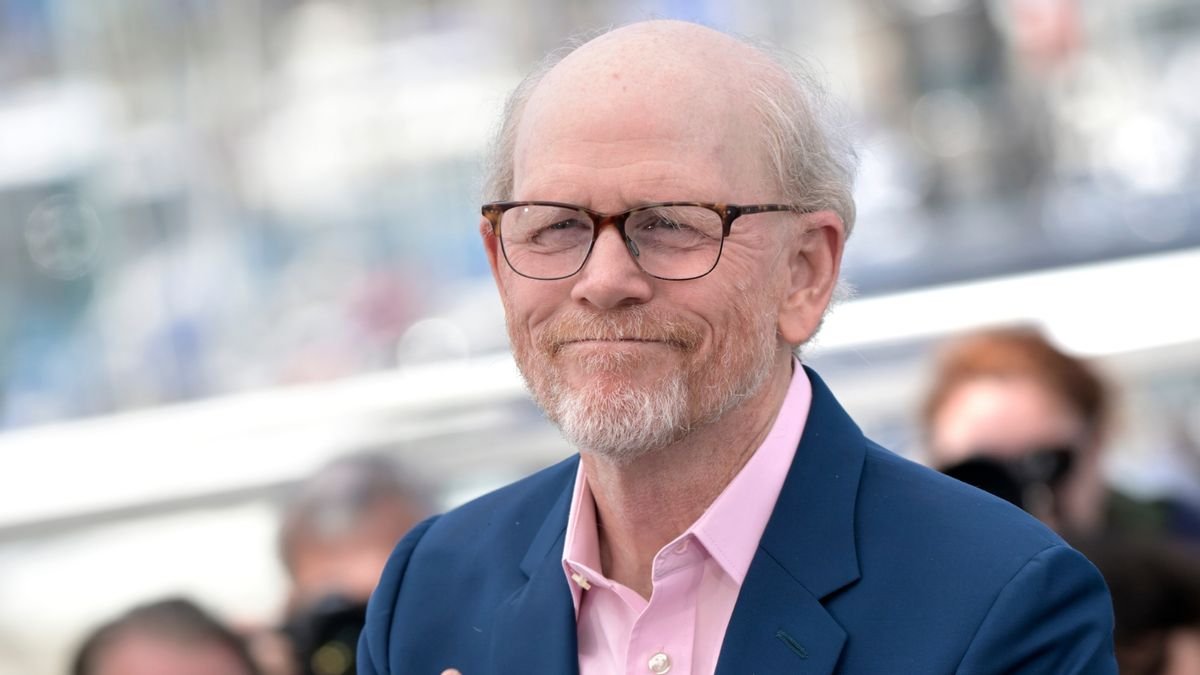
  • Did Ron Howard write letter about being liberal? Here’s the truth

    Did Ron Howard write letter about being liberal? Here’s the truth

    Claim:

    Director Ron Howard authored a letter starting, “I’m a liberal, but that doesn’t mean what a lot of you apparently think it does.”

    Rating:

    Incorrect Attribution

    In summer 2026, an old claim that director Ron Howard wrote an open letter about what it supposedly means to be a liberal resurfaced.

    The letter, which is around 1,300 words, began as follows:

    I’m a liberal, but that doesn’t mean what a lot of you apparently think it does. Let’s break it down, shall we? Because quite frankly, I’m getting a little tired of being told what I believe and what I stand for. Spoiler alert: not every liberal is the same, though the majority of liberals I know think along roughly these same lines:

    The remainder of the letter consists of 16 numbered points describing the author’s beliefs.

    In August 2026, the claim appeared in multiple posts on Facebook and numerous Snopes readers searched our site for information about it.

    (Facebook user Christina Tann)

    As we reported when we first looked into the text’s origins in 2020, Howard was not the real author of the letter. Instead, the words were the work of novelist Lori Gallagher Witt. As a result, we rated the letter as misattributed.

    Witt first posted the letter on her Facebook (archived) and Tumblr (archived) accounts on Jan. 7, 2018. A screenshot of her original Facebook post is below. (Due to the letter’s length, we split the screenshot into two roughly equal halves that appear side by side.)

    (Lori Gallagher Witt)

    Witt’s original letter included a longer introduction than the version that circulated in 2025. The original version opened as follows:

    An open letter to friends and family who are/were shocked to discover I’m a liberal…

    This is going to be VERY long, so: TL;DR: I’m a liberal, I’ve always been a liberal, but that doesn’t mean what a lot of you apparently think it does.

    Some of you suspected. Some of you were shocked. Many of you have known me for years, even the majority of my life. We either steadfastly avoided political topics, or I carefully steered conversations away from the more incendiary subjects in the name of keeping the peace. “I’m a liberal” isn’t really something you broadcast in social circles where “the liberals” can’t be said without wrinkling one’s nose.

    But then the 2016 election happened, and staying quiet wasn’t an option anymore. Since then, I’ve received no shortage of emails and comments from people who were shocked, horrified, disappointed, disgusted, or otherwise displeased to realize I am *wrinkles nose* a liberal. Yep. I’m one of those bleeding heart commies who hates anyone who’s white, straight, or conservative, and who wants the government to dictate everything you do while taking your money and giving it to people who don’t work.

    Let’s break it down, shall we? Because quite frankly, I’m getting a little tired of being told what I believe and what I stand for. Spoiler alert: Not every liberal is the same, though the majority of liberals I know think along roughly these same lines.

    The Facebook post’s edit history showed that on Feb. 2, 2018, around a month after she originally published the letter, Witt added a notice reading “(c) 2018 Lori Gallagher Witt. Feel free to share, but please give me credit, and if you add or change anything, please note accordingly.” A similar notice also appeared at the bottom of her Tumblr post.

    In an email to Snopes in February 2025, Witt said she was inspired to write the letter not because of a single event but because she believed her social circle did not understand her beliefs. She said:

    It had been brewing in my head for a while, especially because I have/had a lot of conservative friends and relatives who would often parrot things about “those liberals.” There was a lot of comments about how we “hate America,” we’re communists, we want to destroy everything, etc. It was this really vile and disingenuous picture of who and what we are, and I felt the need to set the record straight. I genuinely had no idea it would resonate with that many people or that it would go viral.

    How the misattribution spread

    The letter’s misattribution to Howard began in 2020, when, as Witt explained in a Facebook post, someone named Ron Howard — no relation to the director — shared her post without attribution. That person eventually corrected his post to note Witt as the text’s author after she reached out to him. But by that point, other internet users had already begun sharing the letter with the name “Ron Howard” attached.

    Since then, Witt has posted numerous times about her frustration with the persistence of the misattribution, which she has dubbed “the Howarding.” 

    In 2025, Witt posted a photo of Howard holding a poster with images of social media posts containing the letter and a line reading “I didn’t write this” with a checkmark and Howard’s signature next to it. Witt said over email that the photo was from Howard’s April 2025 appearance at Pittsburgh’s Steel City Con, and that her husband had brought the poster for Howard to sign and pose with.

    As of this writing, readers have shared Witt’s original 2018 Facebook post around 30,000 times. By contrast, a Feb. 9, 2025, post that incorrectly attributed the words to Howard amassed more than 100,000 shares — more than three times as many as Witt’s original post — in just a few days.

    Witt said although Howard was by far the person she’s most frequently seen miscredited with the letter’s authorship, she’s experienced other people attempting to take credit for — and even make money off — her words in the past. “I could live with a post going viral and getting separated from my name, but I draw the line when people try to monetize it or otherwise use it to elevate themselves,” she said.

    Witt also said she believed a connection between Howard and U.S. Vice President JD Vance may have spurred renewed interest in the misattributed letter. In 2020, Howard directed and produced the film adaptation of “Hillbilly Elegy,” Vance’s 2016 memoir. 

    We’ve previously looked into other claims involving Howard. They included a rumor that a clip from the television show “Arrested Development” in which he appeared was proof the 1969 moon landing was fake.
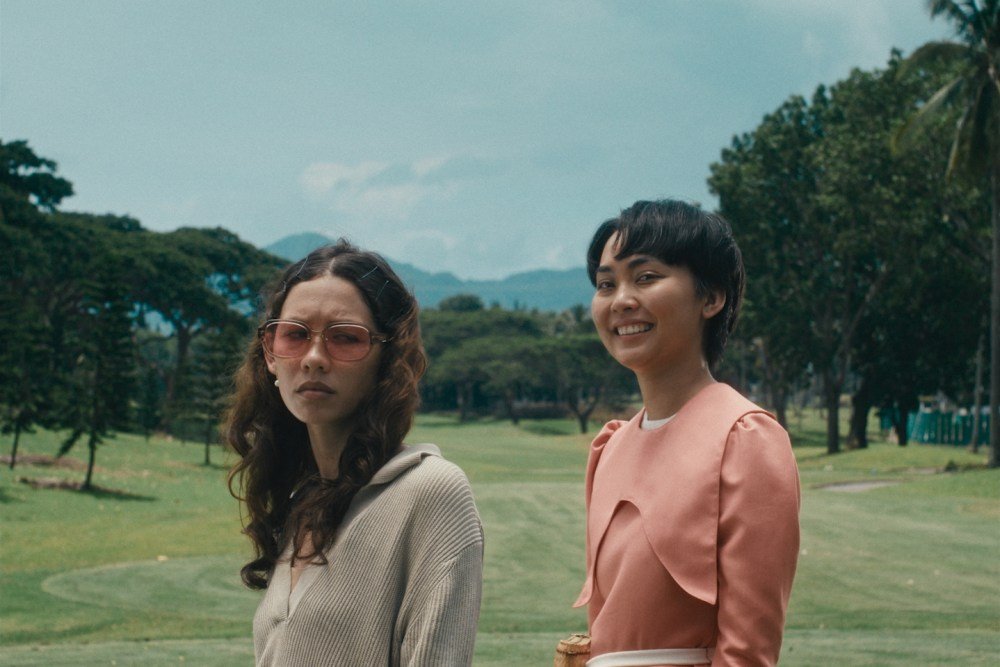

  • Rafael Manuel on Why the Golf Course in ‘Filipiñana’ Is a Metaphor for Inequality in the Philippines

    Rafael Manuel on Why the Golf Course in ‘Filipiñana’ Is a Metaphor for Inequality in the Philippines

    Rafael Manuel’s new indie feature “Filipiñana,” which opens Friday in New York, is set against a backdrop of oppressive heat and drought. The narrative follows Isabel, a 17-year-old from the provinces of the Philippines, who gets a job at a prestigious golf resort.

    Manuel felt the golf course was the perfect setting for the film to explore societal inequities in the country. With the very first courses established on American military bases, the local elite eventually took over, making the golf course a center of power.

    In his framing, the country club members are presented high in the frame to show the hierarchy structure, and the servants are presented low in the frame — an early shot shows Isabel sitting on the grass as she places a ball on the tee for a club member.

    Manuel says, “That’s what attracted me to the golf course.” He adds, “When you think about it, it’s a good metaphor for the country in that it’s very large and situated on a very fertile plot of land that’s toiled on and worked on by so many people, but ultimately enjoyed and profited from by only a select few.” That, Manuel says, illustrates the class divide that has been so ingrained in the Philippines.

    Manuel spoke with Variety about how the film relates to the colonial past of the country, and the metaphorical symbolism of the golf course. He also talks about reflecting that through Isabel’s gaze and why she represents an awakening.

    Can you talk about your main characters Isable and Clara and what they represent and what you wanted their gaze to say? I very much get the notion that Clara is an outsider in all of this.

    The first image you see of Isabel is of her opening her eyes, and the last image you see of Clara is of her closing her eyes. For me, that’s very much representative of their narrative arcs. Isabel’s journey is one of awakening and remembering the past, seeing it and hearing it. Whereas Clara’s journey is one into slumber, inaction, passivity, and perpetuating the system. Clara is a tragic character. Isabel, on the other hand, is a heroic character because I feel like Isabel moves towards action, and Clara moves towards inaction.”

    What went into that casting process and finding Jorrybell Agoto as Isabel and Carmen Castellanos as Clara?

    Clara is a non-actor, but Isabel was in the short. It was only her second time acting, and she was a very inexperienced actor. My directing style is to try to get out of the way as much as possible, so I spent a lot of time building the world of the character and of the film. When it comes to being on set, I try to direct them as little as possible because I trust all the work that we both did in pre-production. Freedom is such an important part of acting because every single decision and gesture that they make, they have to freely choose it. That’s how you get good acting. What I really look for in actors is playfulness because I see playfulness as a sort of resistance. What we try to do is build all these restrictions around them and then see how their playfulness and their autonomy express themselves through the parameters we’ve set.

    Can you talk about working with your production designer Tatjana Honegge and cinematographer Xenia Patricia in terms of establishing the film’s visual language. What did you want to say?

    It was very much a team effort. I’d also like to mention Vincent Villa. He’s a French sound designer based in Cambodia, and I feel like sound has a very important role to play in this film — even in the visual aesthetic — because sound guides the eye on where to look. I feel like the conversations we had were about developing an oral grammar that could give shape, texture, color, and sound to this invisible violence that we were very interested in exploring.

    A lot of the conversations I had with Xenia were about my obsession with landscape photography and how it’s been used in different contexts as a colonial tool. Susan Sontag’s “On Photography” talks about how the American West was colonized through landscape photography. If you go through the Philippine archive of the turn of the 20th century — around the 1800s and 1900s — you’ll see that the Philippines was also colonized through photography.

    Simon Schama writes about this in his book “Landscape and Power.” He talks about how landscape is a projection of man’s imagination onto rock, grass, and water. So the question naturally arises: Whose imagination is being projected? These colonial themes — this dreamwork of imperialism — very much inform the visual language of “Filipiñana.” You’re constantly seeing characters framed in these wide landscapes, and their small actions become a form of resistance to the colonizing gaze.

    A lot of the film is slow in terms of pacing, allowing moments to breathe. What was behind this choice?

    The slowness, for me, has a twofold purpose. First, it really helps communicate the heat and lethargy — the kind of lethargy that the Filipino humidity and the stifling 50-degree heat of a Filipino summer can induce. When you think about why the Philippines has stayed the same for so long — why the country has struggled with the same problems for so long — I think the heat has a part to play in that. If you’ve ever been in heat like that, so humid and sticky, you realize quite quickly that it’s like a quagmire. It makes action so hard to do because all you want to do is lie down. The slow pacing of the film was meant to communicate that. The second reason behind the deliberate pacing of the film was that I really wanted to capture this Filipino experience of waiting for change.

    What do you want people to take away from watching this?

    I feel like so much of what we’re trying to do is create a space for the viewer to exercise their autonomy—autonomy of sight, hearing and feeling. I say that because the way the drama is structured is very minimal. I feel like conventional narrative, in a way, is a form of gentrification. When you take into consideration how so many spaces — not just in the Philippines but around the world — are privatized, you realize you can step out of your house and, in five seconds, you’re being sold something by a billboard. Actually, you don’t even need to step out of your house; you can just go on Instagram. So, we really tried not to be didactic and instead create an autonomous space for viewers to practice their autonomy — or to be autonomous, if they choose to be. So when you ask me what I want them to take away, it’s hard to say because they can take away whatever it is they want to take away. The film’s designed like that.

    I guess for me, one of the main things I’m interested in hearing from audiences after a screening is: How did they view the ending? Did they view it as an optimistic ending, or did they view it as a pessimistic one?

    This interview has been edited and condensed.

  • Disney+, Pokemon Company Ink Global Distribution Deal, Including New Stop-Motion Series

    Disney+, Pokemon Company Ink Global Distribution Deal, Including New Stop-Motion Series

    Disney+ has set a global distribution deal with the Pokémon Company International that will include a new stop-motion series coming in 2027.

    The announcement comes on the heels of “Pokémon the Series: The Beginning” beginning to air on Disney XD earlier this month, marking it as the first title to launch under the new global distribution agreement. The show, which follows Ash and Pikachu as they embark on adventures throughout the Pokémon world, is now available for streaming on Disney+ in the U.S. and some international markets.

    Titled “Pokémon Tales: The Misadventures of Sirfetch’d & Pichu,” the new stop-motion project hails from animation studio Aardman and will debut on Disney XD and stream exclusively on Disney+.

    Per the description for the new series, “Pokémon Tales: The Misadventures of Sirfetch’d & Pichu”: Sirfetch’d and Pichu embark on an epic journey through the Galar Region. Together, they set out on a gallant quest to help and protect Pokémon across the region. Their missions rarely go as planned, but their noble deeds forge their friendship as they step bravely into the unknown where peril, alliances, rivalries, extraordinary Pokémon, and endless laughs await them.

    “Pokémon Tales: The Misadventures of Sirfetch’d & Pichu” creative team at Aardman includes director Tom Parkinson, creative director of IP development Nat McKay and model making creative lead James Young.

    The Pokémon-Disney distribution deal news was announced during a panel at Pokémon XP Friday, which is taking place over the next three days at the Moscone Center in San Francisco.

    “Pokémon has that rare ability to mean something to longtime fans while continuing to feel completely relevant to young audiences today,” Ayo Davis, president of Disney Kids and Family. “This new series ‘Pokémon Tales: The Misadventures of Sirfetch’d & Pichu’ brings Aardman’s signature stop-motion artistry with a bold, playful new perspective to this beloved world, giving audiences a fresh way to experience the characters they know and love. Along with ‘Pokémon the Series: The Beginning,’ these series are powerful additions to Disney XD and Disney+.”

    “These stories, full of adventure and heroism, all told from the perspective of Pokémon is made even more exciting through the lens of the incredible filmmakers at Aardman,” Pokémon director of original animation Phil Rynda added. “Audiences will be delighted getting to know the Sirfetch’d & Pichu, and wonderful cast of Pokémon, featured in this series. Aardman has brought Galar to life in a way that makes you feel like you can smell the air, touch the tree bark, and want to adventure alongside our series heroes.”

    Watch the trailer for the upcoming stop-motion series “Pokémon Tales: The Misadventures of Sirfetch’d & Pichu” below.

  • What’s New on Netflix in September 2026

    What’s New on Netflix in September 2026

    Whether you’re looking to settle into September with cozy classics or start a new series, Netflix has a long list of titles joining or returning to the streamer this fall. 

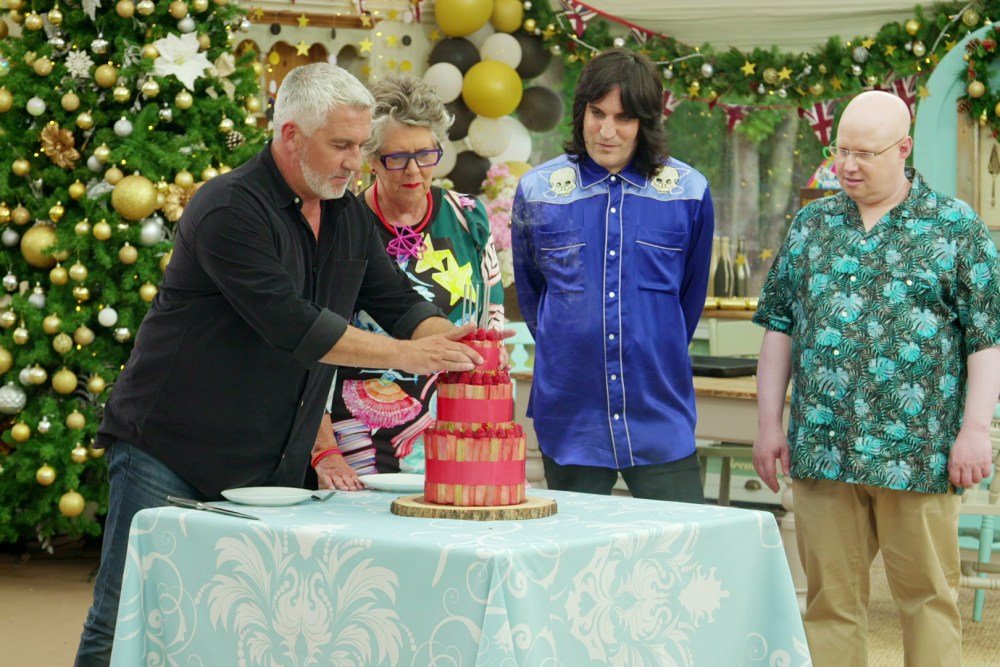
    The long-awaited “Earle Meets World” is available Sept. 4. Following Gen-Z’s ultimate It Girl, Alix Earle, the reality series shows a new side of her, balancing her burgeoning business empire with being that unfiltered, twenty-something, hot mess everyone is used to.

    If reality TV isn’t scary enough, Netflix is adding six “Resident Evil” movies on the heels of the biopunk action horror film series latest film coming to theaters on Sept. 18. 

    More peaceful options include the return of “Great British Baking Show,” “Shark Tales” and “Sleepless in Seattle.”

    Here are all the new titles coming or returning to Netflix in September.

    Sept. 1 

    “Jared Freid: The Family Plan”

    “Untold Raygun: Breaking Badly”

    “17 Again”

    “About Time”

    “Alien” 

    “Aliens”

    “Antz”

    “Battleship”

    “Big Daddy”

    “The Blues Brothers”

    “The Boy Next Door”

    “Conan the Barbarian”

    “Cruel Intentions”

    “Dragnet”

    “The Flintstones”

    “Gothika”

    “Greta”

    “Heartland: Season 19”

    “Jarhead”

    “Jaws”

    “Jaws 2”

    “Jaws 3”

    “Jaws: The Revenge”

    “Kick-Ass 2”

    “Knocked Up”

    “Liar Liar”

    “Neighbors”

    “Phantom Thread”

    “Ready or Not”

    “Resident Evil: Afterlife”

    “Resident Evil: Extinction”

    “Resident Evil: Retribution”

    “The Rite”

    “Scarface”

    “Shark Tale”

    “Sleepless in Seattle”

    “Straight Outta Compton”

    “T2 Trainspotting”

    “The Texas Chainsaw Massacre”

    “Uncle Buck”

    “Unfriended”

    Sept. 2

    “Driven” Seasons 1-3

    “Lovesick” 

    “Resident Evil: Damnation”

    “Resident Evil: Death Island”

    “Resident Evil: Vendetta”

    “Turning Point: Generation 9/11”

    Sept. 3

    “Fito Páez: The World Within a Song”

    “Folktales”

    “The Gentlemen”

    “Major Crimes” 

    Smile 2”

    Sept. 4

    “Earle Meets World”

    “Teenage Wasteland”

    Sept. 5

    “Emeril Tailgates” Season 1

    Sept. 8 

    “Dang”

    “Fauda” Season 5 

    “Stavros Halkias: Uncle Stav” 

    “Untold Mr. T: I Pity The Fool” 

    Sept. 9

    “Prom Night”

    “Tyler Perry’s Why Did I Get Married Again?”

    Sept. 10

    “Call My Agent! The Movie”

    “Crew Girl”

    “NFL Melbourne Game”

    “The Perfect Lie”

    “We Don’t Live Here Anymore”

    Sept. 11

    “Go Team!”

    “Physical 100: Italy” Season 1: Batch 1

    “Stolen Heartbeats”

    “Tribeca 25”

    Sept. 13

    “Dog Man”

    Sept. 14

    “Gabby’s Dollhouse” Season 14

    “Hot Ones: Extra Heat” Episode 2

    “When Hope Calls” Seasons 1-2

    Sept. 15

    “The AI Doc: Or How I Became an Apocaloptimist”

    “I Survived a Serial Killer” Season 1

    Sept. 16

    “The Doll”

    Sept. 17 

    “The Fixers”

    “Monster: The Lizzie Borden Story” 

    “Not a Stranger”

    “Plastic Beauty”

    “Stranger Things: Tales From ’85: Season 2”

    Sept. 18

    “Best of the Best”

    “Pokémon Horizons: Season 3—Rising Hope Part 4”

    Sept. 20

    “Stop! That! Train!”

    Sept. 22

    “Doc: Season 2”

    “Minerva Academy”

    “Party Down” Seasons 1-3

    “Doc” Season 2

    Sept. 23

    “Habeas Corpus”

    “Lifehack”

    “Wonka’s The Golden Ticket”

    Sept. 24

    “A Different World”

    “Delusion”

    “My Sad Dead”

    “Oculus”

    Sept. 25

    “The Final Problem”

    “Steel Ball Run Jojo’s Bizarre Adventure: 2nd-3rd Stage”

    “Unabomber”

    Sept. 29

    “Lego One Piece”

    “Mononoke The Movie: Chapter Ⅲ – The Curse of the Serpent”

    “Murder in a Small Town” Seasons 1-2

  • New Operator of L.A.’s Bruin Theatre Says His Antisemitic Comments Are “Distractions From Reopening”

    New Operator of L.A.’s Bruin Theatre Says His Antisemitic Comments Are “Distractions From Reopening”

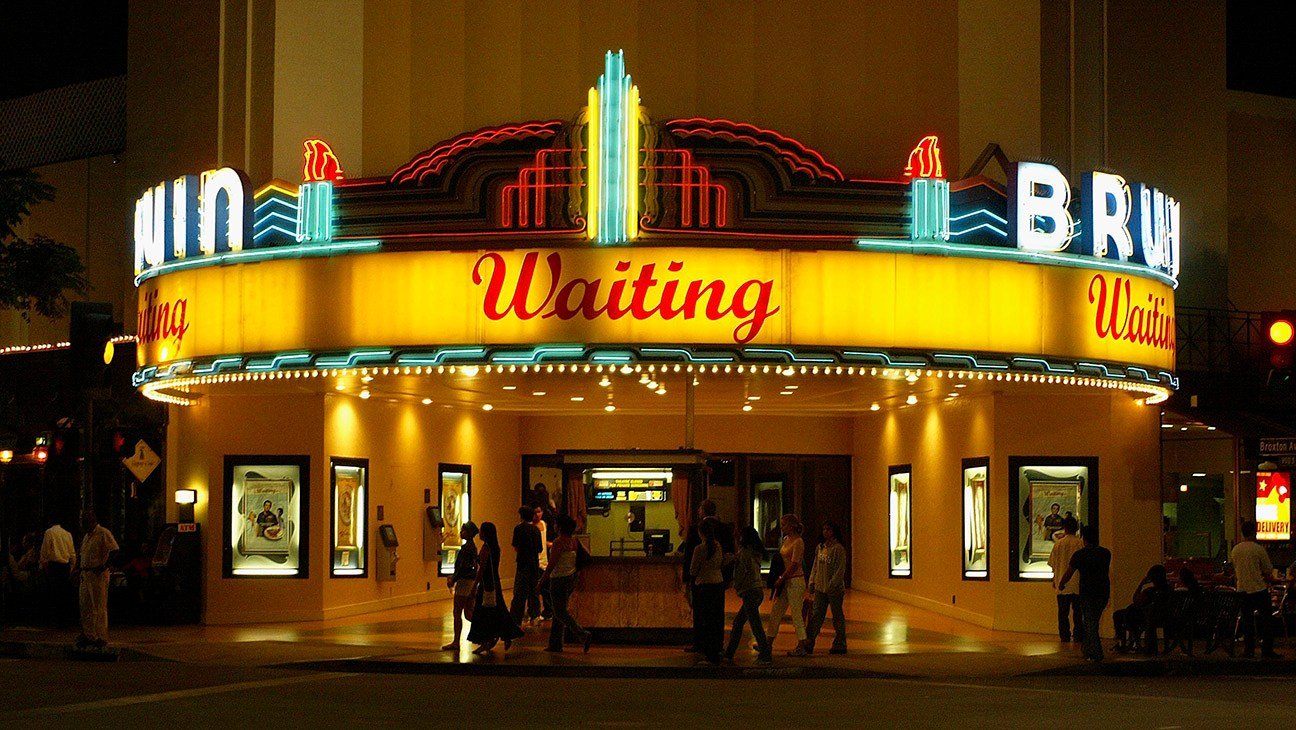
    A comeback for Los Angeles’ iconic 88-year-old Bruin Theatre in Westwood is now in doubt. Information about its new operator, Canadian exhibitor Rui Pereira, may kill the revival.

    On Aug. 26, IndieWire published an investigation highlighting claims of a checkered history with previous endeavors in Toronto’s film community. Among the accusations are nonpayment and unlicensed screenings at another independent venue. Most notably, the outlet — which, like The Hollywood Reporter, is owned by Penske Media — highlighted Pereira’s history of making racist and antisemitic remarks on his theaters’ social media accounts. These included references to “fake Jews,” “sub human devils,” “zionazis” and “murderous filthy vile hasbara fake Jew scumbags.” After another user referred to him as antisemitic, he responded on a Bruin Theatre-branded account: “You mean anti-septic?”

    In an interview with THR, Pereira, 60, described any focus on his rhetoric as “nonsense” and “bullshit,” explaining, “whatever is there [online] doesn’t have to do with what I’m doing [at the Bruin]. This is a contrived situation that exists in the false fantasyland of the Internet.” He argued he’s not a public figure. “I’m just a guy, a working person. My business is selling popcorn and pop and making sure the film is on the screen.”

    Still, Pereira — who says he has no investors or partners in either his Toronto venues or his Bruin endeavor (he signed the lease in July) — believes that the highlighting of his comments may be blowback for his prior hosting of screenings of the recent Israel-critical films No Other Land and Palestine 36 in Canada. “I’m sympathetic to the Palestinians and to humanity,” he says.

    Pereira sought out the Bruin after he learned that a previous deal for it had collapsed. The earlier effort involved the director Jason Reitman, who has taken over the Westwood Village Theater across the street. The Bruin’s owners are descendants of Spyros Skouras, once the president of 20th Century Fox. The family could not be reached for comment.

    Pereira, who contends he isn’t “anti-Jewish,” asserts, “Zionism has now been conflated with genocide and ethnic cleansing.” (Both charges are subject to significant dispute among scholars of the Israel-Palestine conflict.) He tells THR, “everyone is welcome at the [Bruin] theater, including Zionists. I’ve come to open the theater for everybody.”

    The Bruin is located at the heart of one of the most demographically Jewish areas of the Los Angeles region, which features the third-largest concentration of Jews in the world after New York City and Tel Aviv. According to a recent survey, 88 percent of Jews believe that Israel has the right to exist as a Jewish, Democratic state — the historically accepted definition of Zionism.

    The venue is among a group of local exhibition landmarks, including Hollywood’s Cinerama Dome, Glendale’s Alex and Westwood’s Village, whose resurrections as first-run movie houses has generated a surge of civic optimism. In recent years, the Bruin has repeatedly played itself on screen, first in Quentin Tarantino’s Once Upon a Time in Hollywood, when Sharon Tate watches herself in The Wrecking Crew, and again earlier this month in FX’s The Shards, when Bret Easton Ellis visits to see The Shining.   

    Filmgoers mill outside the Bruin Theatre in 1978 in anticipation of Francis Ford Coppola’s Vietnam war film ‘Apocalypse Now.’

    George Rose/Getty Images

    Pereira tells THR that he doesn’t believe his rhetoric will jeopardize the Bruin’s ability to operate, including working with major studios to secure prints and premieres, as well as attracting prominent filmmakers to participate in post-screening talks. But a group of local Jewish organizations object to his stewardship of a key cultural venue in the city.

    “Hate has no place in Los Angeles,” says Anti-Defamation League Los Angeles senior regional director David Englin. “Moviegoers, employees, production staff, and anyone involved in any theater have a right to be free from antisemitism, racism, and other forms of bigotry and discrimination.” Rabbi Noah Farkas, president and CEO of the Jewish Federation Los Angeles, says: “The Bruin’s reopening should be a bright spot for Hollywood. It is a signal of the industry’s resurgence and a moviegoing home that is open to everyone. There is no context in which calling Jews ‘sub human devils’ or celebrating a swastika outside a Jewish family’s home is anything but naked antisemitism, and anyone entrusted with a theater this central to the business must reject that hatred unequivocally.”

    Jim Berk, CEO of the Simon Wiesenthal Center, explains, “The comments attributed to Rui Pereira, whose entity operates the Bruin Theatre, are not just disturbing; they echo a script Jews have heard before. To dehumanize Jews, invoke Goebbels and Nazi imagery, tell Jews to ‘go back to Poland,’ and describe a swastika painted outside a Jewish family’s home as an appropriate symbol for ‘zionazis’ is not criticism of Israel. These are old hatreds, rehearsed in new costume.” He adds, “Antisemitic hatred and the dehumanization of Jews cannot be dismissed as political discourse simply because Israel is invoked,” and notes, “the community deserves an artistic venue operator to operate without bias towards any group, irrespective of their religion or race and expects the controlling ownership of the Bruin to make this commitment without delay.”

    Ari Ingel, executive director of Creative Community for Peace, a non-profit which seeks to counter anti-Israeli sentiment in Hollywood, called Pereira’s remarks “appalling and completely unacceptable,” explaining, “at a time when Canada’s Jewish community is confronting record levels of antisemitism, this is one Canadian export Los Angeles can do without.”

    After hearing of the Jewish organizations’ response to his rhetoric, Pereira acknowledged it was “offensive” and he “must take responsibility.” However, he also characterized the broader conversation about his conduct as “distractions from reopening the Bruin and the excitement and positive energy it has generated.”

  • Late F1 Icon Gilles Villeneuve Drives For Speed, Trophies in ‘Rise of a Legend’ Trailer (Exclusive)

    Late F1 Icon Gilles Villeneuve Drives For Speed, Trophies in ‘Rise of a Legend’ Trailer (Exclusive)

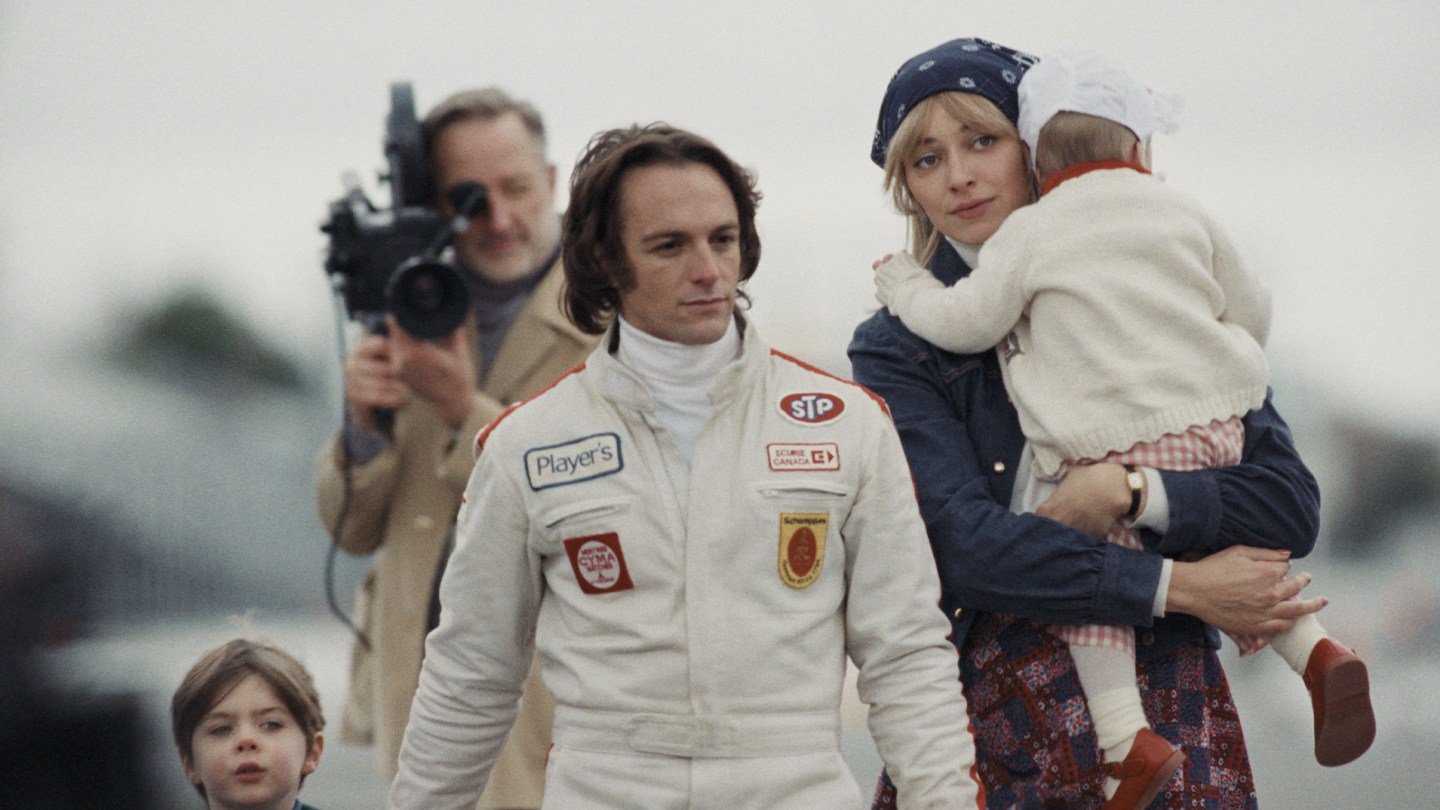
    Gilles Villeneuve, the late Canadian race car legend, shows his daring, aggressive style both on and off the Formula 1 track in the trailer for the Villeneuve: Rise of a Legend biopic set to world premiere at the Toronto Film Festival.

    Directed by Yan Lanouette Turgeon, the film stars Remi Goulet as the F1 car legend and charts his ascent to the dizzying heights of elite car racing, well before Villeneuve’s tragic death at Zolder in 1982. The iconic race car driver rose from poor and rural roots in Quebec, where he snowmobiled his way across Canada and eventually, due to an obsession for speed and checkered flags, reached the ranks of the international racing scene.  

    The film trailer, with Rosalie Bonenfant playing Villeneuve’s wife, doesn’t shy away from portraying the impact of his fame and fortune as an elite race driver on his family. After Villeneuve’s wife scolds him for deciding on his own to sell their home to bankroll his entry into top-flight acing, his father (played by Patrice Robitaille) warns his blank-faced son at another point in the trailer: “You have a family. You’re not alone anymore.”

    Of course, Villeneuve brought that same single-minded and aggressive focus to the F1 race track to become one of the sport’s most respected daredevils in his red Ferrari. Written by Daniel Roby and Guillaume Lonergan, Villeneuve: The Rise of a Legend is produced by Christian Larouche, associated producer Tim Ringuette and co-producer Marc Cote. Christian Simoneau, Melanie Villeneuve and Fabrice Barrilliet executive produce.

     “It is a privilege to launch the film at the Toronto International Film Festival and present it to an international audience. Gilles Villeneuve is an iconic Quebec figure whose legacy continues to resonate around the world,” Larouche and Ringuette said in a statement.

    Le Pacte is handling international sales on the film set to close TIFF on Sept. 19.

  • How ‘Idiots’ Director Macon Blair Conjures Big Laughs From the Year’s Cruelest Villain: ‘He’s Actually a Monster That Has to Be Captured Before More People Get Hurt’

    How ‘Idiots’ Director Macon Blair Conjures Big Laughs From the Year’s Cruelest Villain: ‘He’s Actually a Monster That Has to Be Captured Before More People Get Hurt’

    “This guy really does need to be contained, because he’s got such potential for danger and violence and mayhem.”

    Macon Blair is describing the antagonist of his latest movie. He’s no stranger to menacing genre fare, as evidenced by the two other films he wrote and directed: 2017’s “I Don’t Feel at Home in This World Anymore” and 2023’s “Toxic Avenger” reimagining.

    But despite pitch-black elements, “Idiots,” in theaters Friday via Independent Film Company, is a rollicking comedy. In it, two knuckleheads — the well-intentioned and religious Davis (O’Shea Jackson Jr.) and sleazy bro Mark (Dave Franco) — get a job chauffeuring troubled teens to rehab. While their first ward, Sheridan Kimberley (Mason Thames), appears to be just another troubled rich kid, he turns out to be way too dangerous for his clueless caretakers.

    Having Sheridan actually be a cruel person was one of the key audience expectations the writer-director hoped to flip in the pursuit of laughs.

    “It was about wanting to have the most formidable villain possible for these guys to go up against, and just play off the idea that audiences are smart and they’ve seen a lot of movies,” Blair says. “If you see a premise like this … ‘There’s two dumbbells that have a kid in the car.’ Your expectations are probably going to be that at some point along the way they will give him some advice or wisdom or a hug and he will be redeemed. He’ll get straightened out sooner or later. I really like the idea of taking the wheel in the complete opposite direction, where at a certain point you realize, ‘No, he’s actually a monster that has to be captured before more people get hurt,’ and playing off people’s expectations.”

    Sheridan’s cruelty also fueled the film’s oft-shifting tone, which keeps audiences uncomfortably guessing what cringy situation comes next. Without giving away too much, the film’s grossest scatological joke happens right before Sheridan has a sinister scene with a sex worker (Kiernan Shipka).

    “There’s this big, extremely over-the-top gross-out comedy punchline, and then about 10 seconds later, it goes 100 degrees in the opposite direction,” Blair says. “It’s meant to be whiplash that resets the tone of the movie. As soon as that happens, we’re back into the jokes, but in theory, that clenched feeling from that one moment remains, and that’s how you feel about Sheridan for the rest of the movie. When they’re running around the block trying to capture him, it’s not as cartoonish as it otherwise would be.”

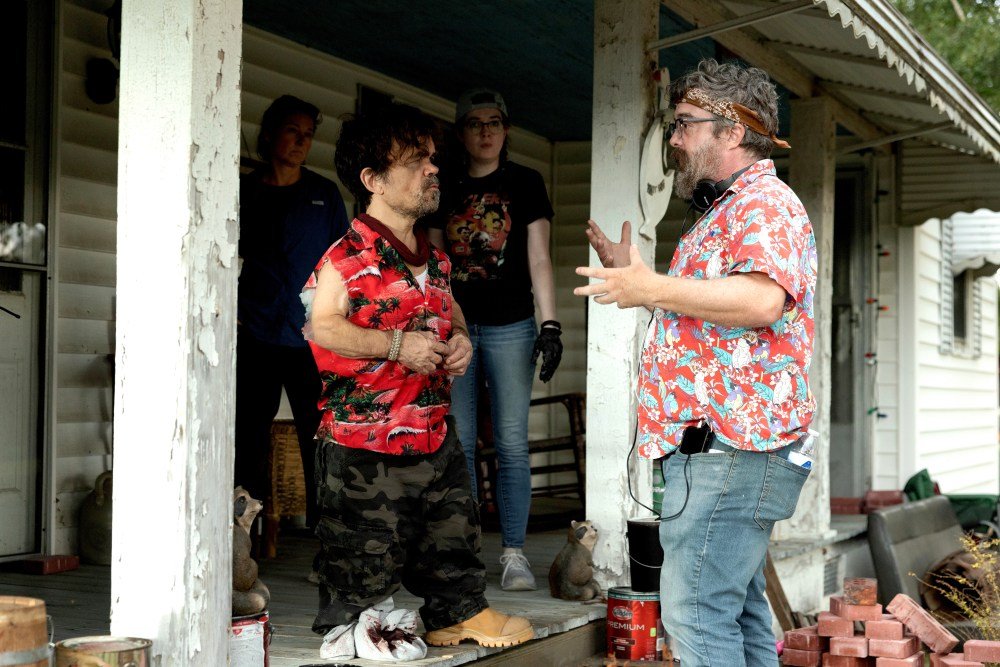
    “Idiots” takes the structure of a road trip movie, as Davis and Mark work desperately to keep Sheridan under control and bring him to rehab. But along the way they reckon with Mark’s busted car, a werewolf-obsessed rapper (Nicholas Braun, in an outrageous role), a militant kidnapper (Peter Dinklage), bad drug trips and more.

    Beyond the plot, Blair and his DP Guillermo Garza hoped to give the comedy a dynamic visual style. Despite the tight indie schedule, Blair says all of this pressure helped make the movie stronger due to creative problem solving.

    “Because the schedule was so short, there were a lot of times where we had a very detailed shot listed/storyboarded plan going in. But we would get in the day, and there wasn’t going to be enough time to get all of it,” Blair says. “So a lot of times on the fly, Guillermo and I would redistill the scene and say, ‘OK, if we thought we were going to do this moment in three shots, what’s the version of it where it’s one shot and we just do it with a move?’ It was one of those things where the limitations of time or light or whatever forced us to … I don’t mean ‘not be precious about it.’ It’s kind of the opposite of that. To really drill down on: ‘gun to my head, what can we afford to lose?’ So the scenes become as specific as possible, because it’s really just the bare bones of what you very essentially need. I’m not saying, ‘I would go into another movie asking for fewer days.’ I wouldn’t. But I loved how that happened, because if we had the luxury of ‘you can shoot as much as you want,’ I don’t think we would have come up with the same solutions, and it would have felt different. It would have felt a little less sharp.”

    The one comedic element Blair didn’t want to stick his neck out for? The much-discussed original title. The film premiered at this year’s Sundance Film Festival as “The Shitheads,” but was renamed “Idiots” once Independent Film Company acquired and dated the film. It wasn’t a war Blair felt like waging.

    “That was part of the conversation we had internally about changing the title: It wasn’t so much a full ‘You’re not allowed to do this.’ It was just a list of limitations,” he says. “It was a lot of things that had to do with where posters could be displayed in public, and how you could obscure the names. It started to feel like it was going to be an uphill battle promotion-wise with this movie. Given that it’s a smaller movie and it’s coming out in the summertime, and there are a ton of movies to compete with, we didn’t want to hamstring ourselves with, yes, it’s a funny title, but to cross your arms and say, ‘By God, I’ll have fewer people see the movie to hold on to this title.’ It seemed like cutting off your nose to spite your face. So we said, ‘Let’s just pivot to something that’s not going to give us that hassle.’”

    Watch the trailer for “Idiots” below.

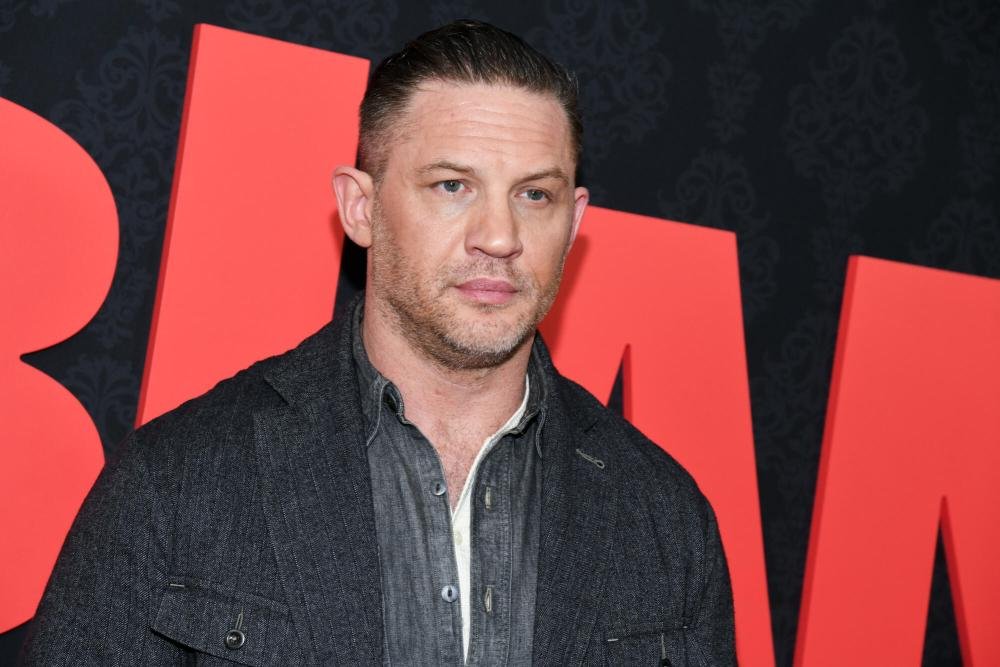
  • Tom Hardy Gets X-Rated About Kathy Bates, Raps About Willem Dafoe’s Green Goblin and Recites Shakespeare on His Wild New Album

    Tom Hardy Gets X-Rated About Kathy Bates, Raps About Willem Dafoe’s Green Goblin and Recites Shakespeare on His Wild New Album

    Tom Hardy is best known as a movie star who plays rough-and-tumble characters, and he’s brought that energy to the mic on his latest project. The actor who records music under the alias Frankie Pulitzer just dropped a collaborative album called “Czarface Meets Frankie Pulitzer” with underground rap supergroup Czarface, which consists of duo 7L & Esoteric and Wu-Tang Clan’s Inspectah Deck.

    For fans of Hardy’s Hollywood work, he peppers in plenty of film and comic book references into his lyrics. The actor is no stranger to comic lore, as he played the villainous Bane in 2012’s “The Dark Knight Rises,” as well as portrayed Spider-Man antihero Venom in three standalone movies and a cameo appearance in “Spider-Man: No Way Home.”

    In the song “Raw Forever,” Hardy loads his verse with references to Martin Scorsese’s 1999 film “Bringing Out the Dead,” Willem Dafoe’s portrayal of baddie Green Goblin from 2002’s “Spider-Man,” Marvel evildoer Doctor Doom, DC Comics hero Sergeant Rock and Sidney Lumet’s classic 1975 film “Dog Day Afternoon.”

    I’m Bringing Out the Dead like a paramedic out the Cage, directed by Marty
    Frank Pierce the gang’s here welcome to the party
    I be somewhat of a scientist like Willem Dafoe
    If you know then you know
    Goblin up crumbs
    Hit ’em with the fly kill ’em with the low
    Profile, no smile, exile the old style
    So vile, exhale the smoke cloud, blow trial
    Dog Day Afternoon
    When I talk Sgt. Rock on the block with the Glock aftershock from the boom
    Rip you out your costume
    Stuff you in the smallest locker, lock you in the locker room
    Doctor Doom how I’m the Victor the Scripture

    In the song “Mad Technology,” Hardy namechecks two Stephen King books-turned-movies (“Cujo” and “Misery”), and says something wild about the star of the latter, Kathy Bates. Elsewhere in his verse, he shouts out Marvel hero Thor, and later references Shameik Moore, who voices Miles Morales in the “Spider-Verse” films and starred in the drama “Dope.”

    You shit-for-brain no-name lame, that bites like Cujo
    I’d rather masturbate to Kathy Bates than hear you flow
    And you know that Misery, it loves company

    …

    Beatin’ P is not an easy chore like defeating Thor

    …

    Sprinkle Dope Across the Verse, shout to Shameik Moore

    At the end of “Grim-Visaged War,” Hardy recites Shakespeare‘s famous “Richard III” monologue in a voice very reminiscent of his Bane performance.

    Lastly, there’s a “Titanic” reference on “Gnawing at My Rhyme Like a Poisonous Rat.”

    Yo, you act amused like DiCaprio scratching his pencils
    To capture your figure you love the attention that’s all clear

    Although Hardy has not spoken publicly about his work as Frankie Pulitzer, he is no stranger to rapping, having previously appeared on other Czarface albums as well as dropping a few loose collaborative singles.

    Hardy also recorded an album at the turn of the millennium called “Falling on Your Arse in 1999″ under the moniker Tommy No 1, along with his producer friend Edward Tracy, aka Eddie Too Tall. The record was never properly released, but it appeared online in 2018.

  • Spotify Names Joe Hadley VP of Global Music Content and Partnerships

    Spotify Names Joe Hadley VP of Global Music Content and Partnerships

    Spotify has promoted Joe Hadley to vice president of global music content and partnerships, the company announced on Friday.

    Hadley, who has been at Spotify since 2022, will now oversee both the streaming service’s music editorial and partnerships teams, and he’ll work directly with artists, labels and music publishers. Hadley will report to Charlie Hellman, Spotify’s SVP and Global Head of Music. Previously, Hadley’s title was global head of music partnerships and audience.

    “Editorial is a key part of bringing an essential human touch to Spotify,” Hellman said in a statement. “The team’s judgment and taste is what fans and artists rely on. Joe’s capable leadership will keep artist advocacy at the center of our work and bring even more impact to the programming we do.”

    Along with Hadley’s promotion, J.J. Italiano has also been named of Head of Editorial. He will report to Hadley.

    Prior to joining Spotify, Hadley was a prolific booking agent, serving as the head of hip-hop and R&B at CAA, where his clients included Beyoncé and A$AP Rocky. Before then, he was an agent at Windish. Italiano had his first stint at Spotify from 2017 to 2019 before heading to YouTube in 2020. He came back to Spotify in 2022.

  • Owen Thiele on Portraying Queer Friendship in ‘Adults,’ Working With Connor Storrie and Being a ‘Nepo Grandchild’

    Owen Thiele on Portraying Queer Friendship in ‘Adults,’ Working With Connor Storrie and Being a ‘Nepo Grandchild’

    Owen Thiele has a lot more riding on “Adults” this time around.

    The FX comedy returned for its second season Aug. 27 with an audience now invested in its messy, co-dependent group of twentysomethings. Thiele, who plays Anton, says the cast spent much of the wait for renewal worried the show might not come back at all. “But I feel like now we have a little, tiny, beautiful cult following that hopefully will stick by us and get us that third season..”

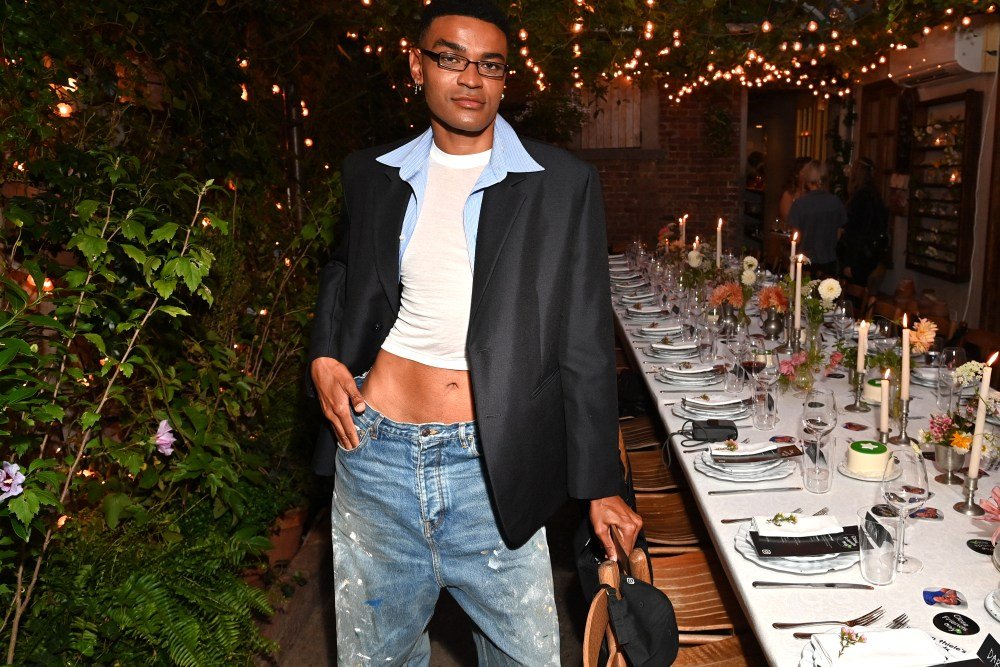
    That was the mood when Thiele sat down with Variety at an Instagram-hosted dinner at Palma in New York celebrating the new season. It can be hard to wrangle even the closest friends to a weeknight event, especially only one day after a booze-heavy premiere the previous night. But Thiele is unquestionably popular. Bowen Yang, Molly Gordon and Mary Beth Barone were just a few of his bold-faced friends who made their way to the West Village for a multi-course Italian meal and many, many dirty martinis.

    Instagram also used the dinner to spotlight Instants, its newer feature for sending spontaneous photos through DMs, while Thiele is set to share behind-the-scenes content from the event on the platform’s @notfit4main account.

    Getty Images for Meta

    Getty Images for Meta

    Getty Images for Meta

    One reason for Thiele’s bursting-at-the-seams friend group is his growing list of Imdb credits. The 29 year-old also appears in Prime Video’s “Overcompensating,” where his character George represents a very different kind of queer friendship than Anton does, and he’s headed to the big screen in “Peaked,” Molly Gordon’s upcoming comedy, alongside Connor Storrie and Dua Lipa.

    He’s also writing “Off Color,” a semi-autobiographical Amazon comedy inspired by his experience growing up Black and gay in a white Jewish family. The project pulls from his fascinating family history: Thiele is the son of music producer Bob Thiele Jr. and the grandson of iconic record producer Bob Thiele (“What a Wonderful World,” which Thiele co-wrote for Louis Armstrong, might ring a bell.) Susie Essman, known for her iconic role in “Curb Your Enthiusiasm,” is set to play Owen’s mother.

    Below, Thiele talks to Variety about portraying queer friendship on screen, being a “nepo grandchild” and working with Connor Storrie and Dua Lipa:

    What can we expect from Season 2 of “Adults” — and Anton and Paul?

    Well, a lot happened. A lot happened. So I’m invested too. When I got those scripts, I was immediately reading. I was hoping that the kiss was addressed and it is but it’s addressed in a way that I think people wouldn’t expect.

    Like avoidant-attachment vibes?

    Sort of, sort of. It’s sort of like me in a relationship.

    I feel like you pull from your own life a lot for the character.

    Yes, I do, I do, I do. A lot of people would say I can’t act because of that. But the writers did such a brilliant job crafting this season because it doesn’t feel at all expected, and there are so many twists and turns that when I was filming it, I was like, “What? This is happening?” I couldn’t believe it.

    You’re in “Overcompensating”, too: the two shows reflect very different types of queer friendships. What do you think might have been missing in representations of queer friendship before, and what do those two separate arcs bring to it?

    I think “Overcompensating” does such a brilliant job of showing someone who isn’t comfortable with themselves finding solace and space in people who are comfortable with themselves. And I think what “Adults” does is show this immediate comfortability and coziness. Sexuality isn’t even uttered.

    But I think they’re two very important stories to tell. One is what I felt in high school. I came out in high school, and I was very much looking for somebody who I could relate to in that way, which is Benny [Benito Skinner] to George [Thiele]. And I feel like in “Adults,” I’m kind of where I am now, where it’s just unspoken and unsaid and it doesn’t really matter.

    I have to ask about “Off Color.” I imagine the “nepo baby” conversation is going to come up. How are you feeling about putting something this personal out there?

    One hundred percent. Everyone thinks I’m a nepo baby. I don’t think my dad was successful enough for me to be a nepo baby.

    But your grandpa was successful. I was on his Wikipedia today!

    No, my grandpa — I am. No, no, he was successful. I am a nepo grandchild, for sure.

    I’m scared, and I’m also ready. I’m like, you know what? I want to put myself out there in every way possible and see what happens. Some things will not be received well, and I’m ready for that. And hopefully other things will be.

    What have the conversations with your family been like while writing?

    It’s hilarious. It feels like therapy. It’s family therapy. My mom will be like, “I never said that.” And I’m like, “You definitely said that.” We’re all working through things, and I’m working through things as I write this show.

    I’m not running things by them. I’m more like sending them scripts, and my mom being like, “Why’d you make me a bitch?”

    Susan Essman is playing her. How did she get involved?

    I met with her. I sat with her and explained my life story to her, and she, for some reason, wanted to be involved, which is so crazy to me still. She’s Jewish, my parents are Jewish. But more than that, she’s an idol. She’s one of my comedy idols. She’s a comedy legend. So I feel very lucky.

    I can only think of her as her character in “Curb Your Enthusiasm.” What kind of energy does she bring playing your mom?

    My mom is a helicopter mom, but Owen in the show is front seat in the helicopter. He is obsessed with her being that way. So it’s the back-and-forth. It’s the enabling. It’s the codependency. She’s not really a yeller. She’s definitely a crier. She cries at everything. It’s a lack of boundaries. I haven’t seen Susie play this, which I think will be fun.

    Going back to “Peaked,” what was it like working with Connor Storrie?

    Connor is a dream. He is not only a very attractive man, he is so beyond talented. I interviewed him for my podcast, and afterward I was like, “Oh God, you are a dream.” And then I got to work with him after that.

    He was just down to play. Everyone on “Peaked” was just down to fucking clown. We were all down to do whatever Molly [Gordon] wanted us to do. Molly has such a great, beautiful, clear vision.

    What was it like being directed by Molly, who you’re so close to?

    She’s my best friend. It felt like we were kids again. I’ve known her since I was two. I’ve been in plays with her. She has directed me before. When I auditioned for “SNL,” she was very involved and was kind of directing my [audition] sketches for “SNL.” She’s been directing me for years, so this just felt like a natural progression.

    What’s your overall vibe with posting on social media?

    Oh my God, I love Instagram. I posted on Instagram twice today. In-feed. I think people are sick of me. I think people are unfollowing. I’m also like, who the fuck cares? Post when you have a hot photo. You have a hot photo, you want people to see it — post that shit. Who cares? Let’s not be precious with our dumps. Let’s just post when we like something.

    I want to go back to 2016 Instagram, where you’re posting a photo of something you like.