Category: Business

  • 4AI and AquaFlux Partner to Connect AI Agents to Real-World Asset Yield

    4AI and AquaFlux Partner to Connect AI Agents to Real-World Asset Yield

    4AI and AquaFlux have partnered to put decentralized AI agents to work optimizing real-world asset yield. 4AI handles the agent marketplace on BSC. AquaFlux handles the RWA protocol and the tri-token structure that lets the yield vary by risk tier. Together, they’re making agents active participants in yield decisions rather than background infrastructure.

    We’re partnering with @AquaFluxPro to unlock the next layer of onchain intelligence by combining decentralized AI agents with structured RWA yield.

    🔸 Decentralized AI marketplace enabling anyone to build and deploy intelligent agents
    🔸 Tri-token (P/C/S) model bringing flexible… pic.twitter.com/0jZaYCXZCY

    — 4AI 🔶 BNB (@4aibsc) April 18, 2026

    What 4AI Actually Does

    4AI is a marketplace on Binance Smart Chain where anyone can build and deploy AI agents. Backed by 0x Labs, the idea is that you shouldn’t need to be a major institution or a specialized developer to create an intelligent agent. Request what you need, someone builds it, you deploy it. Agents become reusable building blocks instead of custom tools you have to commission from scratch each time.

    An agent trained to optimize yield strategies can be requested, built, and deployed by users who need exactly that capability without maintaining their own AI infrastructure.

    How the Tri-Token Model Changes Everything

    AquaFlux’s three-token structure brings real flexibility to RWA markets that have historically been fragmented and illiquid. Different tokens represent different risk and yield tiers. When you add AI agents that can analyze yields across those tiers and move capital between them in real time, the whole thing becomes smarter.

    An AI agent connected to AquaFlux moves capital between risk tiers automatically, based on market conditions and yields. It’s fast in ways manual management never will be. It has the intelligence tools to optimize decisions and the onchain infrastructure to execute them atomically.

    How the Partnership Works in Practice

    The onchain risk engine that AquaFlux operates becomes the decision-making framework for AI agents optimizing yield strategies.

    Rather than agents operating on general instructions or historical patterns, they have access to a structured risk assessment model that’s transparent, verifiable, and continuously updated based on onchain data.

    An AI agent trying to maximize yield for a user can now evaluate RWA opportunities through AquaFlux’s risk framework, understand the composability options across the three-token model, and execute rebalancing decisions that balance yield with risk in real time. The agent knows how to optimize and it knows how to act.

    Why This Bridge Matters for DeFi and RWAs

    The separation between DeFi and RWA markets has created inefficiencies where capital doesn’t flow freely to the highest risk-adjusted returns because the two markets operate with different infrastructure, different custody models, and different user bases. Intelligent agents that can operate across both and make allocation decisions based on unified yield metrics begin to break down those inefficiencies.

    For users, that means yield optimization that’s smarter and faster than doing it manually. AquaFlux’s RWA yield now reaches DeFi’s liquidity. Capital allocation happens through agents instead of sitting fragmented across separate infrastructure.

    Conclusion

    4AI and AquaFlux are connecting decentralized AI agents with structured RWA yield in a partnership that brings automated, intelligent capital allocation to real-world asset markets. AI agents can now evaluate RWA opportunities through AquaFlux’s tri-token framework and execute yield optimization decisions in real time onchain.

    The partnership connects two markets that have historically operated separately by giving agents the tools to work across both at the same

  • Inside the rise of wrench attacks against crypto holders and how France has become the focus

    Inside the rise of wrench attacks against crypto holders and how France has become the focus

    France is facing a rise in crypto-related kidnappings as so-called “wrench attacks” become more frequent, brazen and violent.

    That shift was visible this week amid the staging of an annual international blockchain and crypto conference. A police motorcade escorted VIP guests to a dinner at the Palace of Versailles. And security was also notably reinforced at the Carrousel du Louver, where the conference was taking place.

    Wrench attacks in France have put the country so notably under the international spotlight that government officials took the stage at the conference in Paris to acknowledge their alarm at the scale of the problem. They said that this year alone, the country has suffered at least 41 crypto-related kidnappings and home invasions. That’s one every two to three days.

    Jean-Didier Berger, Minister Delegate to the Interior Ministry, said a new set of measures is being prepared with Interior Minister Laurent Nuñez to tackle the growing issue. A prevention platform has already drawn thousands of registrations, but authorities say further steps are needed as incidents continue to rise.

    Wrench attack epicenter

    The country has become the epicenter of a global rise in wrench attacks. Across multiple jurisdictions, attacks on crypto holders are becoming more frequent and more violent, according to security researchers and law enforcement data.

    Globally, the trend is also on the rise. In 2025, there were 72 verified physical coercion incidents globally, a 75% increase from the previous year, according to Certik and crypto researcher Jameson Lopp’s data, which tracks 188 attacks since 2014. Many more go unreported, he said. Cases involving physical assault rose even faster, up 250% year-over-year.

    The term “wrench attack” refers to the use of physical force to extract access to digital assets. For some attackers, it is easier to coerce a person than to break encryption.

    “Every time a wrench attack is successful, it tells the world that crypto owners are juicy targets,” Lopp told CoinDesk.

    Unlike traditional bank transfers, crypto transactions cannot be reversed. Once a victim authorizes a transfer under duress, the funds can be moved quickly across wallets and chains.

    Attackers seek points of weakness

    Researchers say the way attackers identify victims has also changed.

    “We’re seeing a shift from ‘find a wallet’ to ‘hunt a person,’” Phil Ariss of TRM Labs told CoinDesk. Rather than scanning for technical vulnerabilities, attackers build profiles, he added. They look at social media activity, public appearances and leaked datasets. They track routines and identify points of weakness.

    “The biggest avoidable mistake is tying real-world identity, location and routine too tightly to visible crypto wealth,” Ariss said.

    The problem is exacerbated when attackers get a helping hand from government officials. In one widely known case, in which a French tax official sold wrench attackers sensitive data. The case raised concerns among security experts that insider leaks and compromised state data were feeding directly into wrench attacks.

    The pool of potential victims has widened, with mid-level holders increasingly being targeted, sometimes based on limited or indirect signals.

    Anybody is a potential victim

    Cases now include families, with children targeted alongside crypto-holding parents, making the attacks harder to categorize by severity.

    In January 2025, Ledger co-founder David Balland was kidnapped in France along with his partner. During the attack, one of his fingers was severed and sent to associates as part of a ransom demand. He was rescued after a police operation.

    Other cases have involved prolonged captivity and torture, such as one in New York, where a crypto investor was held for more than two weeks. In Canada, a home invasion escalated into waterboarding and sexual violence as attackers attempted to force access to funds.

    Lopp said both opportunistic and organized groups are involved, but there are signs of increasing coordination. “We do seem to be seeing more organized groups now,” he said.

    TRM Labs’s Ariss says his team has observed similar patterns, noting some groups operate with defined roles and pre-planning, including surveillance and follow-home tactics.

    “These look less like one-off robberies and more like small kidnap or robbery crews specializing in crypto jobs,” Ariss said.

    After funds are obtained, attackers tend to move quickly and frequently the crypto assets they attain are converted into stablecoins and routed across multiple chains, making recovery more difficult.

    France’s role in this trend may reflect a mix of factors, Lopp said, including cases involving leaked personal data and cross-border criminal networks.

    Rising prices, heftier loot

    More broadly, rising asset prices have increased the potential payoff from a single attack, while improvements in digital security have reduced the effectiveness of purely technical exploits.

    “It’s far easier than trying to rob a bank,” Lopp said.

    Another issue is visibility: wrench attacks might be significantly underreported because many are reported as standard robberies or home invasions, with no mention of crypto.

    “A large share of incidents are still recorded as simple robberies,” Ariss said, adding that the crypto element is often left out at the time of reporting, which can make it harder for authorities to connect cases or identify broader patterns.

    The increase in attacks has raised questions about the risks of self-custody, a core principle of cryptocurrency.

    Some security experts point to measures such as multi-signature setups, withdrawal delays and spending limits as ways to reduce risk by limiting how much can be accessed under duress.

    “If coercion cannot produce immediate access to the majority of funds, the risk and return changes,” Ariss said. Such measures do not eliminate the threat but may reduce the incentive for attackers.

    As crypto adoption grows, attacks are becoming more frequent and severe, turning what was once a niche concern into a broader security risk.

  • Banks in the U.S. Are Starting to Fear the Crypto Regulation – They’re Taking Action

    As the countdown continues for the CLARITY Act, a critical bill regulating cryptocurrencies in the US, a notable move has come from the banking sector.

    According to information shared by journalist Eleanor Terrett, banks, particularly those based in North Carolina, have begun to directly intervene in the debate surrounding stablecoin yields.

    An email sent by the North Carolina Bankers Association to its member banks revealed serious concerns within the sector regarding the current consensus document. According to the email, shared by an employee of a small Wilmington-based bank, the current stablecoin “yield” regulation falls short of its goal of preventing deposits from shifting to stablecoins.

    Related News BREAKING: Rumors Swirl That Today’s Hacking Incident Could Be Much Larger – Aave Takes Action

    The email in question encouraged bank employees to call Thom Tillis’s office and convey a specific message. The prepared text stated that under the CLARITY Act, any interest or similar return on stablecoins used as “stores of value” should be strictly prohibited. It specifically added that this prohibition should be clear, unambiguous, and without exception.

    *This is not investment advice.

  • Nomura study says 65% of institutional investors see crypto as a vital portfolio diversifier

    Nomura study says 65% of institutional investors see crypto as a vital portfolio diversifier

    Institutional investors are warming to digital assets, with improving sentiment and broader use cases emerging as key drivers of adoption, according to a new survey from Tokyo-based bank Nomura and its crypto unit Laser Digital.

    The study, based on responses from more than 500 investment professionals in Japan, found that 31% of respondents now hold a positive outlook on crypto over the next year, up from 25% in 2024. Meanwhile, negative sentiment has declined, pointing to a gradual shift in perception as the asset class matures.

    A central theme is diversification. Some 65% of respondents said they view crypto as a portfolio diversifier, while 79% of those considering exposure plan to invest within three years. Most expect relatively modest allocations — typically between 2% and 5% — suggesting institutions are still in the early stages of adoption.

    That shift is being supported by a changing regulatory and policy backdrop. In Japan, policymakers have spent the past year refining crypto frameworks, including discussions around classification, taxation and investor protections. Globally, clearer rules in major markets — alongside the approval and expansion of crypto investment products such as exchange-traded funds (ETFs) and tokenized assets — have reduced some of the uncertainty that previously kept institutions on the sidelines.

    As a result, interest is expanding beyond simple price exposure. More than 60% of respondents expressed interest in staking, lending, derivatives and tokenized assets, reflecting growing demand for yield-generating strategies and more sophisticated portfolio construction.

    Stablecoins are also gaining traction, with 63% of respondents identifying potential use cases ranging from treasury management to cross-border payments and investment in tokenized securities.

    Still, barriers remain. Concerns around volatility, counterparty risk and the lack of established valuation frameworks continue to weigh on adoption. Regulatory uncertainty, while improving, has not fully disappeared.

    Even so, the survey suggests the conversation is shifting. Rather than debating whether to invest in crypto, institutions are increasingly focused on how to do so — a sign that digital assets are moving closer to becoming a standard component of institutional portfolios.

  • Charles Schwab, Citadel Securities weigh entering prediction markets

    Charles Schwab, Citadel Securities weigh entering prediction markets

    Traditional finance giants Charles Schwab and Citadel Securities are both considering entering prediction markets, with each separately weighing up how they wish to get involved in the fast-growing sector.

    “I think at some point we likely will have prediction markets,” Rick Wurster, the CEO of the banking and investing titan Schwab, told investors during a call on Thursday.

    He added that prediction markets weren’t “of tremendous interest” when he recently asked a group of Schwab clients about them, but it was an area the company would “take a hard look at, and it would be quite straightforward for us to offer.”

    Charles Schwab CEO Rick Wurster speaking to CNBC after the company launched Bitcoin and Ether trading on Thursday. Source: CNBC

    Prediction markets such as the popular Kalshi and Polymarket have exploded in use over the past few months, with both platforms seeing a record combined total monthly trading volume of $23.6 billion in March, according to Token Terminal.

    However, Kalshi, Polymarket and other prediction market platforms have also caught the ire of some US state regulators, who have accused them in court of offering unlicensed sports betting.

    Some federal lawmakers have also vowed to crack down on prediction markets, claiming the platforms weren’t doing enough to stamp out insider trading.

    Wurster said Schwab’s potential offering would steer away from allowing bets on areas such as sports, politics and pop culture as it looks to position itself as a partner for building long-term wealth.

    “Prediction markets that are not aligned to that are not something that we want to pursue,” he said. “If you look at the stats on the success of gamblers, they’re not strong, and people generally lose money.”

    Citadel “keeping an eye” on prediction markets

    Meanwhile, Citadel Securities president Jim Esposito said at a Semafor conference in Washington, DC, on Thursday that the company is “absolutely keeping an eye on developments” in prediction markets.

    Citadel Securities president Jim Esposito speaking at the Semafor World Economy conference on Thursday. Source: YouTube

    “We’re not there yet, there’s not that much liquidity,” he added, but said that the market is likely to “ramp and scale,” and it was “certainly possible” that the market-making firm would potentially look to get involved.

    Related: Democrats question CFTC chair on insider trading in prediction markets

    Esposito said Citadel was “not looking at sports at the moment at all, I don’t see us entering that market,” but did signal an interest in some event contracts.

    He added that Citadel could see its retail and institutional clients use some event contracts as a hedge for risks to their investments, such as contracts for elections, which have been known to move markets.

    “That’s going to be some of the biggest risks to investors’ portfolios that they’re going to have to grapple with,” Esposito said. “Having a clean and distinct way to hedge certain risks, I think there’s a good use case and industrial logic to it.”

    Magazine: Should users be allowed to bet on war and death in prediction markets?

  • 30-Year Analyst Explains: “According to the Elliott Wave Theory, the Bitcoin Downturn Is Over”

    30-Year Analyst Explains: “According to the Elliott Wave Theory, the Bitcoin Downturn Is Over”

    Jordi Visser, a veteran macro investor with over 30 years of experience, assessed recent market developments. According to Visser, while artificial intelligence and commodity scarcity are ushering the world into a new economic era, Bitcoin is re-emerging with its “scarcity” argument.

    Visser argues that investor psychology and central bank policies are changing in the digital age. Stating that the Fed has perfected its QE (quantitative easing) game plan, Visser said, “I don’t think we’ll see multi-year recessions or prolonged bear markets again in the rest of my life. The moment a crack appears in the system, it is intervened with money printing and interest rate cuts.”

    He also added that in the hyper-connected world, investors experience “amnesia,” quickly forgetting negative events and focusing on new narratives.

    According to the analyst, despite the deflationary pressure created by artificial intelligence (AI), a serious inflationary risk is looming in the short term. Visser argued that the AI world has reached its physical limits and is experiencing massive processor (CPU), memory (DRAM), and energy shortages.

    Related News Will Bitcoin’s Major Rally Continue? Here’s What the Experts Say

    Visser, particularly highlighting Elon Musk’s “Terra Fab” announcement, predicts that this bottleneck in the hardware and commodities sectors will keep inflation well above the Fed’s target of 2%, reaching 4% and higher.

    Visser, who analyzed Bitcoin’s recent performance from a technical and macroeconomic perspective, stated that according to Elliott Wave theory, Bitcoin has completed its correction phase and entered a new uptrend from the $60,000 level.

    He argued that Bitcoin is now priced not just as a growth asset, but as a representative of “digital scarcity” in a world experiencing processor and energy shortages. He stated that traditional software companies (SaaS) are threatened by AI, but computing-focused firms like Oracle and Bitcoin miners will profit from this process.

    Visser stated that Bitcoin’s place in portfolios will become undeniable by the end of the year, sending this message to asset managers and investment advisors: “By the end of the year, we will reach a point where you will have to explain why 3% to 5% of your portfolio isn’t Bitcoin.”

    *This is not investment advice.

  • One person holds the keys to $200 million of a project’s crypto. His co-founder says that has to end

    One person holds the keys to $200 million of a project’s crypto. His co-founder says that has to end

    For years, $NEO‘s treasury was held in a setup that would be unusual for most financial institutions: hundreds of millions of dollars in crypto assets were controlled through personal wallets, with no multisig protections and little formal oversight.

    That person, according to co-founder Da Hongfei, is Erik Zhang, $NEO‘s other co-founder and the architect of its core protocol.

    “Around 85% is controlled by Eric alone with single signature,” Da said in an interview. “It had never been transferred to any individual or any multi-sig.” The native $NEO and $GAS tokens Zhang holds are currently worth between $200 million and $250 million, Da estimated. That’s more than $NEO‘s current $197 million market capitalization.

    Zhang, for his part, has accused Da of separate problems. The two founders have been airing those disputes in public since December.

    The fight has since produced rival governance plans and an unsuccessful mediation effort in Hong Kong.

    Da published his restructuring proposal on GitHub on April 9. It calls for redomiciling the Neo Foundation from Singapore to the Cayman Islands, replacing the current two-founder governance with an independent five-member board, barring both founders from that board for 24 months, and redistributing roughly 26 million $NEO and 40 million $GAS to tokenholders.

    Zhang’s counter-proposal called staying on the board keeping the Foundation in Singapore, not move it to the Cayman Islands.

    Most pointedly, Zhang’s proposal calls for a formal investigation into historical asset management, including provisions to address potential corruption, improper asset transfers, and concealment of public assets.

    Da dismissed those provisions flatly. “I think it’s a very blunt and empty accusation,” he said. “There is no corruption, no misuse of funds.”

    For some observers, however, the numbers seem quite stark. $NEO‘s treasury holds ~$460 million in assets, roughly double the project’s $197 million market value, while the token has dropped 98% from its 2018 peak.

    Mutual disarmament

    $NEO‘s FY2025 financial report, its first comprehensive disclosure since 2020, revealed over 1,100 $BTC, more than $100 million in stablecoins and cash, and a portfolio of venture investments including an unliquidated stake in Binance.

    Da broke the treasury into two halves. The first, the native $NEO and $GAS tokens, sits largely under Zhang’s single-signature control. The second, bitcoin, ether, stablecoins, fund-of-fund investments, and bank balances, is managed by NGD, the entity Da runs.

    Those non-token assets, once relatively modest, have grown to over $200 million, driven largely by the appreciation of its $BTC and ETH holdings accumulated through early-stage investment returns.

    The result is a treasury split almost evenly between two people who are no longer speaking productively, each holding leverage over the other, neither willing to move first.

    Da framed his proposal as mutual disarmament.

    “NGD will lose its control over most of the assets, including the $BTC and stablecoins, which are over $200 million. And Eric will lose his personal control of the majority of the $NEO tokens,” he said.

    “Basically, me and Eric need to sacrifice our individual control over assets. I think that’s the fundamental change.”

    He said he’s willing, but doesn’t know if Zhang is.

    Da’s restructuring depends entirely on Zhang’s cooperation for its most critical step of transferring the single-signature token holdings to a multisig lock address. In an April 10 AMA, Da committed to a one-to-three month timeline.

    Asked what happens if Zhang refuses, Da was candid.

    “If there’s one person holding around half of a crypto native token and not willing to hand over to a multi-sig, constitutional governance, then what the community should do, I think the answer should come from the community itself.

    CoinDesk reached out to Erik Zhang for comment and had not heard back by time of publication

  • A Bullish Signal Seen in XRP for the First Time in Three Months

    Ali Martinez, a closely followed analyst in the cryptocurrency markets, shared an important assessment indicating that the technical outlook for $XRP is regaining strength.

    According to Martinez, a critical indicator for $XRP, which has been under selling pressure for a long time, has given a bullish signal for the first time.

    According to the analyst, the SuperTrend indicator on the daily chart has turned bullish for the first time since January 17th. This development suggests that a trend reversal may be beginning in the market after months of decline. Martinez stated that this signal could herald a potential recovery for $XRP.

    However, the analyst pointed to a critical level for confirming the uptrend. Martinez stated that the $1.55 level stands out as strong resistance for the $XRP price, arguing that breaking above this level would be decisive. Specifically, a clear breakout and daily close above this level could trigger a rapid upward movement, known in the market as a “relief rally.”

    Martinez noted that the SuperTrend indicator is now beginning to act as support, and in a potential bullish scenario, the first target is the $1.90 range. A move towards this level could indicate that the medium-term trend reversal in $XRP is gaining strength.

    *This is not investment advice.

  • Analyst Claims Selling Pressure on XRP’s Twin Altcoin May Have Eased

    Analyst Claims Selling Pressure on XRP’s Twin Altcoin May Have Eased

    Ali Martinez, an analyst closely followed in the cryptocurrency markets for his technical analysis, shared a new assessment highlighting critical levels for Stellar ($XLM).

    According to Martinez, the $XLM price has been moving within a distinct channel since February. During this period, each upward attempt has been rejected at the $0.179 level, followed by a pullback to the $0.147 support zone. The analyst argues that this pattern has formed a recurring price behavior for months.

    Related News BREAKING: Aave Issues Official Statement Regarding the $293 Million Hack

    Martinez noted that recent developments show $XLM is once again approaching the $0.179 resistance level, stating that this area has historically acted as a strong “sell” zone. However, he added that this level is about to be tested for the fourth time, and pointed out that in technical analysis, frequently tested resistance levels tend to weaken over time.

    According to Martinez, the critical scenario for investors will be a daily close above this level. The analyst stated that a clear break above $0.179 could indicate that the selling pressure accumulated in this region has been exhausted.

    Martinez stated that this situation could trigger a strong upward movement in the $XLM price, predicting that the first target after a possible breakout could be around $0.22, representing a rise of approximately 20 percent.

    *This is not investment advice.

  • Charles Hoskinson, Bitcoin Has Three Options! “In One of Them, the System Collapses Completely”

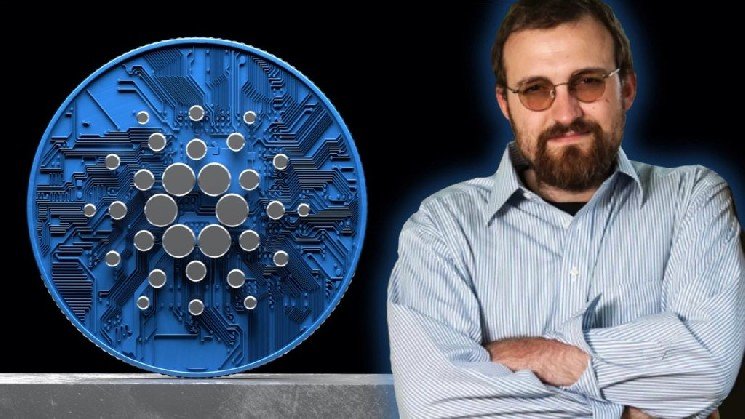
    In a recent interview, Charles Hoskinson, a leading figure in the cryptocurrency sector, shared details about the Midnight protocol, a new and ambitious part of the Cardano ecosystem.

    Hoskinson analyzed why corporate giants (like Google, Microsoft, and Sony) failed in their crypto projects and explained how Midnight offers a solution to these problems.

    Midnight positions itself as a “meta-chain” that can work with networks like Ethereum, Solana, and Bitcoin. Hoskinson describes this structure as the “Chat-GPT” of privacy and compliance.

    Related News Renowned Analyst Benjamin Cowen Issued a Warning Despite Bitcoin’s Rise

    Users will be able to take advantage of Midnight’s privacy features when trading different assets such as Bitcoin or Solana. It will act as an intermediary layer bridging regulated traditional finance (Web 2) and the decentralized world (Web 3).

    One of the most striking parts of the interview was the threat posed by quantum computers to Bitcoin. Hoskinson warned that quantum computers could break existing encryption systems by the early 2030s.

    Hoskinson offered three options for Bitcoin:

    • Doing nothing: This results in the system completely collapsing.
    • Soft Fork: Adding a new signature protocol; however, this carries the risk of theft of the old coins (approximately 34% of the supply) that are not migrated.
    • BIP 361 and Forced Migration: The most aggressive but also the safest option. However, this could lead to the loss of approximately 1.7 million Bitcoins, including Satoshi’s coins.

    *This is not investment advice.