Category: Business

  • Winklevoss Twins Move $130M in Bitcoin to Gemini Hot Wallets: Arkham

    Winklevoss Twins Move $130M in Bitcoin to Gemini Hot Wallets: Arkham

    In brief

    • Gemini founders Tyler and Cameron Winklevoss have transferred around $130 million in Bitcoin to the exchange’s hot wallets over the past week, said Arkham.
    • The blockchain analytics firm speculated that the transfers were “presumably to sell,” while others suggested that they could be intended for purposes such as exchange liquidity.
    • The crypto exchange recently laid off a quarter of its staff and exited the European and Australian markets.

    The founders of crypto exchange Gemini, Cameron and Tyler Winklevoss, have transferred roughly $130 million worth of Bitcoin to Gemini hot wallets over the past week, according to blockchain analytics platform Arkham.

    In a tweet, Arkham said transfers made from wallets it had tagged as belonging to the pair were made over the past week, suggesting potential sell-side positioning as Bitcoin trades near local highs.

    Bitcoin is currently trading at around $70,720, up 4.4% on the day according to CoinGecko data.

    While Arkham claimed that the transfers were intended “presumably to sell,” neither Cameron nor Tyler Winklevoss have publicly confirmed the purpose of the moves at publication time. Wallet transfers to exchange-linked addresses are commonly treated by traders as potential distribution signals, but they do not by themselves confirm completed spot selling.

    Given that the transfers were made to hot wallets at the pair’s own exchange, commenters on Arkham’s post suggested that they may have been intended to facilitate OTC transfers, for custody rebalancing or to provide exchange liquidity.

    Gemini’s recent pivot

    Arkham said the twins still hold about $764 million in BTC, and estimated their aggregate Bitcoin profit-and-loss at around $1.8 billion, underscoring how much early positioning remains on their books despite recent transfers.

    Last September, Tyler Winklevoss predicted that Bitcoin could “easily” trade at 10x its then-current value of $116,000.

    More recently, in February, Gemini saw its stock price plunge by double-digits after the firm announced that three key executives were leaving, just weeks after it laid off a quarter of its staff and exited the European and Australian markets. At the time, Gemini stated that it was pivoting to focus on its prediction market plans, as well as driving efficiency gains through streamlining processes with AI.

    Gemini’s stock has since rebounded from its late-February lows—after closing as low as $5.82 on February 20, it has climbed back to around $8.71 as of the latest close, according to market data from Yahoo! Finance.

    Daily Debrief Newsletter

    Start every day with the top news stories right now, plus original features, a podcast, videos and more.

  • UK Government’s Fraud Strategy Paints Crypto as ‘Growing Risk’

    UK Government’s Fraud Strategy Paints Crypto as ‘Growing Risk’

    In brief

    • In a new Fraud Strategy 2026 to 2029 document, the UK government has highlighted the “growing risk” posed by cryptocurrency.
    • The report noted that crypto is increasingly part of “routine activity,” but pointed to its role in facilitating investment fraud.
    • Blockchain analysis firm Chainalysis argued that crypto’s transparency has created a “powerful flywheel” by which criminal activity can be tracked and tackled.

    The UK government has published its Fraud Strategy 2026 to 2029 document, highlighting the “growing risk” posed by cryptocurrency.

    The report’s authors noted that cryptocurrency is now part of “routine activity” in day-to-day life, alongside social media, telecommunications and digital payments. But, it argued, emerging technologies will “continue to shape” the threat posed by fraud, pointing to crypto’s role in facilitating investment fraud.

    The policy paper framed fraud as a system-wide threat and said that delivery will rely on stronger coordination across government, police, private-sector platforms, and civil society. It also pointed to operational measures including a new public-private Online Crime Centre, an expanded “Stop! Think Fraud” campaign, and the rollout of the Report Fraud service as part of the state response.

    While the strategy page does not center crypto as a standalone chapter in its summary text, blockchain analysis firm Chainalysis said digital-asset flows are now too large to treat as peripheral. In comments shared with Decrypt, Jordan Wain, UK Public Policy Lead at Chainalysis, said that globally in 2025, “up to $17 billion in crypto was transferred to addresses associated with scams and fraud,” adding that industrialized scam networks are increasingly using AI-enabled social engineering and pig-butchering tactics.

    Wain said the UK has “long been leading by example” on fraud policy and argued that the latest strategy can go further by hard-wiring blockchain analytics into existing fraud-sharing frameworks spanning banks, fintechs, telecoms, online platforms, and crypto firms. He added that crypto’s transparency creates a “powerful flywheel of fraud disruption,” affording investigators visibility into financial flows that is often harder to achieve in traditional finance.

    Nevertheless, while Chainalysis pointed to crypto’s transparency as giving investigators “visibility that traditional finance often lacks,” the conversation around crypto privacy tools is increasingly gaining traction, with the U.S. Treasury this week conceding that coin mixers such as the previously sanctioned Tornado Cash can serve lawful privacy purposes.

    Crypto fraud around the world

    A central pressure point highlighted by the report is geography: with roughly three-quarters of fraud against UK individuals and businesses described by Chainalysis as originating from, or being facilitated from, overseas, Wain said the strategy should be treated as a “transnational security challenge” rather than a purely domestic consumer-crime initiative.

    The report highlighted the cross-border nature of cryptocurrency, with “poly-criminal” fraud operations incorporating human trafficking, money laundering and organized crime spreading beyond hubs such as Southeast Asia to South America and even Europe.

    So-called “scam compounds” have become a growing issue across Southeast Asia, with Amnesty International warning that mass escapes of coerced workers have created a “humanitarian crisis” in Cambodia. In September 2025, the U.S. Treasury’s Office of Foreign Assets Control sanctioned 19 entities across Burma and Cambodia, while last month the cross-agency Scam Center Strike Force, established in November 2026, announced that crypto seizures and freezes had reached $580 million.

    Daily Debrief Newsletter

    Start every day with the top news stories right now, plus original features, a podcast, videos and more.

  • Americans Use AI Every Day—But Most Still Don’t Like It, New Poll Shows

    Americans Use AI Every Day—But Most Still Don’t Like It, New Poll Shows

    In brief

    • Artificial intelligence holds a net favorability rating of -20 among U.S. voters, ranking below figures including President Trump and Kamala Harris in a new NBC News poll.
    • Despite the weak sentiment, 56% of respondents said they used an AI platform such as ChatGPT, Microsoft Copilot or Google Gemini in recent months, up from 48% in late 2024.
    • A majority of respondents, 57%, said the risks of artificial intelligence outweigh its benefits, reflecting broader concerns about privacy, economic disruption and trust in the technology.

    More than half of Americans said they had used an artificial-intelligence platform in the past two to three months, according to a new poll.

    Yet when respondents were asked to rate their feelings toward the technology, AI ranked near the bottom of the list.

    The survey of 1,000 registered voters was conducted by NBC News in partnership with Hart Research Associates and Public Opinion Strategies, from February 27 through March 3.

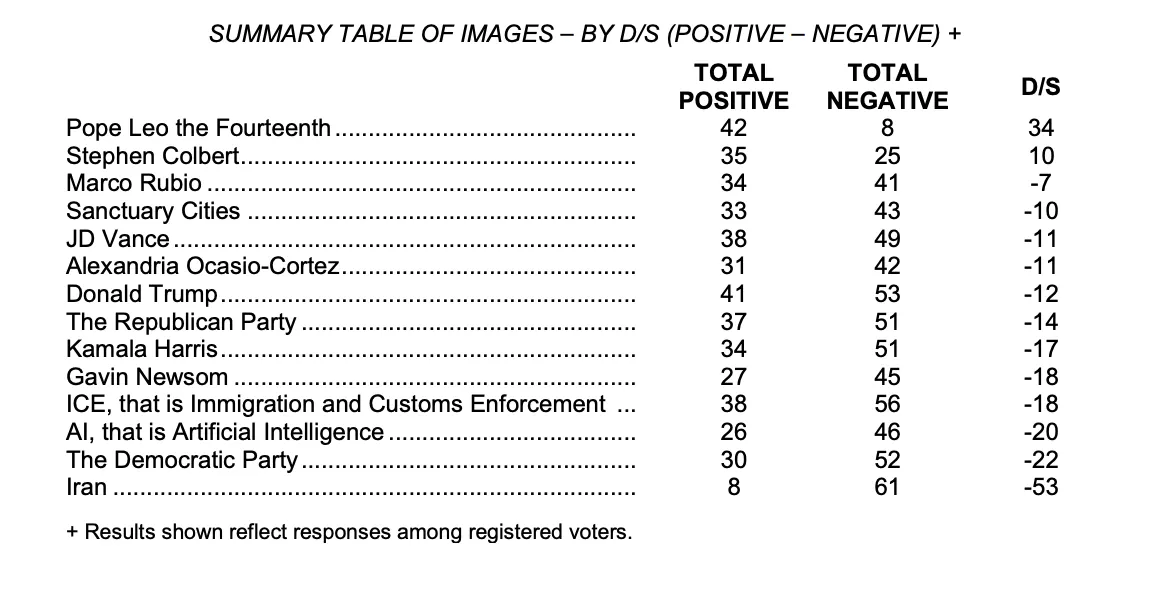
    Just 26% of registered voters view AI positively, while 46% say they view it negatively, yielding a net favorability score of minus 20 points.

    AI’s net favorability trailed Immigration and Customs Enforcement at -18, the Republican Party at -14, President Trump at -12, Kamala Harris at -17, and California Gov. Gavin Newsom at -18.

    Only the Democratic Party, at -22, and Iran, at -53, ranked lower.

    Usage figures, however, point to a different trend. Some 56% of respondents said they had used an AI platform such as ChatGPT, Microsoft Copilot, or Google Gemini in the past few months, up from 53% in August 2025 and 48% in December 2024.

    The data indicate Americans are adopting the tools even as their views of the technology remain lukewarm.

    The poll also asked whether the benefits of artificial intelligence outweigh the risks. A majority of respondents, 57%, said the risks outweigh the benefits, while 34% said the opposite.

    The results align with a Pew Research Center survey from last September, which found that 50% of U.S. adults were more concerned than excited about AI, up from 37% four years earlier.

    Other surveys paint a similar picture. A December 2025 YouGov poll found that 35% of Americans use AI at least once a week, yet only 5% say they deeply trust it.

    Trust is lowest in healthcare and finance, sectors where AI is also expanding fastest. A Quinnipiac University survey from April 2025 found that just 4% of Americans think they can trust AI-generated information almost all the time, and nearly three-quarters said the government should intervene to prevent AI-caused job losses.

    The NBC data also show a sharp partisan gap in how the question about AI governance is framed: Democrats trust the U.S. to regulate AI at lower rates than Republicans, while Democrats are more likely to trust the EU with the task—a reversal of the usual pattern on foreign institutions.

    Overall, most Americans think neither party is good at handling AI policies, with 33% saying both are bad, 4% unsure, and 24% saying they do a similar job.

    But despite that perception, politicians have not slowed down their interest in AI.

    President Trump is pushing for tighter controls on AI hardware, while lawmakers are exploring ways to expand domestic AI industries without alienating voters.

    The debate is unfolding amid persistent concerns about privacy and the technology’s economic impact.

    At the same time, the White House is advancing AI infrastructure projects, including the controversial Stargate Project, even as the technology holds a net favorability rating worse than most politicians.

    Daily Debrief Newsletter

    Start every day with the top news stories right now, plus original features, a podcast, videos and more.
  • Bitcoin Shows ‘Tentative Signs of Improvement’ as Iran Conflict Fears Wane

    Bitcoin Shows ‘Tentative Signs of Improvement’ as Iran Conflict Fears Wane

    In brief

    • Bitcoin has climbed more than 4% to roughly $69,100 as risk assets steadied after oil retreated from a spike tied to Middle East tensions.
    • Futures open interest and aggressive buying in perpetual markets suggest traders are cautiously returning to leveraged positions.
    • U.S. spot Bitcoin ETF inflows have risen to about $934 million, even as trading volumes and network activity remain subdued.

    Bitcoin’s market structure is showing early signs of stabilizing after weeks of pressure, according to a new market note from on-chain analytics firm Glassnode, even as the escalating conflict involving Iran continued to roil global financial markets.

    Bitcoin is up 4.3% on the day to around $69,100 and holding relatively steady after recent volatility tied to geopolitical tensions and surging oil prices sent digital assets lower last week.

    In its weekly market pulse published Monday, Glassnode said the crypto’s internal metrics suggest the worst of the recent stress may be easing, though the recovery remains “tentative.”

    “Overall, conditions are stabilizing, with momentum, ETF demand, and profitability metrics improving,” the firm wrote, noting that price momentum has firmed modestly but still lacks the strength of a decisive bullish shift.

    Analysts have previously pointed to the broader macro backdrop, which remains unsettled, as global markets have grappled with the fallout from the intensifying conflict in the Middle East.

    Crude prices surged on Monday on fears the conflict could disrupt shipments through the Strait of Hormuz, briefly pushing Brent crude as high as about $119.50 a barrel before retreating to roughly $91–$100 after President Donald Trump suggested the war involving Iran might soon de-escalate.

    U.S. equities have swung sharply in recent sessions, with major indexes slipping as investors weighed the inflationary impact of higher oil prices and the risk of a prolonged geopolitical conflict. 

    Modest uplifts were observed late in the U.S. trading session following Trump’s comments, with the S&P 500 closing 0.8% higher on the day.

    These markets are more correlated, more leveraged, and faster than the infrastructure connecting them, Ryan Kirkley, co-founder & CEO of Global Settlement Network, told Decrypt. “Settlement systems built on T+1 or T+2 cycles cannot absorb shocks that propagate in real time across asset classes, currencies, and geographies,” he added. “That gap showed up again last week. It will show up again this week.”

    Against that backdrop, Glassnode said several indicators within the Bitcoin market are beginning to stabilize.

    Futures open interest has increased, suggesting a modest build-up of leverage, while aggressive buying in perpetual derivatives markets points to renewed interest from traders. 

    While Bitcoin has yet to “fully earn” its “digital gold” narrative, its practical use case as a “digital escape hatch” is becoming “increasingly relevant,” analysts at QCP Capital wrote in an investor note on Monday.

    “Although its long-term trajectory remains uncertain, recent price action against a backdrop of escalating tensions suggests growing recognition of this function,” they added.

    ETF flows have also strengthened, rising to $934 million, up 20% or $158 million, from the week prior, Glassnode wrote.

    Still, other indicators suggest the recovery remains fragile.

    Spot trading volumes remain subdued, and network activity has waned, pointing to limited participation.

     “Capital flows remain soft,” the report noted, indicating broader conviction has yet to fully return.

    Daily Debrief Newsletter

    Start every day with the top news stories right now, plus original features, a podcast, videos and more.

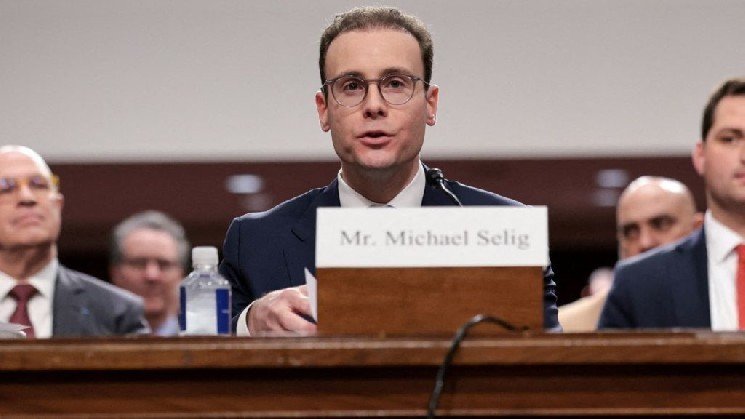
  • CFTC Chairman Michael Selig Speaks About Cryptocurrencies! “He Declared the US the Crypto Capital!”

    CFTC Chairman Michael Selig Speaks About Cryptocurrencies! “He Declared the US the Crypto Capital!”

    As regulatory efforts regarding cryptocurrencies continue in the US, CFTC Chairman Michael Selig has made important statements.

    Speaking at the FIA’s annual industry conference, CFTC Chairman Michael Selig stated that the U.S. is “now the crypto capital of the world,” and pledged the institution to work towards creating clearer rules for cryptocurrency markets.

    “The US has now become the crypto capital.”

    As markets continue to digitize and cryptocurrencies become mainstream, we are at the starting point of another wave of innovation.

    Selig said the CFTC is drafting a classification of crypto assets and providing registration guidelines for unsupervised software developers, while also working on rules for leveraged retail commodity trading and the classification of actual crypto perpetual futures contracts.

    Selig stated, “The CFTC will establish a crypto classification framework to clarify whether a particular asset falls under the CFTC’s jurisdiction, the SEC’s jurisdiction, or both.”

    Finally, Selig emphasized the importance of the CFTC’s cooperation with the US Securities and Exchange Commission (SEC), stating that with the Project Crypto initiative, they aim to end the period of conflict between the two institutions and provide clarity to market participants.

    This initiative aims to reduce regulatory conflicts between institutions and create a common regulatory framework for digital asset markets.

    *This is not investment advice.

  • Blockchain Forum 2026: Top Reasons to Attend in Moscow on April 14–15

    Blockchain Forum 2026: Top Reasons to Attend in Moscow on April 14–15

    On April 14–15, 2026, Moscow will host Blockchain Forum 2026 — the largest crypto and Web3 event in the CIS region. Over the years, the forum has evolved into a key industry platform where digital asset leaders, banks, investment funds and technology companies converge to shape the future of the market.

    Blockchain Forum is not merely a conference; it is an infrastructure-level meeting point for the ecosystem. It is where strategic discussions take place, partnerships are formed and projects that define the direction of the digital asset industry are launched.

    Scale and Market Concentration

    The 2026 edition is expected to bring together over 20,000 participants from 100+ countries, 250 exhibiting companies and more than 200 exclusive speakers, many of whom will be speaking in Russia for the first time.

    This creates a rare concentration of expertise, capital and technological innovation on a single platform.

    Attendees include investors, venture funds, banks, crypto exchanges, Web3 startups and infrastructure providers, enabling direct dialogue between builders, capital and institutional stakeholders.

    200+ Exclusive Speakers

    The agenda will feature leaders of major crypto platforms, investment executives, digital asset regulation experts and technology innovators. Many of these speakers rarely appear in the region, making Blockchain Forum a valuable opportunity for direct engagement and first-hand insights.

    Exhibition and Practical Use Cases

    The exhibition area will host 250 leading crypto companies presenting infrastructure solutions, new products and emerging technologies. Participants will not only hear about trends from the stage but also explore real-world applications — from product premieres to direct interaction with founders and teams.

    AI Future Forum: The Convergence of AI and Web3

    A dedicated AI Future Forum will take place alongside the main agenda, focusing on the integration of artificial intelligence and blockchain technologies. The convergence of AI and Web3 is widely regarded as one of the defining directions of digital economy development in the coming years.

    Networking as a Strategic Asset

    Blockchain Forum is recognized as a strategic networking environment. Beyond the main stages, negotiations take place, investment discussions unfold and long-term partnerships are initiated. The structure of the event enables participants to gain, in two days, the level of access and insights that would otherwise require months of fragmented communication.

    Official Afterparty Headliner — L’One

    The official Afterparty will be headlined by L’One, one of the most prominent artists on the Russian stage. His live performance will serve as the culmination of the forum, bringing participants together in the atmosphere of a large-scale show combined with premium networking.

    The Afterparty traditionally extends the business agenda into a more informal yet equally valuable environment for relationship-building.

    Blockchain Forum 2026 represents a combination of strategic dialogue, technological innovation and capital concentration, creating a space where decisions are made and the future of the market is shaped.

    Tickets are available on the official website. A 10% discount is available with promo code CRYPTONEWSNET.
    More details: https://blockchain.forum/en/

  • Zcash Outpaces Bitcoin Gains as Key Development Team Raises $25 Million

    Zcash Outpaces Bitcoin Gains as Key Development Team Raises $25 Million

    Privacy coin Zcash is one of the biggest crypto gainers over the past day, rising 7% and outpacing Bitcoin’s own rebound as a key team of core developers just raised a Series A round of funding for their fresh venture.

    Zcash Open Development Lab (ZODL) said Monday that it has raised over $25 million in funding from a prominent group of investors including Paradigm, Andreessen Horowitz, Winklevoss Capital, Coinbase Ventures, Zcash treasury firm Cypherpunk Technologies, and notable angel investors including Balaji Srinivasan, Haseeb Qureshi, and Mert Mumtaz.

    Founded by Josh Swihart, former CEO of Electric Coin Company (ECC), ZODL continues the work begun at ECC, including development of the Zodl wallet (formerly Zashi). Since launching in 2024, the wallet has grown Zcash’s shielded pool by over 400%, according to the team, and processed more than $600 million in ZEC swaps since October 2025.

    The full ECC team departed that company in January and has since migrated to ZODL to continue building the wallet as an open, self-custodial private financial platform aimed at broader ecosystem interoperability.

    Beyond the wallet, ZODL said that it maintains a strong focus on Zcash protocol development. The engineers responsible for Zcash’s core systems at ECC have joined ZODL and continue that work, prioritizing usability-driven technical progress.

    “This fundraise positions ZODL for growth, including adding engineers and other talent, and reflects strong conviction from some of the most respected investors in crypto, not only in privacy as a principle, but in the continued growth of the Zcash ecosystem and the ZODL team,” ZODL said in a statement.

    Launched in 2016 in a process that included input from noted whistleblower Edward Snowden, Zcash is designed to be more private than cryptocurrencies like Bitcoin, making it more difficult to trace transactions on its blockchain.

    The coin saw a resurgence in investor interest last fall, rising from a price of about $50 in September to a multi-year peak of nearly $700 in November. That’s still shy of Zcash’s all-time high mark of $3,191 set soon after launch in 2016.

    Like most leading cryptocurrencies, the price of Zcash (ZEC) has fallen sharply in recent months, with the coin recently trading for $215. It’s up 7% over the last day, outpacing Bitcoin’s own nearly 3% rise to just over $69,000. Even with the daily rise, ZEC remains down about 11% over the last month.

    Daily Debrief Newsletter

    Start every day with the top news stories right now, plus original features, a podcast, videos and more.
  • Bitmine moves roughly 9,600 ETH worth $19.5 million to Coinbase Prime as ether treasury firm shuffles holdings

    Bitmine moves roughly 9,600 ETH worth $19.5 million to Coinbase Prime as ether treasury firm shuffles holdings

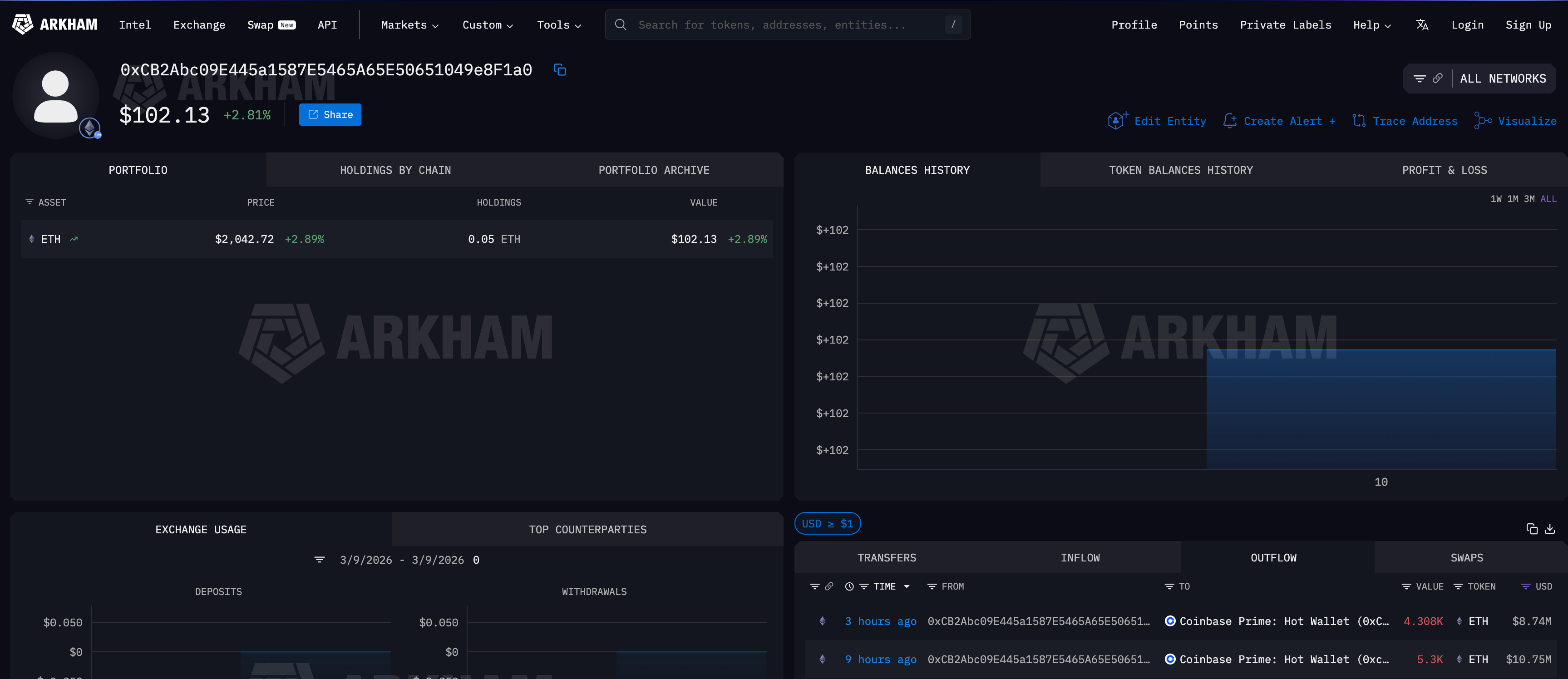
    Bitmine Immersion Technologies moved approximately 9,600 $ETH to Coinbase Prime hot wallets on Tuesday in two separate transfers, Arkham data shows.

    The first transfer sent 5,300 $ETH worth $10.75 million roughly nine hours ago, followed by a second batch of 4,308 $ETH worth $8.74 million about three hours ago.

    Both went through an intermediate wallet before landing at a Coinbase Prime hot wallet address, a routing pattern consistent with institutional custody operations.

    The transfers come after Bitmine reported its largest weekly ether purchase of 2026, buying 60,976 $ETH last week and bringing its total holdings above 4.5 million tokens. Chairman Thomas Lee said the firm was ramping up buying as it believes crypto is in the “late stages of a mini-crypto winter.”

    Moving coins to Coinbase Prime doesn’t necessarily mean Bitmine is selling. Prime is Coinbase’s institutional custody and trading platform, and transfers there could reflect internal rebalancing, staking operations, collateral management, or preparation for OTC activity.

    The balance history on Arkham shows Bitmine’s portfolio peaked near $16 billion around October 2024 and has declined to roughly $2.25 billion, reflecting ether’s price collapse rather than large-scale selling. The company is sitting on estimated losses of $7.8 billion on its position.

    Ether was trading at $2,042, up 2.8% on the day.

  • US Justice Department Files Application to Prosecute This Altcoin Founder for a Second Time! Here Are the Charges and Possible Date!

    The U.S. Treasury Department, which has long opposed cryptocurrency mixers due to their use for criminal purposes, stated that these services also have legitimate privacy use cases on public blockchains.

    While these statements from the US Treasury Department signal a shift in its stance against cryptocurrency manipulators, the US Department of Justice has made a move in the opposite direction.

    Accordingly, the US Department of Justice requested a retrial for the founder of Tornado Cash on two charges.

    According to a post by Eleanor Terrett, host of the Crypto in America program, on her X account, the U.S. Department of Justice has filed a request to the court to seek a retrial for Tornado Cash co-founder Roman Storm, specifically for money laundering and sanctions violations.

    The DOJ is requesting a retrial on two charges (money laundering and sanctions violations) for which the jury was unable to reach a verdict. The ministry has proposed a trial date for early October.

    Eleanor Terrett wrote: “The U.S. Department of Justice (DOJ) is seeking a retrial for Tornado Cash co-founder Roman Storm on two charges that the first jury failed to reach a verdict on: money laundering and sanctions violations. Prosecutors have recommended a retrial in early October, even though Storm’s Rule 29 application to dismiss the unauthorized money transfer charge has not yet been finalized.”

    *This is not investment advice.

  • Bhutan sells $42.5 Million of bitcoin in 2026 as national stack drops 58% from peak

    Bhutan sells $42.5 Million of bitcoin in 2026 as national stack drops 58% from peak

    The tiny country of Bhutan is quietly selling its bitcoin, and the stack is getting thinner each month.

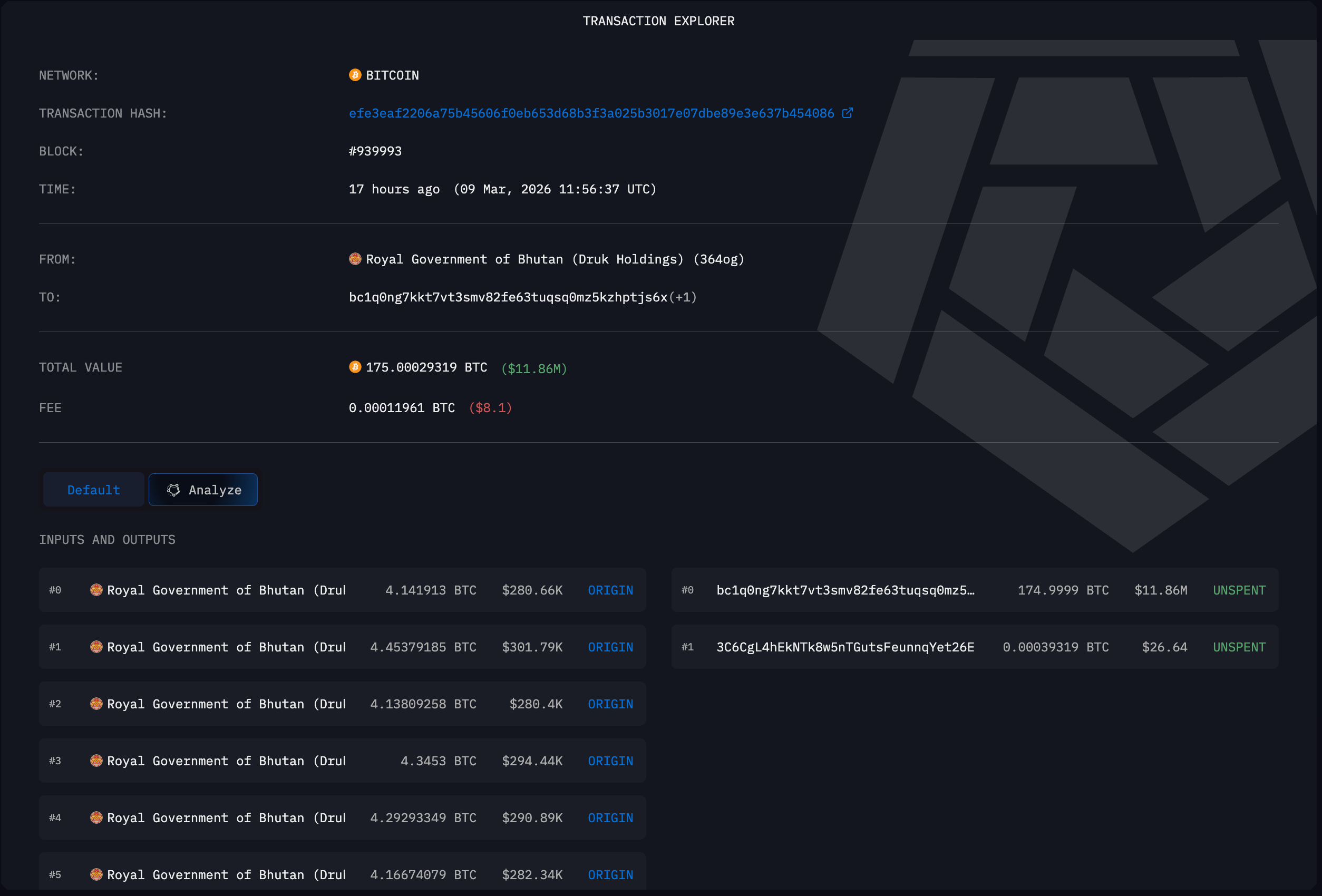
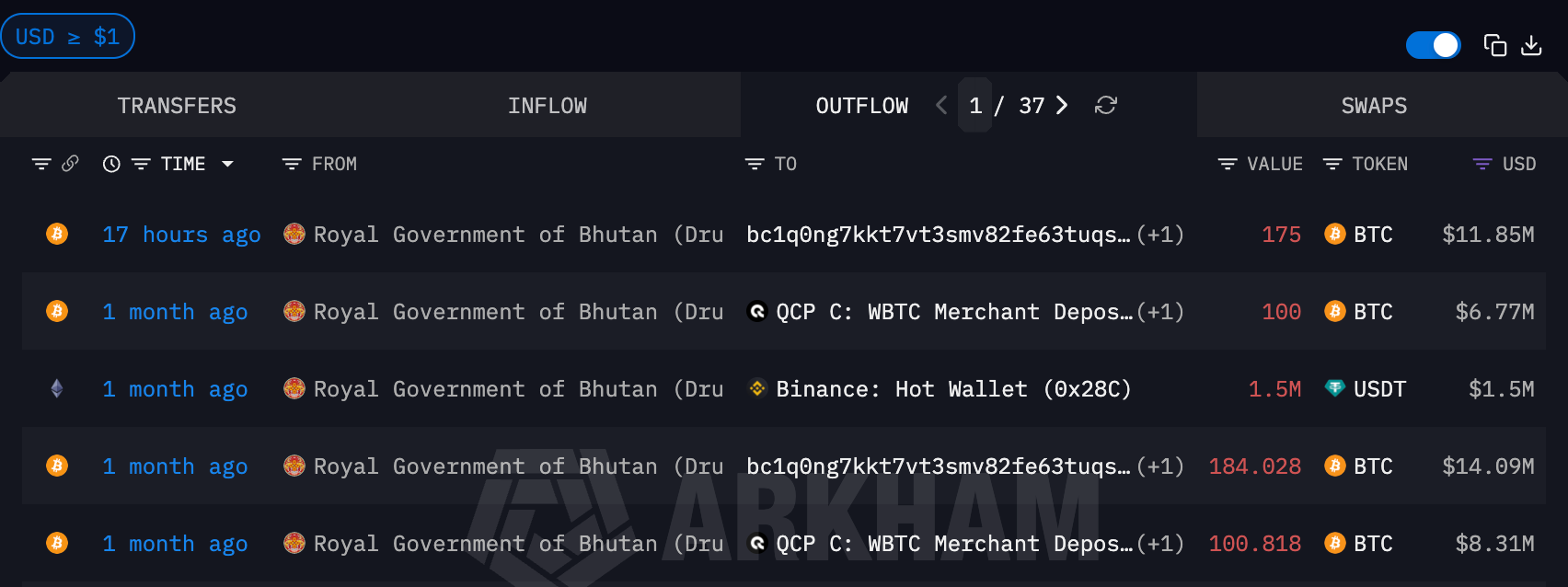
    The Royal Government of Bhutan moved 175 $BTC worth $11.85 million late on Monday, according to Arkham Intelligence data, moving assets to the same bc1q wallet address that received 184 $BTC worth $14.09 million in February. It suggests a consistent OTC or treasury management counterparty.

    The activity is done by Bhutan’s state-owned investment arm, Druk Holding and Investments (DHI), which spearheads the country’s $BTC mining operations.

    The February activity was more extensive than a single transfer. Arkham’s outflow data shows four separate moves that month: the 184 $BTC transfer, two sends to QCP Capital’s merchant deposit address totaling roughly 200 $BTC worth $15 million combined, and a $1.5 million USDT transfer to a Binance hot wallet.

    That’s about $30.7 million in February alone, followed by Monday’s $11.85 million, bringing 2026 outflows to roughly $42.5 million.

    The QCP Capital transfers stand out as sending bitcoin to a trading firm’s deposit address twice in one month is more active than simple treasury drawdowns. It suggests OTC selling or structured liquidity management rather than just moving coins between cold wallets.

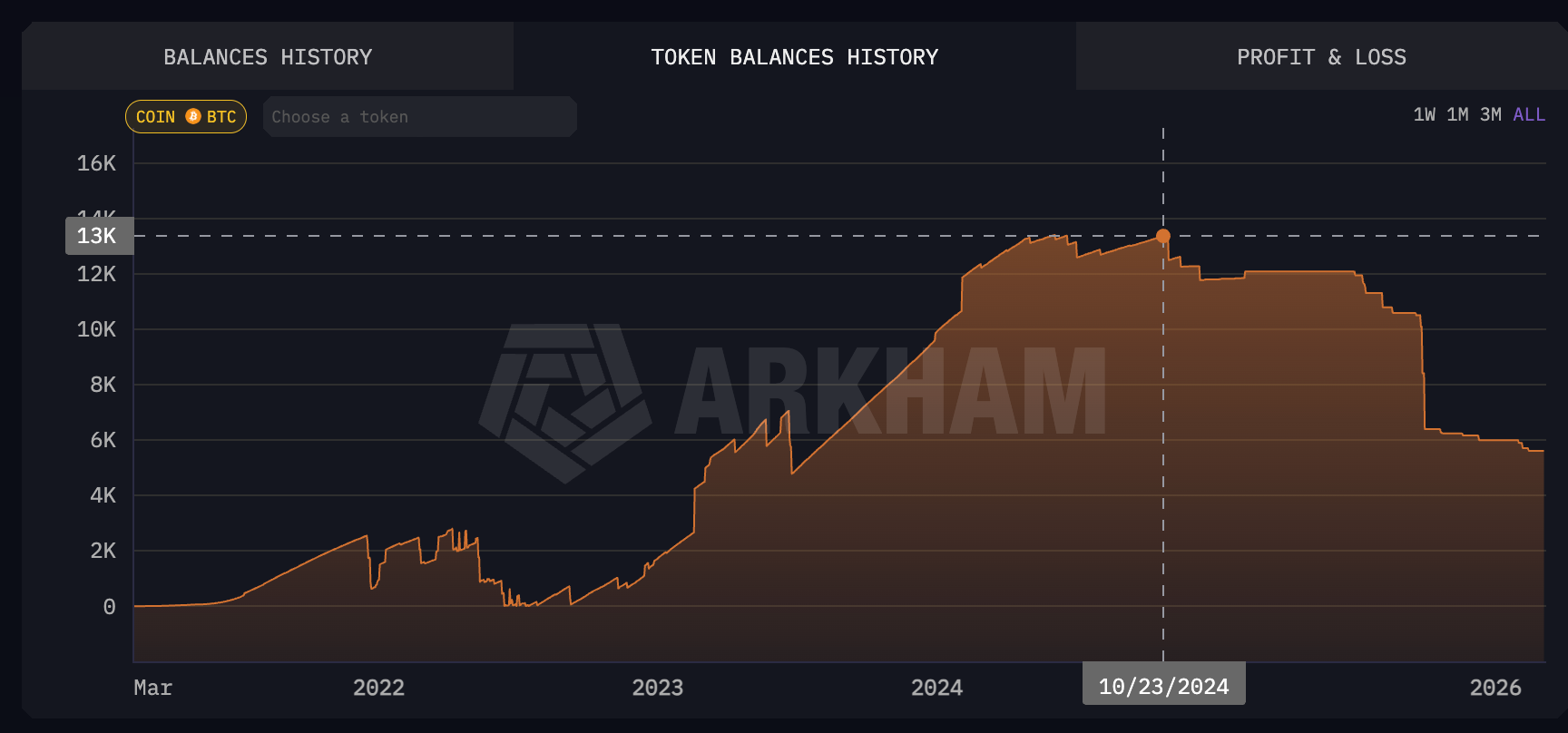
    The balance history chart tells a bigger story, however.

    Bhutan’s stack peaked around 13,000 $BTC in late 2024, built up over several years through state-backed hydroelectric mining. The drawdown began in earnest after October 2024 and has been steep.

    From 13,000 to roughly 5,400 is a 58% reduction in coins. The dollar value has been hit twice, by the selling and by bitcoin’s decline from around $119,000 at the peak to $69,000 today.

    What was likely a position worth over $1.5 billion at its height is now $374 million.

    In December, Bhutan unveiled a national Bitcoin Development Pledge committing up to 10,000 $BTC to fund Gelephu Mindfulness City, a special economic zone designed to use digital assets for its financial reserves.

    Bhutan mined its coins using surplus hydropower, which means the cost basis is effectively zero. Unlike Strategy or corporate treasuries that bought at market prices, there’s no break-even math pressuring these sales. Every transfer is profit.

    The Arkham balance chart shows the full arc. A slow build from near zero in early 2021, steady accumulation through the bear market, a ramp to roughly 13,000 $BTC by late 2024, and then a sharp decline that hasn’t let up.

    The transfers have gone to the same counterparties in similar sizes without any obvious correlation to specific price moves, which looks more like a treasury running a planned drawdown than a holder getting shaken out.

    Druk holdings did not immediately reply to CoinDesk’s request for comment in Asian morning hours.