Category: Business

  • There’s a Sharpe Ratio Signal for Bitcoin—An Analyst Makes a Breaking Claim

    There’s a Sharpe Ratio Signal for Bitcoin—An Analyst Makes a Breaking Claim

    Crypto analyst Ali Martinez said that the sharp decline in Bitcoin’s Sharpe ratio, a risk-return indicator, could signal a favorable period for long-term buying in the spot market.

    According to data shared by Martinez, Bitcoin’s Sharpe ratio has fallen to minus 23. The Sharpe ratio, which measures the return an investment provides in relation to the risk or volatility undertaken, indicates strong returns relative to risk when it is positive, while negative values point to periods where investors face significant losses.

    The analyst noted that a reading of -23 doesn’t necessarily mean the decline in Bitcoin will continue indefinitely; rather, it suggests that sellers may have largely exhausted their options. According to Martinez, this creates an asymmetrical entry opportunity for long-term Bitcoin investors, where the risk is more limited compared to the potential gain.

    Related News Experts Say 80 Percent of the Bitcoin Bear Market Is Over—Here’s What You Need to Know

    Martinez stated that past data also revealed a similar picture, recalling that the Sharpe ratio had fallen to similar levels during the lows of the 2015, 2019, and 2022 bear markets. He noted that these periods coincided with the final capitulation and intense selling phases in the market.

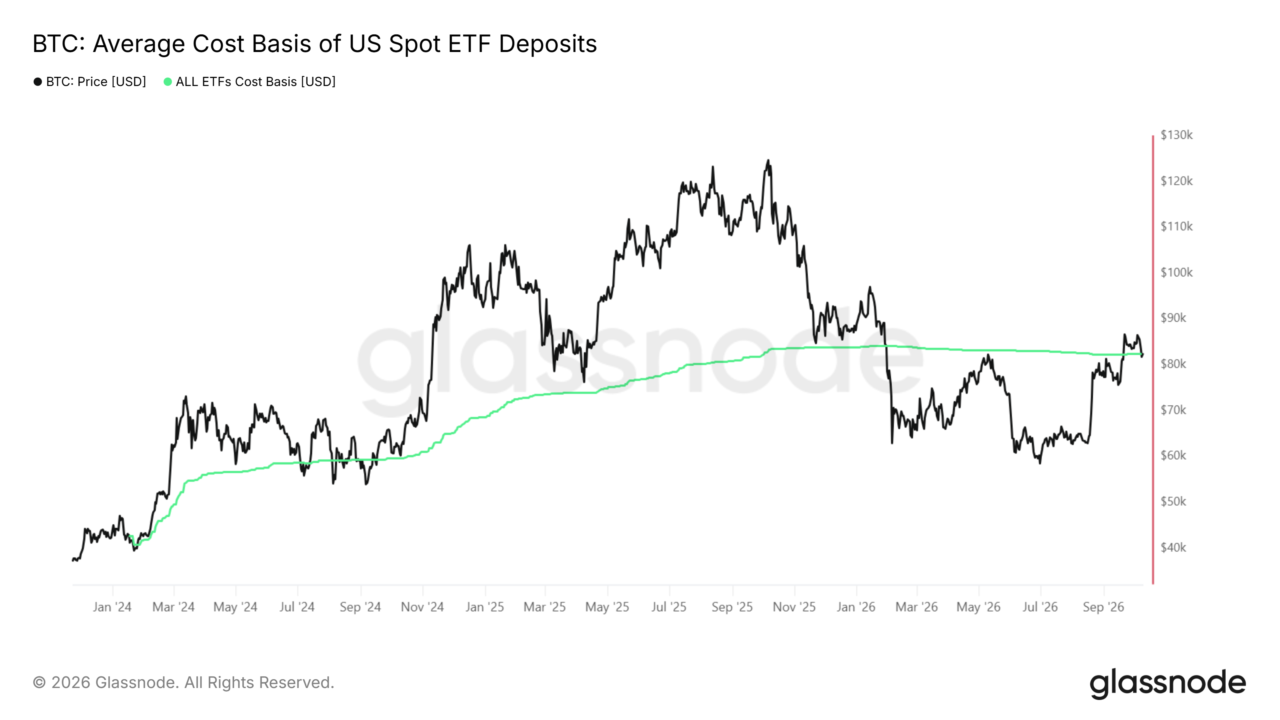
    On the other hand, according to on-chain data, Bitcoin has formed a strong support zone between $63,111 and $61,840. URPD data shows that more than 1.3 million $BTC changed hands within this price range.

    Martinez noted that as long as this support zone is maintained, Bitcoin does not face a significant supply wall up to $84,569. Approximately 582,000 $BTC have traded at this level previously. Therefore, the analyst added, maintaining the region between $61,840 and $63,111 is critical for Bitcoin’s medium-term outlook.

    *This is not investment advice.

  • CryptoQuant Warns: Ethereum is Historically Cheap, But It’s Still Too Early for the Bottom! Here’s Why

    CryptoQuant Warns: Ethereum is Historically Cheap, But It’s Still Too Early for the Bottom! Here’s Why

    Bitcoin and altcoins have experienced sharp declines since last October. With $BTC falling to $57,000 and Ethereum to $1,400, investors are now eagerly awaiting an upward trend.

    At this point, as investors closely monitor the data, CryptoQuant analysts have shared their latest analysis for Ethereum.

    According to a recent report from the on-chain analytics platform CryptoQuant, Ethereum is cheap, but the data suggests the bottom hasn’t been reached yet.

    According to CryptoQuant analysts, $ETH has fallen to more attractive valuation levels compared to Bitcoin. However, the analysts note that despite the price drop, a classic “capitulation” (complete surrender) has not yet occurred in the market, and therefore it is too early to say that the bottom formation is complete.

    The report states that Ethereum’s valuation ratios against Bitcoin have fallen to historically low levels, which could present a significant opportunity for long-term investors. However, on-chain data suggests that Ethereum has not yet bottomed out.

    The report initially stated that $ETH was trading below its cost basis. At this point, $ETH is trading around $1,900. This is approximately 17% below the actual price of $2,304, placing it in the lower half of the current price range.

    According to analysts, this region has historically been associated with market lows and asymmetric rallies.

    Secondly, $ETH has undergone a shift from an overvalued position relative to Bitcoin to a generally neutral one. The $ETH/$BTC MVRV ratio peaked around 0.95 in August 2025 and has since fallen to approximately 0.65.

    However, the MVRV ratio remains above the ~0.45 threshold relative to Bitcoin, marking previous $ETH lows.

    Thirdly, relative selling pressure is decreasing. The $ETH/$BTC inflow rate has fallen from above 1.5 in August 2025 to approximately 0.8, reducing downside risk. However, it still remains below the ~0.4 low selling pressure zone seen at previous lows.

    Fourth, institutional demand is reversing direction for the first time in a year. The $ETH/$BTC ETF asset ratio fell from ~0.20 in August 2025 to ~0.115 in June 2026. During this period, institutional investors preferred Bitcoin over Ethereum. However, from the end of June, the ratio rose to 0.13. This data shows that institutional investors’ interest in Ethereum is starting to increase again. However, it is still at a low level in terms of supporting $ETH’s rise.

    Analysts also added that on-chain data showed that investor panic selling was not as intense as in past bear markets.

    Finally, it’s important to remember that whether Ethereum bottoms out isn’t solely influenced by on-chain data; macroeconomic developments can also play a significant role. Factors such as the Fed’s interest rate policy, dollar liquidity, and ETF inflows also have a major impact on the price.

    *This is not investment advice.

  • Attention XRP Investors: Ripple Announced a Major and Strategic Investment Today!

    Attention XRP Investors: Ripple Announced a Major and Strategic Investment Today!

    As partnership and investment news continues to emerge in the cryptocurrency market, the latest news comes from Ripple (XRP), one of the most important names in the market.

    Accordingly, Ripple has made a strategic investment in the on-chain service provider Notabene.

    Notabene, a provider of compliance-focused on-chain transaction services, announced in an official statement that it has received a strategic investment from Ripple. However, the amount of the investment was not disclosed.

    “Notabene received a strategic investment from Ripple.”

    By integrating $RLUSD into Notabene Flow and exploring how trusted payment authorization can complement Ripple Payments, we will collaborate to expand institutional stablecoin payments.

    According to the announcement, Ripple’s dollar-backed stablecoin, $RLUSD, will be integrated into Notabene’s institutional payment platform, Notabene Flow. The parties also aim to combine Ripple Payments infrastructure with Notabene’s transaction verification and payment authorization technologies to enable financial institutions to conduct regulated stablecoin transfers more securely and efficiently.

    Notabene currently operates an open network connecting more than 2,300 financial institutions across over 100 jurisdictions, processing over $2 trillion in network transaction volume annually. The two companies also plan to work together to expand the use of $RLUSD.

    Jack McDonald, Senior Vice President of Ripple Stablecoins, said the following about the investment: “Stablecoins are rapidly becoming part of mainstream financial infrastructure, but institutional adoption isn’t solely dependent on efficient payment systems. Trusted identity, compliance, and transaction authorization are needed before value can move. Notabene’s network addresses one of the key hurdles to institutional adoption, and together, we are helping to build the compliant infrastructure that institutions need to transfer value globally and expand the use case of $RLUSD.”

    Notabene CEO Pelle Braendgaard stated that financial institutions have moved beyond the question of “should we use stablecoins?”, and the real issue is how to use them securely and in compliance with regulations. According to Braendgaard, the combination of Ripple’s global payment network and Notabene’s trust infrastructure will accelerate the widespread adoption of corporate stablecoin payments.

    *This is not investment advice.

  • Crypto for Advisors: It’s time for tokenization to get to work

    Crypto for Advisors: It’s time for tokenization to get to work

    Regulation is why the mood changed from last year. The $GENIUS Act gave payment stablecoins legitimacy, and speakers repeatedly pointed to the CLARITY Act, still working through the Senate, as the bigger unlock. RedStone co-founder Marcin Kazmierczak framed it bluntly: CLARITY could be a 10x or even 100x moment relative to $GENIUS, because it opens the door to the full range of asset classes.

    Where’s the traction? Cash and collateral are the beachheads

    Collateral is where tokenization earns its keep first. On the repo panel, Broadridge’s Robert Krugman said his firm now moves around $370 billion of tokenized repo a day on the Canton network. That is a sliver of the $12 trillion US repo market, but a real one, and the programmability pitch is simple.

    “If you want to borrow for five minutes, you pay for five minutes [instead of a full day]. It’s a no-brainer,” said Ami Ben-David, CEO at Ownera.

    Asset managers echoed utility over novelty. A recurring principle was that if you tokenize a product, it has to be a net better product than the one it replaces. Apollo’s Christine Moy said the firm’s tokenized private credit fund has confirmed what she calls the “superpowers” of onchain assets: secondary liquidity for otherwise illiquid products, and the ability to post private credit as collateral in DeFi protocols like Aave and Morpho.

  • Southeast Asian Scam Networks Cost Victims Up to $114B in a Year: UN

    Southeast Asian Scam Networks Cost Victims Up to $114B in a Year: UN

    In brief

    • The UN Office on Drugs and Crime says Southeast Asia’s once-fragmented crime syndicates have merged into a single, tech-driven economy built on shared fraud and laundering infrastructure.
    • Scam operations across the wider region drove an estimated $88.3 billion to $114.1 billion in losses in 2025, much of it crypto investment fraud run from industrial-scale compounds.
    • The agency urged regional police to get specialized crypto training to trace and seize proceeds, warning that disruption-focused strategies are not working.

    Southeast Asia’s scam industry has hardened into a single, interconnected criminal economy whose losses now rival the output of entire countries, the United Nations said in a report published Tuesday.

    The UN Office on Drugs and Crime (UNODC) described a “fundamental” restructuring of the region’s underworld. Locally rooted syndicates that once stuck to one territory and one specialty have fused into a transnational network in which groups sell services—money laundering, fraud, human trafficking, data harvesting—to one another over shared infrastructure, the report said.

    Delphine Schantz, UNODC Regional Representative for South-East Asia and the Pacific, likened the model to “corporate franchising,” in a statement, pointing to specialized departments for money laundering, human trafficking and data harvesting that plug into the same service-based network.

    Combined losses from scam offences across East Asia, Southeast Asia, Australia, and New Zealand reached an estimated $88.3 billion to $114.1 billion in 2025 alone—a figure that UNODC noted “outstrips the GDP of several countries in the region.” Much of that money moves through crypto: the compounds run investment- and romance-scam operations, often called “pig butchering,” whose proceeds are laundered on-chain. UNODC warned that police in the region still lack the training to follow the money in “the new crypto context,” with Schantz adding that seizing proceeds is now essential because “disruption alone does not work.”

    Rather than smuggling physical contraband, groups increasingly sell cyber-enabled fraud, criminal infrastructure, and platform-based financial settlements that leave little trace and are hard to attribute. Feeding the machine is forced labor on a global scale, with people from at least 80 countries identified inside scam compounds. Scam networks are now attempting to widen their recruitment pool, the report added, with advertisements targeting individuals with European and North American language skills.

    The report flags generative AI, deepfakes, and near-automated fraud, alongside “malvertising”—the hijacking of legitimate ad networks to spread malware—which it said rose 42% year-on-year in 2025. Criminal operations have been “decoupled” from local telecommunications infrastructure by satellite internet such as Elon Musk’s Starlink, the report said, enabling them to operate in remote locations.

    Beyond scams, the report breaks ground on other fast-growing markets. It identifies the Sulu and Celebes Seas—the maritime triangle between Indonesia, Malaysia, and the Philippines—as a rising smuggling corridor, and it warns that criminals are gamifying online gambling to draw in younger users.

    UNODC Executive Director Monica Juma said the networks are “flexible, persistent and adaptable,” able to shift across borders and resume operations after law-enforcement crackdowns, making international cooperation essential to dismantling them.

    Law enforcement bodies around the world are escalating their response to the threat. U.S. prosecutors last week seized more than $25 million in crypto tied to investment and romance scams routed through the region, and Interpol has labeled the compound networks a global threat. The human toll is also coming into focus, with Amnesty International documenting a humanitarian crisis as workers flee Cambodia’s compounds—the same country where alleged Prince Group boss Chen Zhi was arrested pending extradition to China, in a case that included one of the largest-ever Bitcoin seizures.

    Daily Debrief Newsletter

    Start every day with the top news stories right now, plus original features, a podcast, videos and more.

  • Bulls face a test unlike anything in bitcoin’s 17-year history

    Bulls face a test unlike anything in bitcoin’s 17-year history

    The bitcoin BTC$65,543.28 market is facing a macro environment unlike any it has encountered in its 17-year existence.

    That’s tied to inflation-adjusted returns on bonds. The 30-year Treasury Inflation-Protected Security (TIPS) is now offering a yield of close to 3%, the highest in 17 years, according to TreasuryBonds.com.

    “This is one of the greatest wealth preservation opportunities in decades. Investors can lock in nearly 3% annual returns above inflation for the next three decades, backed by the U.S. government,” the site noted.

    In traditional markets, bonds are considered safe havens. When a haven asset offers a 3% return in excess of inflation, it raises the opportunity cost of holding non-yielding or riskier assets like gold and bitcoin. But for many, especially in the crypto community, bitcoin’s decentralized and censorship-resistant nature makes it a superior store of value and safe haven – and that argument is not without merit. Housing prices measured in bitcoin, for instance, appear significantly cheaper than when measured in dollars.

  • Morning Minute: Wall Street Moving Onchain Will Drive the Next Bull Market

    Morning Minute: Wall Street Moving Onchain Will Drive the Next Bull Market

    Morning Minute is a daily newsletter written by Tyler Warner. The analysis and opinions expressed are his own and do not necessarily reflect those of Decrypt.

    GM!

    Today’s top news:

    • Crypto majors mostly flat despite falling stocks & rising oil; BTC at $65.5k
    • Senate Republicans publish new Clarity Act draft, Dem Leaders still oppose
    • SEC Commissioner Pierce warns some DeFi vaults and onchain lending fall under securities law
    • BTC ETFs see 7 straight days of inflows; ETH validator exit queue goes to 0
    • Rhynotic’s new FWA protocol token runs to $11M, pumps multiple NFT sets

    🏦 Bitwise’s CIO Says Wall Street Moving Onchain Will Drive the Next Bull Market

    The next crypto bull market won’t look like the last ones.

    That’s the argument from Bitwise CIO Matt Hougan, who laid out in a new memo that the coming cycle will be driven by the convergence of traditional and onchain finance, stablecoins, tokenization, 24/7 trading, instant settlement, and institutional DeFi, rather than the speculative demand that powered previous rallies. His key claim is that because this cycle would be built on real financial activity and revenue, it could be bigger than what came before, even if it arrives slower and with less volatility.

    Hougan framed the opportunity as two “lanes.”

    • The first is the “Hyperliquid Lane”—crypto-native protocols that generate serious revenue and route it back to their tokens. For those unfamiliar, Hyperliquid crossed $1 billion in cumulative revenue in June, is on pace for roughly $800 million this year, and directs 99% of that revenue into buying HYPE on the open market.
    • The second is the “Robinhood Lane”—established companies building real financial services on blockchain rails instead of running pilots. Robinhood Chain went live July 1 and has already passed $3 billion in volume.

    The Hyperliquid Lane fixes crypto’s chronic flaw, where applications rack up fees and volume without creating any demand for their token. He named Uniswap, Aave, and Morpho as protocols moving the same direction, along with onchain darlings like Pump.fun. The TradFi stampede, Citadel into Crypto.com, Morgan Stanley onto E*TRADE, the DTCC going live on tokenization, is his Robinhood Lane.

    So here we have a credible institutional voice arguing that revenue and crypto rails will drive the next cycle, not speculation. This is not necessarily a new opinion, as many on CT (Crypto Twitter) have made Hyperliquid their shining star for months now. And as for the institutional driver, that’s not really a new concept either. But it is important when the CIO of Bitwise writes the thesis up formally covering these two factors.

    It’s no longer “the institutions are coming.” It’s “the institutions are here—and they’re going to drive the next bull cycle.” We’ll find out soon if he’s right…

    🌎 Macro Crypto and Markets

    • Crypto majors are mostly flat despite red stocks and rising oil; BTC -0.3% at $65.5k; ETH even at $1,925; SOL even at $78; HYPE even at $59.30
    • Stable (+16%), WLFI (+13%) and ENA (+4%) led top movers
    • Oil +4.5% at $90; Gold -1.5% at $4,090
    • Stock futures are red after rough earnings calls from TSLA and Google; DOW -0.4%, Nasdaq -0.5%
    • Senate Republicans published a new CLARITY draft that would impose limits on Trump’s crypto empire along with other updates
    • Seven key Senate Democrats said the draft “falls short” on ethics, consumer protection, illicit finance, and market integrity
    • SEC Commissioner Hester Peirce warned that some DeFi vaults and onchain lending products may fall under securities laws, a notable caution from the agency’s most crypto-friendly commissioner
    • Franklin Templeton’s Sandy Kaul called blockchain the next AI trade, arguing that as autonomous agents transact in fractions of a cent, card networks become uneconomical and blockchains win the machine-to-machine payment layer
    • BitMEX (co-founded by Arthur Hayes) announced it will permanently close on Sept 23, 2026, and has stopped accepting new users
    • Ethereum’s validator exit queue has fallen from a peak of 2.6M ETH to 0, while its staking queue now has 2.48M ETH and a 43-day waiting period

    Corporate Treasuries & ETFs

    Meme Coin Tracker

    • Meme leaders were mostly flat; DOGE -1%, SHIB -1%, PEPE even, PENGU -1%, TRUMP +3%, BONK -3%
    • Robinhood chain was led by GME (+425x), AI (+80%), and SWOGE (+190%); Cashcat -25% to $48M and PONS -18% to $26M as prior winners sell off hard
    • Solana leaders included Jimothy (+5%), KET (+110%) and BOP (+170%); ANSEM -10% to $175M

    💰 Token, Airdrop & Protocol Tracker

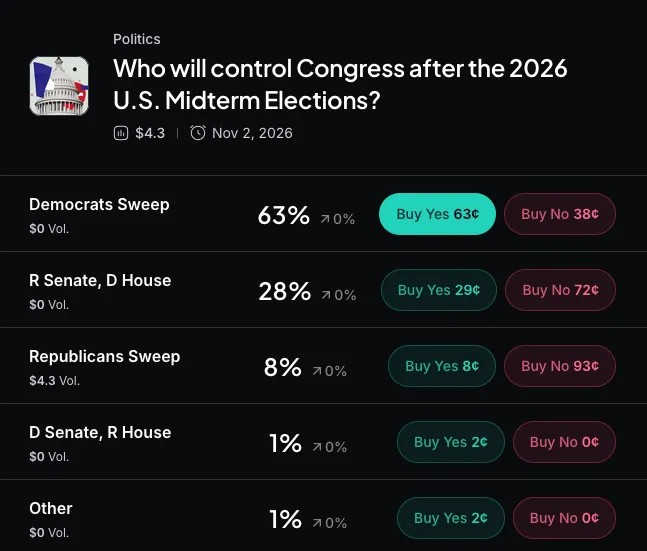
    • Kalshi launched a US Midterms Hub with live odds on Senate and House races alongside polling and FEC data
    • An Arbitrum USDC bridge lost about $24.15M after attackers compromised its hot-validator signing path, clearing quorum to authorize a withdrawal the contract treated as legitimate
    • The Verus-Ethereum bridge was exploited for the 2nd time in 2 months with $7.54M drained, after attackers abused the bridge’s import path

    🚚 What is happening in NFTs?

    • NFT leaders were flat while multiple other sets climbed; Punks even at 32 ETH, BAYC even at 8.65 ETH, Pudgy even at 4.18 ETH; Hypurr’s even at 185 HYPE
    • Cyberkongz (+53%), Memeland MVPs (+29%), TTT (+38%), Creepz (+77%), mfers (+16%) and CrypToadz (+16%) led top movers
    • Robinhood NFTs were led by Hood Mundo (+39%) and Pepe Hood Town (+9%)
    • Rhynotic’s new Fake World Assets (FWA) NFT gacha platform saw its token soar to $11M overnight before retracing
    • An FWA user won a Cryptopunk off a 0.06 ETH gacha spin (550x return), before selling it back for FWA tokens

    Daily Debrief Newsletter

    Start every day with the top news stories right now, plus original features, a podcast, videos and more.

  • Polymarket to challenge France’s nationwide website block

    Polymarket to challenge France’s nationwide website block

    Polymarket added it does not take the other side of trades or profit from market outcomes, distinguishing its model from a gambling operator that sets odds and trades against customers.

    The French regulator said the platform remained accessible after trading restrictions were introduced and continued to promote an unauthorized gambling service.

    It also cited concerns over identity checks and suspected manipulation of weather-related markets.

    France is the latest country to order internet providers to block Polymarket. Ukraine imposed an ISP-level block in January, Argentina followed in March and Spain blocked Polymarket and Kalshi in May.

    France’s action goes beyond the trading restriction already in place. Polymarket had blocked transactions from the country since November 2024, but the ANJ ordered the entire website blocked because users could still view its markets and live probabilities.

    Other countries including Brazil, India, Indonesia and Romania have also restricted access or classified Polymarket as an unauthorized gambling platform. Ukraine currently has no legal framework through which the platform could operate, according to a government policy official.

    CoinDesk has asked Polymarket whether it is challenging enforcement decisions outside France and had not heard back at the time of writing.

  • Abu Dhabi’s Mubadala Capital joins tokenization push as Coinbase takes stake in onchain fund

    Abu Dhabi’s Mubadala Capital joins tokenization push as Coinbase takes stake in onchain fund

    Tokenization has become one of the fastest-growing corners of digital assets as traditional finance firms look to modernize fund infrastructure. Citi recently projected that tokenized securities could grow to roughly $5.5 trillion by 2030, while Boston Consulting Group and Ripple estimate tokenized assets across all asset classes could reach $18.9 trillion by 2033.

    Creating blockchain-based tokens of existing funds could help broaden access to a new set of investors and open the door for fund shares to be used as collateral or plugged into other onchain financial applications.

    For this particular case, KAIO provides the infrastructure that issues and administers Mubadala Capital’s tokenized fund. The company said Mubadala joins firms including Hamilton Lane, Brevan Howard and Laser Digital that use its platform to distribute investment products onchain, and currently has $144 million in tokenized funds on its platform.

    “This strategy was built on differentiated access — to deal flow, to co-investment, to a global network that most investors cannot reach on their own,” Max Franzetti, head of Mubadala Capital Solutions, said in a statement. “Bringing it onchain extends that access to a new class of qualified investors without compromising the institutional discipline that defines how we invest.”

    Brett Tejpaul, head of Coinbase Institutional, said that Coinbase adding the fund to its corporate balance sheet investment is a reflection of growing interest in regulated tokenized assets as treasury holdings. “As regulated assets become programmable, they can become part of a broader onchain economy that is more transparent, composable and accessible to qualified investors in eligible jurisdictions.”

  • 24/7 financial rails: How BNY plans to eliminate the weekend lag in U.S. Treasuries

    24/7 financial rails: How BNY plans to eliminate the weekend lag in U.S. Treasuries

    BNY, the world’s largest custody bank, plans to support round-the-clock settlement of conventional and tokenized U.S. Treasuries in 2027, after completing an after-hours trade involving the reserves of 2 stablecoin issuers.

    The bank will test tokenized Treasuries on a private blockchain by the end of the year and will extend its existing settlement network later this year to cover more of the Asian, European and U.S. trading days, according to a letter sent to clients reported by Bloomberg.

    The earlier transaction involved Ripple’s $RLUSD and OpenEden’s USDO with Ripple participating directly, while BNY’s cash-management business unit Dreyfus acted for OpenEden.

    Tradeweb handled the trade after Fedwire Securities had stopped processing secondary-market Treasury transfers for the day, according to the report.

    BNY said the transaction settled shortly afterward through existing cash rails. The securities were not tokenized, but the test instead showed that Treasury activity tied to stablecoin reserves could continue after the main U.S. settlement window closed.

    $RLUSD and USDO hold short-dated government debt as reserve assets. The tokens trade continuously, but the Treasuries behind them remain tied to weekday settlement windows.

    That can delay reserve adjustments following large creations, redemptions or collateral calls.