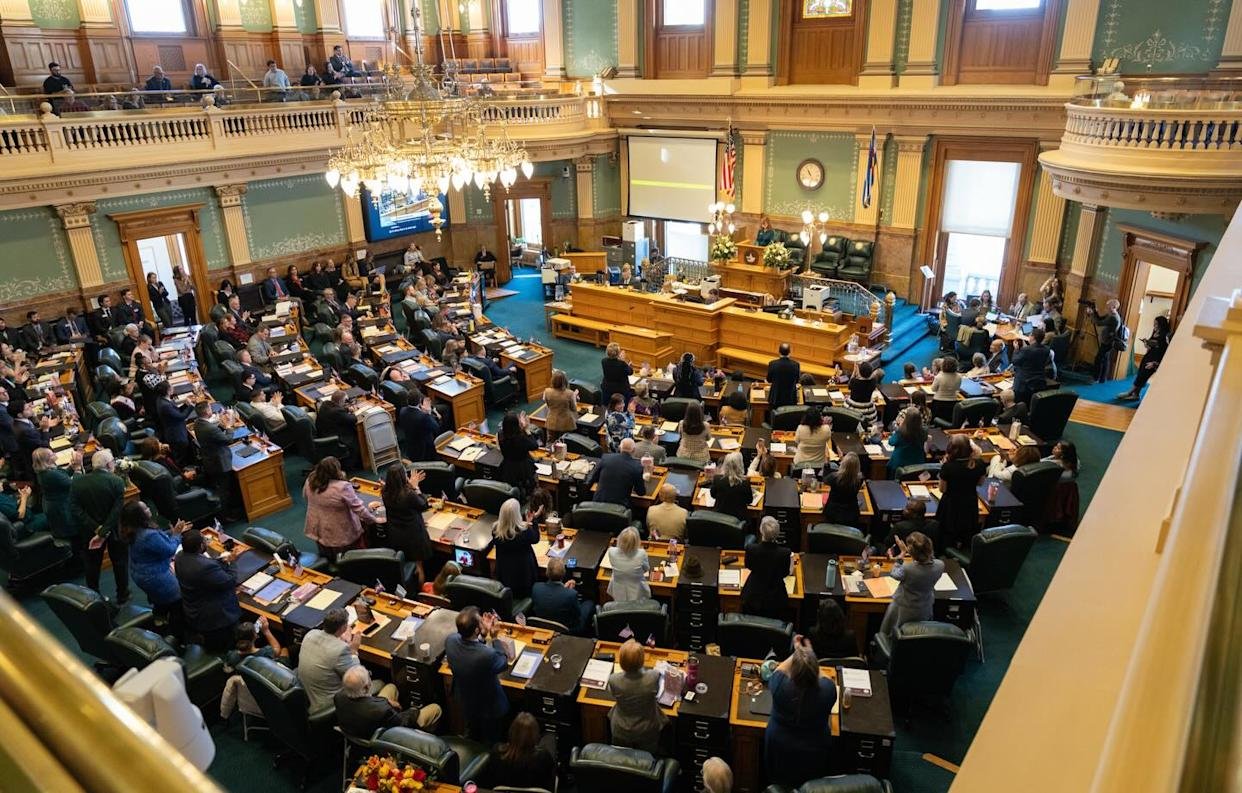
A collective of Colorado lawmakers wants to put an end to “ghost guns” and their rising popularity. Earlier this week, the state’s House Judiciary Committee voted in a 7-4 majority to pass the bill, HB26-1144, along for a decision with the full House of Representatives. The proposed law would “prohibit the use of a three-dimensional printer, or similar technology, to make a firearm or a firearm component.”
Ghost guns are typically made from 3D printers or similar machines without serial numbers, making them virtually impossible to trace and allowing users to skirt the federal requirements for purchasing a firearm. While the bill targets using a 3D printer to make guns, large-capacity magazines and other related components, it even bans possessing and distributing the instructions to manufacture guns in this way. However, these rules would be exempt for federally licensed firearm manufacturers.
“These ghost guns are increasingly found at crime scenes, making it harder for law enforcement to track down a suspect because the gun isn’t traceable,” the bill’s sponsor, Lindsay Gilchrist, said in a press release.
Prior to this proposal, Colorado passed a law in 2023 that banned owning ghost guns or making frames for them. While SB23-279 laid the groundwork, HB26-1144 can be seen as the next step since it’s much more encompassing by targeting ghost guns even before they’re made. According to the bill, first-time violations will be treated as a misdemeanor, while repeat offenses will be upgraded to a felony charge. Looking ahead, HB26-1144 still has to secure a vote from both the Colorado Senate and House of Representatives before being delivered to the governor to be signed into law.
NBA skills coach Drew Hanlen joins Kevin O’Connor to break down the season’s hottest topics, from star player development to the reality of tanking in the league. Drew shares inside stories about working with Joel Embiid, Tyrese Maxey, Jayson Tatum and others and explains why self-belief can be both a gift and a curse for rising talent.
Advertisement
(0:48) When will Tatum return for Celtics?
(12:13) Player development & Deni Avdija
(21:43) Can Hornets maintain their winning ways?
(26:25) How can NBA stop tanking?
(31:09) Joel Embiid’s recovery and development
(43:02) How teams use data & analytics to improve
(49:03) Chris Paul retires from NBA
(56:43) How will defensive coaching evolve?
(01:00:11) Future of the All-Star game
Joel Embiid #21 of the Philadelphia 76ers looks on during the game against the LA Clippers on February 2, 2026 at Intuit Dome in Los Angeles, California. (Photo by Juan Ocampo/NBAE via Getty Images)
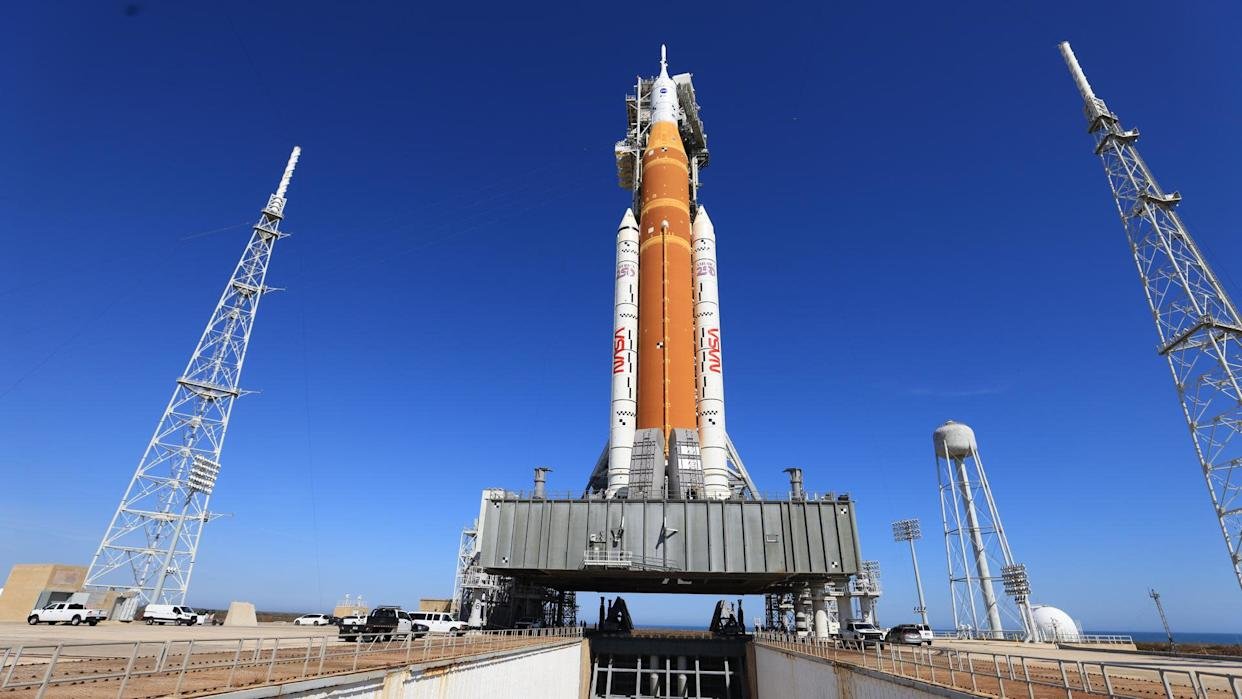
It looks like a March launch is no longer in the cards for Artemis II, NASA’s first crewed trip to the moon’s vicinity since the final Apollo mission over 50 years ago. While preparations were underway at the Kennedy Space Center for a launch as soon as March 6, the space agency says it ran into an issue with the flow of helium to its SLS rocket’s upper stage this weekend and it now has to roll the rocket from the launch pad back to the Vehicle Assembly Building (VAB) to figure out what’s wrong and fix it. A media briefing is planned for sometime this week to discuss the problem and what’s next.
But in a post on X, NASA Administrator Jared Isaacman confirmed the rollback will “take the March launch window out of consideration.” NASA noted on its blog that the current effort “potentially preserves the April launch window, pending the outcome of data findings, repair efforts, and how the schedule comes to fruition in the coming days and weeks.” It’s a four-mile trip back to the VAB that will take hours to carefully transport the massive rocket and the Orion spacecraft. NASA says it’s eyeing February 24 for this trek.
The issue occurred overnight in the early hours of February 21, when NASA says it observed “interrupted flow of helium to the SLS (Space Launch System) rocket’s interim cryogenic propulsion stage.” The space agency explained:
The upper stage uses helium to maintain the proper environmental conditions for the stage’s engine and to pressurize liquid hydrogen and liquid oxygen propellant tanks. The systems worked during NASA’s Artemis II wet dress rehearsals, but teams were not able to properly flow helium during normal operations and reconfigurations following the wet dress rehearsal that concluded Feb. 19. Operators are using a backup method to maintain the environmental conditions for the upper stage engines and the rocket, which remains in a safe configuration.
The Artemis II crew — Commander Reid Wiseman, Pilot Victor Glover, Mission Specialist Christina Koch and Canadian Space Agency astronaut Jeremy Hansen, Mission Specialist — had just entered quarantine a day before the issue arose. NASA says the astronauts have since come out of quarantine.
At the start of this year, NASA announced an accelerated timeline for Artemis II, which was previously set for April 2026 after experiencing delays in 2024. For this 10-day mission, which will be the first crewed flight of the SLS rocket, the Artemis II astronauts will take a trip around the moon in the Orion spacecraft. While it initially targeted early February, the launch was pushed to March due to issues that popped up during the wet dress rehearsal. Now, we’re back to the beginning with a possible April launch, but that’ll depend on the fix being a quick one.
Andrew Siciliano deep dives on the 2026 NFL Draft with Nate Tice & ESPN’s Matt Miller. Andrew kicks things off with Nate Tice as they parse through Nate & Charles McDonald’s latest mock draft and cover a few of the more interesting selections, including EDGE Rueben Bain Jr. going second overall to the New York Jets, RB Jeremiyah Love in the top ten, EDGE David Bailey to the Washington Commanders and more. Next, Andrew & Nate set their sites on Indianapolis for the NFL Combine as Nate gives his top prospects he’s most excited to watch test next week.
Advertisement
Later, Andrew is joined by ESPN’s Matt Miller to get his thoughts on the draft (including Ty Simpson, Caleb Downs and more) before talking through his latest NFL mock draft.
(6:55) – Nate Tice breaks down latest NFL mock draft
(21:55) – Nate’s top prospects to watch at the NFL Combine
(44:00) – Matt Miller talks latest NFL mock draft
MIAMI GARDENS, FLORIDA – JANUARY 19: Fernando Mendoza #15 of the Indiana Hoosiers takes the field during pregame warmups before the 2026 CFP National Championship between the Indiana Hoosiers and the Miami Hurricanes at Hard Rock Stadium on January 19, 2026 in Miami Gardens, Florida. (Photo by CFP/Getty Images)
(Photo by CFP/Getty Images)
Inside Coverage would be nothing without the impact of our beloved Terez Paylor, who was a pillar of Yahoo Sports’ NFL editorial and podcast coverage. We will continue to produce this NFL podcast in his honor, and hope that you can support Terez Paylor’s legacy in one of three ways:
• Buy an “All-Juice Team” hoodie or tee from BreakingT.com/Terez. All profits directly fund the Terez A. Paylor scholarship at Howard University.
• Donate directly at giving.howard.edu/givenow. Under “Tribute,” please note that your gift is made in memory of Terez A. Paylor. Under “Designation,” click on “Other” and write in “Terez A. Paylor Scholarship.”
Today on the Kevin O’Connor show, KOC is joined by Tom Haberstroh to ask some big questions in the NBA world: Are the Houston Rockets done? What teams have the most to prove in the 2nd half of the season? Which young players might break out and which coaches are on the hot seat?
Advertisement
Then, the pair look at two of the hottest names in college basketball: Darius Acuff and Darryn Peterson. How does Acuff’s 49-point explosion affect his draft stock? Is Peterson’s self-check-out gambit for Kansas threatening his no. 1 draft pick potential?
Later, KOC is joined by Daman Rangoola, Sam Esfandiari & Claire De Lune from All-Star Weekend to talk the latest with the Lakers and Warriors. That and more on today’s show!
(1:11) Contenders with the most to prove (13:38) Young players to watch (20:26) NBA coaches on the hot seat (33:46) Kings decimated by injuries (37:12) Darius Acuff drops 49 points vs. Alabama (41:44) What’s going on with Darryn Peterson? (56:32) Daman Rangoola & Sam Esfandiari join from All-Star (1:43:10) Claire De Lune joins from All-Star
HOUSTON, TEXAS – FEBRUARY 11: Kevin Durant #7 of the Houston Rockets looks on during the second half of the game against the Los Angeles Clippers at Toyota Center on February 11, 2026 in Houston, Texas. (Photo by Jack Gorman/Getty Images)
Nate Tice & Charles McDonald join forces to answer the NFL offseason’s biggest looming questions submitted by the audience. The duo start off by diving into the New York Giants’ potential NFL Draft plans with the 5th overall pick, how the Chicago Bears can fix their defensive line and whether or not Brian Daboll is a good fit with QB Cam Ward as the new Tennessee Titans OC.
Advertisement
Next, Nate & Charles discuss whether or not the Los Angeles Chargers can fix their offensive line in one offseason, if the Jacksonville Jaguars defense can take a leap next season, who the Denver Broncos should be targeting in free agency (Tyler Allgeier?) and what our expectations for the 2026 Washington Commanders should look like.
Later, the two hosts wrap up with thoughts on the New England Patriots’ upcoming offseason decisions, why Sean McVay changed to a duo run game style with the Los Angeles Rams, whether Sean McDermott was really the problem with the Buffalo Bills and more.
(44:15) – Biggest offseason questions: Patriots, Rams, Bills & more
New England Patriots quarterback Drake Maye (10) warms up before the NFL Super Bowl 60 football game against the Seattle Seahawks, Sunday, Feb. 8, 2026, in Santa Clara, Calif. (AP Photo/Sue Ogrocki)
The Cooligans welcome former MLS head coach and analyst Giovanni Savarese for a deep dive into the 2026 MLS season. Gio shares his predictions, breakout teams to watch, and how the league continues to evolve ahead of a massive 2026 on home soil. The conversation also turns to the USMNT, as the guys assess expectations, pressure, and what success should realistically look like at the 2026 World Cup.
Advertisement
Christian and Alexis then tackle the troubling racist incident involving Vinícius Júnior during Real Madrid’s clash with Benfica. They unpack how these situations are currently handled, question whether the responsibility to stop a match unfairly falls on the player experiencing abuse, and debate what meaningful structural changes could better protect players moving forward.
Finally, it’s a jam-packed Champions League recap. Folarin Balogun shines in a statement performance against Paris Saint-Germain, Juventus suffer a shocking defeat to Galatasaray, and Bodø/Glimt pull off a stunning win over Inter Milan. The boys react to all the drama, surprises, and what these results mean going forward.
Timestamps:
(6:30) – 2026 MLS preview and predictions
Advertisement
(30:00) – Gio Savarese’s USMNT World Cup outlook
(39:00) – Vinicius Junior deals with racism again: time for a rule change?
(59:00) – Folarin Balogun shines in Champions League loss to PSG
(1:04:30) – Serie A teams suffer shocking Champions League losses
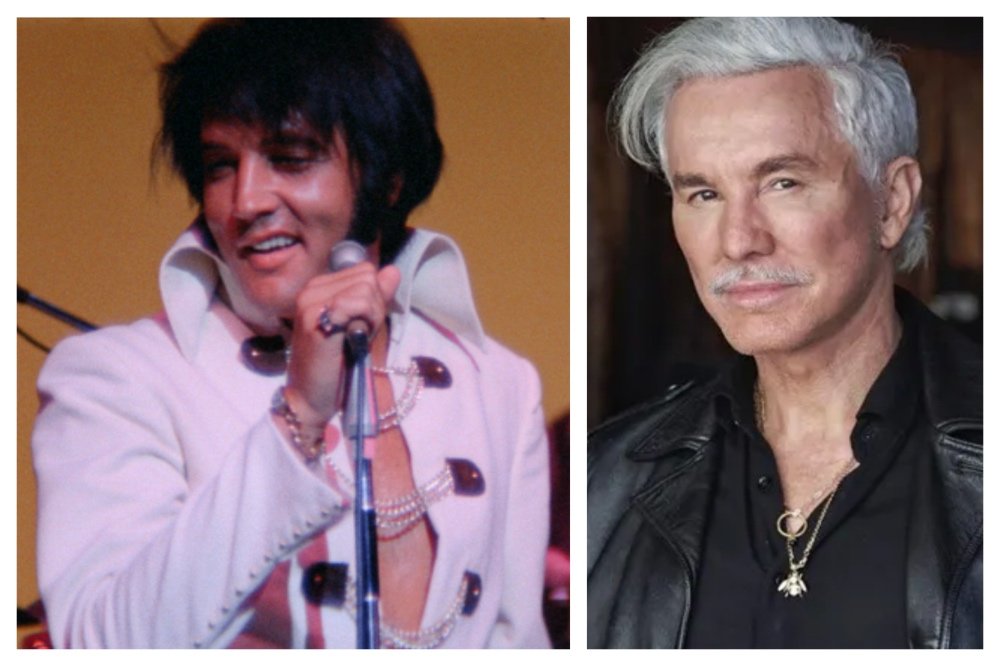
Baz Luhrmann is about to dive back into his long-aborning Joan of Arc movie. But before he does, he had to return to the Elvis well, and the King’s new and returning subjects are glad he did. “EPiC: Elvis Presley in Concert” opened exclusively in Imax theaters this weekend before going wider to slightly smaller screens on Friday. there was little doubt the audience for Presley is still there, or at least for an Elvis seen through the eyes of one of contemporary cinema’s biggest name-brand directors.
“EPiC: Elvis Presley in Concert” may not make it to the $151 million domestic gross achieved by the director’s 2022 biopic “Elvis” in 2022, but weekend results were strong in the initial 325 Imax theaters that played it this weekend, with a $10,000-per-screen average, the highest of any film on the chart. So Luhrmann can already claim victory in his crusade to immerse contemporary audiences in what he considers to have actually been Presley’s peak period as a performer, when he first started playing Las Vegas at the very end of the ’60s and beginning of the ’70s. Critics as well as the Elvis flock have taken to it: Variety‘s review, by Owen Gleiberman out of its Toronto premiere, called it “one of the most exciting concert films you’ve ever seen.”
Prior to his personally touring a series of international Imax unveilingss, Variety spoke with Luhrmann over Zoom at his compound in Australia, where he carefully maneuvered the camera to not reveal any “Jehanne d’Arc” spoilers plastered across nearby walls. But there’s nothing to spoil about his contention that, in his mind, Elvis Presley is America… at any size, but preferably at about 45 feet tall, enshrined in full motion in Hollywood Blvd.’s vaunted Chinese Theatre.
First off, how are you?
I am extraordinarily absorbed and busy, and it’s just been my nature since childhood. I’m just always making things and doing things. And I’m deeply absorbed in my big movie, “Jehanne d’Arc,” which is driving ahead. But now I take a moment for this completely different work, which is trying to get as many people — fans and new audiences — to see “EPiC” on the biggest screen possible. I have to pause and shout out John O. Redmond, my editor of at least 20 years, who’s the creative partner in this and drove it as much as I did. Our big focus is to make a theatrical cinematic experience, and to make it feel as much as possible like you’re actually in the audience and your experience of Elvis is kind of unfiltered. So part of that is me going out and encouraging people to not wait to stream it, to get out and be part of a theatrical experience. Bluntly, it’s a passion of mine.
Putting it on Imax screens exclusively for one week before it goes wider is one way of getting that messaging across. And personal appearances you’re making at some Imax screenings.
Absolutely, man. I’ve been actually in the Gold Coast, where I have my creative facility, then I go to Sydney, which is an outdoor experience with thousands of people, and then that night to the biggest Imax screen in the world, which ia Melbourne. Then I go directly out the back door of that to London, then to L.A. We are doing it at the TCL, the old Mann’s Chinese, in Imax, and I’m thrilled about L.A. because of the memory I have of coming out of COVID.
Quick side story. After being locked down for two years and working in Australia on “Elvis,” the movie, I was finally able to leave and I came to the U.S., landed, and the first thing we said we would do — with masks on and all of that — was “Let’s go down to see a movie.” I walked into TCL and “Dune” was on, which I didn’t want to see on streaming, in thistheater I dearly love. I saw the opening night of “Titanic” there with Leonardo. So I walk up the stairs, thinking, “Oh God, what’s it gonna be like — will there be anyone here? Iit a good idea to go to the theater?” And as I go up the stairs, I can see the screen., and I just stood there and looked at the vast image and the sound, and I just went, “I’m home. I am home.” So the idea that something the whole team has toiled so passionately on is gonna be seen at the TCL, I think for me, that’ll be a historic moment in my journey.
This includes footage that was shot for a couple of Elvis concert films in the early ‘70s. I liked those films, but I admit I haven’t seen either of them since I had them on laserdisc in the ‘90s… which is similar to a lot of people’s experience, except maybe minus the laserdisc part. So for those of us without a clear memory of those films, how much of them might be carrying over into what you have in your film, albeit with a big upgrade?
Yeah, I can tell you. Look, I loved them too. I really did. But the quick narrative is: I’m making “Elvis,” and I hear from John that there might be these lost reels. He said, “Look, if you’re able to get the funds, maybe try and find these reels.” And Ernst Jorgenson, who is probably the premium expert on Elvis in the world, says to me, “Try and get the funds.” And I go, “OK, maybe we can use some of these extra reels,” as supplementary footage of the (Las Vegas) showroom, which I didn’t have in the film at that point. So we got the funds, we go looking, and to our surprise, we find 69 boxes. I didn’t go there, but it’s literally in the salt mines in Kansas City where the negatives of the whole MGM collection are kept so that they don’t rot. When the guys find it, they start sending pictures — boxes everywhere, some are mislabeled, some stuff missing, some not. Wow. So we bring it out and we print some of it. I go, “Look, this is too big a job right now. I’m gonna build the showroom (as a practical set). We’re not gonna use it.”
But now we have 59 hours of not just “That’s the Way It Is,” but “Elvis on Tour,” and some 8mm. And most tellingly, we have this audio — about 50 minutes of it — of Elvis just talking about his life in a way in which you really never hear him talk. So all the way through making “Elvis,” we said, “We’ve got to do something.” And the Elvis fans got wind of it, and it was a bit like, “Release the video! Release the footage!” Like, “Release the files! — the Elvis Files.” And I contemplated: Do we just kind of do a reboot of “That’s the Way It Is” and “Elvis on Tour”? But then we also had this 8mm that was extraordinary, and we had this audio, and we also got things like the full Hampton Road concert (shot on 1972 at the Hampton Roads Coliseum in Virginia for “Elvis on Tour”). But we only had negatives and we didn’t have the sound.
I was so lucky to work with Peter Jackson and his remarkable team at his studio, because you know how Peter had done refurbed the Beatles (for the “Get Back” docuseries). And Park Road have a particular gift for (upgrading) 35mm anamorphic. MGM shot in 35mm anamorphic for “That’s the Way It Is.” Then you had 16 and you had 8. I wanted to bring it all up to Imax quality, so that’s expensive. And then we spent two years trying to find the sound. The mag tape wasn’t there, so we had to find audio. Sometimes we had people in car parks in the middle of the night trading bootleg stuff. I mean, the bootleg industry for Elvis is gargantuan.But the concept becomes: Why don’t we do something that never really happens when it comes to either an Elvis doc or even a concert film, and just let Elvis tell his story — sing it and tell it to you — almost like in a dreamscape?
‘EPiC: Elvis Presley in Concert’
Neon
Now, John O. Redmond will be able tell you what’s in this exactly frame by frame. [For more of that, look to a separate interview with Redmond about making the film, coming up in Variety.] There are some bits that are in “That’s the Way It Is,” and there are some bits that look like they’re in “That’s the Way It Is,” but actually aren’t; it’s a different night, or a different angle. Then there is a significant percentage of the footage which is material that just simply has not been seen. Or maybe some seconds or some minutes have been bootlegged.
I’ll give you an example. There’s an amazing bit I love where Elvis was just sitting with the guitar and he is doing “Little Sister,” and he segueways into “Get Back.” Now, there’s pirated black-and-white stuff out there, but through Park Road we were able to print it and bring it back into a colorscape. Or, when he sings “How Great Thou Art” in the gospel section, 16mm, that’s just never been released. Some of it you would’ve seen in very scratchy bootleg versions. But even if you’ve seen some of it in “That’s the Way It Is,” you’ve never seen it like this… In our movie you see Sammy Davis Jr. and Cary Grant backstage, and we’ve been able to dig back the sound. You’ve seen that footage occasionally, pirated, but we found the sound of what they actually say.
And we had the original Elvis voice, we have the band, but sometimes I’m going from him singing on stage to him talking. Or we’ve done these DNAs where we’ve kind of made new Elvis songs. So it’s meant to be a dreamscape, and that distinguishes it from “That’s the Way It Is.” But what I do want to say is, even in Toronto (it premiered at the Toronto International Film Festival), people were geeking out about the quality. The image is three times the size of my building I’m in, if you’re in a big Imax. But what we really did was make it sound and feel like you’re actually there.
For a lot of us who grew up after the main Elvis era, we go through a journey where we come to worship the Sun Sessions of the ‘60s, and things like the ’68 comeback special, but generally, Elvis later on represents something to us that is spoiled or gone to seed. And so there’s this dichotomy: Black Leather Elvis, cool. White Suit Elvis, not cool. And the average person almost has to put some effort into listening to the boxed sets RCA has put out over the years from the late ‘60s and early ‘70s to discover how much of value is there. There’s still this fallacy we have to get over that Las Vegas was just, in its entirety, not a great period.
Yeah. A thousand percent. You’re dead right — the black leather, cool, but the white jumpsuit, because it’s associated with his extremely fast decline at such a young, young age… And with Las Vebgas… He does it once and twice, and then he does the 15 cities/15-day tour, great. Then does it again, and then does it again, and then does it again, and then does it again. He doesn’t quite know, like a bird hitting a glass window, why the hell he can’t go and do the world tour that he so desperately wants to do. And then as with all of those artists that are beyond music but are actually cultural icons, all of the corruptive things come, and the body becomes corrupted. So what we remember is the Halloween costume — the cheesy white jumpsuit that people wear at Halloween with the glasses, or the wedding chapel send-up guy or the impersonators.
And what gets lost is that when he first did that show, everyone expected him to do a nostalgia show, but he was totally on the cutting edge. And the big sound, like taking “Bridge Over Troubled Water” and turning it into this giant gospel power ballad … I spoke to Clive Davis, and he said, “I was there opening night, and you know what? I still to this day have never seen a night like that,” talking about the opening night, the ‘69 show. The white suit doesn’t come till 1970, because that’s when they film it. But he said, “They had to stop him from doing cartwheels.” The energy on stage was just on another level.
So what has been forgotten is that his absolute pinnacle, his true pinnacle, are those very early Vegas shows. The other thing I think is worth taking into account is that the critics were all flown in by Colonel Parker, and it was a time of the counterculture and the Beatles were breaking up. They came basically with an attitude of like, “This is gonna be a bit of a joke,” and they were utterly blown away by the artistry and the sheer stage power. One thing that I love in the film, for me, personally, is when he is covering the Beatles or doing a Bob Dylan song. Bob Dylan actually said, “The highlight of my career, that’s easy, Elvis recording one of my songs.”
I mean, even the white jumpsuit, by the way: If you look at Mick Jagger and Freddie Mercury, the jumpsuit becomes this huge rock ‘n’ roll iconic thing. Mick wore it, Freddie wore it. But it comes from Elvis.
Neon
One thing not everyone will be aware of before seeing this is how great the TCB Band is, with some of the greatest players in the world, on their game.
What do you think the privilege is like to be able to work with this stuff? I’ve produced a lot of music; I’ve been working with RCA for, like, 15 years;I’ve had a label with them. But to be able to isolate just Ronnie Tutt’s drumming… the Tuttster’s drumming… He’s surrounded by the best. And when you see Elvis rehearsing, he sings the top lines — like, he sings the orchestrations — and he’ll go, “No, no, no, let’s go up here.” It’s in his head. And I think what gets lost again in the whole white jumpsuit kind of Halloween costume smoke is what an awesome and profoundly gifted musician he was. He’d just pick up and sing anything. By the way, think of the voice. So, he’s starting as a high tenor in the ‘50s. But he’s so obsessed with Mario Lanza and opera singers, and he says in our film, “I listen to everything,” and he’s always working on his voice. By the end of it, he’s truly got operatic tone.
You have some augmented or drastically remixed tracks in the film and on the soundtrack.
Working with Jamieson Shaw, we started doing this on “Elvis” the movie, thinking, instead of just having score all the time — although we do have score in this —sometimes we go, “Well, why don’t we just make a new Elvis track?” … We have this small section of Elvis singing “Oh, Happy Day” with the Sweets [the Sweet Inspirations]. We started the movie with him singing that, but he always dreamed of singing with really giant Black gospel choirs, because as you know, he would go when he was a kid and see people like Mahalia Jackson. Elvis was always mixing white and Black gospel. So we have him singing with the Sweets, but then we also recorded choirs in churches in the South, so that we could realize slightly the dream, in this dreamscape, of Elvis singing “Happy Day” with a giant gospel choir. And a big shout-out to our lovely friends in the South who recorded that for us. It’s just going like, well, what if… wouldn’t it be amazing… we’re always asking the question, what would Elvis do?
If you read reviews of the comeback special, some of the (critics) said, “Once again, Elvis is selling sex, but really can’t sing.” I mean, I work in opera. I’ve worked with the greatest singers in the world. And he’s almost like Orpheus, he’s so gifted. I’ve heard the raw vocals. He never recorded in studios with a drop mic; he always had a handheld. So when he’s on stage, the clarity and the evenness of the vocal, even with a pretty crap sound system, is so great. That’s because he’s basically mixing it himself, by mic technique. Which is a thing you just learn — when you bring it in and out, basically, you’re balancing yourself. I’ve heard raw tracks of all sorts of icons, and he has the greatest mic technique of any vocal artist that ever existed.
Do you have a favorite performance of his that’s in the film?
Well, I always avoid doing lists. But, I really lock in every single time when he does “Polk Salad Annie,” because it’s so random. When he goes into the onomatopoeia…I don’t wanna be the world’s biggest name dropper, but a famous, famous, iconic singer of a famous band who I dearly love as a friend said to me, “Oh, the thing about us is, we rehearse, but Elvis never rehearsed moves. It’s a bit like he’s in a spiritual state. He just kind of felt it.” And you see it in “Polk Salad,” him just feeling the music and doing the scat, and then the movement, and then what he does at the end — he’s not so much making it up as he’s going along as just feeling it and passing it on to the audience. And I think that’s why he’s so enigmatic on stage, is that not only does the audience not know what he’s gonna do, the band didn’t know what he was gonna do. Ronnie Tutt said, “We had to glue our eyes to him because we were like, what’s he gonna do next?” That’s why he’s so remarkable as a live performer, because he is literally like a live wire. For a person who’s so uncomfortable off-stage, he’s so comfortable on stage. It’s like you’re in his lounge room, hanging out.
Speaking of iconic singers of famous bands. Bono has been very interested in Elvis all along, even writing a song on “The Unforgettable Fire” that is essentially his poem about Elvis. Here, you have Bono delivering another poem speaking at the end of the movie. How did that come about?
If you saw the show the guys did in Vegas in the Sphere, there’s a lot of Elvis in that, you know? Bono is a real friend, and we’ve collaborated way back in “Moulin Rouge,” and he was such a help on this, just as a cheerleader. I was in the South of France where he lives, and he said, “Look, I’ve written a poem about Elvis,” and he read it to me. John O. and I were thinking, how do we end this? You can’t wrap it up with a comment. Is it another song? And John O. put the poem in, and it seemed to be a great way, with a film that is really, I think in itself, a poem, to end poetically. So I rang Bono, and he said, “Absolutely, I’m honored that you would use it.”
Baz Luhrmann and Austin Butler at Baz Luhrmann’s “EPiC: Elvis Presley in Concert” Los Angeles Premiere held at the TCL Chinese Theatre on February 18, 2026 in Los Angeles, California.
JC Olivera
You’ve been on such a mission with Elvis, so you must feel gratified that, with the previous film, the world kind of came along with your vision. There has been a fear among some Elvis fans that his core audience will die off, and even the next generations, over time, so will people still be going to Graceland in 50 or 75 years? You forestalled that, to a degree, or at least gave him a major cultural turbo boost. Even though the feature film will probably always be the biggest thing you do for Elvis, it looks like this is going to be kind of a continuum through your life.
Look, it wasn’t planned that way. I mean, I was affected by Elvis as a child, but I also went on to other artists as I grew up — Bowie and Michael Jackson and Elton John, for sure, who I love and work with. But Elvis was always there, more than just as a musician or even a pop icon. He was America in so many ways, through the ‘50s, ‘60s and ‘70s — the incredible rebellious energy, the kind of cool family part, but also then almost rising up like a god, and then the descent. And even in his most corrupted bodily state at the end of his life, he sings “Unchained Melody” with probably the best voice he’s ever had.
I did not intend to become this enmeshed in the curation of Elvis. But to your question, the gratification for me — and it’s a little bit unexpected — was to give Elvis a fair voice. It’s not particularly my vision. Of course, any storytelling is somebody’s storytelling. But when I spent all that time in the South, I found Sam Bell — very hard to find him, actually; an older gentleman of color who, when Elvis lived in one of the very few white houses in the Black community, told the story about how they grew up. And I really realized at that point the impact of Elvis… and you can’t extract him from the story of America. He’s that central to so many key things.
I think about what’s going on in America right now. And if you want to know what Elvis might think — and I’m not gonna answer for him; he didn’t often use words — it’s in the song choices. I’m so happy we’ve got “Walk a Mile in My Shoes” or “In the Ghetto” in this show. And people did not want him to record those songs… Now we know through the data that not only have we picked up a truly surprising percentage of young audience that have discovered audience Elvis anew, but even little kids jump up and down in front of the television watching the “Elvis” movie. It’s Elvis’ energy. It moves through time and geography.
More than gratified, I feel privileged to have been the curator to help it be guided away from what I consider to be an ossification — not malicious or on purpose, but an unfair unfair rusting, an untruthful summation, turning Elvis into a trope. It happens. And I wanted to take the trope, shake off the rust and help guide and reveal Elvis for the artist that he is, but also most importantly, the impact that he had on culture and on America as a whole. And the world. And the world — that’s the thing. We know why he didn’t have the world tour [as explored in the earlier “Elvis” film: Colonel Tom Parker had his sway]. And honestly, we are going to give Elvis the world tour he dreamed of. Because he’s gonna be playing on the biggest screens in the world. In Toronto, people actually came up to me and said, “I couldn’t work out whether I was in the audience or not. It felt like I was at the show.”
Are you still thinking about doing a stage-musical adaptation of the Elvis story?
Yeah, actually… I don’t know if it’s announced; I’ll get in trouble. But definitely… Let us put it this way: serious work is being done on the Elvis stage show, based on the movie.
Good enough. And then to ask briefly about the Joan of Arc film’s progress…
I’m so deep in it. The reason I’m shooting this corner of my atelier [on a Zoom call] is because the rest of it is just plastered with story structure and script. We have this extraordinarily gifted, gifted, gifted young actor (Isla Johnston) who’s quietly doing all it’s gonna take. Because it’s gonna take time. I always take time. But I am building medieval France! You know, there’s not a lot of medieval France hanging around ready to be photographed. So it’s not quick, but I’m deep in it. As soon as I finish the tour of Elvis, I’m back to “Jehanne d’Arc,” and that will be my next journey. And yet another character who has actually been kind of relegated to a bit of a trope and a little bit forgotten. I like to be involved in those iconic characters from the past who you sort of wish their power and their guidance and their light was around today. Who, in different ways, were the most surprising candidate to have so much of an effect on the world.
“I couldn’t even feel my hands on the last couple greens,” Bridgeman said.
Luckily for Bridgeman, he kept it together on the 18th hole at Riviera Country Club. After a bogey and a lot of work for a par save on the two holes behind him, which cut his lead to a single stroke, Bridgeman played the final hole perfectly. He landed in the fairway with his drive, stuck his approach about 20 feet short of the cup and left himself a simple two-putt par to seal the win.
With it came a $4 million check — which was just more than half of what he had earned over his first three seasons on the PGA Tour combined — and a jump to the very top, though just barely, of the FedExCup standings.
“I thought it would be a lot easier than it was,” he said. “I kind of had everything under control, especially to start the day and I felt great throughout the day … But I don’t think it will get any easier than a six-shot lead.”
Bridgeman didn’t make many mistakes for most of his round. He birdied twice in his first three holes, and he was even through 15. The lone true stumble came at the par-3 16th, when he landed his tee shot in the bunker and struggled to get out of it before settling for a bogey. He had to scramble to safe par at the 17th, too.
But he got it done.
Jacob Bridgeman held on late to grab a one-shot win at the Genesis Invitational on Sunday in Los Angeles. (AP/Caroline Brehman )
(ASSOCIATED PRESS)
“I thought he handled everything really well,” said Rory McIlroy, who finished a shot back at 17-under. “Because I wasn’t putting pressure on him it probably felt to him like he didn’t need to do that much, but he played very well … It’s hard to close out big tournaments. Even though he was a little shaky coming down the stretch, he held it together when he needed to.”
Advertisement
The winning moment wasn’t something Bridgeman was shying away from all week the way that some athletes would, either. He was envisioning it when he woke up Sunday morning, trying to picture what it would feel like with the trophy in hand.
That, while he knows it might be unusual, feels like the right way to go about it.
“I don’t think I should try and forget about it or not realize what’s going on,” he said. “The magnitude of the situation almost just makes me focus more.”
Though he was admittedly “a little bit nervous” when he first woke up, Bridgeman managed to see the win in his head. It just didn’t turn out like he had hoped.
Advertisement
“I pictured myself walking up that hole with a four-shot lead and knowing that I’d won, but unfortunately for me it was only a one-shot lead and I became a lot more nervous,” he said. “So I kept my head down, didn’t really look up until the end. I felt like if I had kind of become overwhelmed by the moment it might have distracted me.”
Now with the win in the books, Bridgeman will head right to Florida for the Cognizant Classic starting in just a few days. He had already secured a trip to the Masters this spring after he reached the Tour Championship last season. So the next few months will be a build-up for his first career trip to Augusta National.
Advertisement
Though it’ll be incredibly different than anything he’s faced, preparing for the major championship as a Tour winner will make things much, much easier.
“Getting the monkey off my back winning for the first time I think is huge,” he said. “I think the Masters in itself is going to be a whole ‘nother challenge just because that’s the golf tournament that every golfer growing up wants to win, wants to play in, wants to compete in.
“I know that one will be a little bit more mental and physically taxing on me, but I’m very excited for it.”
For decades, Pat Riley has been the architect of the Miami Het.
But he’s a Los Angeles Lakers legend whose likeness was set in perpetuity Sunday with a statue outside Crypto.com Arena.
The Lakers unveiled the statue prior to Sunday’s home game against the rival Boston Celtics. It fittingly stands between statues of Magic Johnson and Kareem Abdul-Jabbar, with whom Riley won four NBA championships as head coach of the “Showtime” Lakers.
Advertisement
With a host of Lakers icons watching, the curtain was lifted, and Riley’s statue emerged from a flurry of purple and gold confetti. The statue is positioned with Riley holding up his right hand in a fist, his trademark signal for Johnson to deliver a pass to Abdul-Jabbar for a sky hook.
An inscription on the base of the statue features a quote that Riley attributed to his father, Leon Riley:
“There will come a time when you are challenged, and when that time comes, you must plant your feet. You must stand firm. You must make a point. About who you are, what you do, and where you come from. When that time comes, you do it.”
Lakers legends among icons to honor Riley
Riley was among the “Showtime” Lakers royalty present for the unveiling alongside Johnson, Abdul-Jabbar, James Worthy, A.C. Green, Bob McAdoo, Kurt Rambis, Norm Nixon and Byron Scott.
Advertisement
Dwyane Wade, who won three NBA championships under Riley’s leadership with the Heat, was also in attendance. As was notable “Showtime”-era Lakers fan Michael Douglas, who gave a speech about his friendship with Riley.
Lakers governor Jeanie Buss, whose father, Jerry Buss, hired Riley, hosted the ceremony.
“Forty years ago, Pat was asked by Sports Illustrated what words he associated with coaching. His response was simple: ‘dignity, respect, pride,’” Buss said. “Those are the values he lives by and the ones he embedded here.
“Even though Pat hasn’t worked here for more than three decades, those remain Laker principles in large part because of him. That’s why it was so important to us to recognize Pat with this statue right here in the heart of downtown L.A.”
When the statue was unveiled, Riley smiled and offered a thumbs up in approval.
When Pat Riley raised his fist, that meant give the ball to Kareem.
(MediaNews Group/Pasadena Star-News via Getty Images via Getty Images)
The celebration of Riley continued at halftime of Sunday’s game with Johnson emceeing a midcourt ceremony in front of a sold-out crowd.
“I was born to be a Laker in 1970 at the Forum with these guys right here,” Riley said when Johnson handed him the mic, while pointing to the aforementioned former Lakers in the building who were lined up behind him at halfcourt.
Advertisement
The man known as much for his fashion sense as his basketball acumen, then had jokes.
“And of all of them, there’s only one who has shown me true respect today, and that’s James Worthy, who has a tie on,” Riley continued. “Everybody’s got a little too casual — $2,000 fine for everybody.”
To be fair to Jamaal Wilkes, Wilkes also had a tie on.
Riley, who wore many hats with the Lakers including player and broadcaster before taking over as head coach, then reflected on his time with the team.
“I had the opportunity to meet, to be with, to play with, to coach, to broadcast, to be a traveling secretary and to be a head coach of this team. And it’s the greatest honor I’ve ever had.”
Advertisement
Current Laker LeBron James, who played under Riley and alongside Wade on two Heat championship teams, was present for the halftime ceremony. He shared a hug with Riley in the tunnel.
Unfortunately for the Lakers, they couldn’t deliver a win over the Celtics to cap Riley’s day. Boston blew the game open after halftime for a 111-89 win.