Chris Sale won’t be a free agent after the 2026 season.
The Atlanta Braves announced they have agreed to a contract extension with the 36-year-old lefty through the 2027 season that has a club option through 2028.
Advertisement
Sale is set to be paid $27 million in 2027 and would be paid $30 million in 2028 if the Braves pick up the option. He’s making $18 million in 2026.
The nine-time All-Star won the first Cy Young Award of his career in Atlanta in 2024 when he posted a 2.38 ERA and 225 strikeouts in 177.2 innings pitched while going 18-3. A season ago, Sale threw 125.2 innings and had a 2.58 ERA with 165 strikeouts. He missed over two months in the summer after fracturing ribs.
That 2024 season was his first in Atlanta after seven seasons with the Red Sox. Sale began his career with the Chicago White Sox and spent the first seven seasons of his MLB career on the South Side before he was traded in December 2016.
Advertisement
The Braves acquired Sale for Vaughn Grissom in December 2023 after the pitcher had dealt with injuries for years. After not playing in the shortened 2020 season, Sale threw just 151 innings across his final three seasons in Boston, including 5.2 innings in 2022. In his final season with the Red Sox, Sale had a 4.30 ERA over 102.2 innings pitched.
He’s clearly bounced back in a big way for the Braves as they attempt to keep pace with the Philadelphia Phillies in the NL East. Atlanta was second to the Phillies in 2024 and fell to fourth in 2025.
Army coach Jeff Monken isn’t against moving the game up two weeks or so to the weekend after Thanksgiving. Right now, the two service academies meet on the Saturday after conference championship game weekend between the rest of the college football regular season and bowl season.
Advertisement
In 2025, the first bowl game kicked off just a couple hours after Army-Navy ended, thanks to the way Saturdays fell throughout the year on the calendar.
“I think Army-Navy is a huge part of the history of college football, and what it is today, even,” Monken told the Athletic. “Give us a four-hour block on Thanksgiving, or on Friday of Thanksgiving, or on Saturday of Thanksgiving, and give us a four-hour block, and just say nobody else plays doing this four-hour block. That’s still protecting the game.”
Army and Navy have occupied their exclusive window in December since the two teams were independent. Now, both teams are members of the American Conference. However, since the game is played so late in the season and after the American’s title game, it doesn’t have any bearing on the conference race. And it has no playoff impact, either. The playoff field is set nearly a week before the game happens.
Moving the game up to the traditional end of the regular season would mean the game could not only count toward the American title race, but even playoff inclusion. Army won 12 games in 2024 and Navy won 11 games a season ago.
A move would also mean the playoff would have room to shift around in December, too. Even if it stays at 12 teams.
Advertisement
With Army-Navy played on the second weekend of December, the 12-team playoff has begun on the third weekend of the month over the past two seasons. That leaves the quarterfinals on New Year’s and then the semifinals and national championship game in January.
And in 2026, the length of the playoff is especially extreme. With New Year’s Day on a Friday, the semifinals are not Jan. 7 and Jan. 8 because at least one team would have to play on a short week. Instead, they’re on Jan. 14 and Jan. 15. The nearly two-week break between the quarterfinals and semifinals means the national championship game isn’t until Jan. 25.
Advertisement
Having another weekend in December available for the CFP will be a huge benefit to shortening the season. Especially if the transfer window stays where it is. The sole transfer window opened while the CFP was still going on in January and teams like Oregon, Indiana, Miami and Ole Miss were both signing recruits while preparing to play postseason games. The earlier the college football season ends, the better chance players will have of being able to transfer after every team’s season is over.
Detroit Lions wideout Amon-Ra St. Brown has quite the connection to Germany. St. Brown’s mother, Miriam, was born in the country, and St. Brown hosts football camps there. Now, he has another reason to visit, as the Lions were announced as participants in the NFL’s 2026 Germany game.
The league announced the news Tuesday, though did not name the Lions’ opponent just yet.
It will mark the first time in over a decade the Lions will play in an international game. The last time they played overseas occurred in 2015, when the Lions took on the Kansas City Chiefs in London. The Lions lost that contest 45-10.
Advertisement
While the Lions will play in Germany in 2026, the NFL has yet to reveal many details about the game. Fans know it will be played at FC Bayern Munich Stadium, but don’t know the Lions’ opponent, game date or kickoff time just yet. All of that information will be revealed — at the latest — during the league’s schedule release.
“I cannot wait to play in front of the incredible fans that I’ve gotten to know through my visits and football camps in the country,” said Lions WR Amon-Ra St. Brown, whose mother, Miriam, hails from Cologne. “Their support for me and the country’s instant connection to the Lions brand is inspiring, and I’m looking forward to our team getting to showcase Detroit football on an international scale.”
The NFL will play a record nine international games in 2026. The league has revealed a few details about those games, including a handful of teams that will play overseas next season.
Advertisement
There are still three international games in which the league has yet to reveal much information, including two of the London games and the 2026 game in Spain.
When the NFL’s free-agent signing period opens in March, one more veteran quarterback will be added to the list of available players. Atlanta Falcons quarterback Kirk Cousins will be released one the first day of the 2026 league year, Falcons general manager Ian Cunningham said Tuesday.
Cunningham made those comments during a local radio interview. He said he spoke to both Cousins and his agent about the move.
Cousins, 37, still showed some ability with the Falcons down the stretch. Following a season-ending injury to Michael Penix, Cousins started the final seven games of the regular season for Atlanta. He threw for 1,471 yards, 10 touchdowns and five interceptions during those contests. The Falcons went 5-2 with Cousins under center down the stretch, but that wasn’t good enough to push the team into the playoffs.
Advertisement
While Cousins already knows his fate, the Falcons will wait until March 11 — when the 2026 league year begins — to make the move for salary cap reasons.
Once he becomes available, Cousins will join a free-agent quarterback market littered with older veterans like Aaron Rodgers, Russell Wilson and Joe Flacco. All four of those players could draw interest from teams, though none of them, with the exception of Rodgers, seems likely to be guaranteed a starting job.
Cousins turned in an excellent 12 seasons to start his NFL career, but an Achilles injury in his final season with the Minnesota Vikings cast doubt on his future. Cousins returned quickly from that injury, but struggled in his first year with the Falcons in 2024, eventually being benched for Penix.
Advertisement
While Cousins showed signs of life down the stretch, it’s unclear whether that will lead to a significant role in 2026. The veteran might still have some ability in his right arm, and could help a team win some games next season, but he may have to compete for playing time on his new club.
Good news for all Ryan Coogler fans: The Sinners director is bringing back a beloved TV show. Hulu has officially green lit a pilot of Coogler’s X-Files reboot, a project three years in the making, Deadline reports. Coogler has a five-year exclusive television deal with Disney, Hulu’s parent company.
Coogler is directing and writing the pilot episode, with Jennifer Yale coming on as showrunner. She previously held the role on The Copenhagen Test. Actress Danielle Deadwyler, known for roles in Till and The Harder They Fall, has signed on as co-lead.
The show will follow the original storyline of two FBI agents who bond as they work on cases around paranormal and unexplained phenomena. No confirmation has come over whether former stars Gillian Anderson and David Duchovny will have any role in the reboot.
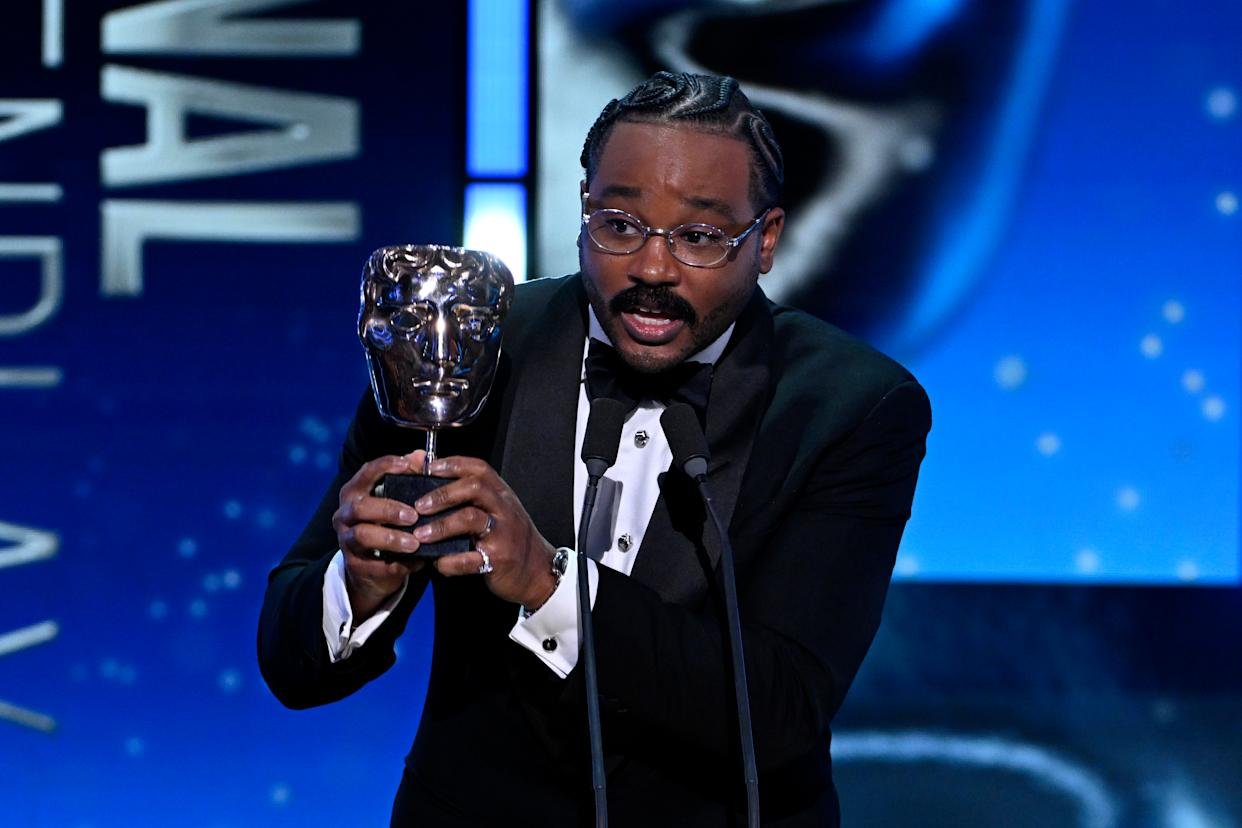
The news came on Sunday, the same day Coogler won the BAFTA for Best Original Screenplay for Sinners. Coogler made history this year with a record 16 Oscar nominations for Sinners, including Best Original Screenplay and Best Picture. Coogler also wrote and directed Creed, Black Panther and Black Panther: Wakanda Forever.
The U.K. government said on Tuesday that streaming services with more than 500,000 U.K. users, including Netflix, Amazon Prime Video, Disney+, ITV’s ITVX and Channel 4’s services, will be covered by enhanced regulation by U.K. media regulator Ofcom “designed to protect audiences and improve accessibility.”
The government unveiled “secondary legislation to implement the Media Act 2024, bringing the largest, most popular VOD services in the U.K. under enhanced regulation by Ofcom,” it said. “Platforms such as Netflix, Amazon Prime Video and Disney+, and the public service broadcaster VOD services like ITVX and Channel 4, will be required to follow similar Ofcom content rules to those currently in place for traditional broadcasters.”
By designating the most popular streaming platforms as “tier 1” services, they will need to adhere to a new VOD standards code. “Similar to the Broadcasting Code, this will ensure that news is reported accurately and impartially and audiences are protected against harmful or offensive material,” the government said. “Audiences will be able to complain to Ofcom if they see something concerning, and Ofcom will have powers to investigate, and take action, where they consider there has been a breach of the code.”
Under a new accessibility code covering the services, they will be subject to minimum requirements for accessibility features. For example, streamers will need to ensure that at least 80 percent of their total catalogue is subtitled, 10 percent is audio-described, and 5 percent is signed.
The regulations are designed to “reflect the significant shift in how audiences choose to watch TV,” the Labour Party government said. After all, around two-thirds of U.K. households subscribe to at least one service from Netflix, Amazon Prime Video or Disney+, with 85 percent of people using an on-demand service each month, compared to 67 percent who watch live TV.
“While licensed television channels must comply with Ofcom’s Broadcasting Code and accessibility requirements, such as subtitles, many of the U.K.’s most popular VOD services are not regulated to the same standard,” highlighted the government. “Some are not regulated in the U.K. at all. This poses a risk to audiences and a lack of consistency across TV and TV-like services.”
As a result, the U.K. government called its move an attempt to “create a more level regulatory playing field and ensure that U.K. audiences – particularly children and parents – can be confident that protections from harmful material are in place, whether they tune in via traditional channels or a mainstream on-demand service.”
Said Secretary of State for Culture, Media and Sport Lisa Nandy: “We know that the way audiences watch TV has fundamentally changed. Millions now choose to watch content on video-on-demand platforms alongside or, in the case of many young people, instead of traditional TV. The Media Act introduced vital updates to our regulatory framework, which this government is committed to implementing. By bringing the most popular video-on-demand services under enhanced regulation by Ofcom, we are strengthening protections for audiences, creating a level playing field for industry and supporting our vibrant media sector that continues to innovate and drive growth across the U.K.”
Ofcom will shortly begin a public consultation on the new standards and accessibility codes to provide an opportunity for the public and providers to set out their views on the rules.
Spanish-language media giant TelevisaUnivision reported a 2 percent U.S. revenue fall to $1.3 billion in the fourth quarter of 2025 as an 11 percent U.S. advertising revenue drop to $423.2 million came alongside a 2 percent subscription and licensing revenue fall to $341 million.
Total U.S. revenue fell 7 percent to $777.2 million in the three months to Dec. 31, 2025, or a 3 percent drop when factoring in political advertising. Mexico revenues rose 7 percent to $546 million, as advertising revenue grew 15 percent to $433 million in that market.
TelevisaUnivision narrowed its fourth-quarter net loss to $234.7 million, compared to a year-earlier net loss of $809.7 million when the media giant recorded a $900 million non-cash impairment loss due in part to a write-down of TV broadcast licenses.
The latest financial quarter saw TelevisaUnivision record a $300 million non-cash impairment loss related to the write-down of program rights. The fourth-quarter financials also underlined how ViX streaming growth continues to offset legacy TV asset declines.
“ViX delivered record revenue, achieved profitability in every quarter, and expanded operating margins throughout the year, evolving into a scalable growth engine that is now a strategically central component to our business model. In 2026, we are building on this momentum to deepen audience engagement, unlock greater value for our partners, and reinforce our leadership as the voice of Hispanics,” Daniel Alegre, CEO of TelevisaUnivision said in a statement ahead of a late morning analyst call to discuss his latest financial results.
The company owns the Univision broadcast network, while also building up its ViX streaming platform to chase younger consumers.
The story of Jesus Christ has inspired countless adaptations for stages, pages, sermons and screens big and small. But since this is the year 2026, there’s a new version being readied for podcast audiences just in time for the Easter holiday.
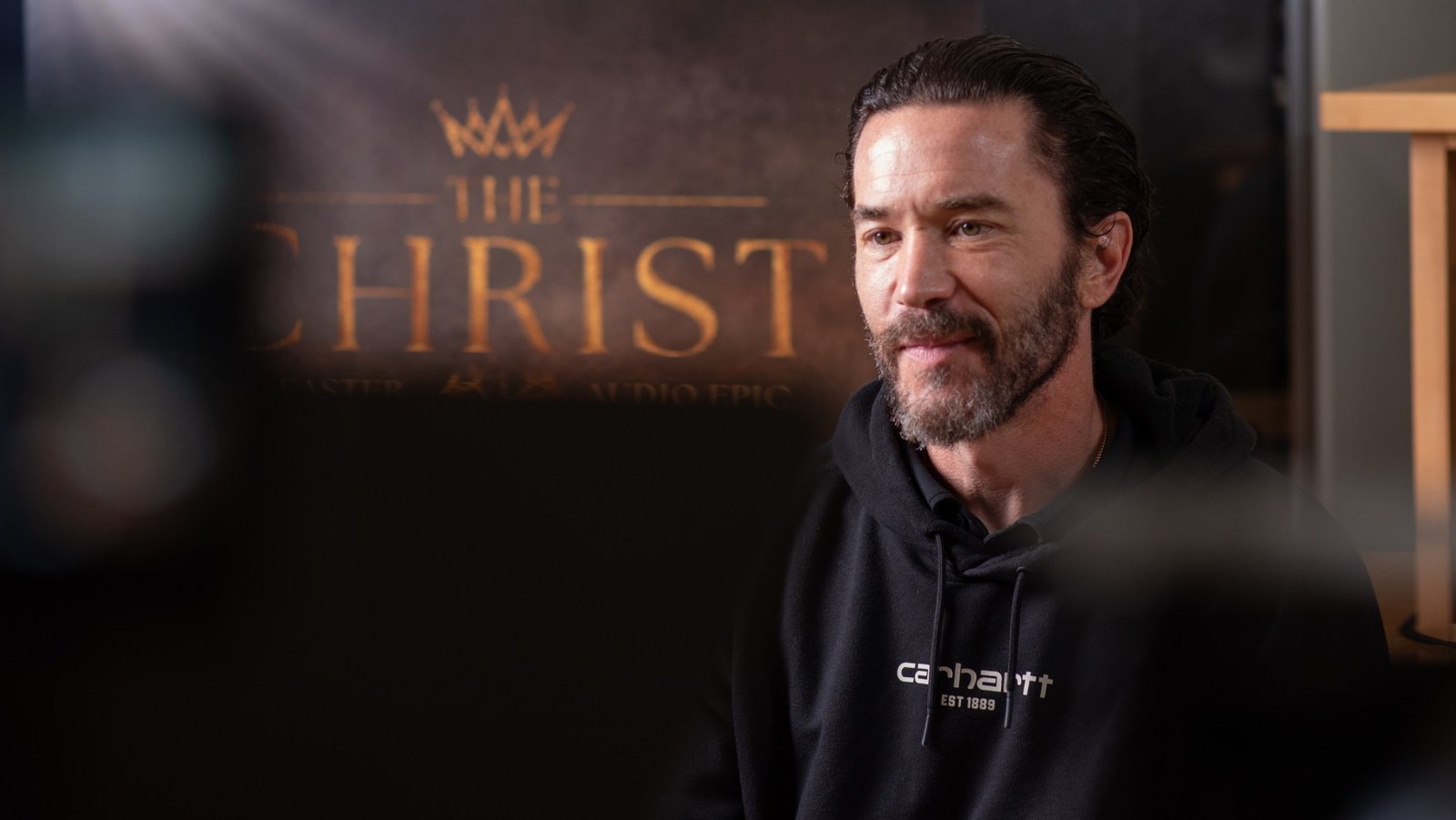
Faith Podcast Network will debut a four-part series, The Christ, billed as “an audio epic” and “the first ever full-scale audio dramatization of Jesus’ life across four immersive episodes using cinematic-quality sound, music and performances.” It will feature more than 100 different characters and some high-profile Hollywood names toplined by Task and Emmy-nominated Ozark star Tom Pelphrey as Jesus Christ, opposite David Oyelowo as Pontius Pilot, Paul Walter Hauser as John the Baptist, Courtney Hope as Mary, mother of Jesus, Patricia Heaton as the host and John Rhys-Davies as the narrator.
The Christ comes from a creative team that includes writer and director Paul Cuschieri, co-director and producer Mark Ramsey and producer Jim Young. The Christ drops during Holy Week, with the first episode debuting on March 30. A new episode will be released each day through April 2, scheduled accordingly so that the entire series will be available by Good Friday on April 3. The official logline says The Christ will cover “the life, death and legacy of Jesus of Nazareth. Through betrayal, courage, suffering and hope, the series explores how one man’s story reshaped history — and redefined love, authority and sacrifice.”
Needless to say, it’s a tall task to step into the shoes of the most famous man who has ever lived. But Pelphrey seems to have arrived at the opportunity at just the right time in his life and career. Engaged to fellow Emmy nominee and beloved TV star Kaley Cuoco, he’s a new father who has only recently started to share more about his life off set. Long considered an actor’s actor, Pelphrey longed to stay in the space of being able to disappear into roles like his acting idol, Robert De Niro. As his profile changed, thanks to critically acclaimed turns in Ozark, Mank and Task, so did his perspective on how to engage with the public as a recognizable actor. He largely credits the shift in worldview to his sobriety, which he revealed on Instagram last October.
“12 years sober today,” he posted on Oct. 1, 2025. “Sober by the grace of God. Deeply grateful for my sobriety and the life I get to live because of it.” He wrote more words about it, but the one mentioned above — God — is most necessary for the below conversation with The Hollywood Reporter as Pelphrey opens up on the intimidation of voicing Jesus in The Christ, how some early Shakespearean acting advice from Mark Rylance came in handy while recording his first podcast series and the beauty of being able to wait for “the next thing that just lights me up.”
What was your reaction when your reps presented an opportunity to play Jesus in a new podcast?
I was so excited. Faith is such a big part of my life, and it has been for a while now. This came to be out-of-the-blue, and I was so excited to be a part of it and tell this great story.
Tell me more about your faith. How far back and how deep does it go?
I was raised Catholic, and you can still see remnants of the ashes on my forehead from [Ash Wednesday services]. But my real relationship to faith started when I got sober, and that is actually what got me sober. When people talk about sobriety, you often hear the phrase “by the grace of God.” I fully believe that to be true in my case. My life went from chaos into order. Maybe a lot of people can relate to this, but I think of my faith like the story of the prodigal son. You’ve gone astray and get beat up out there. You’re sad, scared and don’t know what to do, so you think you should go home. But instead of getting yelled at, punished or kept at arm’s length, you are received with joy. That’s how it felt for me. To now have an opportunity to be a part of telling a story about Jesus, who I believed saved my life, and for that story to possibly help someone who has felt lost, stranded, sad or scared, is deeply meaningful to me.
Pelphrey
Courtesy of Faith Podcast Network
That was beautiful, thank you for sharing. You get the job, then comes a challenge of finding the voice of Jesus, perhaps the most famous person who has ever lived. Obviously, he sounds a bit like Tom Pelphrey, that’s why they hired you, but how did you settle on what Jesus sounds like?
I have to say that there’s a certain size to this that if I thought about it in a certain way, I would’ve been too scared to even attempt it. I’m new to voiceover work, and so regardless of the role, I was already a little intimidated. But I was also very nervous leading up to it. I felt that I shouldn’t try and do too much. And I thought that if I could add to this in any way, I should try and add what it is that I feel like I do best — try and find the most human interpretation of what Jesus is experiencing. That’s part of the power and the beauty of the story — fully God, fully man — and it was interesting to walk through the story by thinking of it more on the fully man side. For me personally, those are the moment in the story that have always touched me the most when Jesus felt and responded like a vulnerable human being.
You mentioned being nervous. How did those nerves affect you?
I knew I would be saying some of the most famous sayings in human history, and if that doesn’t intimidate you a little bit, God bless, but it intimidated me. This is a slightly different way to talk about it but when I was in college at Rutgers, we got to study at [London’s] Globe Theatre, and it was amazing. It was such an incredible juxtaposition of what we were learning with [Sanford] Meisner and the kitchen sink, and all of that. We learned to stand up tall, use your voice and project.
Mark Rylance was still the artistic director there, and he came to talk to our class. At one point, he gave us an example of performance by doing the “to be, or not to be” speech five different ways in a row. He just ripped it, like, whoa. In my mind, what got blown open was how it was this very famous Shakespeare text that is so well known and can, at times, seem inaccessible because it’s so sacred and revered, [that it] became something else. Mark said, “Make everything personal.” He taught us to know what you’re saying and live in the truth of what’s happening. It blew my mind open. To come full circle, I was nervous because [the Christ project] was this very heightened and important role based on something that everybody knows and is familiar with and there’s a presumption that it needs to be said perfectly. I just knew that I would never say it perfectly. When we were about to start, it came time to surrender to the idea that it was never going to be perfect. But what I could offer to the best of my ability was that if I put myself into it, made it personal, said it how I felt it and how it made the most sense to me, we would accomplish the best version of that.
Logistically, what was the recording process like?
We recorded for four or five days. It was really nice because the recording process allowed us to be in the room with multiple actors at once, so that was a really nice way to play scenes. All of the actors are excellent voice actors, and they are so professional and can talk about the differences between this microphone and that microphone, all of this stuff that I didn’t know about. It was amazing to be in the room with them and be able to ask questions in between takes and learn a little bit of technique. I remember when a light bulb went off when I understood how the less volume you had, the more chance there would be for dexterity within the speech.
You can cheat these things because there’s a microphone so close to you. You can literally just get right on top of the microphone and whisper if you want. It’s very powerful and becomes very dynamic. Being in the room with these other actors was so helpful for performance and to build a sense of momentum so that every word, every line wasn’t uttered in isolation in a vacuum. It allowed me to pick up technique, which I’m always trying to do with everybody I work with. What can I steal here? What can I learn here? How can I get better?
Pelphrey and Courtney Hope during the recording process.
Courtesy of Faith Podcast Network
Was there something you stole that was most impactful or meaningful during the process?
Understanding how much more you can play with dynamics in terms of sound, volume and proximity to the mic. I started on stage, and there’s a certain amount of volume and projection needed for that. When you start to work in film and TV, you understand that everything is going to come sit in your lap, and you can whisper and barely move your eyes and everything will be projected. I needed to make that jump in the booth as well. That was definitely something I felt like I walked out of there with on day five that I hadn’t walked in with on day one.
What was the most challenging or most emotional scene?
The obvious answer is the entire passage on the crucifixion. That was obviously a very intense thing to try and capture sitting on a chair in a booth. We tried to get as creative as we could to try and help that feel a little more impactful, even if that meant standing during some of those efforts, or even doing something as simple as breathing. I haven’t listened to it yet to see how it turned out.
How are you with that part of your job, as in listening to or watching your performances?
The nice thing is when there’s a lot of space between when you do it and when you might get to watch it. In general, I am not in love with myself and I don’t hate myself, so it’s OK. It’s really useful if you can try and watch it somewhat objectively. You can learn and see where you can get better the next time, which is always the goal. But what happens is when you first do something, you have so much information about it in your head. If I saw a scene on Task a month later, I still remember what we ate for lunch that day or that the scene required six hours of setups. You have so much information about it that you are not able to experience it for the first time or how the audience is experiencing it. But you are able to get that feeling the more time that has gone by. I’ve never once watched myself and didn’t think that there’s a lot of good things I could learn and do better the next time. But I don’t watch it and think, oh, I’m horrible, or anything like that. I feel like I’m getting better all the time, and that’s all I’ve ever wanted. I’m excited to listen to this.
There were some challenges of being in an audio booth when you’re meant to embody something very physical, because how do you create that? There were specific things that you would never have to do in any other context. I never have to be on set and act like I’m struggling to lift something or I’m exhausted sitting on a chair. If I’m on set and they want me to do that, I can go pick the fucking thing up and start running up and down with it until I’m exhausted and having a hard time lifting it, and then they can film me doing that.
Was the decompression time after work different for this type of project?
Credit to the group of people I worked with — and this happens on a great set, too — but, honestly, every day I left in such a great mood. There are times when you work on things, and you can’t help but to feel like there’s an energy that comes and it lives in you. You can feel it. When you get to work in such a way and you’re accumulating that energy in the process of working, you release it and leave happy, even if what you worked on or released was very dark or intense or heavy. This doesn’t happen to me much anymore but when I was younger, I might leave feeling heavy. If you haven’t been able to live through or share that energy, that’s when you feel bad because you’ve cooked up something that is not yours and you weren’t able to get rid of it. It’s an energy thing.
This was also lovely because David Oyelowo is one of my good friends. The day before I was going in, I looked at the call sheet and I said to [my wife Kaley Cuoco], “David’s going to be there!” It was my first day and would be the first thing I ever recorded, and thank God it was with David because it just calmed me down and put me in such a great mood. He’s incredible. What a sweet, sweet, good, gentle, beautiful man. Paul Walter Hauser is also a buddy. He didn’t get to be there in person but he Zoomed in and I was able to say hi. It was a great group of people.
Oyelowo
Courtesy of Faith Podcast Network
I’m doing this interview because it’s Tom Pelphrey playing Jesus, alongside other well-known actors like David Oyelowo and Paul Walter Hauser. They could’ve cast famous actors from the faith space but since it is recognizable Hollywood names, this has the potential to travel to a wider audience. Did you think about how it might circulate in the world with your involvement, and was that a motivator at all?
There are so many versions of me answering this. I love being an actor, and I will say that for a long time, I really struggled with sharing any part of myself publicly. I really tried to dance around it, partially because of how it made me nervous and partially because of all the insecurities around it. Also, I read an interview once a long time ago with a young Robert De Niro. He was one of my heroes as a young actor. He said that the more people knew about him, the harder it was for him to do his job. I must’ve read that at 17, and it burned into my brain because it’s undeniably true. As an actor like De Niro, which is the kind of actor I’ve always wanted to be, you want to disappear. You want to serve the character. But we don’t live in that world anymore. As much as Robert De Niro was able to do that back then, it’s not the world we live in now.
Sharing about sobriety and faith are so personal to me, and it means so much to me. The other thing you notice is when people are sharing things, you could say a word to a thousand people, and a thousand people hear a different version of that word. In all humility, to share something that matters to you, you first have to come to an understanding and acceptance that you’re surrendering how it’s going to be heard or what it means to anyone listening. You have no control over it. That’s been an amazing process to go through.
You’re quite new to sharing parts of your life, too.
Yes. We were talking about sobriety and the first time I ever shared, on my own, about my sobriety was in the past year. There are a million reasons for that, and part of it was that with sobriety, with faith or getting to do a podcast like this, there came the possibility that at some point, an honest sharing of any of this in whatever humble way I can could potentially help someone or make them feel less alone. That outweighed my fear of being misunderstood. It’s an amazing thing. Once the seal was broken, it felt very freeing. I’m grateful that, like you said, on some level, my participation or David and Paul’s participation would lead you to want to do an article about this. It’s wild. Also, being a dad, you start to think about everything differently.
That was beautiful, thank you. And I appreciate you sharing about your sobriety because as someone who has been a fan of your work, seeing you share about your sobriety last year led me to think of your work in a new way. I know how meaningful of an experience it is and how it changes your life. But where do you go from here? How do you follow up playing Jesus Christ?
Well, I don’t imagine that I will ever have an experience quite like that again. But I will tell you that I will do the same thing that I always do. I wait patiently for the next thing that just lights me up. Honestly, right now, I’ve been waiting for a long time but there are some things coming that I’m really excited about. That in and of itself is such a blessing. You want to talk about life-changing, 12 years ago, I was just hoping for a way to pay my rent. I’m not able to wait forever now, but I can sit back a little bit and be a dad and I don’t need to work immediately to pay my bills. I can wait for things that really move me or speak to me. The longer I am in my sobriety, the deeper I am in my faith, the more I feel that there’s a real power in trying your best in all ways to be of service. I want to be like that as an actor, too. When I read something, if I feel like I can bring something special to it or help it come to life in a very unique way, then I go for it. I felt that way when I read Task because I felt like I could be of service to something bigger than me, and that’s where I want to live these days. I don’t feel that way all the time, so I wait until I do.
What a perfect way to tend. But I do have one more quick question because looking at you, you’re giving a little bit of Jesus today with the longer hair and the beard. Have you thought about letting it grow so when the podcast drops, you sound like Jesus but look a little like him, too?
As tempting as that might seem on some level, the last thing we need anybody thinking is I’m like Jesus in any way. I am a very poor, poor, pale imitation. But Jesus is somebody I’m trying to be more like. Like we say, it’s progress, not perfection.
A look inside the recording of the podcast The Christ.
Courtesy of Faith Podcast Network
A look inside the recording process with the creative team, including director and producer Mark Ramsey, producer Jim Young and writer and director Paul Cuschieri.
Courtesy of Faith Podcast Network
Producer Tatiana Kelly is pictured during the recording process.
J.K. Simmons, The Bear actor Abby Elliott and John Reynolds are toplining Purgatory, Lindsay Lanzillotta’s coming-of-age comedy/drama and feature directorial debut.
The indie, which has just wrapped production in St. John’s, Newfoundland, also stars newcomers Ruby McGurrin, Lauren MacRae, Mary Walsh, Jack Innanen, Julianne Arrieta, Marcus Ngo and Gemma Rosaria Rae.
A synopsis from the producers reads: “Set in the early 1980s, the film follows thirteen-year-old Beatrice Gravel (McGurrin), whose comfortable world—family, school, and church—fractures when her mother (Elliott) moves out to “self actualize,” leaving Beatrice and her sister (MacRae) with their devastated father (Reynolds). As Beatrice doubles down on a plan to ‘fix’ her family, she barrels through bullies, friendship blowups, a make-out party, and a kleptomaniac babysitter—forcing her to decide who she wants to be when she can’t get what she wants.”
Simmons plays Beatrice’s confidante Father Malone, Innanen portrays her school’s vice principal and her mother’s new love interest, while Walsh portrays a teacher and Arrieta is the PTA president.
Lanzillotta directed Purgatory from a screenplay by Christine Speer, and in a statement said of the film: “Beatrice Gravel is just so much fun. At my core, I’m still that teenage girl watching my parents’ divorce, and when I read Christine’s heartfelt and funny take on Beatrice’s experience, it felt brutally honest, real, and oddly comforting. I’ve always loved films that can entertain a wide audience while taking on hard subjects with heart and humor, and that’s what pulled me back to the ’80s to tell this story as a first-time director.”
Purgatory is produced by Lanzillotta, Simone Kirlew, Aldo Lanzillotta, Deniz Gumustas, Mark O’Neill and Gus Murray. The executive producer credits are shared by Ryan Horton, Elliott, Tai Truesdall and William Patterson.
McGurrin is represented by The Characters Talent Agency, while Elliott is represented by Paradigm Talent Agency and OPE Partners. Reynolds is represented by CAA and Entertainment 360, and Simmons is represented by the Gersh Agency.
Mainland China’s 2026 Lunar New Year box office reached RMB5.75 billion ($835.5 million) during the Feb. 15-23 holiday period, down 39.5% year-on-year, with total admissions of 120 million, a 35.8% decline, according to Maoyan Research Institute’s “Insight Report on 2026 Spring Festival Holiday Box Office Film Data.”
The sharp drop follows last year’s phenomenon “Ne Zha 2,” which powered the 2025 Lunar New Year corridor to record levels and went on to earn $2.2 billion, creating an unusually high comparison base for 2026.
Only one day during the eight-day holiday frame surpassed RMB1 billion ($145.3 million), with Feb. 17 – the first day of the Lunar New Year – generating more than RMB1.2 billion ($174.4 million). It marked the first time in six years that the holiday’s average daily gross did not exceed RMB1 billion. The report cites data from Maoyan Pro.
Despite softer demand, supply expanded. Total screenings exceeded 4.35 million over the period, the highest level in recent years, with average daily screenings above 550,000 from day one to day seven of the Lunar New Year, up 15% year-on-year. Average ticket prices fell to their lowest level in recent years, with third- and fourth-tier cities recording declines of more than 6% compared with a year earlier.
The market was heavily concentrated. Racing sequel “Pegasus 3” grossed RMB2.927 billion ($425.3 million) during the holiday frame, accounting for roughly half of total box office. The film logged 978,000 “want-to-see” marks ahead of release and delivered an opening-day gross of RM641 million ($93.1 million), both franchise highs.
Zhang Yimou’s spy thriller “Scare Out” followed with RMB867 million ($126 million). Yuen Woo-ping’s comic-adapted wuxia title “Blades of the Guardians,” starring Jet Li, earned RMB806 million ($117.1 million), while family animation “Boonie Bears: The Hidden Protector” took RMB713 million ($103.6 million).
“Blades of the Guardians” climbed from fourth place on opening day to second by day four, reflecting strong word of mouth.
Total advance sales reached RMB562 million ($81.7 million), reflecting softer pre-holiday momentum compared with last year.
Lower-tier markets again anchored the corridor. Third- and fourth-tier cities contributed 59% of total Lunar New Year box office, the highest share in six years. For most films, revenue from these markets exceeded 50%, while “Boonie Bears: The Hidden Protector” derived more than 65% of its gross from third- and fourth-tier cities. Four cinemas in fourth-tier cities ranked among the national top 10 by box office during the period.
The report also noted a shift in audience structure, with a tilt toward older male moviegoers during the holiday, driven by “Pegasus 3” and “Blades of the Guardians,” while overall per-capita viewing frequency declined year-on-year.
Maoyan Entertainment market analyst Lai Li said the period reflected the continued strength of leading IP alongside a word-of-mouth-driven rebound for high-quality titles, while consumption potential in lower-tier markets was further unlocked. Lai added that the market is expected to optimize content supply, explore a broader range of genres and themes and continue unlocking consumer demand, supporting the industry’s development toward greater efficiency and growth.