Author: rb809rb

  • Chiefs hope TE Travis Kelce returns for another season and will ‘let that process play out’

    Almost two months after a disappointing Kansas City Chiefs season ended, the team still doesn’t know the future of tight end Travis Kelce.

    Kelce, who will turn 37 years old in October, could decide to retire. Though, coming off another productive season, returning for a 14th NFL season is an option as well.

    Advertisement

    “We’ve kind of prepared for either scenario,” Chiefs general manager Brett Veach said at the NFL scouting combine on Tuesday, via Sam McDowell of the Kansas City Star.

    Veach said the team, notably coach Andy Reid, has had “great dialogue” with Kelce’s representatives. The team plans to have more discussions with them at the combine.

    Veach made it clear that the team wants Kelce back.

    “Travis is the best, he’s an icon and hopefully he comes back,” Veach said. “We’ll let that process play out.”

    There would presumably be a discussion about Kelce’s cap number for 2026, which is $19.8 million and includes a $12.5 million roster bonus. But first the Chiefs need to know if he’ll return at all.

    Advertisement

    The Chiefs have plenty of questions this offseason. Patrick Mahomes is coming off a torn ACL. Veach talked about being more explosive in the running game as a way to take pressure off Mahomes this season. There’s also the question of Kelce and whether he returns after putting up 851 yards and five touchdowns last season. Kelce might not be the dominant force he was in his prime but he’s still productive, even at an age in which most tight ends have retired or completely fallen off.

    The Chiefs will wait for an answer. With the league year set to start March 11, they can’t wait too much longer.

  • Texans halt all ‘moronic’ C.J. Stroud trade rumors, say he’s not going anywhere

    C.J. Stroud didn’t play well in the playoffs. That doesn’t mean the Houston Texans are trading their quarterback.

    Texans general manager Nick Caserio probably didn’t need to end the trade speculation involving Stroud, but he did so at the NFL scouting combine on Tuesday.

    Advertisement

    Caserio called the trade speculation “moronic,” according to Aaron Wilson of KPRC. He made it clear Stroud will not be moved.

    “He’s not going anywhere,” Caserio said.

    C.J. Stroud struggled in the playoffs for the Texans. (Photo by Michael Owens/Getty Images)

    C.J. Stroud struggled in the playoffs for the Texans. (Photo by Michael Owens/Getty Images)

    (Michael Owens via Getty Images)

    Stroud has become an interesting case. He had a historic rookie season after he was the second pick of the 2023 NFL Draft and seemed to be on a sure track to stardom in the NFL. He didn’t replicated that stellar rookie production in his second or third NFL season, though injuries have played a part in that as did the Texans’ poor job of putting an above-average offensive line in front of him.

    Stroud’s four-interception game in a divisional round loss to the New England Patriots created a discussion about what’s next for him. Despite that poor game, the Texans are far from making a big move at quarterback.

    “We’re glad he’s our quarterback,” Caserio said, via Wilson.

  • Fantasy Football: Early look at the 2026 NFL Draft WR class heading into the scouting combine

    With the NFL scouting combine on the schedule this week, the entire football world can no longer resist its tempting calls. NFL Draft season has begun. As we officially turn the page to the extended process that seemingly gets elongated every year, I’m ready to rip off some early — I cannot emphasize that word enough — thoughts on the crop of wide receivers in the 2026 NFL Draft class.

    The wideouts in this class are a fascinating bunch. While I’m still searching for an elite option to emerge from my charting process like the ones we saw at the top of the draft two years ago, there is real appeal to the top options this season. Better yet, the top five guys, in my view, are all of completely different archetypes and flavors. That will make for some circuitous and needless preference debates from those of us on the outside, but could provide some real clarity for teams when they go to make selections that benefit their individual rooms early in the draft.

    Advertisement

    Remember, at wide receiver, particularly, intra-positional archetypes matter so much, and destination can so often be destiny. This is especially true when forecasting their production for the first three seasons of their career. While we won’t know those destinations until the end of April, it benefits us to get an early understanding of what types of wideouts these five are as we prepare to rank them pre- and post-draft.

    Again, all of these views and opinions are not conclusions yet, but a rough draft written merely in pencil. It’s February; I’m still working through my charting process for these players using Reception Perception, and we have months to go before we need to file final answers. For now, let’s dive into an early primer on the class, including the group of five prospects at the top who, based on what I’ve studied thus far, I’m comfortable taking in the first round.

    Makai Lemon, USC

    Makai Lemon is just a downright baller. He has elite ball skills, tracking ability down the field and is as tough a receiver as you’ll find. The key for Lemon will be getting confirmed measurables on him, as he ran primarily out of the slot for USC. Teams are hesitant to take a slot-only option high in the draft, especially in a league that’s playing more 12-personnel and other heavier packages.

    Advertisement

    Yet, I personally don’t think Lemon has to be limited to an interior menu as a receiver. He beats man coverage and wins down the field, both as a separator and in tight coverage. I particularly love the way he throttles down and works back to the quarterback in man-to-man reps. He explodes out of cuts to create separation and can adjust to the ball in the air if it’s an errant throw.

    It’s both just a two-horse race and an ultra-close call between Lemon and the next player on this list as to who has the best hands in the class.

    From a production standpoint, I think Lemon has the highest ceiling in the class because he could go absolutely insane in the proper environment. Not only should he be a high-end starter as a slot option from Day 1 with the ability to get open and be a trusty target, but the right coaching staff could also use him as a flanker in two-receiver sets, or even a condensed X-receiver to mimic slot situations. This is how the Seahawks took Jaxon Smith-Njigba from being a slot-heavy receiver to the most productive downfield outside option in 2025.

    Advertisement

    It should also be noted that there is some risk that if Lemon goes to a team that is a little less progressive in its offensive structure, he might be limited to more of an old-school bunny-hop slot route tree. That’s a floor outcome, and it’s pretty unlikely, but something to consider throughout the process.

    Carnell Tate, Ohio State

    Carnell Tate is the latest in a long line of excellent receiver prospects to come out of Ohio State. Like many before him, there is a ton to admire about his profile.

    Unlike Lemon, Tate is a perimeter wideout who shows all the classic X-receiver traits, with potential to blend his game into a more diverse pre-snap option. He’s at his best when working against man coverage on the outside. He has an extremely vertical route tree and you just get rep after rep of him eating up man coverage on downfield patterns.

    Tate is a pro-ready starter who has a refined game as a route runner and a sense of how to get open with both savvy and athleticism. He can fit into any NFL offense.

    Advertisement

    While Tate shows plenty of potential to shine as a separator, his best trait may be his hands. He simply doesn’t drop passes and is as dominant as any prospect in this class, or the last few, at winning contested catches. Tate isn’t a huge wideout but he fully extends his hands and has an elite sense of positioning that allows him to play bigger than his size.

    The negatives with Tate are mostly due to his lack of yards after the catch and his good but not great ability to settle down against zone coverage. Some of that is just due to his near-exclusive outside alignment and downfield-heavy route tree; we often forget YAC metrics are dependent on deployment.

    KC Concepcion, Texas A&M

    To be fully transparent here, wide receivers with KC Conception’s game are easy for me to fall in love with as someone who charts them on a route-by-route basis. He’s a special separator who demolishes corners at all levels of the field.

    Advertisement

    Concepcion knows how to toy with corners against man coverage, bringing both explosive movement skills and advanced craftsmanship to the table. His zone coverage recognition is of high caliber as well. There are plenty of reps on film where he faces press coverage as a perimeter option and fights through it with well-executed releases. Texas A&M used him as a motion receiver at the snap, so his next team has an easy set of film to watch to project his role as a weapon in the pros, where so many teams have layered those wrinkles into their offenses.

    Long story short: the guy gets open at will from every alignment, at all levels of the field and across the entire route tree. Sounds like a pretty awesome player to me.

    While I feel pretty settled that Concepcion is my favorite wide receiver after Tate and Lemon, we should hit on what could be two stumbling blocks in his development. The first could, in part, be assuaged by his measurables later this week in Indianapolis; a handful of teams may not think he has the frame to be an outside receiver in the league. If he gets labeled as a slot-heavy option, he could struggle to find the field in two-receiver sets, which would ultimately limit his production-based upside. I personally think there is ample evidence that he can win outside but this would not be the first time the league disagreed with my conclusion and labeled a smaller receiver as someone who separates as a slot merchant.

    Advertisement

    Yet sharper coaches are now using condensed splits with great success to mimic slot spacing for their outside receivers, allowing former interior players to thrive at Z or even X, as we saw last year with Klint Kubiak and Smith-Njigba.

    Ultimately, we won’t know if that is an issue until Concepcion gets drafted, but if he’s closer to 6-foot and 195 pounds than 5-foot-10 and 185 pounds, a wider variety of teams’ minds might be more open than closed, right or wrong.

    The other concern in Concepcion’s profile is a way-too-high rate of annoying drops. He’s one of those frustrating wideouts who will make the outstanding catch in tight coverage but let the “easy ones” clank off his chest. There’s no doubt that’s frustrating. However, I tend to think right now, based on the games I’ve charted, that his issues are more focus-related rather than based on poor attack or technique screwups. We tend to overstate the risk that a good wide receiver is going to get benched or doghoused because of drops anyway, and the rest of his profile is way too good to hyper-fixate on this likely correctable problem. Still, it’s been an issue, and he does need to fix it at some point.

    Advertisement

    Jordyn Tyson, Arizona State

    The opinions on Jordyn Tyson are seemingly all over the map and based on folks I’ve talked to so far, there’s likely to be a pretty significant divide between the rankings for him based on your methodology of scouting. JJ Zachariason is the best data-based prospect analyst in the business and his model loves Tyson — I would venture to say this is the player he and I have compared notes on most over the last month. However, that’s not even to say that Tyson is purely a data versus film debate because there’s not really a consensus among tape-watchers on his game.

    For me, I’ll say that he’s the player I’ve struggled most to figure out among the likely Round 1 picks through my early charting.

    Tyson has pretty easy traits and skills to like, as he’s a fluid mover who can uncover with ease in the intermediate area when he’s decisive at the break point. He adjusts to the ball well in flight to win off-frame passes. He’s a smart player who is one of the better zone-beaters that I’ve seen so far.

    Advertisement

    However, I find his overall ability to win against man and press coverage to be inconsistent. At times, I think the community mistakes twitchy moves in a phonebooth for quality route running. We call this the Jerry Jeudy phenomenon in this house, and we’ve already seen that be a comparison for Tyson. I don’t think it’s a perfect comp by any means — Tyson doesn’t have the same mental lapses against zone or at the catch point — but they both have a tendency to oversell their routes and don’t play with enough strength through contact.

    Just like Jeudy, that doesn’t make Tyson a bad player, just a little frustrating, and if he doesn’t improve those details as a route runner, it will limit his path to being a WR1 in the league. I’ve always felt this type of receiver was best as a downfield Z across from a strong high-volume X and that’s sort of where I’m at with Tyson right now.

    Lastly, and this seems to be where some film-based analysts are hedging bets against Tyson, he has an extensive collegiate injury history. That includes a multi-ligament knee tear in 2022 and a hamstring injury that dogged him through 2025. That hamstring injury, which last acted up months ago, is still keeping him from participating in drills at the scouting combine this week.

    My current feeling is that Tyson is best bucketed with guys like Concepcion, Denzel Boston, etc. — not with Tate or Lemon. Tyson definitely presents a ton of variance, with the upside to hit big if he stays healthy and irons out some of the frustrating wrinkles in his game, or gets with a coaching staff that’s able to craft a perfect role for his strengths.

    Advertisement

    Denzel Boston, Washington

    Boston looks every bit his listed size of 6-foot-4 and 210 pounds on film. He’s a massive wideout who isn’t close to a complete zero as a separator. He may not have elite straight-line speed but he eats up ground with long strides to get down the field and makes big plays. I’m not saying he’s Mike Evans, maybe like a “Diet Coke” version at best, but the way he gets open with his strides and length as an X-receiver does remind me of the early years of the Bucs’ wideout’s career. The key for Boston will be to develop into a smooth separator along the full route tree, as Evans did, rather than just a big body.

    Boston’s ability to work against zone coverage and position his body on horizontal-breaking routes makes him a candidate to not just be stuck at X-receiver, which is a big appeal to his profile in today’s game. This is especially true in his case because his press coverage ability probably isn’t yet strong enough compared to X-receivers taken in the top 15 of the draft. Yet, when you can give him a free release and a full head of steam, he’s a tough cover.

    Overall, I came away with a positive view of Boston but I hope his next team shares my vision for him as a multi-position, move-around receiver, not just a static X. Tetairoa McMillan was a slightly better prospect, in my opinion, but we saw how he was best maximized when the Panthers moved their rookie WR1 around the formation last year.

    Boston looks like a guy who can play a role early for his next team and watch his assignments grow with time. The right team could really send his stock rising after the draft if we’re projecting his early production.

    Advertisement

    Quick hitters

    Here’s a look at some, but not all, other relevant names, in no particular order.

    Indiana WR Omar Cooper Jr. has a ton of fans out there; some of them are among my most trusted sources and colleagues alike. I’ll admit that I’m still working through his profile and, so far, have found some of his route nuances and zone coverage recognition in the intermediate area to be just acceptable rather than special. That said, he’s extremely physical both at the catch point and with the ball in his hands. My suspicion is that his easily projectable application to an NFL offense as a dynamic YAC threat in a league that’s trying to hunt explosives in that fashion, as opposed to vertical shots outside, is a big part of his fast rise. Think what the Bears got from Luther Burden III as a rookie last year. Altogether, I need to do a lot more work on Cooper before settling on his exact ranking in the class.

    Advertisement

    Tennessee WR Chris Brazzell has real fluidity to his game, listed at 6-foot-5 and 200 pounds. He demonstrates an ability to sink his hips and get open on big-boy routes over the middle in the intermediate area of the field. However, like all of these Tennessee wideouts, he’s extremely raw, mostly lines up on one side of the field and will take some seasoning before he’s ready to become a high-usage player, if it ever happens.

    Alabama WR Germie Bernard is the definition of solid but not spectacular. He’s a physical wideout who has great vision for finding creases with the ball in his hands. While he may not have the gear to get loose against man coverage consistently, he shows a real ability to sift through zone coverage. Bernard looks like a great glue guy who could be a WR3 for a team early, thanks to his ability to work out of multiple positions.

    Louisville WR Chris Bell is a tough prospect to rank thanks to an ACL tear late in the 2025 season. He’s also not the cleanest technician and needs a good bit of development as a route runner. The vast majority of his patterns I charted were slants and quick in-breaking routes.

    Indiana WR Elijah Sarratt grew his notoriety with a strong finish to the season for the National Championship Indiana Hoosiers squad. However, he’s not much of a separator at all at any level of the field as a pure perimeter option. He’s tough and adjusts well to the ball in-flight. He needs to convert to a big slot if he’s going to make it in the NFL, and that is merely a projection.

    Advertisement

    Notre Dame WR Malachi Fields is a hulking X-receiver who played for Notre Dame last year after beginning his career at UVA. The production profile won’t wow you, but Fields has some real skills to translate to a starting X in the pros. His route running is rock solid, particularly against zone coverage, and he can come down with catches in traffic. Fields may not be fast enough to have a WR1 ceiling but I can see him becoming a nice complementary option at X-receiver to complete a room.

    George State WR Ted Hurst reminds me a lot of Seahawks rookie WR Tory Horton, whom I loved in last year’s class. He’s a lanky wideout with speed and acceleration who gets in and out of his breaks with precision. Hurst is coming from a low level of competition at Georgia State but he stands out on film and has the traits worth taking on Day 2.

    Georgia WR Zachariah Branch is going to get hype based on his ability to make explosive plays in space. Teams need to be careful with these created-touch types at wide receiver, rather than slot options who get open on their own. Branch could get a boost thanks to speed with so many teams simply looking for a body to create leverage off motion at the snap, and special teams ability.


  • Jazz’s Vince Williams believed to have ‘significant’ ACL injury after collision with Rockets’ Tari Eason

    Utah Jazz guard Vince Williams Jr. is believed to have suffered a “significant,” potentially season-ending injury to the anterior cruciate ligament in his left knee after a collision with Houston Rockets forward Tari Eason on Monday night, according to Sarah Todd of the Deseret News — an away-from-the ball play that Jazz head coach Will Hardy later termed “not basketball.”

    The collision occurred early in the second quarter at Toyota Center in Houston on Monday. After Rockets guard Josh Okogie stole the ball from Utah’s Brice Sensabaugh, Eason and Williams sprinted back down the court to get into the play. As they ran along the sideline, Eason bumped Williams off, attempting to knock him out of the play and clear the path for a 2-on-1 fast break, which he finished with a slam dunk. The contact knocked Williams off balance, sending him sprawling to the floor; as he fell, his left foot planted, and his left knee bent in the wrong direction.

    Williams immediately grabbed for his left knee in evident pain, and needed to be helped off the court and back to the visiting locker room by Jazz staffers. He did not return, finishing with one point, three rebounds, one assist and one steal in eight minutes of playing time.

    Advertisement

    Eason played on, finishing with 11 points, 10 rebounds, four assists, a steal and a block in 32 minutes of work as the Rockets cruised to a 125-105 win.

    “It doesn’t look great,” Hardy said of the injury after the loss, which dropped Utah to 18-40 on the season. “We’ll get an MRI when we get back [to Utah on Tuesday]. That’s not basketball.”

    According to Todd, Eason went to the Jazz locker room following the game to apologize.

    “I‘ve known Vince for a little bit and he’s just a really good dude, hard working dude,” Eason said. “It was just respect. I’ve got a lot of respect for him, and I know it’s his contract year … I didn’t intend on doing anything. My intentions are always just to play hard. So I went to go holler and just check on him. Obviously nothing helps, but just tell him that I apologize. You know, nobody’s trying to hurt anybody.”

    A second-round pick in the 2022 NBA Draft out of VCU, the 25-year-old Williams began his career with the Memphis Grizzlies, only landing in Salt Lake City earlier this month as part of the Jazz’s blockbuster trade for All-Star big man Jaren Jackson Jr. He’d averaged 5.4 points, 3.2 rebounds and 3.0 assists in 15.0 minutes per game in his first five appearances with the Jazz.

    Advertisement

    After carving out a niche as a hard-nosed 3-and-D wing in Memphis during the Grizzlies’ injury-and-suspension-ravaged 2023-24 season, Williams missed the lion’s share of last season with a stress reaction in his left tibia and a Grade 3 right ankle sprain. Healthy again this season, he’d stepped back into a rotation role amid another injury-filled and tumultuous campaign in Memphis, often serving as a primary ball-handler; while he has struggled to get his jumper online, Williams was averaging a career-best 4.2 assists per game before Monday’s injury.

    With the Jazz losing multiple starters to season-ending injuries, and clearly, um, Prioritizing Player Development in an attempt to keep the top-eight-protected 2026 first-round draft pick they owe the Oklahoma City Thunder, the final seven weeks of the season offered Williams — whose contract includes a $2.5 million team option for 2026-27 — an opportunity to showcase his wares and prove he merited a guaranteed roster spot next season, whether in Utah or elsewhere. Now, though, he could be facing a long comeback, and an uncertain future.

  • Meta Security Researcher’s AI Agent Accidentally Deleted Her Emails

    Meta Security Researcher’s AI Agent Accidentally Deleted Her Emails

    They can shop, book flights, and control your apps—at least in theory. In practice, today’s AI agents are slow, error-prone, and riddled with privacy trade-offs. Here’s a look at what they are, and what they can and can’t yet do.


    By
    Ruben Circelli

  • For All Mankind’s latest trailer teases a war on Mars

    For All Mankind’s latest trailer teases a war on Mars

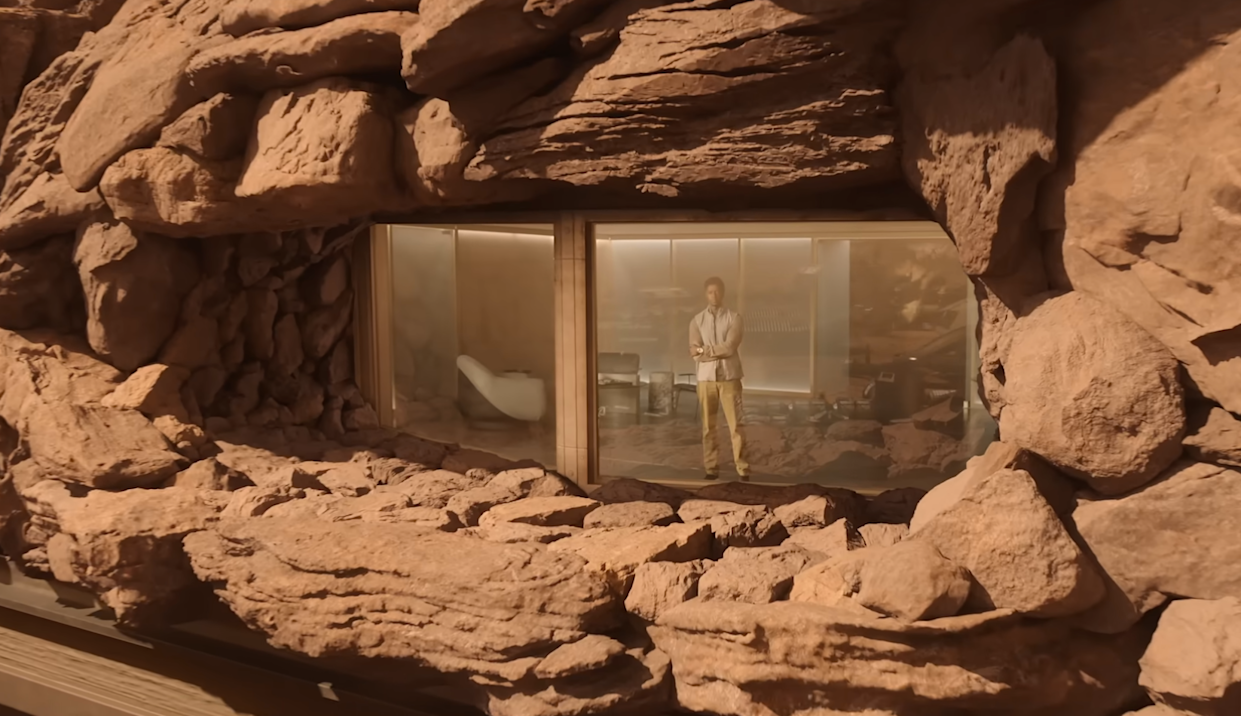
    Apple just dropped a full trailer for the fifth season of its hit sci-fi show For All Mankind. This is the first real look at the upcoming batch of episodes, which premiere on March 27. We got an extremely short teaser trailer last month but that only showed a guy on a motorcycle riding across Mars.

    This is the first real-deal trailer and it’s absolutely stuffed with footage indicating where the next season will take viewers. I’m going to get into some spoilers here, so read at your own risk.

    For the uninitiated, For All Mankind is an alternate history show that started with a simple premise. What if Russia landed on the moon before America? That has since ballooned into all kinds of stuff which include, as mentioned above, a potential war on Mars.

    For All Mankind is a show famous for its time jumps, and season five takes us all the way to an alternate version of 2012. Many of the show’s original surviving characters are still kicking around, but they are old as paste and not exactly fit for high-octane space travel. Remember, the first episode started in the 1960s. Franchise lead Ed Baldwin (Joel Kinnamen) looks particularly dusty.

    Much of the footage features newer characters, including the grandson of Baldwin. Season four ended with a Mars colony asserting its independence via asteroid theft. Now it looks like Earth is striking back, which could lead to a full-scale war. This is giving me The Expanse vibes, which is never a bad thing.

    The show must be clocking good numbers for Apple TV+, as the streamer recently announced a spinoff called Star City. Details are scant, but it looks to cover similar events of the mainline show from Russia’s perspective.

    New episodes of For All Mankind air each Friday. This season will feature ten episodes and concludes on May 29.

  • Marvel’s Wolverine will hit PS5 on September 15

    Marvel’s Wolverine will hit PS5 on September 15

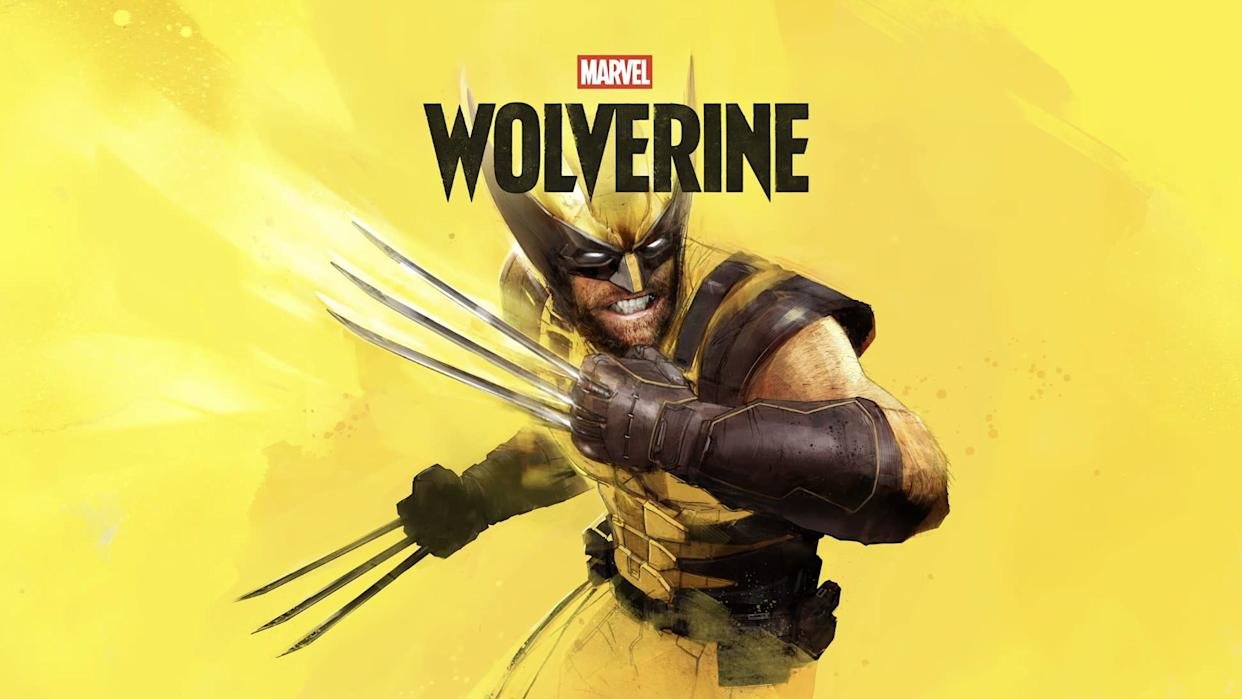
    As spicy as the PlayStation State of Play that took place a couple of weeks ago was overall, there was one major first-party game that was notably absent from the showcase: Marvel’s Wolverine. Insomniac Games’ latest superhero blockbuster was already slated for a fall release and now the studio has revealed exactly when you’ll be able to get your claws on it. Marvel’s Wolverine is coming to PS5 on September 15.

    That’s it. That’s the announcement. There’s no new trailer to accompany the news, other than a six-second release date reveal video that popped up on YouTube. Insomniac previously said it would reveal more details about Marvel’s Wolverine this spring.

    Technically, this release date means that Marvel’s Wolverine will debut in the last week of summer rather than in the fall. Still, it’s one of the relatively few blockbuster games you can expect in the tail end of this year because many major developers and publishers will be staying well clear of GTA VI.

    Insomniac’s game will have a couple of months of breathing room before GTA VI soaks up all of the air in the gaming world when it arrives on November 19 — assuming Rockstar doesn’t announce another delay. However, parent company Take-Two plans to rev up its marketing machine for the game this summer, so it’s looking like GTA VI’s release date will hold this time.

  • iPhone Fold rumors: Everything we know right now, including the leaked design, upgrades, price and more

    iPhone Fold rumors: Everything we know right now, including the leaked design, upgrades, price and more

    Apple still hasn’t revealed a foldable iPhone, but the steady drip of leaks suggests the project is moving closer to reality. Over the past few months, analysts and supply-chain watchers have continued to fill in key details, with most reports still pointing to a launch sometime in the second half of 2026. While Apple hasn’t confirmed anything publicly, the overall picture is starting to look more consistent.

    As always, plans for unreleased Apple hardware can change at any time. Features may shift, timelines can slip and some prototypes may never ship. Even so, recent reporting gives us the clearest sense yet of how Apple’s first foldable could take shape and where it might fit in the broader iPhone lineup.

    Below, we’ve rounded up the most credible rumors so far, and we’ll keep this guide updated as new details emerge.

    When could the iPhone Fold launch?

    Rumors of a foldable iPhone date back as far as 2017, but more recent reporting suggests Apple has finally locked onto a realistic window. Most sources now point to fall 2026, likely alongside the iPhone 18 lineup, with some supply-chain hints suggesting mass production could begin in mid-2026 if development stays on track.

    Mark Gurman has gone back and forth on timing, initially suggesting Apple could launch “as early as 2026,” before later writing that the device would ship at the end of 2026 and sell primarily in 2027. Analyst Ming-Chi Kuo has also repeatedly cited the second half of 2026 as Apple’s target.

    Some reports still claim the project could slip into 2027 if Apple runs into manufacturing or durability issues, particularly around the hinge or display. Given Apple’s history of delaying products that it feels aren’t ready, that remains a real possibility.

    What will the iPhone Fold look like?

    Current consensus suggests Apple has settled on a book-style foldable design, similar to Samsung’s Galaxy Z Fold series, rather than a clamshell flip phone.

    When unfolded, the iPhone Fold is expected to resemble a small tablet like the iPad mini (8.3 inches). Based on the rumor mill, though, the iPhone Fold may be a touch smaller, with an internal display measuring around 7.7 to 7.8 inches. When closed, it should function like a conventional smartphone, with an outer display in the 5.5-inch range.

    CAD leaks and alleged case-maker molds suggest the device may be shorter and wider than a standard iPhone when folded, creating a squarer footprint that better matches the aspect ratio of the inner display. Several reports have also pointed to the iPhone Air as a potential preview of Apple’s foldable design work, with its unusually thin chassis widely interpreted as a look at what one half of a future foldable iPhone could resemble.

    If that theory holds, it could help explain the Fold’s rumored dimensions. Thickness is expected to land around 4.5 to 4.8mm when unfolded, according to analyst Ming-Chi Kuo, putting it in a similar range to the iPhone Air, and roughly 9 to 9.5mm when folded, depending on the final hinge design and internal layering.

    iPhone 17 Pro, iPhone Air

    iPhone 17 Pro, iPhone Air (Engadget)

    Display and the crease question

    The display is arguably the biggest challenge for any foldable phone, and it’s an area where Apple appears to have invested years of development.

    Multiple reports say Apple will rely on Samsung Display as its primary supplier. At CES 2026, Samsung showcased a new crease-less foldable OLED panel, which several sources — including Bloomberg — suggested could be the same technology Apple plans to use.

    According to these reports, the panel combines a flexible OLED with a laser-drilled metal support plate that disperses stress when folding. The goal is a display with a nearly invisible crease, something Apple reportedly considers essential before entering the foldable market.

    If Apple does use this panel, it would mark a notable improvement over current foldables, which still show visible creasing under certain lighting conditions.

    Cameras and biometrics

    Camera rumors suggest Apple is planning a four-camera setup. That may include:

    • Two rear cameras (main and ultra-wide, both rumored at 48MP)

    • One punch-hole camera on the outer display

    • One under-display camera on the inner screen

    Several sources claim Apple will avoid Face ID entirely on the iPhone Fold. Instead, it’s expected to rely on Touch ID built into the power button, similar to recent iPad models. This would allow Apple to keep both displays free of notches or Dynamic Island cutouts.

    Under-display camera technology has historically produced lower image quality, but a rumored 24MP sensor would be a significant step up compared to existing foldables, which typically use much lower-resolution sensors.

    iPhone Fold’s hinge and materials

    The hinge is another area where Apple may diverge from competitors. Multiple reports claim Apple will use Liquidmetal, which is a long-standing trade name for a metallic glass alloy the company has previously used in smaller components. While often referred to as “liquid metal” or “Liquid Metal” in reports, Liquidmetal is the branding Apple has historically associated with the material.

    Liquidmetal is said to be stronger and more resistant to deformation than titanium, while remaining relatively lightweight. If accurate, this could help improve long-term durability and reduce wear on the foldable display.

    Leaks from Jon Prosser also reference a metal plate beneath the display that works in tandem with the hinge to minimize creasing — a claim that aligns with reporting from Korean and Chinese supply-chain sources.

    Battery and other components

    Battery life is another potential differentiator. According to Ming-Chi Kuo and multiple Asian supply-chain reports, Apple is testing high-density battery cells in the 5,000 to 5,800mAh range.

    That would make it the largest battery ever used in an iPhone, and competitive with (or larger than) batteries in current Android foldables. The device is also expected to use a future A-series chip and Apple’s in-house modem, with some reports pointing specifically to a next-generation C2 modem as part of Apple’s broader push to reduce reliance on Qualcomm.

    Price

    None of this will come cheap, that’s for certain. Nearly every report agrees that the iPhone Fold will be Apple’s most expensive iPhone ever.

    Estimates currently place the price between $2,000 and $2,500 in the US. Bloomberg has said the price will be “at least $2,000,” while other analysts have narrowed the likely range to around $2,100 and $2,300. That positions the iPhone Fold well above the iPhone Pro Max and closer to Apple’s high-end Macs and iPads.

    Despite years of rumors, there’s still plenty that remains unclear. Apple hasn’t confirmed the name “iPhone Fold,” final dimensions, software features or how iOS would adapt to a folding form factor. Durability, repairability and long-term reliability are also open questions. For now, the safest assumption is that Apple is taking its time and that many of these details could still change before launch.

  • Ed Skrein Cast as Baldur in Prime Video’s ‘God of War’

    God of War has found its Baldur.

    Prime Video‘s big-budget adaptation of PlayStation’s hit mythology-themed game has cast Jurassic World Rebirth star Ed Skrein as the show’s major villain.

    Skrein will play opposite the previously announced Ryan Hurst (Sons of Anarchy), who plays the show’s protagonist, the Spartan warrior Kratos. Skrein’s credits also include Deadpool and Rebel Moon.

    Here’s the official description of Skrein’s character: “Baldur may be the youngest son of Odin, but he’s his father’s most dangerous weapon. Charismatic, unpredictable and armed with a razor-sharp tongue, Baldur lives by his own rules. As a boy, Baldur was cursed; this curse denied him the ability to feel pleasure and physical sensation. This fuels an insatiable anger and bloodlust in Baldur, who favors a brawling fighting style that blends his immense power with the raw impact of his fists. Above all else, he longs for an opponent that can truly match his prowess in battle. An opponent that can finally make him feel something.”

    God of War already has a two-season commitment with Ronald D. Moore (Battlestar Galactica) serving as showrunner and Emmy-winning director Frederick E.O. Toye (Shōgun) directing the first two episodes.

    Other previously announced cast includes Callum Vinson as Atreus, Max Parker as Heimdall, Ólafur Darri Ólafsson as Thor, Teresa Palmer as Sif, Alastair Duncan as Mimir, Jeff Gulka as Sindri, Danny Woodburn as Brok and Mandy Patinkin as Odin.

    The series will follow the storyline of the two most recent God of War games, which introduced Kratos’ 10-year-old son, Atreus. The two will “embark on a journey to spread the ashes of their wife and mother, Faye,” the show’s logline reads. “Through their adventures, Kratos tries to teach his son to be a better god, while Atreus tries to teach his father how to be a better human.”

    Moore, who has an overall deal at Sony, executive produces with Maril Davis, Cory Barlog, Naren Shankar, Matthew Graham, Asad Qizilbash, Jeff Ketcham, Hermen Hulst, Roy Lee and Brad Van Arragon. Joe Menosky, Marc Bernardin, Tania Lotia and Ben McGinnis are co-EPs. Sony and Amazon MGM are producing God of War with PlayStation Productions and Moore’s Tall Ship Productions.

  • Rachel Reid’s Next Novel ‘Unrivaled’ Pushed to 2027: “This Book Will Be Worth the Wait”

    Rachel Reid’s Next Novel ‘Unrivaled’ Pushed to 2027: “This Book Will Be Worth the Wait”

    Unrivaled, the next novel by Rachel Reid, has been moved to 2027, the author said Tuesday.

    Reid, the New York Times best-selling author of Heated Rivalry, announced earlier this year that she’s releasing the seventh book in her Game Changers series. The book series serves as the source material of the wildly popular Crave-HBO Max, Heated Rivalry.

    In a video posted to Instagram, Reid explained Unrivaled would need to move to June 2027 from its original September 2026 release date. The Canadian author started by sharing her gratitude for the last few months. “I can’t really put into words what any of this feels like for an author,” Reid said in the video.

    “My life has gotten very different in the last couple months, and although it’s all good, it’s also taken away my ability to have quality time to write,” she added. “There’s nothing more important to me than Unrivaled being the best book it can possibly be.”

    Reid has been open about being diagnosed with Parkinson’s disease. “I think when good things happen, sometimes the universe hands you some worse stuff to balance it out. For me, that’s been that my Parkinson’s symptoms have gotten a bit worse, and it’s made it difficult physically to write,” she said.

    “I’m definitely a lot slower. And that’s just something I need to learn how to navigate and kind of face instead of ignoring,” Reid added. The author said to fans in the video that she hopes it’s not too much of a wait. Comments under Reid’s post reassured the author that everyone is fine with waiting a bit longer.

    Reid reassured fans that she’s excited about the book. “Ultimately, it’s gonna be a much better book and that’s the most important thing to me. It’ll be better for the readers, and it’ll be better for the characters,” she said. The author also teased some announcements that fans have been waiting for later this week that’ll hopefully “soften the blow” of Unrivaled being pushed.

    Unrivaled will be a sequel to Heated Rivalry and The Long Game, which both focus on hockey players Shane Hollander and Ilya Rozanov, rival professional players turned lovers (sorry, Shane).

    Spoiler alert for any show-only fans ahead, but Unrivaled will pick up following the events of Heated Rivalry’s sequel The Long Game, which found Shane and Ilya, earnestly in a relationship, dealing with their relationship becoming public, their marriage and the news that Shane would be joining Ilya on his hometown team, the Ottawa Centaurs.

    “For the first time in their professional hockey careers, Ilya Rozanov and Shane Hollander have nothing to hide. For more than a decade, they kept their love a secret, but now they’re out, married and even playing on the same team. The support is incredible. Most of the time,” the book’s official synopsis reads.

    The synopsis continues: “They’ve gotten a lot of love from fans who are thrilled for them. But some people in the hockey world are still reeling from their relationship reveal, and the backlash — led by popular hockey podcast Top Shelf and the #TakeBackHockey movement — is getting louder. Ilya and Shane are finally able to stand together in the light, the way they’d always wanted. And now they might be facing their biggest challenge yet.”

    Reid’s novels received a massive bump in popularity following the released of Heated Rivalry, the Crave-produced series, which airs on HBO Max in the U.S. Heated Rivalry and The Long Game recently became New York Times best sellers, several years after their initial publication. Game Changers, the first book in the series, was featured during episode three of the series.

    Crave renewed Heated Rivalry, starring Hudson Williams as Shane and Connor Storrie as Ilya, for a second season, and HBO Max confirmed it will continue to air the series. Tierney, who wrote and directed the show’s entire first season, has confirmed that he’ll return to direct the series, but told THR ahead of Heated Rivalry’s finale that he was considering the possibility “that other writers will come in to help” him out but that he wasn’t sure yet.