Author: rb809rb

  • Bitcoin panic-selling may be ending as sellers’ profit margins disappear

    Bitcoin panic-selling may be ending as sellers’ profit margins disappear

    Dessislava Ianeva, an analyst at Nexo, made a similar point in an email to CoinDesk.

    “ETF flows confirm it from another angle. The past ten days split between inflow and outflow, netting slightly positive,” Ianeva said.

    “Glassnode data shows spot selling pressure has faded. June’s net selling averaged nearly 2,000 $BTC a day; July’s has slowed to just 53 $BTC a day, the calmest month of 2026 outside April.”

    The relative calm, however, may not indicate a rapid turnaround.

    The price recovery from the year’s low of $57,700, hit earlier this month, is largely driven by derivatives traders and not spot buyers, according to Alex Kuptsikevich, FxPro’s chief market analyst.

    “Demand for Bitcoin is recovering rapidly, though the growth is currently being driven mainly by retail traders in the speculative futures market. At the same time, the situation in the spot market remains less positive,” he said.

    Without a strong return of buy-side liquidity, prices could remain in a sideways trend for months to come, he said.

    Caution is understandable ahead of macroeconomic data that may influence interest-rate decisions and the appetite for risk.

    U.S. CPI for June is scheduled for release Tuesday and Fed Chair Kevin Warsh’s first Congressional testimony is due this week. These events could influence the market trajectory and make, or break, the recovery.

  • President Donald Trump Sends China-Related Crypto Message: Hints at US Clarity Act, a Bullish Cryptocurrency Law!

    President Donald Trump Sends China-Related Crypto Message: Hints at US Clarity Act, a Bullish Cryptocurrency Law!

    Uncertainty continues in the Clarity Act process, one of the most important legislative bills aimed at regulating cryptocurrencies in the US.

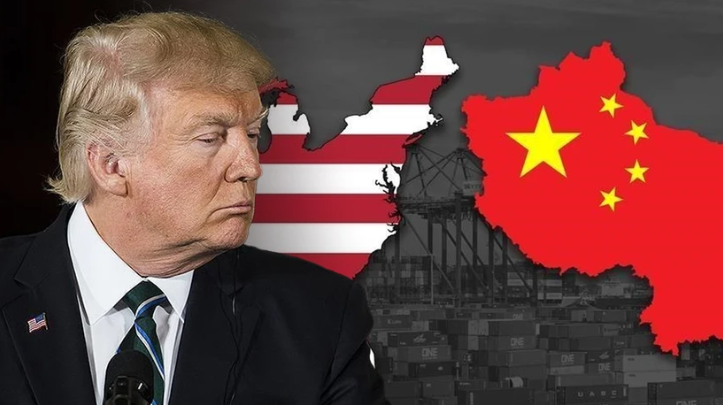
    At this point, the passage of the Clarity Act, also known as the Transparency Act, is eagerly awaited, and US President Donald Trump has also called for its enactment.

    At this point, Donald Trump, in a post on Truth Social, pointed out that many countries, including China, were trying to get their hands on this “important financial event.”

    He added that the US is currently in a leading position, but it should not allow China to win in either the AI or cryptocurrency sectors.

    “…China and many other countries want to completely and entirely seize control of these major financial phenomena and artificial intelligence.”

    We are currently ahead in artificial intelligence, but they are also competing fiercely.

    Don’t let China win in both areas.”

    With Trump making a critical call regarding the CLARITY Act, according to CryptoInAmerica host Eleanor Terrett, the next four weeks, coinciding with the reconvening of the US Senate, are seen as a critical turning point for the passage of the CLARITY Act this year.

    Terrett stated that the market views the period before the August congressional recess as the last realistic opportunity this year to pass the cryptocurrency market structure bill.

    However, the bill needs 60 votes to pass the entire Senate, making the cooperation of the Democrats essential.

    In this context, a revised version of the bill incorporating the proposals of the Senate Banking and Agriculture Committees is expected to be released this week. According to Terrett, this will determine the progress of negotiations and how to proceed on the remaining points of contention.

    The biggest problem remains the ethical issue, as the White House has yet to reach an agreement on conflict of interest measures regarding President Trump’s cryptocurrency businesses. Democrats and some Republicans are demanding stricter ethical guidelines for the president’s crypto ventures.

    *This is not investment advice.

  • Jito proposes token-centric model, pledging JTX revenue to JTO buybacks and burns

    Jito proposes token-centric model, pledging JTX revenue to JTO buybacks and burns

    Jito has published JIP-38, a governance proposal that would formally designate the protocol as a token-centric network, under which all major network revenues will flow to the DAO and be governed by $JTO token holders.

    The only exception is 20% of JTX platform fees, which will continue to be reinvested in JTX development, according to the proposal posted on July 13.

    JIP-38 is now live.

    Value should live with the Network. This proposal formally establishes Jito as a token-centric network, committing 100% of the Jito DAO’s revenue share from @JTX_trade to programmatic buyback and burns of $JTO for at least 1 year from JTX launch.

    — Jito (@jito_sol) July 13, 2026

    The plan would commit 100% of the DAO’s JTX revenue share to open-market $JTO buybacks and permanent token burns for a minimum of one year through Q4 2027.

    As noted, buybacks would be executed automatically through a Rev Splitter mechanism overseen by the Dev Council, while governance documentation would be updated to reflect the network’s token-centric policy.

    JIP-38 also outlines governance and implementation measures including updating official governance documentation to reflect Jito’s token-centric model, progressively automating the Rev Splitter, and completing existing revenue allocation mandates before conducting a comprehensive review of all protocol fee streams in Q4 2027.

    That review will evaluate the effectiveness of buybacks, growth incentives, and other capital deployment strategies, after which $JTO holders will determine the network’s next long-term revenue allocation framework through governance voting.

    According to the proposal, this framework is intended to ensure that the value generated by the network accrues to the token rather than external corporate entities.

    $JTO surged as much as 8% shortly after the team unveiled JIP-38, per CoinGecko.

  • Oregon AG Drops Demand For Records & Motion To Delay Paramount-Warner Bros. Discovery Merger

    Oregon AG Drops Demand For Records & Motion To Delay Paramount-Warner Bros. Discovery Merger

    UPDATED, with comment from AG: Oregon‘s attorney general has dropped a civil investigative demand for Paramount to turn over records related to its efforts to secure federal approval for its merger with Warner Bros. Discovery.

    Oregon Attorney General Dan Rayfield also had asked a state circuit court judge to order Paramount to turn over the materials and to delay Paramount’s closing of its proposed acquisition of Warner Bros. Discovery by 60 days so the documents could be reviewed. A hearing has been scheduled for Monday in Multnomah County Circuit Court.

    A Paramount spokesperson said, “We are pleased that the Oregon Attorney General has withdrawn its motion to delay this transaction. It was the right decision and avoids an unwarranted effort to delay a lawful, pro-competitive merger.

    “Antitrust authorities around the world have carefully reviewed this transaction, clearing it or concluding that it does not violate any competition laws. That regulatory record underscores what the facts, the law and the economics make clear: this transaction will create a stronger challenger to dominant global streaming and technology platforms, expand consumer choice, increase investment in premium content and theatrical distribution, and create more opportunities for creators and workers. We look forward to completing the transaction and delivering those benefits.”

    Jenny Hansson, communications director for Rayfield, said in a statement, “Paramount made it clear that they weren’t going to comply with the investigative demand, and that they think they’re above the law. We’re not going to let them waste Oregonians’ resources on these games. We’ve withdrawn the motion to consider our next steps.”

    California Attorney General Rob Bonta and other state attorneys general are said to be considering a legal challenge to the transaction.

    Rayfield sought Paramount records of lobbying of federal officials, as well as its role in a statement that the DOJ released in support of the transaction. The attorney general also sought documents “related to the formulation and execution of lobbying strategies aimed at obtaining regulatory approval of the proposed merger, which Respond as internally named ‘Project Warrior.’”

    In a court filing, Paramount has objected to the document requests, arguing, among other things, that they impose “burdens and demands which are disproportionate” to the Oregon investigation and are “of such marginal relevance that the value of any materials sought is outweighed by the burden imposed on Paramount in having to provide such information.”

    “Lobbying activities and related communications are wholly irrelevant to whether the proposed acquisition ‘violates Oregon’s antitrust laws,’” the company’s legal team wrote.

  • Meta Plans Huge Data Center Expansion. How Will It Use That Excess Compute?

    Meta Plans Huge Data Center Expansion. How Will It Use That Excess Compute?

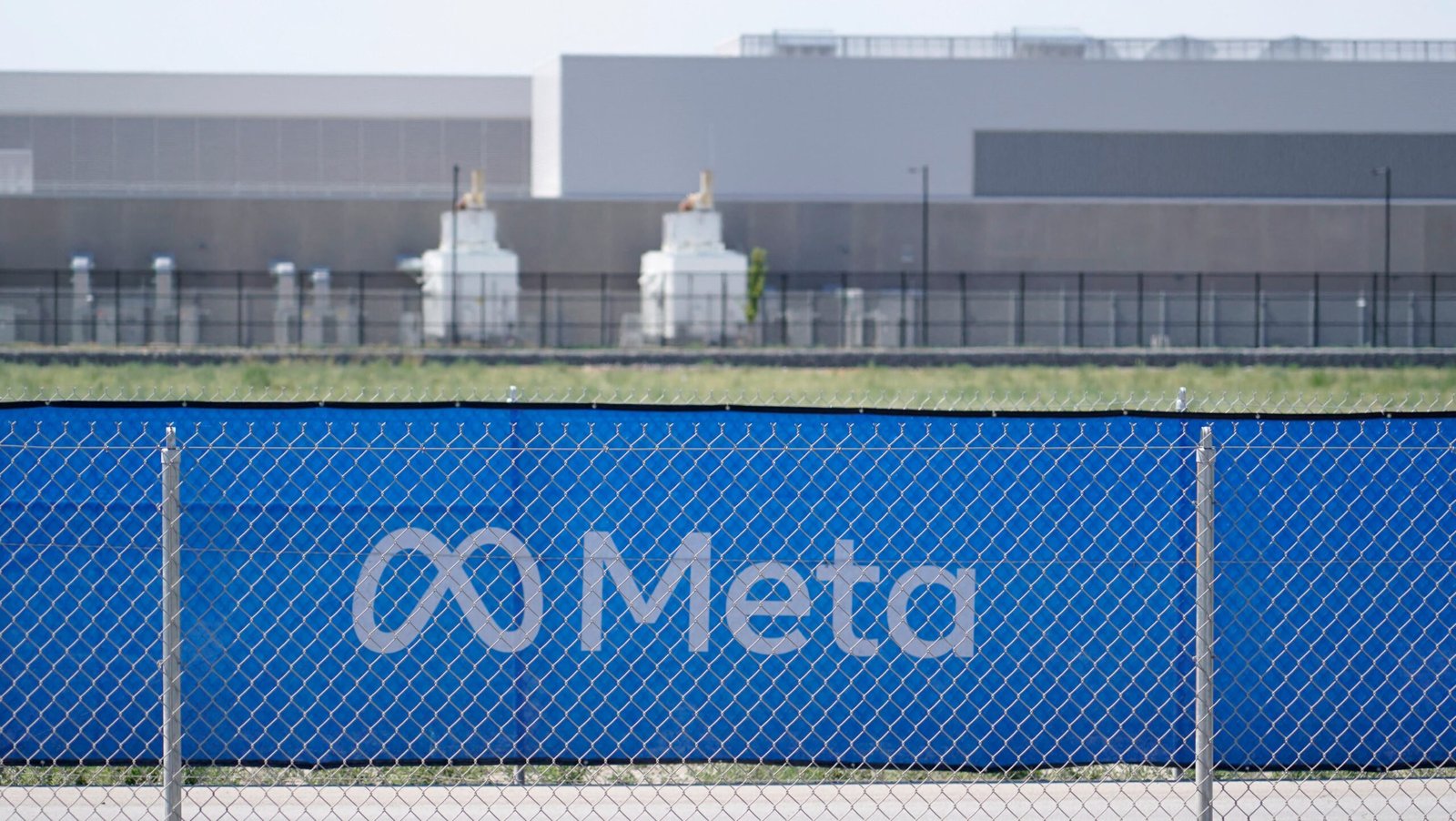
    Meta is expanding its planned Hyperion data center project in Louisiana from 2 gigawatts of computing capacity to 5 gigawatts, according to Reuters. This leap in power will require a sizeable investment, almost doubling the initial planned $27 billion price tag to $50 billion.

    Until the recent AI data center buildout, the largest data centers in the world were in the 10s to hundreds of megawatts. However, since project Stargate was announced in early 2025, ambitions have risen dramatically. Even in mid-2026, though, xAI’s twin Colossus and Colossus 2 data centers reportedly still provide only a combined 1 gigawatt of compute capacity. And Elon Musk has been selling some of that capacity to Anthropic.

    Protestors in London rally against data centers.

    Data center protests (Credit: Vuk Valcic/SOPA Images/LightRocket via Getty Images)

    This raises two important questions about Meta’s plans: Can it even build a data center with a 5-gigawatt capacity, given the memory crunch, let alone cool or power it? Meta is also reportedly exploring the sale of its spare AI compute capacity. So, what will it do with this excess compute, unless it’s expecting an enormous expansion in its existing AI businesses?

    In a memo to staff following recent layoffs, CEO Mark Zuckerberg said he is “optimistic about delivering personal superintelligence to everyone,” which is no small feat, compute-wise.

    That said, OpenAI and Anthropic have absorbed hundreds of billions of investment to get where they are, and they’re still having to discount the AI compute they sell. Many of their biggest customers are cutting back on AI use, too.

    Recommended by Our Editors

    This is all assuming Meta’s mega data center project is even completed. The first promised 2 gigawatts isn’t expected to come online in full until 2030, with the additional 3 gigawatts potentially coming years after that. Data centers are also facing enormous political and community pushback due to their egregious use of local power and water resources.

    Meta has said it will invest over $1 billion in local roads, water, and wastewater systems as part of the project, but environmental law firms are already looking to investigate its finances.

    About Our Expert

  • Grab a Ray-Ban Meta Glasses and Score 3 Months of Amazon Music Unlimited for Free

    Grab a Ray-Ban Meta Glasses and Score 3 Months of Amazon Music Unlimited for Free

    An advertiser paid for editorial consideration of this deal. Our experts vetted the deal based on our independent expertise. Because we determined that the deal will save you money, we covered it.

    Meta has teamed up with Amazon Music to bring you an epic open-ear audio experience for a whole lot less. Meta’s smart glasses are super popular with content creators, but you don’t have to only record video to enjoy these stylish frames, especially with this limited-time bundled offer.

    Pick up any Meta AI frame, including Ray-Ban and Oakley styles, today, and you’ll score three free months of Amazon Music Unlimited. Once you’ve purchased your new Meta AI glasses, you’ll receive an email with a link to claim your free three-month subscription. There are several styles to choose from, but you’ll want to get your orders in while supplies last.

    As an Unlimited subscriber, you’ll get access to music, which includes lossless HD tracks, ad-free podcasts, and one audiobook per month from Audible. You can choose from millions of songs to curate the perfect soundtrack for your commute, catch up with a favorite podcast, or dive into a whole new world through a good book. All this sonic goodness comes from discreet open-ear speakers built right into your frames.

    Meta AI Glasses with 3 Months of Amazon Music Unlimited

    Smartglasses from Meta, Oakley and Ray-Ban


    $224.00
    at Meta

    $299.00
    Save $75.00


    Shop Now

    Your Amazon Music Unlimited subscription will auto-renew at the end of your three free months, but you can keep the party going, starting at $10.99 per month. Meta’s AI frames start at $224, with the popular Ray-Ban Meta Wayfarer (Gen 2) starting at $379.

    If you’re tired of losing your earbuds or want to travel without the bulk of over-ear headphones, this is a good option to consider. Open-ear speakers let you stay aware of your surroundings, which can help keep you safe as you navigate the world. There’s an AI assistant that’ll help you do everything from finding restaurants in your area to setting reminders and even quick translations. Your new assistant can send text and voice messages and pick up calls, all without you having to fumble around for your phone.

    PCMag’s smart home and wearables expert, Andrew Gebhart, gave one of these frames an “Excellent” rating. In his in-depth review, he said, “The Ray-Ban Meta Gen 2 is a stylish, flexible pair of smart glasses that’s genuinely fun to use. Its camera captures crisp photos and high-definition video, perfect for quick sharing, and Meta AI is always on hand to answer questions.”

    To capture the world around you, you can shoot from your point of view with a voice command. The Ray-Ban Meta (Gen 2) smart glasses can record videos and take photos with a 12-megapixel fixed-focus camera lens. You’ll get images at a resolution of 3,024×4,032 pixels, and videos at up to 3K resolution at 30 frames per second, or 1080p at up to 60fps. There’s also 32GB of flash storage, which will hold over 500 images.

    These frames earned a spot on our roundup of the best smart glasses for 2026. With the bonus of three free months of Amazon Music Unlimited, you really can’t go wrong here, especially if you enjoy podcasts, hi-res music, and audiobooks.

    About Our Expert

  • Top 5 Most Memorable ‘Love Island USA’ Season 8 Moments

    Top 5 Most Memorable ‘Love Island USA’ Season 8 Moments

    From Kenzie’s “Clam Slams” to Zach and Bryce’s bromance, here are some of the most viral moments from the latest season of the hit Peacock reality series.

    Love Island USA season eight delivered not only romance, friendship and heartbreak but also plenty of memorable moments viewers will be thinking about long after Sunday night’s finale.

    When you stick a group of sexy singles in a Fijian villa for six weeks and film almost all of their interactions, there’s undoubtedly going to be viral moments, especially from season eight Islanders Melanie, Sol, Tierra, Kenzie, Bryce and Zach.

    While there are probably too many iconic moments in the villa to count, The Hollywood Reporter is highlighting some of the best and worst moments from the latest season of Peacock’s Love Island USA, below.

  • Strategy Pads Cash Reserves to $3 Billion, Skipping Bitcoin Buy for Third Week

    Strategy Pads Cash Reserves to $3 Billion, Skipping Bitcoin Buy for Third Week

    In brief

    • Strategy lifted its cash reserves to $3 billion via common stock proceeds, skipping a Bitcoin buy for the third straight week.
    • Since July 22, the company has generated $215 million in proceeds from Bitcoin sales, less than half the amount of its latest fundraising.
    • At Bitcoin’s recent price, the firm’s stockpile stood around $11 billion underwater.

    Strategy’s Bitcoin-buying machine remained in neutral last week as the firm continued growing its cash reserves, forgoing acquisitions of the digital asset for a third straight week.

    The company raised $467 million during the period by issuing common stock, lifting the balance of its so-called USD Reserve to $3 billion, according to an announcement.

    Shares of Strategy were down 4% following the opening bell, changing hands around $90.80, according to Yahoo Finance. Although the firm’s stock price has tumbled 18% over the past month, it has steadied since hitting a 28-month low of $81.81 in late June.

    Strategy’s flagship preferred stock, Stretch (STRC), had edged down to $87.04, after approaching its highest point in nearly a week in pre-market trading. Since mid-May, the product that currently offers a 12% annual dividend has lingered below its $100 par value, while notching record lows.

    The company’s latest move underscored its commitment to ensuring that it can fulfill preferred stock dividend payments and debt interest obligations, padding its cash cushion to record levels following the adoption of a capital management framework weeks ago.

    In a note shared on Monday, Benchmark-StoneX Managing Director and Senior Research Analyst Mark Palmer shared that Strategy added around 18% to its cash reserves in a single move, providing the firm with more than 20 months’ worth of coverage for its annual dividend and interest obligations of $1.76 billion.

    “The entirety of the company’s capital markets activity during the week was channeled toward fortifying the balance sheet’s cash cushion,” he added.

    The framework marked a significant shift for Strategy, formalizing conditions under which the world’s largest corporate holder of Bitcoin could sell the digital asset. On Monday, the company’s stockpile of 843,775 Bitcoin was valued around $53 billion.

    Since Strategy reported its last Bitcoin purchase on July 22, the company has generated around $215 million in proceeds from selling the digital asset. Those funds were earmarked for dividends and debt, mirroring the intent of its latest fundraising efforts.

    Before Strategy formalized its new approach, some analysts voiced concerns that the company’s USD Reserve had worn too thin, intensifying scrutiny on the sustainability of “ballooning” costs tied to products such as Stretch that receive routine payouts.

    “Orange dots tell only part of the story,” Strategy co-founder and Executive Chairman Michael Saylor said in an X post on Sunday, hinting at the company’s shifting scope alongside a chart of the Bitcoin-buying firm’s recent purchases.

    The company’s willingness to tap Bitcoin as a source of liquidity for its cash reserves represented a reversal of Saylor’s buy-and-never-sell mantra, but some analysts say the shift toward “two-way capital allocation” is ultimately in the company’s best interest.

    On Monday, Bitcoin had fallen 2.3% over the past 24 hours to $62,600, according to CoinGecko. With an average purchase price of $75,476 per Bitcoin, that meant Strategy’s stockpile remained roughly $11 billion underwater.

    Daily Debrief Newsletter

    Start every day with the top news stories right now, plus original features, a podcast, videos and more.

  • Would David Ellison Really Pull Paramount Out of California if the State Tries to Block Warner Bros. Merger?

    Would David Ellison Really Pull Paramount Out of California if the State Tries to Block Warner Bros. Merger?

    Is David Ellison considering a nuclear option of relocating Paramount’s headquarters from California — and potentially diverting billions of production dollars from the Golden State — if California Attorney General Rob Bonta files his expected challenge to the Paramount-Warner Bros. Discovery deal?

    That was the suggestion in an anonymously sourced item published by Semafor on Sunday, which said that Ellison’s “friends and advisers” have been “pushing the media executive to consider shifting his business out of the state.” The report cautioned that Paramount has made no decisions on this front and that such talk “may just be a show of brinkmanship.”

    Indeed, the Semafor report comes as California’s AG appears to be moving forward with plans to file a lawsuit to block Paramount’s $111 billion acquisition of Warner Bros. Discovery “as soon as this week,” the New York Times reported Sunday. California would be joined by states including New York, Washington and Connecticut in the legal challenge, in arguing the deal would “harm competition in the market” for tentpole films among other claims, per the Times report.

    Representatives for Paramount Skydance did not respond to repeated requests for comment.

    The message in the suggestion that Ellison’s Paramount might exit California: If you try to block or slow down our Warner Bros. takeover, we’ll take our business elsewhere. It’s obviously a saber-rattling move, but it isn’t clear whether the threat will give pause to California or other states with Democratic attorneys general who are opposing the deal.

    Paramount last year moved corporate headquarters after buying Paramount Global, relocating from New York City to Los Angeles. Other companies, including Elon Musk’s SpaceX and Larry Ellison’s Oracle, in recent years have moved their HQs out of California for tax reasons or over objections to California laws and regulations.

    It would be one thing for Paramount to shift its corporate headquarters out of L.A. That would potentially affect a few hundred jobs. But the logistics and repercussions of diverting Paramount-Warner Bros. film and TV productions out of California would be daunting — not only would it take several years to do that, it would poison the merged company’s relations with Hollywood professionals, who are already concerned that Paramount-WBD will curtail job opportunities.

    Paramount has lobbied Bonta about the alleged pro-competitive benefits of its Warner Bros. deal, and why specifically it would be a good thing for the state. In May, Paramount chief legal officer Makan Delrahim a letter to Bonta in which he “reiterate[d] our continued commitment and support to Californian movie theaters and audiences” coming “in response to certain misinformation about the marketplace expressed in recent public commentary.” Delrahim also noted Ellison’s repeated pledges that the merged company will release at least 30 films per year.

  • Wall Street transfer agents lobby SEC, warning that third-party tokens pose risks to market integrity

    Wall Street transfer agents lobby SEC, warning that third-party tokens pose risks to market integrity

    “I’d encourage the Commission not to dismiss third-party stock tokens, but to treat them as what they are — a different class of financial instrument, with clear separation from real stocks.”

    Not everyone agrees

    Some market participants, however, say the STA’s proposal risks grouping together fundamentally different tokenization models.

    “The key is whether the tokens represent true stock ownership or just economic exposure,” Dinari CEO Gabe Otte told CoinDesk.

    He said many of the STA’s concerns are valid but apply primarily to synthetic tokenized products. He pointed to the SEC’s January statement, which distinguishes custodial tokenized securities from synthetic structures, arguing that regulated custodial models should be evaluated separately.

    “Both issuer-sponsored and custodial models offer true stock ownership and these should be distinguished from synthetic models for the benefit of the end investor,” Otte said.

    Alan Konevsky, CEO of digital securities platform tZERO, agreed that issuer-sponsored tokenization offers important advantages by preserving the direct relationship between companies and investors. But he argued the market is likely to support multiple compliant approaches.

    “Innovation is accelerating, and we expect multiple compliant, non-misleading, economically and technologically meaningful models to emerge as the market matures,” Konevsky said.

    Eli Cohen, chief legal officer at tokenization platform Centrifuge that focuses on bringing funds onchain, said the letter reflects transfer agents’ concerns that issuer-sponsored tokenization could lose ground if third-party models become more widely adopted.