With help from presenting sponsor Gilead Sciences, the event will take place at the Rainbow Room at Rockefeller Center and be hosted by CNN’s Laura Coates. The honoree program will fete MAC’s charitable arm, Viva Glam, veteran journalist Don Lemon, ETAF’s own Tim Rosta, and Christie’s Marc Porter and Heather Barnhart, all singled outfor their contributions to HIV/AIDS awareness and advocacy.
MAC Viva Glam will receive the Elizabeth Taylor Legacy Award for its “decades-long commitment to HIV/AIDS, LGBTQIA+ rights and women’s health,” per the org. Since 1994, the charitable arm has raised north of $540 million by donating 100 percent of the selling price of its Viva Glam lipsticks to nonprofit partners like ETAF.
Rosta serves as founding executive director of Lifebeat, a program of ETAF that mobilizes the music and entertainment industries to support HIV/AIDS prevention and treatment. Rosta previously served on MTV’s Staying Alive Foundation board for more than 20 years.
Porter and Barnhart of Christie’s are being singled out for their philanthropic leadership in supporting HIV/AIDS-related causes. Porter is chairman of the Americas while Barnhart is global head of client strategy and business development. Together they’ve helped support ETAF by utilizing opportunities around auctions and events.
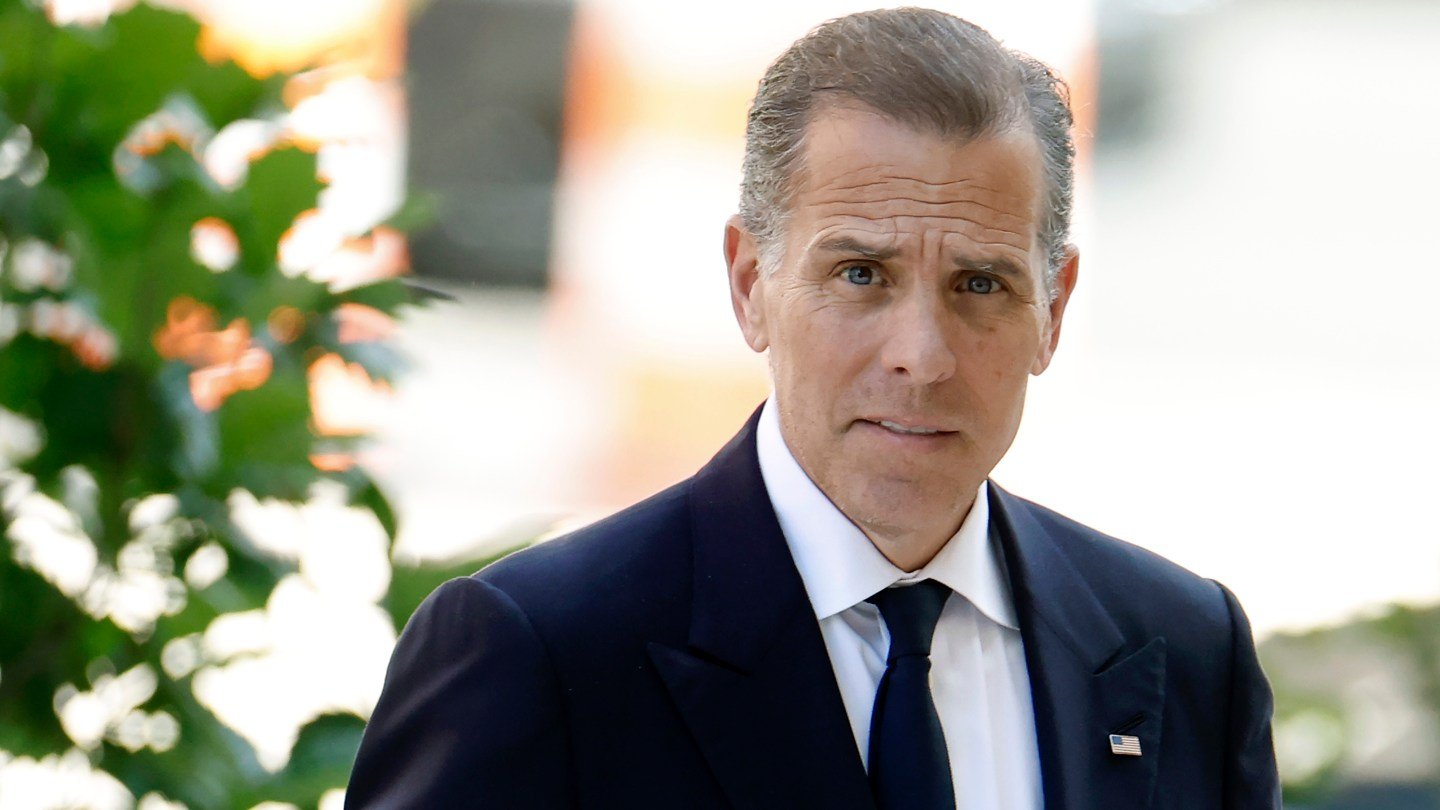
Lastly, Lemon, the longtime CNN anchor who now works as an independent journalist, will be feted with the Elizabeth Taylor Bold Voice Award for his “unwavering commitment to raising awareness about HIV and combating stigma.” He served as the 2025 champion for ETAF’s HIV Is Not A Crime Campaign. News of his award comes on the heels of being arrested over his reporting of an anti-ICE protest at a Minnesota church.
The Pitt, HBO Max’s widely lauded hit series that has repeatedly mirrored reality, including a recent timely season 2 ICE storyline, got the London spotlight on Tuesday evening. Tied to Thursday’s U.K. and Ireland launch of Warner Bros. Discovery (WBD) streamer HBO Max, the first episode of the medical procedural screened in central London, followed by a discussion between HBO and HBO Max chief Casey Bloys and The Pitt star and executive producer, and former ER actor, Noah Wyle.
Created by R. Scott Gemmill, the series stars Wyle as Dr. Michael “Robby” Robinavitch, who leads an understaffed, underfunded emergency room set in Pittsburgh. The show has developed a reputation for accurately portraying the world of healthcare workers and having its fair share of episodes that closely resemble what is happening in the real world.
Coinciding with the launch of HBO Max in the U.K., The Pitt will begin streaming in the market on Thursday, March 26, with all episodes of season 1 and much of season 2, which is still rolling out in the U.S., dropping at once. The streamer will be available in the U.K. directly via its URL, as well as via launch partners Sky and Prime Video.
On Tuesday evening, Wyle expressed his hope that the series would also touch a nerve in the U.K., despite the country’s healthcare system being different from that in the U.S., making it “frustrating for totally different reasons.” About the U.S., the star said: “Our system at the moment is laden with the insurance companies being the intermediary … and care being predicated by the algorithm that the insurance company dictates. So it’s really become a profit-driven, quality-of-care-diminishing system. And I think it’s really enviable that that’s not part of your conversation” here in the U.K., where the National Health Service, or NHS, is the publicly funded system that provides comprehensive free care.
Concluded Wyle: “I personally think we need some sort of national healthcare service in the United States. We need universal coverage for everybody.”
The star and executive producer also discussed how The Pitt takes audiences inside the E.R. “Everything is geared towards it being a voyeuristic experience for the viewer, kind of analogous to being in the back seat of a patrol car going on a ride-along, or being embedded with a combat unit in battle,” he explained. “And it’s an endurance test on the viewer, just like it is on the characters. So that makes it an interesting relationship.”
He continued: “We’re working in real time, shooting 360 degrees. It’s very kinetic, it’s very active, and it’s the closest to doing live theater that you can work with a camera.”
Wyle also shared on Tuesday evening in London that “one of the gratifying things about season two is that we realized that we don’t need a big deus ex machina plot device to keep this engaging, that there is something really fascinating about watching everyday people try to get through the course of their day, beset by all the trials and tribulations that come over the course of their day.” And he offered: “If that is satisfying television, then this show could run forever.”
The medical drama is produced by John Wells Productions with Warner Bros. TV. Gemmill, Wyle and John Wells executive produce alongside JWP’s Erin Jontow, Joe Sachs, Simran Baidwan and Michael Hissrich.
The Pitt returned to HBO Max in the U.S. almost exactly one year after it premiered, with new episodes of the 15-episode season dropping weekly ahead of the April 16 finale. The first season of The Pittwon five Emmys, including for best drama series, best actor for Wyle and best supporting actress for Katherine LaNasa.
The hit medical drama was renewedfor season three ahead of its season two premiere. Bloys asked Wyle about the status of season 3, saying: “You are writing season three right now, and then you’ll start producing. Talk a little bit about the process for coming up with the season. … When will it get on its feet?”
Replied Wyle: “Very soon, boss. We are in the process of writing character arcs for season three for everybody. It’s a very interesting show to break because, unlike a lot of shows where there are 22 episodes that may play out over a calendar year, this is 15 hours of one day. So you’re painting with a much finer brush. For a character’s arc, it’s not really enough to go through the courtship of a romance, but it’s enough to get your head turned. These are really small arcs that happen in the course of a day, but can be really satisfying if you’re engaged with that character.”
Bloys also asked Wyle about his medical instincts after playing a doctor for 23 years, only for the star of The Pitt to share how he helped KPop Demon Hunters producer Michelle Wong at the Critics Choice Awards. “She slipped out of her SUV and hit her head on the ground really hard, and I was the only one around,” Wyle recalled, before quipping that “delusion kicked in.” Concluded the star: “She had a little cut on her elbow. Somebody handed me a Band-Aid, and I felt very medical.”
Nuclear warship murder thriller ‘R91,’ Kyrgyz action drama ‘Red Pants’ and Latin dancing dramedy ‘Chacachá!’ won big Tuesday night at France’s Series Mania, Europe’s biggest TV festival, scooping the prizes offered by its three biggest industry events, the Series Mania Forum’s Buyers Upfront and Co-Pro Pitching Sessions and SeriesMakers.
All suggest a broader audience ambition while broadly building on the three genres that are the favorites of global internet users, Ampere Analysis suggested at Series Mania on Tuesday: Crime and thrillers, comedy and action and adventure.
‘R91’ An ambitious high-concept thriller set and now shooting on France’s nuclear aircraft carrier Charles de Gaulle, “R91” kicks off with a female crew member being found dead just hours after departure. As the killer strikes again, the series evolves from murder investigation to espionage thriller to full-scale military crisis,” Ramy Nahas, SND, director of international distribution noted just before the Buyers Upfront.
Series marks the first-ever co-acquisition between Amazon Prime Video France and leading free-to-air channel M6. Created by Henri Debeurme (“Marianne, Missions”) and Mathilde Arnaud, “R91” is directed by Julien Despaux (“Black Spot,” “Paris Police 1900”). SND announced its high-profile cast just before the Buyers Upfront led by Elodie Yung (“Marvel’s Daredevil,” “The Cleaning Lady,” “The Hitman’s Bodyguard”) and Alban Lenoir, star of Netflix global hit franchise “Lost Bullet.”
“The Charles de Gaulle is the most powerful warship in the French arsenal, and a floating city operating by its own laws, hierarchies and power dynamics,” said Debeurme. “It is the perfect arena for an entertaining story about trust, legitimacy and the price of command.”
‘Red Pants’
Receiving a €50,000 ($58,000) prize, “Red Pants”, from Kyrgyzstan, is set in late 1970s Soviet Kyrgyzstan, where Aisha, a military officer’s daughter, forms the ‘Red Pants’ first female criminal gang, made up of teens, to avenge her father’s death and challenge the oppressive regime.
Based on true events, “‘Red Pants,’ created by Kyrgyz voices, reveals a rarely explored chapter of Soviet Central Asia while speaking to a universal struggle for dignity, agency and survival. The project stands out for its emotional rawness and its fearless young female protagonists,” co-producer Pavel Feldman told Variety.
“I was born in Issyk-Kul, the region where the events of this project unfold. What matters to me in this story isn’t just the crime plot: it’s the deeper exploration of power, identity and female agency within a rigid, patriarchal and controlling system,” said creator Tilek Cherikov.
“The title comes from an awkward moment when their leader’s jeans were stained with menstrual blood,” he added. “The girls transformed this into an act of solidarity by dyeing their own pants red, turning it into a symbol of strength, unity and womanhood without shame.”
‘Chachachá!’ An eight-part dramedic half hour, “Chachachá!” follows a Gen X woman whose sky-high blood pressure finally brings home to to her how out of touch with herself she has become. “She turns to Latin dancing – not for fun, but for survival – igniting chaos with her family,” the synopsis runs.
Behind the Apple TV, AmazonPrime and HBOMax-streamed “Ariel Back to Buenos Aires” Fairweather Murray teams with Weiss, producer of movies by Sarah Polley (“Away From Her”), Brian de Palma (“Redacted”), Atom Egoyan (Adoration”) and most lately Molly McGlynn (“Fitting In”).
“‘Chachachá’ won us over with its light‑hearted, authentic, and sincere tone. It tackles important universal themes of society with humor. We believe this is exactly the kind of story international audiences need right now,” said Ferdinand Dohna, head of content & co-production at Beta, which partners on SeriesMakers with the Series Mania Institute.
Chip Taylor, the Songwriters Hall of Fame inductee who is best known for writing the classic hits “Angel of the Morning” and “Wild Thing,” died Monday at age 86.
The death was reported on social media by his friend, singer Billy Vera, who said that Taylor passed away while in hospice care. No immediate cause of death was given.
Although it sometimes came as a surprise to music fans who knew of his songwriting legacy but not his lineage, Taylor was part of a famous family, being the brother of actor Jon Voight and uncle to Angelina Jolie. Voight was on hand to help induct his brother into the Songwriters Hall of Fame when Taylor received that honor in 2016.
The New York-bred artist was born James Wesley Voight on March 21, 1940. He was a singer in his own right and released numerous singles and albums over the decades, beginning in the late 1950s as a member of the Town Three or under the name Wes Voight before adopting Taylor as his stage name. As a recording artist, his top-charting single was 1975’s “Early Sunday Morning,” which peaked at No. 28 on the country chart.
“Wild Thing” was a No. 1 hit on the Billboard Hot 100 for the Troggs in 1966, helping usher in a wave of what was often referred to as garage-rock. Its rawness made it ripe for cover versions over the years, including Jimi Hendrix’s live rendition at the Monterey Pop Festival in 1967, as captured in the documentary about the gathering, where the guitarist gets wild enough to light his instrument on fire. It was later recorded as a single by the L.A. punk band X and included in the film comedy “Major League.”
The far gentler “Angel of the Morning” also had an extensive life of its own, reaching its peak moment when Juice Newton had a No. 4 Hot 100 hit with it in 1981. The song also reached No. 1 on the AC chart and charted on country radio as well. The song was originally recorded by Evie Sands in 1967 but drew little attention at the time. The first hit version was by Merrilee Rush, whose version reached No. 4 in 1968. It was later recorded by Nina Simone, Olivia Newton-John and the Pretenders, among others.
Some filmgoers who were not around for the original chart runs of “Angel of the Morning” learned it through the licensing of Newton’s version for the opening of “Deadpool” or the closing of “Angel of the Morning,” in both cases for ironic effect. Additionally, Shaggy used it as the springboard for his 2001 hit “Angel.”
With “Wild Thing,” given the song’s simplicity, music fans did not have a hard time believing Taylor when he said he wrote it in a matter of minutes, at the request of a producer who was working on a project by the first group to record it, Jordan Christopher and the Wild Ones. Their version was considered tame, and bombed, before Britain’s Troggs took it on.
“I was a little afraid to play it for people because it was so different than anything I’d done before,” Taylor said. “It wasn’t one of those pretty little country songs. And it was very sexy.”
Taylor told an interviewer he bought into the contention that “Wild Thing” was the first punk record. “Sounds like it to me,” he said. “The way I was doing my rock ‘and’n’ roll stuff and ‘Wild Thing,’ that was all in the same kind of honest energy that would come with the Velvet Underground and Joan Jett and all those people. The demo is very garage-sounding, very punk-sounding. And the recording of it is very garage-sounding and probably the first record that was done like that. … ‘WIld Thing‘ is a therapeutic song. It lets you relax. And I think that’s the secret to it. It’s simple and it feels good. It’s sweaty. Sweaty things are good.”
He told Rock Cellar of his favorite cover versions, “Hendrix heard the Troggs’ version. He told his girlfriend that he’d just heard a song that was his favorite song that he had ever heard. The next morning he was taking a shower and it came on the radio and he jumped out of the shower butt naked and said, “That’s the song I’m talking about!” He used to play it all the time, so his versions were wonderful because he had the same strum, the same thing that I do hitting the strings with the upstroke with my thumb in the same simple man’s way of playing the guitar.” So I loved his version and I also loved the version done by X, which was very true to the feel of it. They did a wonderful version.”
Prior to that, Taylor had been a staff writer at April-Blackwood Music, CBS’ publishing arm of CBS, and had had country songs recorded by artists like Willie Nelson, who recorded his “He Sits at My Table.”
Linda Ronstadt popularized “I Can’t Let Go” with a 1980 recording. it was another number he had written for Evie Sands.
Billy Vera’s post noted that he and Taylor co-wrote “some good ones,” including “Make Me Belong To You” (recorded by Barbara Lewis and Fats Domino), “Storybook Children” (recorded by Vera along with Nancy Sinatra and Lee Hazelwood, plusDon Williams) and “Papa Come Quick (recorded by Bonnie Raitt).
From the ’90s forward, he made an impact largely on the Americana scene as a singer-songwriter.
In 2012, Taylor got back in touch with his wild side with his presciently named group Chip Taylor & the New Ukrainians, issuing an album titled “F**k All the Perfect People.” The title song was featured in the Netflix series “Sex Education.” In 2019, he got rootsier again with a new album, “Whiskey Salesman.”
As discussions continue in the US regarding the draft Clarity Act, which is expected to shape the cryptocurrency market, the issue of yield on stablecoins has become one of the most critical topics in the regulatory process. A new draft text that emerged today allegedly suggests that, under pressure from the banking sector, direct earnings from stablecoin balances will be prohibited. This has sparked significant concern in the cryptocurrency market.
However, according to new information reported by White House correspondent Sander Lutz, significant flexibility in favor of the crypto sector may have emerged during negotiations on the draft text. According to information from two sources, the new regulatory language could allow earning returns on staked stablecoins. If this approach is adopted, users would be able to continue earning passive income by staking their stablecoin assets.
While this potential regulation is seen as a significant gain for the crypto sector, the focus of the debate has quickly shifted to the banking sector. The critical question is whether banks will view returns generated through staking as a direct threat to their business models. Indeed, another source close to the matter stated that it would be “illogical” for the banking sector to accept such a compromise, highlighting the depth of the disagreement between the parties.
On the other hand, it is reported that the aforementioned compromise text is being reviewed today by banking sector representatives on Capitol Hill. Following this review process, the stablecoin regulations are expected to take their final form and the fate of the Clarity Act draft is expected to become clear.
Chip Taylor, the singer and member of the Songwriters Hall of Fame who laid the groundwork for “Wild Thing” by The Troggs, “Angel of the Morning” by Juice Newton and “Try (Just a Little Bit Harder)” by Janis Joplin, has died. He was 86.
Taylor died Monday night in hospice care, according to an Instagram post from Grammy-winning singer Billy Vera. In 2023, he underwent treatment for throat cancer, which he wrote and sang about on his album Behind the Sky, released in February 2024.
One of Taylor’s older brothers is Oscar-winning actor Jon Voight, and one of his nieces is Voight’s daughter, Oscar-winning actress Angelina Jolie.
The much-appreciated Taylor sang, played guitar and recorded some two dozen albums during a remarkable six-decade career — that is, when he was not carving out a living as a professional gambler.
He started out in a rockabilly band born, not in the South, but in his hometown of Yonkers, New York, then spent time as a writer and producer at April Blackwood Music, the publishing arm at CBS, where he signed Vera and James Taylor.
Taylor’s expansive songwriting résumé also included “I Can’t Let Go,” recorded by frequent collaborator Evie Sands, The Hollies and Linda Ronstadt; “I Can Make It With You” (The Pozo-Seco Singers, Jackie DeShannon); “Welcome Home” (Walter Jackson, Dusty Springfield); “Sneakin’ Up on You” (Peggy Lee); “On My Word” (Cliff Richard); and two tunes performed by Vera and Judy Clay, “Country Girl City Man” and “Storybook Children.”
“I’m the kind of writer who doesn’t think too much about what he’s writing about,” he said in 2000 of his approach to music.
Taylor’s first big hit was the rock anthem “Wild Thing,” which the British group The Troggs took to No. 1 in July 1966 and the Jimi Hendrix Experience performed the following June at the Monterey Pop Festival. When Hendrix was through with it, he famously set his guitar on fire.
“I think The Troggs’ record was a right funky record. You couldn’t beat that,” Taylor noted in a 2006 interview. “It was like the demo, except they played it with an electric guitar. The feeling was exactly the way it should have been. To me, that was the start of punk.”
“Angel of the Morning,” a song about premarital sex, was first recorded by Sands in 1967 before Merrilee Rush & the Turnabouts’ version made it to No. 7 on the Hot 100 in June 1968. Thirteen years later, Newton’s take sold more than a million copies and peaked at No. 4 as the first country song to play on MTV.
(Fun fact: Rush’s version was used in the 1999 film Girl, Interrupted, which starred Jolie in her Oscar-winning turn. Watch Taylor perform his song here.)
In 1969, Joplin recorded “Try (Just a Little Bit Harder),” written by Taylor and Jerry Ragavoy, and used it as the opening track on her debut album, I Got Dem Ol’ Kozmic Blues Again Mama!, and as a signature tune in concert.
Chip Taylor performing in 2016 in New York City.
Larry Busacca/Getty Images
The third of three boys, James Wesley Voight was born on March 21, 1940. His brothers, Barry Voight, a geologist who invented a formula to predict when a volcano will erupt, and Jon were born in 1937 and 1938, respectively.
Their father, Elmer, was a golfer who played in the U.S. Open in 1928 and 1929 and then served as the pro at the Sunningdale Country Club in Scarsdale, New York. Their mother, Barbara, was a teacher and a swim instructor.
“The three of us were very close in age, and we did all this stuff growing up,” Taylor told NPR in 2010. “Our mom and dad were very supportive of us being crazy, so we have wonderful days together.”
Taylor said his “hardcore turn toward music” came when he was 7 or 8 and his parents took him to see My Wild Irish Rose.
“I didn’t want to go to the show, but I was just mesmerized by the music,” he recalled. “I remember going back in the car that night, I didn’t want to talk, I just wanted to keep the physical feeling I felt when I heard the music sitting in the fourth row. So I felt, that night, that something changed in me.”
He became a fan of country music and Southern blues by listening late at night to a radio station in Wheeling, West Virginia, and while still a student at Archbishop Stepinac High School in White Plains, he wrote songs at the Brill Building at 1650 Broadway.
In 1957, he and his band, Wes Voight & the Town and Country Brothers, were signed by King Records, then predominately a home for Black artists.
Now known as Chip Taylor — execs at the label were worried DJs would have trouble pronouncing “Voight” — he recorded a few singles that went nowhere before moving to Warner Bros. Records in 1962, when he made it on the Hot 100 with “Here I Am.”
However, “It wasn’t any moneymaking time for me. It was still, ‘How am I going to survive to stay in this business?’” he said. “And that’s when I decided I was going to really make an effort to write for other people.”
He wrote “He Sits at Your Table,” recorded by Willie Nelson, then sent other songs to country music execs Chet Atkins and Gerry Teifer. That led to him becoming a staff writer (working often with Al Gorgoni and Ted Daryll) at April Blackwood Music.
Asked to write a song for Jordan Christopher and the Wild Ones in 1965, Taylor toldBillboard in 2016 that he “hung the phone up, started looking out the window and thinking about some girls, some wild things I had known in my life. I don’t remember which one I was thinking of at that moment, but the chorus for [‘Wild Thing’] came right to me.
“I loved the sound of the chords and the feeling of the chords. I went in the studio without it being finished and just asked the engineer to turn the lights out, and I tried to put myself in the mindset of whatever the heck I wanted to say to that girl. And it was very simple. I didn’t say much, but it felt right, it was powerful.”
He said his three favorite versions of “Wild Thing” were done by The Troggs, Hendrix and the X rendition that’s heard as Charlie Sheen arrives from the bullpen in Major League (1989).
In 1967, Taylor and Gorgoni formed Rainy Day Records and released the song “Night Owl” by the Flying Machine, a group that included James Taylor. The singer, however, would depart to become the first non-British act to sign with The Beatles’ Apple Records.
Other artists covering Chip Taylor’s songs included Frank Sinatra, Waylon Jennings, Barbara Lewis, Lita Ford, American Breed, Lorraine Ellison, the Bobby Fuller Four, Marshall Crenshaw, The Fleetwoods, Emmylou Harris and Anne Murray.
Taylor recorded seven solo albums in the 1970s, included the gem “Last Chance,” and appeared in Jonathan Demme’s Melvin and Howard (1980) before stepping away from music in 1981 when he said Capitol Records refused to promote his single “One Night Out With the Boys,” which he thought was a sure-fire hit.
He then went from a part-time gambler to a full-time one, with horse racing and card counting, which got him banned from many casinos, his specialty. “To say did I make a lot of money, could I have survived and just lived with that? Yeah, I could have,” he toldCBS Sunday Morning in 2008.
Taylor resumed his music career in 1995 and launched an independent label, Train Wreck Records, in 2007, intimate, Americana tunes with the likes of singer-violinist Carrie Rodriguez, guitarist John Platania, bassist Tony Mercadante and singer-fiddler Kendel Carson.
His 2011 children’s album, Golden Kids Rules, featured his granddaughters Kate, Samantha and Riley. And after he was inducted into the Songwriters Hall of Fame in 2016, they all took the stage to perform “Wild Thing.”
In addition to his brothers and granddaughters, survivors include his wife, Joan (they first married in 1964, got divorced and remarried), and his children, Kelly and Kristian.
“I just try to let my spirit go someplace,” he said in 2010. “And then I try to catch up to it, to find out where we’re going with it.”
From left: Brothers Jon Voight, Chip Taylor and Barry Voight gathered before Taylor was inducted into the Songwriters Hall of Fame.
Don Pendelton’s The Executioner book series is taking another run at the big-screen.
Sony Pictures has picked up a testosterone-fueled creative package that sees Lethal Weapon and The Nice Guys‘ Shane Black reteam with veteran action producer Joel Silver to adapt the action-adventure paperback novels. The package pick-up happened as Sony secured the complicated screen rights to the Executioner books, putting them in one house for the first time in decades.
Black will write, with an eye to direct, the script with frequent collaborators Anthony Bagarozzi and Charles Mondry. Silver will produce alongside Angry Films’ Don Murphy and Susan Montford, who have spent the last several years steering the complicated rights of Pendleton’s creation.
Executioner was a pulpy book series that told the muscular and bullet-filled adventures of Mark Bolan, a sniper turned one man army fighting against the Mafia, the KGB, terrorists and cyber-criminals, or whoever were the bad guys of his latest book’s era.
Initially the books were written by Pendleton but later ghost writers were hired as Pendleton licensed out the books, which at their height were being churned out upwards of two a month and in the end numbered 464 books. The series ran from 1969 to 2020 (Pendleton died in 1995), selling hundreds of millions copies worldwide, spawned spin-off book lines, a magazine and comics.
Hollywood had long tried to adapt Bolan’s adventures. William Freidkin made an attempt that would have seen Sylvester Stallone play Bolan. Burt Reynolds and Steve McQueen were also involved in certain iterations.
Screenwriter Shane Salerno tried to set up an adaptation at Warner Bros. in 2014 with Bradley Cooper attached to star but that was destined to fail from the outset. According to several sources, he only had part of the rights in his hands as Sony has had domestic screen rights to the books for decades.
But this new deal sees all the rights line up under Sony’s umbrella, hopefully paving a clear runway.
The Executioner deal is a full circle moment for Silver, who tried to get a movie off the ground in the early 1990s. And Black is a dime store paperback and pulp fiction aficionado, with the Bolan stories among his favorites.
The reunion of Black and Silver is a tantalizing one. As writer and producer, the pair respectively count classic and well-remembered action movies Lethal Weapon, The Last Boy Scout, Kiss Kiss Bang Bang, and The Nice Guys among their collaborations. (The duo also worked together on Black’s Amazon movie Play Dirtybefore the producer was let go over claims of verbal abuse.)
Bagarozzi and Mondy, meanwhile, are also frequent collaborators of Black’s. Bagarozzi co-wrote Nice Guys with Black and co-wrote Dirty Money with both Black and Mondry. Mondry and Bagarozzi also co-wrote the Jake Gyllenhaal-starring reboot of Road House, which Silver producer.
Murphy, one of the producers of the long-running Transformers franchise, and Montford are producers behind the upcoming edgy horror movie Faces of Death, which IFC/Shudder open April 10. Their Angry Films banner is also developing a live-action feature adaptation of horror video game Poppy Playtime and classic pulp hero Buck Rogers, both with Legendary.
Pendleton’s estate is repped by Joel Gotler at Intellectual Property Group, which also reps authors such as Jeffrey Archer, James Ellroy, and Micheal Connelly.
Black is repped by WME, Greenlit Management and Goodman Genow. Bagarozzi and Mondry are also repped by WME, Greenlit Management and Goodman Genow.
The agency will increase robotic missions to the moon and launch a spacecraft called Space Reactor 1 Freedom.
Published On 24 Mar 202624 Mar 2026
NASA has unveiled a major overhaul of its moon and Mars strategy, scrapping plans for a lunar-orbit space station and instead committing $20bn over the next seven years to build a base on the moon’s surface, while also advancing plans to send a nuclear-powered spacecraft to Mars.
NASA Administrator Jared Isaacman outlined the changes on Tuesday during a meeting in Washington, DC, with partners, contractors and government officials involved in the Artemis programme, saying the agency will increase robotic missions to the moon and lay the groundwork for nuclear power on the lunar surface.
Isaacman, appointed by US President Donald Trump and who took charge in December, said the changes form part of a broader overhaul of NASA’s long-term Moon-to-Mars strategy.
The planned moon base is intended to support long-term human presence on the lunar surface, with robotic missions expected to help prepare the site, test technologies and begin building infrastructure before astronauts return later this decade.
The agency also disclosed plans to launch a spacecraft called Space Reactor 1 Freedom before the end of 2028, a mission designed to demonstrate nuclear electric propulsion in deep space on the way to Mars.
The spacecraft will deliver helicopters on the Red Planet, similar to the Ingenuity robotic test helicopter that flew with NASA’s Perseverance rover, a step the agency said would help move nuclear propulsion technology from laboratory testing to operational space missions.
The Ingenuity helicopter was the first aircraft to achieve powered, controlled flight on another planet. It travelled to Mars attached to NASA’s Perseverance rover and landed in February 2021.
Pausing the Lunar Gateway station
The Lunar Gateway station, a planned space station in lunar orbit being developed with contractors including Northrop Grumman and international partners, was meant to serve as a base where astronauts could live and work before heading to the Moon’s surface.
But NASA now plans to repurpose some Gateway components for use on the surface instead.
Repurposing Lunar Gateway to create a base on the moon’s surface leaves uncertain the future roles of Japan, Canada and the European Space Agency in the Artemis programme, three key NASA partners that had agreed to provide components for the orbital station.
“It should not really surprise anyone that we are pausing Gateway in its current form and focusing on infrastructure that supports sustained operations on the lunar surface,” Isaacman said.
The changes to NASA’s flagship Artemis programme are reshaping billions of dollars’ worth of contracts and come as the United States faces growing competition from China, which is aiming to land astronauts on the moon by 2030.
The Artemis programme, begun in 2017 during Trump’s first term as president, envisions regular lunar missions as NASA’s long-awaited follow-up to its first moon missions in the Apollo programme that ended in 1972.
Vince Vaughn has some thoughts about late-night television.
On a new episode of Theo Von’s podcast “This Past Weekend,” the two got to talking about how comedy has become more political in recent years, with Vaughn saying it’s “part of the job because you’ve got to talk about current events, but you don’t want to become part of a group and feel like you’re a champion for one ideology. You want to make fun of everybody.”
Von said Hollywood is a “liberal place” and Vaughn added an addendum: “But not really. It’s more like, ‘We’re smart and got it figured out, and if you don’t agree then you’re an idiot.’” He continued, “There was definitely a culture that if you didn’t agree with these ideas, you were looked at as bad.”
This attitude, said Von and Vaughn, bled into the late-night TV landscape, plaguing the programs hosted by Jimmy Fallon, Jimmy Kimmel, Seth Meyers and more. (Vaughn and Von did not name names.)
“A lot of the late shows have struggled because … the only person they could make fun of at a certain point was white, redneck kind of people, and then everything tanked after that,” said Von.
“The podcasts have gotten so much more popular with less production, less writers, less staff. And the reason is … people want authenticity,” added Vaughn. “The talk shows, to a large part, became really agenda-based. They were going to [evangelize] people to what they thought. And so people just rejected it because it didn’t feel authentic. It felt like they had an agenda. It stopped being funny, and it started feeling like I was in a fucking class I didn’t want to take. I’m getting scolded.”
While many believe the reason late-night shows are in decline is shifting viewing habits and the move away from linear television, Vaughn thinks the main problem is the shows themselves.
“The phenomenon isn’t what they say. They always blame technology, but the reality is it’s the approach,” he said.
“People are going to tune into a podcast more so because they want to feel like people are having a real conversation. It’s interesting to them,” Vaughn added. “But if you look at what happened to the talk shows and why their ratings are low, it’s got only to do with the fact of what you just said, which is they all became the same show. They all became so about their politics and who’s good and who’s bad.”
Von asked Vaughn — who has previously identified as a “libertarian” and visited Donald Trump in the Oval Office — if he ever felt “ostracized” in Hollywood.
“I always got along with people … and try to be honest about who I am,” Vaughn said, adding, “I have opinions on both sides” of the political aisle. He said his early relationships in Hollywood were not colored by politics because “we weren’t 23 sitting around talking about fucking taxes.”
He added, “If you’re constantly worried what someone else thinks of you and you’re only around them a couple hours a day, you’re miserable most of the time. You’ve got to find the way to be yourself, but be respectful.