Author: rb809rb

  • Pakistan maintains ‘delicate balancing act’ as it hosts Iran talks

    Pakistan maintains ‘delicate balancing act’ as it hosts Iran talks

    As the United States-Israeli war on Iran entered its 30th day, key regional powers have converged on Pakistan’s capital, Islamabad, in a bid to de-escalate the fighting in the Middle East, which has caused a global energy crisis.

    Driven by growing concerns over the fallout of the conflict, Egyptian Foreign Minister Badr Abdelatty, Turkish Foreign Minister Hakan Fidan and Saudi Foreign Minister Faisal bin Farhan Al Saud arrived on Sunday for two days of talks with Pakistani Deputy Prime Minister Ishaq Dar.

    Recommended Stories

    list of 4 itemsend of list

    “Islamabad has now become the hub of all diplomatic activity to try to bring an end to the US-Israel war on Iran,” Al Jazeera’s Osama Bin Javaid reported from the Pakistani capital.

    He noted that the meetings are a platform initially discussed in the Saudi capital, Riyadh. Dar, who is also Pakistan’s foreign minister, is now trying to use this foundation to “build a regional bloc of sorts” that could eventually bring together broader powers, including Indonesia and Malaysia.

    The diplomatic push follows a Saturday evening phone call between Dar and his Iranian counterpart, Abbas Araghchi. According to a readout posted on Araghchi’s official Telegram channel, Dar briefed him on the four nations’ efforts to achieve an immediate halt to the war. During the call, Araghchi detailed what he described as “heinous crimes” committed by the US and Israel against Iran, accusing them of deliberately targeting schools, hospitals, other public infrastructure and residential areas.

    As an initial confidence-building measure after the ministers’ call, Islamabad announced that Tehran had agreed to allow 20 Pakistani-flagged ships to pass through the Strait of Hormuz at a rate of two per day.

    Bin Javaid explained that this move is designed to “tell the Americans that they’ve been somewhat successful in opening the Strait of Hormuz”.

    The regional efforts come as US President Donald Trump announced a 10-day extension of his deadline for Iran to reopen the strait, through which 20 percent of the world’s oil and gas supplies pass. Tehran’s chokehold on the strait has created the worst energy crisis since the 1973 oil embargo.

    Trump has sent a 15-point ceasefire plan to Iran, but Tehran has rejected it and instead presented its own conditions, including the end of US-Israeli aggression, reparations for war damage and security guarantees to prevent future attacks.

    Trump and Israeli Prime Minister Benjamin Netanyahu launched the war on February 28 as Washington was holding talks with Tehran on its nuclear programme. Oman, the mediator of those discussions, said the war was launched although a deal had been “within reach”.

    ‘Very delicate balancing act’

    Pakistan will be walking a diplomatic tightrope at the talks. It has close defence ties with Saudi Arabia and shares a 900km (560-mile) border and cultural ties with Iran. Pakistan is also home to the second largest Shia population in the world after Iran.

    “It’s a difficult job, given the fact that these foreign ministers will be meeting to see if they are able to bring the Americans and the Iranians back to the negotiating table,” Al Jazeera’s Kamal Hyder said, reporting from Islamabad.

    Zahid Hussain, a political analyst from Pakistan, described the country’s role as a “very delicate balancing act”. He pointed out that while Islamabad condemned the recent attacks on Iran and Gulf states, it explicitly named Israel while carefully refraining from naming the US.

    Ties between Washington and Islamabad have warmed up since Trump succeeded former US President Joe Biden. Trump has hosted Pakistan army chief Asim Munir twice as the two leaders have developed a personal rapport. Trump has described Munir as “my favourite field marshal”.

    “Pakistan is currently playing the role of a messenger rather than a mediator, relaying messages between America and Iran,” Hussain explained, noting that Islamabad lacks the leverage to impose solutions. “If the war ends following this initiative, it will significantly elevate Islamabad’s diplomacy. But if it continues, Pakistan will be one of the countries most harmed.”

    ‘Islamic alliance’

    Analysts said the diplomatic push is a calculated attempt to appeal directly to the US president’s political ambitions.

    Mahjoob Zweiri, a Middle East policy expert, told Al Jazeera the Islamabad talks seek to revive Trump’s newly established Board of Peace, which went into a diplomatic “coma” after its recent proposals for Gaza.

    “They are appealing to the president’s sensibilities,” Zweiri said. “The message is: ‘You created this board and say you want to achieve peace. Go and make peace in this war.’”

    Beyond political manoeuvring, the participating nations are driven by severe economic fears. For Islamabad, the stakes are existential. Pakistan risks a major crisis if energy supplies decline while millions of its citizens could lose their jobs in the Gulf region if the conflict spreads.

    Experts also pointed out the enormous economic costs borne by the Gulf countries as their energy exports, a major source of revenue, have dropped drastically due to the closure of the Strait of Hormuz.  And near-daily Iranian drone and missile attacks have targeted energy and industrial facilities, forcing petroleum companies in several countries to declare force majeure on supply contracts.

    Gulf countries have condemned the Iranian attacks but have so far refrained from undertaking a military response. Iran has carried out attacks on its Gulf neighbours, who have forged close economic and security ties with Washington. Bases in the region where US forces are deployed have repeatedly been attacked by Iran since the war began.

    Mahmoud Alloush, a Turkiye-based political analyst, noted that the war has “increasingly deepened the doubts of US-allied countries regarding the American security umbrella”, proving that a reliance on Washington has brought consequences rather than protection.

    Alloush argued that the Islamabad gathering serves as a foundational step for an “Islamic alliance” designed to counter the Israeli project in the region, address the resulting geopolitical vacuums and mitigate the uncertainties surrounding future US involvement.

    Turkish President Recep Tayyip Erdogan has urged Arab countries not to join the war against Iran. His foreign minister has been travelling to Arab capitals to try to prevent the conflict from spreading.

    “Unfortunately, the region is being drawn step by step into a game scripted by Israel,” he said, accusing Israel of sowing a “seed of discord” to divide Muslim countries.

    However, the diplomatic push is racing against a highly volatile reality.

    On Saturday, Yemen’s Iran-aligned Houthi rebels launched their first attacks on Israel since the start of the conflict, just a day after thousands of additional US soldiers arrived in the Middle East.

    US media reports said the Trump administration is planning to launch a ground invasion.

    Iran’s parliament speaker, Mohammad Bagher Ghalibaf, on Sunday said Iranian forces are prepared for a potential US ground attack as he accused Washington of signalling talks while planning an escalation of the war.

  • Ukrainian Director Zhanna Ozirna Explores Intimacy Under Siege in ‘Honeymoon’

    Ukrainian Director Zhanna Ozirna Explores Intimacy Under Siege in ‘Honeymoon’

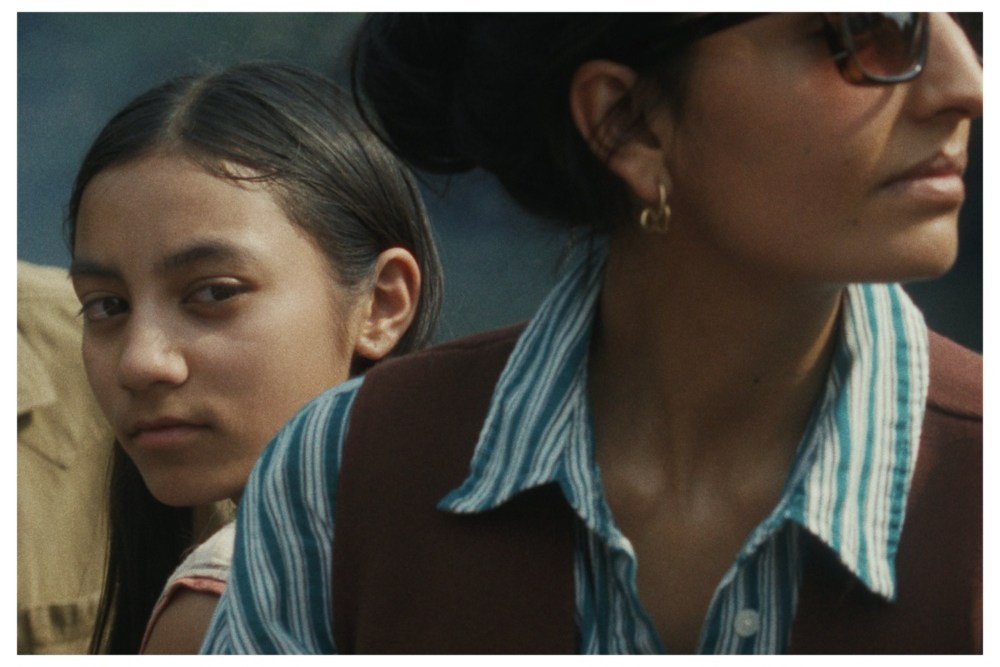
    At the 40th edition of Switzerland’s Fribourg International Film Festival, socially and politically engaged cinema remains at the heart of the lineup. Among the titles in international competition is “Honeymoon,” Ukrainian filmmaker Zhanna Ozirna’s chamber drama about a newly married couple trapped in their apartment as Russian forces close in on the Kyiv region at the start of the 2022 invasion.

    Ozirna’s debut feature, which is having its Swiss premiere at FIFF, takes an intimate approach to a subject that has often been documented through frontline footage and reporting. Instead of depicting combat directly, she keeps the harsh realities of war largely offscreen, turning her attention to what happens inside a relationship when fear and the instinct to survive take over every aspect of daily life.

    The project grew out of testimonies Ozirna encountered in the early days of the war. Friends had endured weeks in hiding and one story in particular stayed with her of a family forced to crawl across their apartment floor to avoid being seen from outside.

    “That image stayed with me,” Ozirna says. “To crawl for days just to stay alive felt like something that goes against basic human dignity.”

    Rather than build the film around a family’s experience, she drew from multiple accounts, shaping them into the story of a single couple. “I wanted to keep it minimal,” she says. “For me, the war was more of a frame, the real subject was the relationship. I was interested in how people behave when they lose their sense of safety and dignity, and how relationships change in that kind of situation.”

    That approach also shaped the film’s ethical framework. In Ukraine, Ozirna notes, there is an ongoing debate about how to portray a war that is still unfolding. She was determined not to exploit trauma, and one early decision was to avoid casting actors who had lived under occupation themselves.

    “We spoke with some very strong actors who had gone through it,” she says. “But they told us it would be re-traumatizing. So we understood very clearly that we could not ask that of them.”

    Her refusal to show Russian soldiers onscreen was equally deliberate. Their presence is conveyed entirely through sound, be it their footsteps, distant blasts, the constant sense of threat. While partly a practical decision for a production with a limited budget, it was also a conceptual one.

    “I didn’t want to show the enemy in a simplified way, and I also didn’t want to humanize that violence in a way that felt false to me,” she says. “So they remain like a ghost, something always near, something you fear, something that can return at any moment.”

    As the film continues to screen internationally, Ozirna is acutely aware of the gap between those living through the war and audiences encountering it from afar. Though global attention has shifted, daily life in Ukraine remains defined by uncertainty. “People abroad live their lives and that’s normal,” she says. “But for us, it’s different. Sometimes I can’t plan even a few days ahead.”

    For Ozirna, fiction offers a way to bridge that gap, allowing audiences to focus on the human cost of war in its most intimate form. “There are many documentaries showing what is happening,” she says. “But fiction can explore something else by looking at intimacy, relationships, and how people really feel.”

  • Leon Le on Reframing Vietnam Beyond the Western Gaze: ‘Vietnamese Stories Have Been Told Through a Dated, Disrespectful, Ignorant Lens’

    Leon Le on Reframing Vietnam Beyond the Western Gaze: ‘Vietnamese Stories Have Been Told Through a Dated, Disrespectful, Ignorant Lens’

    For director Leon Le, the problem isn’t a lack of stories about Vietnam, instead it’s how they’ve been told. “Vietnamese stories have been told through a very dated, very disrespectful, ignorant lens,” he says.

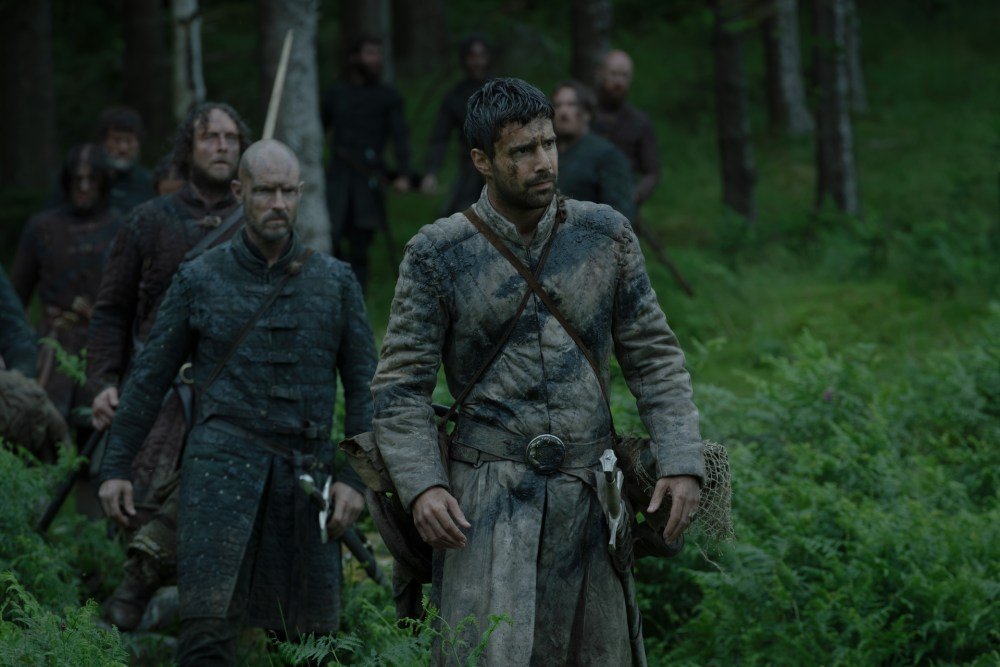
    His sophomore film, “Ky Nam Inn,” in competition in the features section of the Fribourg International Film Festival, returns to 1980s Saigon, following a translator, a war widow and her young son in the years after reunification.

    For Le, the film is less about plot than what comes after conflict. “It’s not just a love story between a man and a woman,” he says. “It’s reconciliation between the winner and the loser, between the North and the South,” he adds. “What are we going to do now, after the war has ended, after the foreigners have left, and we have to live with each other again?”

    That idea runs through the film’s structure. The central character works as a translator, adapting French classic “The Little Prince” into Vietnamese. “Once we settled on ‘The Little Prince,’ everything started clicking,” Le says. “Khang’s journey started echoing what the Little Prince is going through.” The choice also reflects the peeling back of historical layers. “We can play into the aftermath of not only what the American war left behind, but also colonization and what the French left behind.”

    To build the visual identity of the film, Le, who left Vietnam at 13, draws on his own memories, still intact decades later. “I still recall a very particular afternoon when the sun was all pink, and kids were flying kites,” he says. “I can immediately transport back to that moment.” “I don’t think it’s a conscious thing,” he adds. “I just feel like that’s how it’s supposed to be.”

    “Ky Nam Inn” leans into specificity, whether from the arrangement of objects in a room to the gestures of its characters, details the director says have stood out to international audiences. For Le, however, that attention is simply a natural part of the process. “That’s just basic storytelling,” he notes.

    That attention to lived experience is central to how he approaches storytelling. “Who am I making this movie for?” Le ponders. “It has to be for the Vietnamese audience first.” Trying to explain cultural details for Western viewers, he adds, often distorts them. “Nobody would ever say, ‘Vietnamese people have this saying,’” he explains. “You don’t present your life like that. You don’t explain your culture to yourself.”

    He also points to a broader issue. “There’s not enough stories about Vietnam for audiences to differentiate between what’s real and what’s just a version of it,” Le says. “Whatever you put out there, people are going to think it’s real.” That, he says, raises the stakes. “There’s a responsibility when you tell the story of a group of people that’s not mainstream.”

    Screening in Fribourg, a festival long dedicated to global cinema beyond the Western mainstream, offers a different kind of resonance for Le. “We’re not alone,” the director says. “There are people who want to hear our voices.”

    But that recognition isn’t what drives him. “With my first film and this film, I made no money whatsoever, no salary, not a single dime,” he says. “There’s no reason for me to do any of this if it’s not from love.”

  • France’s largest bank to debut Bitcoin, Ether ETNs for French retail clients tomorrow

    France’s largest bank to debut Bitcoin, Ether ETNs for French retail clients tomorrow

    France’s largest lender BNP Paribas is bringing six new crypto exchange-traded notes (ETNs) tied to Bitcoin and Ethereum to its exchange platform in France, starting tomorrow March 30, according to a recent announcement.

    Exchange-traded notes (ETNs) are tradeable debt products that give investors exposure to the underlying markets through index tracking. They provide liquid and diversified exposure without direct ownership, though investors face issuer credit risk and potential market losses.

    Offered under MiFID II, which is designed to boost transparency standardize market operations, and protect investors, the ETNs let millions of individual investors and private banking clients get indirect exposure to crypto assets without purchasing or holding the underlying coins directly.

    At launch, the products, issued by vetted asset managers, will be available to various client segments, with a phased international rollout to follow.

    As one of the early movers of blockchain and crypto, BNP Paribas has tested blockchain use cases in areas such as trade finance and securities settlement, formed partnerships with fintech and blockchain firms, and shown interest in developing digital asset services for institutional clients.

    The group has also supported ongoing research into how these innovations could reshape financial markets.

    BNP Paribas is part of Qivalis, a consortium of major European banks working to develop a euro-pegged stablecoin for institutional and crypto use. The initiative is targeting a late-2026 launch under MiCA rules.

    BNP Paribas pilots tokenized money market fund on Ethereum

    BNP Paribas recently piloted the tokenization of a money market fund share class on public Ethereum infrastructure.

    Built on a permissioned model, the initiative restricts access to eligible participants while remaining compliant with regulatory standards. The intra-group experiment aims to evaluate new operational workflows and explore how tokenisation could improve fund issuance and distribution.

    French retail investment

    France’s retail investment base has grown meaningfully in recent years. Roughly 2.5 million French retail investors participated in stock-market trading during 2025, with an estimated 1.6 million new entrants joining the country’s equity markets over the preceding three years.

    If even a fraction of the roughly €2 trillion in liquid savings held by French households rotates toward these newinstruments, the capital implications for Bitcoin and Ethereum order books could be significant.

  • Expert Analyst: “Bitcoin’s Key Resistance Level Is $72,500; Selling Pressure May Persist”

    A noteworthy analysis regarding Bitcoin’s price outlook in the cryptocurrency market has been shared. According to analysts, Bitcoin is facing strong resistance at the $72,500 level, and the likelihood of continued selling pressure in the coming months is high.

    Darkfost, an analyst at the crypto analysis platform CryptoQuant, stated that Bitcoin has not yet crossed a significant threshold when considering its long-term supply dynamics. According to the analyst, excluding the supply that has been dormant for over 7 years and any lost Bitcoins more accurately reflects the actual circulating supply in the market. Following this correction, Bitcoin’s current price is estimated to be around $72,500, a level currently acting as strong resistance.

    Related News Jordi Visser, a 30-Year Veteran Analyst: “Bitcoin Will Set a New Record This Year, But the Situation Is Different for Altcoins”

    Darkfost noted that Bitcoin has been trading below this level for about two months, pointing to similar behavior in past bear markets. According to them, in previous cycles, BTC remained below this cost floor for 6 to 10 months and struggled to regain that level.

    The analysis argued that if historical trends repeat themselves, Bitcoin could remain under pressure in the coming period, and the price could continue to consolidate below the $72,500 level.

    *This is not investment advice.

  • Pentagon readies ‘for weeks of US ground operations’ in Iran

    Pentagon readies ‘for weeks of US ground operations’ in Iran

    The Pentagon is preparing for weeks of limited ground operations in Iran, potentially including raids on Kharg Island and coastal sites near the Strait of Hormuz, according to United States officials quoted by The Washington Post newspaper.

    The plans, which fall short of a full invasion, could involve raids by special operations and conventional infantry troops, the Post reported on Saturday, exposing US personnel to Iranian drones and missiles, ground fire, and improvised explosives.

    Recommended Stories

    list of 3 itemsend of list

    Whether President Donald Trump would approve any of those plans remains uncertain, according to the report.

    “It’s the job of the Pentagon to make preparations in order to give the Commander in Chief maximum optionality. It does not mean the president has made a decision,” White House press secretary Karoline Leavitt said in a statement, responding to questions over the Post report.

    The Trump administration has deployed US Marines to the Middle East as the war in Iran stretches into its fifth week, and has also been planning to send thousands of soldiers from the army’s 82nd Airborne to the region.

    On Saturday, the US Central Command (CENTCOM) said about 3,500 additional soldiers arrived in the Middle East on board the USS Tripoli.

    The sailors and marines are with the 31st Marine Expeditionary Unit and arrived in the region on March 27, along with “transport and strike fighter aircraft, as well as amphibious assault and tactical assets”, according to CENTCOM.

    Officials speaking to The Washington Post said discussions within the administration over the past month have touched upon the possible seizure of Kharg Island, a key Iranian oil export hub in the Gulf, and raids into other coastal areas near the Strait of Hormuz to find and destroy weapons that can target commercial and military shipping.

    According to the report, one person said the objectives under consideration would probably take “weeks, not months” to complete, while another put the potential timeline at “a couple of months”.

    The Pentagon had not responded on Saturday to the Post’s requests for comment. Iran has yet to respond to the report.

    The report comes as Pakistan, which shares a 900km-long (559-mile) border with Iran, mediates between Washington ‌and Tehran, hosting two days of talks starting on Sunday with the foreign ministers of Saudi Arabia, Turkiye and Egypt.

    Iranian threats

    The Iranian parliament speaker, Mohammad Bagher Ghalibaf, said on Sunday the “enemy openly sends messages of negotiation and dialogue and secretly plans a ground attack”.

    “Unaware that our men are waiting for the arrival of American soldiers on the ground to set fire to them and punish their regional partners forever. Our firing continues. Our missiles are in place,” the Tasnim news agency reported, quoting Ghalibaf.

    “Our determination and faith have increased. We are aware of the enemy’s weaknesses, and we clearly see the effects of fear and terror in the enemy’s army.”

    It was not clear whether Ghalibaf was responding to the Post report.

    On Wednesday, Ghalibaf had warned that intelligence reports suggested that “Iran’s enemies” ⁠were planning to occupy an Iranian island with support ‌from an unnamed country in the region.

    He said any such attempt would be met with targeted attacks on the “vital infrastructure” of the regional country – which he did not name – that assists in the operation.

    Meanwhile, Iran’s navy chief Shahram Irani said on Sunday that the USS Abraham Lincoln aircraft carrier would be targeted if it comes within range.

    “As soon as the USS Abraham Lincoln carrier strike group comes within firing range, we will avenge the blood of the martyrs of the Dena warship by launching various types of sea-to-sea missiles,” Irani was quoted as saying by state TV, referring to an Iranian frigate sunk by the US on March 4.

    On Wednesday, Tasnim quoted an unnamed military source as saying that Iran could open a new front at the mouth of the Red Sea if military action takes place on “Iranian islands or anywhere else in our lands”.

    The source told Tasnim that Iran can pose a “credible threat” in the Bab al-Mandeb Strait, ⁠which lies between Yemen and Djibouti.

    Tasnim later quoted an “informed source” claiming that Yemen’s Houthi rebels, backed by Iran, are prepared to play a role “if there is a need to control the Bab al-Mandeb Strait to further punish the enemy”.

  • XRP tests $1.33 as rising leverage and weak price action create unstable setup

    XRP tests $1.33 as rising leverage and weak price action create unstable setup

    $XRP is holding near $1.33, but the setup is getting fragile. Price isn’t collapsing, but it’s not recovering either — and that kind of drift lower, paired with rising leverage, usually doesn’t resolve quietly.

    News Background

    • $XRP slipped slightly over 24 hours, staying pinned near $1.33
    • Funding rates jumped sharply while long liquidations picked up, signaling aggressive positioning
    • Large volume spikes earlier in the session failed to translate into sustained upside

    Price Action Summary

    • Price briefly pushed higher but was rejected near $1.35-$1.36
    • The market has since rotated lower into support around $1.33
    • Structure shows lower highs, even as support continues to hold
    • Momentum has clearly slowed rather than reversed

    Technical Analysis

    • This is a classic tension setup: positioning is increasing, but price isn’t following
    • Rising funding rates suggest traders are leaning bullish, yet repeated rejections show sellers still control the tape
    • The failed follow-through after high-volume moves is the key signal — demand isn’t strong enough yet
    • That mismatch often leads to sharper moves once one side gets forced out

    What traders should watch

    • $1.33 is the immediate line — a break likely accelerates toward $1.30
    • On the upside, reclaiming $1.35-$1.36 is needed to shift momentum
    • The bigger tell is positioning: if leverage keeps building without price moving higher, downside risk increases
  • Olympic gender test ‘a disrespect for women’, South Africa’s Semenya says

    Olympic gender test ‘a disrespect for women’, South Africa’s Semenya says

    South African sprinter Caster Semenya, a two-time Olympic 800-metres champion, says the International Olympic Committee’s (IOC’s) reinstatement of gender verification tests for the 2028 Los Angeles Games is “a disrespect for women”.

    The hyperandrogenic athlete on Sunday also expressed her disappointment that the measure was taken under new IOC President Kirsty Coventry of Zimbabwe.

    Recommended Stories

    list of 3 itemsend of list

    “For me personally, for her being a woman coming from Africa, knowing how African women or women in the Global South are affected by that, of course it causes harm,” Semenya said in Cape Town on the sidelines of a sporting competition.

    The IOC said on Thursday that only “biological females” will be allowed to compete in women’s events, preventing transgender women from competing.

    The IOC had previously used chromosomal sex testing from 1968 to the 1996 Atlanta Olympics before abandoning it in 1999 under pressure from the scientific community, which questioned its effectiveness, and from its own athletes commission.

    “It came as a failure, and that’s why it was dropped,” Semenya said.

    “It’s like now we need to prove that we are worthy as women to take part in sports. That’s a disrespect for women.”

    Semenya has become the symbol of the struggle of hyperandrogenic athletes, a battle on the athletics tracks and then in courtrooms, to assert her rights, which she has waged since her first world title in the 800m in 2009.

    In 2025, she won a partial victory at the European Court of Human Rights in her seven-year legal fight against track and field’s sex eligibility rules.

    The court’s highest chamber said in a 15-2 ruling that Semenya had some of her rights to a fair hearing violated before Switzerland’s Supreme Court, where she had appealed against a decision by the Court of Arbitration for Sport. It had ruled in favour of track’s international governing body, World Athletics.

    The original case between Semenya and Monaco-based World Athletics was about whether female athletes who have specific medical conditions, a typically male chromosome pattern and naturally high testosterone levels, should be allowed to compete freely in women’s sports.

    The European court’s ruling did not overturn the World Athletics rules that in effect ended Semenya’s career running the 800m after she had won two Olympic gold medals and three world titles since emerging on the global stage as a teenager in 2009.

    IOC’s policy shift removes conflict with Trump

    In a major shift of policy, the IOC is abandoning rules it brought in in 2021 that allowed individual federations to decide their own policy and is instead implementing a policy across all Olympic sports.

    “Eligibility for any female category event at the Olympic Games or any other IOC event, including individual and team sports, is now limited to biological females, determined on the basis of a one-time SRY gene screening,” the IOC said in a statement.

    They will be carried out through a saliva sample, cheek swab or blood sample. It will be done once in an athlete’s lifetime.

    “The policy we have announced is based on science and has been led by medical experts,” Coventry said.

    “At the Olympic Games, even the smallest margins can be the difference between victory and defeat, so it is absolutely clear that it would not be fair for biological males to compete in the female category. In addition, in some sports it would simply not be safe.”

    The new policy removes a potential source of conflict between the IOC and United States President Donald Trump as the 2028 Los Angeles Olympics comes onto the horizon.

    Trump issued an executive order banning transgender athletes from women’s sport soon after he returned to office in January 2025.

    The US leader took credit for the IOC’s new policy in a post on his Truth Social network on Thursday.

    “Congratulations to the International Olympic Committee on their decision to ban Men from Women’s Sports,” Trump wrote. “This is only happening because of my powerful Executive Order, standing up for Women and Girls!”

    2024 Olympic gender row

    While sports such as swimming, athletics, cycling and rowing have brought in bans, many others have permitted transgender women to compete in the female category if they lowered their testosterone levels, normally through taking a course of drugs.

    The IOC is bringing in the new policy after the women’s boxing competition at the 2024 Paris Olympics was rocked by a gender row involving Algerian fighter Imane Khelif and Lin Yu-ting of Taiwan.

    Khelif and Lin were excluded from the International Boxing Association’s 2023 world championships after the IBA said they had failed eligibility tests.

    However, the IOC allowed them both to compete at the Paris Games, saying they had been victims of “a sudden and arbitrary decision by the IBA”.

    Both boxers went on to win gold medals.

    Lin has since been cleared to compete in the female category at events run by World Boxing, the body that will oversee the sport at the Los Angeles Summer Games.

  • The US-Israeli war on humanity

    The US-Israeli war on humanity

    We are witnessing a war on humanity. This might sound hyperbolic to some, but it should not. What is unfolding across the globe is not a series of isolated events or crises. It is a coordinated assault waged through brute force against the international systems that sustain humanity. The goal is a world order that doesn’t just quietly practise “might makes right” but proudly proclaims it.

    Yet we cannot understand this moment without understanding that Palestine – as both a place and a struggle – has emerged as the epicentre of it.

    While the October ceasefire in Gaza offered some relief from the daily carpet bombing, shelling, drone strikes and targeted sniper fire, deadly violence continues to rain on Palestinians from the sky. In violation of the agreement, the Israeli regime also continues to severely restrict the entry of aid and food into the strip.

    The Israeli army has divided Gaza in half with the so-called Yellow Line running from north to south and carving out more than 50 percent of Gaza’s pre-genocide territory. Supposedly temporary, this line in reality functions as a mechanism of permanent demographic reorganisation.

    This daily violence is not incidental to the post-ceasefire arrangement – it is structural to it. We, therefore, need to be precise about what this arrangement is. It is a new phase of the genocide – one that allows the Israeli regime to pivot while enabling third states to claim progress when the core reality for Palestinians in Gaza remains largely unchanged.

    Without a doubt, this moment is the apex of the Israeli regime’s plan to bring into being “Greater Israel” – a biblical project that would see Israel expand to Jordan, Lebanon, Iraq and parts of Saudi Arabia.

    The destruction of Gaza, the annexing of large swaths of the West Bank, the invasion of southern Lebanon and now the bombing of Iran all pave the way for the actualisation of that plan. With few consequences and little pushback despite the flagrant trampling of international law, the Israeli regime now realises it has more freedom than it could have possibly ever imagined to act however it wants and take whatever it wants.

    None of this, however, can be understood in isolation from what has made it possible – nearly eight decades of unprecedented diplomatic, financial and military cover for the Israeli regime from the United States and European states. This refusal to hold Israel to account continues even as the Israeli government lays waste to the facade of the global rules-based order.

    One of the starkest iterations of this dynamic came in November when the United Nations Security Council passed Resolution 2803, endorsing US President Donald Trump’s 20-point plan for Gaza, including the creation of the Board of Peace.

    This resolution was pushed through with extraordinary levels of political pressure and coercion. It mandates foreign administrative control over the Palestinian population in Gaza with no reference to the genocide or war crimes nor accountability mechanisms. It is, in effect, a resolution that launders impunity through the mechanisms of multilateralism.

    Since then, the Trump administration has made it clear that it intends for the Board of Peace to be a global project – one that attempts to displace the UN and replace multilateral governance with a structure answerable solely to Washington. Clearly for Trump, Gaza is where this project will begin but it is not where it will end.

    We have already seen it spread: the illegal attack on Venezuela’s sovereignty and the kidnapping of its president; the intensification of the siege on Cuba and its deliberate starvation; the illegal US-Israeli war on Iran, which is still given diplomatic cover by many Western states; Israel’s assault on Lebanon, aimed at reoccupying parts of its territory.

    Simultaneously, we are also seeing the rise of artificial intelligence companies that have been implicated in the genocide in Gaza and whose technology is now deployed by the Immigration and Customs Enforcement (ICE) agency on the streets of US cities. We are seeing the private security sector, the surveillance industry and the military-industrial complex – whose profits peaked during the genocide and are repeaking now during the war on Iran – all expanding through conflict and all finding new markets, new laboratories and new populations to test on.

    This is a profound moment, not just for the region, but also for the rest of the world. Trump’s comments about Spain after Spanish Prime Minister Pedro Sanchez’s refusal to allow the US to use its military bases to conduct strikes on Iran demonstrate this par excellence. He said: “Spain actually said we can’t use their bases. And that’s all all right. We could use their base if we want. We could just fly in and use it.” This shouldn’t be dismissed as Trumpian ramblings. It should be a warning to all sovereign nations.

    Capitulation or appeasement manifested in agreements to grant access to ports and airspace and defence cooperation treaties won’t shield sovereign nations from danger – in fact, quite the contrary. Such entanglements bind them to the war-making machinery of the US and Israel, rendering sovereignty conditional. It is a pattern many countries know too well.

    What is now clear is that what started in Gaza is continuing elsewhere in the world. The genocidal US-Israeli war machine is expanding, and by doing so, it is waging war on humanity itself.

    The views expressed in this article are the author’s own and do not necessarily reflect Al Jazeera’s editorial stance.

  • Bittensor ecosystem tokens’ value hit $1.5 billion as Jensen Huang endorsement supports TAO rally

    Bittensor ecosystem tokens’ value hit $1.5 billion as Jensen Huang endorsement supports TAO rally

    Bittensor’s $TAO has rallied 90% so far this month, and the tokens in its ecosystem are running up even harder.

    The network’s subnet token category reached a combined market cap of $1.47 billion on Monday, with $118 million in 24-hour trading volume, according to CoinGecko data.

    The surge follows $TAO‘s own run from $180 to above $332 in March, but the subnet tokens are where the real action is. Templar, the token for Subnet 3, gained 444% in 30 days. OMEGA Labs rose 440%. Level 114 added 280%. BitQuant gained 230%. Even the larger subnet tokens posted significant returns, with Chutes up 54% and Targon gaining 166%.

    Bittensor is a decentralized network that creates marketplaces for artificial intelligence. Instead of one company building and controlling AI models, Bittensor incentivizes a global network of participants to contribute computing power, data, and machine learning models in exchange for $TAO, the network’s native token.

    The network is divided into specialized sub-networks called subnets, each focused on a different AI task, from training language models to running compute infrastructure to cybersecurity analysis. There are currently 128 active subnets, each with its own token whose value is tied directly to the amount of $TAO staked into it.

    Several catalysts contributed to these moves of the Bittensor’s ecosystem tokens.

    Subnet 3 produced Covenant-72B, a large language model trained permissionlessly across Bittensor’s decentralized network by over 70 contributors using commodity internet hardware.

    The model was trained on 1.1 trillion tokens and achieved a 67.1 MMLU score, confirmed in a March 2026 arXiv paper. That puts it in competitive range with Meta’s Llama 2 70B, a model built by one of the most well-resourced AI labs in the world. (MMLU, or Massive Multitask Language Understanding, is a standardized test for AI models that scores them across 57 academic subjects.)

    Subnet 3, called Templar, is Bittensor’s decentralized AI training network. Miners contribute GPU compute power and compete to produce useful training gradients for large language models, while validators evaluate the quality of their contributions and distribute $TAO rewards accordingly.

    Think of it as a way to train AI models the same way bitcoin mines blocks, with distributed participants around the world contributing hardware and getting paid for useful work.

    Elsewhere, Nvidia CEO Jensen Huang and investor Chamath Palihapitiya endorsed Bittensor’s approach on the All-In Podcast on March 20, framing decentralized AI training as complementary to proprietary models. Coming from the CEO whose blog post earlier this month briefly helped reverse a tech stock selloff, the endorsement carried weight beyond the usual crypto echo chamber.

    How subnet tokens work

    The subnet token mechanics explain why the gains are so outsized relative to $TAO itself.

    Since Bittensor launched dynamic $TAO in February 2025, each subnet operates its own automated market maker with a native token whose valuation is determined by the $TAO staked into that subnet’s reserves. When $TAO appreciates, every subnet’s reserve becomes more valuable, inflating token prices and attracting more stakers. The relationship is reflexive and amplifies moves in both directions.

    With $TAO at roughly $3 billion in market cap and individual subnet tokens ranging from $1 million to $137 million, the subnet tokens function as leveraged bets on the parent protocol.

    The network plans to expand from 128 to 256 active subnets later this year, which would bring a new wave of token launches.

    A potential regulatory decision on converting the Grayscale $TAO Trust into a spot ETF could provide institutional access by late 2026. And Digital Currency Group subsidiary Yuma is already contributing to 14 different subnets, suggesting the smart money is treating this as infrastructure rather than speculation.

    Whether the subnet rally sustains depends on whether Bittensor keeps producing competitive AI models or whether Covenant-72B was a one-off that got lucky timing with a Huang endorsement.