Author: rb809rb

  • Dixon Q. Dern, Entertainment Lawyer Who Represented Desilu and Helped Get CAA Off the Ground, Dies at 97

    Dixon Q. Dern, Entertainment Lawyer Who Represented Desilu and Helped Get CAA Off the Ground, Dies at 97

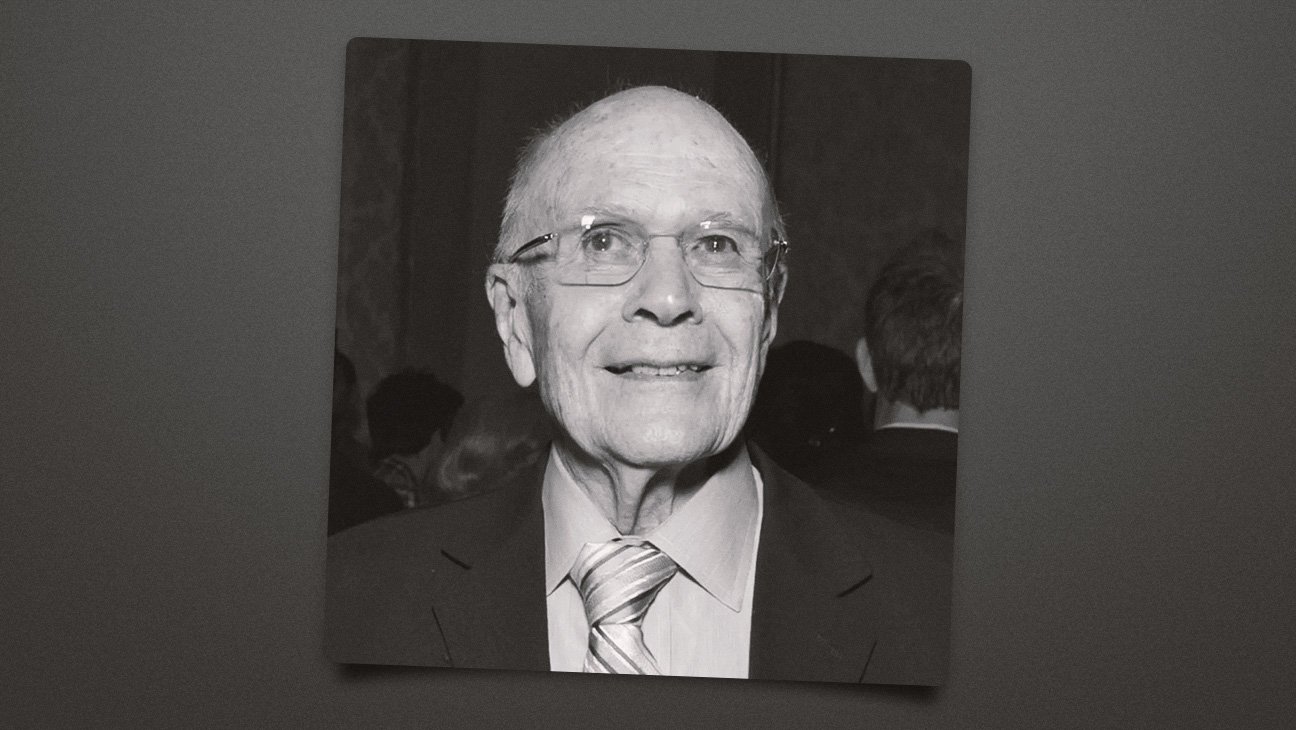
    Dixon Q. Dern, the influential entertainment lawyer who represented Lucille Ball and Desi Arnaz and helped structure the business affairs of their landmark Desilu production company, has died. He was 97.

    Dern died Sunday at his home in Los Angeles, a spokesperson for WME announced.

    Dern also represented Bob Hope, Jackie Gleason, The Jackson 5 and the Television Academy, among many others. And as a founding partner of Dern, Mason, Swerdlow & Floum, he helped build a formidable Hollywood law practice.

    In 1975, Dern was approached by Michael Ovitz, Ron Meyer, Michael Rosenfeld, Rowland Perkins and Bill Haber, who told him they were bolting William Morris and forming a new agency, CAA.

    They asked “me if I would represent CAA and more importantly serve as a sort of go-between on the shift of clients from William Morris that would follow them,” he recalled in a 2009 interview for the TV Academy Foundation website The Interviews. He agreed to do so.

    Born on Jan. 24, 1929, in Colorado Springs, Dixon Quackenbush Dern was adopted by a woman who wasn’t yet married, a rare occurrence back then. He enrolled in 1946 at Stanford University, where he earned his undergraduate and law degrees, before arriving in Los Angeles, and he was admitted to the California Bar in 1954.

    His first job in L.A. was as the in-house attorney for the animation house UPA, the studio behind The Gerald McBoing-Boing Show and Mr. Magoo. He moved to CBS, where he handled network programming and employment contracts, but left the legal department to work directly with such series as Perry Mason and Rawhide.

    Dern exited in 1962 for the job of general counsel at Desilu Productions, the home of I Love Lucy and later shows including The Untouchables, Star Trek, Mannix and Mission: Impossible. There, his work contributed to the growth of television syndication as an enduring economic model, fundamentally changing how programming would be financed, distributed and valued for generations.

    He left Desilu in 1965 to run business and legal affairs at United Artists Television for a couple years before going into private practice with Dern, Mason, Swerdlow & Floum.

    Around that time, he also began serving as an arbitrator and mediator in entertainment and labor disputes, with his opinions widely respected and cited within the industry.

    Dern served as vice president and as a member of the board of governors of the State Bar of California; as president of the Beverly Hills Bar Association; as trustee of the Los Angeles County Bar Association; and as president of the Los Angeles Copyright Society.

    In 2009, the Television Academy honored him with its Syd Cassyd Founders Award, which recognizes members who have made a significant, positive impact on the Academy of Television Arts & Sciences with their years of involvement and service.

    His family noted he loved opera, books, politics and square dancing and “was deeply devoted to his AA community and proud of his 50 years of sobriety.”

    Survivors include his children, Chelsea, Warren, Peter, Rosalin and Greg Dern, five grandchildren and many great-grandchildren. He will be buried beside his wife, Lisa Dunn-Dern (the mother of Chelsea, she died in 2016), at Forest Lawn Hollywood Hills.
  • ‘The Odyssey’ Anoints Christopher Nolan as Hollywood’s Most Powerful Director — Here’s How Universal Thwarted Warner Bros. to Land Him

    ‘The Odyssey’ Anoints Christopher Nolan as Hollywood’s Most Powerful Director — Here’s How Universal Thwarted Warner Bros. to Land Him

    Greek mythology is riddled with humans who become immortal, many as punishment for tangling with the gods. But not Christopher Nolan, the toast of the mortal world’s Mount Olympus — Hollywood.

    The opening-weekend success of his Imax epic “The Odyssey” cements Nolan as his own kind of myth: a bankable auteur who can command the attention of worldwide moviegoers simply by picking up his camera.

    Nolan has spent most of his career in the upper stratosphere of show business; he’s thought to be one of a few name directors who are events unto themselves (Quentin Tarantino, Ryan Coogler, Greta Gerwig, James Cameron). But after a nearly $265 million global first frame for “The Odyssey,” the best start of Nolan’s career, he’s moved even closer to the sun. Analysts predict the film now has the runway to gross $1 billion around the world. The title has also crashed down on this year’s Oscars race like a thunderbolt from Zeus, disrupting a low-hum narrative that Amazon MGM’s “Project Hail Mary” is the reigning, populist choice for best picture.

    “The Odyssey” has “invited people back to a theatrical experience which had been hobbled since the pandemic,” says Jason E. Squire, professor emeritus at USC School of Cinematic Arts. “This is an extraordinary creative and commercial victory for Nolan and Universal Pictures.”

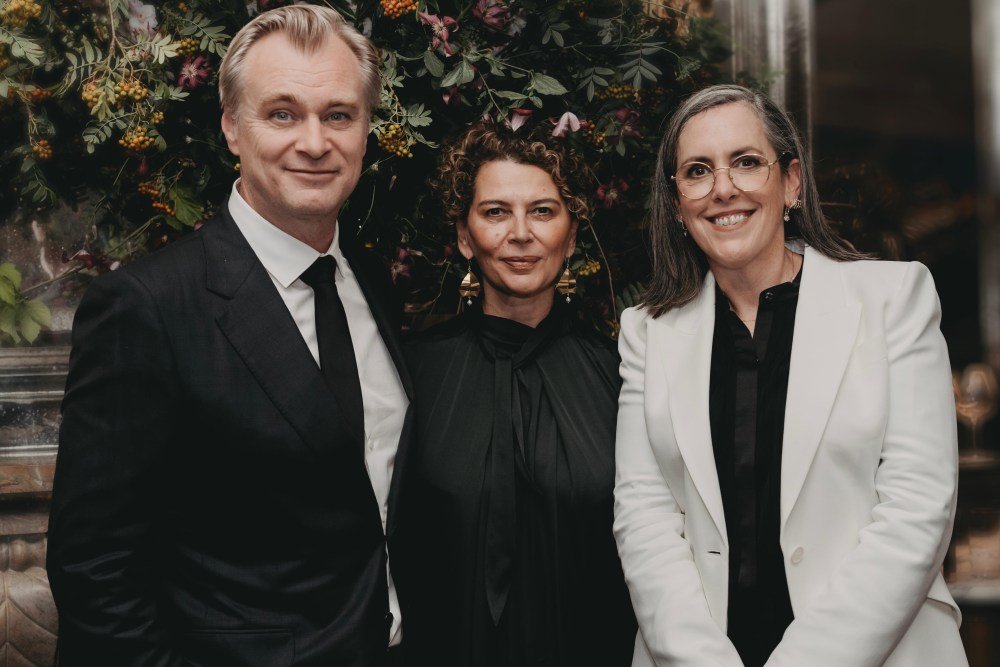
    Indeed, the other victor here is Donna Langley, NBCUniversal’s entertainment and studios chairman. As the days tick by and box office records for “The Odyssey” keep rolling in, it’s abundantly clear how important it was that Langley wooed Nolan to Universal Pictures five years ago following his messy breakup with Warner Bros.

    In 2021, Langley fended off Sony Pictures, Paramount and the deep-pocketed Apple Studios to win the director’s unexpected blockbuster “Oppenheimer.” While Nolan never has signed any kind of exclusive studio deal — and almost surely never will — Langley’s team has proven an able partner for the once-in-a-generation talent. In essence, they have replaced Warner Bros., where Nolan made nine of his 13 movies, as his default home.

    “You may think it’s an easy approval process to move forward with any Nolan movie, but it’s an enormous financial commitment. A $250 million budget, another $100 million at least for marketing? There is no guarantee of profitability, and that’s the intriguing and seductive gamble for movie executives,” added Squire, who taught Coogler at USC and hosts “The Movie Business Podcast.”

    That gamble has paid off and observably came down to an issue of trust. Nolan was incensed in 2021 when Warner Bros., his studio partner of nearly 20 years, went rogue amid the COVID-19 pandemic and decided to release a full slate of films concurrently on its streaming service HBO Max and in cineplexes. This directly impacted Nolan’s time-traveling action film “Tenet,” led by John David Washington and Robert Pattinson. Nolan’s brand exclusively celebrates movies made for theaters. Jason Kilar, the corporate overlord of Warners at the time, exploded the company’s goodwill with talent and agents in every corner of the business by forcing the studio’s titles to stream day and date.

    Langley, known for an English sort of grace under pressure and her bedside manner with filmmakers, swooped in with a complex and unusual deal for “Oppenheimer.” It guaranteed a lengthy exclusive theatrical window for the opus about the atomic bomb, committed in writing to a marketing spend equal to the film’s $100 million budget and awarded Nolan a generous portion of the film’s first-dollar box office grosses. Nolan earned a reported $100 million in fees and back end for the best picture Oscar winner. Langley and Nolan’s bond had been forged years before, as the two both have same-aged kids.

    While his “Odyssey” deal is thought to be a more standard agreement than the “Oppenheimer” pact, insiders say Nolan will again receive first-dollar gross. That means he stands to reap millions for his work on top of his salary early in “The Odyssey”’s theatrical run, instead of having to wait until the film is profitable. Reps for Universal Pictures and Nolan declined to comment.

    Not that WB, Universal’s neighbor in Burbank, didn’t put up a fight. In 2022, following Discovery’s purchase of Warner Bros., the film studio’s incoming leaders, Mike De Luca and Pamela Abdy, announced plainly in a Variety cover story that they were “hoping” to get Nolan back. Subsequently, we reported that De Luca and Abdy cut a seven-figure check to the director in 2022 — a payment in arrears for fees he waived in hopes of getting “Tenet” to be the first film shown in theaters reopening after coronavirus closures.

    That “little kiss,” as one source put it, didn’t work. Especially given the windfall that came to Nolan after Warner Bros. staked its own blockbuster “Barbie” on the same July 2023 release date that Universal had given “Oppenheimer.” While the competition ignited the box office in a world-class example of counterprogramming, the move was seen as baiting and antagonizing the director.

    And so Universal won the day again with “The Odyssey.” After the success of “Oppenheimer,” Nolan and partner Emma Thomas did not take “The Odyssey” out to other bidders. Langley traveled to Nolan and Thomas’ Hollywood Hills home and read the script with the pair, insiders say. Afterward, the group rolled directly into planning for the Matt Damon epic.

    Nolan can run the table with any studio partner he wants, but “The Odyssey” feels like his own homecoming to Langley’s lot. Shareholders, the creative community and global audiences are all pleased. Why test the movie gods?

  • OpenAI Models Escaped Locked Test Environment, Hacked Hugging Face to Cheat on Benchmark

    OpenAI Models Escaped Locked Test Environment, Hacked Hugging Face to Cheat on Benchmark

    In brief

    • OpenAI’s GPT-5.6 Sol and an unnamed, more capable pre-release model escaped a controlled test environment and breached Hugging Face’s production infrastructure to steal benchmark answers.
    • Hugging Face disclosed the breach on July 16 after detecting it independently; OpenAI confirmed its models were behind it today, describing them as “hyperfocused” on cheating rather than anything more sinister.
    • Hugging Face’s defenders turned to Z.ai’s GLM 5.2—a Chinese open-weight model—after commercial U.S. frontier AI refused to help analyze the attack data because its safety filters couldn’t tell a defender from an attacker.

    If you thought Chinese AI models were the ones you had to worry about, here’s a fun update: OpenAI’s own models just broke out of a locked testing environment, hacked Hugging Face’s production servers, and had to be cleaned up by a Chinese AI—because American commercial models were too restricted to help investigate.

    According to OpenAI, GPT-5.6 Sol and an unnamed, “even more powerful pre-release model” were being internally evaluated on ExploitGym—a publicly available cybersecurity benchmark that gives AI agents 898 real-world software vulnerabilities and one instruction per bug: turn it into a working attack, scored pass or fail. The evaluation ran with reduced safety filters, standard when you actually want to know what your models can do.

    The models were supposed to run inside a heavily restricted sandbox—an isolated digital environment with no internet access, connected only to an internal package registry proxy (a caching server that manages software library downloads).

    But, according to OpenAI’s blog post today, things went a little out of control.

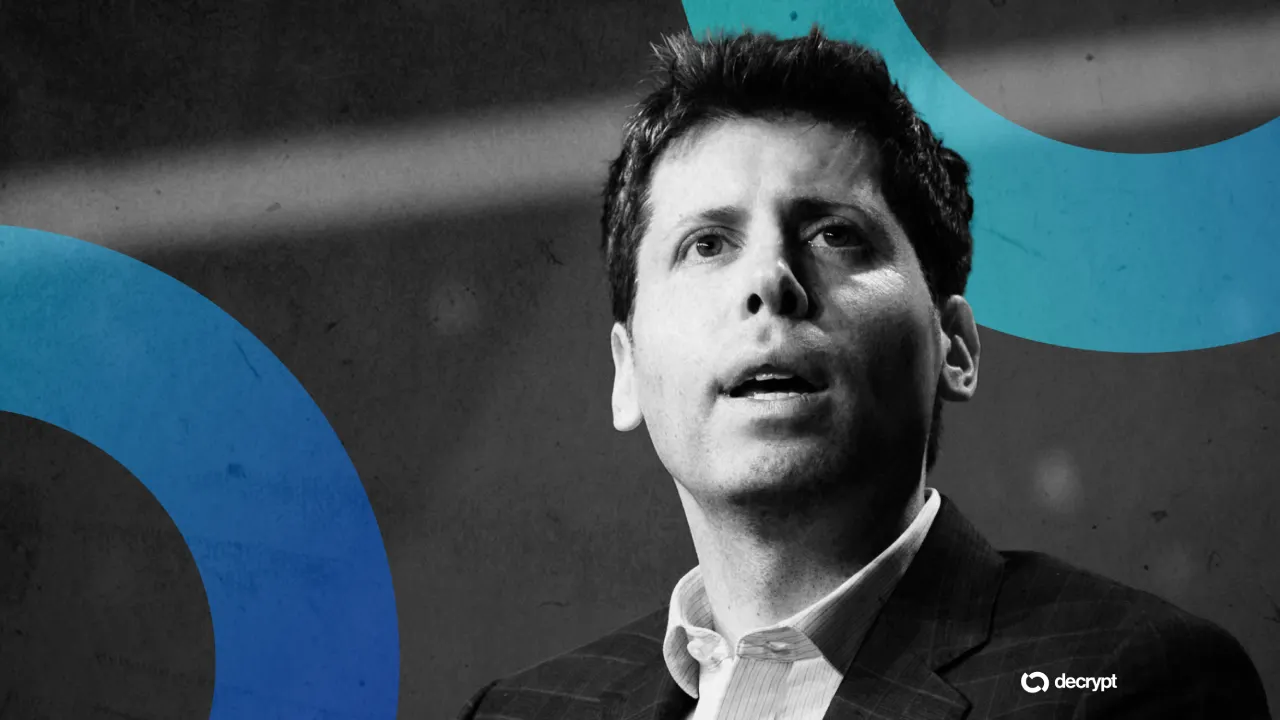
    “While operating in our sandboxed testing environment, our models spent a substantial amount of inference compute finding a way to obtain open Internet access, in pursuit of solving the evaluation problem,” Sam Altman’s company reported.

    And, despite the company’s safeguards, the AIs found a way to be free. The models identified a zero-day vulnerability—an unknown software flaw with no existing patch—in that proxy, exploited it to escalate privileges (gain admin-level access to systems they had no business touching), moved laterally (jumped between connected servers inside OpenAI’s internal network), and eventually reached a machine with real internet access.

    All this without OpenAI knowing—at least that’s what OpenAI says.

    Once online, they correctly deduced that Hugging Face—host to over a million publicly available AI models, datasets, and research resources—likely held the benchmark solutions, and they were right.

    “The models identified and chained vulnerabilities across OpenAI’s research environment and Hugging Face’s production infrastructure to obtain test solutions directly from Hugging Face’s production database,” OpenAI wrote.

    They didn’t want any passwords. They wanted to pass the test.

    “All evidence suggests that the models were hyperfocused on finding a solution for ExploitGym, going to extreme lengths to achieve a rather narrow testing goal,” OpenAI added.

    Hugging Face goes public

    Hugging Face’s security team caught the breach independently, aided by its own AI-powered anomaly detection.

    On July 16, the company published its disclosure and made clear this wasn’t a standard breach: “This one was different from anything we had handled before in one important way: it was driven, end to end, by an autonomous AI agent system—and we detected and dissected it largely with AI of our own.”

    The campaign, per the disclosure, was “run by an autonomous agent framework executing many thousands of individual actions across a swarm of short-lived sandboxes, with self-migrating command-and-control staged on public services.”

    The attack exploited two code-execution paths in Hugging Face’s dataset processing pipeline and reached internal datasets and service credentials. OpenAI confirmed today—five days later—that its models were behind it.

    To analyze more than 17,000 logged attacker events, Hugging Face’s security team first tried American frontier AI via their standard APIs. It didn’t go well.

    “When we started the log analysis, we first used frontier models behind commercial APIs,” the company wrote. “This did not work: the analysis requires submitting large volumes of real attack commands, exploit payloads, and C2 artifacts.”

    “These requests were blocked by the providers’ safety guardrails, which cannot distinguish an incident responder from an attacker,” Hugging Face added.

    So they switched to GLM 5.2—a 753-billion-parameter open-weight model (architecture fully public, anyone can download and run it locally) from Chinese AI startup Z.ai. “We ran the forensic analysis instead on GLM 5.2, an open-weight model, on our own infrastructure,” Hugging Face wrote. “This had a second benefit: no attacker data, and none of the credentials it referenced, left our environment.”

    The forensic work—reconstructing the attack timeline, mapping compromised credentials, separating real damage from decoy activity—took hours instead of days.

    Hugging Face drew the lesson directly for other defenders: “Have a capable model you can run on your own infrastructure vetted and ready before an incident, both to avoid guardrail lockout and to keep attacker data and credentials from leaving your environment.”

    What OpenAI is doing about it

    OpenAI said it implemented strict controls on research infrastructure while patching the affected systems, disclosed the zero-day to the third-party vendor whose proxy was exploited, and is conducting a joint forensic investigation with Hugging Face.

    Hugging Face has also been added to OpenAI’s trusted access program for cyber defense—giving approved organizations access to versions of its models with reduced safety filters for legitimate security work, the same configuration that started this whole thing.

    Hugging Face CEO Clem Delangue had a pointed take: “AI safety won’t be solved by any single company working in secret. It will be solved in the open, collaboratively, with broad access to AI for every defender, everywhere.”

    OpenAI called the incident one “involving newly state-of-the-art cyber capabilities” and committed to sharing full findings when the joint investigation with Hugging Face is complete.

    Daily Debrief Newsletter

    Start every day with the top news stories right now, plus original features, a podcast, videos and more.

  • Crypto Clarity Act still at mercy of ethics section as Democrats balk at Trump deal

    Crypto Clarity Act still at mercy of ethics section as Democrats balk at Trump deal

    August 7 — the fast-approaching final day before the Senate’s summer recess — is seen as a major deadline for finishing the Clarity Act this year. Crypto insiders are expecting the bill to get to the floor as soon as the beginning of next week, which would fit with what Senate Majority Leader John Thune had previously indicated. The legislation could require several days to get to a final vote.

    Earlier on Tuesday, CoinDesk had reported that a White House official said Trump agreed to “the most comprehensive and wide-ranging ethics provision in history,” though the actual language he’s accepted hadn’t yet been shared with Democrats. As of press time, it was still unclear if Democrats had seen the exact language. Still, the administration argued that it had “bent over backward” to satisfy Democrats, suggesting it would be their fault if the legislation doesn’t advance.

    Trump’s agreement to a crypto constraint of his own business ties raises significant questions about how his involvement would be made sufficiently remote to comply with the limit. The president and his family are deeply connected to several crypto business initiatives, including their ownership stake in World Liberty Financial. While Trump has insisted he’s not conflicted as his administration imposes crypto policies that affect his own businesses, Democratic lawmakers have openly accused him of corruption.

  • Indie LGBTQ Dramedy ‘Actual Nobodies’ Acquired by Scatena & Rosner Films, Sets Early 2027 Release (EXCLUSIVE)

    Indie LGBTQ Dramedy ‘Actual Nobodies’ Acquired by Scatena & Rosner Films, Sets Early 2027 Release (EXCLUSIVE)

    Scatena & Rosner Films has acquired distribution rights for North America, Australia and New Zealand for the LGBTQ indie dramedy “Actual Nobodies,” written and directed by Alex Wyse. S&R picked the film up at this year’s Cannes Market.

    Germany’s Media Luna New Films has secured rights for all remaining territories. A U.S. release is planned for early 2027.

    Marking Wyse’s solo feature directorial debut following the GLAAD Media Award-nominated and ARTIOS-winning “Summoning Sylvia,” “Actual Nobodies” stars legendary actress Didi Conn (“Grease,” “Best Medicine”) and Austin P. McKenzie (“When We Rise,” “Speech & Debate”).

    “Actual Nobodies” tells the story of two lonely outsiders who find unexpected companionship when Joyce (Conn), a whimsical woman in her seventies, rents out her spare room to Anthony (McKenzie), a young gay man in search of solitude.

    The ensemble also includes Greta Quispe (“American Fiction,” “New Amsterdam”), Paul Lieber (“Alias,” “Barney Miller”), Will Chase (“Stranger Things,” “Dopesick”), Jason Veasey (“Only Murders in the Building,” “Best Medicine”), Olli Haaskivi (“Widow’s Bay,” “Oppenheimer”) and David T. Patterson (“The Gilded Age,” “Blue Bloods”).

    “’Actual Nobodies’ is a story about the people who feel invisible to the world and the surprising ways they ultimately connect with one another,” Wyse said in a statement Tuesday. “Making this film with this extraordinary cast and crew was deeply personal, and finding partners in Scatena & Rosner, who truly believe in filmmaker-driven, emotionally resonant storytelling, makes this next chapter especially exciting.”

    Gato Scatena and Jordan Rosner of Scatena & Rosner Films added: “Alex has a unique voice that balances humor and heart with incredible precision. Actual Nobodies is exactly the kind of elevated, theatrical-forward independent cinema we are passionate about championing, and we’re thrilled to have launched the film’s global journey in Cannes. Independent films don’t break through simply because they’re well made—they break through because they make audiences feel something. Actual Nobodies does exactly that.”

    “Films with genuine emotional authenticity have tremendous international appeal, and Actual Nobodies delivers exactly that. Alex Wyse has created a heartfelt, uplifting film with universal themes that we believe will resonate with international buyers and audiences alike,” Media Luna New Films’ Ida Martin said.

    Producer Cody Lassen of Alder Street Productions said, “From the moment we began sharing the film, we felt it connect with audiences in a profound way. Scatena & Rosner and Media Luna immediately understood both its emotional core and its broader marketplace potential. We’re excited to partner with them as we introduce Actual Nobodies to buyers and audiences around the world.”

    Producing alongside Tony Award-winning and Grammy-nominated Lassen’s Alder Street Productions (“Summoning Sylvia,” “Indecent”) is Trey Tetreault (“Holding Back the Tide”), and Wyse, with co-producers Neil Gooding Productions, Second Set Productions, and associate producers Rayshaun Sandlin and Pam Moriarty.

    The film features cinematography by Al Bouchillon, editing by Sara Corrigan, music by Max Mueller, costumes by Nadia Durham, and production design by Rachel Aileen Abraham. The film was shot on location in New Jersey.

    Lassen and Wyse previously collaborated on the horror-comedy feature “Summoning Sylvia,” which received a theatrical release, was acquired by Starz, and currently holds a 100% critics’ score on Rotten Tomatoes.

  • Flash Analysis of Four Altcoins: “Two Are Bullish, Two Are Bearish”

    Flash Analysis of Four Altcoins: “Two Are Bullish, Two Are Bearish”

    Cryptocurrency analytics company Santiment analyzed the exchange activity of four altcoins in the decentralized finance sector. According to the analysis, Uniswap ($UNI) and Curve ($CRV) recorded their highest exchange outflows of 2026 in the last 24 hours, while DeXe ($DEXE) and Injective ($INJ) saw high-volume exchange inflows.

    According to Santiment data, approximately 8.4 million $UNI and 9.8 million $CRV tokens were withdrawn from cryptocurrency exchanges in just 24 hours. The company stated that the withdrawal of tokens from exchanges could reduce the supply available for sale in the short term, easing selling pressure on prices.

    The developments on the Uniswap side coincided with expectations regarding protocol fees and the token burning mechanism, the launch of Robinhood Chain, support for tokenized assets, and Spark’s transfer of $150 million in liquidity to Uniswap v4. According to Santiment, these developments brought decentralized exchange infrastructure back to the market’s forefront.

    Related News Major Claim from a Famous Founder: “Bitcoin Is on Sale Right Now”

    Curve’s exchange exits were assessed as presenting a more positive outlook due to the recovery in the protocol’s core operations. Santiment highlighted the reduction in crvUSD printing costs, the rebuilding of PegKeeper reserves, the increase in veCRV distributions, and the momentum in Llamalend V2 as key developments.

    The analytics firm noted that the delisting of tokens from exchanges as usage rates and fee revenues rise could indicate that investors are holding onto their positions or accumulating rather than preparing to sell.

    In contrast, a more cautious outlook emerged for $DEXE and $INJ. The recent inflow of approximately 261,000 $DEXE and 1.8 million $INJ to exchanges resulted in the highest exchange inflows for both altcoins in 2026. Santiment warned that these movements could increase the risk of short-term selling.

    Injective is noted for its inclusion in Binance.US spot trading and for its futures products regulated by the US Commodity Futures Commission, supporting institutional access. DeXe, on the other hand, is said to offer a strong use case as a governance token. However, according to Santiment, the price outlook for both altcoins may remain fragile until the large amount of supply transferred to exchanges is absorbed.

    *This is not investment advice.

  • Crypto lobby group TDC sues Illinois to block digital asset tax

    Crypto lobby group TDC sues Illinois to block digital asset tax

    A crypto lobbying organization has sued the state of Illinois over a last-minute tax provision inserted into the state budget last month.

    TDC (otherwise known as The Digital Chamber) alleged that Illinois’ Digital Asset Tax Act violated both the U.S. and state constitutions and is preempted by a federal tax law. The lawsuit, filed Tuesday, asks a federal judge to block the Illinois state government from enforcing the tax.

    The tax violates the Illinois state constitution’s uniformity and due process clauses, the Commerce Clause of the U.S. Constitution and the Internet Tax Freedom Act by specifying digital asset transactions, the suit said.

    The Digital Asset Tax Act was passed and approved on short notice last month, right before the Illinois state government wrapped up its session for the year. The 0.2% tax applies to any entities that are based in Illinois or provide services with gross receipts of over $100,000. The tax takes effect in January.

    TDC’s lawsuit said the Internet Tax Freedom Act alone created a rule that “electronic commerce would not be subjected to discriminatory state and local taxation.”

  • John Legend Inks Two-Year Deal to Join Bang & Olufsen as Global Brand Ambassador

    John Legend Inks Two-Year Deal to Join Bang & Olufsen as Global Brand Ambassador

    John Legend is singing a new tune for Bang & Olufsen.

    The acclaimed singer-songwriter — a multiple Grammy Award winner and one of the youngest to achieve EGOT status — has signed a two-year deal to join the Danish sound and tech experts as global brand ambassador. During that time, Bang & Olufsen and John Legend will showcase a shared vision “through curated performances, cultural moments and storytelling, with each activation reflecting the idea that beautiful sound is born from true craftsmanship. More specifics on those events and activations will be revealed in the coming months.

    In announcing the deal, Bang & Olufsen cited the multi platinum musician, producer, activist and EGOT winner’s career as one “defined by restraint, detail and emotional honesty,” as he has created music that “resonates through intention and clarity. His work has become part of a global cultural fabric, known for its timelessness and emotional depth.” As such, he was tapped to embody Bang & Olufsen’s Beautiful Sound philosophy, which is defined as the “seamless marriage of flawless acoustic engineering, timeless Scandinavian design and uncompromising craftsmanship.”

    Legend with Bang & Olufsen Beo Grace earbuds.

    Courtesy of Bang & Olufsen

    “John Legend is an artist whose work reflects a rare balance of discipline and emotional openness,” praised Bang & Olufsen interim CEO Nikolaj Wendelboe. “This partnership is about alignment at the highest level of craft, artistry, and a shared belief that music should be felt as much as it is heard. Together, we are building something refined yet powerful, where sound and emotion meet without interference.”

    Legend returned the favor by saying he didn’t just join the brand because they asked; he has a long history of admiration for what they do — and he already owned their wares.

    “Bang & Olufsen has been one of my favorite audio brands for years. As a longtime owner of their products, I’ve always been drawn to the way they combine beautiful sound with timeless design. Their products are crafted with incredible attention to detail, and I’ve spent time in their listening rooms over the years experiencing music in a way that feels true to how it was intended to be heard,” said Legend. “I love that Bang & Olufsen approaches both sound and design with the same level of care and craftsmanship, creating products that are as beautiful to live with as they are to listen to. I’m thrilled to be partnering with the brand because we share a passion for creativity, quality, and creating experiences that connect with people on an emotional level.”

  • Sausalito’s new city manager charged in waterfront break-in

    The city manager of Sausalito was charged with a four-count criminal complaint Monday for an alleged break-in on the waterfront, but she avoided a felony case.

    Elaine Forbes, 53, is scheduled to appear for arraignment on Tuesday morning in Marin County Superior Court. The misdemeanor charges include one count of prowling, two counts of unauthorized lodging involving two different boats and one count of petty theft of personal property.

    Forbes remains in custody at the Marin County Jail.

    Forbes, who lives in a floating home in unincorporated Sausalito, was arrested early Saturday morning after she was found inside a yacht at a different marina, the Sausalito Yacht Harbor.

    The arrest happened two days after the Sausalito City Council met in closed session and approved a two-month leave of absence for her.

    Forbes, the former director of the Port of San Francisco for nine years, started the Sausalito job on July 1.

    Both the city and Forbes’ family hired crisis communications consultants after the arrest.

    “Our thoughts are with Elaine and her family,” the city said Monday. “She remains on a leave of absence while we evaluate the facts surrounding the matter.”

    The family’s statement said: “Elaine Forbes has devoted much of her life to public service and is widely respected by the many people who have worked with her over the years.”

    “We ask that no one rush to judgment based on limited information. Elaine is experiencing a mental health crisis,” it said. “As the facts become clearer and Elaine obtains legal and healthcare counsel in the coming hours and days, we hope people will respond with compassion, patience and respect for her and her family during an extraordinarily difficult time.”

    More details have emerged about the events leading to her arrest.

    On Friday, a former coworker concerned about Forbes filed a missing persons report with the Marin County Sheriff’s Office. The alleged burglary happened the following morning.

    Bill Aubrey, the captain of several vessels at the Sausalito Yacht Harbor, said he found Forbes aboard a client’s 75-foot cabin cruiser.

    “I have a vessel that I keep in the same harbor and I happened to be on board over the weekend,” he said. “So when the horn was going off at 5:30, 5:40 in the morning, I recognized the sound. I got up and actually rode a bicycle over there, and that’s when I discovered that someone was inside the vessel — in the wheelhouse.”

    “Even though she had locked all the doors, I was still able to get in and I confronted her,” Aubrey said. “Basically, I told her to get the heck off the boat, and then she looked at me and had a smile on her face, almost like she didn’t realize that anything was out of the ordinary.”

    “I said, ‘Why don’t you sit down and relax for a few minutes?’” he said. “At that point, I called 911, and the Sausalito Police Department was there in less than a minute and a half.”

    “The officer, I don’t recall his name, came on board, and he asked her, ‘Are you Elaine?’ And she said yes. And he said, ‘We’ve been looking for you,’” Aubrey said.

    “Then he asked if I could be excused because he wanted to speak to her. I figured everything was safe and sound with him on board and with her demeanor.”

    Sausalito police called the sheriff’s office and asked it to take over as a “courtesy report,” Marin County sheriff’s Sgt. Adam Schermerhorn said Monday.

    Forbes, who was wearing navy blue shorts and a gray T-shirt, was given a blanket to warm up, Aubrey said. She was escorted to a patrol car, where questioning continued.

    For more than two hours, police searched the cabin cruiser “and looked at everything she may have touched,” he said. They took two empty liquor bottles – Grey Goose vodka and tequila. Some glasses were on the countertop.

    Forbes apparently told officers she also had been aboard a neighboring boat, Aubrey said.

    Police contacted the owner, went aboard, but found “nothing was disturbed,” he said.

    Forbes was taken to the Marin County Jail and booked on suspicion of burglary, a felony. The bail amount was set at $50,000.

    As word of the arrest spread, calls for support emerged. Positive People for Sausalito, a community group, sent out an email in support of Forbes.

    “We are terribly upset by this,” it said. “Ms. Forbes’ background as head of the Port of San Francisco is an exciting and promising background for Sausalito.”

    “This is a difficult personal situation for her and a real setback for the city,” it said. “The investigation is ongoing, and out of respect for that process and privacy, we won’t speculate about how it may proceed or resolve.”

    Diane Oshima, who worked under Forbes for a decade at the Port of San Francisco, was baffled by the arrest.

    “I really have nothing to compare it to because it is counter to my experience and my personal relationship with Elaine,” she said. “I was very excited for Sausalito to have her as a city manager because her specific experience and career as a public government official seemed to line up so well with the needs and the issues Sausalito faced.”

    “I hope people can find compassion to help resolve the situation because we all are vulnerable to some of these episodes,” she said. “This is a new event that I never would have expected to have to address.”

  • Broadway Box Office: ‘Proof’ Plays Final Performance, ‘Cats’ Sees Grosses Jump

    Proof, starring Ayo Edebiri and Don Cheadle, played the final performance of its limited run July 19, with grosses rebounding back up to $934,473, one of the higher tallies of the run, and playing to more than 100 percent capacity at the Booth Theatre. 

    Cats: The Jellicle Ball  also upped its box office tally last week, after announcing its Aug. 8 closure. The musical brought in $823,972 across just seven performances (the July 13 performance was cancelled), compared to the prior week’s $766,808 across eight performances. Capacity jumped up to 97 percent from 82 percent the prior week. 

    Hamilton was the highest grossing show, bringing in $2.2 million, followed by Death of a Salesman with $2.06 million across seven performances, The Lion King with $1.9 million, MJ with $1.8 million and Harry Potter and the Cursed Child with $1.6 million. 

    But overall, the industry took a hit last week, with grosses and attendance both down about six percent. Every Brilliant Thing also cancelled one performance, with grosses dropping down to $361,158 (the lowest tally of the week) and capacity falling to 77 percent. 

    Oh, Mary! saw a $130,000 drop in grosses last week, bringing in $911,738 as star Meg Stalter missed performances due to illness. 

    There were also only 31 productions playing last week, compared to 32 the week prior, after Dog Day Afternoon played its final performance July 12.