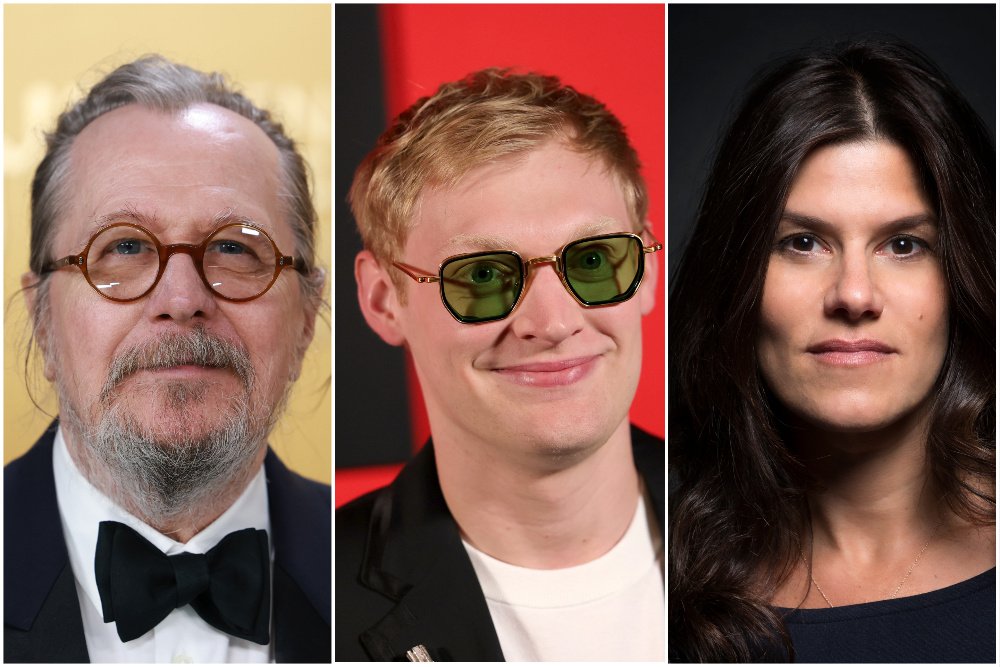
“Slow Horses” star Gary Oldman, “Obsession” director Curry Barker and “Barbie” producer Robbie Brenner are among the lineup of speakers at the Toronto Film Festival’s inaugural market, which runs Sept. 10-16.
Other speakers at the event, known as TIFF: The Market, include “Obsession” star Inde Navarrette, director Lee Chang-dong, and producers Christine Vachon and Pamela Koffler. They will join Pam Abdy and Mike De Luca, the Warner Bros. Motion Picture Group’s co-chairs and CEOs, who were already announced.
Charles Tremblay, head of TIFF: The Market, said, “The high caliber of speakers participating in our first market reflects the industry’s strong support for our vision and the intentional efforts we’re making to build on TIFF’s long-standing reputation as a welcoming space for creativity and commerce to co-exist.”
The speakers will appear as part of the Visionaries and Dialogues programs, as follows:
VISIONARIES PROGRAM Gary Oldman The festival said the talk would be “anchored in Oldman’s creative process” and would “celebrate an unparalleled career filled with varied and unforgettable characters,” including Jackson Lamb in the espionage drama “Slow Horses,” which is premiering its sixth season at the festival.
Robbie Brenner A moderated discussion that highlights the career of the two-time Oscar-nominated producer (“Barbie,” “Dallas Buyers Club”), and president and chief content officer of Mattel Studios, who brings “The Housewife” to this year’s festival.
Lee Chang-dong With his upcoming release, “Possible Love,” as a focal point, the conversation will highlight Lee Chang-dong’s work whose “naturalistic style as a novelist and playwright has influenced his filmmaking process and consistent desire to explore the human experience.” Lee Chang-dong will also be presented with the Ebert Director Tribute Award at this year’s festival.
DIALOGUES Curry Barker, Inde Navarrette This discussion will center around the making of Focus Features’ breakout hit “Obsession,” and its journey to becoming one of the biggest box office successes of the year, after making its debut at TIFF last year.
Christine Vachon, Pamela Koffler The founders of Killer Films will discuss the multi-faceted role of a producer and their approach to working with filmmakers.
SPECIAL EVENT The Town With Matthew Belloni Live @ TIFF Belloni’s popular podcast “The Town,” part of Spotify’s The Ringer podcast network, will be live at TIFF: The Market with special guest Matthew Greenfield, president of Fox Searchlight Pictures.
“Our Summit programming is designed to inspire creators, inform decision makers, and fuel healthy discussions around the ever-evolving screen industries,” said Geoff Macnaughton, VP, market programming and theatrical.
Additional speakers and programming will be announced in the coming weeks.
James Gray and Darren Aronofsky are among the big-name filmmakers getting honored at the 79th edition of the Locarno Film Festival this August. But the 2026 lineup of the Swiss festival also showcases all sorts of newer and emerging filmmakers from around the globe.
Their names may not be widely known yet, but buzz at a festival, such as Locarno, could, of course, open doors and bring support for more projects ahead. Some of these up-and-coming filmmakers, however, create cinematic experiences not under their legal names, but pseudonyms. Cases in point: Filmsaaz and Neozoon, whose works are featured in this year’s Pardi di Domani, or “Leopards of Tomorrow, program.”
The name of the program is a reference to Locarno’s Leopard awards and is designed to provide “a vital space for expressive experimentation and innovative forms of cinematic poetry,” the festival says. In fact, it calls the section “a cornerstone” of its mission “to foster dialogue between generations and traditions and to support the filmmakers who will define the future of cinematic expression.”
Whether or not you are already aware of Neozoon and Filmsaaz and their work, THR has compiled some key info about these filmmakers and asked them about their work as a small tease of what awaits you.
Filmsaaz world-premiered Wolfgang, the minimal-budget feature directorial debut of the Tehran-born audiovisual artist that is a gender-queered acid trip opera, earlier this year at the International Film Festival Rotterdam. In Locarno’s Pardi di Domani – Concorso Corti d’Autore lineup, they will debut a new 21-minute short film called Ãsheghetam.
‘Ãsheghetam’
Courtesy of Locarno Film Festival
The title is “a very intense way to say ‘I love you’,” Filmsaaz explains. “It literally means ‘I am your lover’.” Written, directed and edited by Filmsaaz, whose real name is Saleh Kashefi, the short feels particularly timely. “During a chaotic night at an underground Tehran rave disrupted by the morality police and the sudden outbreak of war, a queer youth chooses to retreat into a bubble of romantic illusion with their partner just to survive the brutal reality outside,” its synopsis reads.
“I started developing the film about a year ago, after the 12-day war between Iran and Israel happened,” Filmsaaz tells THR. “Even though very complex to make, the important thing for me was to finish and release it fast, as it is important for this film to be seen as soon as possible. So we were lucky that Locarno was kind enough to accept the film with a rough cut; the film just [got] finished about two weeks ago.”
Filmsaaz shares this thought on a possible regime change in Iran. “Of course, nothing is permanent, and even the most powerful governments and monarchies have collapsed in history – it’s only a matter of time.” And they add: “These days I feel quite hopeless and cynical in general about the world we live in. The film, in fact, is about giving up hope and dissociating from reality, which is the defense mechanism all of the Iranian youth have learned.”
So, where does the moniker Filmsaaz come from? Well, it mixes the Farsi words for “filmmaker” and “music.” And this new name was a conscious decision. “I wanted to let go of the conventional birth name, which represents a culture, a gender, a religion, a history, and represents a family,” the creative told THR earlier this year. “I wanted to give myself a name that was as simple as possible. I wanted to free myself from all those contexts and layers, and also to somehow redefine how filmmakers are represented.”
Filmsaaz, courtesy of Seraphine Sallin-Mason
After all, the likes of Bono and Prince prove you can make a name for yourself with just one name. “Why are we always known by our first name and last name?” explained Filmsaaz. “Musicians and other kinds of artists can have artistic names. They can have a persona.”
Filmsaaz has made all sorts of shorts in the past, and they have such colorful titles as The Three Letter Word (2017), Kim Kardashian in a Cat’s Eyes (2019), I Was Gonna Kill Myself but Instead I Made This Film (2020), Leaving Here and Her (2021), And How Miserable Is the Home of Evil (2023), A Man Passes by the Soaked Trees (2024) and Overture (2025).
Meanwhile, Locarno 2026‘s Pardi di Domani – Concorso Internazionale lineup includes Together, a 14-minute short that the festival website teases this way: “An exploration of human desires for land ownership and property through archival footage and social media. It contrasts togetherness with rising individualism, questioning whether possession stems from need or a Eurocentric, patriarchal narrative.”
The short comes from the “eco feminist art collective” Neozoon. The two main creatives behind it are Friederike Kersten and Michaela Metzger, who have also worked with other collaborators in the past. The Locarno website notes that Neozoon was founded in 2009 in Berlin and Paris. And it highlights: “Their work is based on the principle of collage and investigates sociological questions of the Anthropocene,” or our epoch in which human activity shapes the planet’s climate and ecosystems. The collective’s website is even more specific, saying the team “examines sociological questions dealing with speciesism in the capitalocene.”
Neozoon, aka Michaela Metzger (left) and Friederike Kersten (right), courtesy of Locarno Film Festival
You may know that “neozoon” is the word for a non-native or invasive species. And the collective’s street art, films and installations have used the concept of non-native species to explore how modern human society interacts with nature and animals. “In their video films, the de-and recontextualization of found footage and social media material is a recurring element,” especially the use of YouTube and TikTok footage, the Locarno website also explains.
And the Locarno site highlights some of their past works. Again, they have titles that will turn heads. Among them are Good Boy – Bad Boy (2011), Unboxing Eden (2013), Shake Shake Shake (2016), Little Lower Than the Angels (2019), Biting the Dust (2021) and Lake of Fire (2022).
If you get a sense that there is an activist vibe and a desire to challenge our thinking behind Neozoon’s work, that is surely by design. For example, Lake of Fire is described as “a film collage that addresses the fear of death and hell and how a dualistic way of seeing and living fuels the climate change-related ‘hell on earth’.”
The inspiration for Together came in the form of a 2021 book by an anthropologist and an archaeologist. “After reading [David] Graeber and [David] Wengrow’s The Dawn of Everything a few years ago, we started looking specifically for film and audio material about ‘the history of mankind,’ the Neozoon duo tells THR. “The same story came up again and again: people settling down, claiming ownership, fencing themselves off, becoming more and more individual, more and more alone – as if that were the great goal of humankind and as if there had never been another option. So we started asking what kind of story that actually is.”
‘Together’
Courtesy of Locarno Film Festival
Neozoon also has a clear take on how Eurocentric, patriarchal narratives play into this urge to own land and fulfill individuals’ desires. “All the material we found comes from the global North, produced by a small number of institutions,” the Neozoon members explain. “What those films narrate as human development is a story of acquisition: settling down, putting up fences, owning. They weren’t inventing it. They were illustrating the science of their time, and that science was done by the same people. European men excavated and European men interpreted, and the past they found looked like the world they already lived in: the hunter at the center, the woman at the fire.”
Things are starting to change, though. “Much of that is being rewritten now – the abilities of early humans, who actually hunted, the role of women completely – not because new evidence appeared, but because other people are doing the interpreting now,” highlights the Neozoon team.
So, does the collective consider itself political and/or activist? “Political, yes. Activist would be claiming more than a short film can do,” the duo tells THR. “What runs through all our films is the question of the exploitative treatment of non-human animals and of nature by (male) human beings. New research suggests that this world was once a different one, in which ecofeminist perspectives, for instance, were the standard rather than the exception. Part of that is observing and acknowledging other species on this planet.”
Such as ants, for example, which play a key role in Together. They are “masters of bridge-building in order to survive as a group,” Neozoon explains. “That seems to us more admirable than the story we have been telling ourselves about our own species.”
The US Treasury’s Office of Foreign Assets Control (OFAC) announced a new round of sanctions targeting Iran’s maritime revenue network, including two firms accused of operating an IRGC-backed insurance scheme for ships transiting the Strait of Hormuz.
Treasury said Persian Gulf Marine Insurance Company and HormuzSafe Marine Services Authority sold mandatory insurance policies covering risks such as vessel seizures while accepting payments in Bitcoin and other digital assets to circumvent sanctions.
According to the Treasury, the insurance scheme was designed to generate revenue for the IRGC while giving Iran greater influence over commercial shipping through one of the world’s busiest waterways. The sanctions were imposed under Executive Order 13902 as part of the US campaign to increase economic pressure on Iran.
In addition, OFAC sanctioned eight shipping companies and blocked eight oil tankers that allegedly transported millions of barrels of Iranian crude oil and petroleum products to destinations including China and the UAE. Treasury said it has now sanctioned more than 100 vessels associated with Iran’s shadow fleet in 2026.
The latest measures freeze assets subject to U.S. jurisdiction and prohibit transactions involving designated entities. Treasury also warned that non-US persons may face penalties if they assist sanctioned parties or facilitate efforts to evade US sanctions.
Morning Minute is a daily newsletter written by Tyler Warner. The analysis and opinions expressed are his own and do not necessarily reflect those of Decrypt.
GM!
Today’s top news:
Crypto majors are red while stocks grind higher; BTC -2% at $63.7k
BTC ETFs see $233M in net inflows, 2nd biggest day since early May
Coinbase posts surprise loss in Q2 earnings; Strategy books $8.2B loss
NY AG files petition to shut down Kalshi, seeks $36B in damages
Coldcard exploit leads to $38M in Bitcoin losses
📉 Coinbase Posts a Surprise Loss as Trading Dries Up
Coinbase reported $1.22 billion in second-quarter revenue on Thursday, down 14% from the prior quarter and 19% from a year ago, along with a net loss of $359 million. COIN stock fell roughly 5% after hours.
The miss was broad: revenue came in below the $1.29 billion Wall Street expected, and the loss of $1.36 per share was far worse than the roughly break-even result analysts had modeled. Total crypto spot trading volume fell more than 20% from the prior quarter as prices slid and volatility hit multi-year lows, dragging transaction revenue down 21% to $599 million.
Subscription and services revenue also missed, despite being the less trading-dependent segment of the business. Coinbase blamed late-closing USDC commercial agreements and lower staking revenue from falling prices, but the shortfall undercut the idea that the diversified businesses are decoupled from the trading cycle.
On the bright side, stablecoin revenue reached $292 million, with average USDC held on Coinbase products hitting a record $20 billion, more than 30% of all USDC in circulation. Prediction-market revenue more than doubled quarter over quarter, up 106%, and crossed a $100 million annualized run rate. Coinbase’s share of global crypto trading volume hit a record 10.3%, its third straight quarter of market-share gains, and the company said 88% of net revenue now comes from sources other than Bitcoin spot trading, up from 45% in 2020. It also held $8.6 billion in cash, extended a 14-quarter streak of positive adjusted EBITDA, and lowered its full-year expense outlook.
Now that the results are in, it’s interesting to look at Robinhood and Coinbase side by side. Both reported crypto trading revenue shrinking and prediction markets surging, but Robinhood posted record profit while Coinbase posted an outright loss. Coinbase is clearly far more exposed to the trading cycle it’s trying to grow beyond, and it doesn’t yet boast 13 9-figure product lines. As for Q3, guidance is looking fairly soft. But that may not be accounting for Cobie taking over trading and the apps. Let’s see how fast he can get to work on turning the story around…
🌎 Macro Crypto and Markets
Crypto majors are slightly red; BTC -2% at $63.7k; ETH -2% at $1,880; SOL -1% at $73.40; HYPE +3% at $54.90
Top alt movers include UNI (+5%), PUMP (+5%) and ADA (+3%)
Oil +1% at $85; Gold +1% at $4,115
Stock futures are green as tech stocks and memory go higher; DOW +0.5%, Nasdaq +1.2%
Strategybooked an $8.2 billion Q2 loss as Bitcoin fell below its $75,476 cost basis, far worse than the $2.15 billion Wall Street expected, though it added 11% to its stack and said its cash reserve covers two-plus years of dividends
Cathie Wood’s Ark Investsold BitMine while adding to Coinbase and Circle, trimming about $4.4 million across BitMine, Robinhood, Block, and Bullish after their shares fell, while recently buying roughly $43.5 million of Coinbase and Circle
Treasury Secretary Scott Bessenturged the Senate to pass the CLARITY Act, accusing Democrats of stalling for political reasons and closing his appeal by quoting Satoshi Nakamoto: “If you don’t believe me or don’t get it, I don’t have time to try to convince you, sorry.”
The Bitcoin quantum threatinched closer as IBM claimed a “trusted quantum advantage,” a milestone that renews urgency around hardening Bitcoin’s cryptography
Elon Musk’s xAIsued Minnesota to block the US’s first AI nudification law, challenging it on free-speech grounds
Ondo Financeis weighing an acquisition worth up to $500 million, as the real-world-asset tokenization firm looks to expand through M&A
Robinhood chain was led by FRONG (+600x) and IF (+74%)
Solana leaders included Moondogecoin (+300x) and KET (+60%); ANSEM +4% at $178M
💰 Token, Airdrop & Protocol Tracker
The New York Attorney Generalfiled a petition to shut down Kalshi in New York State over what it’s calling an illegal gambling operation and seeks at least $36B in damages
Ponswent live on Uniswap’s Launches aggregator, touting more than 210,000 tokens launched in two weeks and over $283 million in volume through Uniswap pools, with a v2 coming on Uniswap v4 to bridge memecoins and RWAs on Robinhood Chain (PONS -12% to $28M)
A Coldcard key flawdrained $38 million in Bitcoin, with 594 BTC swept from about 500 wallets in 25 minutes after a build error left seeds far more guessable than intended; maker Coinkite believes an attacker used AI to find the bug in its open-source firmware, a review its own AI had missed weeks earlier
🚚 What is happening in NFTs?
NFT leaders were red; Punks even at 32.3 ETH, BAYC -1% at 8.3 ETH, Pudgy -4% at 3.8 ETH; Hypurr’s even at 189 HYPE
No notable movers
Daily Debrief Newsletter
Start every day with the top news stories right now, plus original features, a podcast, videos and more.
The global live music business is chugging along through its busy summer season as strong as ever, defying even what has long been its biggest challenge: ticket-price sensitivity.
Consumers consistently cite cost as the biggest barrier to attending concerts. But the percentage of respondents on Luminate‘s U.S. Music 360 survey who cite ticket prices as a deterrent has trended downward from 59% in the first quarter of 2024 to 53% in the same period two years later. The survey and Luminate’s latest special report, “Live Music 2026,” is the focus of this week’s episode of Variety podcast “Strictly Business.”
“The concert industry really hasn’t seen too much of, if any, decline in demand,” says Luminate analyst Rob Steiner, author of the report. “That is not as much of a concern in the live music business, despite ticket prices going up overall on average.”
Listen to the full podcast:
But the success of the concert business doesn’t come without some areas of struggle, as evidenced by the outbreak of so-called “blue dot fever” earlier this summer. Some well-known artists like Meghan Trainor and Zayn Malik were forced to cancel portions of their tours due to apparent underwhelming audience demand. On the other hand, superstar Bad Bunny is raking it in on the world tour that he launched on the heels of his electrifying Super Bowl Halftime Show appearance in February.
As Steiner sees it, while consumers are proving they are willing to pony up top dollar for live shows, they are also forced to make tough choices about who they can’t afford to see, which impacts performers who aren’t necessarily top-shelf draws.
“Unless you are like a Taylor Swift or a Coldplay or Beyonce, you’re gonna have a lot harder of a time, I think, to get people to your shows because they aren’t able to afford going to every single show they want to go to,” he said. “Unfortunately, that greatly impacts the middle tier of artists that are too big for clubs, but too small for stadiums.”
Steiner touches on a broad variety of issues impacting the concert business, including what separate Gen Z consumers from their older counterparts and the struggle of independent venues to keep up with attendance trends at bigger arenas and stadiums.
“Strictly Business” is Variety’s weekly podcast featuring conversations with industry leaders about the business of media and entertainment. (Please click here to subscribe to our free newsletter.) New episodes debut every Wednesday and can be downloaded at Apple Podcasts, Amazon Music, Spotify, Google Play, SoundCloud and more.
Traders have no way to react to events after markets close on TradFi venues. Perps on the other hand run 24/7. The Iran conflict was reflected in oil perps on Hyperliquid before CME reopened. Perps offer a continuously running, efficient market in a simple interface. Futures and options come with expiry dates, complicated greeks and interfaces. Perps remove all of that while keeping the speculative upside potential intact.
Martin Lee is Market Insights Lead of DWF Labs, one of the most active market makers and investors in digital assets.
Derivatives always outgrow spot
Derivatives volumes always outgrow their underlying spot market. It’s what we see in equities, commodities and crypto. RWAs are following the same trend. Equity perp volume on Hyperliquid ran 13-20x tokenized equity spot volume between March and May 2026.
You could argue that the number of traders matter more, a metric that spot usually wins out across most markets (except commodities). Looking into the numbers, tokenized equities have the bigger base: 180,845 wallets against 24,378 for equity perps. But perp holders are compounding at roughly 33% a month against spot’s 17%. Even in the domain where spot dominates, perps are rapidly closing the gap.
Perps innovate faster
The biggest factor driving the acceleration is the rapid rate of experimentation that RWA perps are able to have. Launching tokenized assets takes much longer and is more legally complex than launching a new perp market. The ease of launching perp markets creates opportunities for novel synthetic markets to be spun up. Markets that unlock fresh opportunities that didn’t exist before. A true 0 to 1 moment.
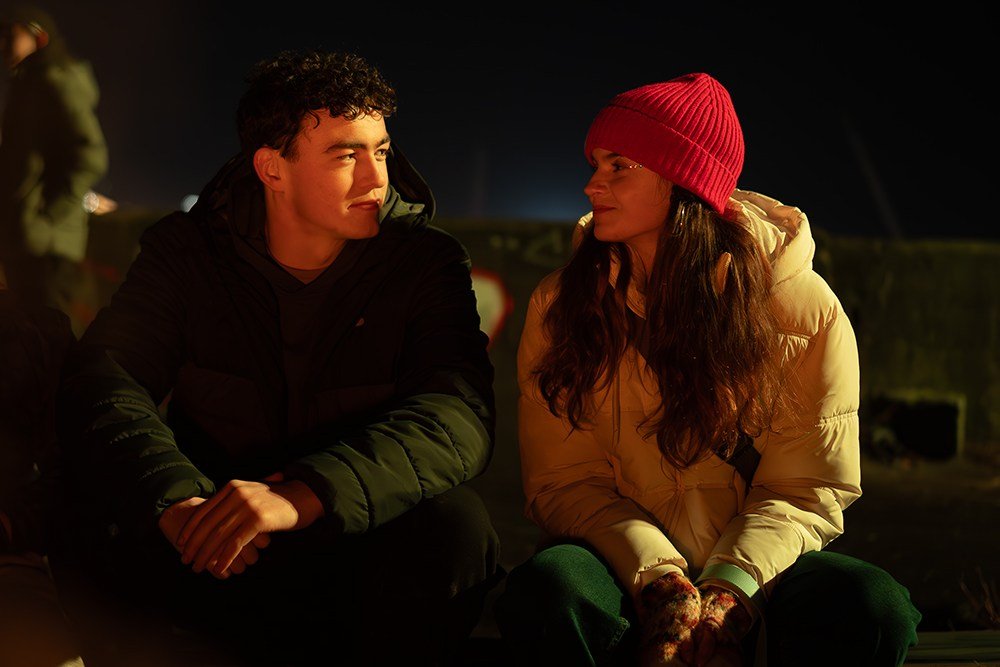
Full details of an under-the-radar and low-budget Irish feature starring Barry Keoghan have been revealed alongside a couple of first look images from the film.
“Lemonade,” written and directed by documentary filmmaker Kim Bartley in her narrative feature debut, was shot earlier this year in Dublin. Set amid Ireland’s care system, the film is described as a story about “first loves, second chances and the power of human connection.”
The film follows teenager Danny, who after making a mistake that could derail his future, unexpectedly reconnects with Josh, a social worker who once tried to help him but whose own mistakes drove them apart. When their paths cross again, Josh becomes both mentor and mirror, guiding Danny on his journey to manhood- through first love and loves lost. Along the way Danny discovers that family is not always the one you are born into, but the one that believes in you when no one else will.
Playing the lead role of Danny is rising Irish star Lewis Brophy, recently seen in acclaimed local feature and Berlinale prizewinner “Christy.” Keoghan, meanwhile, stars as Josh. The principal cast also includes Carla Tous, Eileen Walsh and Imelda May.
Barry Keoghan as Josh in “Lemonade”
Colm Hogan
Producers on “Lemonade” are Rachel Lysaght and Farah Abushwesha, while exec producers include Bartley, Geraldine East, Niamh Fagan, Desmond Byrne, Lorcan Kavanagh, Peg Cafferty, Deepak Sikka, Mark Foligno and Sire Ramos. Keoghan also exec produces for his new producton company Wolfcub, which at this year’s Cannes saw its debut feature “Butterfly Jam” (starring Keoghan) open the Directors’ Fortnight competition.
Speaking to Variety ahead of Cannes, Keoghan discussed “Lemonade,” describing it as having considerable parallels with his own upbringing as a foster child in Dublin. “There are moments in ‘Lemonade’ when I was like, this is too to-the-bone,” he said. “Honestly, it makes me emotional just chatting about it, but it’s beautiful.”
Behind the camera on the feature, Colm Hogan served as cinematographer, Paul Mullen as editor, Tamara Conboy as production designer and Louise Stanton as costume designer. John Brennan, Daniel Bodsworth, Rob Hughes and Mark Langlay-Smith oversaw sound, while the original score was written by Siôn Trefor, Ioana Șelaru and Galia Arad.
“Lemonade” is an Underground Films and Rocliffe Productions co-production, in association with Play House Studios and with the participation of Coimisiún na Meán. It was supported by Screen Ireland.
Coinbase said it captured a record 10.3% share of global crypto trading volume during the quarter, its third consecutive quarterly gain. Analysts at Benchmark, Oppenheimer, Clear Street and Cantor all highlighted the figure as evidence that trading activity is consolidating onto larger regulated exchanges during periods of market stress.
Several also pointed to derivatives, where Coinbase reported flat trading volumes despite management saying the broader derivatives market declined by double digits.
Diversification shows progress, but isn’t enough
Analysts viewed Coinbase’s push beyond spot trading as encouraging, even though the newer businesses remain too small to offset weakness in core trading revenue.
The company is trying to diversify through prediction markets, derivatives, subscriptions, stablecoins and its Base blockchain. Prediction markets surpassed a $100 million annualized revenue run rate, while Coinbase One topped one million paid subscribers. Its Circle partnership for USDC also renewed on existing terms, removing a key concern for investors.
Still, there was broad agreement that diversification has not yet become large enough to replace lost trading revenue.
Clear Street noted new businesses continue gaining traction but remain “optionality” rather than meaningful earnings contributors. Barclays was more critical, arguing prediction markets and retail derivatives “did not” provide the boost they offered last quarter. Compass Point similarly said emerging businesses “barely moved the needle.”
Apple’s revamped Siri and new Apple Intelligence features may be free to start, but power users will likely have to pay to get more out of them. The news came during the company’s latest earnings call, when Apple CEO Tim Cook was asked about how Apple plans to recover its AI compute costs.
“In terms of what it means for compute cost, it’s obviously early going for us. And so I don’t want to say that we have a complete plan for that,” Cook said, before adding: “We do believe there will be people that want to use it a lot. And so we will have some kind of upgrade possibilities on iCloud Plus where people can buy up the stack on iCloud Plus. And we’ll see how the pickup for that is.”
This isn’t the first time Apple has spoken about usage limits for AI features. As MacRumors reports, Apple dropped a hint during WWDC, saying that certain AI features, including Image Playground, could come with usage caps.
iCloud+ is currently best known for offering additional cloud storage, with plans starting at just $0.99 per month for 50GB and going up to $60 per month for 12TB. The subscription includes additional privacy features, such as Hide My Email and iCloud Private Relay, but cloud storage remains its biggest draw.
Whether the addition of extended AI usage could revamp the plans remains to be seen. Cook’s statement arrives just weeks after Apple raised iCloud+ prices in eight countries, including Egypt, Japan, Indonesia, New Zealand, Nigeria, the Philippines, Turkey, and Vietnam.
Recommended by Our Editors
Apple’s updated Siri, meanwhile, is already available via iOS 27’s public beta. The general release is expected in September with the latest iPhones. Some of the standout Siri AI updates include a new chatbot-like interface, the ability to explain what you see on the screen, take action across apps, and create Shortcuts using natural-language prompts.
About Our Expert
Experience
Jibin is a tech news writer based out of Ahmedabad, India. Previously, he served as the editor of iGeeksBlog and is a self-proclaimed tech enthusiast who loves breaking down complex information for a broader audience.
New York State wants Kalshi shut down and stripped of three times its gains, with damages put at a minimum of $36 billion.
The Commodity Futures Trading Commission sought a restraining order against New York’s enforcement a day earlier.
Kalshi has been restrained in Michigan and Washington and refused relief in New York, with Minnesota the lone exception.
New York State is seeking at least $36 billion from Kalshi, asking a state court to shut its prediction market down and strip it of three times whatever it has earned. Attorney General Letitia James filed the petition on Friday alongside a motion for a temporary restraining order, treating the platform as an unlicensed gambling business across eight counts. Filings put the damages figure at a minimum, pending a full accounting.
The counts run from the New York Constitution’s gambling ban to bookmaking, possession of gambling records, unlicensed mobile sports wagering and the federal Wire Act. The state also wants $100,000 for every offer of sports wagering, restitution and disgorgement.
“Kalshi has chosen to ignore New York’s gaming laws, which exist to protect consumers, prevent problematic gambling, deliver funding for critical public services, and ensure that every company plays by the same rules,” said New York Governor Kathy Hochul in a statement, adding that the state was taking action to stop its “illegal behaviour” and bring the firm into compliance.
Investigators placed test bets, including four contracts on Connecticut to beat Michigan in April for $1.14 including fees. The petition says Kalshi lets 18-year-olds open accounts where New York sets the floor at 21, and offers markets on games involving New York college teams, which even licensed operators are barred from touching.
A federal-state collision
The Commodity Futures Trading Commission had moved first. It sued New York in April to establish that federal law gives it sole authority over event contracts, and on Thursday asked the court in that case for a restraining order barring the state from bringing criminal or civil enforcement against Kalshi or any other CFTC-registered platform. New York filed the next day regardless.
Kalshi has mostly been losing. It sued the New York State Gaming Commission in the Southern District last October, was denied a preliminary injunction on July 7 and refused protection pending appeal on July 27. A Michigan judge restrained it in June, and King County Superior Court granted Washington a preliminary injunction on July 20. Its two real wins are the Third Circuit, which upheld an injunction against New Jersey in April, and Minnesota, where a federal judge blocked the state’s ban on July 27.
The Minnesota ruling turned on whether event contracts count as swaps under the Commodity Exchange Act. Judge Katherine Menendez found many do, and singled out sports and pop-culture markets as the doubtful cases. New York’s petition is aimed almost entirely at sports.
Washington versus the states
New York is the latest front in a campaign the Trump administration has run for months. The CFTC has sued Illinois, Arizona and Connecticut over their attempts to police event contracts, added Wisconsin, and moved against Minnesota within hours of its ban becoming law. The president has backed the agency directly, calling state officials who oppose prediction markets “SCUM.”
Kalshi’s own figures, quoted back at it in the petition, put its valuation at $22 billion and annualized trading volume at $178 billion. James sued Coinbase and Gemini in April on a similar theory.
Daily Debrief Newsletter
Start every day with the top news stories right now, plus original features, a podcast, videos and more.