The North American Aerospace Defense Command (NORAD) says F-16 fighter jets intercepted two civilian aircraft that entered restricted airspace over Bedminster, New Jersey, where US President Donald Trump was watching a tournament at his golf course.
AT&T is introducing a new, ruggedized 5G Android tablet with an affordable price and one unavoidable problem for potential buyers: They’re too old for the device.
The carrier’s new, TCL-built AmiGo Jr. Tab 2 is AT&T’s latest addition to the market for child-optimized tablets. The pricing involves some grown-up math: either $239.99 up-front or, if you activate a new line, $4.99 a month for 36 months ($179.64 total) with $1.70 in bill credits off a $20.99/month tablet plan.
The remainder of the AmiGo Jr. Tab 2’s specs are less impressive: an 8.7-inch, 1,340-by-800-pixel display, a stylus, 64GB of internal storage (which you can expand by up to 2TB with a microSD card), an 8MP rear camera and a 5MP front camera, and the older Wi-Fi 5.
AT&T’s spec sheet lists a 6,000-mAh battery and a charge time (“up to 145 minutes” to reach 100%) but not how long it runs on a charge, instead just citing “all-day” usage.
The more relevant software for potential buyers of the Tab 2, which AT&T recommends for children ages 3 to 10, may be the parental-control app available for Android and iOS, which offers usage monitoring and location tracking, plus the kid-friendly apps installed on the tablet itself. It joins a set of other AmiGo devices, including a smartwatch and a Samsung-made phone.
Editors’ Note: We updated this post to remove an incorrect detail provided in an early copy of AT&T’s announcement.
About Our Expert
Experience
Rob Pegoraro writes about interesting problems and possibilities in computers, gadgets, apps, services, telecom, and other things that beep or blink. He’s covered such developments as the evolution of the cell phone from 1G to 5G, the fall and rise of Apple, Google’s growth from obscure Yahoo rival to verb status, and the transformation of social media from CompuServe forums to Facebook’s billions of users. Pegoraro has met most of the founders of the internet and once received a single-word email reply from Steve Jobs.
Ingeborg and Adam are visionary hand surgeons who are bound by love, control and irresistible fixations. Ingeborg, for one, feels compelled to steal objects. Adam longs to become one.
But after an accident, their well-choreographed lives suddenly face a force that could upset the careful balance that has long defined their relationship: the enigmatic Gaia. With her arrival, unexpected desires start springing up.
With Objet a, her new mind-bending and visceral feature, Berlin-based visual artist and filmmaker Ann Oren (Piaffe) returns to Locarno. It is a stylized cinematic exploration of the fragile relationships between humans, as well as humans and nature. And it is likely to make you look and think at control, desire, intimacy, identity – and kleptomania – in a different way.
Objet a, world-premiering in the international competition of the 79th edition of the Locarno Film Festival on Tuesday, Aug. 11, stars Aenne Schwarz (All Is Well, Every You Every Me) as Ingeborg, Louis Hofmann (All the Light We Cannot See, The Forger, Dark) as Adam, and Simone Bucio (Piaffe, The Ivy) as Gaia. Georg Friedrich (Great Freedom) and Sofia Kokkali (Our Wildest Days) also feature.
“I’m interested in human desire and how it connects us to other species,” Oren says in a director’s note. “The human body is the starting point for my cinematic language: the more control we have over it, the more we separate ourselves from the natural world.”
Oren wrote the screenplay for Objet a with Geoffroy Grison. The cinematography is courtesy of Juan Sarmiento G. (The Voice of Hind Rajab, A Poet), with editing by Hansjörg Weißbrich (Rose, Late Shift). The film is produced by Schuldenberg Films in co-production with Tarantula, asterisk* and ERT. A theatrical release in Germany through Grandfilm is scheduled for the first quarter of 2027. Oscilloscope Laboratories has acquired the North American rights. Bendita Film Sales is handling international sales.
Ahead of the Locarno premiere of Objet a, Oren, Schwarz and Hofmann talked to THR about the serious and fun sides of the production, how they collaborated on its choreography and how timely its themes are if you look close enough.
Ann, what gave you the idea for this film and this story?
ANN OREN Several things, but what I was starting with was the sense of touch. I make very visceral films. My first feature film, Piaffe, dealt with the sense of sound. I start with the experience of the human body today in order to understand the human condition today. Here, I was thinking about the sense of touch today and what happens when we touch flat screens more than we touch our lover’s skin. A lot of experiences have flattened down to touching this plexiglass most of the day, so what is happening to our fingertips? I think they’re really deprived, and I was imagining zombie-like, hungry fingers – hungry to touch something. And then I had this idea of a couple that is living a very bubbled life and communicating emotionally through objects.
‘Objet a’
Courtesy of Juan Sarmiento G./Schuldenberg Films
I am curious, Aenne and Louis, how Ann pitched this project to you. To me as a viewer, Objet a sometimes felt a bit like a dance choreography that was very body-driven and that I could “feel” physically while watching.
AENNE SCHWARZ When I read the script, I felt a real longing to become part of this genuinely faraway world, which, at the same time, felt somehow familiar. What was very intense was when Ann talked us through the script. I remember when we all met, she had such a precise and full vision of what she wanted. And then, yes, it was a very physical experience. I experienced it like diving in, and at the same time, you had to hold the line and be very straight because they’re such delicate characters.
LOUIS HOFMANN I remember that in our first rehearsal, the term dance popped up quite a few times. The way we moved around one another was, I guess, testing out how near you could be to one another and what distance you could create. I remember that there were only a few moments where the characters would actually touch. But most of the time, it was about playing with the distance between them, creating tension, and playing with that tension.
SCHWARZ Yes. The gaze was part of the tension between us. You never lose each other. But sometimes, you are very far and sometimes much closer. It’s always a thin line holding us together.
HOFMANN And that longing for the touch is, I think, omnipresent, and that created the tension.
Interesting how you both describe this. Now it makes more sense to me why I sometimes felt that you two were almost moving like marionettes. Ann, are you happy if viewers get that sense?
OREN Absolutely, because this is exactly the type of work that I’m doing. I see working with actors as being about a very physical performance. There is also the psychology, but what I’m actually interested in is how the characters make decisions, not rationally, but rather through gut feeling. I look at human beings as the species that they are. In everyday life, it happens to everybody that we are compelled to do something, although we don’t really understand why. And I think it’s very exciting for a viewer to see that in a character and see that things are charged with this kind of tension.
In the psychoanalytic theory of Jacques Lacan, “objet a” is an unattainable object of desire. Aenne, Louis, were you familiar with this term, or did Ann go through some of this theory? Or was it not really that important to understand such concepts?
HOFMANN My girlfriend mentioned it to me. I wasn’t aware of it, but she was. And then during rehearsals, we touched on it a little bit. My character Adam has this desire of wanting to be a desired object for someone else. But then through his journey, he is also developing a sense of what he wants to be for himself. For me, that was a very beautiful journey to go on.
‘Objet a’ film still, courtesy of Juan Sarmiento G./Schuldenberg Films
AENNE I saw the title and remembered that a long time ago I studied literature, and Lacan was a topic in one seminar. I remember that I was very excited about it, and so I got a little bit into it. A close friend of mine is a Lacanian psychoanalyst. I felt I had a very intense meeting with this “objet a” myself during filming. The film became this object, in a way. I also wanted to touch it. I also wanted to have it, to own it, and it was also slipping away. So for me, it was a very personal experience with the theme.
HOFMANN You mentioned marionettes. I sometimes felt that the way I was being, or we were being directed, I felt so secure and so safe. In Ann’s world that she created, we just kind of obeyed her vision in a very beautiful way. I don’t mean that we had no say in it anymore, because it was quite the opposite. She was still welcoming all of our ideas.
Do you remember any examples?
HOFMANN When I tried to find the character, I very much went through voice. It was an impulse. I’d read somewhere that the soul of a character is placed in the voice, and I’ve never really gone through that, using the voice in particular to create the character. During rehearsals, I was reading Georg [Friedrich]’s part with Aenne, and I was mimicking, for fun, Georg’s [Austrian] accent and dialect. And then Ann was like: “Wait, I love this voice for you.” And I said: “Hang on, I can’t really have Georg’s voice when being in a film with Georg.” But I then took that placement of the voice, where his voice sits. That’s just an example of how playful we were with one another while being in that very safe and secure environment of Ann’s vision.
Ann Oren, courtesy of Björn Melhus
Courtesy of Björn Melhus
Ann, as a filmmaker, how do you think about colors? I noticed, or maybe I should say “felt,” colors quite a bit in Objet a…
OREN This is the bread and butter of my language. I don’t even have to sketch it out. It just comes to me. What would be the color palette of the film, and how does that support the mood that I would like to bring across? For this film, I wanted to reduce colors. Actually, we only have natural colors in the film until, slowly, green becomes the guest and the star color in the film. You have to work very hard to reduce color, actually, especially when you’re shooting outside, and then you slowly introduce it. So when you have a sequence in the end, it’s really ecstatic.
So we made sure in the production design and in the costumes that the range was from whites and beiges into the deep browns. The red color was used only in the bedroom … and [in another location] in the background. When I see Adam and Ingeborg within these natural colors, it really makes me think of them a little bit more like animals.
I felt the desire inside, or below the surface, of the couple without the characters having to talk about it. Is there a trick to tap into that to make us viewers sense this desire?
SCHWARZ With Ingeborg, what I thought was very exciting about her was that her fingertips and her eyes are her sensual organs. And I really tried to dive into these sensations. The crutch she [gets for one of her legs as the film unfolds] became part of my body. It was exciting for me to really open to the world that an object can become so strong. And with Gaia, she also has a sense she never had before, and she can’t control it. That is like an earthquake for her. She goes into a direction she never went before, and she can’t understand it.
She basically has things in order. She knows what she wants. She’s very sensitive and delicate, but also very clear in what the object has to do for her. And then this kind of melting starts when her body breaks. When her leg is broken, something breaks into pieces.
‘Objet a’ film still, courtesy of Juan Sarmiento G./Schuldenberg Films
HOFMANN I remember that the objects, the crutch, as well as a corset I use, had an immense effect – not only on us but on the whole team. There was a fascination with the beauty of how they were built, and maybe how we got attached to them. We treated them as extended parts of ourselves, and there was this fascination coming from the team as well.
I also remember us, as actors, acting differently when we had our objects with us. There was more to us, and it was also kind of between us. This film is about these two people who are symbiotic and living their life in a very symbiotic way, doing everything with one another – working together, living together, loving each other – and then there are these new elements popping up that are so disturbing at first, and so irritating, and so frightening. And then they slowly but surely start to go with those impulses, and they don’t really know where they’re coming from.
SCHWARZ One thing that was very special was that this was very playful, and also funny in a way. And that gave us also a lot of freedom. We were having fun. We were laughing.
HOFMANN At first, I wondered, “Is this going to become not body horror, but is it all going to be really dark, scary and just full of doom?” But I felt it was quite endearing, and so sweet, no matter how strange these desires might appear to other people. At the end of the day, they are very endearing, sweet desires. And I found the characters so endearing.
SCHWARZ Yes, there’s a tenderness.
Ann, can you share how you think of rituals as part of your storytelling?
OREN That has a lot to do with obsessions with control. You see that with both of them, especially with Adam’s character. He’s obsessed with controlling his body, developing his body, and then he wants his body to also get attention. But the more control we have over our bodies, the more we are disconnected from the natural world that we are a part of. And I think this is a very contemporary condition.
The need for rituals, historically, first of all, is that they are relaxing. It doesn’t have to be a religious ritual, but it can be about the things that you have to do in the morning or the things that you have to do before you leave the house. I think that the need for it also has to do with forgetting ourselves and connecting with something larger than ourselves. If in the beginning, the characters are connected to controlling their lives and to objects, towards the end, it opens up to a psychedelic experience that is like ecstasy. And ecstasy has always been a need for humankind. Today, there is a renaissance of psychedelics in the world because we’re so controlled – the need to forget ourselves, to have a moment of ego loss, and to connect to something larger than ourselves. I didn’t want to have a didactic experience for the audience, but rather lure them into something through passion.
Speaking of passion, Adam and Ingeborg really try to control that when we first meet them…
OREN I built the sexuality between the couple so that they were canceling parts of their bodies; they’re not including their genitals. It’s all about this exchange of the experience of touching and being touched, but in the most clinical way, which makes it absurd and interesting and a very particular choice for the two of them, which makes them suit each other very well. I think we live so bubbled today, and we’re trying to control everything, and it’s becoming about maximizing the length of your life, but you forget to live your life.
The film starts with thinking about the human condition, our bubbled life, and what, in a way, leads us to the disaster that we are in right now. We’re living in times of war, climate catastrophe and tech fascism, and it starts from that. So, the film is something very fantastical, and I have very particular characters. But it touches on living in the world right now, and I hope that it’s going to resonate and be absorbed this way. I like to work with ambiguity, so I don’t want a person to come out of the film and be able to describe it with one sentence. That would make it rather boring.
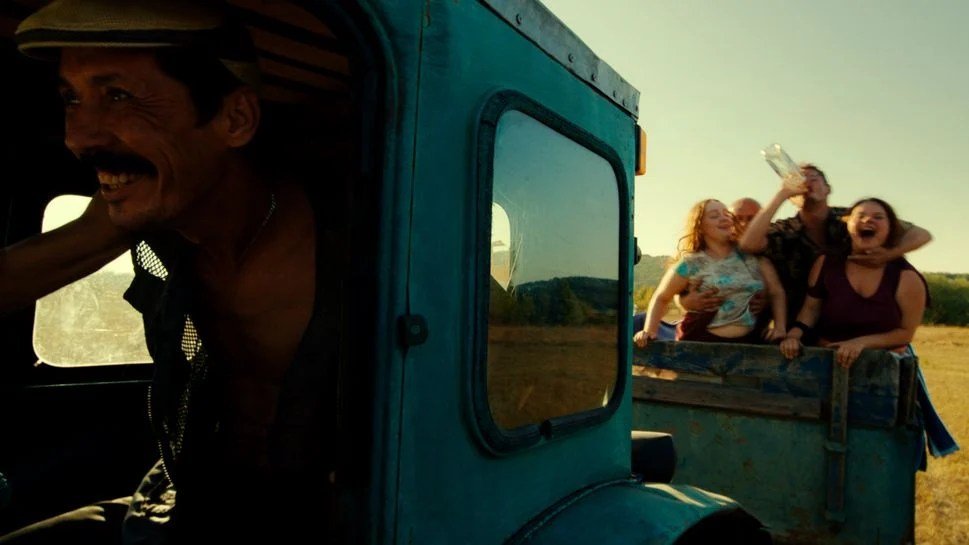
Writer-director Natalka Vorozhbyt (Bad Roads) decided to face the Demons to explore the roots of the war between Russia and Ukraine. Now, she is unleashing the Demons at the 79th edition of the Locarno Film Festival, where the film will world-premiere in the Filmmakers of the Present competition program on Aug. 13.
Here is how a synopsis describes the movie: “In the 1990s, Slavik, a homeless drifter from Russia with a blurred past who claims to be a writer, wanders into a remote village in central Ukraine. Nina, a strong and independent woman much older than Slavik, takes the stranger into her home. At first, their strange companionship resembles an unlikely love story. But as their relationship unfolds, love turns into betrayal, and the village begins to reveal its hidden rules — a place where witches may live next door, and the dead sometimes speak with the living.”
The creator of the film highlights that it unfolds on three interconnected levels. “The first is the relationship between a man and a woman within a traditional society,” Vorozhbyt explains in a director’s statement. “The second is socio-political, where this relationship becomes a metaphor for the relationship between Russia and Ukraine. The third is mystical, exploring the connection between the living, the dead, and the otherworld.”
In case you wonder: Nina seems to be the embodiment of post-Soviet Ukraine and the country’s independence. So, you’ll want to look out for any danger to her.
Ruslana Pysanka, Aleksey Mitin, Tatiana Stepanova, Ruslan Garmash and Mykola Ponomarenko feature in the cast. Demons was filmed by cinematographer Volodymyr Ivanov, with editing by Milenia Fiedler and Andriy Gulyanych. Celluloid Dreams is handling international sales.
THR can now exclusively premiere the trailer for Demons. Don’t expect any exorcizing of demons here! Instead, it is time for a drink and “fire in the belly.” You look confused! To change that, watch the trailer for Demons right here.
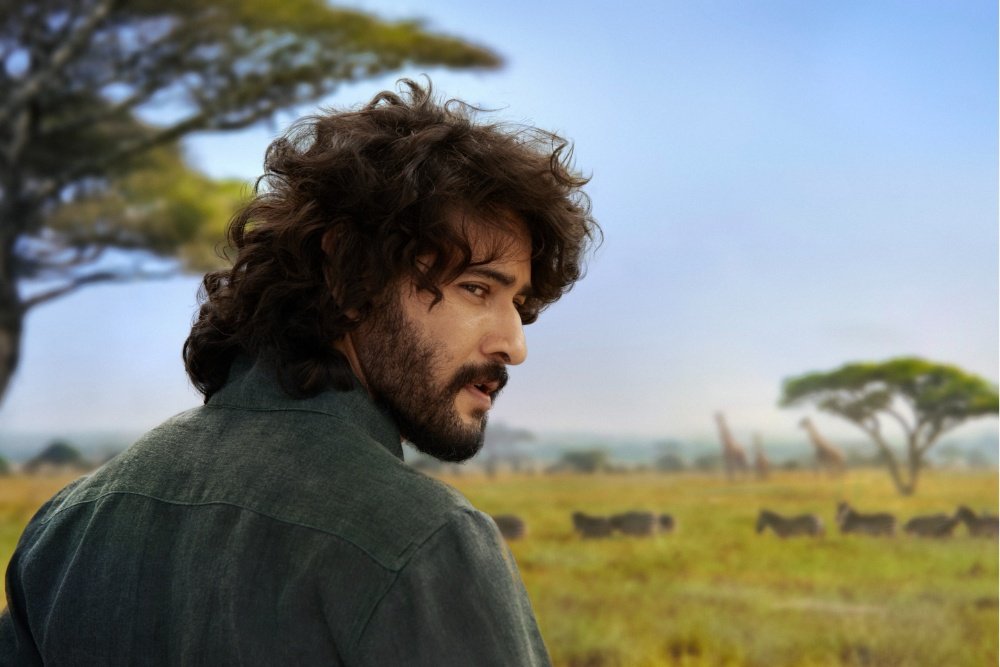
Two new character stills of Mahesh Babu from S.S. Rajamouli‘s “Varanasi” were released Sunday to mark the actor’s birthday, showing his character Rudhra on location in Africa.
The film’s story spans thousands of years and traverses multiple continents, with locations ranging from Antarctica to Africa to the titular Indian city. Babu plays the dual roles of the protagonist Rudhra and Hindu God Rama, Priyanka Chopra Jonas plays a character named Mandakini and the main antagonist Kumbha is played by Prithviraj Sukumaran.
The images were shot at the Kilimanjaro and Maasai Mara locations, two of the African settings featured in the film. In one still, Mahesh Babu reclines on a bamboo raft in a jungle setting, dressed in a loose olive-toned shirt and dark cargo trousers, with tousled curly hair and a full beard. The other image shows him in profile against the African savannah, with giraffes and zebras visible in the background.
Mahesh Babu – “Varanasi”
Sri Durga Arts/Showing Business
Rajamouli described the character’s dual nature in a note accompanying the stills. “Rudhra was born to fulfil a purpose much larger than himself. He carries a destiny he did not ask for. He is witty, he is vulnerable, and he is fierce. That is what Mahesh brought to him. Anyone can play fierce. Very few can play fierce and fragile in the same breath,” he said in an Instagram post.
The director also reflected on the Africa shoot itself. “These frames are from our Africa schedule, and the land gave us something no set could. Shooting around Kilimanjaro and in the Masai Mara, I was stunned. There were mornings I felt even the 1.43:1 Imax frame could not hold what was in front of us,” he said.
The stills mark the latest in a series of character reveals from the production, following images of Priyanka Chopra Jonas released for her birthday.
Babu, who spent a year preparing for the role, underwent three months of Kalari martial arts training solely to adjust his posture for the character’s period-appropriate bearing. “I’m playing Lord Rama’s character, it required posture… you can’t stand like modern characters,” he has said to Variety.
He also trained with a track and field team for several months to modify his running style. “When I saw the shot, I was really happy. It was worth it, because that six months of training for that one shot was really worth it,” he said. “The way I walked changed, the way I stood changed, everything changed.”
“Varanasi” is Rajamouli’s follow-up to the Academy Award-winning “RRR.” M.M. Keeravani, who won the Oscar for “RRR’s” “Naatu Naatu,” is returning to score the new film.
“Varanasi” opens in theaters worldwide on April 7, 2027.
Improving your memory doesn’t have to mean flashcards, endless repetition, or another subscription you’ll forget about. The memoryOS Student Plan is available as a lifetime purchase for $79.99 (MSRP $198), giving you long-term access to a platform built around proven memory techniques.
Despite its name, the Student Plan isn’t limited to students. It’s designed for anyone who wants to retain information more effectively, whether that’s preparing for exams, remembering presentations, learning new skills, or simply reducing forgetfulness.
MemoryOS combines established learning methods such as spaced repetition, mnemonics, and the Memory Palace (Method of Loci) with interactive lessons and virtual environments to help organize information visually. The goal is simple: make information easier to store and easier to recall later.
The lifetime plan includes 52 interactive micro-lessons, 11 core memory skills, 140 virtual loci, unlimited practice attempts, and a distraction-free, ad-free experience. You also get access to Virtual Mind Palaces that grow as your training progresses.
Replace mindless scrolling with a skill that keeps paying off.
Prices subject to change. PCMag editors select and review products independently. If you buy through StackSocial affiliate links, we may earn commissions, which help support our testing.
About Our Expert
StackCommerce Team (Sponsored)
Experience
Products featured in these stories are selected by our partners at StackCommerce. If you buy something through links on our site, PCMag may earn an affiliate commission.
Senate Majority Leader John Thune introduced a cloture motion for the Clarity Act, which includes comprehensive regulations for the cryptocurrency market. This move paves the way for a critical procedural vote on the bill after Congress members return from their August recess.
According to an agreement reached in the Senate, the cloture vote on the motion to proceed with the consideration of the Clarity Act is scheduled for Tuesday, September 15.
Passing the Cloture amendment will not automatically enact the Clarity Act. The vote will only limit the debate on the amendment to proceed with the bill’s consideration, allowing the legislation to move forward on the Senate’s agenda.
Related NewsMajor Updates Coming to Ethereum and Solana: What Will Change?
The motion requires the support of 60 senators to pass. Given that Republicans hold 53 seats in the Senate, even with the support of all Republican senators, at least 7 Democrats or independent senators would still need to vote for it.
The Clarity Act aims to clarify the regulatory framework for the cryptocurrency market in the US and more clearly define which institutions will oversee digital assets. However, negotiations are ongoing in the Senate regarding the final version of the bill.
Politicians are reportedly trying to resolve their disagreements, particularly regarding ethical provisions, rules on combating illicit financing, and how to incorporate regulations drafted by the Senate Agriculture Committee into the bill.
The introduction of the Cloture motion is seen as a significant procedural step indicating that the Republican leadership plans to make the Clarity Act a top priority item on the Senate’s agenda in September.
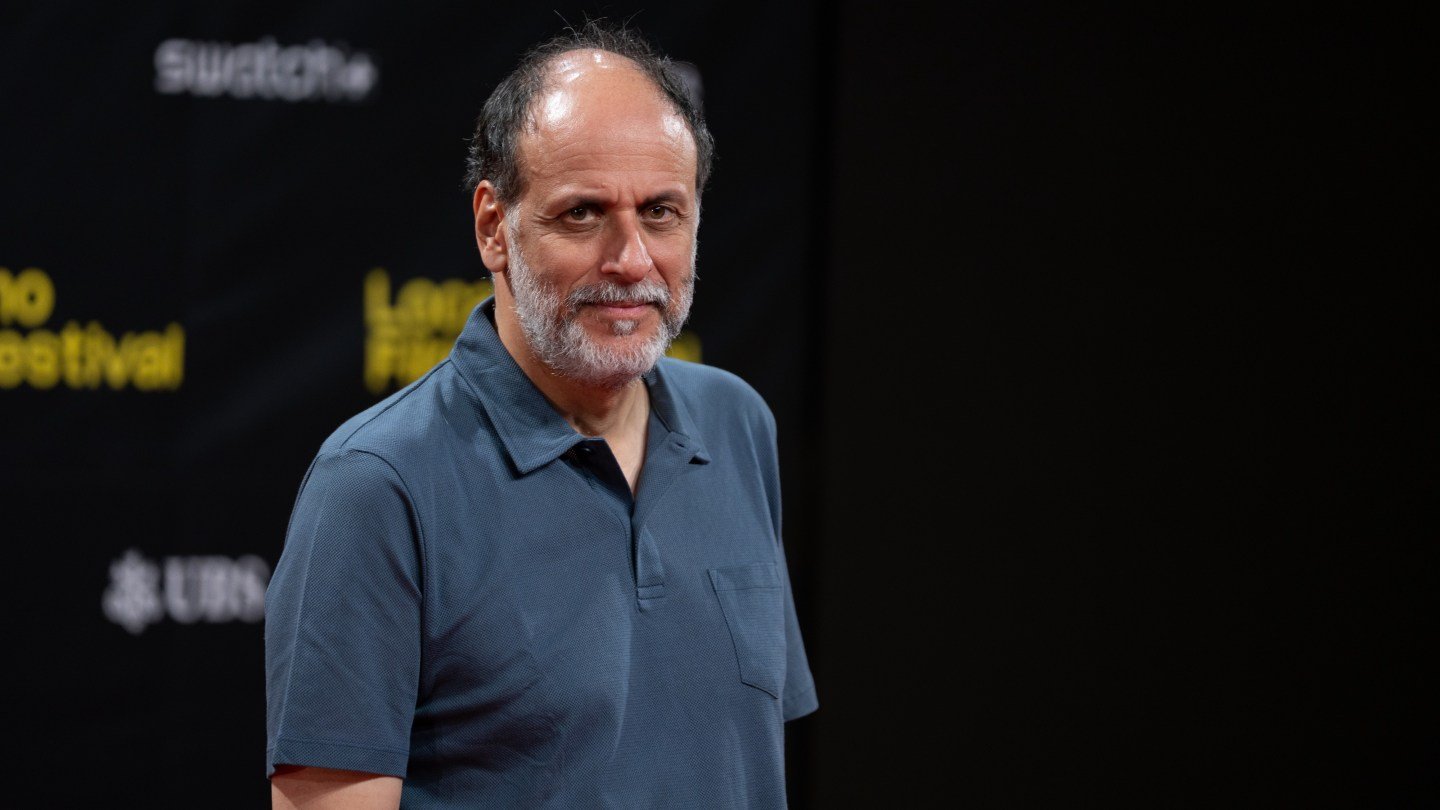
To be precise, Guadagnino came to Locarno, in Italian-speaking Switzerland, to discuss Ketticè, the sophomore feature of his former assistant, writer-director Giovanni Tortorici (Diciannove). The coming-of-age drama stars Salvatore Gallina, Rachele Testagrossa and Monica Bellucci. And yes, the movie’s list of producers includes Guadagnino.
Set in Palermo, Sicily in 2012, the era of media mogul-turned-politician Silvio Berlusconi, the movie revolves around Giulio, a listless and dissatisfied 16-year-old who drifts through his days without any enthusiasm for school and no real future prospects. But his encounter with Ketty, a more self-assured peer, offers him an escape from the monotony. The two form a close friendship, which a synopsis describes as “a shared refuge in their search for freedom, far from the judgmental gaze of the adult world.”
The film’s title refers to Ketty’s nickname in the Sicilian dialect. Bellucci plays Giulio’s mother in an aristocratic Sicilian family that leaves her feeling oppressed. The cinematography is by Camilla Cattabriga, with editing by Marco Costa. PiperPlay is handling international sales.
Guadagnino was asked by reporters about Italy’s rich cinematic history and if his decision to produce Tortorici’s movie was his way of keeping that tradition alive. “Most definitely,” he replied. “I think that we can agree that historically, Italian cinema, from the silent times until the ’70s, generated some of the most important personalities in the history of cinema, but also as an industry, had created a system that was the envy of many other countries. There were many different kind of films being made.”
‘Ketticè’
Courtesy of Locarno Film Festival
But then, something happened with “the advent of private TV and the Berlusconi empire,” Guadagnino offered. “It dried [up], and most of what was produced for cinema became TV. Genre was killed. A pretension on authorship became such that the great idea of cinema as authorship became basically people writing scripts and shooting their own scripts so that they could define themselves as authors.” In the end, “the movie industry shrunk and the perspective shrunk and the cinema of Italy became sterile and totally devoid of an idea of language and of an idea of life.”
That’s where Tortorici comes in. “So when you meet a personality like Giovanni, who, of course, is an Italian filmmaker working in Italy, but I like to think that he’s a filmmaker, period, when you meet someone that is a complete rarity in the landscape of Italian cinema, you must protect it,” Guadagnino concluded. “You must make sure that every stone is not left unturned in order to give him the means to express himself. For me, introducing films such as Giovanni’s movies is a way to … set up a pavement into the future.”
And he emphasized: “It’s about the mindset. The mindset means how you do your stuff, what stories you want to tell, how you understand reality, how you interpret reality. How you run away from falseness is intoxicating for all its truth, all its incredible, vivid reality.”
As a producer, Guadagnino shared that he likes to watch a movie and experience it like anyone else in a movie theater. His audience take on Ketticè: “As an audience member, I feel the movie really speaks in a very universal way.”
‘Ketticè’
Courtesy of Locarno Film Festival
Tortorici said his film explores how institutions, such as school, family and the state, fail kids. “I think the guilty ones are the adults,” he told reporters. “I think they just live in a cultural context of the ultra-capitalist contest and a mediatic world.”
Does Tortorici have any vision for his cinematic future after two autobiographically inspired films? “In my next movie, I’m going to explore something that is very far from me,” he offered. “Shooting this movie, I met a lot of people in Palermo, even coming from difficult neighborhoods with difficult life experiences. I find in these stories the possibility to continuing to explore this struggle of young people with authorities.”
Continued Tortorici: “I think the big problem of society is the structure of, for example, the family. I think family is the structure that [creates] the next repressed person. So I would very much like to explore these different experiences in all parts of society, family in particular.”
The family living in the house that “Rehmat” uses as Rashid Ali’s ancestral home lost a son to a drug overdose shortly after Indian filmmaker Gurvinder Singh and his crew first met them.
Singh tells Variety, “The actual family that lives there lost their 19-year-old son after we met them for the first time. When I looked at him, the first thought that ran in my mind was that he was on drugs. And he died of an overdose within two months. What else do I need to say? How can that not affect you as a filmmaker planning a film in that scenario. How can you avoid depicting such a state of affairs?”
“Rehmat” has its world premiere in the Concorso Internazionale, the main competition of the 79th Locarno Film Festival. It is the only Indian feature in the section this year and will compete for the festival’s top honor, the Pardo d’Oro.
Adapted from short stories by the Punjabi writer Ajeet Cour, “Rehmat” weaves three narratives set in present-day Punjab around themes of displacement and inherited grief. Singh says the material resonated with him directly through family history. “She has written about many themes, uprootedness being one of them, and she belongs to my grandparents’ generation that migrated from Lahore or other parts of west Punjab to Delhi,” he says. “That was the sort of affinity I had with her stories.”
Three decades after he began documenting Punjab’s folk ballads and oral histories, and 15 years after his debut feature “Anhey Ghorhey Da Daan” premiered in Venice, Singh says the film has given him something he didn’t expect. “I never experienced the Partition, but did feel a sense of trauma during the years of militancy and the anti-Sikh carnage in Delhi in 1984,” he says. “Frankly speaking, this film offers me a closure. I feel it has brought out all that I needed to express about the divided land and its people.”
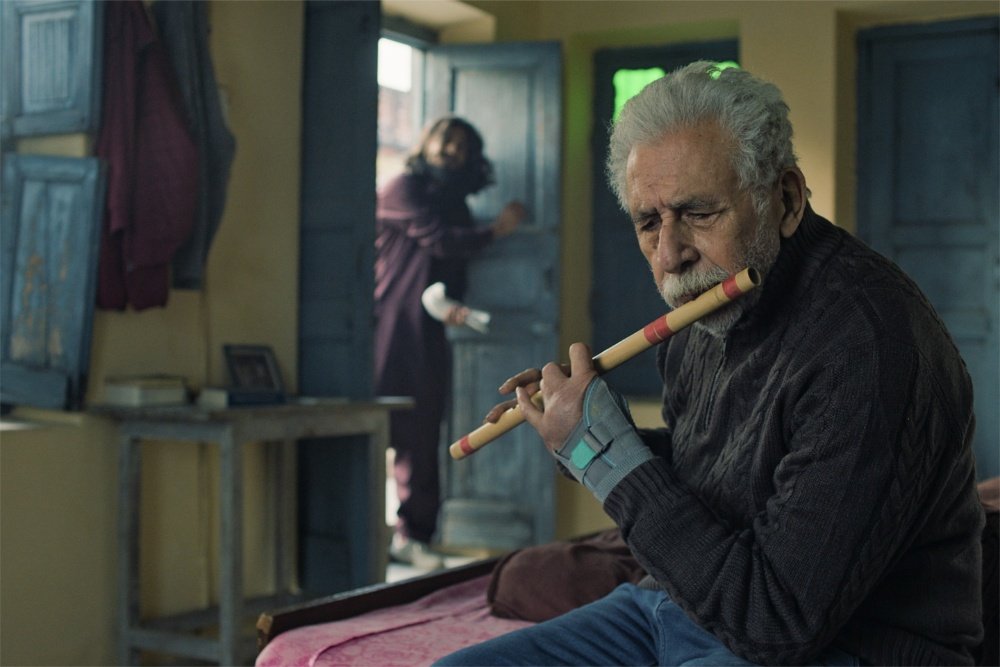
The film stars revered Indian thespian Naseeruddin Shah as Rashid Ali, a Punjabi Muslim man whose family left before Partition and who returns to his birthplace after a lifetime in England. Shah says he committed to the role before knowing any of its specifics. “I’d seen and been deeply moved by Gurvinder’s films,” Shah tells Variety. “His cinematic sensibility and his take on the turmoil in his home state made profound statements. I just thought I’d like to be part of such films.”
That leap of faith went both ways. Singh says, “I approached Naseer without having written the script, only having a vague outline of the character of Rashid in my mind. His acceptance gave me the possibilities to expand and flesh it, knowing the kind of conviction, intellect and charisma he will bring into it. The responsibility became a flight of imagination. It was a new territory for me.”
Of working with Shah on set, Singh says, “I had decided that I would initially observe him in front of the camera and then figure out my approach. But I kept doing that and hardly needed to direct him,” describing how the actor’s “use of the body, gestures, handling of objects” turned Rashid “into his own personal expression.”
Shah, who is not Punjabi and does not speak the language fluently, says, “I agree I don’t have the Punjabi heartiness and I don’t look Punjabi. But I think that helped to identify Rashid as an outsider. I don’t speak Punjabi fluently but practice helped.” On the ambiguity of a character who initially introduces himself to the village as God, Shah adds: “A character doesn’t have to be understood by the actor playing him. Actors aren’t psychoanalysts. One must be able to empathize with the character’s situation.”
Singh’s preference for long, unbroken takes runs through the film, including the opening shot that establishes Seema’s world. Singh says, “The sense of uninterrupted time that the long take affords, both with the static and the mobile camera, is highly involving for me as a spectator, and my first instinct is to attempt that. But there are scenes where you know it will not be practical or even desirable, hence the montage has to be employed. Both create a different quality of attention and being. And perhaps life is also like that. Our ways of seeing and engaging keep altering.”
Shah adds, “I love long takes. It fits beautifully with my stage work. Frankly I don’t believe there’s a great difference between stage and film acting if truth is what you’re looking to find.”
Beyond the ancestral house, Singh says the village itself, with its crumbling 19th-century school building and untended lanes, reshaped the narrative during location scouting. Asked how he views Punjab today, Singh says, “Bleak from the perspective of lack of imagination among the youth or those of my generation, not because of any lack of compassion. People are sticking to the glory of ownership of land and the caste they belong to. It has given them a false sense of bravado and entitlement. And the gender discourse is abysmal, especially in the villages. No wonder so many young girls are escaping to the West.”
Alongside Shah, the cast includes Suvinder Vicky, Mita Vashisht, Navjot Randhawa and Diya Kamboj, plus the celebrated Punjabi poet Jaswant Zafar, making his screen acting debut at 60 as Harjap. Of casting Zafar, Singh says, “Whenever I have cast a non-actor in a major role, it is fully knowing that the person will play himself or herself on screen. So Zafar became Harjap for me. He has all the natural qualities I had imagined in Harjap and a profound sense of the feelings that he carries, both as a common man and as an intellectual.”
“Rehmat” is produced by Singh and Arpana Caur, with Andrei Cosmin Illes and Némésis Srour serving as co-producers. The film is a co-production between India’s Vahao Studio and Paris-based Pavo Films, the outfit Illes and Srour launched earlier this year, with “Rehmat” as its debut project.
Shah, whose career stretches back to the parallel cinema movement of the 1970s, says, “My early work prepared me for a film like this. I think Gurvinder has surpassed other contemporary filmmakers in India.” Of the film’s Partition-era subject matter, he says, “I believe it’s important that these films get made. Even if not widely seen now, they will remain as a testament.”
Asked what he’s working on next, Singh says, “I am not sure what I want to do after this. I came to the cinema through some conspiracy of the universe. I grew up painting and writing. I am painting again these days.”
CoinGecko, a cryptocurrency data and tracking platform, has announced the cryptocurrencies that have attracted the most investor interest in the last few hours. Based on search data from the last three hours on the platform, Tutorial ($TUT) topped the list of trending cryptocurrencies.
According to CoinGecko data, Tutorial ($TUT) attracted attention by rising 325.8% in the last 24 hours. Pudgy Penguins ($PENGU) and IoTeX ($IOTX) followed closely behind, with IoTeX gaining 49.3% and Pudgy Penguins 1.7% in the same period.
Related NewsMajor Development for the Clarity Act After a Long Wait—Affects All Cryptocurrencies
Here is a list of the most searched cryptocurrencies and their total market capitalization on CoinGecko in the last 3 hours: