Author: rb809rb

  • ‘House of the Dragon’ Star Shares the Bright Side of That Tragic Finale Twist

    ‘House of the Dragon’ Star Shares the Bright Side of That Tragic Finale Twist

    [This story contains MAJOR spoilers from the House of the Dragon season three finale.]

    “Do not trust the queen. Aegon has returned. His dragon lives. Your unborn child is a hostage, a prize by which she can hold power over her enemies. She will never release you.”

    These end up being among the final words Queen Helaena Targaryen ever hears. In the House of the Dragon season three finale, a newly ousted Mysaria (Sonoya Mizuno) issues her stark warning to the recently imprisoned Helaena (Phia Saban), who internalizes that information and weaponizes it: first, by way of speaking ugly truths about Rhaenyra (Emma D’Arcy) right to her face, and then, finally, by way of an open Red Keep window. Just as King Tommen once plummeted from that very same location in Game of Thrones, so too now has Helaena fallen. The season ends with Rhaenyra coming upon Helaena’s vacant quarters, while Team Green’s queen herself lies on the ground below, impaled on spikes. 

    It’s a haunting image, perhaps appropriately so, given Helaena as a character who knows a thing or two about nightmares and dreams. It’s also a hinge upon which much of the rest of House of the Dragon will turn, according to the folks behind the scenes. In a press event held ahead of the season finale, D’Arcy spoke about Helaena’s death and what it means for the show’s future: “Helaena is sort of the moral heart of the show, I think. She’s maybe the only character who has a proximity to power, but remains kind of uncontaminated. And so, I think her death sort of condemns Rhaenyra to the path she’s chosen. I think there’s sort of no way back after that.”

    If there’s a way back, it exists somewhere far beyond the fallen Helaena. Below, Phia Saban chats with The Hollywood Reporter about building out the dream-seeing queen’s final chapter.

    ***

    How much did you know about Helaena’s fate in advance?

    When I got the job, I spent a lot of time Googling and searching the Wikis, so I’ve always known this was coming. Plus, there are so many fans out there in the world, and I know so many people who knew and would make a point to tell me about what was going to happen to me. 

    When it’s a show this big with a character fate this crucial, is it pretty much impossible to avoid that kind of spoiler on your end?

    Totally. It was never an option not to know. I’m just happy I made it three seasons!

    You’ve had a lot of time to think about her death, then. What are some of your first thoughts when you think about the character, now that her arc ends in this way?

    Objectively, it’s very sad. The story is sad. I love Helaena. I feel for Helaena. I try to find hope, by thinking she felt as though she had been killed already in many ways, but… it’s very sad. But for me? Kind of a bucket list thing: I got to die on TV! (Laughs.) I got to do the thing where you keep your eyes open… everyone wants to do that!

    How was that experience?

    The prosthetics were amazing. It made me want to do a thing where I’m entirely in prosthetics. It was so genius, getting to work on that. You really work with the most talented people on House of the Dragon. I could go through every department right now and tell you all about them, but the people I had never really worked with much before were the prosthetics people, and it was amazing. I sat there while they created my neck, which had this incredible spike, and they painted it on me in a way that was so lifelike. It was so fun. 

    What went into crafting the force-feeding scene?

    It involved a few weeks of what we’d call “gruel meetings.” I would try all these different slops, and they would say, “Choose the one you want to get force-fed.” The one we picked, it was a dal, low spice level. It was okay! 

    Before that goes down, literally, you have one final scene with Emma. What do you remember about it?

    I really loved it, because it came from a conversation I had with executive producers [Ryan Condal and Sara Hess] about it. I felt a lot of ownership over Helaena and have loved building that character. And I felt it was important to get across some of the things that I had always had as Helaena mantras in my mind in that moment. And I felt like that was the justice for Helaena. So we spoke a lot about Joan of Arc, and this idea that there’s more to life than not being dead. I found it really delicious that Helaena could be like, “There are things in the world that you’ll never know how beautiful they are, and they’re not even beautiful.” And that’s truly what she wants to get back to: having a relationship with the world and not being kept and silenced and used.

    That links up with the scene in the courtyard, when Helaena looks out at all the birds in cages being taken away.

    Is there a shot of her holding something in her hand? If there isn’t, what might be some context is that when we shot that scene, I was holding a dead caterpillar. To me, that moment became more about her relationship with nature, mourning her freedom and how strongly she feels for her creatures — and exactly as you say, how it strikes her that to see something that won’t live and fly again. I think to me, that’s what that was about, but they might’ve done some clever editing and just not got me holding it.

    What was your last day on set like?

    I saw Fabien talk about this, and I wonder how much it’s clever scheduling from the team, but the last thing I shot was my death shot. I was on a soundstage surrounded by spikes feeling pretty proud of myself in my prosthetics, trying to keep my eyes open with the whole team. And then Ryan came out and he said some nice things and lots of lovely people were there. And yeah, it was really amazing. It’s very hard in the moment to take in the finality of it. This is something I’ve been working on, and a character I’ve been caring for, for five years now. But there is joy in this. There’s pride and there’s excitement. It will probably hit me once I see the full episode and it’s out there, or perhaps when they all get back to work without me. 

    ***

    House of the Dragon season three is now streaming on HBO Max; read THR‘s finale coverage.

  • Tedde Moore, Who Played Ralphie’s Teacher in ‘A Christmas Story,’ Dies at 79

    Tedde Moore, Who Played Ralphie’s Teacher in ‘A Christmas Story,’ Dies at 79

    Tedde Moore, an actress who is best known as playing young Ralphie Parker’s teacher in A Christmas Story, has died. She was 79.

    Moore died Wednesday in Huntsville, Ontario, according to a post on her Facebook page. A cause of death was not given.

    “On Wednesday August 5th under sunny skies overlooking Fairy Lake, Tedde passed away surrounded by family physically and spiritually in her beloved Huntsville Muskoka,” the post reads. “Her bravery in this choice was almost overwhelming, beyond beautiful and also difficult. Forever the teacher, she had a quote for every occasion and a special way of touching the lives and hearts of everyone she met. Her magic and love will be remembered by all she took under her generous and welcoming wings.”

    Moore played Miss Shields in the 1983 Christmas classic opposite Peter Billingsley. She memorably gives Ralphie a bad grade on his paper about wanting the Red Ryder BB gun for Christmas and also has to deal with Flick (Scott Schwartz)’s getting his tongue stuck on a ice-cold flagpole. Moore was nominated for a Genie Award, presented by the Academy of Canadian Cinema and Television, for best performance by an actress in a supporting role. She reprised her role for 1994’s My Summer Story, which, like A Christmas Story, was based on Jean Shepherd’s semi-autobiographical stories.

    Her other TV appearances include spots on Friday the 13th: The Series, RoboCop: Prime Directives, Odyssey 5 and This Is Wonderland. 

    Moore played Mrs. Claus in the 2011 TV movie Mistletoe Over Manhattan and also portrayed Nanny Shaw in the miniseries The Kennedys that same year. According to iMDB.com, her final credit was the 2017 TV movie Magical Christmas Ornaments.

    Born April 11, 1947, Moore was the daughter of Darwina Faessler Moore and actor Mavor Moore, best known for playing the title role in a Canadian radio drama adaptation of Nero Wolfe in 1982. Her grandmother was Canadian theater pioneer Dora Mavor Moore.

    She attended the Royal Academy of Dramatic Art in London, graduating in 1967 with the Principal’s Medal of Honor. After graduating, she starred opposite Christopher Walken in the Stratford Festival production of A Midsummer Night’s Dream.

    In 2009, Moore was diagnosed with multiple sclerosis.

    Moore had two children with Canadian film and television director Donald Shebib, who directed many documentaries, including 1970’sGoin’ Down the Road and 1973’s Between Friends. Their children are daughter Suzanna, a child actor (Are You Afraid of the Dark?) turned teacher, and Noah, a child actor (Goosebumps) turned Grammy-winning music producer, also known as “40,” who is a frequent collaborator of Drake’s. 40, who produced the Drake hits “Hold On, We’re Going Home,” “One Dance,” “God’s Plan,” “Toosie Slide” and “Take Care,” was diagnosed with multiple sclerosis in 2007, two years before his mother.

    Moore has another daughter, Zoë, from a previous relationship with actor Patrick Christopher Carter, and raised a foster daughter, Chaunce Drury.

  • Windows 11 Pro Is Down to Just $11 Until August 9

    Windows 11 Pro Is Down to Just $11 Until August 9

    TL;DR: Get a Windows 11 Pro lifetime license for $11.23 (reg. $199) through August 9 with code AUG25.

    Why spend hundreds on new hardware when one of the cheapest, most powerful PC upgrades costs less than a Cava bowl? Right now, you can get a Windows 11 Pro license key for just $11.23 (MSRP $199) through StackSocial with code AUG25.

    And here’s something else to keep in mind: Microsoft has ended support for Windows. That means no more security updates, patches, or tech support, so now’s the time to upgrade.

    Windows 11 Pro Key Enhancements:

    • DirectX 12 Ultimate for ray-traced graphics and high frame rates

    • Auto HDR to add contrast and color to even older games

    • DirectStorage (with compatible hardware) for lightning-fast game load times

    You’ll also get improved window management, faster boot speeds, and a more intuitive layout built to streamline your workflow. Windows 11 Pro is engineered to work with your PC—not against it—so your system finally runs like the powerhouse it was built to be.

    Upgrade to Windows 11 Pro for just $11.23 (MSRP $199) through August 9 with code AUG25.

    Recommended by Our Editors

    Microsoft Windows 11 Pro


    $11.23
    at StackSocial

    $199.00
    Save $187.77


    Get Deal

    Prices subject to change. PCMag editors select and review products independently. If you buy through StackSocial affiliate links, we may earn commissions, which help support our testing.

    About Our Expert

  • ‘House of the Dragon’ Star Emma D’Arcy and Creator Ryan Condal on Rhaenyra-Daenerys Finale Connection and What All That Death Means for Season 4

    ‘House of the Dragon’ Star Emma D’Arcy and Creator Ryan Condal on Rhaenyra-Daenerys Finale Connection and What All That Death Means for Season 4

    SPOILER ALERT: This article contains spoilers for the Season 3 finale of “House of the Dragon,” now streaming on HBO Max.

    HBO’s “House of the Dragon” ended its third season Sunday with a bang, then a whimper.

    Following a slew of casualties (including James Norton’s Ormund Hightower) during a massive battle between the Blacks and the Greens at Tumbleton, Helaena Targaryen (Phia Saban) jumps to her death off screen in King’s Landing.

    While players on both sides of the battle for the Iron Throne are to blame for the carnage, Season 3 of the “Game of Thrones” prequel has put forward the quickly unraveling Queen Rhaenyra Targaryen (Emma D’Arcy) as the one most responsible for the fire and blood. And “House of the Dragon” co-creator and showrunner Ryan Condal is prepared for Rhaenyra’s heel turn to be compared to that of her descendant Daenerys Targaryen (played by Emilia Clarke) in 2019’s “Game of Thrones” series finale.

    “I think that’s wonderful if people draw parallels between this and the original series,” Condal said during a press conference Friday. “For sure, there’s going to be mirroring and echoes and reflections across the two series, and people will see things that are either intentional or subliminal. And I will just say that I think this is a one of those existential themes that goes across this entire universe, which is the draw of the Iron Throne — what it does to a person in its thrall, or the people that are trying to get to it.”

    Condal notes the “big difference” here is that “Daenerys only got to the Iron Throne at the very end, after she had destroyed the city,” while “Rhaenyra goes through this experience of having the throne, trying to hold it and being, in a way, turned and changed by it — altered by the experience.”

    “They’re very different things, but I think the parallels do call to the greater themes of the ‘A Song of Ice and Fire’ universe, which is pride and power, and how power corrupts, and how far it corrupts. And it can change good people into corrupted people,” Condal says. “It can take corrupted people and make them real villains, and other people, like Viserys, it can simply just destroy.”

    It seems the Iron Throne is doing a mixture of both to Rhaenyra by the end of the third season of “House of the Dragon.” She’s been pricked and bloodied by it, and is now making the choice to turn violent herself, becoming responsible (directly or inadvertently) for more than one death in the finale.

    “I really wanted to make sure that that journey was a legible one,” D’Arcy says. “I think, broadly, if we’re to be more practiced at protecting democracy, which seems increasingly fragile at times, we have to be smarter about understanding the behaviors of dictatorial leaders. I think Ryan and I both, this was an opportunity to attempt to try and make a certain type of behavior at least understood by an audience. And from an acting perspective, it felt much more playable to think about empathy and the sort of empathetic machine and how that gets damaged and affected by events, than it did to sort of solely think about her relationship with authoritarianism or something.”

    Rhaenyra orders Daemon (Matt Smith) to take Tumbleton, and kill every Hightower he can while leaving its people as unharmed as possible. Daemon brings troops and his dragon Caraxes, but holds out on laying siege for as long as possible, especially as Ormund has stationed children on the battlements and in front of the gates to the city. Eventually, Daemon uses Caraxes to burn down the entrance so that the Blacks can storm the town in search of Ormund and his Rhaenyra’s latest rival, Daeron (Benjamin Evan Ainsworth). The plan is to take those Hightowers out before turning to the matter of a revived Aegon (Tom Glynn-Carney) and his dragon Sunfyre.

    By the end, many of Rhaenyra’s supporters, including Northmen Roddy the Ruin (Tommy Flanagan), have been killed by a traitorous Ulf (Tom Bennett) and his dragon Silverwing — but so has Ormund, who went up in flames when Ulf double-crossed him, too.

    Daemon, Corlys (Steve Toussaint) and Hugh (Kieran Bew) make it out alive, and the last we see of Ulf, he is being chased by Daemon on Caraxes and Hugh on Vermithor. Back in the burnt Tumbleton, Gwayne Hightower (Freddie Fox) is barely left standing, while the fate of Daeron and his dragon Tessarion are unknown.

    “All season long, we’re setting up this classic medieval siege, which is really where we wanted to get to, and the fun of that, the concept of that battle was that Ormund had basically done all he could to blunt the threat of Rhaenyra’s greatest power — which is that she has, or had, six dragons, under her command at that point,” Condal says. “So how do I take the dragons off the board and make this an even fight, man-to-man? And he sees his army as better trained and better suited than the rivermen that are coming to attack. He knows the ground, he’s inside the city, they have to come over the walls, sacrifice a bunch of their men. It was a very, very, very complex thing to fold all together, but we wanted to do a classic Medieval siege. That was the elevator pitch for the finale.”

    Back in King’s Landing, Rhaenyra is making moves she thinks will keep her firmly on the Iron Throne as long as Daemon and his team pull through. She kicks Mysaria out of the Red Keep, and has a captive, pregnant Helaena forcefed to keep her alive. Rhaenyra dons some Joan of Arc-esque armor, and has Alyn (Abubakar Salim) escort her and her young son and new heir Joffrey (Oscar Eskinazi) to the sept, where she demands to be annointed as the queen in front of all her people. When the High Septon refuses this request yet again, in favor of supporting Aegon’s return, she orders his execution.

    Then Rhaenyra takes to the streets, and tells the people of King’s Landing the prophecy her father, Viserys, entrusted to her: Aegon the Conqueror’s “A Song of Ice and Fire” vision of the Targaryens and their dragons being the only ones who can defeat the whitewalkers in the future. She tells the crowd (which Mysaria is hiding in) that she is the “prince that was promised,” and they look on in shock, confusion and fear.

    It’s a big moment for fans who will recall the importance of this prophecy to the original “Game of Thrones” series, and how “House of the Dragon” has incorporated it into its own mythology in a break from its source material, George R.R. Martin’s “Fire & Blood.”

    “It’s not in the book, and it’s not in the history, but there is a bunch of talk about how Rhaenyra became very despotic, and became a tyrant at the end, and was very unpopular with the people,” Condal says. “So we saw it as, this could just be something that happened, and there was disagreement over exactly, what it was, so it didn’t make the historical record. My glib toss-off from the historians is, ‘Oh, well, Targaryens say crazy shit all the time.’ But so much of their existence is this self-aggrandizement. And for the stonemasons standing there in the crowd just looking up at this, it could just sound like somebody trying to make something of themselves, because they have no idea of all the quote-unquote real history that went into Rhaenyra making that speech.”

    Condal says the scene was written into the “House of the Dragon” storyline because the writers wanted “a real seismic change, a sea change in Rhaenyra’s relationship to her people” leading into the final season.

    “She’s seen to the death of their religious leaders, she’s standing outside of the church of the faith of most of the people standing there, as a member of a totally different faith, this old Valyrian faith of dragons and fire gods and blood magic,” Condal says. “And [she’s] pronouncing herself this chosen one, the leader that is going to take them through the fire and out of the darkness.”

    When Rhaenyra returns to the Red Keep, she receives the terrible news that Helaena has jumped to her death. (Read Variety‘s interview with Phia Saban here.) In Helaena’s room, Rhaenyra finds a tapestry Helaena had just finished sewing that predicts a dark and fiery end for Rhaenyra in the future. Now, she’s left to wonder how the people — including Helaena’s traveling mother, Alicent (Olivia Cooke), her childhood best friend — will react when they learn of Helaena’s death. And who they will blame.

    The “House of the Dragon” team has already broken the “superstructure” story for the final season, and Condal has handed in a draft of the first episode to HBO, but there’s no timeline for when Season 4 will air just yet. Condal says he has been on a break throughout the airing of Season 3.

    “No, I’ve actually taken time off,” Condal says. “I needed to step away from all of this. But we have an incredible season coming. As crazy and big as Season 3 was, I think Season 4 is going to be even bigger.”

    Condal adds: “It’s a great privilege to be able to tell a story, and to be able to control and write the ending, and to control when and where that happens. This is not a given in making television, certainly. So, we’re very excited to get back in, and we have new characters, and new dragons and new locations all to come, that I think are gonna make it a very worthy, final season.”

    For more of Variety’s “House of the Dragon” finale coverage, read this interview with Phia Saban, who plays Helaena Targaryen and this interview with James Norton, who plays Ormund Hightower. This interview has been edited and condensed.

  • Aubrey Plaza and Christopher Abbott Are Parents to a Baby Daughter

    Aubrey Plaza and Christopher Abbott Are Parents to a Baby Daughter

    Aubrey Plaza and Christopher Abbott have become first-time parents.

    The couple reportedly welcomed a baby daughter in late July, according to reports. TMZ posted photos of the actress carrying a baby in New York after seeing Death of a Salesman on Sunday, which marked Abbott’s last performance.

    Abbott played Biff Loman in the Broadway revival of Arthur Miller’s classic play opposite Nathan Lane and Laurie Metcalf; he earned his first Tony Award nomination for the role, and they attended the ceremony as a couple (see photo above).

    Plaza, meanwhile, earned an Emmy nom for best supporting actress in a drama series for her role in The White Lotus in 2023. She also was the co-creator of Prime Videos animated series Kevin. Her other credits include Agatha All Along and Parks and Recreation.

    News first surfaced in April that Plaza was pregnant with her first child. The couple have worked together previously, in the 2020 movie Black Bear as well as in the off-Broadway play Danny and the Deep Blue Sea.

    She was previously married to writer-director Jeff Baena (Life After Beth), who died by suicide in January 2025.

  • ‘House of the Dragon’ Star Phia Saban on Helaena’s Finale ‘Tragedy’ and Changes to Maelor Storyline

    ‘House of the Dragon’ Star Phia Saban on Helaena’s Finale ‘Tragedy’ and Changes to Maelor Storyline

    SPOILER ALERT: This article contains spoilers for the Season 3 finale of “House of the Dragon,” now streaming on HBO Max.

    HBO’s “House of the Dragon” lost its moral center with the death of Helaena Targaryen (Phia Saban) in Sunday’s Season 3 finale.

    The pregnant Helaena takes her own life by jumping from her window in the Red Keep when left alone in her room. It’s a death many fans saw coming following a season of Helaena’s ominous visions and deep depression over being secluded from her young daughter, Jaehaera, in King’s Landing. Queen Rhaenyra (Emma D’Arcy) discovers Helaena’s suicide just before the episode ends.

    “It’s a tragedy. That’s definitely the arc of Helaena’s story,” Saban tells Variety. “But I think, as she says earlier, ‘This is my body, and this is my baby — and both of those things have been forsaken as long as I’ve lived.’ And she doesn’t want to live the way she’s living anymore, and she feels that she wants to protect the children that she does have. She’s just trying her best.”

    Before she died, Helaena left behind the final piece of a tapestry she’s been embroidering throughout all of “House of the Dragon” Season 3 for Rhaenyra to find. After the image of Rhaenyra jumping to her own death and landing on spikes, Rhaenyra sees a depiction of her on the Iron Throne with blood streaming down from the crown on her head and surrounded by dragon flames.

    HBO

    During a press conference, D’Arcy called Helaena the “moral heart of the show” and predicted how her death will affect Rhaenyra heading into “House of the Dragon”’s fourth and final season.

    “She’s maybe the only character who has a proximity to power, but remains kind of uncontaminated,” D’Arcy says. “And so, I think her death, condemns Rhaenyra to the path she’s chosen. There’s no way back after that. There’s certainly no route back to a more moderate form of leadership. And, I mean, I don’t know where we go from here, but I imagine it’s likely to be impassable in her relationship with Alicent, which I think also means Helaena’s death condemns Rhaenyra to be alone in her pursuit for power.”

    While creator Ryan Condal has deviated on “House of the Dragon” from the source material in author George R.R. Martin’s “Fire & Blood,” Helaena’s arc has had some of the most significant changes, including the exclusion of her youngest child, Maelor. In Martin’s version, Helaena dies by suicide after Maelor — who survived the “Blood & Cheese” incident in Season 2 — is brutally murdered while she’s locked up in the tower. And she is not pregnant at the time of her death.

    Saban says these book plot points didn’t affect her performance of the character on “House of the Dragon.”

    “I think you can only play the story that you’re telling,” Saban says. “So really it’s the character that I built, and the story that Ryan and Sarah [Hess] and all the writers were creating, that was really all that felt relevant. But I know that there are differences in the stories, and I think that some of those differences are really cool. And I don’t think that Helena would have been maybe such a juicy part for me personally to play if there weren’t some of the differences that have been made. So you kind of just roll with the punches.”

    See below for more from Variety‘s interview with Saban about the “House of the Dragon” Season 3 finale.

    I don’t know how much you follow stuff online, but Helaena has been a deeply beloved character, and even more so this season. I think people just want her to be with her chickens and her babies, so I know they are going to take this very hard, and it really mirrors what happens in the book “Fire & Blood,” because the smallfolk will take Helaena’s death so hard. How do you personally feel, knowing that this is all coming? Helaena’s death is really a turning point in this series.

    It’s very nice to hear that, and that people care. I guess that’s really what you can hope for. That one way or another, people sort of care whether you live or die. So that’s very nice to hear.

    During the finale conversation between Helaena and Rhaenyra, Helaena tells the story of a beetle she likes, and Rhaenyra’s like, “That’s great. You could show me sometime.” And Helaena says, “You don’t care. You’re pretending. You’re ugly.” Does she now dislike Rhaenyra more than she doesn’t like Aegon? What brought her to this point with Rhaenyra, and would she have previously chosen Rhaenyra as the “better” one?

    Interesting. I don’t know about the comparison. I think the context is so different for both of them. It’s very hard to compare. The feeling from Rhaenyra is that she feels extremely violated. She feels her freedom’s been violated by her and her relationship to freedom and to nature and to all of the things that feed her as a person have been taken away. So I suppose it’s more than a punishment — I feel it’s more like a home truth. You’re looking for what’s useful to you, and there are things in the world that are fascinating and beautiful, despite how they relate to like power struggles in the kingdom. And I think she just is making a point about that. That there’s more to life. And actually, I think she’s proud that that’s how she feels.

    Do you think Helaena reaches her breaking point because of Mysaria’s warning to her? If she hadn’t had that interaction with Mysaria, would she have kept going as she was?

    I don’t think it wouldn’t have happened if Mysaria didn’t say it, but I do think it’s just another addition to the descent. There’s a confirmation of what Helaena already feels, which is that she is never going to live a life again in which she feels alive. And that’s kind of what Helaena says to Rhaenyra. She’s like, “There’s more to life than not just not being dead. Like, the bar is on the floor. I have higher dreams and hopes and feelings for the world than that.” In a sense, maybe some might say that she takes power from what she does. That she can, rather than being killed by a vision, she can choose that for herself.

    We’ve gotten a lot of Helaena’s visions this season. Which one did you enjoy performing the most? What did you think was the most powerful?

    I love all of them. I can’t say that I didn’t love being on the dragon. That’s like a bucket list thing. We’re on the dragon show — I had to get in there. So I’m very grateful that was written for me. And I loved it. It was so fun.

    Helaena chose to stop working on her tapestry and leave it behind where Rhaenyra will presumably find it. It looks like Rhaenyra is bleeding from the crown in that final embroidery — is that what you think that is?

    I think Helaena’s embroideries blend a sort of dreamlike and literal. It’s an art form, so I don’t think she’s subscribing to necessarily always realism. But yes, it didn’t look like a great portent, did it? Wish her all the best, though!

    For more of Variety’s “House of the Dragon” finale coverage, read this recap and story about the press conference with co-creator Ryan Condal and star Emma D’Arcy and this interview with James Norton, who plays Ormund Hightower. This interview has been edited and condensed.

  • Bitcoin ‘Anti-Spam’ Fork Sputters to a Halt After Mining Just Two Blocks

    Bitcoin ‘Anti-Spam’ Fork Sputters to a Halt After Mining Just Two Blocks

    In brief

    • Supporters of BIP-110 split off into a minority Bitcoin chain on Saturday at block 961,632, but it mined only two blocks in about eight hours before stalling, falling dozens of blocks behind the main network.
    • The fork inherited Bitcoin’s difficulty setting with barely any hashpower—about 2.53% of recent blocks signaled support, far below the 55% activation threshold,
    • BIP-110 sought to temporarily block non-financial data like Ordinals inscriptions from transactions, a move critics including Michael Saylor call a dangerous precedent.

    The long-simmering fight over a controversial Bitcoin network proposal finally produced a chain split over the weekend, but the breakaway Bitcoin fork sputtered almost immediately, grinding out just two blocks in roughly eight hours before stalling out.

    The fork came as a result of a Bitcoin Improvement Proposal known as BIP-110, whose supporters claimed would protect the network from unwanted spam and the legal liability that comes from hosting non-financial data on the network. Its detractors, the majority of the Bitcoin community, viewed it as an attempt at censorship.

    The fork triggered Saturday at block 961,632, when Bitcoin nodes running BIP-110 software began rejecting any block that failed to signal support for the proposal. A block mined by AntPool without that signal was accepted by the main network and rejected by BIP-110 nodes, while a miner on the Ocean pool produced the alternative the minority chain followed.

    Hours later, the splinter chain sat far behind, trailing the main network by dozens of blocks as Bitcoin kept churning out one roughly every ten minutes.

    The stall stems from a problem the fork can’t easily escape. Bitcoin only recalibrates its mining difficulty every 2,016 blocks, and the breakaway chain inherited the network’s current setting while commanding a sliver of its computing power—about 2.53% of recent blocks signaled for the proposal, far short of the 55% needed to activate without splitting. At that pace, the chain would need roughly 350 days to reach its next difficulty adjustment, versus about two weeks for Bitcoin, leaving blocks hours apart.

    BIP-110, as Decrypt has previously reported, is a soft-fork proposal to temporarily bar people from stuffing images, text, and other non-financial data into Bitcoin transactions. Backers argue the practice, popularized by Ordinals inscriptions, clogs the network and drives up fees for ordinary payments.

    Opponents counter that anyone paying for block space has earned the right to use it as they see fit, and that letting miners and node operators police transactions erodes Bitcoin’s censorship resistance. Strategy’s Michael Saylor has been among the critics, warning that turning a spam dispute into a consensus change sets a dangerous precedent.

    On early Sunday morning, Saylor posted on X: “Bitcoin worked exactly as designed. BIP-110 was free to fork, and the network was free not to follow. The result was decisive: about 99.85% of Bitcoin’s hash power stayed with Bitcoin. The BIP-110 branch mined only two blocks and is already more than 80 blocks behind.”

    Jameson Lopp, a long-time Bitcoin advocate and the co-founder of Bitcoin security company Casa, echoed the sentiment and took it a step further: I won’t be ‘welcoming back’ or unblocking any BIP-110 supporters,” he posted on X. “They proved themselves to be susceptible to delusional propaganda from folks emanating reality distortion fields. In many cases they spewed vitriol and harassed the very people who have devoted their lives to supporting and improving Bitcoin.”

    There’s a further catch for anyone holding the fork’s coins: because both chains accept identical transactions, a sale on the minority chain can be replayed on Bitcoin, potentially handing a buyer real BTC from the same seller. The mandatory signaling window closes at block 963,647—a mark the chain won’t come close to reaching.

    Daily Debrief Newsletter

    Start every day with the top news stories right now, plus original features, a podcast, videos and more.

  • XRP is getting left behind in the crypto bounce even as ETFs keep attracting investor money

    XRP is getting left behind in the crypto bounce even as ETFs keep attracting investor money

    Payments-focused cryptocurrency $XRP dropped about 5% to $1.03 last week, even as bitcoin BTC$64,992.63, ether ETH$1,918.56, and solana (SOL) each climbed 1% to 4%. The broader crypto market added 1.4%, pushing total market capitalization to $2.19 trillion. $XRP is currently hovering near $1.03.

    The underperformance is puzzling because $XRP exchange-traded funds still attracted net investor capital for a fourth consecutive week. The inflows, however, have slowed sharply, collapsing roughly 93% week-over-week to around $1 million, according to data source SoSoValue. Meanwhile, bitcoin and ether funds pulled in hundreds of millions.

    Traders and analysts on X and elsewhere point to several overlapping explanations for the price apathy. Regulatory uncertainty tops the list: the Senate has delayed consideration of the CLARITY Act, the legislation many view as key to clarifying $XRP’s status and unlocking broader institutional participation. That vote is not expected until mid-September at the earliest.

    On the flow side, the setup currently looks balanced.

    $XRP’s positioning looks patient in its own right, with order flow staying large even as volume metrics turn neutral — quiet absorption rather than capitulation or a confirmed breakout,” Iliya Kalchev,, analyst at Nexo, said in an email.

    Still, long-term optimism remains high.

  • Kiran Abbavaram’s Mythological Action-Fantasy for India’s Zee Studios Reveals Title as ‘Indraputra’ (EXCLUSIVE)

    Kiran Abbavaram’s Mythological Action-Fantasy for India’s Zee Studios Reveals Title as ‘Indraputra’ (EXCLUSIVE)

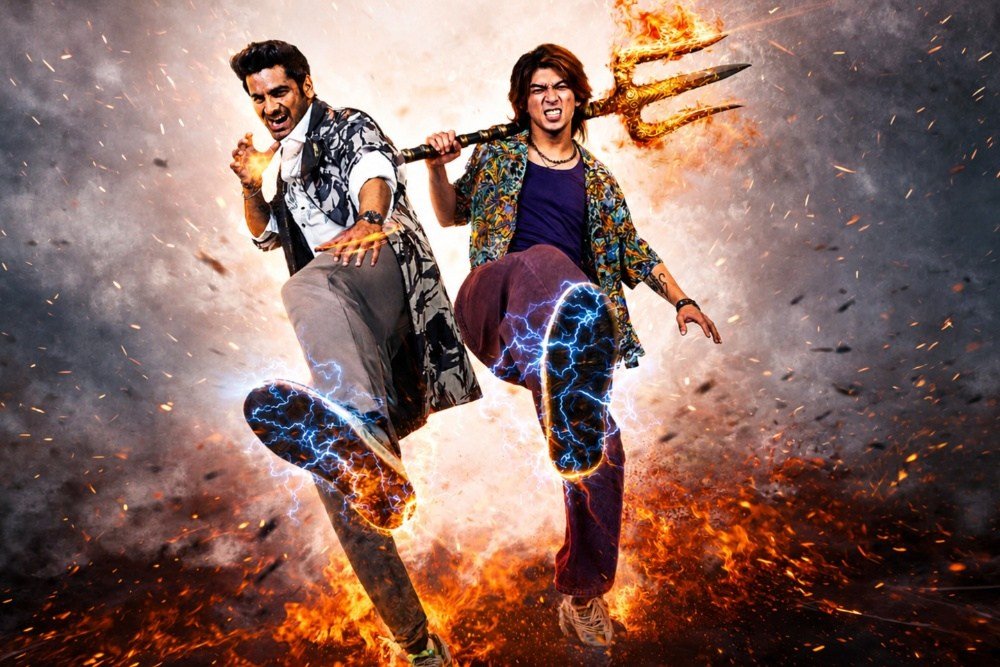
    Kiran Abbavaram‘s mythological action-fantasy for Zee Studios has revealed its title as “Indraputra,” with the pan-Indian project, directed by Srikanth Puppala, set to begin principal photography in October.

    Abbavaram takes on a mythology-rooted part built around the conflict between dharma, the principle of righteous duty and moral order in Hindu philosophy, and adharma, its violation. The film is designed as a pan-India release intended to reach audiences across languages, and is positioned as the opening chapter of a broader mythological universe.

    “‘Indraputra’ is very different and unconventional from anything I have done before,” Abbavaram said. “The moment I heard the story, I realized it was a film that would stimulate me further as an actor and it very well aligns with my cinematic vision. The role requires both emotional depth and physical changes, and I am excited to bring this character to life. I am thankful to Zee Studios and Srikanth garu for believing in me. I can’t wait to start this amazing journey.”

    Abbavaram made his acting debut in 2019 with the romantic comedy “Raja Vaaru Rani Gaaru.” 2021’s “SR Kalyanamandapam,” which he also wrote, built his wider profile. He went on to star in “Sebastian P.C. 524” and “Sammathame” in 2022, followed by three releases in 2023 including “Vinaro Bhagyamu Vishnu Katha,” with “K-Ramp” and “Chennai Love Story” being his most recent releases.

    “Indraputra” is produced by Zee Studios and Prerna Arora, and co-produced by Keerthan. The film is now in pre-production ahead of an October start, with the supporting cast, technical crew and release date to be revealed imminently.

    “Indraputra” marks Puppala’s feature directorial debut. He previously worked in the direction teams of “Kudi Yedamaithe,” “Katamarayudu” and “Gopala Gopala,” and most recently served as first assistant director to Rishab Shetty on “Kantara: A Legend – Chapter 1.”

    “‘Indraputra’ is a dream that has been close to my heart for a very long time,” Puppala said. “Our mythology is filled with timeless stories, and with this film, we aim to present one such epic on a scale that is both visually spectacular and emotionally relevant to the audiences across the country. Having Kiran Abbavaram lead this journey is truly exciting, as he brings sincerity, intensity, and conviction to the character. I thank Zee Studios for placing their faith in this vision, and I am really looking forward to taking ‘Indraputra’ on floors this October.”

    Arora’s credits include “Toilet: Ek Prem Katha” and “Dhundh.” She has an existing relationship with Zee Studios, having previously produced “Jatadhara” for the studio.

    “‘Indraputra’ is the beginning of a world we have been passionately building,” Arora said. “Inspired by the richness of Indian mythology, infused with a contemporary vision, the film marks the first chapter of a very expansive mythological universe.”

    “Indraputra” joins a run of pan-India projects built around interconnected mythological worlds, following Ele Animations’ “Mahaprabhu Jagannath,” the launch title of its planned Sanatan Universe, and Hombale Films and Kleem Productions’ “Mahavatar Cinematic Universe,” an animated franchise built around the 10 avatars of Vishnu, spanning seven features from 2025’s “Mahavatar Narsimha” through 2037.

  • NYSE advances onchain settlement for tokenized securities

    NYSE advances onchain settlement for tokenized securities

    New York Stock Exchange President Lynn Martin said on Aug. 10 that the exchange is continuing to develop infrastructure for onchain settlement of tokenized securities, months after outlining plans for a dedicated digital trading platform.

    Speaking at a National Assembly seminar in Seoul, Martin also confirmed NYSE participated in The Depository Trust Company’s July tokenization initiative.

    The remarks provide a fresh update on a project that has moved from an early development announcement into live industry testing. NYSE first disclosed the platform in January, while regulatory filings and its participation in DTC’s July production transactions have since provided clearer details about how tokenized securities could fit into existing U.S. market infrastructure.

    NYSE Developing Onchain Settlement Platform for Tokenized Securities

    NYSE President Lynn Martin said the exchange is developing an onchain settlement platform for tokenized securities and participated in DTC’s tokenization pilot in July.

    Martin said NYSE will continue exploring… pic.twitter.com/XlF5ptE9We

    — Wu Blockchain (@WuBlockchain) August 10, 2026

    NYSE tokenized securities plan moves beyond January announcement

    NYSE parent Intercontinental Exchange first announced the platform on Jan. 19. The planned venue is designed to combine NYSE’s Pillar matching engine with blockchain based post trade infrastructure. ICE said it would support 24/7 trading, immediate settlement, fractional shares, dollar denominated orders and stablecoin funding.

    Subject to regulatory approvals, the separate digital venue would support both tokenized versions of traditional securities and securities issued natively in tokenized form. Holders would retain conventional dividend and governance rights. The system is also being designed to support multiple blockchain networks for settlement and custody.

    As previously reported in the exchange’s January plans, the project represents a broader attempt to bring blockchain settlement into regulated U.S. equities rather than creating an offshore tokenized stock product. Martin said in Seoul that NYSE views the industry as being at a “critical turning point between traditional finance and DeFi.”

    DTC pilot gave NYSE a live production test

    Martin said NYSE participated in DTC’s tokenization pilot in July. DTCC independently confirmed NYSE among more than 30 financial and digital asset companies involved in live production transactions completed on July 15. Participants also included BlackRock, Goldman Sachs, JPMorgan, Nasdaq, Circle, Ondo Finance, Citadel Securities and Vanguard.

    The DTCC release said the exercise converted securities held at DTC into tokenized representations and used them in real transactions. Tests covered equity delivery versus payment, Treasury and repo transactions, securities lending, collateral pledges, equity transfers and central counterparty margin processes. The transactions ran across DTCC’s private Besu network and the public Canton network.

    The July work was therefore more than a technical sandbox. It used DTC’s production environment and followed a December 2025 SEC staff no action letter permitting DTC to operate a three year tokenization program under specified conditions. DTCC plans to launch its broader Tokenization Service in October. As crypto.news reported in recent pilot coverage, the effort brings major traditional and crypto firms onto common settlement infrastructure.

    SEC filing brings tokenized shares inside existing market rules

    NYSE has also taken a separate regulatory step. An April SEC filing established rules allowing eligible securities to trade in tokenized form on NYSE during DTC’s pilot program. The filing became effective upon submission under the applicable SEC rule process.

    Under that framework, tokenized shares can trade alongside traditional shares on the same order book when they have the same ticker, CUSIP, rights and privileges. Eligible securities include Russell 1000 components and exchange traded funds tracking major indexes. The tokenization choice does not alter order priority. In related regulatory coverage, crypto.news previously reported how the proposal keeps the assets inside existing national market rules.

    There is an important distinction between that framework and NYSE’s planned dedicated digital venue. Trades handled through the current DTC pilot continue settling on a T+1 basis, according to the SEC filing. By contrast, NYSE’s separately announced digital platform is intended to support immediate settlement and 24/7 trading and remains subject to regulatory approvals described by ICE.

    What happens next for NYSE’s onchain platform

    NYSE has also been building the infrastructure around the proposed venue. In March, it signed an agreement with Securitize, naming the company as the first digital transfer agent eligible to mint blockchain native securities for issuers on the upcoming platform. Securitize Markets is also expected to participate as a broker dealer, subject to applicable requirements.

    The next concrete milestone is DTCC’s planned October launch of its Tokenization Service following July’s production transactions. NYSE’s April rules also state that the exchange will provide members at least 30 calendar days of notice before beginning tokenized trading under the DTC pilot framework.

    For the separate 24/7 digital platform, ICE has not replaced its original qualification that the venue is subject to regulatory approvals. Martin’s Seoul remarks instead show that NYSE continues pursuing the project while testing tokenized market infrastructure through DTC. Her comments frame onchain settlement as a potential part of global financial infrastructure, but its broader rollout still depends on regulatory and operational steps.