Rumor has it leaked phone call features Trump panicking about Epstein files. Here’s the truth
Nov. 19, 2025
Read More

Nov. 19, 2025
Read More
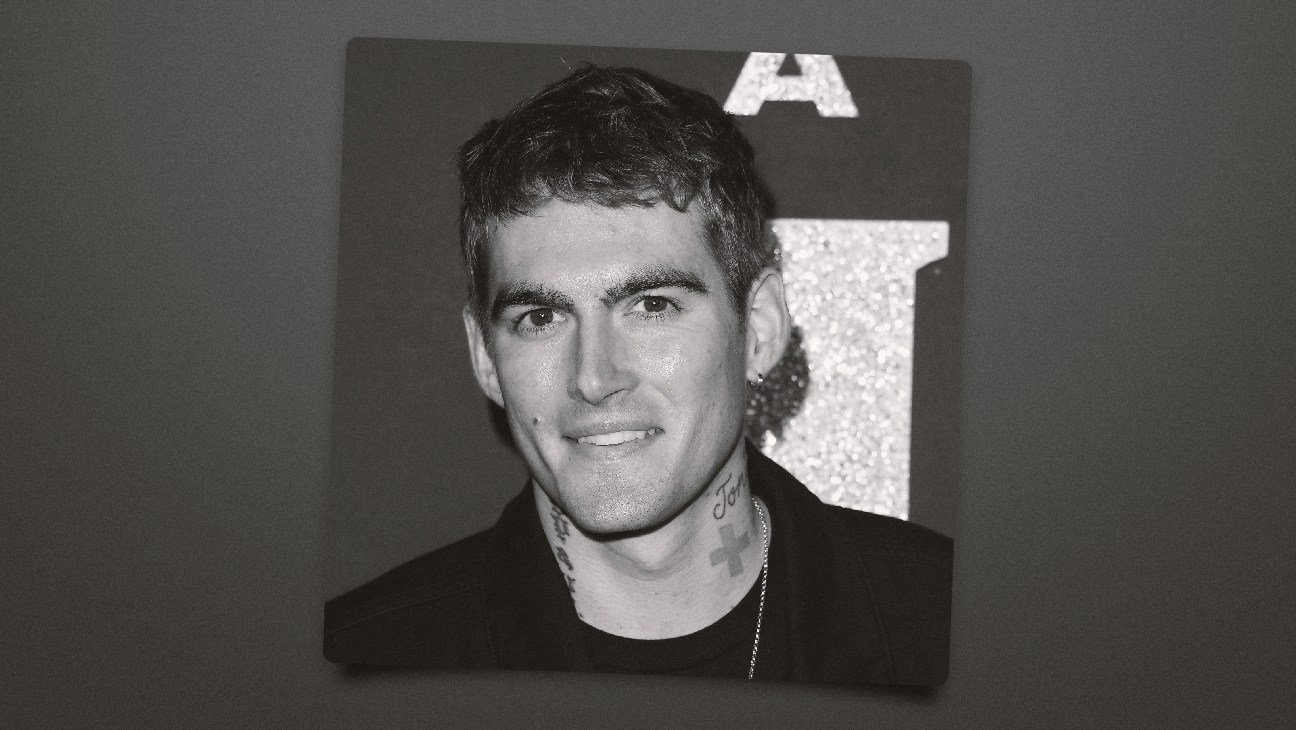
Presley Gerber, the son of Cindy Crawford and Rande Gerber, died Sunday, according to multiple reports. He was 27.
“The family is asking for privacy during this very difficult and painful time,” a rep for the family told The Hollywood Reporter.
A rep told TMZ that Presley died earlier Sunday. According to the Los Angeles County Medical Examiner, he died at a rehab facility.
Presley also is survived by a sister, model-actress Kaia Gerber, 25, who most recently appeared in Ryan Murphy’s The Shards.
TMZ is reporting that an autopsy has not yet been completed. The Hollywood Reporter has reached out to reps for the family.
Presley began modeling in his teens alongside Kaia. He was signed by IMG Models at age 15 and made his runway debut in a Moschino show in Los Angeles before appearing on the runway for Dolce & Gabbana in Milan and in a Calvin Klein campaign.
Presley has had trouble with the law. In 2019, he was arrested and charged with a DUI. He was sentenced to three years’ probation and ordered to complete a DUI program and two days’ community service.
He also has opened up about struggling with his mental health and depression.
In 2020, he got a tattoo on his face that read “MISUNDERSTOOD” but later seemingly had it removed.

The Hollywood Reporter is a part of PMX Global, LLC, a subsidiary of Penske Media Corporation. © 2026 The Hollywood Reporter, LLC. All rights reserved.
THE HOLLYWOOD REPORTER is a registered trademark of The Hollywood Reporter, LLC.
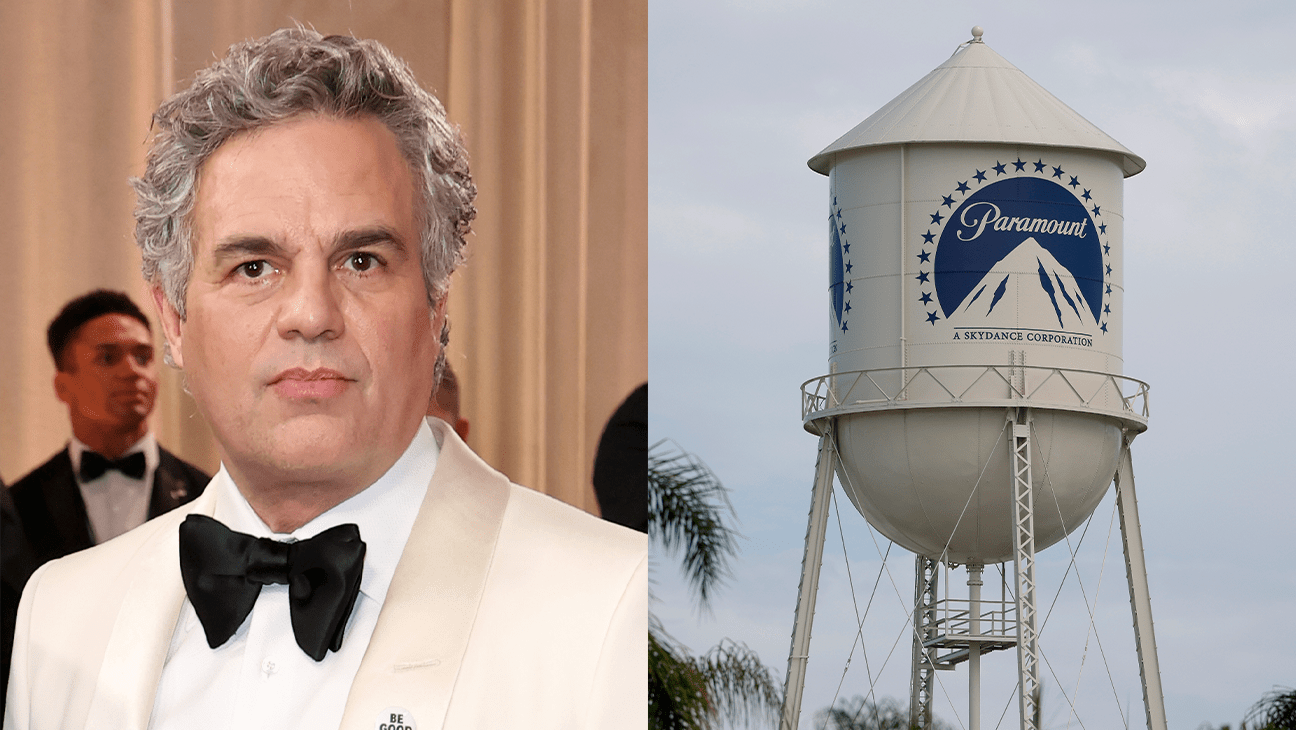
Amid reports that Paramount is in “advanced talks” to settle the antitrust lawsuit filed by 12 state attorneys general led by California against the company’s takeover of Warner Bros. Discovery, Mark Ruffalo is urging Rob Bonta to “not cave.”
“Don’t you dare @AGRobBonta, do not cave. 5,670 film makers put their necks on the line for you to fight this merger. Another 75,000+ and counting have signed to tell you not to concede in just 3 weeks,” the actor wrote on X. “You work for the people — the very people who will be hurt if you let this lousy deal filled with empty promises go forward.”
The Wall Street Journal reported Friday that Paramount and the states are closing in on a deal to settle the lawsuit.
Ruffalo included a link to sign a petition in support of the merger being blocked. “Please sign to send a message to the AG’s and Paramount. Reject the deal. The people don’t want it!” he added.
The Task star has been very candid about his opposition to the merger; he testified against the merger to a Senate hearing and signed an open letter alongside many actors also against Paramount’s potential takeover of Warner Bros.
In an August Instagram post, he noted Oracle’s (founded by Larry Ellison, the father to David Ellison) ties to the Israeli military, sharing a clip of former Oracle chief Safra Catz talking about Oracle’s tech at the Israeli-American Council National Summit in 2024 as it related to Israel’s war effort in Gaza. In the video, the executive spoke about “profoundly scary technologies” the company built that could be deployed. Ruffalo detailed the war as a “genocide” that “was built on an apartheid system of oppression powered by Oracle.”
A spokesperson for Paramount shared a statement in response to Ruffalo, calling his remarks “antisemitic.”
“We are, as always, troubled when antisemitic tropes are invoked in purported service of a business dispute,” the statement read in part. “Words like ‘genocide’ and ‘apartheid,’ applied to a corporate transaction, aren’t just wrong — they’re a bridge too far, and they cheapen the very real suffering those words are meant to describe. This doesn’t deserve a response in kind — and to be clear, we don’t tolerate prejudice of any kind, against anyone.”
The Avengers actor refuted the statement made by a Paramount rep, writing on X, “The accusation that I am antisemitic is appalling and fundamentally dishonest.”
On July 13, the states filed a lawsuit alleging that the merger would combine two of Hollywood’s top five studios, which would lead to higher prices, less movies in theaters and a decrease in the variety and quality of content. “There is no debate here: This merger will snuff out competition, drive up prices, diminish content quality, and produce fewer movies and shows each year,” said California Attorney General Bonta at a press conference at the time.
The filing of the suit led to a temporary pause on the merger, ruled by U.S. District Judge Araceli Martínez-Olguín on July 20; that temporary restraining order was subsequently extended on July 23. One day later, Paramount agreed to hold off on the acquisition until the court makes a decision of whether or not the deal violates antitrust laws.

The Traitors‘ next celebrity season is set to be released in 2027, and Peacock has unveiled its star-studded cast.
Musical theater icon Kristin Chenoweth, Olympic gold medalist Chloe Kim, The Secret Lives of Mormon Wives Leavitt and former NFL player Rashad Jennings are among the upcoming season. The next season will feature much more Hollywood talent, including several actors, than normal. There’s also plenty of love for the Bravo-universe this season, although that’s no surprise.
The new season’s full cast is: RuPaul’s Drag Race’s Bianca Del Rio, content creator Boman Martinez-Reid, The Real Housewives of Salt Lake City’s Bronwyn Newport, actress Casey Wilson, Kim, singer Cody Simpson, Southern Charm’s Craig Conover, The Real Housewives of Atlanta’s Cynthia Bailey, actor Dominic Monaghan, Next Gen NYC’s Emira D’Spain, The Real Housewives of Potomac’s Gizelle Bryant, Love Island’s Iain Stirling, Big Brother and Amazing Race’s Jag Bains, Love Island USA’s JaNa Craig, The Bachelor’s Joey Graziadei, actor Johnny Sibilly, Chenoweth, Survivor and The Challenge’s Michele Fitzgerald, Survivor’s Q Burdette, The Challenge’s Rachel Robinson, Jennings, Big Brother and Amazing Race’s Taylor Hale and Leavitt.
The Traitors — based on a Dutch format — is a competition where contestants are split into two categories: Faithfuls and Traitors. All 23 contestants will start as Faithfuls before Cumming decides which (typically) three players will become Traitors. The titular role then works to sneak past the rule-following players who are attempting to figure out who the Traitors are while choosing a Faithful player each night to “murder.” Studio Lambert produces the series, which utilizes reality TV stars and other media personalities for its contestant pool.
The Traitors has already been renewed for another three seasons following the upcoming celebrity season, bringing its total expected seasons to at least nine. In the wake of The Traitors success, NBC has debuted a civilian version of the series, The Traitors: New Blood. This is technically considered the show’s fifth season, making the celebrity version its sixth.
More to come.

Age: 41
Known For: Reality TV personality, Broadway producer
Other Reality Shows: The Real Housewives of Salt Lake City
Social Media: Instagram, X (formerly Twitter)
Age: 29
Known For: Singer, actor and swimmer
Other Reality Shows: Figure it Out, Dancing with the Stars, The Masked Singer Austrailia
Social Media: Instagram, X (formerly Twitter)
Age: 59
Known For: Reality TV personality and model
Other Reality Shows: The Real Housewives of Atlanta, The Real Housewives Ultimate Girls Trip, Celebrity Big Brother, Criss Angel’s Magic with the Stars, Got to Get Out
Social Media: Instagram, X (formerly Twitter)
Age: 32
Known For: Reality TV personality
Other Reality Shows: Survivor
Social Media: Instagram
Age: 43
Known For: Reality TV personality
Other Reality Shows: Road Rules, The Challenge, The Challenge: All Stars, The Challenge: Untold History
Social Media: Instagram
Age: 41
Known For: Former NFL player
Other Reality Shows: Dancing with the Stars, Talk Show the Game Show, Guy’s Grocery Games – Game Day Super Teams
Social Media: Instagram, X (formerly Twitter)

It’s officially the last New Music Friday of the summer, and artists did not play when it came to dropping fresh bangers. From A-list names and collaborations to highly anticipated albums, get your playlist ready and let’s have some musical fun.
Shakira and Maluma reunite on “Agua,” their first major collaboration since 2018’s “Clandestino.” It marks their first merengue together, and they did not miss. The Colombian superstars turn up the heat and show off their chemistry and sexual energy in the spicy music video. Shakira looks incredible, per usual, as she flaunts her amazing body and signature dance moves.
CA7RIEL, Paco Amoroso, PinkPantheress, and Fred again come together for “Sexy Magic,” which is featured on the long-awaited Grand Theft Auto VI soundtrack. CA7RIEL and Paco Amoroso are on fire, scoring 7 nominations at the Latin GRAMMYS, the second most after producer Edgar Barrera.
Piso 21, Micro TDH & Gangsta will have you feeling flirty and ready for date night with “Segunda Cita.” It’s a powerhouse collaboration with all the artists seamlessly blending their sounds. It includes a sweet moment with Micro TDH celebrating their first collab with Piso 21, “Te VI’s” initiation into the billions club on Spotify.
Mexican singer-songwriter Michelle Maciel begins a new chapter with her album La Gloria, a 13-track project that explores love, personal growth, and experimentation while blending corridos, reggaetón, and boleros. The album’s focus track, “Dolencias,” featuring Ana Gloria, brings the two artists together for a fun, dance floor-ready collaboration that highlights Maciel’s ability to move between genres.
Following the release of his album Ya No Me Importa Si Nadie Me Escucha, Venezuelan rising star Zulia drops “Birkin.” The singer has one of the most unique voices in music, with bold, sensual lyrics, and a smooth sound.
Puerto Rican singer Guaynaa gets into his salsa swag with “SE PARECE AL PAI.” The catchy track has incredible instrumentals, an infectious melody, and lyrics inspired by his own life as a father. It stars his wife, Lele Pons, and their daughter, Eloísa.
GRAMMY-winning Mexican guitar duo Rodrigo y Gabriela release their new album OurHome. They step into new territory with “Somos Como Tú,” their first-ever song featuring lyrics and vocals. The track explores migration, displacement, and the connections that unite people across cultures, marking a new chapter for the duo as they continue to expand beyond their signature acoustic sound.
After postponing its release, Feid drops his new EP, EL GREEN PRINT: La Saga (Disc 2) – EL CLUB DE LAS 19 FLORES, the next chapter of his Green Print era. It includes collaborations with Vicente García, El Americano 4KT and Pirlo, Divino and Baby Ranks, Icon, Yandel, and Spanish star Bad Gyal.
The one and only Elvis Crespo adds another collaboration with the new generation, this time with Beele. The genre-blending track has merengue, urban, and pop sounds with exciting instrumentals that will have you ready to move your hips.
Miley’s highly anticipated album Bass Persuades is here, and it’s beautiful. It’s the first album since dropping Cyrus and shows off the multifaceted sides of the singer. “Let’s Get Married” is a gorgeous track dedicated to her fiancé, Maxx Morando, and comes with an intimate music video starring the couple.

One of the major industry narratives at this year’s San Sebastián Festival, running Sept. 18-26, will be the presentation of SETT, the venture capital fund of Spain’s Ministry for Digital Transformation.
SETT director general Javier Ponce and its audiovisual director María Coronado deliver a practical guide to Spain’s governmental investment drive powering up companies in Spain: What it’s doing, why, and where it could go in the future. The companies it s investing in – with more to be revealed – are likely to be among the most dynamic in Spain.
What, explained very briefly, are the objectives of SETT’s Spain Audiovisual Hub strategy?
Javier Ponce: SETT is a public investment entity that manages investments in strategic, transformative sectors, including the audiovisual industry. It serves as a public catalyst for growth, employment, innovation and talent—all core elements of the audiovisual sector. SETT has managed the Spain Audiovisual Hub Fund, an instrument established under Spain’s Recovery Plan and financed through the European Union’s Next Generation funds.
Through the Spain Audiovisual Hub Plan, SETT provides financing and equity or quasi-equity investments, either directly to companies in the sector or through financial intermediaries active in the audiovisual industry. The objective has been to attract private investment and improve access to finance for projects related to films, television, animation, multimedia and interactive content, among others. Priority has been given to high-impact projects focused on creating audiovisual content and intellectual property rights while ensuring that those rights remain with the production companies.
And the rationale of a sovereign venture capital fund’s co-investment model?
Ponce: It is based on public-private collaboration to launch transformative initiatives that, because of their innovative nature, involve additional risks that make it difficult to attract purely private funding. Only highly liquid, large-scale markets with a long-established audiovisual industry are able to mobilize sufficient capital to finance major new productions or transformative industry initiatives.
SETT’s Spain AVS Hub fund could draw down up to €1.5 billion ($1.75 billion) from NextGeneration E.U. funding. According to María Gonzalez Veracruz, investments made are just under €250 million. Her explanation is that you simply ran out of time. Could you comment?
Ponce: Indeed, European funds have been fundamental for Spain, and the Recovery Plan has played a key role in driving major structural reforms and stimulating economic growth. However, it is also true that these funds came with specific requirements, including strict implementation deadlines, which made optimal execution more challenging.
For the audiovisual sector, the possibility of co-investing alongside a public entity represented a major innovation. Time therefore became a critical factor, as market participants first needed to understand the role and implications of partnering with a public investor that shared both risks and returns.
The next challenge is to ensure that these investments continue to thrive, identify new opportunities, and maintain confidence in the talent and ambition of Spanish audiovisual companies, which now benefit from SETT’s backing.
SETT, however, is not over, I believe. Obviously it has to exercise governance over investment accords now struck. I believe as well that there are plans to launch a new program España Crece, with a €13.3 billion ($15.6 billion) budget, held by ICO, but whose investments will be handled in part by SETT, if I understand correctly. Could you comment?
Ponce: The audiovisual sector will remain one of SETT’s strategic areas of activity and will continue under new fund “España Crece”. We have begun discussions with ICO to define the procedures and framework for collaboration between the two institutions, ensuring the continuation of co-investment in strategic technologies and sectors.
SETT has represented a significant shift in the way public investment in strategic industries is conceived. Through SETT, the State acts as a catalyst and partner in the most innovative areas of the economy, with the objective of positioning Spain at the forefront of transformative industries. That is why we invested in the audiovisual sector and why we will continue to do so.
Its ability to generate industrial activity, employment and broad economic impact makes it a strategic sector that will continue to enjoy our support.
Could you illustrate the rationale of SETT’s co-investment model in one or two of the investments made and the obvious benefits it could bring to the companies Spain’s film-TV industry.
Coronado: The SETT model has been built on three pillars. First, it adopts an industry-wide approach, rather than a project-based one, addressing the entire audiovisual business ecosystem. Second, its investment facilities are directed at the equity capital of companies or regulated investment vehicles. Third, it promotes public-private partnership instruments on a medium-long term.
Under this model, promoters must convince a genuinely private investor that their company represents a worthwhile investment opportunity. SETT co-invests alongside the private investor on a pari passu basis: public investment is intended to support companies, but always under the same terms and conditions as private capital.
This approach strengthens both domestic and international private investment in companies based in Spain, while also attracting foreign businesses that see Spain as an attractive location to establish their operations. Clear examples include the South African transactions involving The Refinery and Moonlighting, with a combined investment of €25 million, as well as Amuse Labs and Milo, two leading examples of Spain’s animation industry, which have mobilised €13 million and €19 million respectively.
My sense is that SETT investors can indeed help companies scale, create more such expertise and build infrastructure. But would you agree?
Coronado: In my view, the main challenge for the coming years is to consolidate the model we have been promoting and supporting. It is essential to continue strengthening and diversifying support policies so that Spain can establish itself as a global hub for the audiovisual industry over the long term. This means supporting every segment of the industry according to its specific needs.
Scale is undoubtedly part of the challenge, as is ensuring the availability of the infrastructure needed to accommodate medium- and large-scale productions, strengthening technical training, and fostering talent across the industry. It will also be important to continue enhancing the tax framework and the legal and regulatory environment to maintain Spain’s competitiveness, while further developing public-private investment instruments.
In addition, it will be essential to understand the cash-flow financing needs of projects to address the full range of companies’ financing requirements. Finally, the industry’s ability to adapt and diversify will remain critical, both in terms of technology and creativity, as well as business models and corporate structures.
In your view, does the introduction of sovereign venture capital in the Spanish film and TV industry encourage a change of mindset in the industry?
Coronado: Yes, absolutely. It creates new opportunities. It is essential to think in terms of medium- and long-term business strategy, rather than focusing only on immediate projects. It enables companies to strengthen their capital base, making them more ambitious, better able to protect their intellectual property, diversify, expand internationally, and bring their products to market more effectively.
What have you learnt in the two years of the Spain AVS Hub Phase II which you would like to apply in future investments by SETT under España Crece?
Coronado: The main learning here is the confirmation that SETT has a clear and necessary purpose for the industry, both in attracting private investment and foreign companies, and in creating opportunities for the local industry. It is important to allow more time for business plans to mature and for companies to secure private investment.
Can you outline very briefly what the SETT event at San Sebastián Festival will consist of?
Coronado: As you would expect, we will have a strong presence at the festival, with a wide range of activities. On Sept. 20, the Secretary of State for Digitalisation and Artificial Intelligence, through the Ministry for Digital Transformation and the Civil Service, which is leading the Government’s Spain Audiovisual Hub Plan, will host an event in which SETT will present the huge progress we have made in financing the audiovisual sector and new ongoing projects. Additionally, on 22 September, I will take part in a panel discussion at the conference organised by the CAA as part of Spanish Screenings Investment & Tech. That same day, we will also host an exclusive roundtable with investment funds and banks specialising in the audiovisual sector, bringing together both international and Spanish participants. We also have a few more surprises in store, which we will unveil throughout this very important festival for the industry.

While large whale transactions in the cryptocurrency market attracted attention, significant developments occurred in $PONS, $ZEC, and $HYPE. A whale selling millions of $PONS put pressure on the price, while another whale who opened a long position in $ZEC about a month ago saw their unrealized profit approaching $10 million. Hyperliquid, meanwhile, burned $2.42 million worth of $HYPE in the last 24 hours.
According to on-chain data, a whale sold 2.25 million $PONS tokens withdrawn from Binance for approximately $1.29 million worth of USDG and Ethereum. On the day of the large sell-off, the price of $PONS fell by 12 percent.
On the $ZEC side, a whale stood out, having opened a long position of 9,810 $ZEC approximately a month ago at an average price of $517.68. As the $ZEC price rose to $1,534.70, the investor’s unrealized profit reached $9.98 million. It was also noted that the same investor held a short position of 3,550 ETH, resulting in an unrealized loss of approximately $2.60 million.
Hyperliquid also continued its token burning operations to reduce its supply. Over the past 24 hours, the platform burned 26,310 $HYPE tokens at an average price of $91.86. The total value of the transaction was estimated at approximately $2.42 million.
Hyperliquid has burned a total of 48.76 million $HYPE tokens to date, with a current market value of approximately $4.50 billion. This amount represents 4.88% of $HYPE’s maximum supply. The platform’s revenue over the last 30 days reached $64.34 million, while its all-time total revenue stands at $1.26 billion.
*This is not investment advice.

With Bitcoin’s price once again climbing above critical technical levels, analyst PlanB offered a noteworthy assessment. PlanB stated that Bitcoin closed above the 50-week moving average, which is around $79,000, and that the next technical target is the 100-week moving average at approximately $89,000.
PlanB noted that Bitcoin was trading around $81,000, stating, “Bitcoin closed above the 50-week moving average. The next target is the 100-week moving average, around $89,000.”
The renowned analyst also stated that his assessment that the bear market in Bitcoin has ended is now clear. He noted that after August closed at $78,571, a recovery was observed in various market indicators, and pointed out that the percentage of Bitcoin supply in a profitable state increased from 50% to 72%.
In addition, the analyst noted that the monthly RSI indicator rose from 41 to 51, arguing that this data points to an improvement in market momentum. According to PlanB, these developments suggest that Bitcoin may have passed its bottom, and the technical outlook supports bullish expectations for the upcoming period.
*This is not investment advice.
Fetch.ai has announced that it is investigating reports of an exploit involving its token conversion contract. This news comes from a recent tweet by the @Fetch_ai account, which urged users to only trust official channels. The implications of this incident could have a significant impact on user confidence and market sentiment going forward.
The broader cryptocurrency market continues to display mixed signals, with Fetch.ai now facing scrutiny due to security concerns. In its recent communication, Fetch.ai emphasized the importance of relying on official channels, indicating a proactive approach to safeguarding user interests. As the investigation unfolds, it may lead to shifts in both user trust and overall market dynamics.
Currently, Fetch.ai’s trading activity shows no reported volume or price, reflecting the uncertainty surrounding its recent exploit announcement. This lack of trading activity may suggest apprehension among investors as they await further updates from the development team. The overall crypto market remains in a state of flux, with Fetch.ai’s situation potentially influencing broader market sentiment.
Fetch.ai operates as a decentralized platform that enhances automation through AI-driven agents. The jurisdiction over this matter falls under the purview of user security and trust, critical in the rapidly evolving blockchain space.
Traders should watch for any official updates from Fetch.ai regarding the ongoing investigation. Key levels of user confidence and market sentiment will likely dictate future price movements. The potential for shifts in trading behavior could also emerge as the community reacts to the findings of the investigation.
This article is for informational purposes only and does not constitute financial advice.