Author: rb809rb

  • How to Watch the Argentina vs. England FIFA World Cup Semifinal Live for Free

    How to Watch the Argentina vs. England FIFA World Cup Semifinal Live for Free

    Argentina take on England in the second FIFA World Cup semifinal on today, and the matchup reignites one of soccer’s fiercest rivalries, fueled by decades of history on and off the field. Players on both ends will be quite aware of the bitterness, but when they set foot in the Atlanta Stadium this afternoon, all they’ll be playing for is a place against Spain in this weekend’s final in New Jersey.

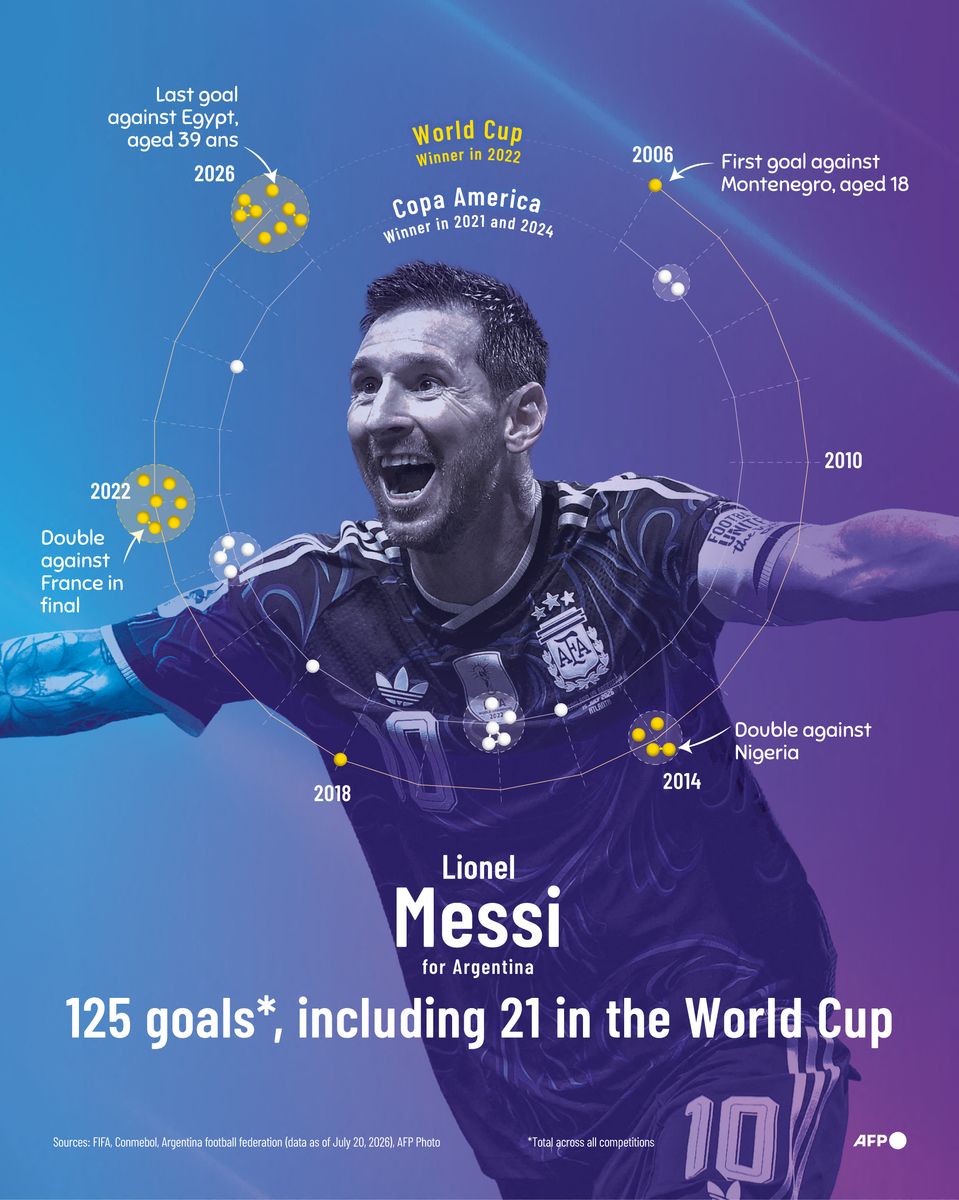
    For England, it’s a chance to return to the final for the first time since lifting the trophy in 1966. For Argentina, it’s about playing their third final in four editions and inching closer to back-to-back titles. Surprisingly, this semifinal will also be the first meeting between Lionel Messi and England. The eight-time Ballon d’Or winner has scored against 45 countries, and he will be keen to make England the 46th.

    The Three Lions have plenty of firepower of their own. Declan Rice has provided England with much-needed control in midfield, while wingers Anthony Gordon and Bukayo Saka have stretched defenses with their pace and dribbles. To top things off, captain Harry Kane and Jude Bellingham have been in the form of their lives up front.

    The names on both team sheets point to yet another fiery World Cup semifinal today. It’s the first at a World Cup since 2002, and no soccer fan should miss this game. If you’re excited, here’s how to tune in live to Argentina vs. England semifinal using a streaming subscription, and how to watch for free with a VPN or free trial.


    When Is the Argentina vs. England World Cup Semifinal?

    The semifinal game between Argentina and England kicks off at 3:00 p.m. ET on Wednesday, July 15, at Atlanta Stadium in Atlanta, Georgia.


    How to Watch Argentina vs. England Live in the US

    You can watch Argentina vs. England live on Fox or Telemundo. If you don’t have cable and you live in the US, you can watch with a sports streaming subscription, such as DirecTV, Fox One, Fubo, Peacock, Sling, YouTube TV, and more. If you don’t have a live TV or streaming service, you may be able to watch the game with a free trial:


    How to Watch Argentina vs. England Online for Free

    The Argentina vs. England semifinal match will air live for free on several streaming platforms across the globe, including:

    These platforms are geo-locked to their respective countries, but you can use a virtual private network (VPN) to watch matches for free from the US or elsewhere. For the Argentina vs. England World Cup semifinal, we recommend ExpressVPN, our top pick for location spoofing. ExpressVPN has servers across the globe, making it easy to mask your actual location so you can access region-locked content. Additionally, ExpressVPN is also an official supporter of the 2026 FIFA World Cup.

    Editors’ Choice

    4.0

    Excellent


    ExpressVPN


    $3.49 Per Month (73% Off for 28 Months)
    at ExpressVPN

    $12.99 Per Month


    Learn More

    Here’s how you can access the Argentina vs. England match with a VPN using BBC iPlayer as an example:

    1. Sign up for a streaming-friendly VPN (like ExpressVPN).

    2. Download the VPN app on your computer, phone, or preferred device.

    3. Connect to a server in the UK.

    4. Visit BBC iPlayer or ITV to start streaming.

    Note: If you’re new to BBC, you may be asked to create an account to access iPlayer. Add a UK postal code on the sign-up page to avoid possible disruptions. I tested this earlier this week to make sure it was still working.

    Usually, the top VPNs that let you connect to servers in other countries aren’t free. But if you already have a VPN subscription or qualify for a free trial, you may be able to use one to watch the FIFA World Cup semifinal between Argentina and England at no additional cost.


    Argentina: Road to the Semifinal, Team News

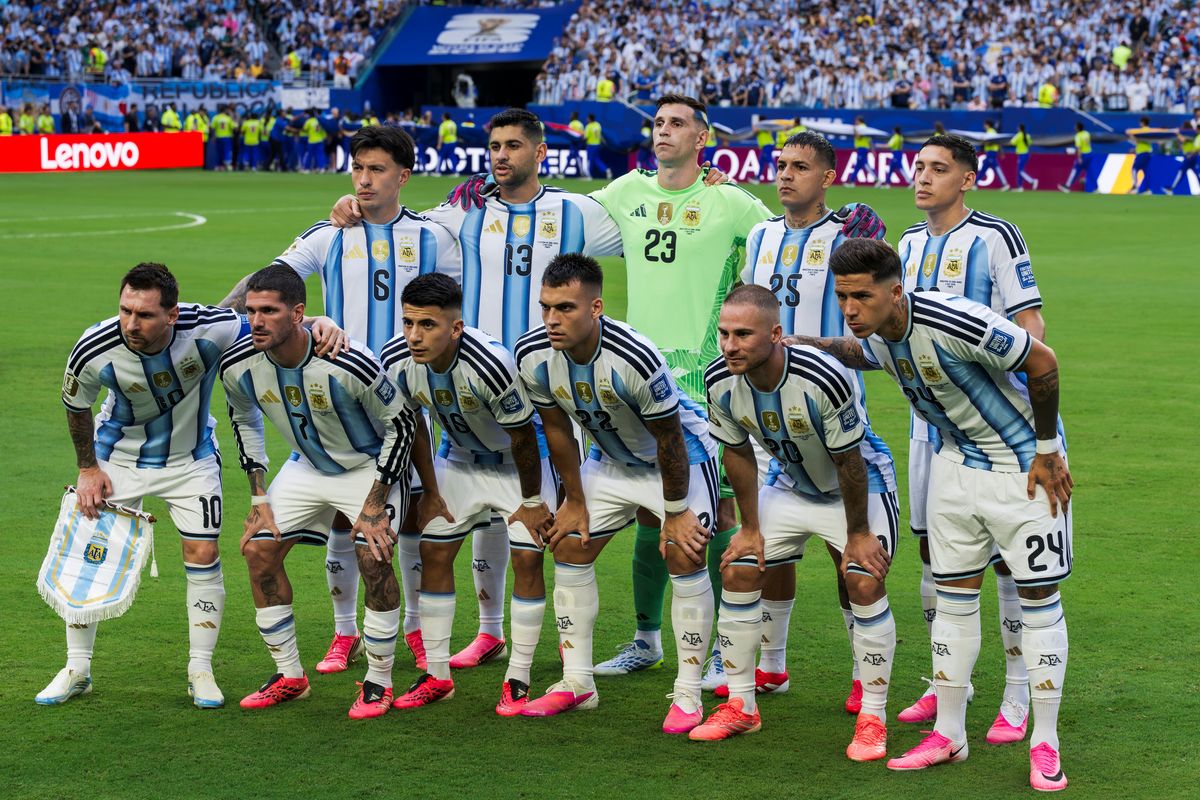
    Argentina's playing XI against Switzerland at the FIFA World Cup 2026

    (Credit: David Ramos/Getty Images)

    Argentina’s play hasn’t always looked pretty, but their passion and game-control has brought them to yet another World Cup semifinal. The team relied heavily on Lionel Messi’s playmaking and scoring abilities in the early part of the tournament, but of late, we’ve seen significant contributions from the likes of Alexis Mac Allister, Julián Alvarez, Enzo Fernández, and Lautaro Martínez. Alvarez, especially, has been the talk of the town following that screamer from outside the box to close out Switzerland in the quarters. Here’s a look at La Albiceleste’s journey so far, and the expected lineup for today’s game.

    • Group Games: Beat Algeria 3-0; Beat Austria 2-0; Beat Jordan 3-1

    • Round of 32: Beat Cabo Verde, 3-2

    • Round of 16: Beat Egypt, 3-2

    • Quarterfinal: Beat Switzerland, 3-1

    • Top Scorer: Lionel Messi (8 goals) | Most Assists: Lionel Messi (2)

    Expected lineup: Fans and pundits have urged Scaloni to add pace by giving minutes to Giuliano Simeone, Nico Paz, and Valentín Barco. But Scaloni is expected to stick with the same lineup that’s given him greater control and produced 17 goals (tournament’s highest). That would be Martinez in goal; Molina, Romero, Martinez, and Tagliafico in defense; Paredes, De Paul, Fernández, and Mac Allister in the midfield; and Messi and Alvarez in the forward line.


    England: Road to the Semifinal, Team News

    England's playing XI against Norway at the FIFA World Cup 2026

    (Credit: Eddie Keogh – The FA/The FA via Getty Images)

    England, like Argentina, have shown great spirit throughout the tournament, pulling themselves out of really some tight games. They have also been quicker and more potent in attack than Argentina. Bukayo Saka and Anthony Gordon keep the flanks busy, while Bellingham and Kane are quick to pounce on any chance they get in front of goal. Their chances of reaching the final heavily rely on stopping Messi, and coach Thomas Tuchel will want Declan Rice and Nico O’Reilly to give him as little space as possible. If they negate that threat, England are favorites to win the game.

    • Group Game 1: Beat Croatia 4-2; Drew Ghana 0-0; Beat Panama 2-0

    • Round of 32: Beat DR Congo, 2-1

    • Round of 16: Beat Mexico, 3-2

    • Quarterfinal: Beat Norway, 2-1

    • Top Scorers: Jude Bellingham, Harry Kane (6 goals) | Most Assists: Bukayo Saka, Anthony Gordon (3)

    Expected lineup: Tuchel will again be without Jarell Quansah, who is serving a two-game suspension for dangerous play against Mexico. As a result, the German coach is expected to stick with the XI that beat Norway, with Saka likely replacing Madueke. That would put Pickford in goal; Konsa, Stones, Guéhi, and O’Reilly in defense; Rice, Anderson, and Bellingham in the midfield; and Saka, Gordon, and Kane up front.


    2026 FIFA World Cup Schedule

    The 2026 FIFA World Cup runs from June 11 to July 19 and will be co-hosted by the US, Canada, and Mexico. This year, the tournament has expanded to 48 participating nations for a total of 104 games.

    • June 11 to June 27: Group stage

    • June 28 to July 2: The knockout stage begins with the first-ever Round of 32 at a FIFA World Cup. The eventual champion will have to win five consecutive knockout games, instead of the former four.

    • July 3 to July 7: Round of 16

    • July 9, 10, 11: Quarterfinals

    • July 14-15: Semifinals

    • July 18: Bronze final

    • July 19: Final

    We’ll be following the World Cup through this weekend, so stay tuned for more.

    The World Cup Has a Secret AI Command Center

    PCMag Logo

    The World Cup Has a Secret AI Command Center

    About Our Expert

  • Fabrice Du Welz to Head Locarno International Competition Jury

    Fabrice Du Welz to Head Locarno International Competition Jury

    Belgian filmmaker Fabrice du Welz will preside over the jury for the international competition at the 79th Locarno Film Festival, part of a full slate of juries the festival has revealed across its sections.

    Du Welz has made nine features that have screened at major festivals; Locarno has shown two of them, “Adoration” on the Piazza Grande in 2019 and “The Passion According to Béatrice,” out of competition in 2024. He is joined on the jury by Italian producer Marco Alessi, founder of Rome-based Dugong Films, whose credits include work with directors Stefano Savona, Yuri Ancarani and Rä di Martino and who produced Bertrand Mandico’s “Roma Elastica,” playing out of competition in Locarno this year. Rounding out the panel are French actor Lolita Chammah, whose career includes collaborations with Claude Chabrol, Werner Schroeter, Claire Denis, Claire Simon and Benoît Jacquot; Chilean actor Paulina García, who won the Silver Bear for “Gloria” in 2013; and Olivier Père, who previously served as artistic director at Locarno and as general delegate of the Cannes’ Directors’ Fortnight, and who now heads the cinema unit at Arte France Cinéma as executive director, a post he has held since 2012.

    The Filmmakers of the Present Competition, the section dedicated to emerging directors, will be judged by Tunisian actor, director and producer Afef Ben Mahmoud, who also directs the Gabès Cinéma Fen festival; Czech producer and director Radovan Síbrt, co-founder of production company Pink, whose credits include the Academy Award-winning “Mr. Nobody Against Putin” (2025); and filmmaker Margherita Spampinato, whose breakthrough feature “Sweetheart” (“Gioia Mia”) followed its selection in the section last year with a David di Donatello win, plus the Kering Women In Motion Emerging Talent Award, presented at Cannes.

    Three filmmakers will judge the Leopards of Tomorrow section. Lebanese director, writer and actor Mounia Akl has had work presented at Cannes, Venice, Toronto and London. South African producer Steven Markovitz, a longtime force in regional independent cinema, counts “aKasha” (2018), “Rafiki” (2018), “Tug of War” (2021) and “Omen” (2023) among his credits. Italian director Antonio Piazza, who co-directed “Sicilian Letters” (“Iddu,” 2024) with Fabio Grassadonia, rounds out the panel; that film premiered in competition in Venice.

    The First Feature jury, which awards the Swatch First Feature Award for the festival’s best debut, comprises Matthieu Darras, who runs the festival consultancy Tatino and brings programming experience from Cannes, Venice, San Sebastián and TorinoFilmLab; Sung Moon, a Jeonju International Film Festival programmer and former member of the Korean Film Council; and Swiss-Peruvian filmmaker Klaudia Reynicke, whose film “Queens” (“Reinas”) took the Prix du Public UBS at Locarno77 on its way to becoming Switzerland’s Oscar submission and a Swiss Film Awards winner.

    The Pardo for Change jury, which recognizes films engaging with environmental, ethical, social and cultural issues, includes freelance war reporter and author Gianluca Grossi; Somali-Austrian filmmaker Mo Harawe, whose debut feature “The Village Next to Paradise” bowed in Cannes’ Un Certain Regard sidebar in 2024; and Seta Thakur, who leads communications and social innovation work at the Wyss Academy for Nature.

    A separate jury will oversee the Locarno Kids Screenings, deciding the winner of the Locarno Kids Award la Mobiliare in the festival’s new competitive strand for feature films made for young viewers. This year, for the first time, 13 jurors between ages 11 and 15 will screen seven titles in the section before selecting a winner, meeting daily throughout the festival for a training program led by industry professionals.

    Locarno artistic director Giona A. Nazzaro said: “Selecting those whose eyes will be watching the films in the competitive sections is a task that always brings out desires and emotions. The diversity of talent meets the diversity of perspectives. Ultimately, however, what matters most is a willingness to be surprised, to be amazed, and to embrace the unexpected. In this sense, we are proud that the films of the 79th edition can begin their journey out into the world accompanied by those talented creative figures who have agreed to share the adventure of the Locarno Film Festival with us.”

    The 79th Locarno Film Festival runs Aug. 5-15.

  • Locarno Film Festival Unveils Juries, Including Paulina García, Lolita Chammah

    Locarno Film Festival Unveils Juries, Including Paulina García, Lolita Chammah

    The 79th edition of the Locarno Film Festival is coming up fast, and organizers have now unveiled the full lineup of this year’s juries that decide the winners of the Pardo d’Oro, or Golden Leopard, and the Swiss festival’s other awards. 
     
    Presiding over the jury of the international competition, the Concorso Internazionale, will be Belgian filmmaker Fabrice Du Welz (AdorationThe Passion According to Béatrice. He is joined by Italian producer Marco Alessi, founder of Rome-based Dugong Films and one of the producers of Bertrand Mandico’s Roma Elastica, which is part of this year’s out-of-competition lineup, French actress Lolita Chammah (CopacabanaBarrage), the daughter of Isabelle Huppert, Chilean actress Paulina García (Gloria) and Olivier Père, the former artistic director of the Locarno Film Festival and now executive director of ARTE France Cinéma and head of its cinema unit since 2012. 
     
    The films in the Concorso Cineasti del Presente, or Filmmakers of the Present, program dedicated to emerging directors, will be judged by Tunisian actress, director, producer and director of the Gabès Cinéma Fen festival Afef Ben Mahmoud, Czech producer and director Radovan Síbrt, responsible for shepherding such international productions as the Oscar-winning Mr. Nobody Against Putin and Italian filmmaker Margherita Spampinato (Sweetheart). 
     
    Meanwhile, the Pardi di Domani section, focused on the filmmakers of the future, will be evaluated by a jury made up of Lebanese director, writer and actress Mounia Akl (Costa Brava, Lebanon; House of Guinness), South African producer Steven Markovitz (RafikiOmen) and Italian director Antonio Piazza (Sicilian Letters).

    The First Feature jury, honoring the best debut in the festival’s lineup with the Swatch First Feature Award, is comprised of Matthieu Darras, director of Tatino, who has programmed for Cannes, Venice, San Sebastián and TorinoFilmLab; Sung Moon, the Jeonju International Film Festival programmer and former member of the Korean Film Council; and Swiss-Peruvian filmmaker Klaudia Reynicke (Queens). 

    The Pardo for Change honor “reflects Locarno’s commitment to cinema that engages with pressing environmental, ethical, social, and cultural questions of broad social relevance.” Its jury includes Gianluca Grossi, a freelance war reporter, writer and theater author; Somali-Austrian filmmaker Mo Harawe (The Village Next to Paradise) and Seta Thakur, head of communications and social innovation at the Wyss Academy for Nature.

    Said Giona A. Nazzaro, artistic director at Locarno: “Selecting those whose eyes will be watching the films in the competitive sections is a task that always brings out desires and emotions. The diversity of talent meets the diversity of perspectives. Ultimately, however, what matters most is a willingness to be surprised, to be amazed, and to embrace the unexpected.”

    The 79th Locarno Film Festival will take place Aug. 5-15. 

  • Locarno Winner Nelson Yeo’s ‘The House on the Moon’ Boards Parallax Films for Worldwide Sales (EXCLUSIVE)

    Locarno Winner Nelson Yeo’s ‘The House on the Moon’ Boards Parallax Films for Worldwide Sales (EXCLUSIVE)

    Parallax Films has come aboard “The House on the Moon,” the Singapore wuxia science-fiction feature set to world-premiere in international competition at the 79th Locarno Film Festival, as worldwide sales agent.

    The company holds exclusive rights across most international territories. German-speaking territories, Taiwan and Singapore are excluded from that exclusivity, while Parallax also holds non-exclusive rights across other regions in Southeast Asia.

    Directed by Nelson Yeo and co-written by Yeo and Vicki Yang, “The House on the Moon” blends science fiction with wuxia, the Chinese tradition of martial-arts hero stories, drawing on the Chinese myth of moon goddess Chang’e and legendary archer Hou Yi. It is Singapore’s first wuxia feature film and the country’s first feature produced using virtual production technology.

    Yeo previously premiered his debut feature “Dreaming & Dying” at Locarno in 2023, where it became the first Southeast Asian film to win both the Golden Leopard in the Filmmakers of the Present competition and the festival’s Best First Feature award.

    “Returning to Locarno with ‘The House on the Moon’ feels like the stars have aligned. A few years ago, this felt like reaching for the moon – and we have,” Yeo tells Variety. “I’m so grateful to our fantastic cast and crew for embarking on this journey with me and bringing a childhood dream to life. We can’t wait to share the film with audiences around the world.”

    The ensemble cast includes Lim Shi-An as Chang Er, Dominick Rustam as Hou Yi, Akira Huang as Nanyang Bandit, Harry Chang as Peng Meng, Lee Kang-sheng as Yue Lao and Doreen Toh as Yin Yuan.

    The film is produced by Tan Si En, Wendy Lie and Kuek Shee Heng for Momo Film Co – part of Fremantle – and Aview Images, with co-producers Weydemann Bros., 9LB Film and KawanKawan Media. Financing comes from the Taiwan Creative Content Agency (TAICCA), with support from the Singapore Film Commission’s VP Grant.

  • US, UK Outline Recommendations to Align Stablecoin and Tokenization Rules

    US, UK Outline Recommendations to Align Stablecoin and Tokenization Rules

    In brief

    • The U.S. and UK Treasuries have published 10 joint recommendations to align their regulation of stablecoins, tokenized assets, and capital markets, five of them focused on digital assets.
    • The recommendations, from a taskforce set up during President Trump’s 2025 UK state visit, add no binding rules but set a shared direction, including a private-sector group to test cross-border tokenization and a joint statement backing stablecoins.
    • Coinbase welcomed the plan, calling the recommendations a “critical moment for transatlantic cooperation.”

    The U.S. and UK have laid out a joint roadmap for aligning how they regulate stablecoins, tokenized assets, and digital money, a coordinated push by two of the world’s largest financial centres to let blockchain-based finance move more easily across the Atlantic.

    The 10 recommendations, published Tuesday by HM Treasury and the U.S. Treasury, come from the Transatlantic Taskforce for Markets of the Future, which Chancellor Rachel Reeves and Treasury Secretary Scott Bessent set up during President Trump’s UK state visit in September 2025.

    Five cover digital assets and the rest address traditional capital markets, though none are binding rules, leaving each country to complete its own regulatory processes under a shared direction.

    Stablecoins and tokenization

    On the digital-assets side, the taskforce wants regulators, the Bank of England, the FCA, the SEC, and the CFTC, to find common approaches to tokenized assets, including how tokenized securities reach settlement finality and whether stablecoins and tokenized money market funds can serve as collateral at clearing houses. It calls for a private sector-led group to spend a year testing cross-border tokenization use cases, and for a “multi-money ecosystem” in which stablecoins, tokenized bank deposits, and other digital money coexist.

    Alongside the recommendations, the two governments are developing a joint statement on stablecoins, backing a dynamic cross-border market and saying payment stablecoins should be fully backed on at least a one-to-one basis by high-quality liquid assets. Those principles echo the U.S. GENIUS Act, the federal stablecoin law signed last year. A fifth recommendation asks both sides to push for a technology-neutral review of how the Basel Committee treats banks’ crypto exposures.

    The alignment effort lands as both countries build out their own regimes. The U.S. is implementing the GENIUS Act ahead of a 2027 effective date, while the UK’s own cryptoasset regime is due to take effect in October 2027. Both are moving to catch the European Union, whose MiCA rules have been fully in force since the end of 2024 and is set to be revised in 2027. The recommendations stop short of mutual recognition, with a stablecoin licensed in one country still having to clear the other’s rules to operate there.

    Industry reaction

    Crypto firms welcomed the direction. Katie Harries, Coinbase’s head of policy for Europe, called the recommendations a “critical moment for transatlantic cooperation,” highlighting the opportunity for the two financial centres to “reimagine global capital markets through tokenisation.”

    For the UK, the recommendations build on an ambition to “minimize frictions” between the two countries, as outlined by Economic Secretary to the Treasury Lucy Rigby in May, when she suggested that it “may well take the form of some forms of recognition or alignment.”

    At the time, Rigby said that digital assets carry the potential for a “complete transformation” of the country’s markets, as the government advances stablecoin rules, an FCA-run stablecoin sandbox, and a consultation on a single framework for traditional and tokenized payments.

    Daily Debrief Newsletter

    Start every day with the top news stories right now, plus original features, a podcast, videos and more.

  • Binance Announces Addition of 10 New Trading Pairs to its Spot Market Product Range! Here Are the Details

    Binance Announces Addition of 10 New Trading Pairs to its Spot Market Product Range! Here Are the Details

    Binance continues to expand its portfolio in the spot market. The platform, one of the world’s largest cryptocurrency exchanges, announced it will list 10 new trading pairs under its bStocks product family to offer users more trading options. The company also stated that it will reduce the maker trading fee to zero for these newly listed assets for a limited period.

    According to a statement by Binance, the bStocks assets named AAOIB (Applied Optoelectronics), ARMB (Arm), AVGOB (Broadcom), BABAB (Alibaba), HOODB (Robinhood), IBMB (IBM), MRVLB (Marvell Technology), NOKB (Nokia), RKLBB (Rocket Lab), and TSMB (TSMC) will be available for spot trading with $USDT pairs on July 15, 2026, at 16:30. Simultaneously, the Spot Algo Trading Bots service will also be launched for these trading pairs.

    The newly listed trading pairs will be AAOIB/$USDT, ARMB/$USDT, AVGOB/$USDT, BABAB/$USDT, HOODB/$USDT, IBMB/$USDT, MRVLB/$USDT, NOKB/$USDT, RKLBB/$USDT, and TSMB/$USDT. This will allow users to perform both manual trades and utilize algorithmic trading bots for these tokens.

    Binance has also launched a special campaign to support the listing. Accordingly, the maker commission fee for all bStocks trading pairs listed above will be 0% from the listing date until August 31, 2026 at 02:59. This means that investors providing liquidity to the order book will be able to trade without paying maker fees during the campaign period.

    bStocks products stand out as digital assets based on the shares of some major companies in traditional financial markets. Recently, Binance has been expanding this product line, aiming to offer its users blockchain-based investment opportunities in leading companies in the technology and finance sectors.

    Market experts say the new listings could boost trading volume and that the zero-maker commission campaign could particularly appeal to professional investors and market makers. Binance’s move is seen as part of its strategy to strengthen integration between traditional finance and the digital asset ecosystem.

    This is not investment advice.

  • U.K. Government Proposes Social Media Curfew for Older Teens Alongside Under-16 Ban

    U.K. Government Proposes Social Media Curfew for Older Teens Alongside Under-16 Ban

    The U.K. government has proposed a social media curfew for older teenagers alongside its pending ban for those under 16.

    According to the BBC, 16 and 17-year-olds could face apps such as Instagram, TikTok and YouTube being unavailable to access by default between the hours of midnight and 6 a.m. However, they would be able to opt out of this by changing their settings.

    In June, it was announced that the U.K. was moving ahead with a full social media ban for children under 16 years old. The curfew for 16 and 17-year-olds would take effect alongside the ban, which if passed in Parliament, will begin in spring 2027.

    The platforms to be banned for under-16s include Snapchat, TikTok, YouTube, Instagram, Facebook and X. WhatsApp and Signal will not be part of the ban.

    The BBC reports that “addictive” features like auto-play and infinite scrolling would also be disabled, and there will also be measures to help under-18s use AI chatbots safely, including enforced breaks. Technology Secretary Liz Kendall said in a statement that, along with the midnight curfew, this measure will be “crucial in helping young people get the sleep they need, focus on school and college, and spend more quality time with family and friends, all of which are fundamental to building a happy, healthy and fulfilling adult life.”

    She added: “We want young people to enjoy the benefits of technology while having the tools to make the online world a place where they can thrive.”

    The proposed U.K. ban follows similar legislation introduced in Australia, Indonesia and France earlier this year.

  • Ledger adds Celo fee abstraction, expands support to 18 token gas payment options

    Ledger adds Celo fee abstraction, expands support to 18 token gas payment options

    Celo has enhanced its collaboration with Ledger by integrating a key network feature into the hardware wallet provider’s platform, offering more flexible transaction fee options to users worldwide.

    Ledger supports Celo’s CIP-64 fee abstraction

    Ledger has implemented support for Celo’s fee abstraction, made possible through the network’s CIP-64 upgrade. This change allows users to pay transaction fees using a variety of Celo-native assets, rather than being restricted to the $CELO token.

    The new functionality builds on Ledger Live’s December 2025 update, where users gained the ability to transact and exchange $CELO and Celo stablecoins through Ledger’s interface.

    With this latest expansion, Ledger’s user base of more than 8 million people in over 200 countries can now settle gas fees in any of 18 supported tokens. These payment options include Tether USD₮, USDC, Wrapped Ether (WETH), and multiple fiat-referenced stablecoins developed by Mento Labs.

    Accepted fiat-backed tokens span a range of global currencies such as the euro, British pound, Japanese yen, Canadian dollar, Australian dollar, Nigerian naira, Kenyan shilling, and South African rand, offering considerably broader payment flexibility.

    Mini dictionary: CIP-64, or Celo Improvement Proposal 64, is an upgrade that enables transaction fees to be paid with approved ERC-20 tokens on the Celo network, rather than requiring users to exclusively use the $CELO token for gas payments.

    Stablecoins overtake $CELO for transactions

    Launched in July 2023 during the network’s Gingerbread hard fork, CIP-64 has allowed users to pay transaction fees with selected stablecoins and other ERC-20 tokens. This approach, now widely adopted across the Celo network, has led to a significant shift in transaction behavior.

    Celo reports that nearly half of all transaction volume on the network now uses stablecoins denominated in US dollars, instead of the network’s native $CELO token.

    By allowing users to handle transaction fees with familiar currencies, Celo aims to lower barriers to entry and streamline the experience of using money across blockchain payments and decentralized finance applications.

    The integration with Ledger is expected to further simplify onboarding, particularly for users interested in exploring Celo payments and DeFi solutions.

    Celo leads in tokenized gold adoption

    Beyond network transactions, Celo highlighted its leading position in the market for tokenized gold. According to network figures, 107,622 users on Celo own Tether Gold (XAUT), positioning the network as the dominant platform for tokenized gold holders.

    Blockchain data estimates a total of 118,500 XAUT holders across seven blockchain networks. Of these, Celo accounts for 90.8%, followed by Solana at 4.5%. Other platforms with measurable XAUT user bases include HyperEVM (1.9%), Arbitrum One (1.8%), Plasma (0.6%), Monad (0.3%), and Ink (0.1%).

    Celo attributes its dominance to a growing ecosystem, including applications such as MiniPay, Squid Router, Uniswap, Featherlend, Morpho, and TheoriqAI, that together drive adoption of real-world asset tokenization.

    Celo, a mobile-first blockchain that aims to make decentralized financial services accessible to anyone with a smartphone, is now advancing into sectors beyond digital-only payments. By making stablecoin-based gas payments easier and leading the charge on tokenized gold, Celo is seeking new use cases for blockchain technology in mainstream finance.

    Celo’s expanding ecosystem and diverse payment options underscore its strategy to position itself as a leading platform for accessible and practical financial instruments on the blockchain.

  • NEAR Governance Vote To Scrap Gas Rebates Puts Developer Incentives Under Review

    NEAR Governance Vote To Scrap Gas Rebates Puts Developer Incentives Under Review

    $NEAR Governance Vote To Scrap Gas Rebates Puts Developer Incentives Under Review is a useful reminder that crypto coverage is not only about token prices. Sometimes the more important story is the infrastructure, regulation, security, or product layer sitting underneath the market noise.

    The immediate point is straightforward: nEAR governance voted to scrap developer gas rebates. That gives readers something concrete to work with, rather than another vague sentiment update.

    TL;DR

    • $NEAR governance voted to scrap developer gas rebates.
    • The change affects developers who relied on protocol gas distributions.
    • It raises a broader question about how chains should reward app builders.

    Why This Matters Now

    The timing matters because $NEAR is already part of a wider conversation across the market. Traders want to know whether the development changes liquidity or risk. Builders want to know whether it changes what can be deployed. Compliance teams want to know whether it changes how platforms operate.

    In that sense, the story is bigger than one headline. It sits inside the ongoing shift from speculative crypto cycles toward more practical questions: who can use these systems, how safe are they, and whether the underlying incentives actually work.

    The best way to read it is with discipline. It is not a guarantee of immediate upside, and it should not be treated as one. But it does add a fresh data point to the way the market is thinking about $NEAR.

    The $NEAR Angle

    For $NEAR, the important part is the specific mechanism. If this is a security issue, the risk sits in dependencies and user protection. If it is a listing or product launch, the question is access and liquidity. If it is a governance or research proposal, the question is whether the idea can survive implementation.

    That is where this update becomes useful. It is not just a label attached to a trend. It gives readers a way to understand what might actually change if the development gains traction.

    Crypto has a habit of turning every announcement into a broad market claim. This one deserves a narrower read. The value is in seeing how it affects the users, developers, institutions, or traders closest to the issue.

    The Risk Side

    There is also a caution attached. Source material can confirm that a development exists, but it cannot prove that adoption will follow. A proposal still needs support. A product still needs users. A chart still needs confirmation. A compliance tool still needs integration.

    That is why the responsible reading is not to oversell the story. The stronger takeaway is that this adds to a pattern. The crypto market is steadily becoming more professional, more technical, and more sensitive to real operational details.

    Readers should also watch for follow-up signals. That could mean developer feedback, exchange support, regulatory response, wallet adoption, liquidity data, or simply whether market participants continue reacting after the first headline fades.

    What Comes Next

    The next stage will decide whether this remains a narrow update or becomes part of a larger market theme. In crypto, that difference matters. Plenty of stories look important for a few hours and then disappear. The ones that last usually show up again through usage, liquidity, enforcement, governance, or developer adoption.

    For now, this gives the market another piece of information to weigh. It is specific enough to be useful, but still early enough that readers should keep the caveats in view.

    That makes it worth covering without pretending it settles anything. The story is a signal, not a final verdict.

    The key is not to confuse coverage with certainty. $NEAR stories can move quickly, especially when they touch security, regulation, listings, infrastructure, or price levels. The useful approach is to track the next confirming detail rather than assume the first update carries the whole market story. That is how traders avoid chasing noise and how readers separate a genuine development from another passing headline.

    This report is based on information from thedefiant.io.

    This article was written by the News Desk and edited by Samuel Rae.