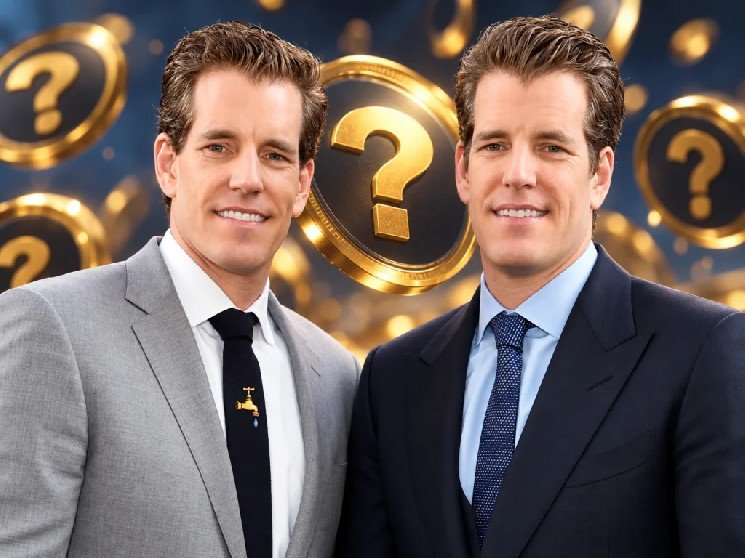
Winklevoss Asset Services, controlled by the Winklevoss twins, has filed an S-1 registration application with the U.S. Securities and Exchange Commission (SEC) for a spot Zcash exchange-traded product. According to the application, the product is planned to be listed on Nasdaq under the ticker symbol “WINK”.
The Winklevoss Zcash ETF will directly hold $ZEC, the native token of Zcash, offering investors exposure to price movements in $ZEC after deducting the fund’s operating expenses and other liabilities. The fund’s net asset value will be calculated based on the daily price reference.
The application also stated that Gemini Trust Company would act as the custodian of $ZEC assets. A sponsorship fee of 0.25% per annum is planned for the fund, while ordinary operating expenses will be covered by the sponsor.
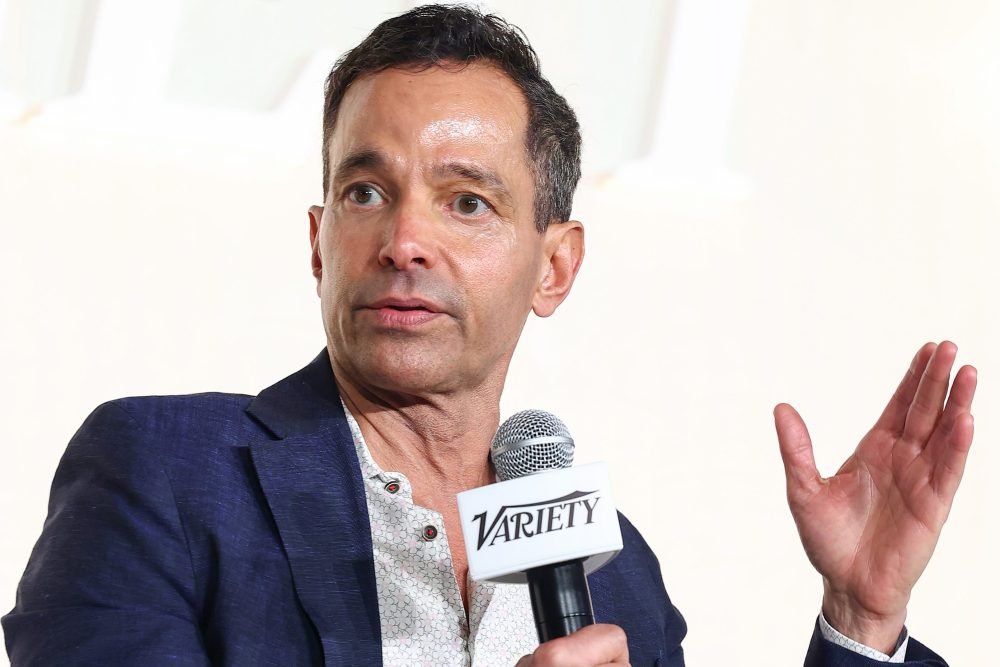
Hours after Skydance chairman and CEO David Ellison and co-CEO Ynon Kreiz sent a memo to employees at the combined company outlining their operating philosophy and goals for the new company, Cheeks sent his own email to TV staffers across studios and networks.
That note started didn’t spell out a structure just yet, but it’s understood that divisional bosses who will report to him include Warner Bros. TV Group and U.S. networks chairman/CEO Channing Dungey, CBS Studios president David Stapf and Paramount TV Studios topper Matt Thunell. Alongside Cheeks, JB Perrette (previously WBD’s CEO/president of global streaming and games) serves as co-chair of Skydance TV, as well as chief business officer. Perrette additional holds those roles for the Skydance DTC streaming division.
“The work ahead is significant, and so is the opportunity,” he said in the note. “I am energized by the possibilities. Together, we’ll build on our collective strengths to create an even stronger future.”
Cheeks’ ascension at Skydance was a huge vote of confidence from Ellison, who had previously tapped the exec to serve as Paramount TV media chair last year when Skydance first took control of Paramount. Prior to that, Cheeks was one of the three co-CEOs of Paramount Global (previously known as ViacomCBS) — and was the only one of that triumvirate to make the transition to the new company.
Here’s his note:
Team,
Today is the start of a new chapter. By bringing together Paramount and Warner Bros. Discovery, we’ve assembled a remarkable collection of television brands, networks and studios, backed by some of the most talented teams in the industry.
I want to acknowledge the hard work, creativity and dedication you each bring to this historic moment. Thank you for playing through the noise this past year. I am excited to move forward together and shape our future as one team.
Our Skydance Television group
This newly formed Skydance Television group is an unmatched mix of networks, studios, platforms and programming genres.
Our three television studios — Warner Bros. Television Studios, CBS Studios and Paramount Television Studios — will continue to create franchises, premium originals and unscripted hits that entertain viewers of all ages and interests and power our platforms and partners around the globe.
CBS remains a cornerstone, underpinning our multiplatform strategy to deliver entertainment, news and sports to audiences at scale.
CBS Sports, TNT Sports and Warner Bros. Discovery Sports together form an enviable and expansive global sports portfolio.
CBS News is one of the most important brands in journalism, delivering national and worldwide news across broadcast, streaming and digital. At the local level, our 27 CBS stations serve 17 markets with best-in-class community journalism.
Our cable portfolio features more than 50 channels globally, connecting viewers with culture-defining entertainment, kids and family programming and leading lifestyle brands.
There are too many standout shows to name individually, but one thing is clear: the breadth and quality of programming across this group is unrivaled, spanning some of the most watched, most acclaimed and most award-winning in the industry.
Our team This next chapter will be defined by the strength of our people. I know you’re eager to hear more about leadership, structure and strategy. More details will be shared as soon as we can.
What happens next This is a moment of transition. With that comes uncertainty. The stress of this is not lost on me. Expect to hear more on our structure and priorities in the weeks ahead. Please continue to reference our Integration Hub.
The work ahead is significant, and so is the opportunity. I am energized by the possibilities. Together, we’ll build on our collective strengths to create an even stronger future.
Our favorite Prime Day deals can help you save big on everything from OLED TVs to gaming headsets. But what good is all that gaming gear without awesome video games to play? Fortunately, no matter what video game console you own, including the PlayStation 5, Switch 2, and Xbox Series X, you can score huge savings on fantastic games. Trust me, I’ve been covering gaming for PCMag for more than a decade, and I’ve played just about everything out there, including each game on this list.
Not a Prime Member?
You can still shop and save during Big Deal Days, but to get the best prices, you must sign up for Prime. Don’t worry, though: You can grab a free 30-day trial during the sales event.
Mario Tennis Fever takes the fun of this elegant sport and amplifies it with wacky, fighting game-esque shenanigans. Equipping your character with different rackets lets you unleash special attacks, like trapping your foe in ink or burning them alive. This adds a chaotic new level of strategy to your rallies. I love Mario Tennis Fever; it’s one of my favorite game releases of the year. And you can buy it for $20 off.
The original Final Fantasy VII was so impactful that it took Square Enix three whole games to do a proper remake. Final Fantasy VII Rebirth is the middle chapter of the trilogy, taking Cloud and friends across the planet as they hunt for the villainous Sephiroth. Final Fantasy VII Revelation, the grand finale, arrives next April, so there’s still time to catch up. Get the RPG now, while it’s discounted by $53!
For decades, Capcom has gifted us iconic franchises like Mega Man, Resident Evil, and Street Fighter. So it’s great that the storied publisher can still release an awesome, original game. Pragmata is a sci-fi shooter with a unique twist: You aim at enemies with your gun while solving hacking puzzles to take them down. The $20 discount should make you more willing to take a chance on the new idea.
The next major Pokémon game, Winds and Waves, doesn’t arrive until 2027. But I would argue that Pokémon Legends: Z-A, an action-packed spin-off, does more to push this franchise into the future. Instead of turn-based battles, Z-A lets monsters fight in real time, making combat much more dynamic and reminiscent of the anime. And when you aren’t fighting, take in the lovely sights and sounds of the pseudo-French city locale. Pokémon Legends: Z-A is $30 off right now.
I don’t know why Sonic the Hedgehog, famous for running fast, needs to be in a car for his racing game. But if you can get past that, Sonic Racing: CrossWorlds is a very good Mario Kart alternative. Controlling Sonic and friends, you’ll race on tracks set in alternate worlds pulled from other Sega games or even other properties, such as SpongeBob SquarePants. Get in on the racing action now and save $40.
John Madden looms so large over the sport of football that Hollywood’s about to release an unhinged biopic about him starring Nic Cage. And a crucial element of that legend is the Madden football games, the only game in town for official simulated NFL action. Football season is already underway, so pick up Madden 27 for $27 off and create your own big moments.
A Hive of Scum and Villainy
Star Wars Outlaws forged its own path in Star Wars gaming by focusing more on thieves and scoundrels than folks who use lightsabers. Initially, I didn’t love the game’s focus on harsh stealth, even if it made sense in context. Fortunately, the game has received many updates that have greatly improved the experience. This is now an open-world Star Wars galaxy that’s worth your time and money. You can force-grab it for just $14.99—that’s a $55 savings!
The Best Editor-Vetted Prime Day Deals
*Deals are selected by our commerce team
FAQ
How Much Does a New Game Normally Cost?
Video game prices have fluctuated greatly over the years, as the industry moved from expensive cartridges to relatively cheap discs. However, after settling around $50 at the beginning of the 2000s, prices for top-tier games have steadily increased to about $70, or even $80 in some recent cases. There are still exceptions, but when prices like these are the norm, deals are even more attractive
This PlayStation/Xbox/Nintendo Switch Is on Sale for Cheap! Should I Get It?
Absolutely! For all sorts of dumb economic reasons, video game consoles are now growing more expensive over time, not less. So if you see a deal on a PlayStation 5, Switch 2, or Xbox Series X/S, then hop on it, because chances are you won’t find it that cheap again. Plus, with console generations now lasting longer than usual, picking up a discounted system should keep you going for at least a few years.
Can I Save Money by Buying Games Digitally?
Buying a digital game means giving up certain rights you have with a physical purchase, such as reselling the game to a store to pocket some dollars. However, to compensate, some games are actually cheaper on digital storefronts than their physical counterparts. In addition, you can find deals on physical gift cards that give you cash to spend on digital games.
About Our Expert
Jordan Minor
Principal Writer, Software
Experience
My PCMag career began in 2013 as an intern. Now, I’m a senior writer, using the skills I acquired at Northwestern University to write about dating apps, meal kits, programming software, website builders, video streaming services, and video games. I was previously a senior editor at Geek.com and have written for The A.V. Club, Kotaku, and Paste Magazine. I’m the author of the gaming history book Video Game of the Year: A Year-by-Year Guide to the Best, Boldest, and Most Bizarre Games from Every Year Since 1977, and the reason everything you know about Street Sharks is a lie.
The integration is designed to reduce the number of separate providers involved in funding, moving and withdrawing money from ether.fi. Users will be able to complete identity verification once and reuse that information across supported products, subject to local requirements.
MoonPay’s Headless Ramps will provide embedded fiat onramps and offramps without redirecting users outside the ether.fi interface. MoonPay Trade will handle cross-chain routing and crypto conversions inside the app.
The partnership will also give ether.fi users virtual accounts with account and routing details through MoonPay Enterprise, supporting payment rails including ACH, Fedwire, SWIFT, Faster Payments and SEPA. Crypto Deposits will allow users to deposit assets from external wallets or exchanges and have them converted into their ether.fi balance.
The expansion comes as ether.fi builds beyond its origins as an Ethereum liquid staking protocol and into payments and other consumer financial products.
Ether.fi said its card processed $123.7 million in spending during September across 1.5 million transactions and more than 48,000 active addresses, citing Paymentscan data. That compares with $24.1 million in September 2025.
Since launching in April 2025, the card has processed about $918 million in cumulative spending across 11.6 million transactions and 113,000 addresses, according to the company.
“The bar for ether.fi isn’t other crypto products,” ether.fi co-founder and Chief Growth Officer Rok Kopp said. “It’s whatever banking app a user opens every morning.”
The partnership preserves ether.fi’s self-custodial model while using MoonPay’s licensed infrastructure for fiat payment rails. Ether.fi said users retain control of their wallet keys while MoonPay handles payments and compliance at the points where funds move between traditional banking systems and crypto.
“The platforms that win will be the ones that make money move simply,” MoonPay CEO and founder Ivan Soto-Wright said.
Kenyan health officials confirmed on Tuesday the country’s first Ebola death as an outbreak in the nearby Democratic Republic of the Congo (DRC) continues to spread.
The person was a Kenyan man who had been living in the DRC for the last seven years, Aden Duale, Kenya’s cabinet secretary of health, said in a press conference.
The Ministry of Health told ABC News the patient was 40 years old and traveled from Buta, a city in the northwestern DRC.
Duale said the patient fell ill about a month ago and was treated in several hospitals while in the DRC. He traveled from the DRC to Kampala, the capital of neighboring Uganda, by road, then boarded a Jambo Jet flight, arriving in Kenyan capital Nairobi last Saturday, Oct. 3.
The patient underwent a public health screening at Jomo Kenyatta International Airport and was taken by a friend to Nairobi Hospital, where he was isolated and later transferred to the East Wing Isolation Facility.
Duale said the patient had symptoms including fever, chills, fatigue, weakness, muscle pain, sore throat and painful swallowing. Doctors collected a sample from the patient, which was positive for Ebola and specifically Bundibugyo virus, a rare variant of Ebola behind the current DRC outbreak for which there are no vaccines and no treatments.
Kenya Health minister Aden Duale speaks to journalists as he announces the first case of Ebola virus in Kenya, Nairobi, Oct. 6, 2026.
Andrew Kasuku/AP Photo
Dr. Patrick Amoth, director general for health in Kenya’s Ministry of Health, said during the briefing that officials believe the patient knew he was ill and reached out to friends and relatives to transport him from the airport to the hospital directly.
“It is potentially possible that some of the medications that he was taking could be able to mask some of the symptoms and therefore give a false positive screening, meaning you could pass through the [airport screening system] because you have taken a medicine, say for example to lower your temperature,” Amoth said. “We believe that he knew that he was unwell.”
Duale said the patient was given supportive treatment but passed away on Monday evening.
“We take this opportunity to pass our sincere condolences to the family and friends of the departed. Arrangement for safe and dignified burial of the deceased are ongoing, and the burial is planned for later today in line with the Ebola safe and dignified public health protocols,” Duale said.
Duale said that 28 contacts of the patient, including family members and healthcare workers who attended to him, have been identified. Health officials are attempting to contact 23 more passengers and four crew members who were on the flight with the patient, and arrangements for quarantine among those at risk have been prepared.
“I wish to assure the public not to panic as all systems are in place to mitigate the spread of the disease,” Duale said. “The public is urged to continue with the frequent hand washing or use of alcoholic hand [wipes] and avoid close contact with sick people coming from countries reporting active transmission of Ebola disease.”
Amoth said Kenyan health officials are collaborating with immediate neighbors and partners including the neighboring country of Uganda, as well as the WHO.
“You [are not] able to put a wall between Uganda and [the DRC], between Kenya and Uganda, to prevent the entry of a pathogen,” he said. “Therefore, we continue to maintain a heightened state of alert, and what is important for us is to be able to pick [up] the disease when it arrives within our borders, and ensure that we prevent community transmission.”
People walk outside the Nairobi Hospital where the first Ebola patient had been admitted before he died in Nairobi, Kenya, October 6, 2026.
Monicah Mwangi/Reuters
Irene Bosire, Kenya deputy director of programs for the humanitarian nonprofit International Rescue Committee, said in a statement that with confirmation of the first imported Ebola case in Kenya, focus has shifted from preparedness to response.
“The IRC is working closely with national and county governments, following Kenya’s Ebola preparedness and response plan,” Bosire said. “We are supporting screening activities to track the disease, trace people who have been in contact with the patient to stop it spreading, share clear information with communities, and provide supplies to prevent infection.”
As of Oct. 3, 8,854 cases of Ebola and 4,114 deaths have been confirmed, according to the Congo Ministry of Health, with 824 patients in isolation.
The case fatality rate currently stands at 48.2% while contact tracing has improved since the summer to 73.8%, the ministry noted.
The audio version of this article is generated by AI-based technology. Mispronunciations can occur. We are working with our partners to continually review and improve the results.
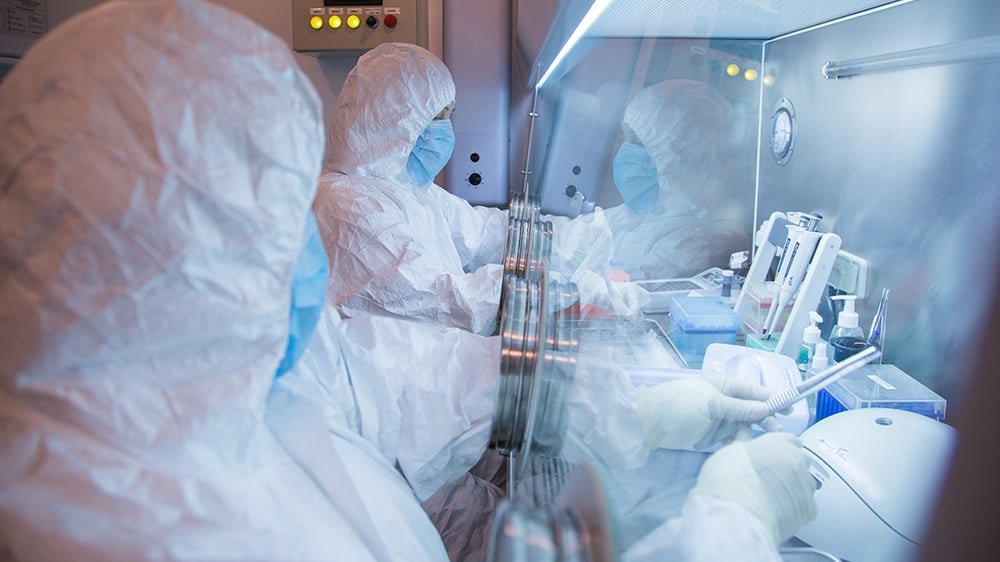
The World Health Organization (WHO) says Russian authorities told it that no cases of plague had been detected among anyone who had come into contact with a Siberian plague institute laboratory worker who died last week.
In a statement to CBC News, the WHO said Russia had informed the agency on Tuesday that the woman’s illness appeared to be a “typical acute respiratory viral infection,” but that “no case of plague has been recorded in Irkutsk, either in her or in anyone else.”
Authorities in Irkutsk previously said the 28-year-old woman, identified in Russian media as Darya Shipilova, died on Friday from pneumonia of an as-yet unestablished origin, leading to speculation she had been infected with pneumonic plague — a virulent form of the bacteria-borne illness.
Shipilova was reported to be a technician at the Irkutsk Anti-Plague Research Institute of Siberia and Far East.
The WHO said it had requested further information from Russian authorities about which pneumonia-causing pathogen is believed to have led to the woman’s death.
Rospotrebnadzor, the Russian government’s public health and consumer watchdog, also said in a statement that no infectious diseases had been reported among the staff of the same plague research institute in Irkutsk over the past 10 days and that extensive testing had found no microorganisms in the deceased woman’s body linked to her work.
“A comprehensive set of anti-epidemic measures was immediately organized and implemented in full in accordance with public health legislation,” the watchdog said.
“This included identifying the widest possible circle of individuals who had been in contact with the patient and arranging for them to be placed under medical observation in hospital with daily laboratory tests.”
It said the results had revealed two cases of COVID-19 and two cases of rhinovirus infection, but that no pathogens causing other infectious diseases had been detected.
“None of the contacts showed any changes in their state of health associated with infectious disease.”
Locals not phased by plague rumours
Elena Sofina, deputy head of the Shelekhov district near Irkutsk, where a local hospital was placed under quarantine, said what she called a “dangerous diagnosis” had not been confirmed.
She added that 60 per cent of those placed under quarantine as a precaution had already been released. Local media said around 200 people had previously been quarantined.
Locals in the town said their lives had barely been disrupted, although they said some people in shops had initially worn surgical face masks as a precaution.
A resident who gave her name only as Anna said the situation was calm and that people had been prepared for restrictions to be introduced, but that life had gone on pretty much as usual.
“Everyone had face masks at home and wore them for no more than 24 hours,” she told Reuters.
Denis, another resident, said news of the lab worker’s death had been widely discussed in the town and that the local hospital had temporarily stopped doing diagnostic tests but had since resumed normal business.
A May 2025 satellite image shows the Anti-Plague Institute of Siberia and the Far East in Irkutsk, Russia, where 28-year-old Darya Shipilova before her death last week. According to Russian officials, Shiplova died from pneumonia of an as-yet unestablished origin, prompting authorities to quarantine about 200 people and causing public health fears on social media. (Google/Airbus/Handout/Reuters)
Kremlin thanks Trump for offer to help
Kremlin spokesman Dmitry Peskov expressed appreciation for an offer of help on Monday from Trump, although without making clear if Moscow planned to accept it.
“It’s always good when mutual assistance is offered,” Peskov told reporters.
Trump on Monday described the situation as a “big problem for Russia.” U.S. Secretary of State Marco Rubio said on Tuesday it was incumbent on Moscow to share more information.
Health Canada told CBC News it is also monitoring the situation, though it sees no risk to Canada at this time.
WATCH | Questions, concern surround death of Russian anti-plague lab technician:
What we know about the suspected plague death in Russia
Two-hundred people have been placed under medical observation in Siberia, Russia, after a laboratory worker died after a reported accident at a plague research facility. The World Health Organization says the public health risk remains low.
It’s time to save some cash on the things you were planning on buying anyway. Amazon Prime’s Big Deal Days are here, and if you were hoping for a big discount on your next flagship carry, last generation’s Google Pixel 10 remains a worthy buy at $200 off.
Why should you listen to me? I’ve been writing about and testing smartphones for more than 15 years. I’ve seen the ebbs and flows of the mobile landscape, and the trends that stayed and those that faded. I know what a reliable smartphone looks and feels like. Google’s Pixel 10 is the real deal, with its Tensor G5 processor, compact chassis, and top-tier camera performance powered by Google’s imaging algorithms. Plus, Pixel hardware offers helpful features like Magic Eraser and Call Screening, which will hang up on spam calls for you before you hear the ringer. The Pixel 10 is backed by seven years of software updates and security support.
It’s deals like this that make Amazon Prime’s Big Deal Days and our intensive coverage so valuable.
Best Compact Android Flagship Deal
Google Pixel 10
6.3-inch OLED display, Google Tensor G5 CPU, 12GB RAM, 128GB-256GB
As flagship phone prices keep rising, the Google Pixel 10 remains a worthy buy, even though it launched in late 2025. The Google-made Android smartphone’s $200 price drop (down to $599 from $799) makes the device even cheaper than 2026’s Pixel 10a, which is the mid-tier offering in the Pixel 10 lineup. But that Pixel 10a ships with Google’s Tensor G4, less RAM, and a camera system that can’t do as much as the regular Pixel 10.
The Pixel 10 has plenty of pro-tier features. It’s the first of Google’s higher-end models to feature a dedicated 5x telephoto lens. It’s also the first to bring the magnetic Pixelsnap to the Pixel ecosystem, which means you can swap MagSafe accessories with iPhone-loving people in your life. Combined with the Tensor G5 chip—which didn’t even make it to the economical Pixel 10a—and seven years of guaranteed software and security updates, it’s a suitable buy if you’re willing to sport last year’s hardware.
Recommended by Our Editors
If you like this phone deal and want to save more, be sure to check out our complete Prime Day coverage, where you’ll discover deals upon deals.
The Best Editor-Vetted Prime Day Deals
*Deals are selected by our commerce team
FAQ
Is Google’s Pixel Actually Cheaper During Amazon Prime Day?
Amazon’s $599 price is one of the lowest deals we’ve seen on the flagship since its debut in 2025, especially if you’re hoping to buy it unlocked. That comes to about a 25% discount.
Which Pixel Should I Avoid?
The Pixel 10a is a powerful little mid-tier device that pushed Google’s A-series forward in its own right, but it’s a downgrade at $699 for its dated Tensor G4 CPU and lack of a telephoto camera.
What Month Is the Cheapest to Buy a Pixel?
October is a good time to check on leftover stock, especially for the devices that were impressive at launch but have been on the shelf for a while. Plus, if you buy before the holidays, you’re likely to get the color and storage amount you desire.
About Our Expert
Florence Ion
Senior Writer, Mobile
Experience
I’m PCMag’s Senior Mobile Writer. I write about Android, iOS, and the myriad intricacies in between. I’ve been covering these worlds for more than 15 years. Before joining PCMag, I was a staff reporter for Gizmodo, PCWorld, and Ars Technica.
During Amazon’s Prime Day Big Deals, you can pick up ESET Home Security Essential for half its usual price. With this security suite, you get ESET antivirus apps for Windows, macOS, and Android, as well as an unusual app for smart TVs. Those with the tech skills to appreciate them will find its network inspector, anti-theft system, and banking protection components delightful. And its Android security app is among the best. Getting it for half off makes this security suite even more tempting.
Not a Prime Member?
Anyone can shop and save during the Big Deal event, but to get the best deals, you need to sign up for Prime. Don’t worry about spending all your savings on membership. You can sign up for a free 30-day trial during the sales event and cancel when it’s over.
Even on an ordinary day, a five-license subscription for ESET Home Security Essential costs $69.99, less than almost all its competitors. Cut that already-low price in half, to $35, and you’ve got a serious Prime Day bargain. And this is no cheap protection. It gets top scores from the independent labs, and it includes expected security suite features, including antivirus, firewall, spam filter, and parental control. On top of the expected, it adds quite a few bonuses, among them webcam protection, anti-theft, and a network inspector. High quality, low price, what’s not to like?
Prime Day is a great time to invest in security for your devices, but that’s not all. For Prime Day offers of all kinds, be sure to visit our PCMag Deals Hub.
The Best Editor-Vetted Prime Day Deals
*Deals are selected by our commerce team
About Our Expert
Neil J. Rubenking
Principal Writer, Security
Experience
When the IBM PC was new, I served as the president of the San Francisco PC User Group for three years. That’s how I met PCMag’s editorial team, who brought me on board in 1986. In the years since that fateful meeting, I’ve become PCMag’s expert on security, privacy, and identity protection, putting antivirus tools, security suites, and all kinds of security software through their paces.
Before my current security gig, I supplied PCMag readers with tips and solutions on using popular applications, operating systems, and programming languages in my “User to User” and “Ask Neil” columns, which began in 1990 and ran for almost 20 years. Along the way, I wrote more than 40 utility articles, as well as Delphi Programming for Dummies and six other books covering DOS, Windows, and programming. I also reviewed thousands of products of all kinds, ranging from early Sierra Online adventure games to AOL’s precursor Q-Link.
In the early 2000s, I turned my focus to security and the growing antivirus industry. After years of working with antivirus, I’m known throughout the security industry as an expert on evaluating antivirus tools. I serve as an advisory board member for the Anti-Malware Testing Standards Organization (AMTSO), an international nonprofit group dedicated to coordinating and improving testing of anti-malware solutions.
If you purchase an independently reviewed product or service through a link on our website, The Hollywood Reporter may receive an affiliate commission.
Sure, Prime Big Deal Days has its fair share of highlights, but many of the real sale standouts are coming from elsewhere. As the 48-hour shopping holiday takes over our feeds, alternative retailers are proving their discounts are just as good — perhaps even better.
For a limited time, Men’s Wearhouse is offering up to 50 percent off over 2,000 pieces: 30 percent off shoes, suits and sports coats; up to 40 percent off dress shirts; and up to half off pants, shorts and outerwear, exclusively online at menswearhouse.com.
Along with the flash sale comes free shipping on Tuesday, Oct. 6 and Wednesday, Oct. 7, plus, up to 70 percent off hundreds of clearance finds across all categories.
Standout labels from the online-only event include Calvin Klein, Michael Kors, Tommy Hilfiger, Awearness Kenneth Cole (the designer’s Men’s Wearhouse-exclusive collection) and Paisley & Gray (for more unique styles). As for shoes, our top picks span Cole Haan, Timberland, Gola, Florsheim and Clarks.
Awearness Kenneth Cole Merino Wool Long Sleeve Polo Sweater
Clarks Weltridge Casual Moc Toe Leather Oxfords
In terms of styling, collegiate-coded dressing is taking a front seat this fall, as the hottest shows of the season — like Off Campus and The Shards — are inspiring menswear for the cooler months ahead. The preppy academia fashion playbook spans luxe leather loafers, quarter-zip pullovers and casual knitwear, but regardless of trends, these cardigans, polo sweaters and crisp Oxfords never really go out of style.
Calvin Klein Slim Fit Stripe Supima Cotton Dress Shirt
Awearness Kenneth Cole Merino Wool Long Sleeve Polo Sweater
Tommy Hilfiger Modern Fit Linen Suit
Wilke-Rodriguez Marled Crew Neck Sweater
Shop the full flash sale and clearance assortment online only at menswearhouse.com, and use code FREESHIPPING for free standard shipping on orders placed between Tuesday, Oct. 6 and Wednesday, Oct. 7.
Ella Bleu Travolta has officially made her Paris runway debut on one of the top fashion brands’ stages. The 26-year-old daughter of John Travolta and the late Kelly Preston made her Paris Fashion Week runway debut, walking in Miu Miu’s Spring/Summer 2027 Ready-to-Wear show on Sunday.
Ella rocked an oversized forest-green blazer layered over a patterned top and navy trousers and sandals. She looked cool and composed with hair in a perfectly messy updo with natural makeup. There’s no denying she looked just like her mom’s mini me. Kelly might be remembered for her blonde hair, but she used to dye it brown and shades of red over the years.
Miu Miu is ranked as the world’s second-hottest fashion brand according to the second quarter of the 2026 Lyst Index, which tracks the hottest fashion brands and products online. It looks at what 160 million shoppers are searching for and engaging with across social media, search, editorial coverage, and emerging AI platforms based on desire, demand, and discovery. So her Paris Fashion Week debut was with one of the most sought-after fashion houses in the world.
She’s been on the runway before, making her New York Fashion Week runway debut in 2022, walking in Karl Lagerfeld’s “Cara Loves Karl” collection.
Ella has also attended Fashion Weeks in New York and Milan and appeared on red carpets in designer looks, including this year’s Cannes Film Festival. She has pursued acting throughout her career and recently starred in her father’s directorial debut, Propeller One-Way Night Coach, which premiered at Cannes earlier this year, which is when John’s hat went viral.
Ella can even sing, releasing her debut single “Dizzy” in 2022. In her Vogue Italia interview, she explained that she hopes to bring all of those interests together rather than just choosing one. “I’m trying to combine all these things as much as possible,” she said, adding that she is focusing on acting but hopes fashion and music will continue to be part of her life.
In a world obsessed with the idea of “nepo babies,” Ella has made it clear that she wants to establish an identity of her own. When asked about the term in 2023, she told Parade, “I know that personally speaking, for me, my parents are my parents and obviously what they do is acting and singing and all of that, but I can just learn from them—I’m definitely proud to be their child and also forge my own career in whatever I choose.”
She carried that same tune in 2026. “I’m very close to my family, but I don’t want to give up being myself,” she told Vogue Italia. “I’d like to forge my own path: at home they’ve always encouraged me to do so.”
John has also emphasized that Ella is her own person. In a 2019 interview with PEOPLE, he praised his daughter as “gracious, generous, poised, graceful and gorgeous,” adding that he didn’t take credit for who she became “other than just adoring her.”