The streamer is submitting the second season of its Pakistani American comedy, “Deli Boys,” across 22 categories, with 28 total planned submissions, Variety has learned exclusively.
At the center of the push is a play for outstanding comedy series, with the sophomore run set to drop as a binge on Hulu on May 28, 2026, three days before the end of the eligibility window. The show landed on numerous best-of lists in its freshman year with a strong 96% on Rotten Tomatoes.
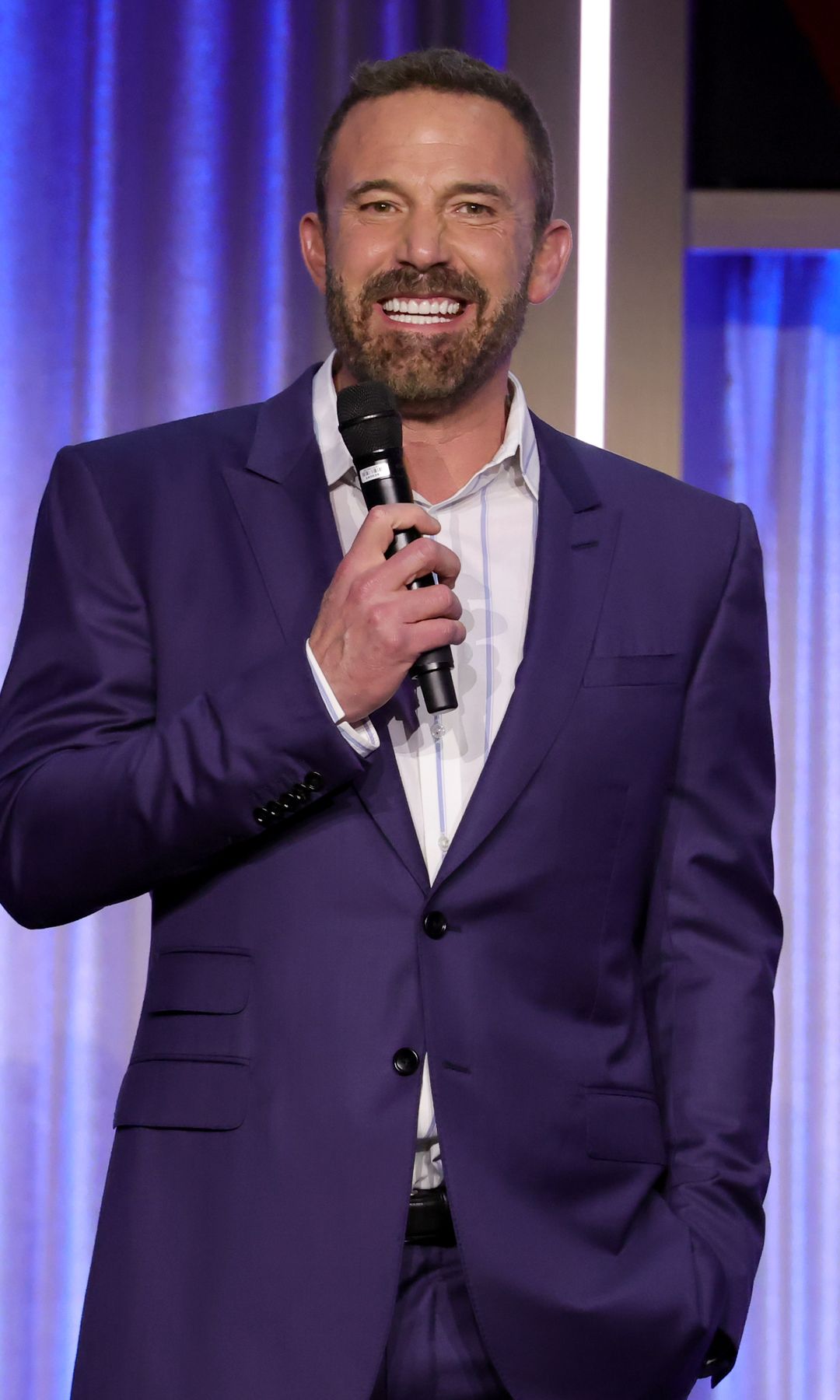
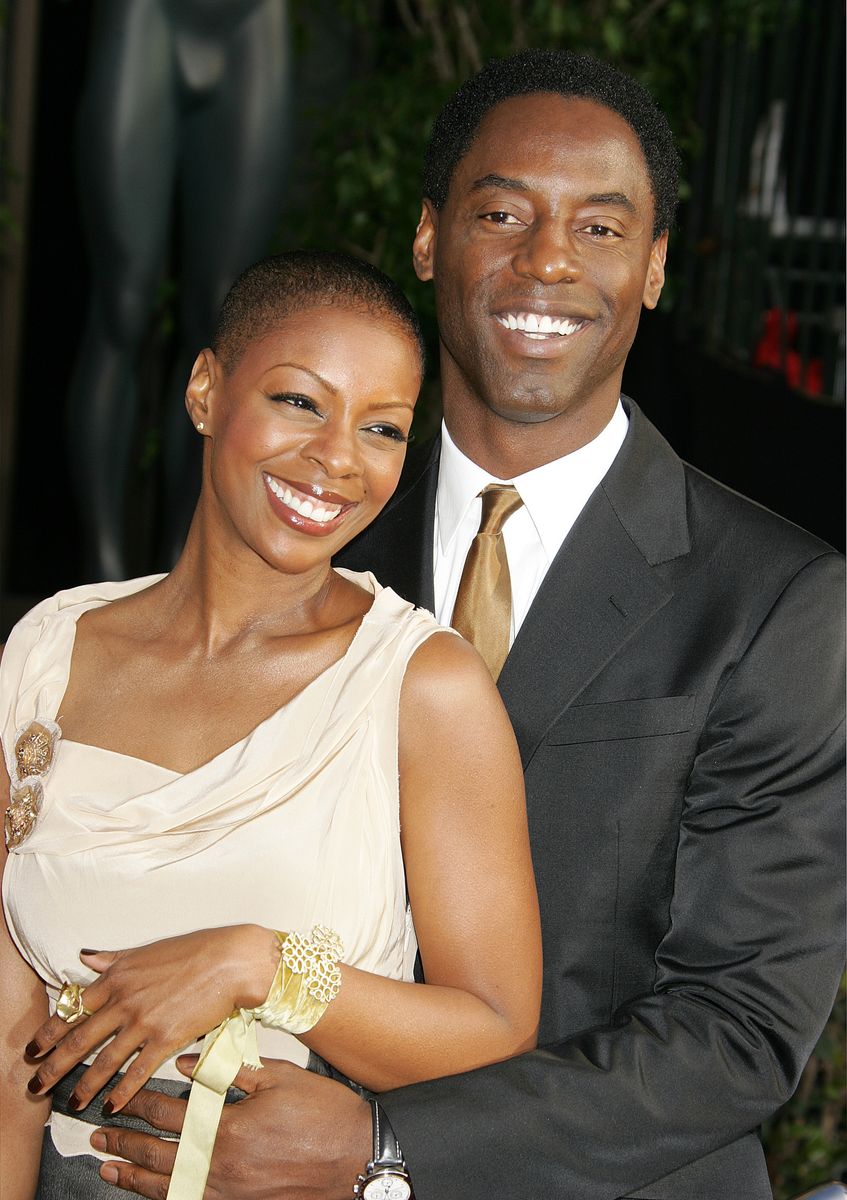
Saagar Shaikh, who plays the impulsive younger brother Raj Dar, will compete for the lead comedy actor category. In addition, the supporting actor field will be led by Asif Ali as elder brother Mir Dar and Brian George as Ahmad, alongside two of the season’s prominent additions: Emmy winner and “Saturday Night Live” alumni Fred Armisen joins the second season as casino magnate Max Sugar, a money launderer who becomes the brothers’ auntie Lucky’s chaotic new love interest. And Tony nominee and Grammy winner Andrew Rannells comes aboard as Philadelphia District Attorney Andrew Chadwater, who is angling to turn one major bust into a mayoral run.
Poorna Jagannathan, whose turn as the formidable crime-boss auntie Lucky has been a fan favorite, will be the lone supporting comedy actress submission.
The campaign will also target a deep bench of guest actors for the upcoming sophomore season. Emmy and Oscar nominee Kumail Nanjiani will be on the guest comedy actor ballot alongside “Queer Eye” host Tan France, and former “Glee” star Iqbal Theba. At the same time, six-time Emmy nominated comedian Robin Thede, best known for “A Black Lady Sketch Show” and YouTuber and Canadian comedian Lilly Singh will vie for spots in the guest comedy actress race. The series will additionally vie for directing and comedy, with the official selections still to be determined. With the artisans, Hulu will submit “Deli Boys” in an additional 14 craft categories. Specific episode submissions and craft details will be announced in the coming weeks.
Season 2 picks up with the Dars discovering that inheriting a criminal empire was, in fact, the easy part. Drowning in dirty money and surrounded by Philly’s sketchiest operators, Mir works to expand the family’s DarCo enterprise without torching it, Raj plots revenge on Ahmad and Lucky finds her professional and personal lives blurring as Max Sugar turns laundering into what one might generously call a situationship.
Emmy submissions are due on May 7, with the nomination-round voting running from June 11-22. The 78th Primetime Emmy Awards nominations will be announced on July 8.
DELI BOYS – First Look – (Disney/Sandy Morris) — FRED ARMISEN
Disney
The full list of Emmy submissions is below.
Outstanding Comedy Series
Lead Actor in a Comedy Series: Saagar Shaikh
Supporting Actor in a Comedy Series: Asif Ali, Fred Armisen, Brian George, Andrew Rannells
Supporting Actress in a Comedy Series: Poorna Jagannathan
Guest Actor in a Comedy Series: Tan France, Kumail Nanjiani, Iqbal Theba
Guest Actress in a Comedy Series: Lilly Singh, Robin Thede
Directing for a Comedy Series: Episode TBD
Writing for a Comedy Series: Episode TBD
Production Design for a Narrative Program (Half-Hour)
Casting for a Comedy Series
Cinematography for a Series (Half-Hour)
Contemporary Costumes
Single-Camera Picture Editing for a Comedy Series
Contemporary Hairstyling
Main Title Design
Contemporary Makeup (Non-Prosthetic)
Music Composition for a Series (Original Dramatic Score)
Music Supervision
Sound Editing for a Comedy or Drama Series (Half-Hour) and Animation
Sound Mixing for a Comedy or Drama Series (Half-Hour) and Animation
Joby Aviation is kicking off 10 days of electric air taxi demo flights in New York City. Before you try to book one to bypass the city’s awful traffic, Joby’s aircrafts aren’t taking customers yet. Instead, the company is trialing the air taxis in “real flight routes and real environments,” as indicated in its press release.
With the first point-to-point flight of its electric vertical takeoff and landing (eVTOL) aircraft completed, Joby said that one of its electric air taxis made it from John F. Kennedy International Airport to NYC’s heliports in Lower Manhattan and Midtown in less than 10 minutes. Unlike helicopters, Joby’s CEO, JoeBen Bevirt, said this “quiet, zero operating emissions air taxi service” will better serve New Yorkers. These demo flights are part of Joby’s participation in the eVTOL Integration Pilot Program, the Federal Aviation Administration’s program to fast-track the commercial rollout of air taxis.
Joby said it’s still in the final stages of securing FAA certification, but this latest campaign in NYC should propel its process forward, especially after having completed piloted demos in the San Francisco Bay Area in March. Joby was previously targeting to launch its air taxi service in 2025, but that goal has since been pushed back. The company’s CEO said that Joby is planning to start passenger flights in New York, Texas and Florida as soon as the second half of 2026, according to Bloomberg.
Images and details about Samsung’s upcoming smart glasses have leaked, according to a report by Android Headlines. We knew these were coming at some point, but we now have what could be actual photos and they look pretty nifty. The glasses are reportedly being developed under the codename “Jinju” and could cost anywhere from $380 to $500.
These are the first smart glasses from Samsung and look to offer a similar feature set to stuff like Meta Ray-Bans and the forthcoming Google Gemini glasses. Samsung’s specs will run on the Android XR wearables platform and will likely feature heavy integration with the Google Gemini chatbot.
It has been reported that these glasses will not feature a display, but that’s likely coming with another pair in 2027. The second release is being developed under the codename “Haean” and will reportedly include a micro-LED display, allowing for similar functionality to something like the Meta Ray-Ban Display glasses. These could cost anywhere from $600 to $900.
We don’t know when the Jinju glasses will launch, but later this year is a safe bet. Samsung has a major Unpacked event scheduled for July. We could get some official details at that point, though it’s unlikely the smart glasses will launch alongside stuff like the Galaxy Z Fold 8 and the Galaxy Watch 9.
It’s far more likely we’ll get a tease at that event, with a launch later in the year. This is what Samsung did with its Galaxy XR virtual reality headset last year.
It’s also been reported that the Jinju glasses will include a 12MP camera, a Snapdragon AR1 chip and directional speakers with bone-conduction tech. These specs are, of course, subject to change before launch. It’s also highly possible the price will tick up beyond the aforementioned range, thanks to global economic uncertainty and the rising costs of RAM and storage.
Solana Foundation said the network has a researched path to migrate toward post quantum cryptography if quantum computing becomes a credible threat to blockchain security.
A new report on Solana’s quantum readiness is here, from @anza_xyz and @jump_firedancer.
TLDR: Quantum is still years away, and if and when it materializes, the work to migrate Solana is well-researched, understood, and ready to deploy as described below. pic.twitter.com/eNYgJeV2mx
— Solana Foundation (@SolanaFndn) April 27, 2026
The foundation said no immediate change is needed, but the ecosystem has already studied how to protect wallets and preserve network performance.
The plan centers on Falcon, a post quantum digital signature scheme identified independently by Anza and Firedancer, two major Solana validator client developers. Both teams have built initial Falcon implementations, reflecting alignment around compact signatures designed for high throughput blockchain use.
Solana Foundation also pointed to Blueshift’s Winternitz Vault, a quantum resistant lamports vault that uses Winternitz one time signatures and has been available in the ecosystem for over two years. The project’s GitHub describes the vault as using WOTS and truncated Keccak256 hashing to protect against quantum related threats.
The roadmap calls for continued research into Falcon and alternatives, adoption of a post quantum scheme for new wallets if the threat becomes credible, and migration of existing wallets to the selected standard. Solana Foundation said the transition is expected to be manageable and not meaningfully affect network performance.
$XRP-linked investment products swung back to inflows last week after shedding $56 million the week prior, as digital asset funds extended their winning streak for a fourth consecutive week.
According to CoinShares’ new report, Bitcoin led $1.2 billion in crypto fund inflows as institutional demand strengthened ahead of the upcoming FOMC meeting, where the Fed is expected to provide guidance on interest rate policy.
Bitcoin captured the bulk, attracting $933 million in a single week and bringing its year-to-date total to $4 billion. The asset was trading above $76,000 during the reporting period, its strongest showing since the correction that rattled markets in late February.
Ethereum pulled in $192 million, its third consecutive week above $190 million, while Solana and $XRP collectively attracted around $47 million.
Regionally, the US accounted for roughly $1.1 billion of the total. Germany more than doubled its prior week’s contribution of $61.7 million. Switzerland, which had pulled in $138 million the week before, reversed course and added $35.2 million. Canada chipped in $15 million.
Blockchain equity ETFs, which hold shares of companies building on or around blockchain technology rather than the tokens themselves, recorded $617 million in inflows over three weeks, reaching record highs and reflecting surging investor interest.
The next major catalyst is the Fed meeting on April 28–29. With no rate move expected, Powell’s tone could either reinforce risk appetite or introduce downside risks.
Bitcoin slid below $77,000 after climbing past $79,000 yesterday, as the total crypto market value fell to $2.6 trillion, per CoinGecko.
After Melania Trump made headlines earlier Monday by calling for ABC to cancel Jimmy Kimmel Live! in the wake of a shooting outside the White House Correspondents’ Dinner, Trump posted on Truth Social a similar take.
“Wow, Jimmy Kimmel, who is in no way funny as attested to by his terrible Television Ratings, made a statement on his Show that is really shocking,” wrote Trump. “He showed a fake video of the First Lady, Melania, and our son, Barron, like they were actually sitting in his studio, listening to him speak, which they weren’t, and never would be. He then stated, ‘Our First Lady, Melania, is here. Look at Melania, so beautiful. Mrs. Trump, you have a glow like an expectant widow.’ A day later a lunatic tried entering the ballroom of the White House Correspondents’ Dinner, loaded up with a shotgun, handgun, and many knives. He was there for a very obvious and sinister reason. I appreciate that so many people are incensed by Kimmel’s despicable call to violence, and normally would not be responsive to anything that he said but, this is something far beyond the pale. Jimmy Kimmel should be immediately fired by Disney and ABC. Thank you for your attention to this matter!”
The post follows a suspected shooter being arrested for opening fire at the WHCD host hotel — and Attorney General Todd Blanche revealing that investigators believe the suspect, Cole Tomas Allen, 31, was targeting members of Trump’s administration.
Melania Trump previously posted, “Kimmel’s hateful and violent rhetoric is intended to divide our country. His monologue about my family isn’t comedy—his words are corrosive and deepens the political sickness within America. People like Kimmel shouldn’t have the opportunity to enter our homes each evening to spread hate. A coward, Kimmel hides behind ABC because he knows the network will keep running cover to protect him. Enough is enough. It is time for ABC to take a stand. How many times will ABC’s leadership enable Kimmel’s atrocious behavior at the expense of our community.”
The first lady’s statement follows ABC temporarily suspending Jimmy Kimmel Live! last September following threats from Trump’s Federal Communications Commission chairman Brendan Carr. That incident was tied to a joke Kimmel made after the assassination of Charlie Kirk. When Kimmel returned to the air, he said his joke had been “ill-timed or unclear or maybe both” and added, “I get why you’re upset.”
Representatives for ABC and Kimmel have not replied to requests for comment.
Trump has feuded with Kimmel since 2016 and has called for the talk show’s cancellation several times. Contrary to his new post, Trump frequently reacted to things Kimmel has said. Kimmel, in turn, has long made mocking Trump a focal point of his monologues. Trump previously was credited—correctly or not—with pushing CBS to cancel another late-night critic of his administration, Stephen Colbert, whose TheLate Show ends next month. After the Colbert decision, Trump posted on social media, “I absolutely love that Colbert’ got fired. His talent was even less than his ratings. I hear Jimmy Kimmel is next. Has even less talent than Colbert!”
The WHCD shooting marked the third time Trump’s security perimeter has been breached by a man with a gun who intended to cause the president harm during his second term. The first was in July 2024, during a rally in Butler, Pennsylvania, when Thomas Matthew Crooks opened fire on Trump with a rifle, grazing the president’s ear. The second was in September 2024, when Ryan Wesley Routh was spotted with a rifle at a golf tournament while Trump was playing. In addition, there have been other incidents, such as two foiled assassination plots allegedly perpetrated by Iran.
Series can have unreliable narrators, “Money Heist,” for example. But what about unreliable heroes? Just cast in a lead role in “Dexter Resurrection” Season 2, Dan Stevens delivers one, playing Pepper in AMC’s “The Terror: Devil in Silver,” executive produced by Ridley Scott at Scott Free and celebrating its world premiere at Canneseries April 27.
Pepper is first seen teaching his girlfriend’s young daughter how to play drums. He has plans, he tells his girlfriend, to teach other kids in the apartment block. “I like a man who hustles,” says his girlfriend. But not a man who splashes $4,000 on a new drum kit, all the money the couple have. Nor a man like Pepper, who flies off the handle when he catches his girlfriend’s ex manhandling her, pummelling the man in rage.
Pepper is arrested and committed to New Hyde Psychiatric Hospital rather than being taken down to a police station. Something is wrong at New Hyde, a malevolent devil or monster which attacks patients, including Pepper. But something is wrong with Pepper himself, and he’ll only heal if he confronts not only New Hyde’s monster but his own inner demons.
The role of Pepper demands a high-caliber performance from Stevens, (“Downton Abbey,” “Legion”), mixing righteous and sometimes verbally violent rage, medication-induced stupor and boggle-eyed horror – as well as discomfort as he connects to his still traumatic past. He also experiences a second broad character arc moving from indifference to appreciation for his fellow patients.
“The Terror: Devil in Silver” packs a prestige executive producer package apart from Ridley Scott of David W. Zucker at Scott Free, showrunners Chris Cantwell (“Halt and Catch Fire”) and Victor LaValle (“The Changeling”), author of the novel on which the season is based, the book being rated “a dizzying high-wire act” by the Washington Post and “fantastical, hellish, and hilarious” by the Los Angeles Times.
Emmy nominee Karyn Kusama (“Yellowjackets”), also an executive producer, directs the first two of six episodes.
She knowingly hitting their genre beats. But this is a true-blue psychological thriller and much more.
Set to bow on AMC+ and Shudder on May 7, “The Terror: Devil in Silver” also marks the third installment in an acclaimed horror anthology begun with AMC’s 2018 supernatural survival thriller “The Terror” Season 1, showrun by David Kajganich and Soo Hugh, chronicling Sir John Franklin’s doomed Arctic naval expedition over 1845-48. 2019’s “The Terror: Infamy,”charted the devastation of WWII Japanese-American internment.
AMC already has flagship franchise “The Walking Dead” and the expansive world of the “Anne Rice’s Immortal Universe” installments. “The Terror” anthology “speaks to a common audience DNA,” David W. Zucker notes. “Now under Dan McDermott, AMC is very excited to be in that market with this kind of psychological horror and supernatural element that’s defined each of the cycles that we’ve done,” he adds. “The Terror: Infamy” “still preys on internal threats and vulnerabilities that emerge from our personal belief systems and perceptions.”
Led by Judith Light (“Transparent,” “Before,” “Out of My Mind”), playing a veteran New Hyde patient, “Devil in Silver” packs a distinguished cast: CCH Pounder (“Rustin,” “NCIS: New Orleans”), Aasif Mandvi (“Evil,” “This Way Up”), John Benjamin Hickey (“The Big C,” “Lilly”), Stephen Root (“Barry,” “Heads of State”) and Michael Aronov (“The Americans,” “Operation Finale”).
Dan Stevens and Judith Light in ‘The Terror: Devil in Silver’
Variety chatted to Stevens and Zucker as “The Terror: Devil in Silver” celebrated its world premiere at Canneseries.
A sense of vulnerability runs through the whole “Terror” anthology….
Zucker: Yes. “Devil in Silver” is the first cycle set in modern times and similarly explores our individual culpabilities with Dan Stevens’ character. He feels quite trapped in an environment with people to whom he cannot relate and in a place where he thinks he doesn’t belong, only to be confronted by something there that exploits a truth which resides deeply within him.
That marks “The Devil in Silver” apart as a genre piece….
Zucker: Victor LaValle’s suspenseful novel was the foundation for “Devil in Silver,” which he adapted with Chris Cantwell. When Karyn Kusama came aboard as director, it was the lure of the writing but ultimately the trajectory of Dan’s character that she found really quite unique and unusual for a story in this genre space. It’s not a tale about simply vanquishing the devil or delving into what the conventional realm of that story would be. It takes quite a different approach in terms of our protagonist’s ultimate discovery about himself.
Which Pepper himself has suppressed….
Zucker: Yes, it’s really speaking to the things that we tend to cut off and deny in our psyches, and the degree to which we need to contend with them. There’s something inherent to Pepper’s nature which lands him in New Hyde in the first place: a belligerence and anger that will really test how he contends with all he encounters at New Hyde. There are parts of his past that he’s really subverted, some quite painful but undeniable on his part. It’s revealing the core source of what haunts him, as it corresponds to what he battles at New Hyde.
“Devil in Silver” also taps into the current Zeitgeist…. COVID-19, for instance, made people realize that they had not been connecting with the essential things in their lives.
Zucker: I’d say that’s an essential part of it. And a key component of the novel and the show is the setting itself, which is a real impeachment of our mental health system, this history of confining and discarding lives that has spilled out into the streets of America. Where do those who need meaningful assistance, where can they reside and what support is available to them? There’s a connectivity and empathy for another that we’ve lost.
The way you play Pepper, Dan, he begins the tale as a seemingly outgoing American male who, suffers an extraordinary predicament which forces him to recognize emotions and feelings which he’s suppressed.That seems a very male thing….
Stevens: Certainly, Dan has a problem commonly associated with maleness – an inability to engage with emotion and past trauma that will inevitably come back to haunt him, either literally or metaphorically. That’s definitely one of the story’s big themes. I don’t know, however if it’s the entirety of it. The novel, as well as having strong horror elements and is a social realist tale, an institutional critique as much as anything. So it’s got these two things running in parallel, which I think makes for quite an interesting narrative. That was certainly what engaged me to begin with: It wasn’t just a straight up horror show with a monster. There was something more to it, a social critique going on underneath.
Acritique of the U.S. health service…
Stevens: Yes. New Hyde as an institution in our story exists not to heal people but to contain those that society finds inconvenient. Pepper is committed to New Hyde because it’s convenient for the cops to put him there rather than process him through the criminal system. What’s interesting about Victor’s story originally, and is very present in our story, is how, poverty, race and bureaucratic indifference, not illness, determines who gets locked away. And so our ward, New Hyde, becomes a sort of metaphor for all the ways in which society disappears its undesirables.
How would you read the “devil” in the title of the novel and the series?
Stevens: Obviously there is a “devil” that is sort of roaming our ward, the monster of the show. But I think that monster sort of functions on multiple levels. It literalizes the violence that’s already present in the institution in its neglect, overmedication and dehumanization. The series is asking: What’s more monstrous: the creature in the hall or the system that’s trapping these vulnerable people and just looking the other way?
The Pepper you play has a considerable character arc….
Stevens: Certainly, the issues surrounding what he did haunt him as much as any physical, actual monster. He has a sort of reckoning with that past. But there’s also change in the way he relates to other people in the ward and the relationships that he develops. He gets into the inner lives of these people, their history and humanity and starts to see that this humor and courage and this love that’s going on. And it really actually sort of opens him up to stare down the demon that he’s carrying as much as this sort of literal monster in the hallways.
It’s quite unusual to have a social realist series with a monster. Are these the kind of parts that you’re looking for?
Stevens: Yes. I love the genre space because it affords a great deal of creativity and playfulness. What interests me within that space is the opportunity to, in parallel, have a conversation about something that you know, that needs a different lens on it. You know, that clearly the lens we have on it already isn’t working. So we need to shed some light on it. We need to throw the conversation into a different paradigm in order to to look at it. Definitely, it spoke to me on that level very, very much. Victor’s original novel definitely is in conversation with something like “One Flew Over the Cuckoo’s Nest” but it’s more explicitly concerned with race and is grimmer about the possibilities of sort of individual heroism against institutional power.
Genre these days almost demands originality…
Stevens: Yes, another thing I enjoy about genre is the dialogue within the genre itself. There’s a push for originality by definition. Filmmakers within the space are in dialogue with each other: like, ‘You did your zombie movie, your shark movie, your whatever it is movie like this, I’m going to do it like this.’ There is a very strict set of rules, but it’s like, which ones are you going to break this time in order to surprise people? That’s something that excites me about about genre. We want to be constantly showing you things that you haven’t seen before and championing that originality. Genre really invites that. Audiences are learning that. And ultimately, distributors, networks will follow. They have to.
Donald Trump is demanding ABC and Disney fire Jimmy Kimmel. Just hours after his wife, Melania, wrote in an X post that ABC must “take a stand” against Kimmel and his “atrocious behavior,” Trump took to his Truth Social account to post an even more blunt takedown of Kimmel.
“Wow, Jimmy Kimmel, who is in no way funny as attested to by his terrible Television Ratings, made a statement on his Show that is really shocking,” Trump said. “He showed a fake video of the First Lady, Melania, and our son, Barron, like they were actually sitting in his studio, listening to him speak, which they weren’t, and never would be. He then stated, ‘Our First Lady, Melania, is here. Look at Melania, so beautiful. Mrs. Trump, you have a glow like an expectant widow.’”
Trump continued, “A day later, a lunatic tried entering the ballroom of the White House Correspondents Dinner, loaded up with a shotgun, handgun, and many knives. He was there for a very obvious and sinister reason. I appreciate that so many people are incensed by Kimmel’s despicable call to violence, and normally would not be responsive to anything that he said but, this is something far beyond the pale. Jimmy Kimmel should be immediately fired by Disney and ABC.”
Trump and his MAGA supporters are outraged over Kimmel’s spoof of the White House Correspondents Dinner, which aired on “Jimmy Kimmel Live!” a few days before the actual event was held in Washington D.C. Kimmel parodied hosting the event and jokingly addressed that Melania had the glow of an “expectant widow.” The real White House Correspondents Dinner was then disrupted days later when a shooting occurred. Donald and Melania Trump and administration officials were quickly evacuated from the event as the shooter was tackled by law enforcement on a different floor of the venue.
“Kimmel’s hateful and violent rhetoric is intended to divide our country. His monologue about my family isn’t comedy — his words are corrosive and deepens the political sickness within America,” Melania Trump posted on X. “People like Kimmel shouldn’t have the opportunity to enter our homes each evening to spread hate. A coward, Kimmel hides behind ABC because he knows the network will keep running cover to protect him. Enough is enough. It is time for ABC to take a stand. How many times will ABC’s leadership enable Kimmel’s atrocious behavior at the expense of our community.”
Variety has reached out to representatives for Kimmel and ABC for comment. Kimmel was previously suspended last September for one week after controversial comments about Charlie Kirk’s murder.
Share on PinterestThe Trump administration has directed the FDA to fast-track psychedelic therapies like ibogaine to treat PTSD and other mental health disorders. farmer images/Getty Images
A sweeping executive order aims to fast-track psychedelic therapies, putting drugs like ibogaine in the national spotlight.
The policy expands research funding, accelerates FDA review pathways, and opens access routes for patients with serious mental illness.
The executive order explicitly calls out ibogaine therapy, despite limited research and serious questions about its safety profile.
The move coincides with Trump’s recent call to reclassify medical cannabis as a less dangerous drug, marking major shifts in national policy around controlled substances.
President Trump signed an executive order aimed at expanding research and improving access to psychedelic drug therapies.
The April 18 order also aims to streamline and expedite the Food and Drug Administration’s approval process for certain high-priority treatments.
The Trump administration has touted the executive order as an important step toward addressing the nation’s mental health crisis, especially among U.S. veterans, who bear an outsized share of that burden.
A diverse coalition, including psychedelic research organizations, medical professionals, veterans groups, and podcaster Joe Rogan, has publicly celebrated the decision.
The order also allocates $50 million to support state-level psychedelic research. The shift in policy coincides with Trump’s recent move to reclassify medical cannabis as a less dangerous drug.
Matthew Johnson, PhD, professor of psychiatry and behavioral sciences at Johns Hopkins University, called the decision “welcome news,” adding that it is “building upon decades of science.”
Psychedelics are a class of drugs that act on the body’s serotonin system. They can produce well-known effects, including changes to visual perception, hallucinations, an altered sense of self, and feelings of insight or connection. Primary examples of psychedelics include LSD, psilocybin (“magic mushrooms”), and DMT.
The President’s executive order is one of the boldest federal actions on psychedelic drugs to date.
However, it is also being met with caution by some experts who expressed concern that expedited FDA approval of experimental therapies could be harmful to patients.
“It’s important to explore the use of psychedelics to treat [hard-to-treat] disorders like PTSD, that’s completely reasonable,” said Richard Friedman, MD, psychiatrist and director of the Psychopharmacology Clinic at Weill Cornell Medicine.
“What we don’t want to do is speed up the testing and evaluation of drugs if it means that we’re giving short shrift to the rigorous analysis of safety,” Friedman told Healthline.
Trump’s executive order is intended to target “the burden of suicide and serious mental illness rates in Ameica” through a number of levers involving research, access, and FDA review.
Here are the main points:
Breakthrough Therapy is an expanded Fast Track designation intended to expedite the development of drugs that have shown early clinical evidence of substantial improvement over existing therapies.
The voucher program is designed to shorten the FDA’s review period for such drugs; a process that might typically take six months or more could be reduced to 1 or 2 months.
Taken together, these two programs could significantly accelerate the development and approval of high-priority psychedelic therapies with promising clinical data.
Next, the order seeks to expand psychedelic research by allocating $50 million through the Advanced Research Projects Agency for Health (ARPA-H) to match state investments in psychedelic research programs. It also requires collaboration among the FDA, the Department of Health and Human Services (HHS), the Department of Veterans Affairs, and the private sector to increase interest and participation in psychedelic research clinical trials.
For patients, the executive order emphasizes the use of the Right to Try Act. This federal law allows eligible patients with life-threatening conditions to access investigational drugs outside of clinical trials.
A White House fact sheet explicitly includes experimental psychedelic therapies within the scope of the Right to Try Act, so long as they “have met basic safety requirements.”
While psychedelic therapy drugs, including psilocybin, MDMA, and ibogaine, all remain illegal Schedule I drugs, the executive order preemptively addresses potential rescheduling and legality based on therapeutic potential.
According to the White House, the order will direct the Attorney General of the United States to prepare for the rescheduling of specific drugs “as soon as possible,” following the successful completion of Phase 3 clinical trials.
“In most places, psychedelic possession is still a felony. The drug war on psychedelics is not over,” Johnson said.
Then there’s the issue of one drug in particular, the only one specifically named in the executive order: ibogaine.
Ibogaine is a naturally occurring psychoactive compound derived from the roots of the Tabernanthe iboga, a shrub native to Central Africa.
Ibogaine has become a cause célèbre among veteran groups for its supposedly transformative effects on those who live with PTSD and substance use disorder.
“Many of these individuals have essentially made it their life’s mission to send their fellow vets down [to Mexico] to get access to ibogaine clinics and treatment, as well as sowing the seeds in the United States to kind of move things along so we can get that approved here,” Johnson said.
Prominent individuals, including former Texas Governor Rick Perry and Robert O’Neill, the former Navy SEAL who killed Osama Bin Laden, have become outspoken supporters of ibogaine therapy. Then there’s Joe Rogan, the most widely listened-to podcaster in the United States and a noted psychedelic advocate, who has expressed support for ibogaine therapy.
The field is also moving forward in other domains of mental health. In perhaps the most high-profile study on ibogaine to date, researchers at Stanford found that ibogaine therapy had profound effects on PTSD, depression, and anxiety symptoms in U.S. combat veterans with traumatic brain injury (TBI).
The treatment had an immediate impact on mood and function in several domains of mental health. The average disability rating of the veterans prior to treatment was more than 30, but one month after treatment, it had dropped to just 5.1, a score that no longer indicated disability.
Other areas improved too; veterans experienced noticeable improvements in depression (87% reduction), PTSD symptoms (88% reduction), and anxiety (81%) reduction.
However, the trial was small — just 30 participants. While there were no serious adverse effects in that trial, the safety profile of ibogaine is a serious red flag for some in the field.
The wrinkle, according to experts, is that despite full-throated support from many in Trump’s circle, research on the drug remains significantly more limited than on other psychedelic therapies. There are serious concerns about its safety profile as well.
“In this field, in terms of FDA-approved trials, there’s been far more work and more advanced-stage work with psilocybin. And you could say the same thing for MDMA. Ibogaine is at a very different stage, in part because it’s been a more difficult challenge to get funding for the research and to get approval because it does have some additional safety concerns,” Johnson said.
Ibogaine, which is not a classic psychedelic but rather an atypical one that acts on multiple systems in the body, including opioid receptors, has been dogged by safety concerns.
“It is probably the most dangerous of all psychedelic-like compounds,” Friedman said. “Ibogaine is well known to have cardiotoxicity, which is not part of the public conversation, and that worries me.”
He points out that while its safety profile has been well documented, its therapeutic value has not.
“It’s not clear that ibogaine has distinctly advantageous pharmacologic benefits that classic psychedelics that are safer have,” he said.
Johnson, on the other hand, is generally more supportive of continued research despite other psychedelics being further along in the approval pipeline.
“All of these substances have been understudied,” he said. “It’s still an open question whether there’s something really special about ibogaine, but I’m very open to it.”
Set against the backdrop of the U.S. mental health crisis — especially among veterans, who have significantly higher rates of suicide, substance use disorders, and other mental health conditions than civilian populations — the Trump administration’s support for ibogaine suggests a willingness to accept potential risks.
Others, however, say that the focus on ibogaine in particular is both simplistic and dangerous:
“[Veterans] need more than just a magic molecule. They need an entire package of psychiatric treatment that includes empirically tested psychotherapies,” Friedman said.
“Anyone who knows anything about ibogaine would say pushing it as the first treatment to study is worrisome,” he added.
Share on PinterestResearch shows that Ozempic may preserve lean body mass better than Mounjaro. Image Credit: Iuliia Burmistrova/Getty Images
A recent study found that semaglutide medications, such as Ozempic, may better preserve lean body mass than tirzepatide medications, such as Mounjaro.
This may be due in part to tirzepatide leading to more significant weight loss.
The findings show that maintaining a strength-training routine may help reduce muscle loss when using GLP-1s.
GLP-1 drugs have exploded in popularity due to their ability to promote significant weight loss. This class of medications has helped transform the way healthcare professionals treat obesity.
Semaglutide medications, such as Ozempic or Wegovy, and tirzepatide medications, such as Mounjaro and Zepbound, are the most popular GLP-1 drugs for weight loss.
A study recently published in medRxiv has shown that while tirzepatide appears to lead to greater weight loss, there may be a trade-off of a higher loss of lean body mass than semaglutide.
Lean body mass includes muscle, connective tissue, and other essential components that support metabolism, strength, and overall physical function.
This study is a preprint and has not yet been peer-reviewed in a scientific journal, but here’s what the researchers found.
The researchers measured each participant’s lean body mass before and after beginning their first prescription of either semaglutide or tirzepatide. They found that those on tirzepatide consistently showed a greater loss of lean body mass.
People on tirzepatide lost about 1.1% more lean body mass than those using semaglutide in the first 3 months of using the medications. This increased to 2% more lean body mass loss by 12 months.
“This finding is not entirely surprising. Tirzepatide is generally more potent than semaglutide, and with greater overall weight loss, you often see a higher degree of lean mass loss as well,” said Jeffrey Lee, MD, double board certified plastic surgeon and founder of JL Plastic Surgery, who also prescribes GLP-1s. Lee was not involved in the study.
“In other words, the more aggressive the weight loss, the greater the likelihood that some of that loss includes muscle, not just fat,” Lee told Healthline.
The study emphasizes the importance of physical activity while taking GLP-1s.
Lee agreed. “Exercise (particularly strength training) plays a critical role in preserving lean muscle mass while on GLP-1 medications,” he said.
“I emphasize to my patients that both adequate protein intake and exercise are essential for preserving muscle. Both aerobic exercise and resistance training are highly beneficial,” added Mir Ali, MD, bariatric surgeon and medical director of MemorialCare Surgical Weight Loss Center at Orange Coast Medical Center in Fountain Valley, CA. Ali wasn’t involved in the study.
Lee noted that resistance training signals the body to maintain muscle, even in a calorie deficit, and should be a core part of any weight loss plan using GLP-1 drugs.
Ali emphasized that adequate protein intake is also an important factor in supporting muscle preservation.
“Just as important is the pace of weight loss — slower, more gradual weight reduction tends to better preserve lean mass compared to rapid weight loss. This is why careful dose titration and ongoing monitoring are key when using GLP-1s,” Ali told Healthline.