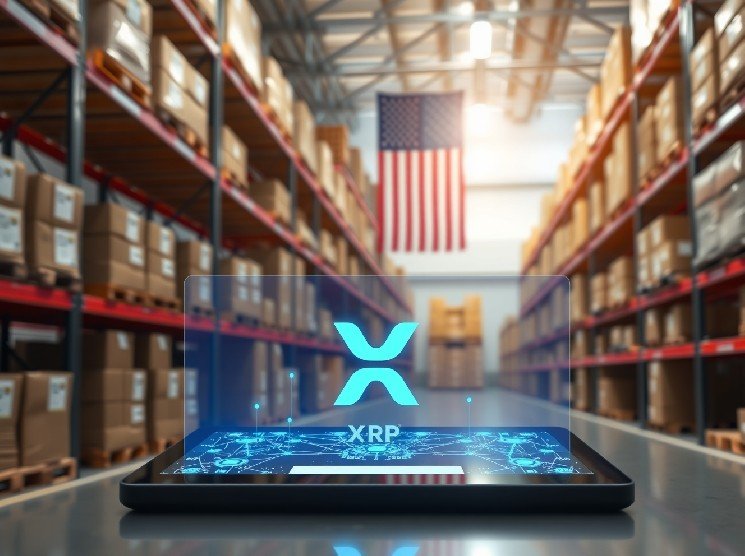
U.S.-based supply chain company Made In USA Inc. has announced plans to adopt the $XRP Ledger (XRPL) as the foundational blockchain infrastructure for its operations. The decision, first reported by The Crypto Basic, marks a notable step in the integration of distributed ledger technology into American manufacturing and product certification processes.
Blockchain for Product Certification
Made In USA Inc. intends to leverage XRPL to build a system designed for supply chain verification and product certification. The company, which focuses on verifying and promoting American-made goods, sees blockchain as a tool to enhance transparency and trust in its certification workflows. By recording certification data on a decentralized ledger, the company aims to create an immutable and publicly verifiable record of a product’s origin and manufacturing standards.
The choice of $XRP Ledger over other blockchain platforms is significant. XRPL is known for its low transaction costs, high throughput, and energy efficiency, making it a practical choice for enterprise applications that require frequent data recording without high overhead. The ledger’s native token, $XRP, is not expected to be the primary focus of this integration; rather, the company is adopting the underlying technology for its data layer capabilities.
Implications for the Supply Chain Sector
This adoption aligns with a broader trend of traditional industries exploring blockchain for supply chain management. Major corporations and logistics providers have experimented with distributed ledger technology to track goods, verify authenticity, and reduce fraud. However, many of these initiatives have remained in pilot phases or have been limited to specific product lines.
Made In USA Inc.’s commitment to XRPL could signal a more permanent shift. If successful, the system could serve as a model for other certification bodies and supply chain operators looking to adopt blockchain without building proprietary infrastructure from scratch. The use of a public ledger like XRPL also introduces a layer of public accountability, as certification records would be visible to anyone with internet access.
Why This Matters
For consumers and businesses, blockchain-based certification offers a potential solution to the problem of false or misleading claims about product origins. The Federal Trade Commission and other regulatory bodies have increased scrutiny of ‘Made in USA’ labels in recent years, seeking to penalize companies that misrepresent the origin of their products. A transparent, immutable record could simplify compliance and enforcement.
For the cryptocurrency and blockchain industry, this represents another real-world use case that extends beyond financial speculation. Enterprise adoption of public blockchains for non-financial applications helps validate the technology’s utility and may encourage further institutional investment in the sector.
Conclusion
Made In USA Inc.’s integration of the $XRP Ledger for supply chain verification and product certification is a practical application of blockchain technology in a traditional industry. While the full scope and timeline of the implementation remain to be seen, the move adds to the growing list of enterprises exploring distributed ledgers for operational transparency. The success of this initiative could influence how other certification bodies and supply chain operators approach blockchain adoption in the coming years.
FAQs
Q1: What is Made In USA Inc. adopting from the $XRP Ledger?
Made In USA Inc. is adopting the $XRP Ledger (XRPL) as its core blockchain infrastructure for supply chain verification and product certification, not necessarily the $XRP token itself.
Q2: Why did Made In USA Inc. choose XRPL over other blockchains?
XRPL offers low transaction costs, high throughput, and energy efficiency, making it suitable for enterprise applications that require frequent, low-cost data recording.
Q3: How will this affect consumers?
If implemented, consumers may be able to verify the authenticity of ‘Made in USA’ claims through a transparent, immutable blockchain record, potentially reducing fraud and increasing trust in product labeling.
Leave a Reply