Galaxy Digital has lowered its estimated probability of the CLARITY Act becoming law in 2026 to 50%, citing a shrinking Senate calendar and the absence of visible legislative progress ahead of the August recess.
According to a research note from Galaxy Digital, Head of Research Alex Thorn reduced the firm’s previous 60% estimate after concluding that time, rather than the contents of the bill, has become the biggest obstacle to passage.
i’m again reducing my odds of CLARITY act passage in 2026, mostly due to the shortening calendar and growing competition for floor time from other items
still think we’ll see a vote in july – but can it get to 60? we hope it can but it’s not obvious at the moment that it will https://t.co/fnbamkUzXp
— Alex Thorn (@intangiblecoins) June 26, 2026
Thorn wrote that the lack of public developments has become a signal in itself, arguing that negotiations have yet to produce the milestones normally expected before a floor vote.
While the Senate Banking and Agriculture Committees have been working on a combined version of the legislation, Galaxy noted that lawmakers have not released the merged text or announced a debate schedule. Thorn wrote that staff-level discussions remain constructive but cautioned that private negotiations should not be mistaken for legislative momentum without a public voting timetable.
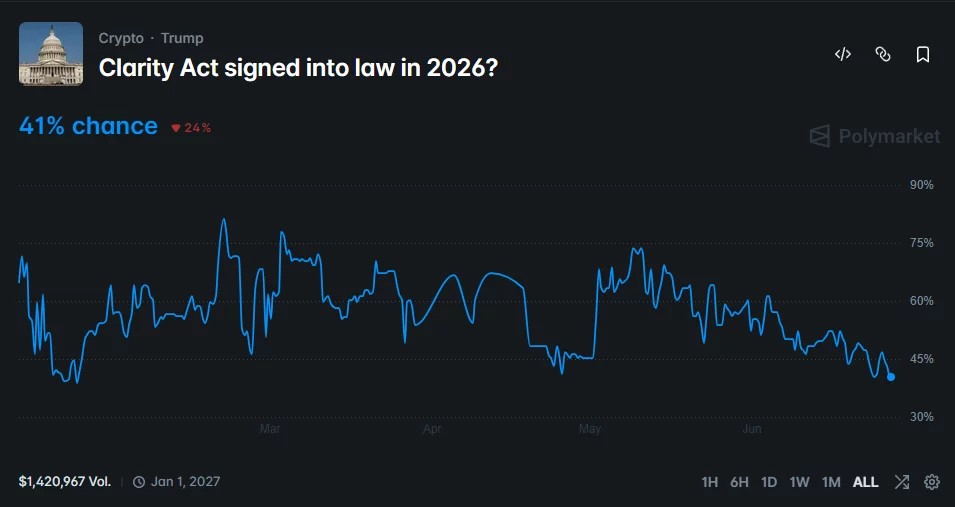
Separately, data from Polymarket shows traders currently assign about a 41% chance that the CLARITY Act will be signed into law in 2026, indicating growing skepticism over the bill’s prospects.
Senate calendar has become the biggest hurdle
As the Senate remains adjourned until July 13, the available legislative window before the August recess has narrowed further. As previously reported by crypto.news, Representative Anna Paulina Luna said Senate Majority Leader John Thune secured unanimous consent for the adjournment, meaning no senator objected to the extended break.
Luna criticized the decision and said she would not vote to reopen the House floor until senators return to Washington. Her comments came as the CLARITY Act continues waiting for Senate floor time after advancing onto the chamber’s legislative calendar.
Galaxy argued that competition for Senate floor time has intensified following President Donald Trump’s decision to tie his support for a bipartisan housing bill to passage of the SAVE Act. According to Thorn, lawmakers must also address other priorities, including FISA legislation and the annual National Defense Authorization Act, leaving limited time for crypto market structure legislation.
Calling the legislative calendar the primary concern, Thorn wrote that the downgrade is tied to scheduling rather than disagreements over the bill itself. He added that the remaining runway before the August recess has been reduced to only a matter of weeks, making floor time the Senate’s scarcest resource.
Policy debates continue alongside procedural delays
Apart from scheduling pressures, several policy issues also remain unresolved. Galaxy noted that ethics provisions continue to divide lawmakers even after a conflict-of-interest amendment was removed during committee consideration. Thorn also pointed to ongoing requests from law enforcement organizations seeking revisions to developer protections contained in the Blockchain Regulatory Certainty Act.
Earlier this week, the U.S. Department of Justice rejected concerns raised by four national law enforcement organizations, stating that the CLARITY Act would not reduce prosecutors’ ability to investigate crimes involving digital assets. The organizations had argued in a June 23 letter that Section 604 and related exemptions could create regulatory gaps that criminals might exploit, while the Justice Department said the legislation would not weaken investigations into offenses including terrorism financing, drug trafficking, and human smuggling.
Meanwhile, Senator Cynthia Lummis has said the Senate expects to release the final CLARITY Act text around July 4 for public review before seeking floor consideration later in July. According to crypto.news, if the Senate amends the House-approved version, both chambers would still need to reconcile the legislation before sending it to the president.
Galaxy said several developments could improve the bill’s prospects, including publication of a unified Senate text, resolution of the remaining policy disputes, and, most importantly, a leadership commitment to schedule a July floor vote.
Thorn added that such an announcement within the next two weeks could lift the firm’s estimated odds back to 60% or higher, while continued silence into mid-July would likely lead to another downgrade.
Leave a Reply