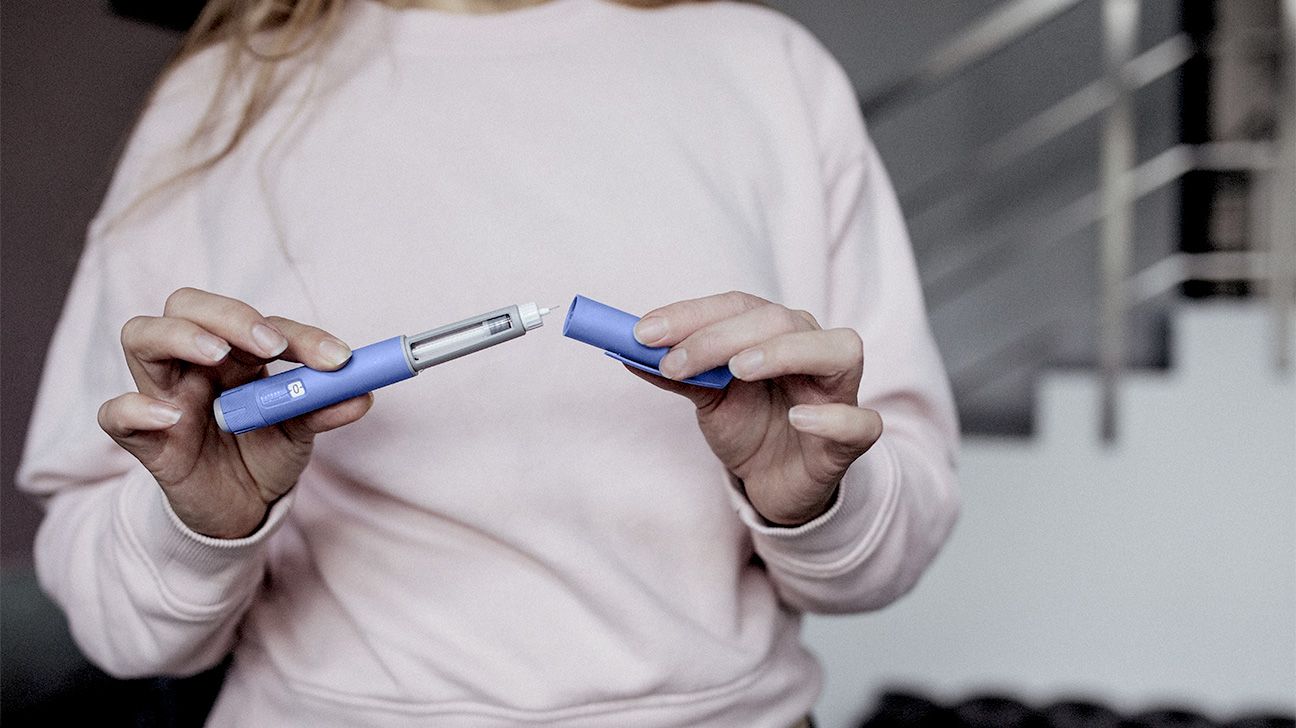
- Researchers report that GLP-1 drugs used to treat type 2 diabetes may impair a person’s sense of taste and smell.
- Experts say taste and smell dysfunction doesn’t appear to be a common side effect of GLP-1s, which are widely prescribed for weight loss.
- The weight loss benefits of these medications likely outweigh any negative effects on smell and taste.
GLP-1 medications prescribed to treat type 2 diabetes may affect a person’s sense of smell and taste, according to a new study.
Researchers report that study participants who used GLP-1 drugs had a higher rate of disturbances in taste and smell than people who were only prescribed diabetes medications.
They said the effects of GLP-1s on these sensory functions could be connected to the drugs’ absorption into a person’s nervous system.
“This study suggests that GLP-1RA therapy is associated with a higher risk of smell and taste disturbance, highlighting the need for closer monitoring and greater public health awareness,” the study authors wrote.
“Future research is required to validate these findings and to further explore the mechanisms underlying this association,” they added.
Experts say that loss of smell or taste from GLP-1 medications doesn’t appear to be widespread.
Mir Ali, MD, a bariatric surgeon and medical director of MemorialCare Surgical Weight Loss Center at Orange Coast Medical Center in California, said he hasn’t heard many concerns from his patients about taste or smell impairment. Ali wasn’t involved in the study.
“I don’t think it should discourage people from taking these medications,” he told Healthline. “The trade-off of getting to a healthy weight far outweighs any changes to taste or smell.”
For their study, the researchers examined the medical records of two groups of participants in the TriNetX Global Collaborative Network program, which involved more than 170 healthcare institutions from December 2017 to April 2026.
Each group consisted of more than 430,000 adults with a diagnosis of type 2 diabetes who had no history of taste or smell impairment. Participants in each group were about 55% female, with an average age of about 57 years.
One group had been prescribed a GLP-1 medications after their diabetes diagnosis. The other group was prescribed a diabetes medication but did not use any GLP-1 drugs.
There was a follow-up period of 3 months to 2 years after the discontinuation of the use of GLP-1 medications.
The researchers reported that taste disturbances were identified in 769 participants in the GLP-1 group, compared with 445 in the control group.
Smell disturbances were reported by 649 participants in the GLP-1 group, compared with 316 in the control group. The researchers said that the smell and taste dysfunction could be related to the olfactory bulb and chemosensory pathways.
“These findings align with evidence that GLP-1 is widely expressed and secreted within the nervous system, supporting potential effects in either the central or peripheral nervous system,” the researchers wrote.
Ali said weight loss can affect a person’s sense of taste and smell. He added that there aren’t really any treatments for temporary smell and taste dysfunction. “As weight stabilizes, taste and smell tend to return to a more normal state,” he said.
Zhaoping Li, MD, a professor of clinical medicine at the University of California, Los Angeles, noted the new study is observational and doesn’t prove a cause-and-effect relationship between GLP-1s and impaired taste and smell. Li wasn’t involved in the study.
Li shared that her patients have not encountered serious smell or taste dysfunction. “It has not been a major issue,” she told Healthline. “I don’t think it will have a major impact on people’s acceptance of these drugs.”
Li said that taste and smell impairment caused by the medication has a simple solution. “If it is related to the drugs, then you stop taking the drugs,” she said.
It’s
Experts say smell has many important functions. They say it helps people determine what to eat, influences food taste, and affects socialization. Smell also provides a warning for hazardous events such as fires or gas leaks.
The sense of smell is connected to the part of the brain involved in behavioral and emotional responses. That’s why certain odors spark strong emotions, influence behavior, and trigger memories, according to UCLA Health.
Impaired smell can be the complete inability to smell or the partial inability to smell. It can be a temporary or a permanent condition.
Temporary smell dysfunction can be caused by allergies or bacterial and viral infections. In older adults, impaired smell is considered a typical age-related change. However, it can also be a sign of:
It’s
Your sense of taste helps you evaluate food and drinks, so you can determine what’s safe to eat. It also prepares your body to digest food.
You can develop impaired taste from respiratory illnesses such as COVID-19, as well as allergies, sinus infections, or nasal polyps. Some medications may also affect the sense of taste, as can dental conditions such as gum disease and inadequate oral hygiene.
Smell and taste disturbances have also been reported in people with type 2 diabetes.
Li said the COVID-19 pandemic has made people more sensitive to changes in taste and smell. “COVID really taught us a lesson in this regard,” she said.
GLP-1 medications work by suppressing a person’s appetite and managing their blood sugar levels.
Some of the drugs are taken daily as oral tablets, while others are injected on a weekly basis.
Some are approved as prescription treatments for type 2 diabetes, while others, such as Wegovy, Zepbound, and Saxenda, have been approved as weight loss treatments.
Researchers have reported that GLP-1 drugs that contain the active ingredient tirzepatide may be more effective for weight loss than GLP-1 medications that contain the active ingredient semaglutide.
A 2025 study concluded that GLP-1 drugs can help improve heart and brain health but might also cause kidney and gastrointestinal issues.
In December 2025, the World Health Organization (WHO) issued new guidelines recommending GLP-1 medications to help treat obesity.
Ali said people starting GLP-1s need to recognize that the drugs only suppress appetite, and a healthy lifestyle that includes a balanced diet and regular exercise is important.
“The medications are only a tool to help patients switch to a more healthy diet,” he said. “People have to think of obesity as a long-term condition.”
Leave a Reply