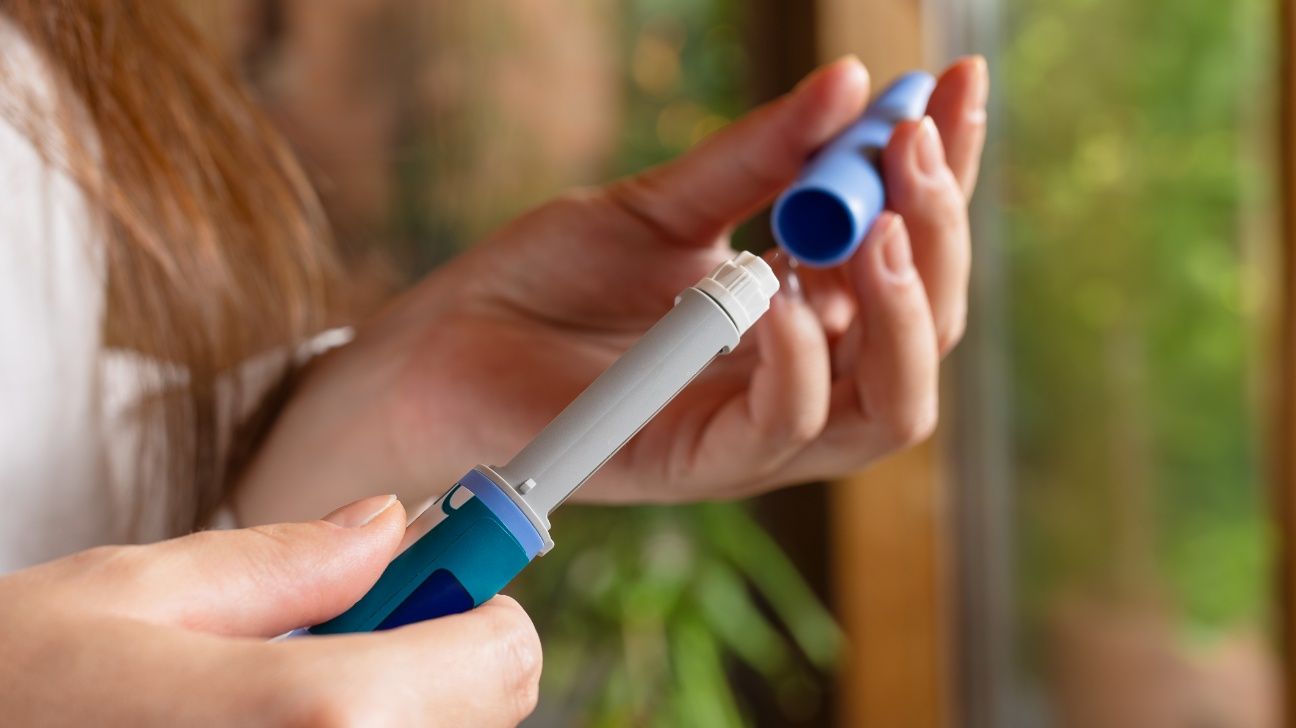
- A recent study found that GLP-1 medications like Ozempic and Wegovy may help lower impulsive and violent behaviors.
- The researchers noted that higher impulsivity and alcohol use were significantly associated with violent behavior overall, but were weaker among those using GLP-1s.
- The findings suggest additional mental health benefits of GLP-1 drugs beyond alcohol use and addiction.
GLP-1 medications have been shown to have many benefits in treating obesity and type 2 diabetes.
The researchers found that higher levels of alcohol use and impulsivity were associated with violent behavior overall. However, the behaviors were weaker among GLP-1 users. The results were published on June 17 in
Lead study author Daniel Semenza, PhD, director of research at the New Jersey Gun Violence Research Center and an associate professor at Rutgers University, explained that the study was not designed to identify the biological mechanisms driving the relationship between GLP-1 use and violent behavior.
“We can’t say with certainty why these associations emerged in this paper,” Semenza told Healthline.
“However, growing research suggests that GLP-1 medications may influence things like reward processing and impulse control. One interpretation is that GLP-1 medications may weaken the extent to which established risk factors like impulsivity translate into harmful behavior. However, this is a hypothesis that requires further investigation,” he said.
The researchers analyzed data from a 2025 survey of 7,521 adults in the United States. Their primary focus, however, was on the 821 individuals who had ever used a GLP-1 drug.
The researchers compared current GLP-1 medication users with former users. They examined whether using the medications changed the relationship between impulsivity, violent behavior, and alcohol use.
Violent behaviors were measured using a validated self-reporting offending scale that assessed behaviors, such as:
The researchers found that the association between impulsivity and violent behavior was about 62% weaker among current GLP-1 medication users compared with former users of the medications.
“The strongest signal was the interaction between GLP-1 use and impulsivity, suggesting that the usual association between impulsivity and violent behavior was substantially attenuated among current GLP-1 users,” said Betul Hatipoglu, MD, professor of Medicine, CWRU School of Medicine. Hatipoglu wasn’t involved in the study.
“This study is interesting because it does not show that GLP-1 receptor agonists directly reduce violent crime. Rather, it suggests that among people taking GLP-1 medications, two well-established risk factors for violence — impulsivity and alcohol use — appear to have a weaker relationship with violent behavior,” she told Healthline.
Recent
“We’re seeing early evidence that GLP-1s may reduce cravings not just for food, but for alcohol and other substances, which has significant implications for addiction treatment,” Matt Glowiak, PhD, chief addiction specialist at Recovered, told Healthline. Glowiak wasn’t involved in the study.
“At the same time… some individuals report improved well-being or reduced ‘mental noise’ around cravings, while others may struggle with identity shifts, restrictive patterns, or unrealistic expectations,” Glowiak told Healthline.
“Clinically, I think of these medications as potentially powerful adjuncts but not replacements for therapy, behavioral change, or deeper work around coping and meaning,” he said.
Semenza cited other recent studies that have examined the link between GLP-1 use and behavioral changes, including:
“There is also growing interest in potential effects on mood and stress responses,” Semenza continued.
“At the same time, it’s important to note that this is an evolving area of research. Some findings are stronger and more consistent than others, and we are still learning which effects are robust and what biological mechanisms may be involved.”
Semenza added that the current study should be viewed as a first step rather than a definitive answer.
“We found that the relationships between impulsivity, alcohol use, and violent behavior were substantially weaker among current GLP-1 users than former users, but the study cannot establish causality,” he said.
Leave a Reply