
The stablecoin market continues to show resilience despite ongoing weakness across crypto markets. While periods of outflows remain visible, the broader stablecoin supply has largely stabilized rather than entering a sustained decline.
Earlier in February, Tether [$USDT] and USD Coin [$USDC] monthly liquidity outflows approached $8 billion. Since then, the pace has eased to roughly $4 billion, suggesting capital is no longer leaving the ecosystem as aggressively as before.
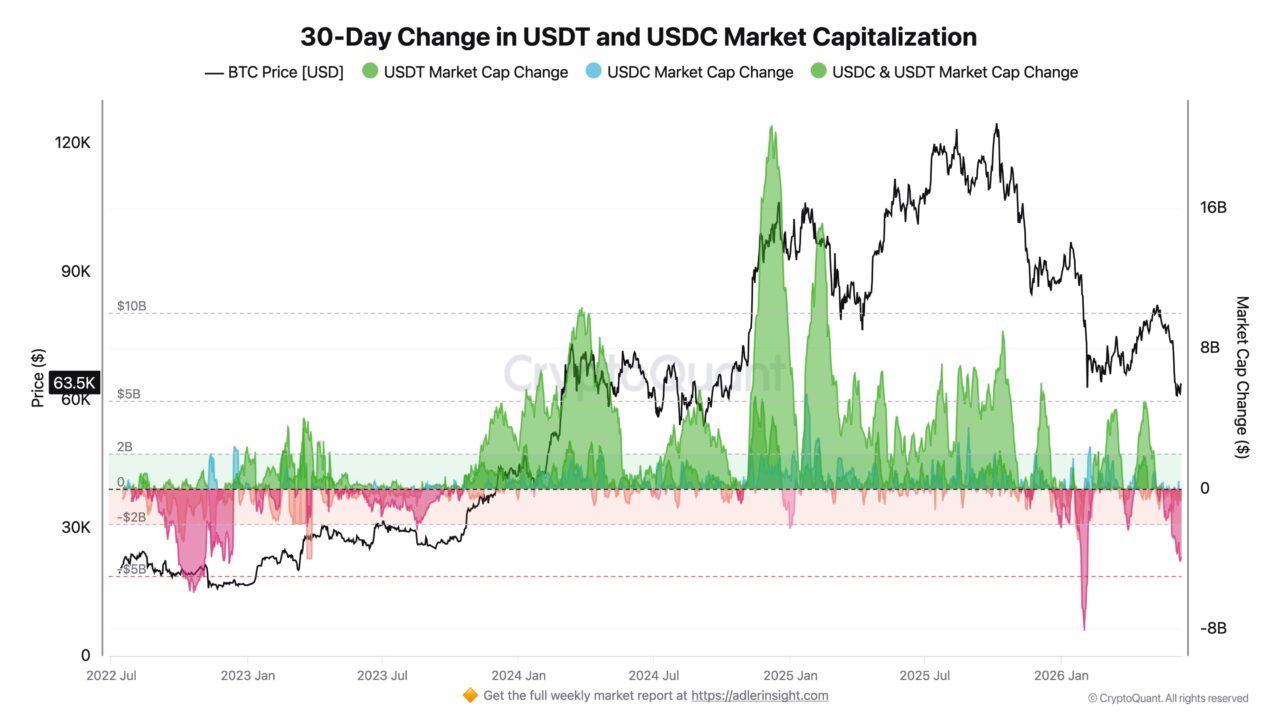
However, exchange activity paints a different picture. During the market’s strongest phases, $USDT and $USDC inflows surged, with monthly inflows reaching $5.7 billion and occasionally exceeding $15 billion on a 30-day basis.
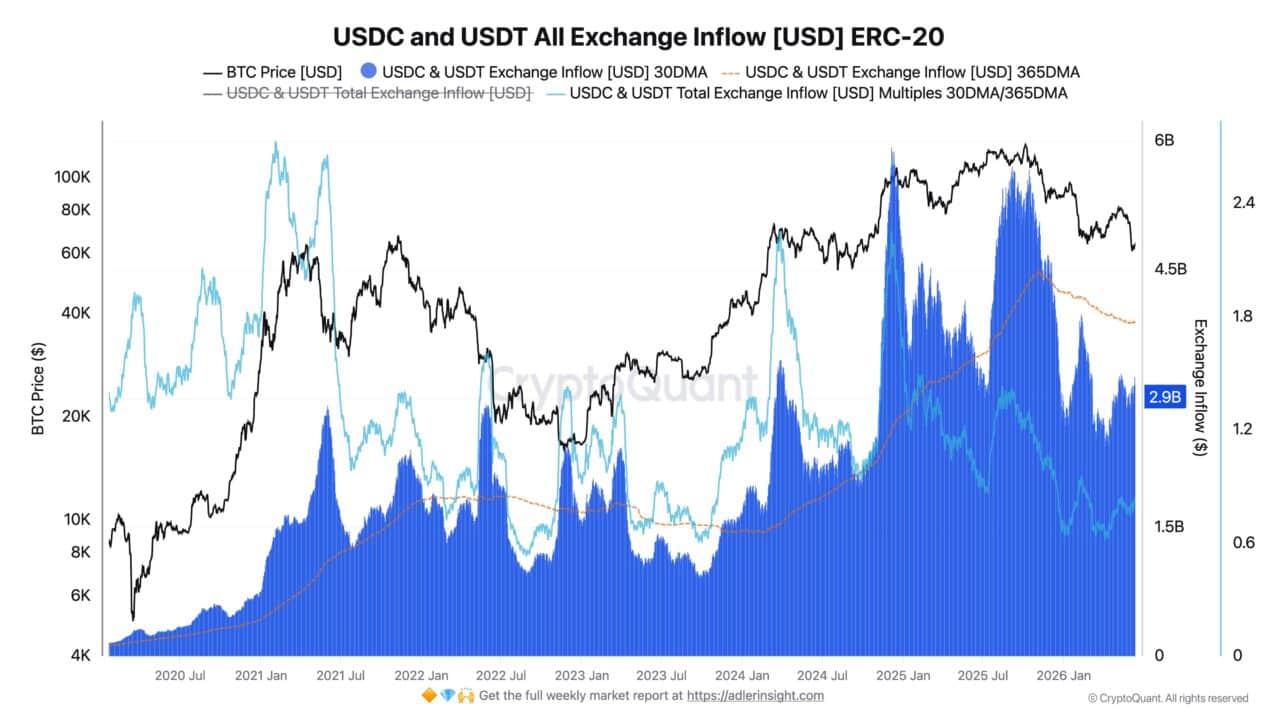
Those periods coincided with Bitcoin’s [BTC] strongest advances. Since then, inflows have steadily weakened. Monthly deposits have fallen to around $2.9 billion, while the annual average has declined from roughly $4.47 billion to $3.87 billion.
The resulting 0.77 ratio highlights a sharp slowdown in capital deployment. This divergence suggests liquidity remains within crypto, yet investors are using it more selectively rather than aggressively chasing risk.
Institutional adoption strengthens Stablecoin demand
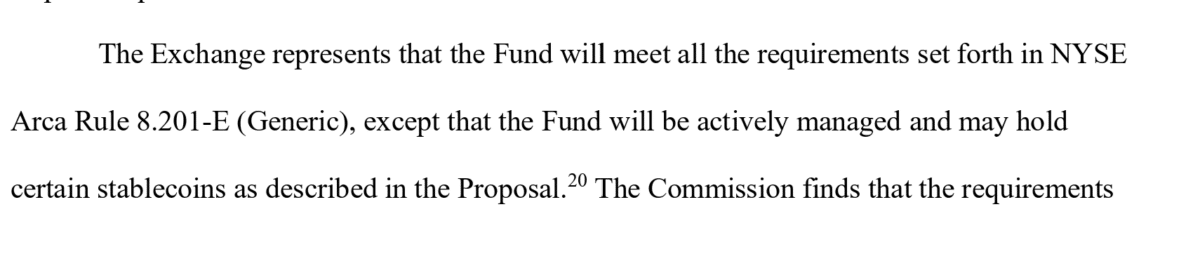
Stablecoins are gaining a larger role within regulated crypto investment products as institutions expand their use beyond trading. Recent SEC approval of the T. Rowe Price Active Crypto ETF allows the fund to hold certain stablecoins as part of its actively managed strategy.
This development highlights how stablecoins are increasingly being used for liquidity management and portfolio operations within regulated structures. Beyond investment products, stablecoin adoption continues to grow across payments and settlement activity.
The broader stablecoin market now stands near $315 billion, reflecting sustained demand despite weaker conditions across crypto markets. As usage expands, stablecoins are serving more functions than simply facilitating trades.
Their growing presence in investment funds, payments, lending markets, and settlement processes underscores their increasing importance across the digital asset ecosystem.
While stablecoins continue supporting liquidity across crypto markets, their role is also expanding beyond investment activity. According to McKinsey’s report, real-world payment volume reached roughly $390 billion in 2025, highlighting growing demand from businesses and consumers.
This shift suggests stablecoins are increasingly functioning as payment infrastructure, reducing reliance on speculative market cycles.
Final Summary
- Stablecoins increasingly support payments, settlement, and institutional finance beyond crypto trading.
- Utility-driven stablecoin demand continues growing as reliance on speculation gradually declines.
Leave a Reply