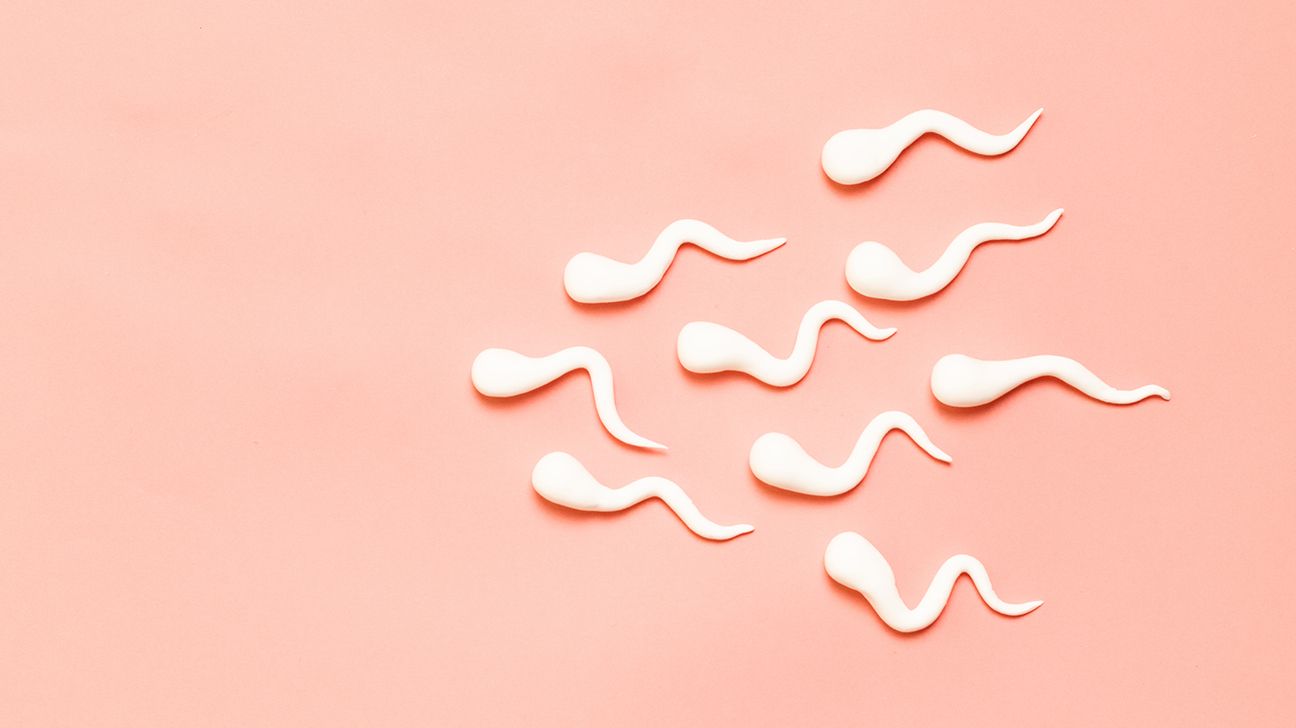
- “Spermmaxxing” is one of the most recent social media “maxxing” trends.
- In this trend, men seek to increase their fertility through lifestyle changes and other approaches, such as eating raw garlic.
- “Maxxing” refers to maximizing almost anything and has become part of the broader trend in online culture.
Social media is filled with trends that promise to help people “maximize” or “optimize” different aspects of their health and lives. From fibermaxxing to looksmaxxing and even ballmaxxing, there seems to be a “maxxing” trend for almost everything.
The latest example is “spermmaxxing,” a trend centered on improving sperm count, fertility, and overall reproductive health.
The trend has led some males to try unverified methods to “maximize” their sperm, such as eating raw garlic and even dipping their testicles in ice water.
One particularly concerning recommendation promoted by some influencers is testicle tanning. Experts say the practice may actually reduce sperm counts and increase the risk of testicular tumors.
Why are males, especially younger males, increasingly interested in optimizing their sperm health?
Growing concerns about male fertility have become a popular topic in certain corners of social media. While research has found evidence of declining sperm counts over the past several decades, many influencers are packaging those concerns into content designed to drive engagement, sell supplements, or promote lifestyle programs.
But while some influencers may be capitalizing on male fertility anxiety and promoting questionable advice, experts say the increased focus on reproductive health isn’t necessarily a bad thing.
“I’m not going to dismiss this entirely. The underlying instinct that men should be paying attention to their reproductive health is actually correct. But the execution is often somewhere between ineffective and absurd,” Philip Werthman, MD, board certified urologist, men’s health specialist, and director of the Center for Male Reproductive Medicine and Vasectomy Reversal in Los Angeles, CA, told Healthline.
“Raw garlic and ice baths for your testicles aren’t going to move the needle in any meaningful clinical way. What concerns me more is that these trends fill a vacuum that medicine has created by largely ignoring male fertility. Men have historically been an afterthought in reproductive medicine, and when mainstream healthcare doesn’t engage them, they turn to social media. That’s a failure on our part as much as anything else,” he said.
Werthman spoke to Healthline about spermmaxxing, male fertility, and how ejaculation can affect prostate cancer risk.
This interview has been lightly edited for clarity and length.
Werthman: The data is pretty alarming. Meta-analyses show sperm counts in Western men have dropped roughly 50–60% over the past four to five decades. That’s not noise, that’s a signal.
The obesity epidemic alone is a major driver — excess adipose tissue converts testosterone to estrogen and directly impairs spermatogenesis. We’re also seeing later-in-life fatherhood, which compounds the picture. This deserves far more serious public health attention than it’s getting.
Werthman: Clinically, the signs can be subtle or frankly absent until a couple is struggling to conceive.
That said, things I tell men to pay attention to:
Hormonal symptoms like fatigue, mood changes, and loss of muscle mass can also reflect underlying hypogonadism that impacts fertility.
Any man who’s been trying to conceive for 12 months without success — or 6 months if his partner is over 35 — should have a workup, not just wait.
Werthman: Several big ones.
First, the idea that fertility is primarily a female issue. It’s not. Male factor contributes to roughly 40–50% of infertility cases.
Second, that sperm count is all that matters — morphology and motility are equally important, and a high count with poor motility or abnormal morphology still means compromised fertility.
Third, that young age equals good fertility — sperm quality begins declining in the late 20s, and the impact of lifestyle factors accumulates over time.
Fourth, that testosterone supplementation improves fertility, it does the opposite; exogenous testosterone suppresses the HPG axis and can cause azoospermia. That one causes real clinical harm when men self-medicate with TRT while trying to conceive.
And fifth, that these things are fixed — most lifestyle-driven fertility impairment is at least partially reversible with the right interventions.
Leave a Reply