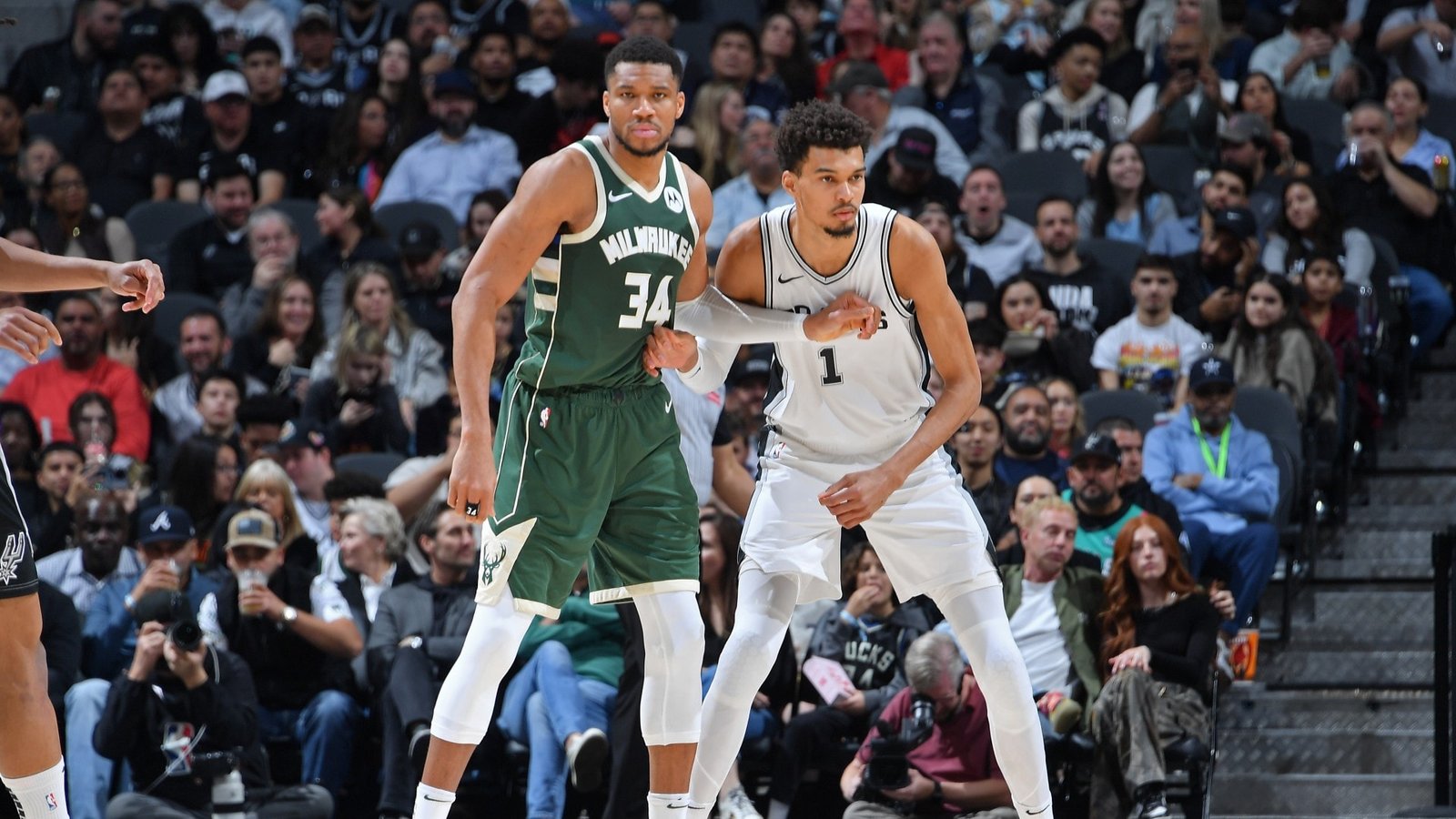
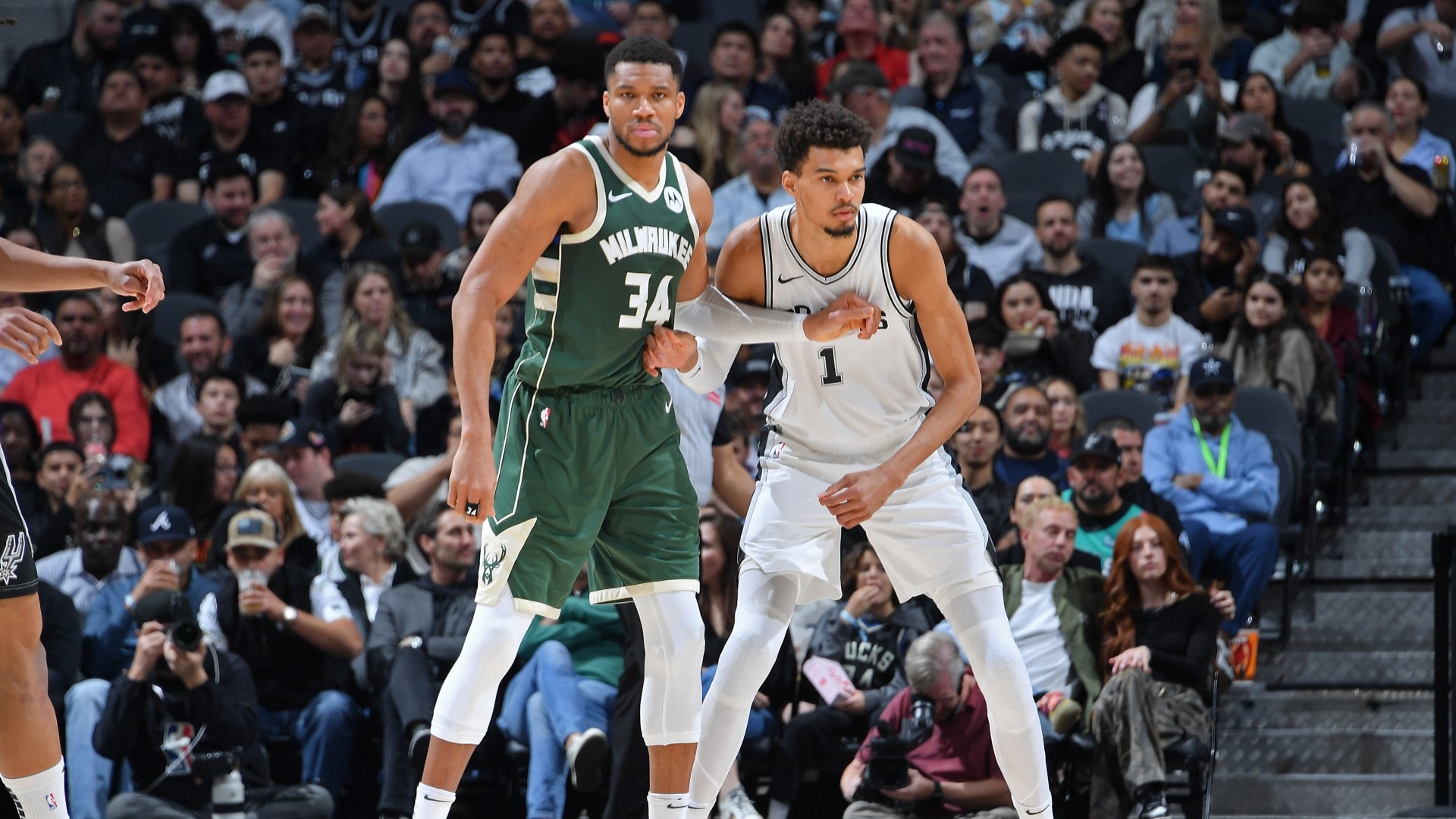
Victor Wembanyama is becoming a driving factor in how NBA executives build their teams.
Editor’s Note: Read more NBA coverage from The Athletic here. The views on this page do not necessarily reflect the views of the NBA or its teams.
***
Imagine being an NBA front office executive watching these Western Conference finals.
You see Victor Wembanyama, the 7-foot-4, 22-year-old basketball alien who descended upon San Antonio just a few short years ago, dominating in the kind of way we’ve never seen against the historically great, reigning champion Oklahoma City Thunder. And you wonder, while scanning a roster that now seems so depressingly ill-equipped, how your team is supposed to deal with this terrifying talent for the next decade (plus) to come.
That conversation is happening all around the league of late.
Wembanyama’s early exploits in this series (tied 1-1, with Game 3 in San Antonio on Friday) merely confirm what was already known by most: He is the kind of generational two-way player who is so elite, and so unique, that he is changing the way teams are built. The hope for his foes — the prayer, really — is that you can somehow land enough players (big and small) with the sort of skillsets that give you a puncher’s chance at stopping his superpowers.
“There’s kryptonite out there somewhere,” as one Western Conference general manager put it.
No matter what comes next, the bigger-picture issues that come with Wembanyama’s arrival are as unavoidable as his eight-foot wingspan. Does that mean teams will suddenly load up on athletic, strong big men, like they did in the old days while trying to counter the likes of Wilt, Russell, Kareem, Hakeem or Shaq down low? Or, given Wembanyama’s ability to play like a guard, do you chase those rare wings who have the right combination of size, speed and strength to mitigate what he does all over the floor?
And with the Giannis Antetokounmpo sweepstakes already headlining this summer, is there a chance teams might be even more willing to make a run at the Milwaukee star as a way of countering the Wemby effect?
With those sorts of questions in mind, I discussed the impact of it all with a few veteran executives this week — two from the Western Conference and one from the East. They were granted anonymity by The Athletic as a way of inspiring as much candor as possible. And while they certainly didn’t have the answers, this much was clear: The people in their positions will search for them for a long time to come.
“Teams will definitely have to start figuring out, ‘How do we get through this guy?’” the Eastern Conference executive said. “So you look at it, and it’s like, ‘What do we need? How do we build our team to get better to compete against (Wembanyama and the Spurs)?’
“Trust me, it’s on everybody’s mind. Teams will try to find ways that they can build a roster out to beat the Spurs, just like they are to beat OKC.”
First things first, teams must decide what sort of gameplan works best against Wemby before they decide what direction to take with their rosters. That, as we’ve seen so far in this series, remains an open debate.
The Thunder took the small-but-mighty approach in Game 1, using Alex Caruso (6-5, 186 pounds) and Jalen Williams (6-5, 211) on the 236-point Wembanyama for much of the night. Thunder big man Chet Holmgren (7-1, 208) spent some time guarding his rival, but Wembanyama had his way throughout the 122-115 double-overtime win. According to Stathead.com, Wembanyama was just the fifth player in league history to have at least 41 points, 24 rebounds and three blocks (regular season or playoffs), joining Chamberlain (who did it 12 times), Olajuwon (twice), Patrick Ewing (once) and Joe Barry Carroll (once).
But Thunder coach Mark Daigneault and his staff switched it up in Oklahoma City’s 112-113 Game 2 win, putting big man Isaiah Hartenstein (seven feet, 249 pounds) on Wembanyama for the lion’s share of the defensive duties, with cameos from the likes of Jaylin Williams (6-9, 240) and Lu Dort (6-4, 220). Wembanyama, in turn, finished with 21 points, 17 rebounds, six assists and four blocks. His impact was certainly lessened from the series opener, but he was still a serious problem.
“What’s the profile of a player, or the profile of a defense, that he struggles with?” the Western Conference GM said rhetorically. “There’s always an area you can attack, (and) his is the strength factor. It’s better now than when he came into the league three years ago, but (still a weakness). And with OKC playing Caruso and Dort (on him), I get the thought process. But they’re just too small. Then again, your 7-1, 7-2 guys aren’t able to match up. I think you need to find someone in the 6-8, 6-10 range who’s strong and athletic. They have to be strong enough to get into his body, to force him off the block, but quick enough to keep him in front. But the answers aren’t readily available.”
Yet herein lies the irony: If the Spurs are able to get past the Thunder, they could be headed for a rematch in the NBA Finals against a team that did very well in a high-stakes Wembanyama test five months ago: The New York Knicks. After the Spurs eliminated the Thunder in the NBA Cup semifinal in mid-December, they fell 124-113 to the Knicks in the championship game, during which Wembanyama had just 18 points, six rebounds, one assist, one block and a game-worst minus-18 mark.
The Knicks, with first-year coach Mike Brown pulling the strings, had Mitchell Robinson (7-0, 240) and Karl-Anthony Towns (7-0, 248) share the assignment, while OG Anunoby (6-7, 240) played the part of disruptor on the wings. Wembanyama had better luck in his other two outings against the Knicks this season (the teams split those games), but that Cup finale was the closest you’ll find to a blueprint performance against him. As the Eastern Conference executive pointed out, there are already other teams rushing to collect that sort of skillset variety with, presumably, the hopes of slowing Wembanyama.
“Look at what Utah did at (the February trade deadline), adding (6-10, 242-pound rim-protecting center) Jaren Jackson (in a trade with Memphis),” the executive said. “Now you have him and (7-1, 240-pound forward Lauri) Markkanen, with (7-2, 245-pound center Walker) Kessler potentially back (he’s a restricted free agent this summer). It’s like they’re gearing up for that reality that they’re gonna be facing (these Spurs) for the foreseeable future and need big, athletic, defensive-minded guys to combat Wemby.”
“You’ll see it in the draft, too, with the kid from Michigan (7-3, 260-pound center Aday Mara) going really high because he has size, is agile and is a pretty good defender.”
As for the notion that the Bucks might have a more robust market for Antetokounmpo because of what Wembanyama is doing, all three of the executives agreed that it’s a logical conclusion. The 6–11, 243-pound “Greek Freak” still has one of the league’s most elite physiques, with the athleticism and aggressive styles to maximize it, as well as the ability to play inside and out that is an absolute must.
“Yeah, Giannis is a matchup solution for Wemby, so I could definitely see teams factoring that in when they’re discussing trading for him,” one of the Western Conference executives said.
When Wembanyama had his most memorable game yet in the series opener against the Thunder, I compared the viewing experience (hypothetically speaking) to the equivalent of watching “Wilt and Russell all at once.” Then again, that comparison made little sense considering he had just buried a three-pointer from more than 32 feet that forced the second overtime. So … Steph Curry meets Wilt combined with Russell?
The comparisons, as we all agreed, are futile.
“He’s a problem from inside the halfcourt, and there’s just no one like that,” one of the West executives said with a laugh. “At least Shaq was human in the sense that you needed three centers to bang with him. You’ve got 18 fouls (to work with). Maybe one was skilled, and the other two could hold him up while the other guys get rest. But there’s no archetype like (Wembanyama) — no player ever. It’s a problem, and it’s going to be a problem for 15 years.”
***
Sam Amick is a senior NBA writer for The Athletic. He has covered the Association for the better part of two decades while at USA Today, Sports Illustrated, AOL FanHouse and the Sacramento Bee. Follow Sam on X @sam_amick.
Leave a Reply