The current state of financial markets is best described as macro-geopolitics first, crypto second.
The evidence is clear. Despite recent positive regulatory developments related to the Clarity Act, bitcoin has shown little excitement, trading near $77,200 – largely unchanged over the past 24 hours and for the week.
Meanwhile, oil remains elevated near $100 and speculative capital is pouring into copper amid fears of a sulfur shortage. The connection? Copper production is heavily dependent on sulfuric acid, whose supply has been disrupted through the Strait of Hormuz.
In essence, everything is revolving around Hormuz, driving commodity flows and prices higher, stoking inflation fears, lifting bond yields, which are supposedly weighing over crypto. The U.S. stocks, meanwhile, hover near record highs, driven by AI optimism.
Bitcoin is not at the center of this geo-economic and AI repricing.
It is no surprise, therefore, that U.S. spot bitcoin ETFs continue to bleed, recording $1.15 billion in outflows this week after $1 billion last week, according to SoSoValue. The Coinbase premium, a key gauge of U.S. demand relative to the rest of the world, has hit monthly lows.
Analysts have repeatedly emphasized that these indicators need marked improvement before a sustained rally can take hold. The question is whether that will happen while markets remain fixated on geopolitics and AI.
In the meantime, certain corners of the crypto market, particularly on-chain perpetuals and quantum-resistant tokens, continue to show strength, driven by specific news and narratives, as we discussed Thursday. Layer-1 blockchain Near Protocol’s token ($NEAR) is the latest addition to that group, surging over 25% in the past 24 hours following the announcement of a major upgrade focused on automated scaling and quantum resilience.
In traditional markets, Nasdaq futures have surrendered early gains and are trading largely flat. Analysts remain broadly bullish on stocks following the latest earnings season. Stay alert.
Read more: For analysis of today’s activity in altcoins and derivatives, see Crypto Markets Today . For a comprehensive list of events this week, see CoinDesk’s “Crypto Week Ahead.”
What’s trending
- ZachXBT flags $520K Polymarket exploit on Polygon, team says funds are safe (CoinDesk): Polymarket is aware of reports tied to its rewards payout system and emphasized that user funds and market resolutions remain safe, describing the issue as an internal one rather than a broader contract exploit. Further updates are expected.
- Near Protocol to automate its own growth and its token is skyrocketing (CoinDesk): Near’s forthcoming upgrade will allow the network to scale dynamically without human intervention. The market is approving, driving up $NEAR by 27% in the last 24 hours to $2.25.
- Asian shares track Wall Street gains and oil prices climb on uncertainty over the Iran war (AP): Asian shares advanced Friday following modest gains on Wall Street, while oil prices rose as efforts to end the Iran war yielded limited results. Oil prices Thursday in U.S. trading, alleviating pressure from the bond market as yields fell.
- Treasury yields fall as investors digest week of bond market volatility (CNBC): U.S. Treasury yields fell Friday after a week of volatility that saw borrowing costs rise to multi-year highs in response to renewed concerns about inflation. The yield on the 10-year Treasury note fell more than 2 basis points to 4.564%.
Today’s signal
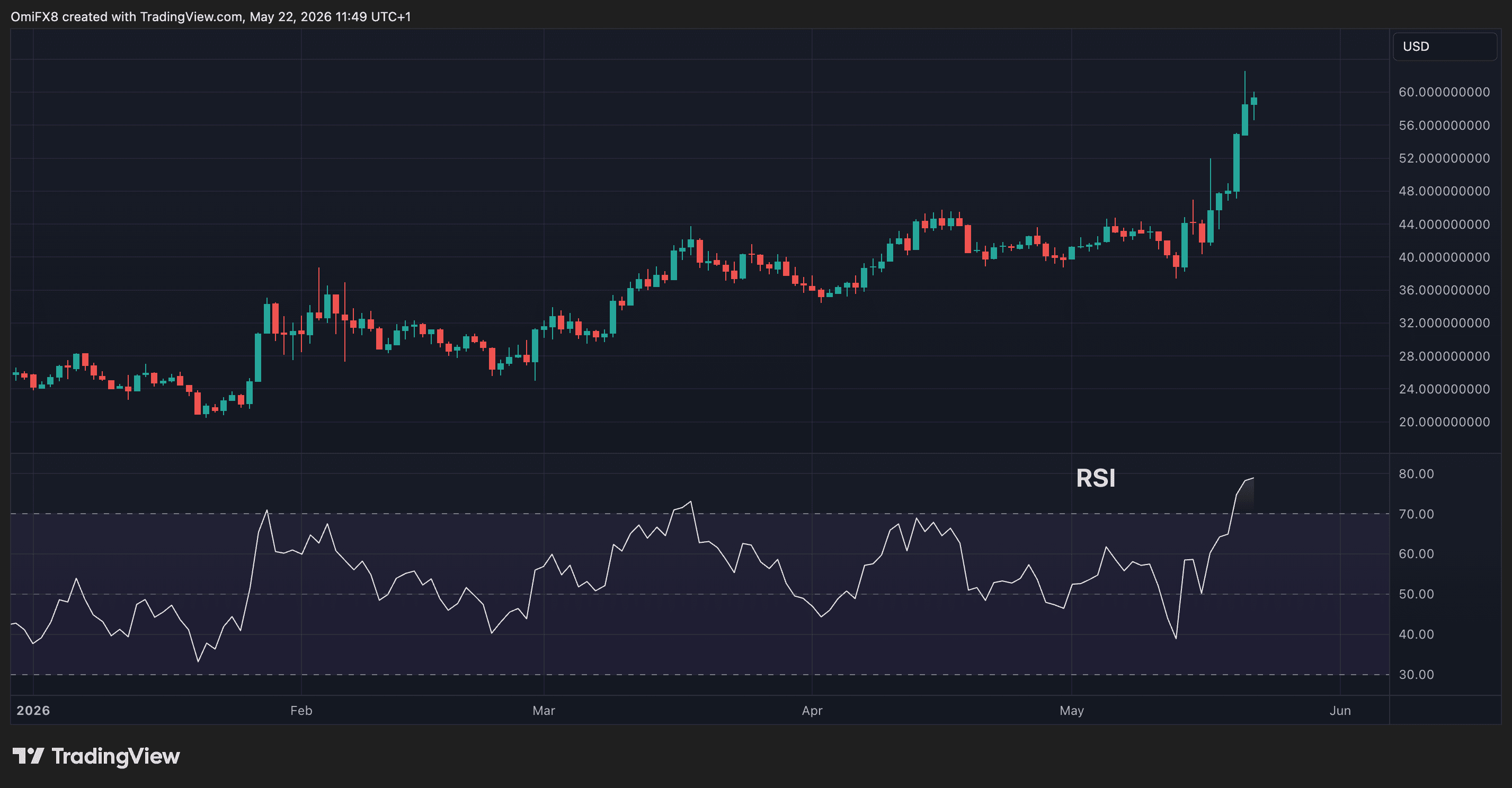
HYPE’s 14-day Relative Strength Index (RSI) has surged above 70. While readings above 70 are widely labeled as “overbought,” this interpretation is often misleading.
The RSI is a momentum oscillator that measures the speed and magnitude of recent price changes. A reading above 70 simply signals strong bullish momentum and suggests that the uptrend may still have room to run. It does not automatically mean the asset is overvalued or due for an imminent reversal, as the popular narrative often implies.
In strong trending markets, RSI can remain elevated for extended periods without triggering a meaningful pullback.
Leave a Reply