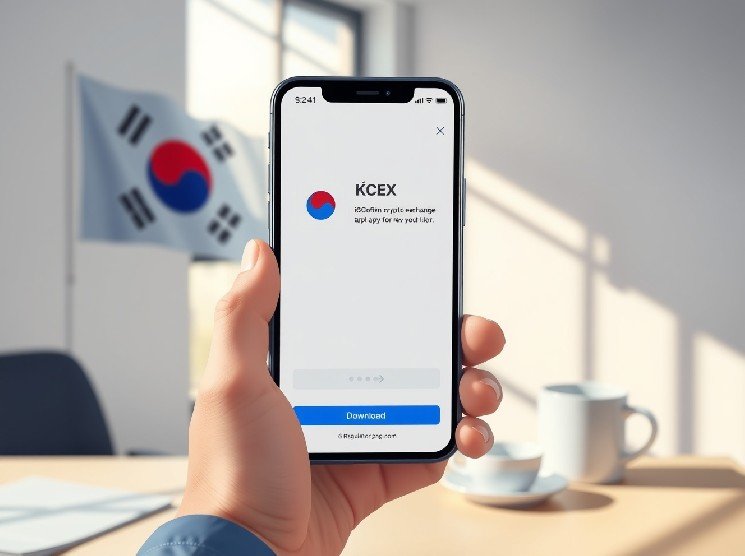
An unregistered overseas crypto exchange, KCEX, continues to operate in South Korea despite a government ban, leveraging a loophole through the iOS App Store. This situation reveals significant gaps in the country’s regulatory framework for virtual asset service providers. As of April 22, 2025, the exchange remains accessible to South Korean users, undermining efforts to enforce financial oversight.
KCEX Unregistered Exchange: Background and Timeline
South Korean financial authorities flagged KCEX for unregistered business activities in August 2024. The exchange, based overseas, never obtained the necessary license from the Financial Services Commission (FSC). Despite this, it continues to attract users through its mobile application.
The timeline of events highlights the challenges regulators face. In 2024, the FSC strengthened rules for virtual asset service providers. They required all exchanges to register with the Korea Financial Intelligence Unit (KoFIU). Non-compliance carries penalties, including blocking access to local markets.
However, KCEX sidestepped these measures. The exchange did not block South Korean IP addresses. Instead, it maintained its app on the iOS App Store. This move allowed users to download and trade freely. The app’s availability on Apple’s platform gives it legitimacy in the eyes of many users.
How the iOS App Store Bypass Works
The bypass relies on Apple’s global distribution system. Apple does not individually vet each app for compliance with foreign financial regulations. Instead, it relies on the app developer’s self-certification. KCEX likely listed its app as available in all regions, including South Korea.
This oversight creates a major enforcement gap. South Korean authorities can block websites and domain names. They can also request internet service providers to restrict access. But they cannot directly remove apps from Apple’s App Store without a formal request to Apple. Such requests take time and often face legal hurdles.
Additionally, users can bypass regional restrictions by changing their App Store account region. This technique requires no technical skill. It makes the ban nearly impossible to enforce at scale.
Regulatory Gaps in South Korea’s Crypto Oversight
South Korea has one of the strictest crypto regulatory environments globally. The Specific Financial Information Act requires all exchanges to register with KoFIU. Exchanges must also implement anti-money laundering (AML) and know-your-customer (KYC) procedures.
Despite these rules, unregistered exchanges thrive. A 2024 report from the FSC found over 30 unregistered overseas exchanges targeting South Korean users. These platforms often offer higher leverage or fewer restrictions than domestic exchanges.
Table: Comparison of Registered vs. Unregistered Exchanges in South Korea
Impact on South Korean Crypto Users
The continued availability of KCEX exposes users to significant risks. Without regulatory oversight, these exchanges may engage in market manipulation. They might also fail to secure user funds. In 2023, several unregistered exchanges collapsed, causing millions in losses for South Korean investors.
Moreover, users face legal consequences. Trading on unregistered platforms violates South Korean law. The FSC has warned that users could face fines or criminal charges. Yet enforcement remains rare, creating a sense of impunity.
Financial experts emphasize the need for better user education. Many traders choose unregistered exchanges for lower fees or access to specific tokens. They often overlook the risks until a problem occurs.
Expert Analysis: Why Enforcement Fails
Legal experts point to jurisdictional issues as the primary barrier. KCEX operates from a country outside South Korea’s legal reach. The FSC cannot issue fines or freeze assets held abroad. International cooperation through bodies like the Financial Action Task Force (FATF) exists but is slow.
Furthermore, technology evolves faster than regulation. Decentralized exchanges (DEXs) and peer-to-peer platforms add another layer of complexity. Even if Apple removes the KCEX app, users can access the exchange via web browsers or alternative app stores.
Dr. Kim Min-ji, a professor of financial law at Seoul National University, notes: “The current regulatory framework assumes a centralized, cooperative environment. The crypto market is neither. Regulators must adopt a more proactive, technology-driven approach.”
Broader Implications for Global Crypto Regulation
The KCEX case is not unique. Similar situations occur in Japan, the United States, and the European Union. Apple and Google face increasing pressure to vet financial apps more rigorously. In 2024, the EU’s Digital Services Act (DSA) began requiring app stores to verify the legal status of financial service providers.
South Korea could adopt similar measures. The FSC has discussed requiring app stores to block unregistered exchanges. However, such a mandate would face legal challenges from Apple and Google. It could also set a precedent for other countries.
Industry observers predict a shift toward self-regulation. Crypto exchanges may form consortiums to verify each other’s compliance. Blockchain analytics firms already offer tools to identify unregistered platforms. These tools could help app stores automate vetting processes.
Conclusion
The KCEX unregistered exchange case highlights the persistent challenge of enforcing crypto regulations in a globalized digital economy. Despite South Korea’s robust legal framework, the iOS App Store loophole allows the exchange to operate freely. This situation underscores the need for international cooperation, technological innovation in enforcement, and greater user awareness. Until regulators close these gaps, unregistered exchanges will continue to pose risks to investors and undermine financial stability.
FAQs
Q1: What is KCEX, and why is it considered unregistered in South Korea?
KCEX is an overseas cryptocurrency exchange that has not registered with South Korea’s Financial Services Commission (FSC) as required by law. It was flagged for unregistered activities in August 2024 but continues to operate.
Q2: How does KCEX bypass South Korea’s ban through the iOS App Store?
The exchange lists its app as available in all regions on Apple’s App Store. Apple does not automatically block apps based on foreign financial regulations, allowing South Korean users to download and use it.
Q3: What risks do users face when trading on unregistered exchanges like KCEX?
Users risk financial loss from potential scams or exchange collapses. They also face legal consequences, including fines or criminal charges, for violating South Korea’s Specific Financial Information Act.
Q4: Can South Korean authorities force Apple to remove the KCEX app?
Yes, but only through a formal legal request. The process is slow and requires international cooperation. Apple may comply if the request is legally sound, but enforcement is not immediate.
Q5: What steps can South Korea take to prevent similar loopholes in the future?
Regulators could mandate app stores to verify the registration status of financial apps. They could also strengthen international partnerships and adopt blockchain-based monitoring tools to detect unregistered platforms.
Leave a Reply