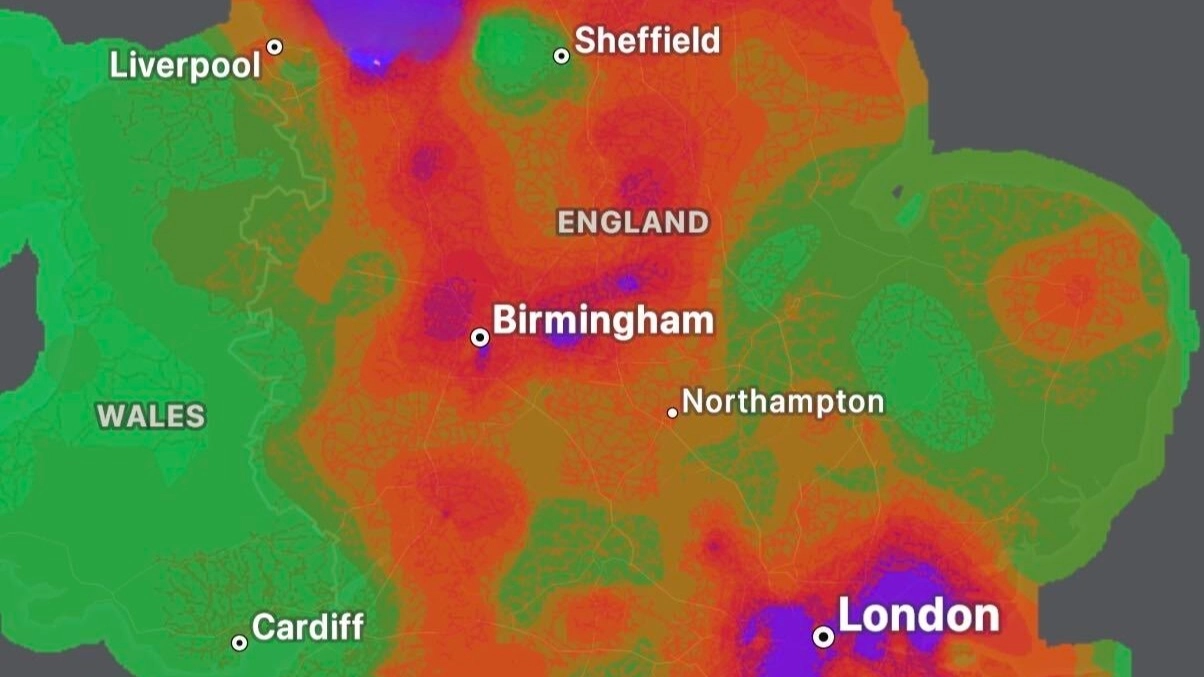
The UK is facing an extreme air pollution alert dubbed by some as ‘code red’, with a health warning issued over the dangers of poor air quality.
Following a number of days of fireworks, swathes of Britain have now ranked ‘high’ on air pollution ratings, especially in the south and north west.
Weather apps have warned about air quality, with the pollution levels high in many areas and people told they may experience ‘discomfort’ due to the conditions.
According to the UK Air Information Resource (DEFRA), many parts of the country are experiencing poor air quality ranked as ‘very high’, namely the north west and Merseyside, Yorkshire and Humberside, the West Midlands, Eastern UK, Greater London and the South East.
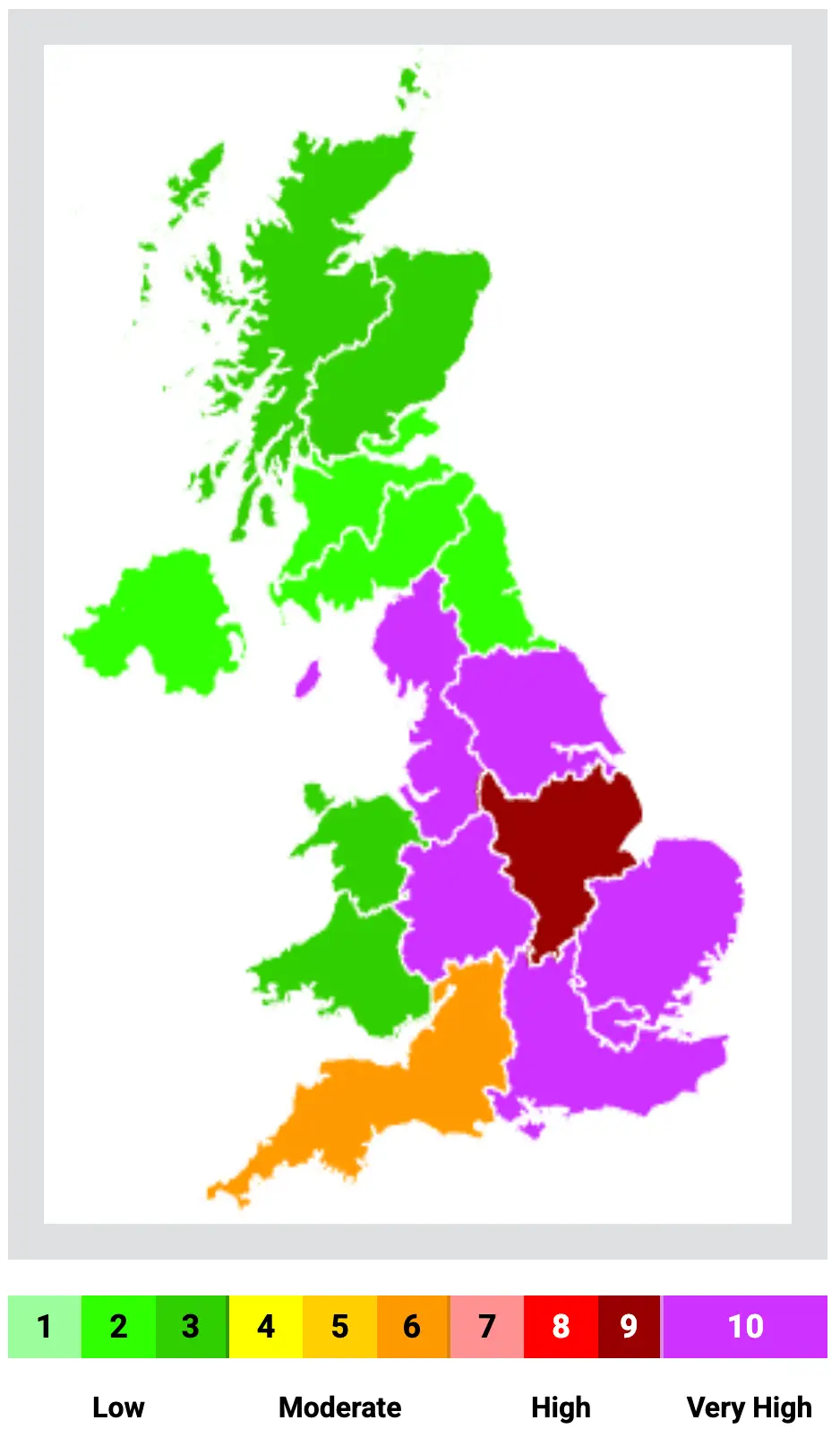
The UK’s air quality ratings on Sunday (DEFRA)
‘Very High’ air pollution is the highest possible alert level, meaning everyone should reduce physical exertion, especially outdoors, and particularly if experiencing temporary symptoms like a cough, sore throat, or sore eyes.
However for at-risk groups, including adults and children with lung problems such as asthma, adults with heart conditions, and older people, they should avoid strenuous physical activity entirely, according to the Government alert.
Simon Birkett, Founder and Director of Clean Air London meanwhile described it as a ‘code red’ situation, writing on X: “Widespread EXTREME AIR POLLUTION across UK.
“People have blasted fireworks into the fog for days to create a deadly smog full of toxic metals, smoke and other particles.”
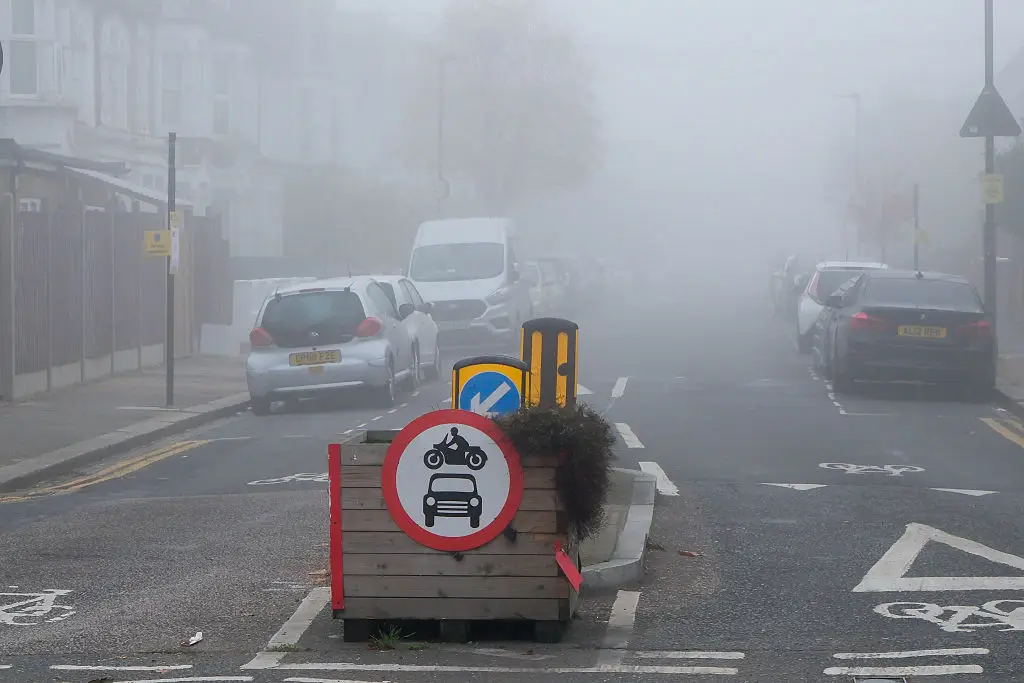
Pollution levels are high in parts of the UK (Matthew Chattle/Future Publishing via Getty Images)
It comes after Bonfire Night and days of fireworks, which release smoke and fine particles into the atmosphere. These include metals including copper, barium, strontium, aluminium and other metals used to create different firework colours and gaseous pollutants including nitrogen oxides.
Weather apps show the decrease in air quality in certain areas of the UK, as a similar warning on Apple’s weather service read: “Anyone experiencing discomfort such as sore eyes, a cough or sore throat should consider reducing activity, especially outdoors.”
This coincided with a yellow weather warning forecasting fog being issued across large parts of the country on Sunday which warned of the potential of flight disruption.
According to IQ Air, fireworks can increased airborne particulate matter levels by as much as 370 percent during the week of seasonal celebrations.
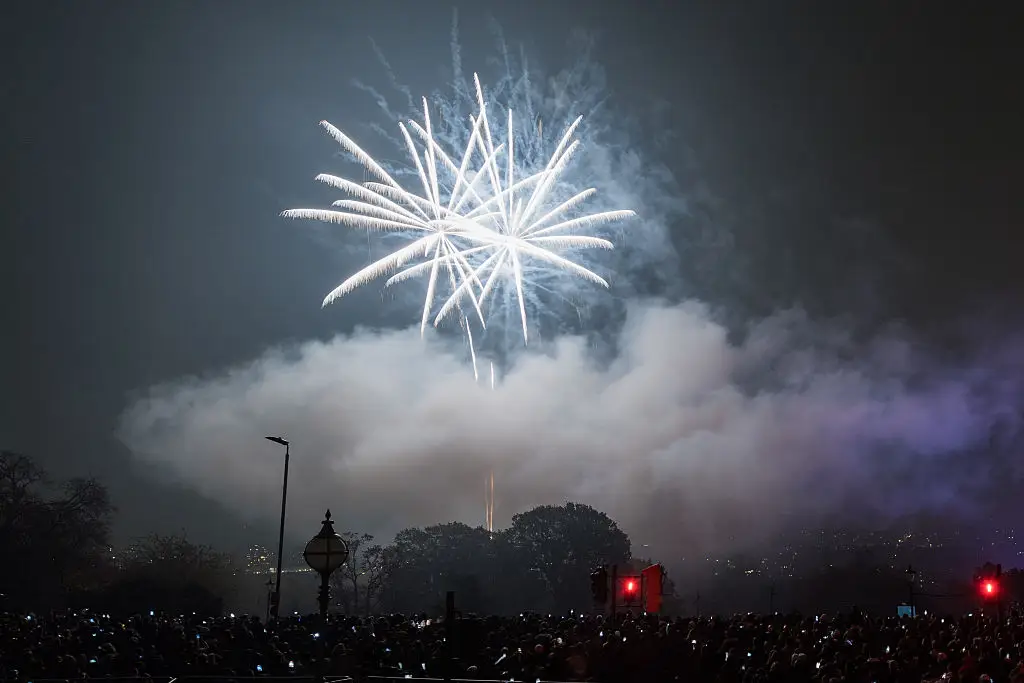
Fireworks impact the air quality (Wiktor Szymanowicz/Future Publishing via Getty Images)
According to the Gov UK air quality checker, long term exposure to air pollution can lead to many different health conditions and can reduce life expectancy.
“Harmful particles linger in the air long after fireworks have finished”
Dr Matt Swallow, clinical lead from Asthma + Lung UK, had previously issued a Bonfire Night warning for those with pre-existing conditions, such as asthma.
“For most people, Bonfire Night means fireworks, sparklers and celebration. But for someone with a lung condition, what should be an evening of fun could end in a medical emergency,” he said.
“Bonfire smoke, fireworks pollution and chilly air can all trigger breathing difficulties, potentially leading to life-threatening asthma attacks or serious flare-ups. And you don’t have to be standing next to a bonfire to be affected.
“Smoke and harmful particles can linger in the air long after the fireworks have finished.”
Issuing advice, he continued: “If smoke from bonfires or fireworks affects your breathing, it’s best to avoid being near them. But we know this isn’t always possible.
“So we’d urge people to take precautions, including standing well back from smoke, taking medication as prescribed and knowing what to do if their symptoms worsen.”
Leave a Reply