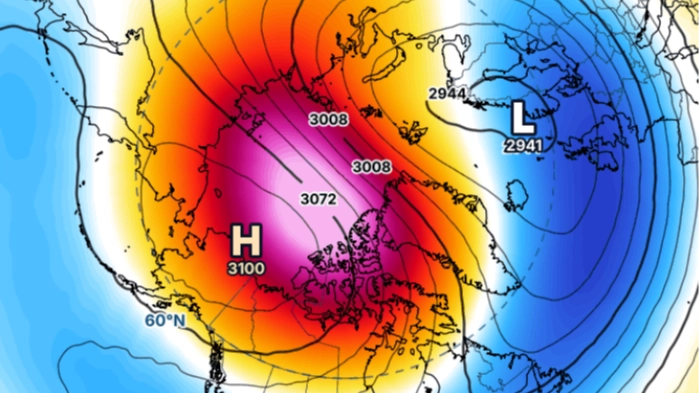
Experts have revealed how an unusual Arctic weather event near the North Pole could dramatically change the winter that the UK experiences.
After some of the hottest days on record this summer, and fears about the El Niño phenomenon wreaking havoc on weather and vital food production globally, sparking stockpiling warnings, exactly what’s in store for us this winter can’t be confirmed just yet.
It’s too early to say, but current seasonal models generally favour a milder, wetter, and more unsettled overall pattern for much of the UK.
But it also hinges on a weather phenomenon called ‘sudden stratospheric warming (SSW)’ which is developing due to the polar vortex.
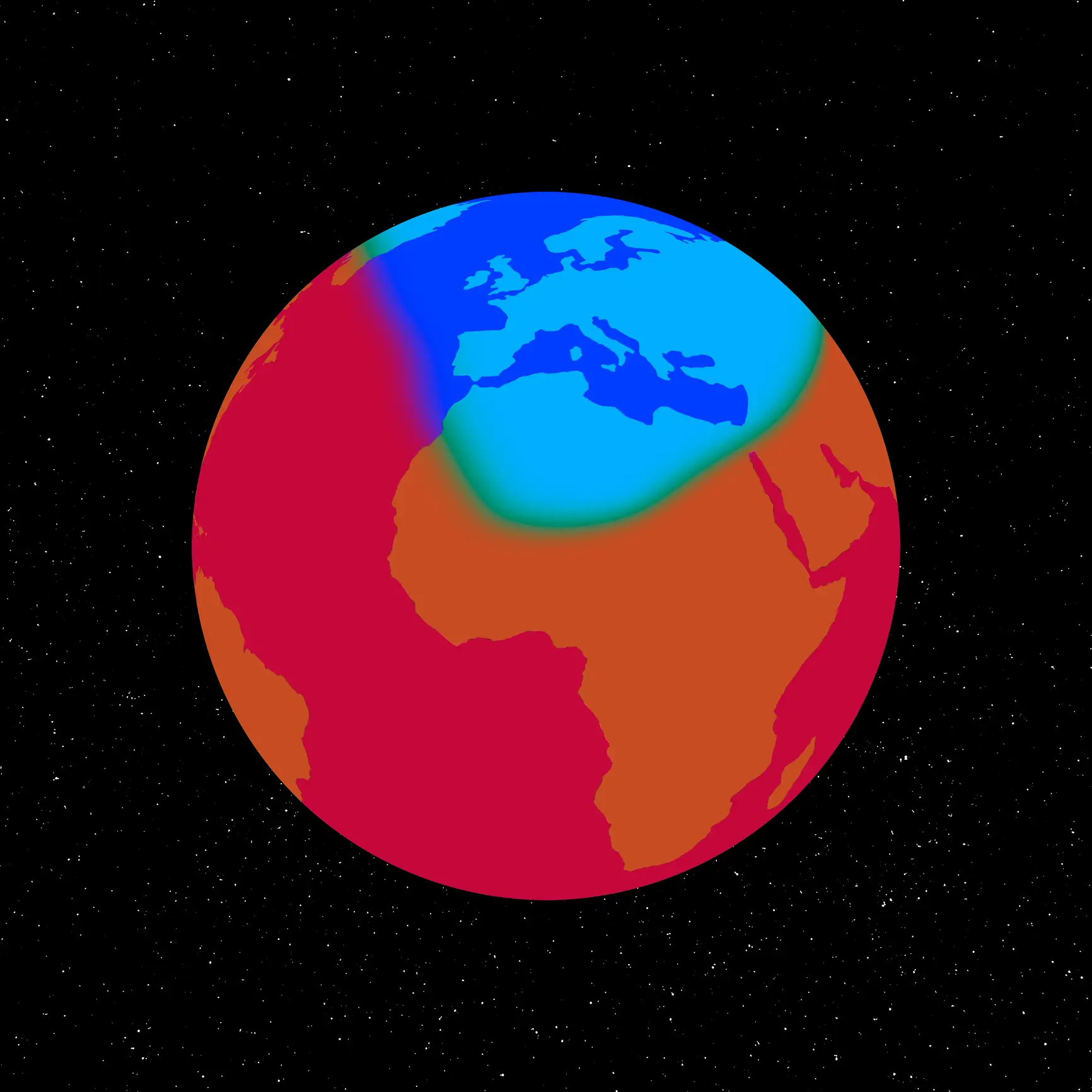
The illustration of the Polar Vortex (Getty)
This is created due to the difference in freezing Arctic and warmer areas further south, which cause a strong ring of winds around the North Pole.
And it is impacted directly by El Niño, which causes unusually warm sea-surface temperatures in the tropical Pacific to increase thunderstorm activity.
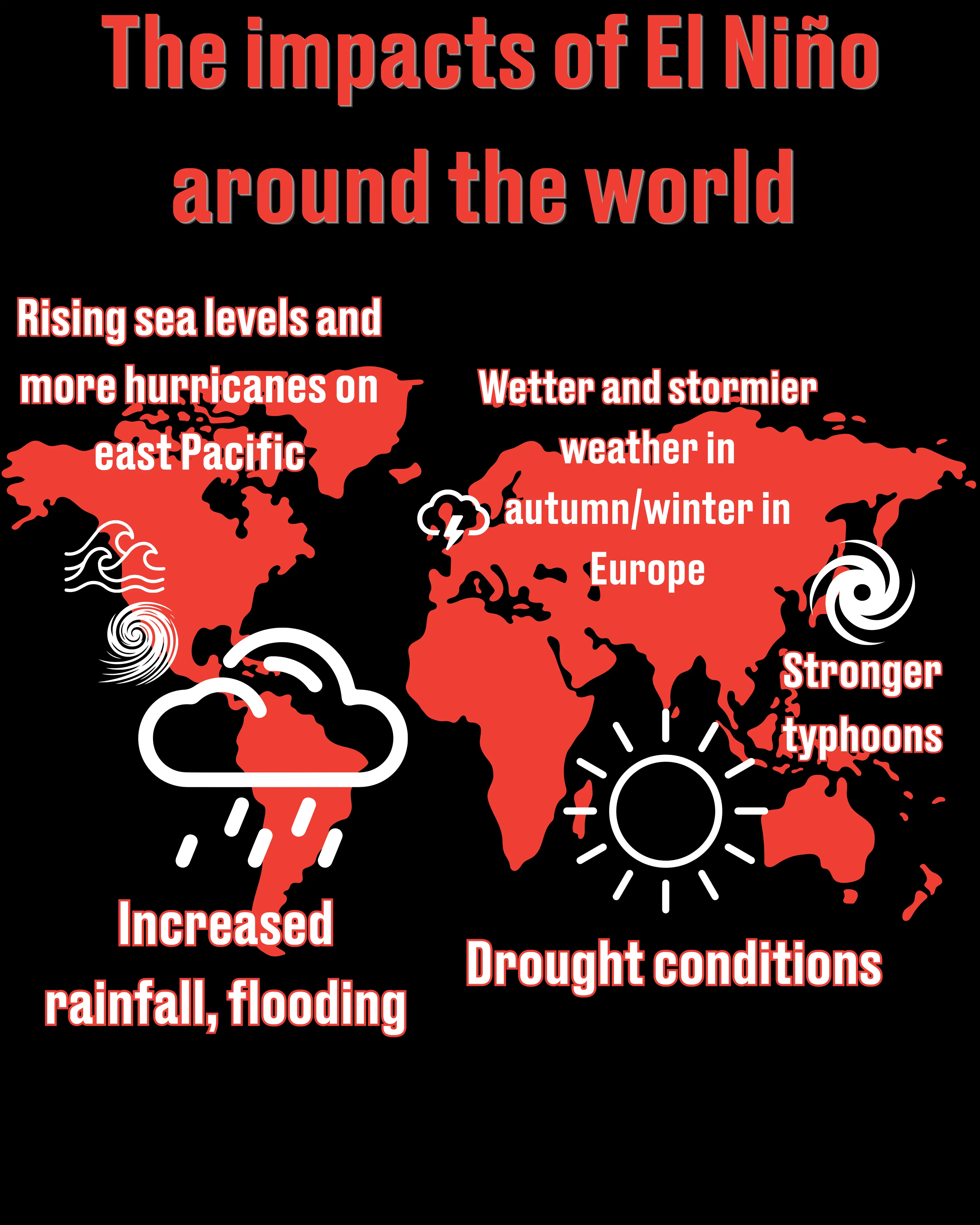
The impacts of El Nino across the world (LADbible)
This then releases large amounts of heat and energy into the atmosphere and alters atmospheric circulation.
The naturally-occurring climate event impacts weather patterns around the world, which can result in the likes of flooding, droughts or wildfires.
‘Stratospheric warming’
The Met Office has said that the stratospheric polar vortex is currently being disturbed, with signs that a sudden stratospheric warming (SSW) is developing.
This is because weather patterns lower down in the atmosphere can push upwards and interfere with polar vortex winds, meaning temperatures high above the Arctic can rise dramatically, sometimes by 30–50°C over a few days.
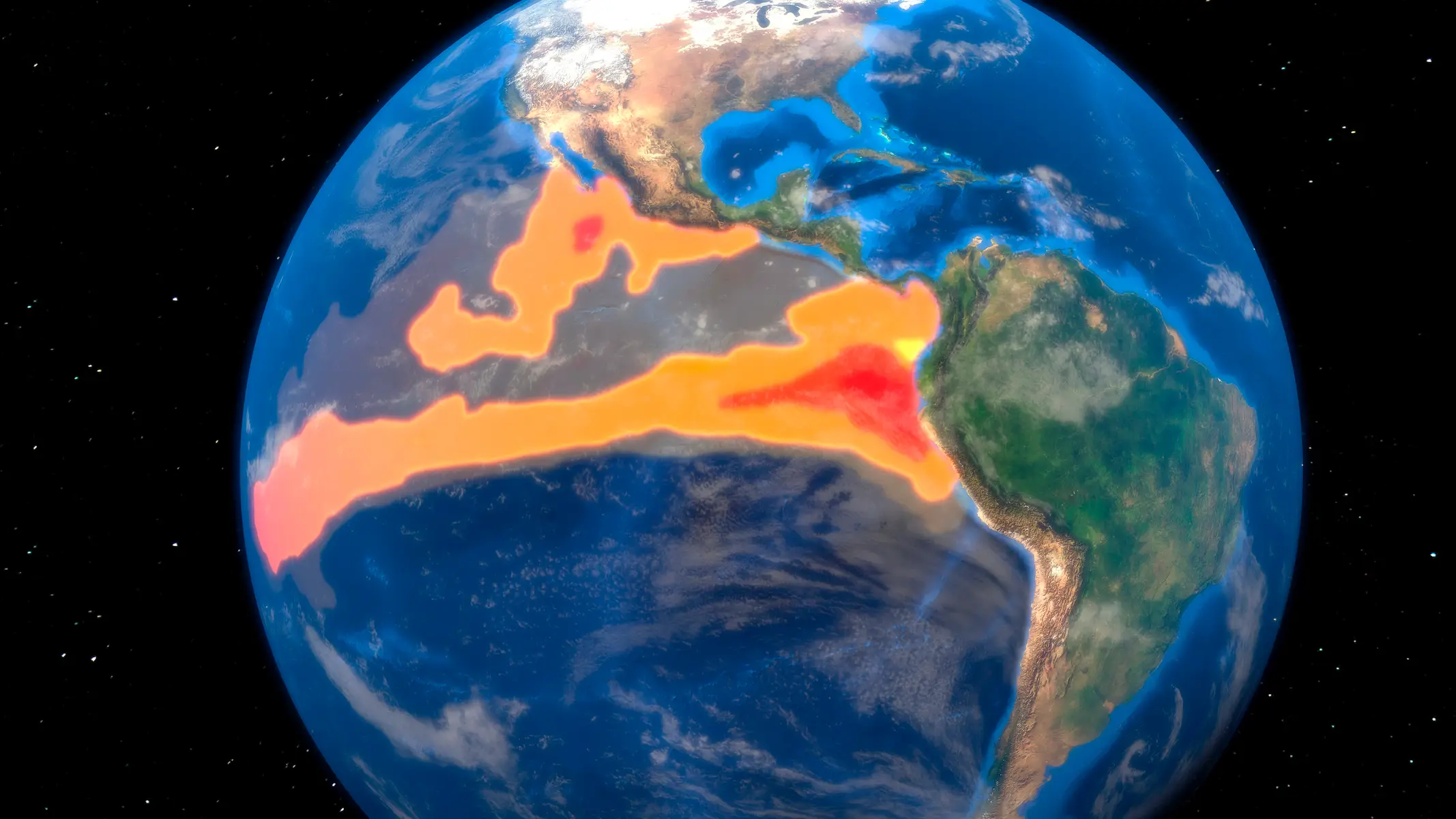
Super El Nino (Getty Stock)
The winds around the polar vortex can even reverse direction.
The Met Office alert explained: “During autumn, the stratosphere above the North Pole becomes increasingly cold as the Northern Hemisphere receives less sunlight.
“The growing temperature contrast between the Arctic and lower latitudes helps strengthen a ring of westerly winds around the pole, known as the stratospheric polar vortex.
“Usually, this vortex is relatively circular. However, large atmospheric waves developing lower down in the troposphere can propagate upwards and disturb it.
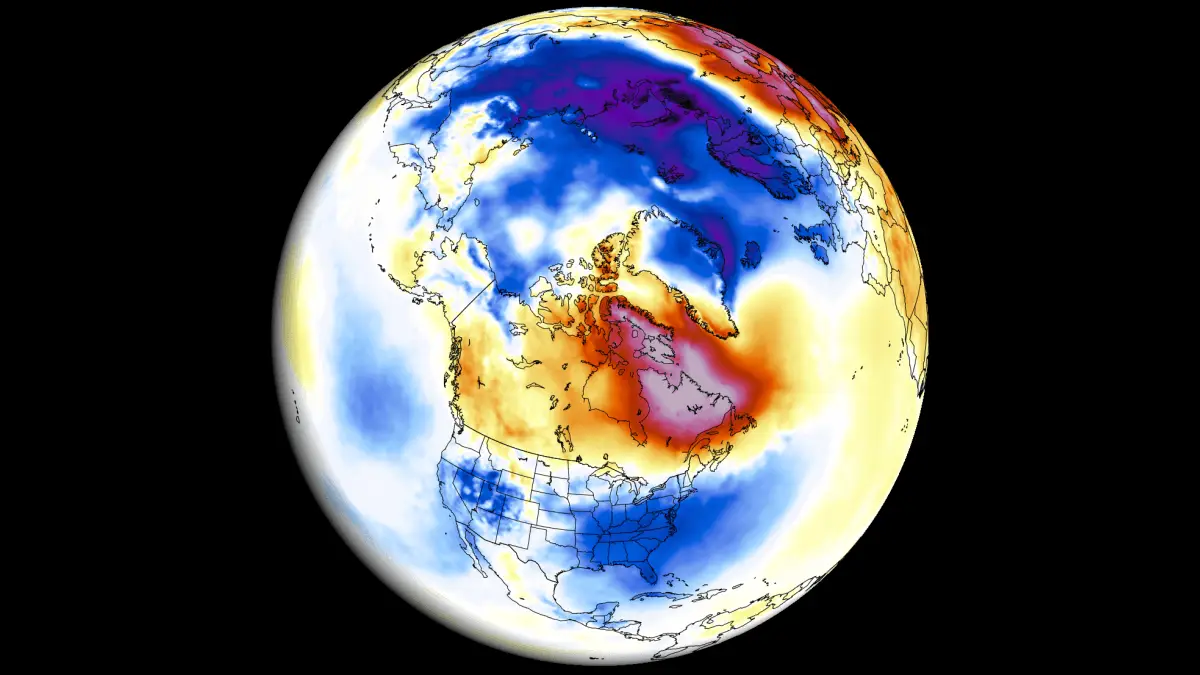
The SSW impacts in the atmosphere (Severeweather)
“These disturbances can stretch the vortex, push it away from the pole or, in some circumstances, split it.
“That is important because sufficiently strong disturbances can result in a sudden stratospheric warming. In a major SSW, the westerly winds around the polar vortex can reverse and become easterly.”
Met Office presenter and meteorologist, Aidan McGivern, explained: “El Niño is basically enhancing the waves that go on in the troposphere, the wriggly jet stream.
“Those waves can then propagate upwards into the stratosphere, knocking, bumping and disturbing that circle of winds around the polar stratosphere, causing it to be displaced, pushed off the pole, deformed or even split.”
How will this impact the UK’s winter?
The Met Office explained that the current weather disturbance is already producing warming in the stratosphere above the North Pole.
When an sudden stratospheric warning (SSW) occurs, its effects can weaken the Atlantic jet stream and increase the likelihood of blocking areas of high pressure developing.
High pressure over the UK could bring quieter, drier conditions with an increased likelihood of frost and fog.
Blocking farther north could encourage easterly winds, while high pressure to the west could make northerly winds more likely.
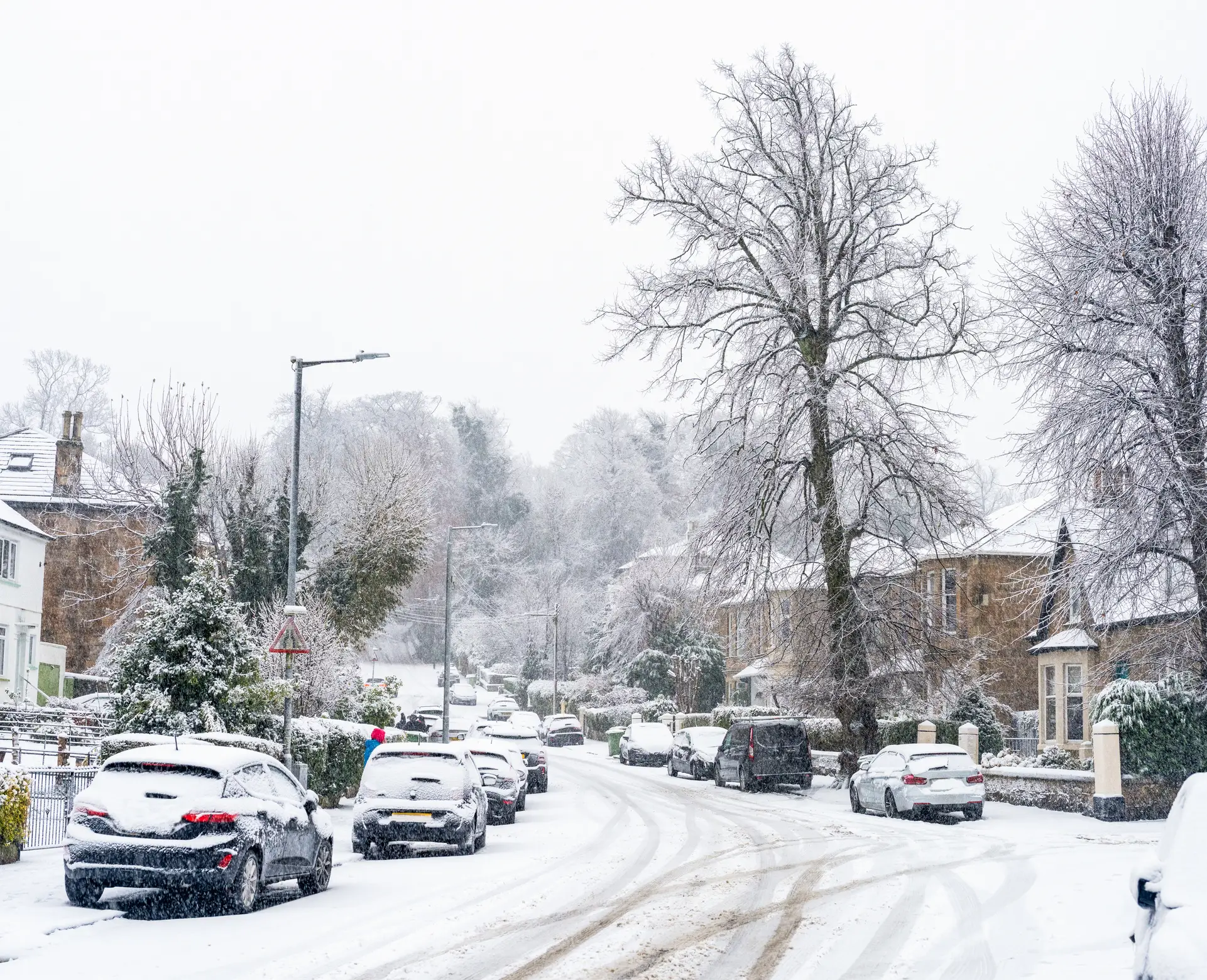
It’s too early to predict just how cold the UK will be (Getty)
Historically, an SSW increases the chance of colder UK weather, but the outcome is still far from guaranteed.
For now, therefore, there can not be a definite forecast for a cold spell.
Instead, meteorologists will be monitoring the polar vortex and whether changes in the stratosphere work downwards into the part of the atmosphere.
Meteorologist Aidan McGivern added: “We know that El Niños increase the chances, through this chain of events, of sudden stratospheric warmings happening, and we know sudden stratospheric warmings increase the chance of colder weather for the UK.
“So we’ve got this chain of events that we can start to flag well in advance.”
Leave a Reply