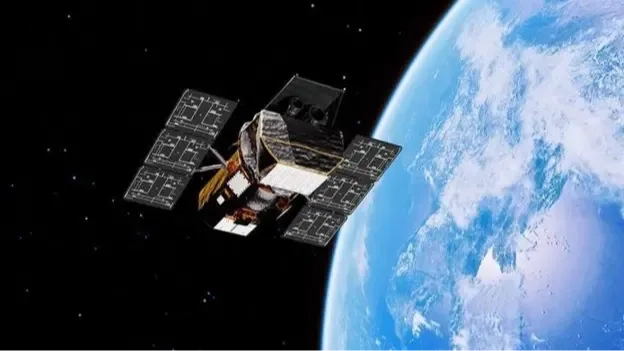
A huge observatory that has been in orbit for 22 years is expected to come crashing back down to Earth after a failed rescue attempt.
The Neil Gehrels Swift Observatory is careening back to humanity following an accelerated orbital decay driven by intense solar activity, it was confirmed.
Most of the 3,200 pound (1.45 tonne) spacecraft, weighing the same as a large adult giraffe or standard Honda CR-V is luckily expected to burn up as it blazes through the atmosphere, however NASA predicts some pieces of the vehicle will hit the ground.
It’s thought that certain compartments and mirror elements could survive the journey and land in the ocean, or potentially within a broad zone covering parts of Africa, Australia, Asia, and the Americas.
However the chance of humans being injured as a result is currently low, and it is not expected to impact anywhere in the UK.
Currently, according to NASA, Swift’s orbit is angled at 20.6 degrees to the Equator and Earth’s midpoint.
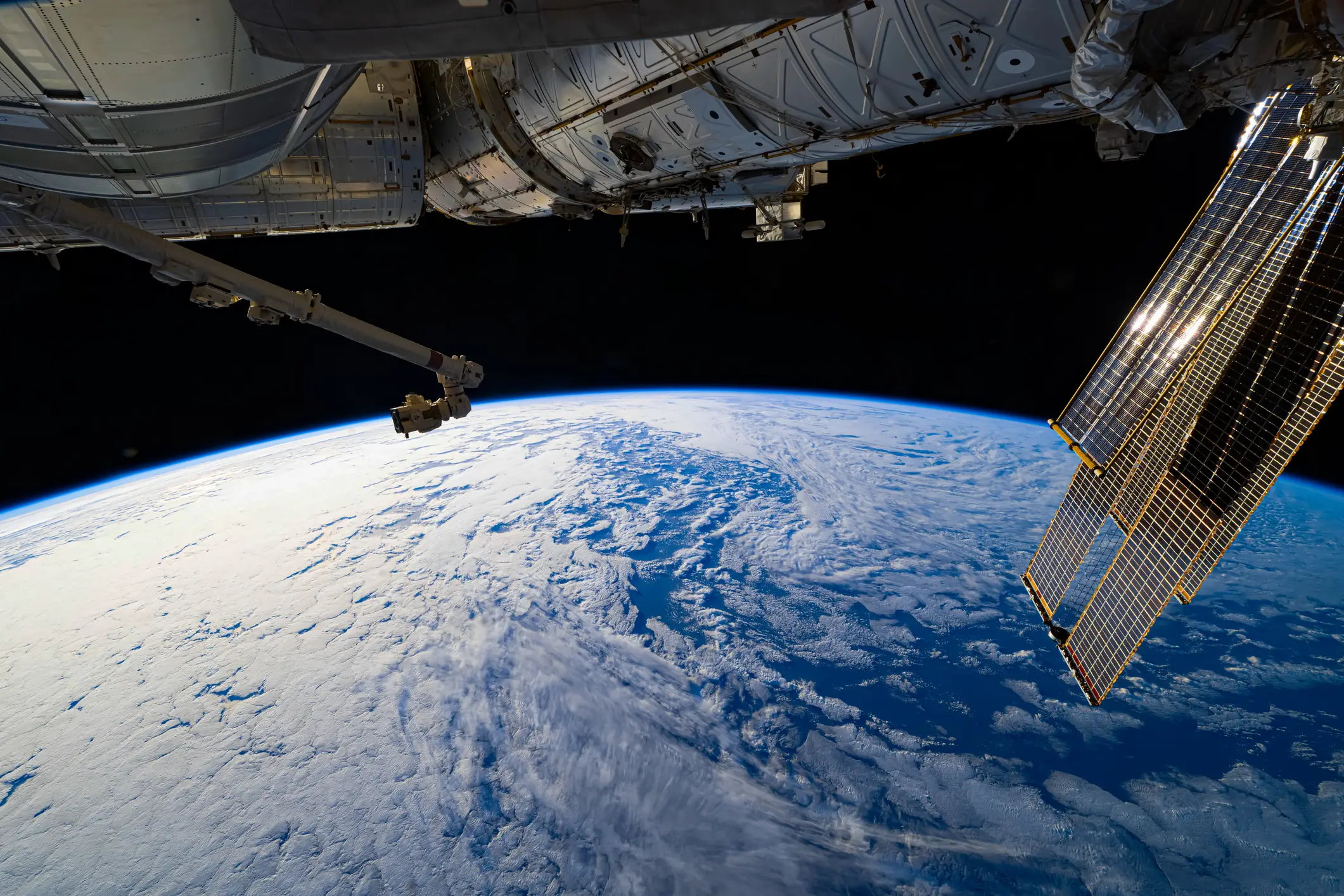
Part of the satellite is expected to crash into Earth (Getty)
It’s not yet clear exactly where Swift will crash down, but it is expected to be somewhere between 20.6 degrees south latitude and 20.6 degrees north latitude.
At launch in 2004, Swift was a first-of-its-kind multi-wavelength observatory, which was designed to study the most powerful explosions in the cosmos using three different telescopes.
Over the years it has successfully logged over 1,400 exploding stars while alerting primary observatories to conduct deeper studies.
It was only designed for a two-year prime mission but spent two decades on its scientific operations.
NASA confirmed in an update earlier this week that Swift would ‘re-enter the atmosphere’ in the early hours of Wednesday (4 November) with an ‘uncertainty of 11 hours.’
It follows an emergency rescue attempt by Katalyst Space which failed back in September when its robotic spacecraft suffered technical issues.
This then forced ground controllers to power down Swift in late October.
This means it’s re-entry to Earth’s atmosphere is uncontrolled as the device is no longer able to steer or observe.
However thankfully, the risk of harm to people on Earth is considered low. It’s path however is being followed by the Space Force.
“NASA expects most of the spacecraft to burn up as it travels through the atmosphere, but some components are expected to survive re-entry,” a NASA statement read.

Parts of the satellite could hit Earth (Getty)
“Re-entry locations of any surviving components can vary from hemisphere to hemisphere and depend on when it re-enters.”
It continued: “The risk of harm coming to anyone on Earth is unlikely — approximately 1 in 2,100. NASA and Space Force will continue to monitor the re-entry and update predictions.
“During more than two decades of science operations, Swift served as a multi-tool for exploring the universe, observing a wide range of light, rapidly pointing at short-lived outbursts, and sending alerts to other facilities to help coordinate follow-up observations.”
All satellites in low Earth orbit experience atmospheric drag, with recent solar activity increasing this effect on Swift which has ‘sank rapidly’, NASA added.
Leave a Reply