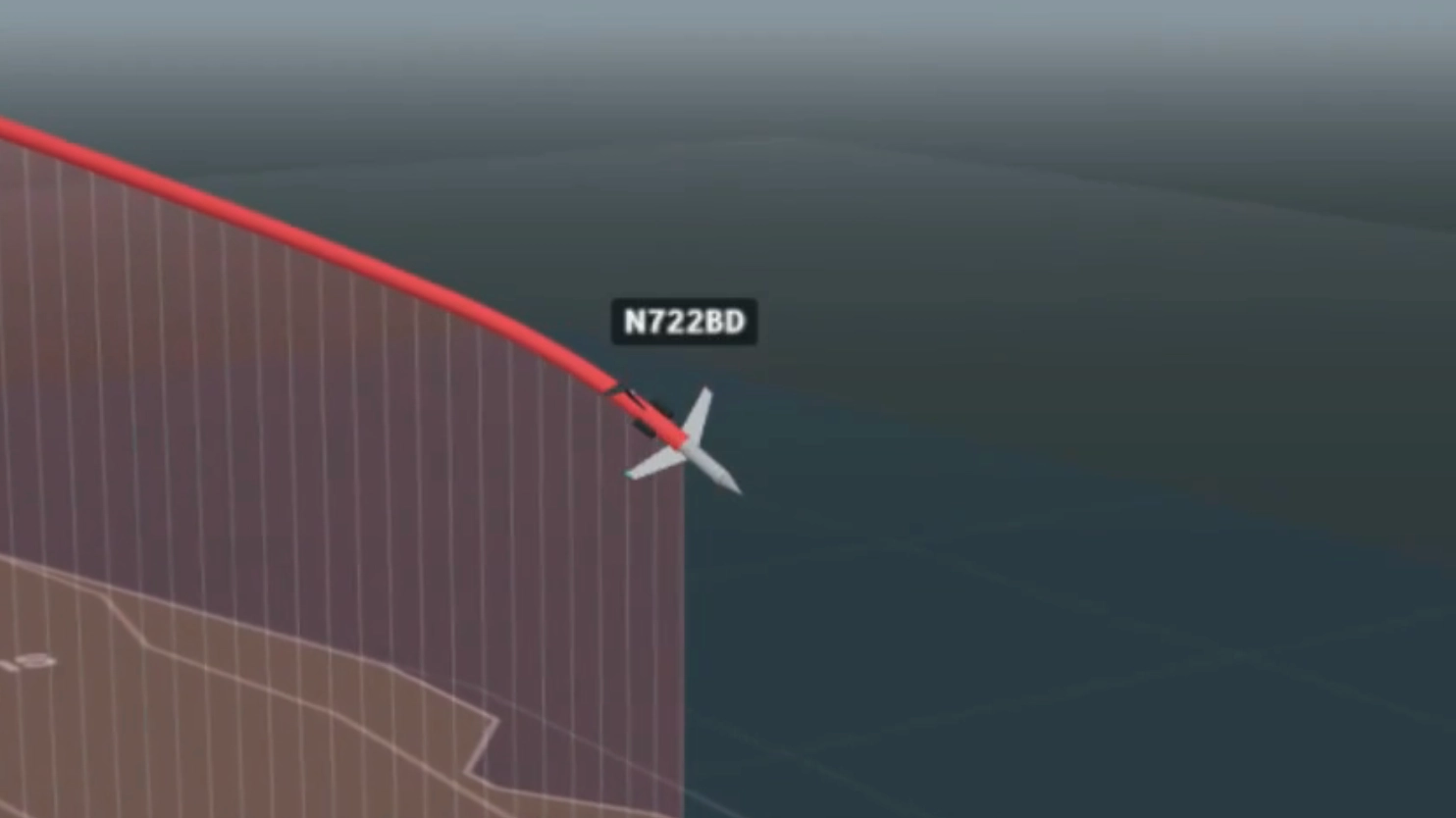
A reconstruction of the private jet which crashed into a South Florida neighbourhood shows what might have happened in ‘the last three minutes’.
All nine people on board the Learjet 60 aircraft from Texas died, as videos taken by passers-by show the terrifying moment the Bahamas-bound aircraft plunged 35,000 feet to the ground on Sunday afternoon (1 November).
Flight analysis indicated that the plane may have encountered severe weather and reported icing just before it plummeted into a roadway in Palm Beach County.
Air traffic control audio recorded moments before the crash, appears to show someone in the cockpit reporting ‘moderate turbulence’ and that the crew was ‘managing the ice’.
An account on X (@elteslaengineer) has since made a reconstruction to show what might have happened just minutes before the crash.
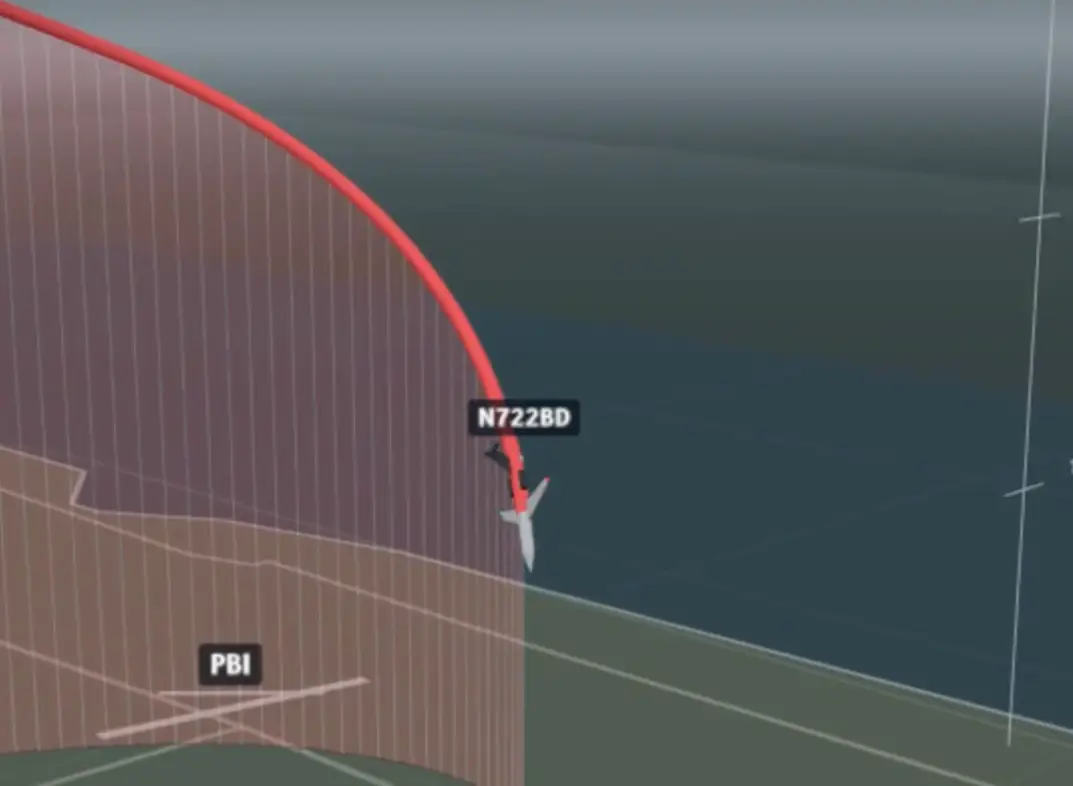
A 4D reconstruction shows what might have happened in the minutes prior to the crash (X/@elteslaengineer)
“The Learjet 60 that crashed in Palm Beach County today went from 35,000 ft to the ground in 76 seconds,” the user wrote.
“I rebuilt the last 3 minutes in 4D from ADS-B, ATC audio, a NEXRAD analysis and dashcam video, then ran the engineering. Here’s what the data says, and what it doesn’t.”
What might have gone wrong?
Justin Crabbe, the CEO of private aviation platforms Jettly and BlackJet, tells LADbible that ‘based on the pilot’s references to icing and turbulence, it’s possible the aircraft was encountering weather conditions that were affecting its performance and controllability’.
“Ice accumulation can reduce lift, increase drag and raise the aircraft’s stall speed. If the aircraft was struggling to maintain airspeed or altitude, the situation could have deteriorated very quickly,” he suggests.
“However, without the complete cockpit audio, flight data and other evidence, it’s difficult to say exactly what happened or whether icing was ultimately responsible.”
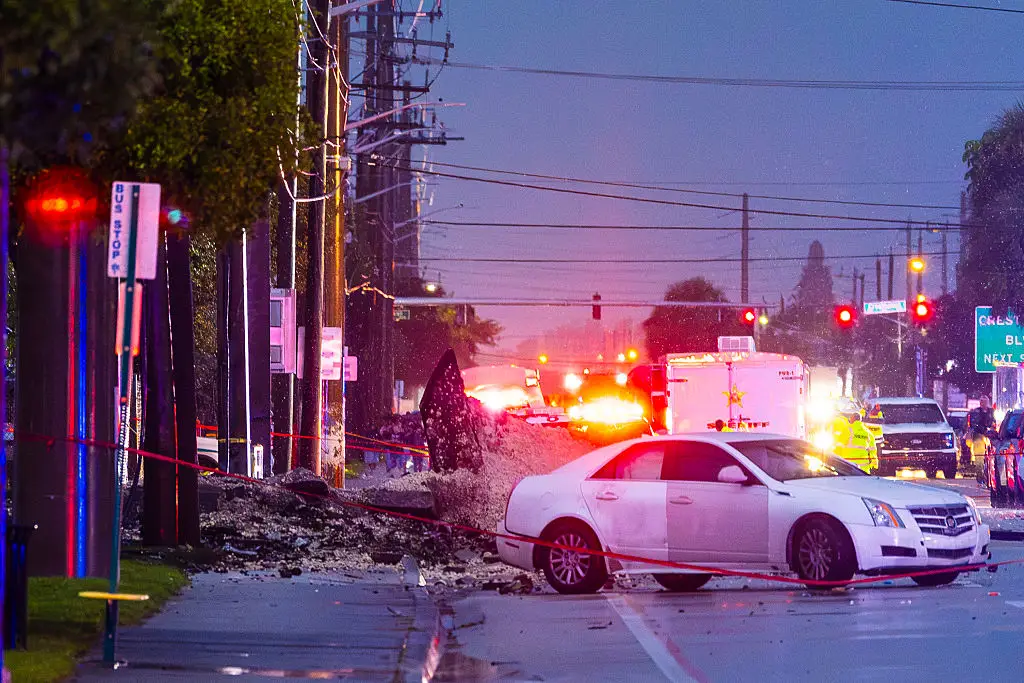
Why is there a lack of debris left at the crash site?
(Saul Martinez/Getty Images)
Crabbe notes that ‘the amount of visible debris depends heavily on the aircraft’s speed, angle of impact, the surface it strikes and whether there was a post-impact fire’.
“A high-energy impact like that can break an aircraft into very small pieces, with much of the wreckage concentrated around the impact point rather than scattered over a large area,” he explains.
“Some debris may also be buried beneath the surface or removed by emergency crews. A relatively small debris field doesn’t necessarily mean anything unusual happened before impact.”
What have the authorities said?
(Mehmet Yaren Bozgun/Anadolu via Getty Images)
20-year-old co-pilot Nathalia Gadelha Filgueiras has been identified as one of the nine who died.
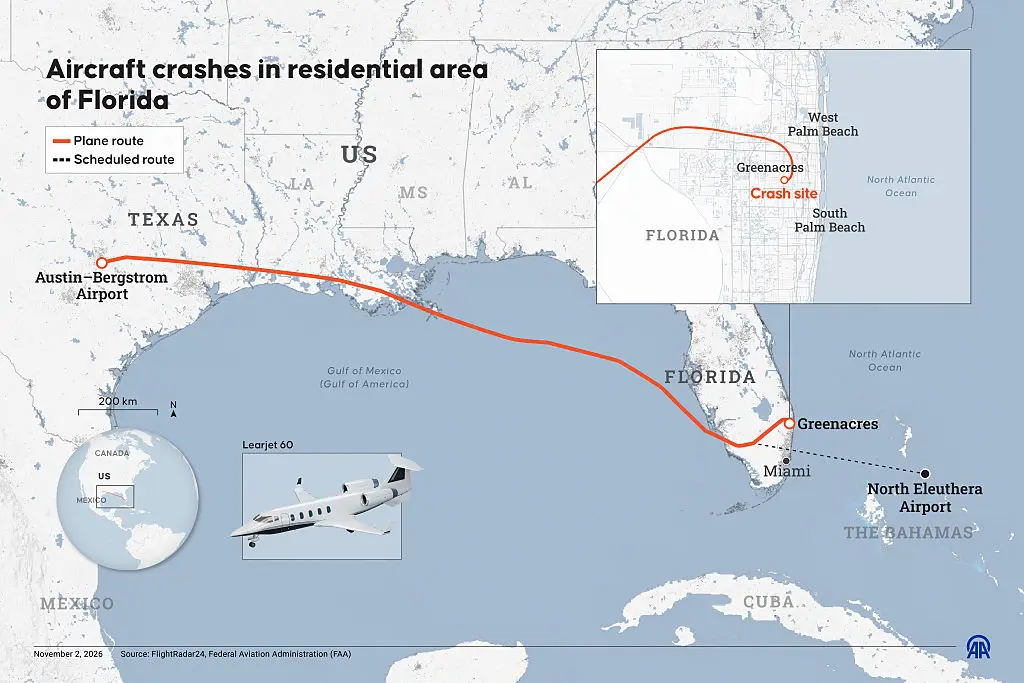
In a statement shared with LADbible, the Federal Aviation Administration (FAA) said: “A Learjet 60 crashed in a residential area near Cresthaven, Florida, around 12:50 p.m. local time on Sunday, Nov. 1. Nine people were on board.
“The aircraft departed Austin-Bergstrom International Airport in Texas and was headed to North Eleuthera Airport in the Bahamas.
“The FAA and National Transportation Safety Board will investigate. The NTSB is in charge of the investigation and will provide all updates.”
Crabbe believes that ‘investigators will be working to reconstruct the aircraft’s final flight path, including its altitude, airspeed, descent rate and any unusual changes in direction or attitude’.
“They’ll examine available cockpit recordings, air traffic control communications, radar and ADS-B data, along with weather reports and any evidence of icing in the area. They’ll also look at the aircraft’s maintenance history, anti-icing equipment, engine performance and the physical wreckage to determine whether there were any mechanical issues,” he adds.
Interview conducted by Olivia Burke.
Leave a Reply