The US has pushed back on the IRGC’s claims, dismissing them as an attempt to increase oil prices ahead of US elections.
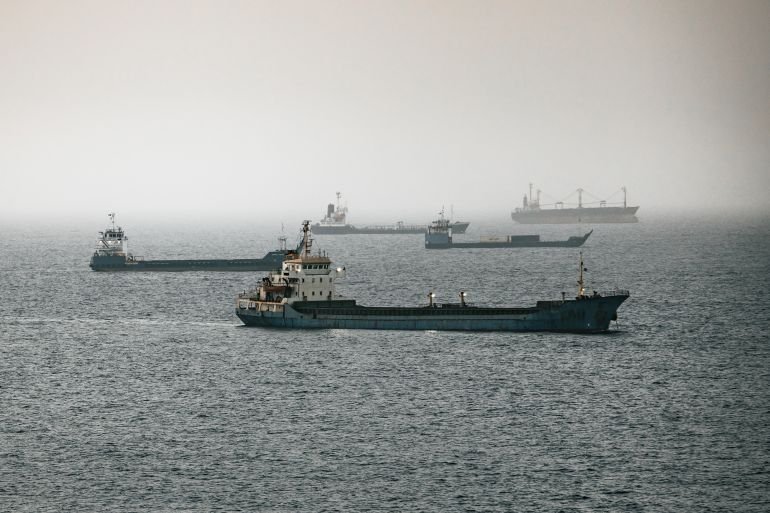
Iran says that seven oil tankers have been struck and sustained damage in the Strait of Hormuz, the largest single-day toll for the waterway since the United States and Israel started their war against Iran on February 28.
Iran’s Islamic Revolutionary Guard Corps (IRGC) said in a statement on Thursday that four of the vessels were transferring oil when they were targeted and caught fire overnight. The other three were disabled after striking mines.
Recommended Stories
list of 3 itemsend of list
The claims could not be independently verified, and the report did not provide details about possible casualties or the tankers’ flags.
The IRGC also warned that it could strike US bases across the Middle East if Washington moves to help tankers transit other parts of the strait.
“The US military must know that if this trend continues, the conflict will extend to its bases in the region,” the IRGC said in a statement on its Sepah News website. “This is a serious warning.”
Iran claims control over Hormuz, a strategic shipping route through which one-fifth of the world’s oil supplies passed before war broke out. It regularly attacks ships that attempt to navigate the strait without its authorisation.
But the US military has been escorting vessels through the waterway in increasing numbers, with Iran responding by stepping up attacks.
US President Donald Trump said on Thursday that “Iran is doing everything they can to drive up the price of oil prior to the US Midterm Election”.
In a post on his Truth Social platform, he added: “They are making up fake hits, mines, and everything else because more oil is coming through the Hormuz Strait now than it did even prior to the beginning of the conflict.”
A US Central Command spokesperson, speaking anonymously to Al Jazeera, also called Iran’s mine claims incorrect.
The spokesperson said US forces have cleared the international shipping lanes of mines and that Iran is using missiles and drones.
The strait remains open, the spokesperson said, with 95 percent of vessels getting through.
The attacks, the spokesperson added, show Tehran’s “desperation” under the US blockade, which cuts Iran off from the resources it needs to rebuild the military capabilities the US has said it destroyed.
Americans want ‘relief’ from war costs
“The number of ships and tankers attacked every single day is increasing, and Iran is saying it is continuing to do this because they are not going to allow any change in that situation,” said Al Jazeera’s Mohamed Vall, reporting from Tehran.
“They have full control over the Strait of Hormuz right now, they say.”
Vall said there is also talk in Tehran about an imminent escalation in the war, with the Iranians expecting the US to attack even before US midterm elections in early November.
“The IRGC army chief has boasted that Iran is more ready than anytime before, and has produced enough weapons and equipment to wage a symmetrical war against the United States,” he said.
Reporting from the US White House, Al Jazeera’s Kimberly Halkett said: “Striking Iran does not appear to serve any Republican interests”, adding that pre-election polls tell the same story for Trump’s political party.
“What we’ve seen in surveys in recent months, and as of today, is that most Americans want relief from their tax money going to pay for any potential war with Iran that is ramped up,” Halkett said.
“There is real frustration over the rising cost for everyday Americans, given the rising fuel prices that have occurred as a result of this conflict … As a result, the US president is having to make the case.
“The pressure is on the president, and it’s not just from the opposition party,” she said. “It is also from within the Republican Party as well.”
Leave a Reply