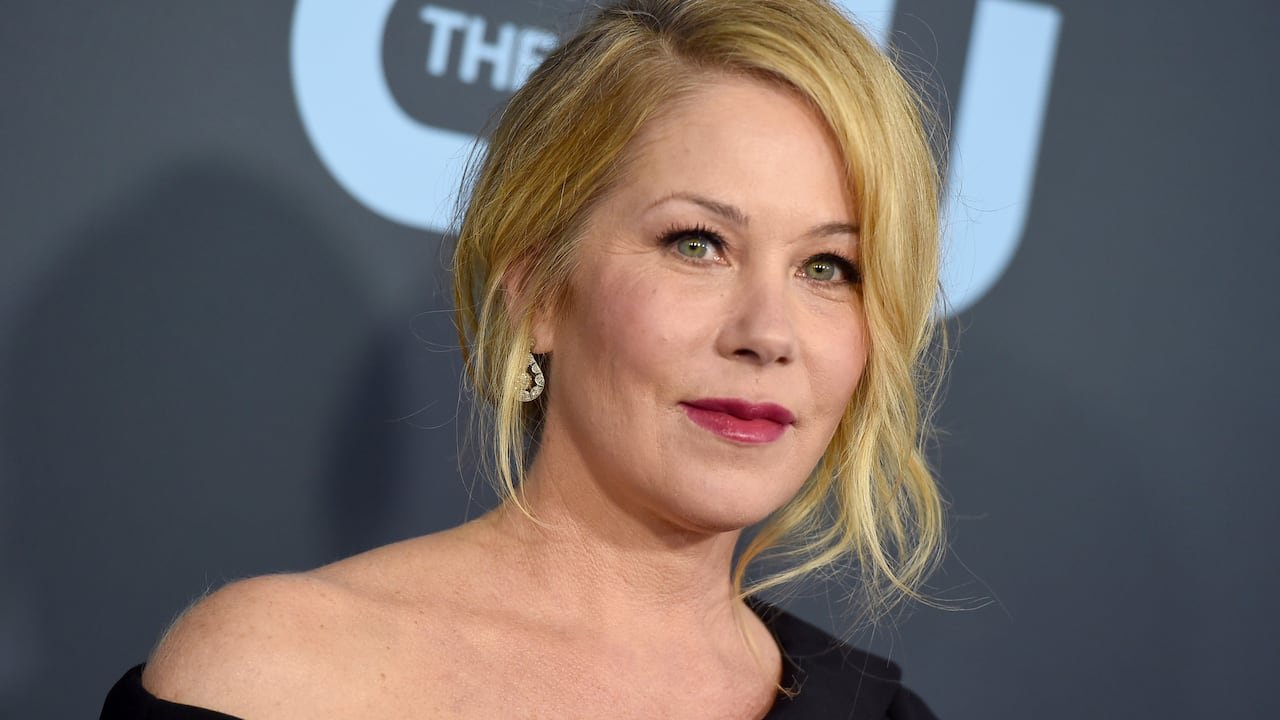
After five years of tireless advocacy for those who shared her diagnosis of multiple sclerosis (MS), Christina Applegate has revealed that doctors now believe she was misdiagnosed.
“To me it comes as, like, I’m back at square one,” she said of the news.
Applegate shared the story in a two-part Tuesday episode of the podcast MeSsy, which she co-hosts with Jamie-Lynn Sigler, who has MS. She had spent some months away from the show, which she explained was partially to process the revelation.
Audibly emotional at times, Applegate said that while her doctor had congratulated her when revealing she didn’t have MS, she didn’t feel happy — only lost.
“You don’t get misdiagnosed and all of a sudden I’m better. I haven’t gotten better … if anything, I’ve gotten worse, in some ways,” she said.
“My legs aren’t working, you know, all the same stuff is happening to me.”
Multiple sclerosis is a complex autoimmune disease of the central nervous system. With MS, the immune system mistakenly attacks the myelin, part of the central nervous system that serves as a protective coating for the nerves. This inhibits the brain and the body from sharing information, resulting in symptoms including numbness, memory issues, fatigue, mobility issues, and sometimes vision loss.

Applegate arrives for the 29th Screen Actors Guild Awards in Century City, Calif., in February 2023. (Valerine Macon/AFP via Getty Images)
Dr. Mark Freedman, director of the multiple sclerosis research unit at The Ottawa Hospital, compared it to when the outer rubber part of a wire wears off, exposing the copper inside.
“You’ve now got a bare wire, which doesn’t conduct well,” he told CBC News. The nerve is also then more exposed to inflammation in the body, which “can then go after that little wire and cut it and destroy it all together, and then you’ve lost the connection permanently.”
The disease takes many forms, with some patients experiencing periods of remission and relapse, and others dealing with more consistent progression causing increasing disability.
Misdiagnosis is not uncommon globally — one U.S. study from 2019 by researchers at Cedars-Sinai found that the rate of misdiagnosis was nearly one in five patients. A 2024 review looked at studies reporting misdiagnosis rates ranging from five to 41 per cent, and found an estimate of 15 per cent misdiagnosis rate when they pooled six studies.
‘Tested for everything’
Applegate first announced she had MS on social media in August 2021, but it started earlier that year, she said in Tuesday’s podcast episode, when she began to experience numbness in her feet, which slowly moved up her legs.
“And then the pain started,” she said. “All that time, I was being tested for everything under the sun.”
She said she underwent spinal MRIs, brain MRIs and a spinal tap, and that doctors thought she might have a low-grade version of the disease at first. But her symptoms kept getting worse. When doctors found nearly 40 lesions on her brain, she was officially diagnosed with MS.
“I felt like, ‘OK, I have an answer,’” she said in the podcast episode.

Applegate attends the 26th Annual Screen Actors Guild Awards in Los Angeles in January 2020. (Mike Coppola/Getty Images for Turner)
But a couple years ago, her doctor paused her infusion treatments to see how her B cells would respond. When their levels didn’t change, doctors began to look closer at the diagnosis, including using “new technology that had come out” around brain MRIs, she said.
In 2024, the official diagnostic criteria was updated after a committee of experts evaluated new scientific advances — including the use of new tools like advanced MRIs capable of more specific detection.
Ultimately, it was concluded Applegate didn’t have MS — but she wasn’t given another diagnosis to replace it, leaving her in the dark as to what was causing her ongoing symptoms.
“I feel like I let everybody down, you know?” Applegate said tearfully to co-host Sigler, saying she felt like they’d become “the poster children for MS” together. The two started their podcast in 2024, featuring conversations about parenting and ordinary life struggles while dealing with the disease.
“It’s like I had a reason … for why my day sucked every day, and now I don’t have a reason. It’s very unnerving.”
The actress, who stepped away from the screen in 2021 after her diagnosis, is known for roles in movies such as Anchorman: The Legend of Ron Burgundy, and Bad Moms, and for TV roles including her Emmy-nominated turn in Netflix’s Dead to Me.
Global rates of MS
Globally, more than 3.1 million people are living with MS worldwide, according to MS International Federation. Canada has one of the highest rates of the disease in the world, with more than 90,000 Canadians, roughly one in 400, affected by it. Around seven out of 10 cases are among women.
It can be difficult to diagnose because many conditions have overlapping neurological and physical symptoms — for instance, migraines can also create white spots on an MRI of the brain, and nerve damage from other conditions can create numbness.

A study that aims to improve balance in people with multiple sclerosis is ongoing at McMaster University in Hamilton. The study has people hooked up to a computer and play classic videogame Tetris with their body.
Being treated for MS when you don’t actually have it can be risky for patients, Freedman said, as some of the more aggressive MS treatments work by suppressing the immune system, potentially exposing patients to viruses for no reason.
“The longer you take them and the older you are, the better the chances you’re gonna have a problem,” he said.
In Canada, he says, the misdiagnosis rate is much lower than in the U.S., estimating it at less than five per cent. He puts it down to Canada having a higher number of MS specialists and dedicated MS centres.
“What we teach our residents and fellows is if you’re not sure of the diagnosis, you follow up the patients, you repeat testing, you look for the other thing that could look like MS, but you don’t put the label on.”
In the podcast, Sigler reassured Applegate that her advocacy was still important even if she was misdiagnosed, and admitted that even if Applegate couldn’t feel happy, her first thought on hearing the news had been that one day, her friend might be able to dance again.
“I’m going to continue holding in my heart that this is a blessing for you,” Sigler said.
Leave a Reply