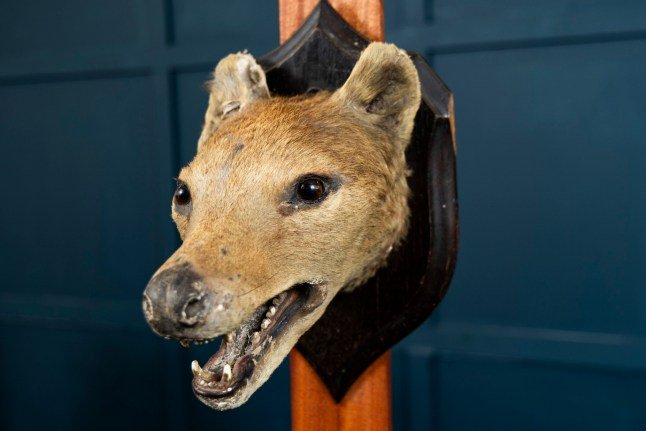

A rare extinct tiger head has been found under a bed weeks after the ‘only one in existence’ sold for a staggering £60,000.
The taxidermy head of a Thylacine – also known as a Tasmanian Tiger – was found by a couple in their home, who initially had no idea how rare their discovery really was.
They came forward after the only other known surviving taxidermy of its kind was sold at auction back in August, under the mistaken belief it was a fox head.
The Thylacine has been extinct since 1936 and only a handful of specimens – mostly skins made into rugs – have previously been sold since, fetching hundreds of thousands of pounds.
The previous surprise auction was the first time a fully preserved head had been discovered – and its initial mistaken identity saw its auction begin with a lowly guide price of between £30 and £50.
Its previous owner had bought it at an antiques market after being intrigued by its ‘googly eyes’.

But two bidders spotted its potential and it was ultimately sold to James Cranfield for £50,000, plus £10,000 in fees.
At the time, he hailed it as the ‘holy grail’ of the natural history world and said: ‘The head I now own is the only one in existence.’
Now, the second Thylacine head was found and could sell for tens of thousands of pounds when it goes under the hammer next month.
The head, affectionately named ‘Trevor’ by staff, will be sold by the same auction house.
Auctioneer Andrew Stowe said: ‘Our sale back in August made international headlines and we thought it was a once-in-a-lifetime moment.
‘To have unearthed another is extraordinary. Scientists, academics, and collectors dedicate their lives to finding these rare specimens – to have two pass through our hands in a matter of weeks is nothing short of phenomenal.’
Radiographs have confirmed the tiger’s original skull remains intact within the mount.

Andrew added: ‘The discovery of the skull inside was another spine-tingling moment.
‘Part of the cranium is missing on the right-hand side, likely marking the location of the fatal shot delivered over a century ago.’
The Thylacine was a unique carnivorous marsupial native to Australia, Tasmania, and New Guinea that evolved dog-like traits through convergent evolution.
Mainland populations disappeared around 2,000 years ago, but an isolated population survived in Tasmania into the modern era.
The find has been authenticated by Dr. Stephen Sleightholme, with the mount officially added to the International Thylacine Specimen Database (ITSD), which logs all known physical remains in public and private hands.
Dr Sleightholme of the ITSD said: ‘Thylacine remains are exceptionally rare and rank among the most valuable zoological specimens.

‘Their scientific, historical and cultural significance is reflected in the considerable interest surrounding surviving examples.
‘Beyond their monetary value, these remains provide an essential record of a species lost to extinction.’
Andrew branded the head ‘the most important item we’ve ever sold’.
‘We’ve sold some incredible pieces over the years, but this goes way beyond another rare item – it’s a major scientific breakthrough and a vital piece of history,’ he said.
The thylacine head will go under the hammer on Thursday November 26th at Auctioneum.
The sellers are a private family in London who have declined to comment.
MORE: Rescuers come to the aid of bald hedgehog after it loses all its prickles
MORE: Trump brags about knowing what a giraffe is at bizarre Kansas rally
MORE: Final picture of fisherman killed by 12ft alligator taken moments before his death
Leave a Reply