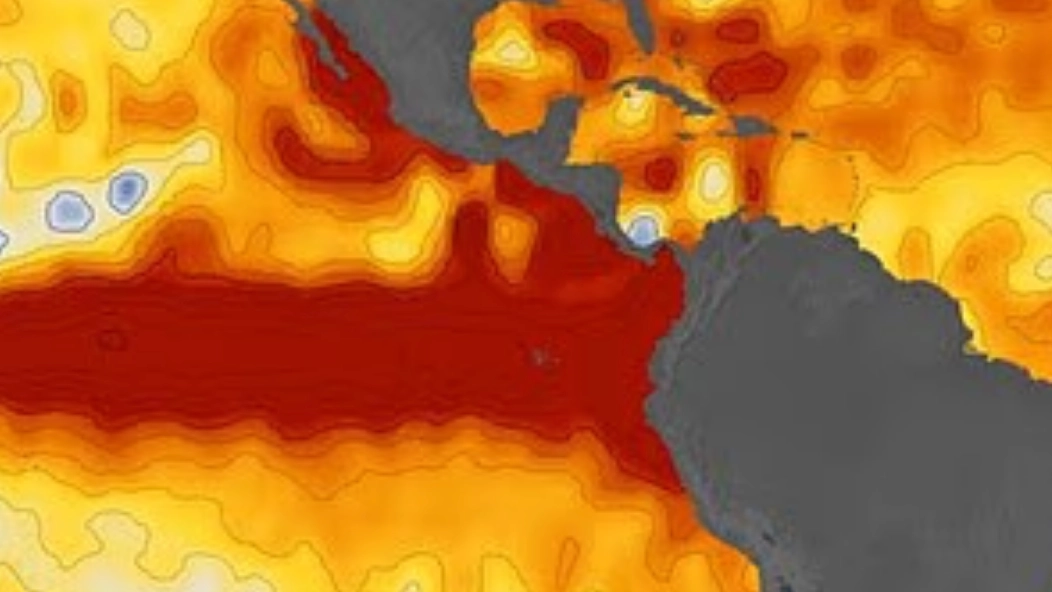
Scientists have warned that El Niño could result in dramatic rise in the ocean, leading to widespread flooding as the cycle takes effect.
El Niño is a part of the ENSO cycle, meaning the El Niño Southern Oscillation, and is dependent on the surface temperature of the Pacific Ocean.
While it is a naturally occurring phenomenon, some scientists have also warned that increases in sea temperatures from climate change may also further exacerbate the impact of this El Niño, which has been informally referred to as a ‘Super El Niño’, though this is not an official term.
The US National Oceanic and Atmospheric Administration has predicted that there is an 83 percent likelihood this is the strongest El Niño ever recorded, with data first being collected in 1950.
The precise impact of El Niño varies depending on location, with some places experiencing drought while others might experience floods, and now scientists have warned that this El Niño could push some parts of the Pacific Ocean to 40cm higher than they would usually be.
This is from masses of warm water flowing across the Pacific, causing a ‘bulge’ in the water that could lead to erosion and coastal flooding stretching all down the west coast of North and South America from Alaska to Chile.
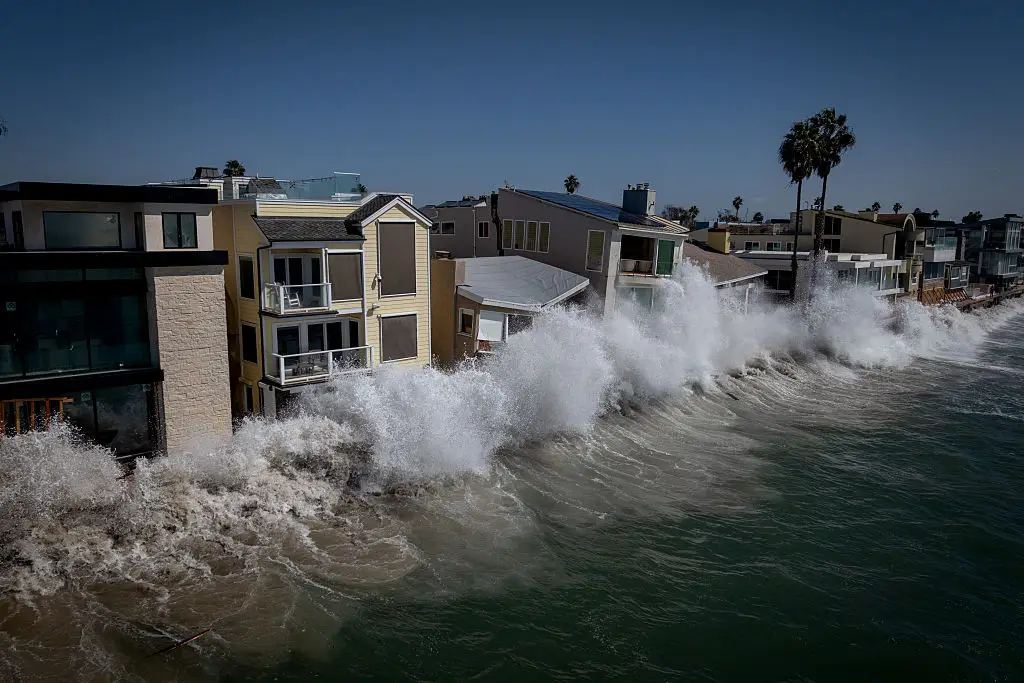
Homes in Long Beach in California being hit by waves in October 2026 (Eric Thayer / Los Angeles Times via Getty Images)
Thomas Monahan is an academic at the University of Oxford who specialises in oceanic forecasting, and told the Daily Mail: “How will the upcoming Super El Niño affect coastal extremes around the world?
“The answer is substantially: along the coast from Mexico to Ecuador, the projected 2026–27 Super El Niño may temporarily raise sea level by an amount equivalent to four to five decades of projected sea-level rise – in a single season.”
Monahan suggested that the sea levels may reach their highest point between November and December, as this will be when the surface temperature of the ocean is expected to be highest.
“At the most affected regions, a high-water level normally reached about once every 52 days could be exceeded during up to half of all high waters,” he added.
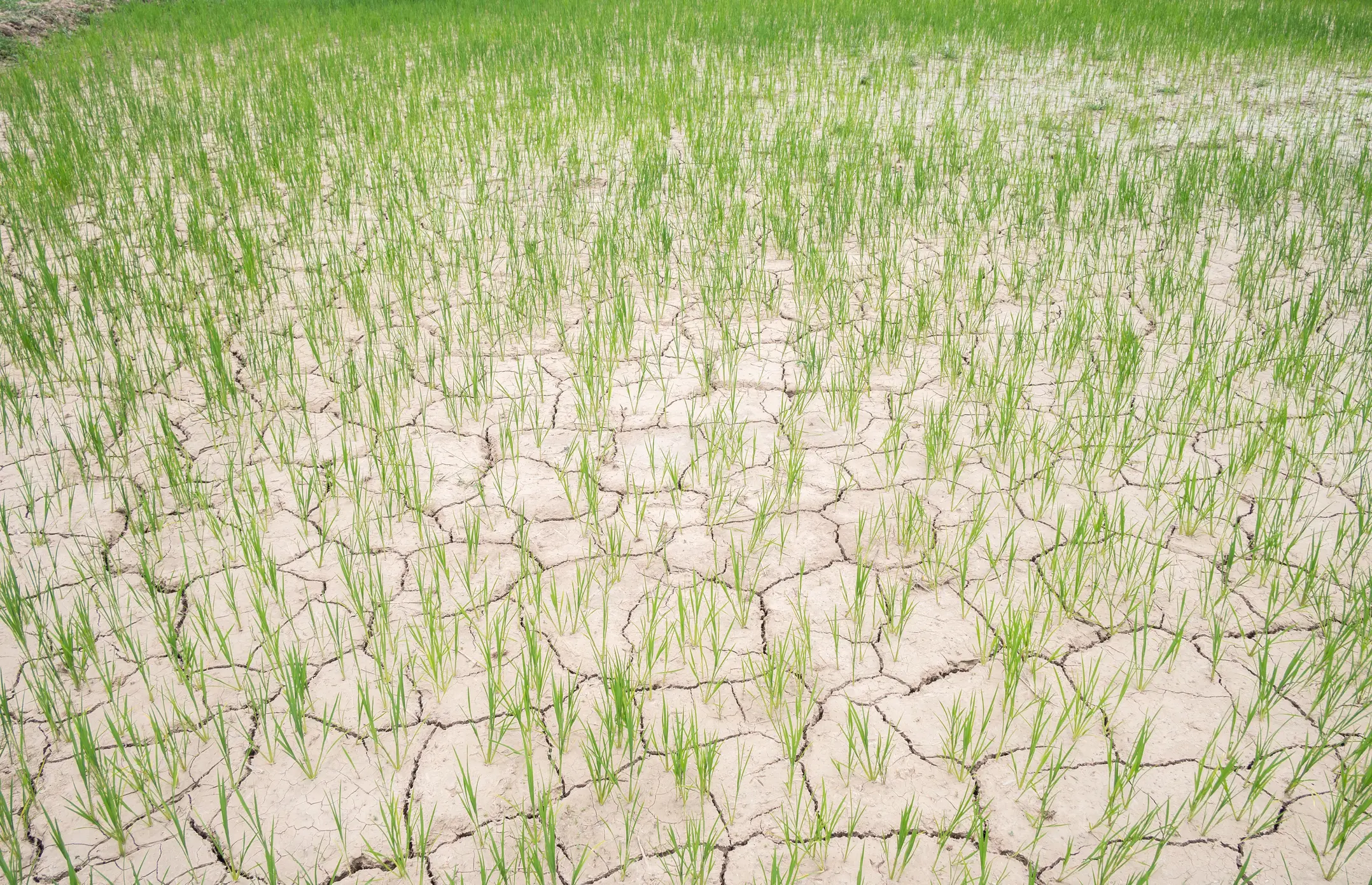
El Niño can cause everything from floods to droughts (Getty Stock)
Monahan said that his research indicates that there will be a much higher likelihood of extreme conditions across Pacific coastlines, with the largest impact expected to be felt near to the equator.
For example, the Galapagos Islands may see increases of between 24 and 40 cm, while Ecuador and Peru could see up to 33cm.
El Niño occurs roughly every two to seven years, and can have a huge impact on weather patterns around the world.
The other half of the ENSO cycle, which is the cooling phase, is ‘La Niña’, or ‘The Girl’ in Spanish, and ‘El Niño’ means ‘The Boy’.
During El Niño warmer water from the equatorial Pacific Ocean start to build up off the South American coast.
Scientists have already warned about the potentially catastrophic impact of this El Niño cycle, which is expected to be among the strongest ever recorded.
It is anticipated that the effects will continue to build for the rest of 2026, and be maintained through 2027 as well.
Leave a Reply